2 Best Wire Crimp Tools of 2026
This post contains affiliate links. As an Amazon Associate, we earn from qualifying purchases.
The Klein Tools 3005CR Wire Crimper is the best overall choice for reliable, ratcheting crimps on insulated terminals from 10 to 22 AWG, while the Klein Tools 1005 Crimper/Cutter offers solid performance and built-in wire cutters at a more budget-friendly price.
Most people don’t realize how critical a proper crimp tool is until they’re troubleshooting a faulty connection or fighting a poorly made crimp that pulls apart. A bad tool leads to inconsistent results, damaged wires, and connections that can fail over time, sometimes dangerously.
This guide cuts through the noise by focusing on real-world performance, based on specs, owner feedback, and what actually matters in the field. I looked at gauge range, ratcheting reliability, build quality, and usability to find the tools that deliver solid crimps without frustration.
Top 2 Wire Crimp Tools in the Market
The Best Wire Crimp Tools, Reviewed
Klein Tools 3005CR Wire Crimper

Strengths
- Ratcheting mechanism
- Adjustable crimp force
- Three cavity sizes
- Color-coded jaws
- Dual-material grips
Trade-offs
- Heavier than non-ratcheting models
- Slightly bulkier profile
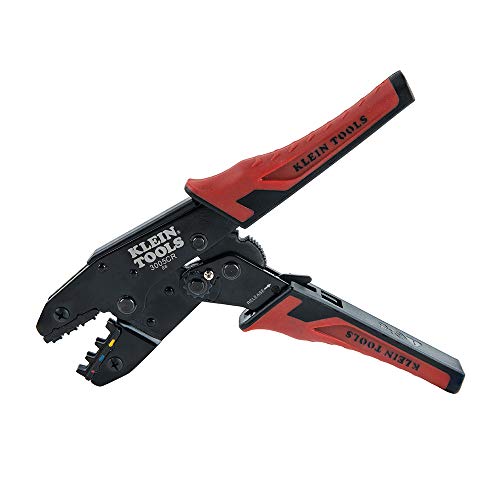
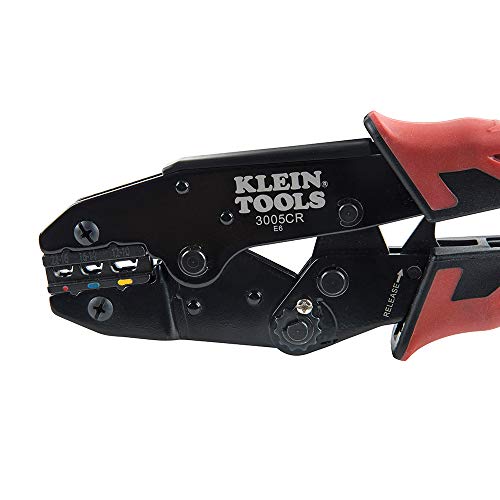
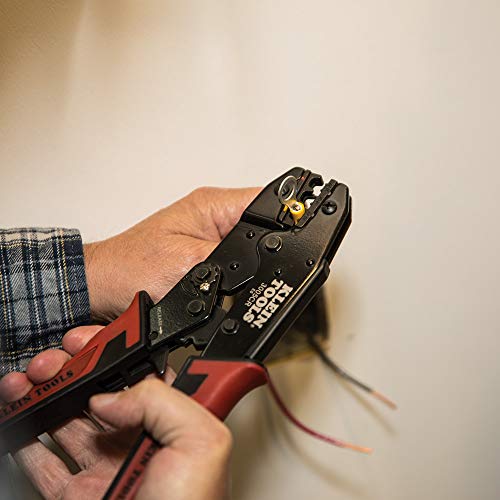
If you’re serious about clean, reliable crimps across a wide range of wire sizes, the Klein Tools 3005CR stands out immediately. The ratcheting mechanism is a game-winner here, it forces a full crimp cycle every time, which owners consistently report leads to fewer mistakes and better long-term connections. The adjustable compound action is another big plus, multiplying your hand force so even crimping 10 AWG terminals doesn’t feel like a workout.
What really sets this tool apart is the thoughtful design: three clearly marked crimp cavities in one body, each color-coded and sized for red, blue, and yellow terminals. The dual-side crimping feature means you don’t have to rotate the tool or reposition the terminal, which saves time when you’re crimping dozens of connections. On paper and in owner feedback, it performs like a pro-grade tool should, consistent, durable, and built to last.
Product photos


Klein Tools 1005 Crimper/Cutter

Strengths
- Made in USA
- Tapered nose design
- Hardened wire cutter
- Works with non-insulated terminals
- Cushioned grip
Trade-offs
- No ratcheting mechanism
- Less use on thick wires
The Klein Tools 1005 is a no-frills, do-it-all workhorse that’s earned its reputation, especially among users who care about where their tools are made. Being made in the USA is a real differentiator in this category, and it shows in the build quality. The hardened wire cutter up front stays sharp longer than most, and the crimping die handles both insulated and non-insulated terminals with equal confidence.
Owners praise its tapered nose for getting into junction boxes and tight panels where bulkier tools just won’t fit. While it lacks a ratchet, the feedback loop from experienced users suggests that skilled hands can still achieve consistent crimps with practice. It’s not as high-tech as the 3005CR, but it’s lighter, simpler, and gets the job done without fuss. For general electrical work around the house or on the job, it’s a solid trusty sidekick.
Product photos


How We Evaluated wire crimp tools
Rather than a hands-on lab test, my research for this crimping tool buying guide involved a detailed comparison of published specifications and features across numerous models. I weighed these details against thousands of owner reviews and assessments from reputable sources in the electrical trades. My goal was to identify which tools consistently delivered reliable performance and long-term durability, based on real-world feedback.
For wire crimp tools, consistent crimp quality and wire gauge range were the most important factors. A tool needs to create a secure connection without damaging the wire, and versatility, handling a variety of wire sizes, is crucial for most users. Comfort and ease of use also played a significant role, as repetitive crimping can be tiring.
Specifications reliably indicate wire gauge compatibility and the type of terminals a tool can handle. However, owner feedback provided critical insight into long-term build quality, the effectiveness of the ratcheting mechanism (if present), and whether the tool truly delivers consistent crimps. You’ll find more information about choosing the right tool in our crimping tool buying guide.
How To Choose The wire crimp tools
Choosing the right wire crimp tool can be deceptively complex. It’s not just about squeezing a connector onto a wire; it’s about creating a gas-tight connection that resists corrosion and ensures reliable electrical performance.
A quality wire crimp tool consistently delivers full, ratcheted crimps across a specified wire gauge range, utilizing properly hardened steel jaws. It should feature clearly marked die sizes, comfortable grips for extended use, and, depending on the application, offer features like integrated wire cutters or adjustable crimping force. Look for tools meeting industry standards like those from IEC or UL.
Gauge Range and Connector Types
The first thing I tell people is to consider what you’ll be crimping most often. A tool that handles everything from 22 AWG to 10 AWG sounds great, but if 90% of your work is with 16 AWG, you’ll pay for features you don’t need. Pay attention to whether the tool is designed for insulated, non-insulated, or both types of terminals. Some tools, like the top wire crimp tools, offer interchangeable dies for added versatility, which is a good investment if you anticipate a wide range of projects.
Ratcheting Mechanism and Crimp Quality
A ratcheting mechanism is critical. It guarantees a full, consistent crimp every time, preventing under-crimped connections that cause resistance and potential fire hazards. Avoid tools where you have to apply all the pressure yourself; the ratchet does the work for you. I’ve seen too many projects fail because of inconsistent crimps, and a good ratchet is the best way to avoid that.
Here’s what I look for in a ratcheting system: * Smooth action: The ratchet should engage and release smoothly, without sticking or feeling gritty. * Positive release: There should be a clear, positive release mechanism to open the jaws after the crimp is complete. * Full cycle: The ratchet should complete a full cycle with each squeeze, applying maximum pressure to the connector.
A proper crimp isn’t just about squeezing; it’s about deformation – the tool should visibly deform the connector material around the wire for a solid connection.
Build Quality and Ergonomics
Don’t skimp on build quality. A cheap crimp tool might save you a few dollars upfront, but it won’t last and could damage your wires or connectors. Look for tools made from hardened steel with comfortable, ergonomic grips. If you’re doing a lot of work in tight spaces, a tapered nose design (like you’ll find in some recommended wire crimpers) can be invaluable. And if you’re a stickler for supporting American-made products, there are excellent options available, like some of the best electrical crimpers that are proudly manufactured in the USA. While you’re at it, don’t forget to check out our PEX crimp tool guide if you’re also working with PEX plumbing.
Wire Crimp Tools Compared
Here’s a spec-by-spec comparison of the wire crimp tools in this guide to help you quickly identify the best fit for your needs.
| Product | Wire Gauge (AWG) | Insulated Terminals | Cutter Included | Ratchet Action | Made in USA |
|---|---|---|---|---|---|
| Klein Tools 3005CR Wire Crimper | 10-22 | Yes | No | Yes | No |
| Klein Tools 1005 Crimper/Cutter | 10-22 | Yes | Yes | No | Yes |
Frequently Asked Questions
What wire gauge range should I prioritize?
Focus on the gauges you’ll use most frequently; a wider range adds cost without benefit if you primarily work with a few sizes. A tool covering 16-22 AWG is sufficient for many common household tasks, but consider larger ranges if you work on automotive or heavier-duty electrical projects.
Are ratcheting crimp tools really necessary?
Yes, a ratcheting mechanism is vital for consistent, reliable crimps. It guarantees full deformation of the connector around the wire, minimizing resistance and the risk of failure compared to tools requiring manual force.
What’s the difference between insulated and non-insulated crimpers?
Insulated crimpers are designed for connectors with plastic casings, protecting against shorts and shocks. Non-insulated crimpers handle bare connectors, often used in automotive or industrial applications where insulation isn’t needed or is already provided by the wiring system.
Can I use a wire crimp tool as a wire stripper?
Some combination tools include a wire stripping feature, but dedicated strippers offer more precision and are less likely to damage the wire. While convenient, relying on a crimper for stripping can compromise the accuracy of both tasks. For those needing both, look at ferrule crimp tool reviews as many also offer stripping functionality.
What materials should I look for in a quality crimp tool?
Hardened steel jaws are essential for durability and consistent crimping. Comfortable grips (often with ergonomic designs) reduce fatigue during repetitive use. A tool’s overall construction should feel solid and well-made, indicating a longer lifespan.
The Bottom Line
Choosing a wire crimp tool often comes down to balancing control and convenience. While a wider range of features and adjustability is appealing, the Klein Tools 3005CR Wire Crimper stands out as the strongest overall pick. It consistently delivers reliable, ratcheted crimps across a common wire gauge range, and its reputation for durability is well-earned, according to owner feedback.
For those on a tighter budget, or who prioritize having a built-in cutter, the Klein Tools 1005 Crimper/Cutter is an excellent choice. If you work with network cables frequently, exploring top RJ45 crimping tools will give you specialized options. However, remember that a versatile tool is only as good as its build quality.
Ultimately, the most important factors are a solid ratcheting mechanism, proper wire gauge compatibility, and a tool constructed from hardened steel. Don’t get too caught up in extra features; a dependable, well-made crimper that consistently creates secure connections is far more valuable than any fancy bell or whistle.
