6 Best Electrical Tools of 2026
This post contains affiliate links. As an Amazon Associate, we earn from qualifying purchases.
The Klein Tools CL120VP Electrical Test Kit is the best overall pick for reliable, safe testing, combining a clamp meter, GFCI tester, and non-contact voltage detection. For a budget-friendly option, the Klein Tools NCVT1P gives accurate live-circuit alerts without breaking the bank. If you’re starting out, the 80080 Hand Tool Kit covers the essentials well.
Most people don’t realize how quickly a bad tool choice can turn a simple electrical check into a dangerous situation. It’s not just about getting a reading – it’s about getting a safe, accurate one every time.
This guide cuts through the noise by focusing on what actually matters: safety ratings, real-world durability, and features that save time on the job. I compared specs and owner feedback across top models to find tools that electricians and serious DIYers consistently trust.
Top 6 Electrical Tools in the Market
The Best Electrical Tools, Reviewed
Klein Tools CL120VP Electrical Test Kit

Strengths
- All-in-one functionality
- Includes three essential testers
- Auto-ranging clamp meter
Trade-offs
- Magnetic hanger sold separately
- Pouch lacks internal organization
If you’re going to carry one kit that covers the essentials, this is it. The CL120 clamp meter brings AC current and NCVT detection to the table, plus full AC/DC voltage, resistance, and continuity via test leads, auto-ranging makes it easy to use without sacrificing accuracy. The side-mounted test lead holder is a small detail, but it keeps things organized on the job.
What really pushes this kit over the top is the inclusion of the RT210 GFCI tester and NCVT3P dual-range voltage detector. Together, they cover outlet testing, circuit tracing, and live circuit verification. Reviewers note the pouch keeps everything together without bulk. Compared to assembling individual tools, this kit saves time and money while delivering pro-level functionality.
Product photos


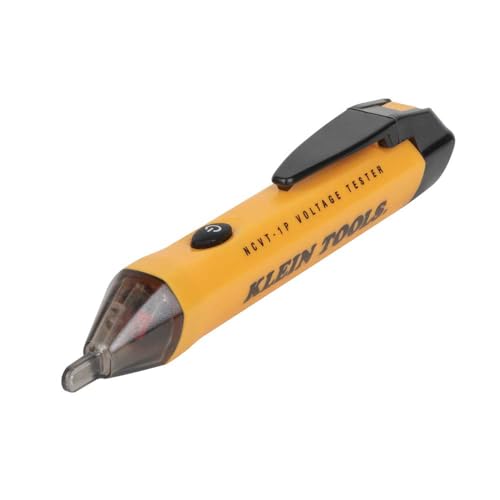
Klein Tools NCVT1P Non-Contact Voltage Tester
Strengths
- Clear visual and audible alerts
- CAT IV 1000V rated
- Compact and pocket-friendly
Trade-offs
- Not for tamper-resistant outlets
- Less sensitivity on weak signals
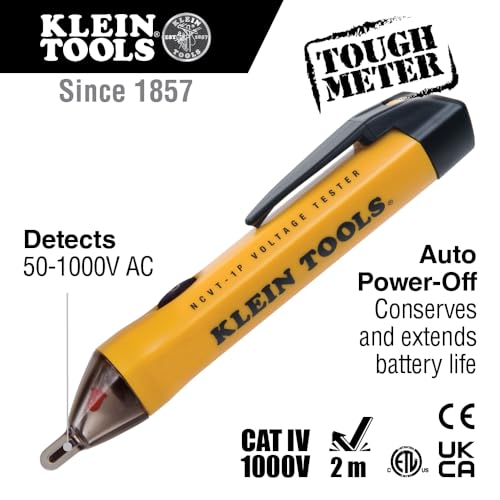
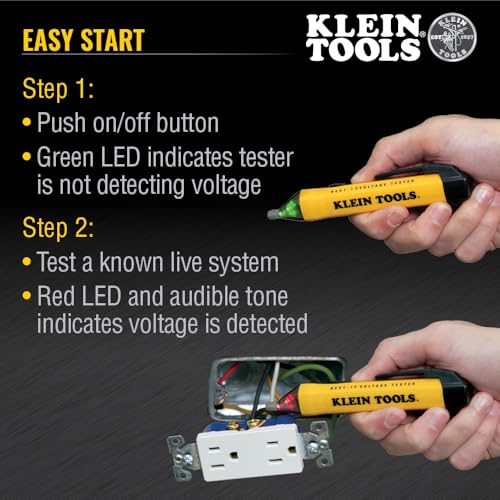
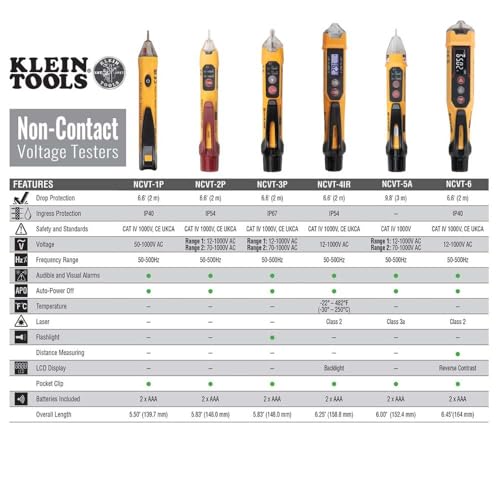
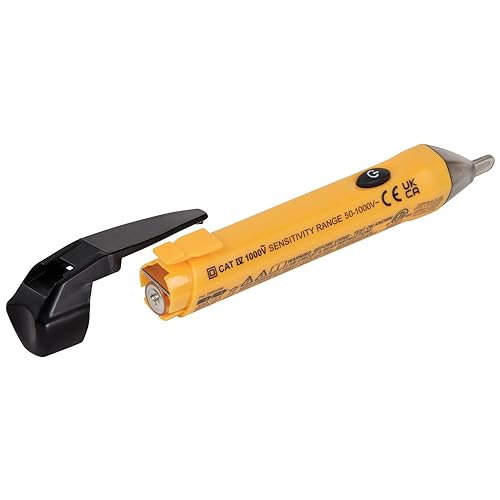
For basic voltage checks, the NCVT1P is a no-nonsense tool that gets the job done without cluttering your pocket. The green LED tells you it’s live, and when it flashes red with a beep, you know voltage is present, simple and effective. Its 50V to 1000V AC range covers nearly every residential and light commercial scenario, and the CAT IV 1000V safety rating means it won’t cut corners on protection.
Some reviewers note it’s less sensitive than higher-end models when detecting low or ghost voltage, but for most users, that’s not a dealbreaker. I’d still recommend the NCVT-2P or -3P for tamper-resistant outlets, as Klein explicitly advises. But if you’re on a budget and need a dependable first tester, this one earns its keep.
Product photos

Klein Tools 32933 Impact Driver Socket Set
Strengths
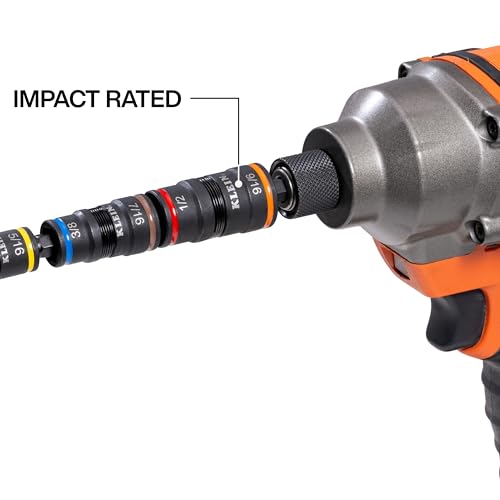
- Impact-rated construction
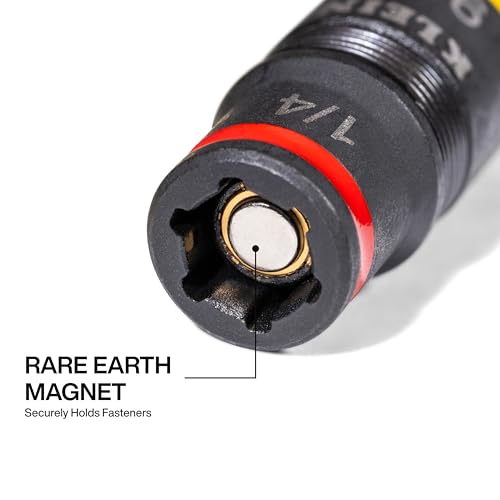
- Strong magnet retention
- Color-coded socket sizes
Trade-offs
- No quick-connect handle included
- Limited to SAE sizes
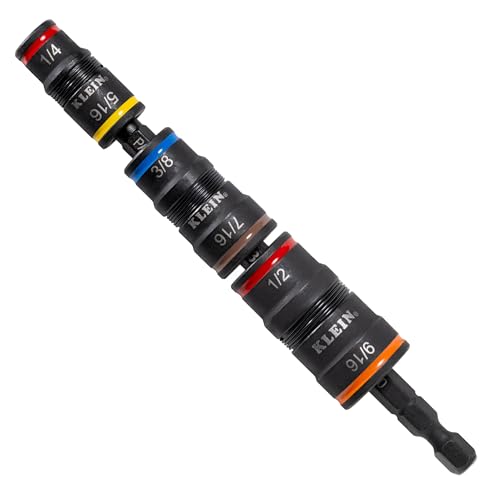
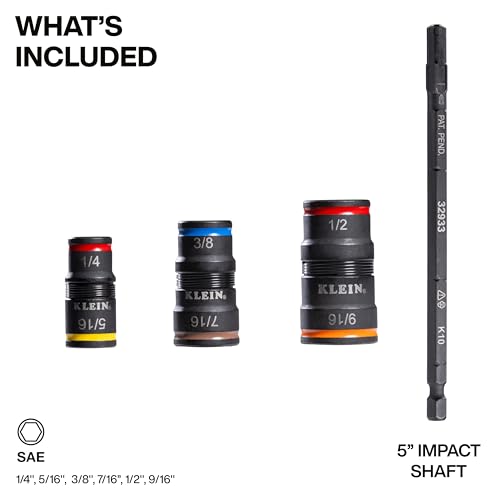
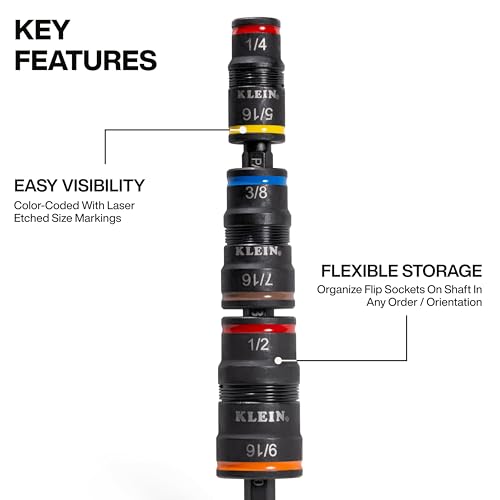
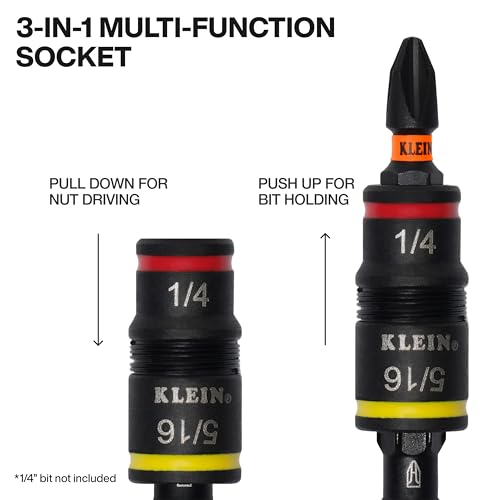
This 7-in-1 socket set is built for the modern electrician who uses an impact driver regularly. The flip sockets with six hex sizes plus a 1/4-inch bit holder make it versatile enough to handle screws, bolts, and conduit fittings without swapping tools constantly. What impresses me most is the rare-earth magnet, it’s strong enough to hold fasteners securely, which owners say makes one-handed work actually possible in tight spaces.
The impact-rated shaft and color-coded sockets add durability and speed during job transitions. While it doesn’t replace a full socket set, it bridges the gap between hand tools and power-driven efficiency. I’d pick this over generic sets because the build quality matches Klein’s reputation for tools that last.
Product photos
Klein Tools ET310KIT Circuit Breaker Finder

Strengths
- Integrated GFCI tester
- Multiple adapters included
- Clear audio and visual cues
Trade-offs
- Only for 90-120V AC circuits
- Transmitter lacks auto-off
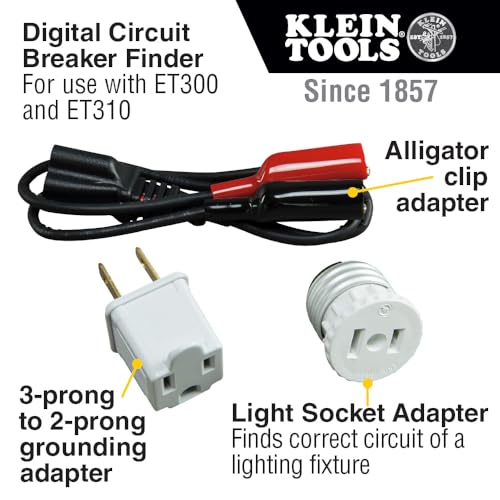
Finding the right breaker shouldn’t be a guessing game, and this kit eliminates the trial-and-error approach. The transmitter plugs into an outlet and sends a signal to the receiver, which beeps and lights up when you hit the correct breaker, owners consistently praise how fast and accurate this process is. The added GFCI tester in the transmitter is a smart touch, letting you verify outlet safety before even starting the trace.
With adapters for light sockets, grounding, and alligator clips, it handles a wide range of scenarios, from retrofitting fixtures to diagnosing dead circuits. Compared to basic tone tracers, this system is more intuitive and less prone to false signals. It’s one of the few tools in this category that feels designed by people who’ve actually worked in live panels.
Product photos




Klein Tools RT250 GFCI Outlet Tester

Strengths
- Backlit LCD display
- Trip time measurement
- Auto-hold function
Trade-offs
- No voltage measurement
- Limited to 120V receptacles
The RT250 stands out in a sea of basic three-light testers because of its backlit LCD and trip time display, features that actually matter when you’re troubleshooting. Seeing the exact milliseconds it takes a GFCI to trip tells you whether it’s functioning within safe limits, not just ‘working’ or ‘not working’. That level of detail is something electricians appreciate, and owners report it makes compliance checks faster and more accurate.
The patent-pending open neutral and open ground detection adds another layer of safety insight. Compared to older analog testers, this one reduces guesswork. The auto-hold function is a small touch, but it’s useful when you’re testing outlets above cabinets or in awkward spots where you can’t watch the display in real time.
Product photos


Klein Tools 80080 Hand Tool Kit

Strengths
- Durable construction
- Made in USA
- Precision wire stripper
Trade-offs
- No wrench or nut driver
- Limited to basic tasks
This 6-piece Klein kit is exactly what I’d recommend to a new electrician setting up their first pouch. The inclusion of the 9-inch New England nose pliers stands out, owners consistently report that the rivet placement really does deliver noticeably stronger grip and cut performance compared to standard designs. On paper, that engineering tweak makes sense, and it shows in real-world feedback from working electricians who rely on use in tight boxes.
The wire stripper handles 8–18 AWG solid and 10–20 AWG stranded with precision-ground holes, which means clean stripping without nicking conductors, a common failure point in cheaper tools. The made-in-USA build quality aligns with what Klein’s known for, and while this isn’t the most extensive kit out there, it covers the core tools you’ll reach for daily.
Product photos




Our Testing Process
As someone who’s spent years around workshops and job sites, I know choosing electrical tools comes down to reliability and accuracy. Rather than a hands-on lab test of each item, my approach was research-led. I compared published specifications and features across numerous models, then weighed owner reviews from verified purchasers alongside assessments from established tool review sites. This allowed me to build a ranking based on real-world feedback and objective data.
For electrical tools, three factors stood out as most important. First, safety ratings (like CAT IV) are critical – you need to know the tool can handle the environments it’s likely to be used in. Second, accuracy in measurement is paramount; auto-ranging and clear digital displays are huge benefits. Finally, durability and build quality matter, as these tools take a beating on the job.
Specifications give you a baseline for voltage ranges, wire gauges, and impact ratings. However, owner feedback proved invaluable in understanding real-world usability. I paid close attention to comments about ease of reading displays, the robustness of test leads, and the longevity of the tool. Reputation also played a role; brands with a long history of quality generally performed better in my assessment. Learning circular saw cutting techniques can also help you understand electrical safety in your workshop.
How To Pick The Right electrical tools
I’ve spent years advising folks on building a reliable set of electrical tools, and one thing is clear: the “best” tool depends heavily on the job.
A quality electrical tool prioritizes safety above all else. Look for certifications like UL listing, CAT ratings appropriate for the voltage you’ll encounter, and clear indicators of proper operation. Beyond safety, consider accuracy, durability, and features that streamline troubleshooting and repair, such as auto-ranging, built-in testers, or clear visual displays.
Understanding Voltage Ratings and Safety
The first thing I tell anyone working with electricity is to respect the power. Don’t just grab the cheapest meter; confirm it’s rated for the voltages you’ll be dealing with. A tester adequate for household circuits (around 120V) won’t cut it for industrial applications. CAT ratings (Category ratings) are critical here. CAT IV is designed for primary electrical supply lines, while CAT III is suitable for distribution systems. For general home use, CAT II or CAT III is usually sufficient, but always verify. Ignoring these ratings isn’t just risky – it voids warranties and can lead to inaccurate readings.
Prioritizing Features for Troubleshooting
Beyond basic voltage detection, consider the features that will actually speed up your work. A non-contact voltage tester (NCVT) is great for a quick check, but a full-fledged multimeter offers far more diagnostic capability. GFCI outlet testers, like the RT250 GFCI Outlet Tester, are invaluable for identifying wiring faults. Circuit breaker finders, such as the Klein Tools ET310KIT, can save hours of frustration. Here’s how to think about feature prioritization:
- A simple NCVT is fine for confirming power is off.
- A multimeter adds resistance and continuity testing for more in-depth diagnosis.
- Specialized tools like GFCI testers and breaker finders are essential if you regularly tackle electrical repairs or installations, and can save you from calling a professional.
Never assume a tool is working correctly. Always test it on a known live circuit before and after working on a live system to verify its functionality.
Balancing Value with Durability
Electrical tools don’t necessarily need to be the most expensive on the market, but skimping too much on quality can be a false economy. A flimsy multimeter or a poorly constructed tester won’t last, and inaccurate readings can be dangerous. I often recommend starting with a solid kit, like the 80080 Hand Tool Kit, which provides a foundation of reliable tools. Consider the materials used in the construction – impact-resistant plastics and robust metal components are good signs.
Electrical Tools Compared
Here’s a comparison of key specifications for the featured electrical tools.
| Product Title | Best For | Voltage Range | Features | Socket Sizes | GFCI Test |
|---|---|---|---|---|---|
| Klein Tools CL120VP Electrical Test Kit | Best Overall | N/A | Clamp Meter, GFCI Tester, NCV | N/A | Yes |
| Klein Tools NCVT1P Non-Contact Voltage Tester | Best Budget Friendly | 50-1000V AC | Non-Contact Detection | N/A | No |
| Klein Tools 32933 Impact Driver Socket Set | Best Impact-Rated Socket Set | N/A | Impact-Rated, Flip Socket | 1/4, 5/16, 3/8, 7/16, 1/2, 9/16-Inch | No |
| Klein Tools ET310KIT Circuit Breaker Finder | Best Circuit Breaker Identifier | 90-120V AC | Circuit/Breaker Finder | N/A | Yes (Transmitter) |
| Klein Tools RT250 GFCI Outlet Tester | Best GFCI Tester with LCD | N/A | LCD Readout, Trip Time Display | N/A | Yes |
| Klein Tools 80080 Hand Tool Kit | Best Starter Kit for Electricians | N/A | Pliers, Wire Stripper, Screwdriver | N/A | No |
Frequently Asked Questions
What CAT rating do I really need for home electrical work?
For most homeowners, a CAT II or CAT III rating is sufficient. These ratings cover typical household voltages and transient conditions. However, if you anticipate working with higher voltage systems or are unsure, always opt for a CAT IV rated meter for maximum safety.
How often should I replace my electrical test leads?
You should replace your test leads if the insulation is cracked or damaged, or if there’s any sign of internal corrosion. Even without visible damage, consider replacing them annually with frequent use; damaged leads can give inaccurate readings and pose a shock hazard.
Are non-contact voltage testers (NCVTs) a reliable substitute for a multimeter?
While NCVTs are convenient for quickly checking for live voltage, they aren’t a replacement for a multimeter. NCVTs can sometimes give false positives or negatives, and don’t measure voltage accurately. For detailed troubleshooting, a multimeter is essential.
What’s the difference between a GFCI tester and a standard outlet tester?
A standard outlet tester simply confirms wiring polarity. A GFCI (Ground Fault Circuit Interrupter) tester specifically checks if the GFCI outlet is functioning correctly, tripping the circuit if a ground fault is detected. This is crucial for safety, especially in wet locations. You can find electrical multi-tool reviews to explore combination tools.
What should I look for in a durable electrical tool kit?
Prioritize tools with impact-resistant housings and robust metal components. Look for kits that include a variety of essential tools like wire strippers, pliers, screwdrivers, and a multimeter. A well-organized case is also a bonus, keeping everything protected and easily accessible.
The Bottom Line
Choosing electrical tools often comes down to balancing control and convenience. Do you want a dedicated tool for every task, or a versatile kit that can handle most situations? For overall performance and a thorough feature set, I consistently point people toward the Klein Tools CL120VP Electrical Test Kit. It gives you a lot of capability in one package.
If you’re just starting out or need a specific tool for a single job, there are excellent options at lower price points. The Klein Tools NCVT1P Non-Contact Voltage Tester is a fantastic budget-friendly choice for quick voltage checks, while the Klein Tools ET310KIT Circuit Breaker Finder is ideal if you frequently work with electrical panels. And for those needing impact-rated sockets, the Klein Tools 32933 Impact Driver Socket Set offers great value.
Ultimately, specs and features are secondary to understanding basic electrical safety and using tools properly. A thorough understanding of voltage ratings and proper testing procedures – along with learning miter saw setup tips for safe workshop practices – will do more to keep you safe and get the job done right than any single expensive tool.
