
8 Best Welding Sleeves of 2026
This post contains affiliate links. As an Amazon Associate, we earn from qualifying purchases.
The Tillman 9215 Goatskin/FR Cotton Welding Sleeves stand out as the overall best choice for most welders, combining durable goatskin with flame-resistant cotton for reliable protection. For those on a budget, the KLEIN TOOLS 21″ FR Cotton Welding Sleeves offer solid performance at a lower price, while the Schwer CORE Cut & Flame Resistant Sleeves bring serious cut protection into the mix for high-risk environments.
Welding throws sparks, heat, and sharp edges your way, and your arms are often in the line of fire. Many sleeves claim to protect you, but too many fall short when it matters, either degrading quickly or restricting movement.
After comparing the field and weighing specs against real-world feedback, I focused on heat resistance, durability, fit, and added features like Kevlar stitching or thumbholes. This guide cuts through the marketing to show you which sleeves actually deliver where it counts.
Top 8 Welding Sleeves in the Market
The Best Welding Sleeves, Reviewed
Tillman 9215 Goatskin/FR Cotton Welding Sleeves
Strengths
- Goatskin leather lower arm
- Kevlar thread seams
- Secure wide elastic
Trade-offs
- Cotton upper lacks cut protection
- Not the longest
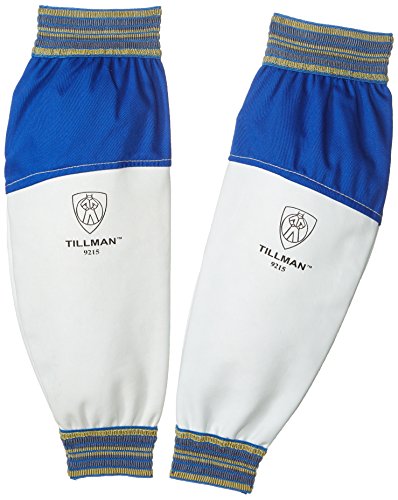
This is the model I’d personally reach for if I had to pick one sleeve for general welding work. The combination of top-grain goatskin from wrist to mid-arm and royal blue FR cotton above delivers smart protection, leather where sparks hit most, cotton where mobility matters. The Kevlar-threaded seams add real durability, and the 22-inch total length covers well without excess bulk. Owners praise the balance of protection and comfort, especially during full-day jobs.
The 2.25-inch external elastic band keeps these firmly in place, more securely than standard cuffs. While they’re not the longest or the cut-resistant, they hit the sweet spot for most welding scenarios. For all-around performance, this is the benchmark.
Product photos
Leather Welding Sleeves with Kevlar Stitching
Strengths
- Heavy-duty leather outer
- Kevlar stitching
- Adjustable Velcro fit
Trade-offs
- Less breathable
- Slightly shorter length
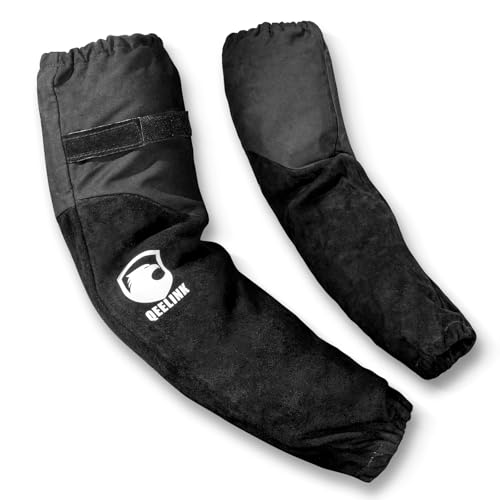
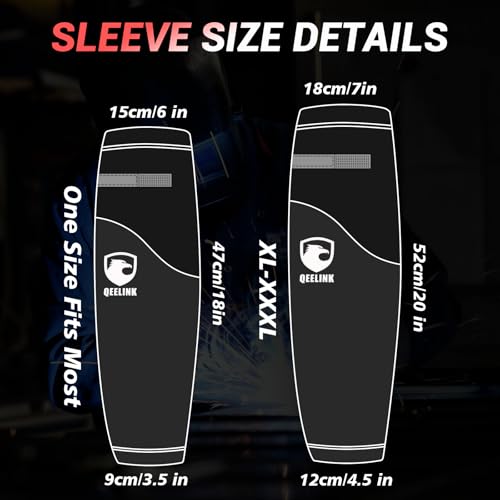
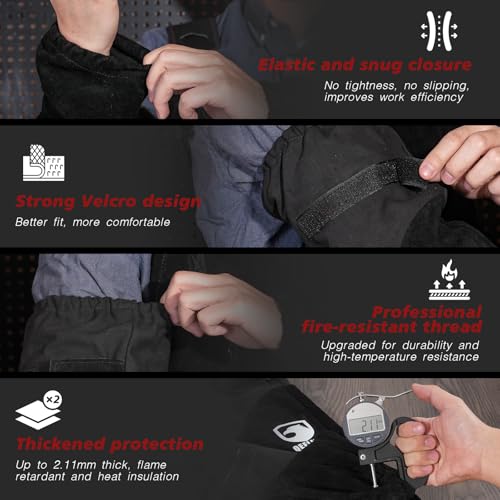
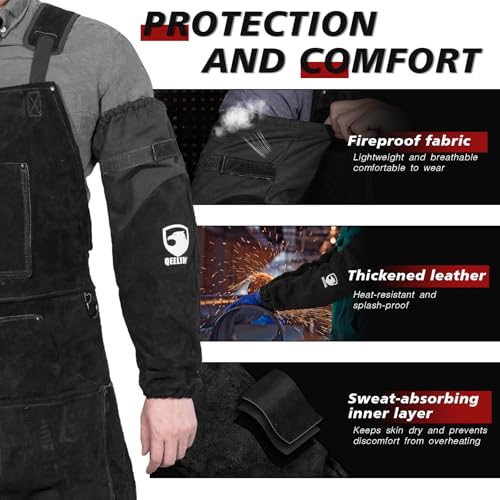
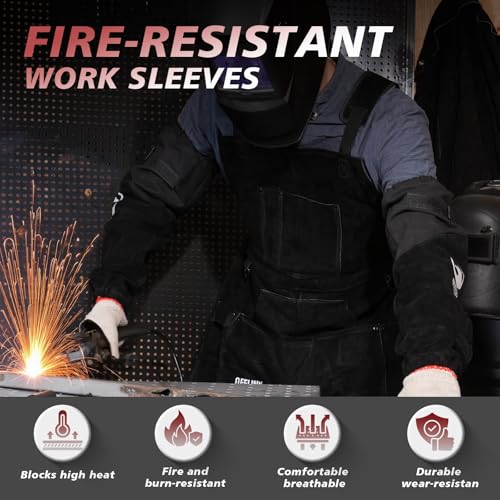
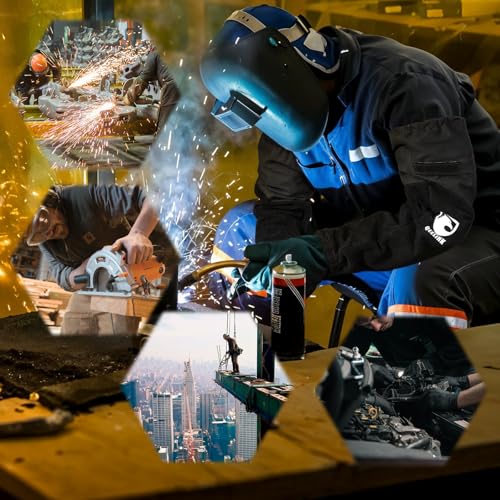
The blend of 75% heavy-duty cowhide leather and 25% fireproof cotton gives these sleeves serious heat resistance, which on paper puts them ahead of all-cotton options when working near intense, sustained heat sources. Owners consistently report feeling more protected during long welding runs or blacksmithing sessions, and the Kevlar stitching adds real durability under thermal stress. The 20-inch length is slightly shorter than some competitors, but the Velcro + elastic cuffs offer a more customizable, secure fit that stops debris from sneaking in.
I’d pick these over basic cotton sleeves if you’re routinely exposed to high heat or open flames. The double-layer design with cotton lining helps manage sweat, though breathability still lags behind lighter fabrics. It’s a trade-off: more protection, slightly less comfort in warm environments.
Product photos
KLEIN TOOLS 21″ FR Cotton Welding Sleeves

Strengths
- ASTM F1506 compliant
- Secure elastic cuffs
- Jacket compatible
Trade-offs
- No cut protection
- Cotton only
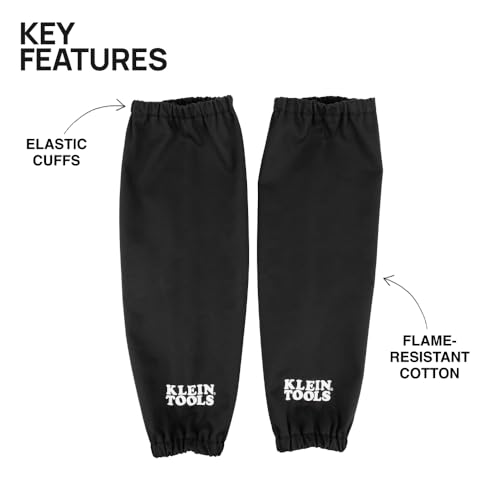
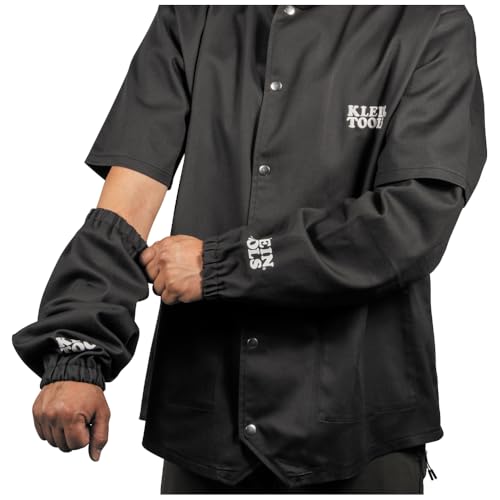
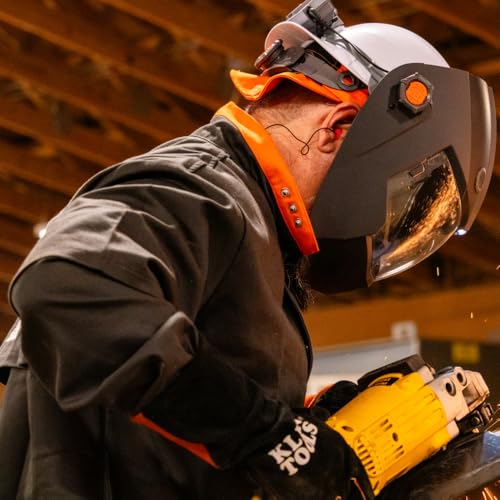
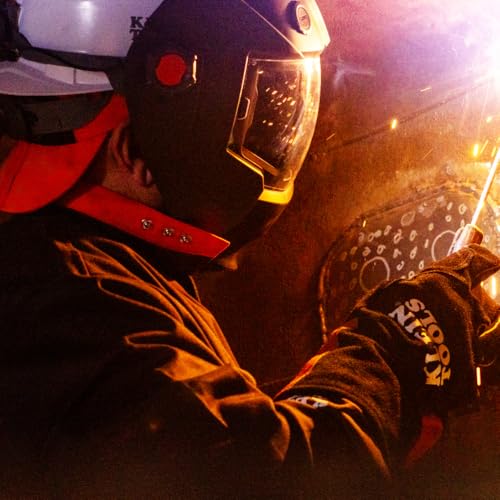
At 21 inches, these hit the sweet spot for standard welding coverage and are built with 100 percent cotton that meets ASTM F1506 standards, a must for job site compliance. Klein is a trusted name in trade gear, and these sleeves reflect that with simple, reliable design. The elastic cuffs work well to keep the sleeves in place, and their compatibility with Klein’s short-sleeve jackets is a thoughtful touch for users building a matched PPE set.
They won’t stop cuts or handle extreme abrasion, but for general MIG or stick welding, they deliver solid protection. Reviewers note they hold up well in wash cycles, which matters for anyone reusing PPE over time. If you’re looking for no-frills, code-compliant cotton sleeves, this is a dependable choice.
Product photos

Schwer CORE Cut & Flame Resistant Sleeves
Strengths
- ANSI A5 cut resistant
- Flame-resistant aramid blend
- Fiberglass free
Trade-offs
- Shorter 18-inch length
- Less heat resistance than leather
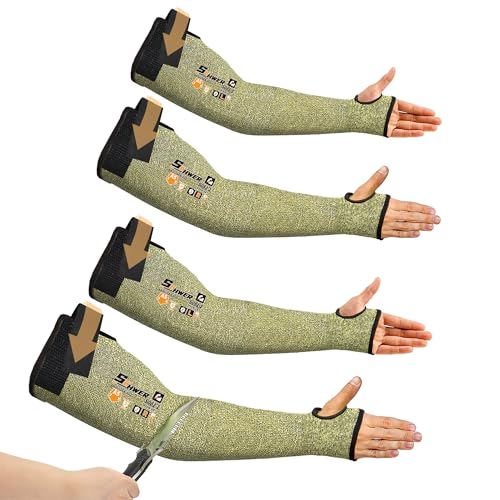
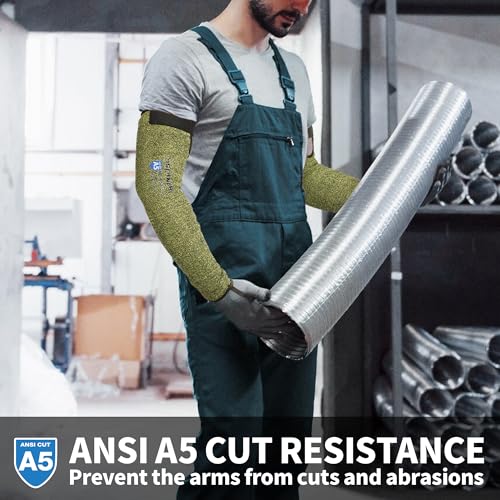
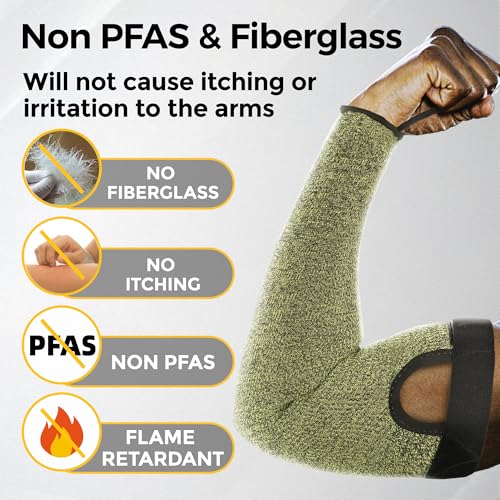
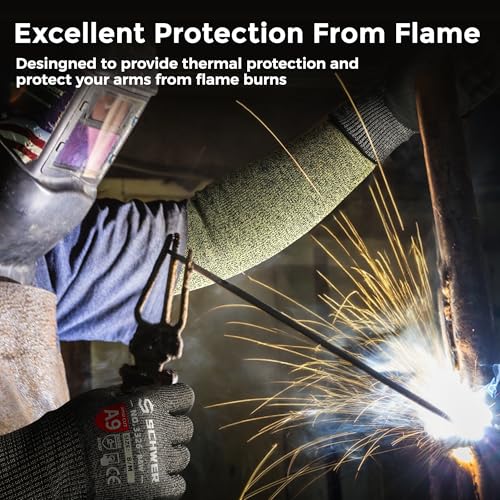
These are built for a different kind of threat profile, where both cut and flame resistance are essential. The aramid and stainless steel wire blend delivers ANSI A5 cut protection, the highest level available, which sets them apart from every other sleeve here. When exposed to flame, the aramid swells to create a protective barrier, and owners report confidence wearing them in mixed-risk environments like metal fabrication or automotive repair.
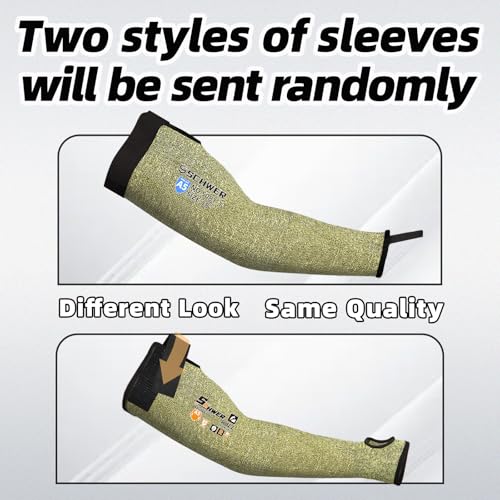
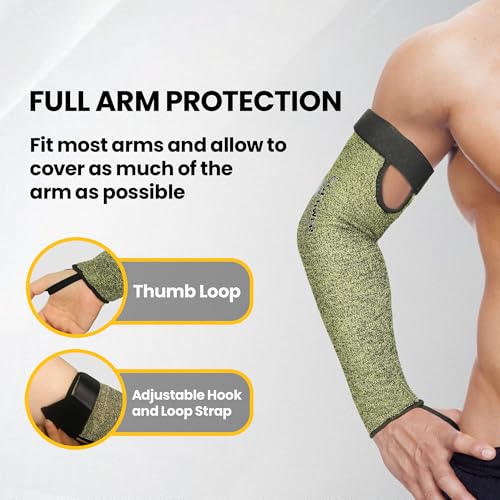
At 18 inches, they’re shorter than most, so upper arm coverage is limited. But the stretchy knit design with thumbholes ensures they stay put during movement. And being fiberglass and PFAS-free is a real plus for skin comfort during long shifts. If your work involves both sharp edges and sparks, this is the closest thing to all-around protection.
Product photos
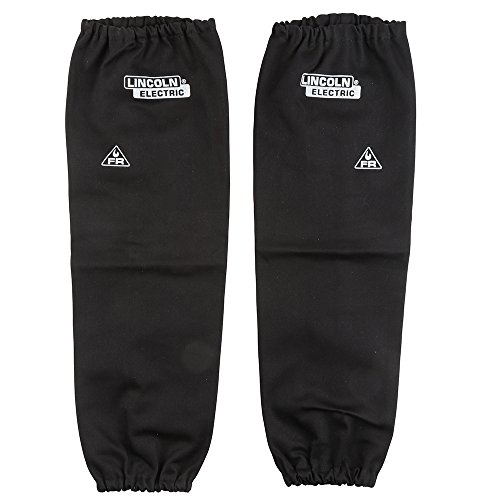
Lincoln Electric KH813 Black FR Cotton Sleeves
Strengths
- Affordable
- Lightweight
- Easy slip-on fit
Trade-offs
- Basic construction
- No durability upgrades
These are the budget pick, no question, simple, 21-inch cotton sleeves with elastic cuffs and the Lincoln Electric name behind them. The 9-ounce FR material does its job against spatter and short-term heat exposure, and owners consistently say they’re a solid value for occasional use. They won’t last as long as premium models, and there’s no special reinforcement or advanced materials, but for weekend DIYers or backup PPE, they make sense.
I’d recommend these only if you’re on a tight budget or need a spare pair. They lack the durability and fit refinement of higher-end sleeves, but for light-duty welding, they’re functional.
Product photos


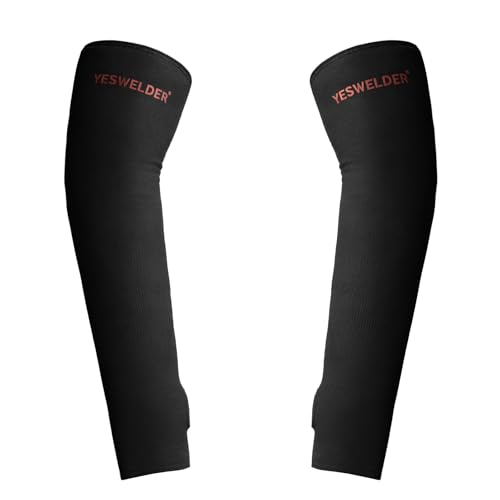
YESWELDER Extra-Long Flame Resistant Sleeves
Strengths
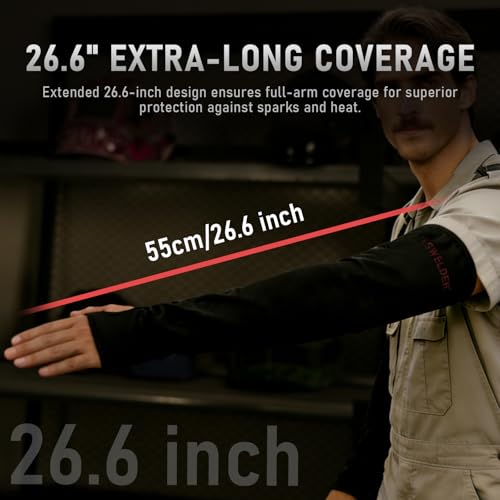
- Extra-long 26.6” coverage
- Breathable stretch fabric
- Multi-scene use
Trade-offs
- No cut resistance
- Cotton only
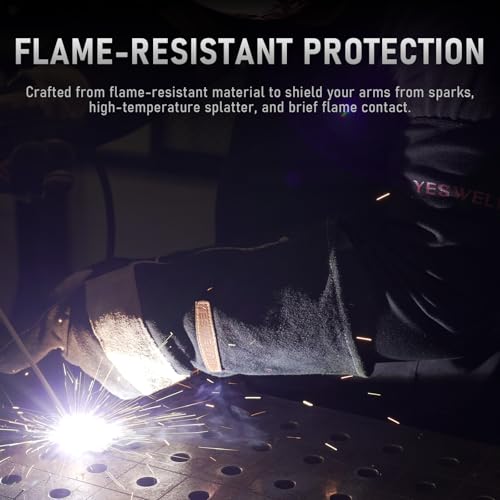
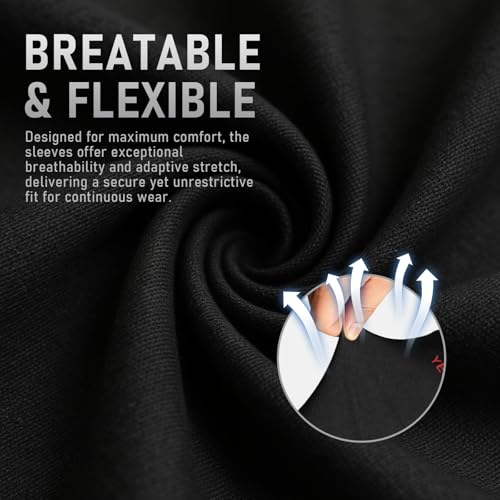
At 26.6 inches, these are the longest sleeves in the lineup, and that extra coverage really stands out, especially for taller users or those working overhead. The 100% flame-retardant cotton is stretchable and promotes airflow, which owners say makes them noticeably more comfortable during extended use. I like that they’re marketed beyond welding, feedback shows they get solid use in grinding, cutting, and even backyard BBQs, which speaks to their versatility.
The thumb holes do their job keeping the sleeves from slipping, and the one-size design fits a wide range of arms. They aren’t leather, so don’t expect the same heat barrier as hybrid models, but for lightweight, breathable protection across multiple high-heat tasks, these are hard to beat.
Product photos


Lincoln Electric Split Leather & FR Cotton Sleeves
Strengths
- Hybrid leather-cotton design
- Durable construction
- Elastic fit
Trade-offs
- Limited cotton stretch
- No cut resistance
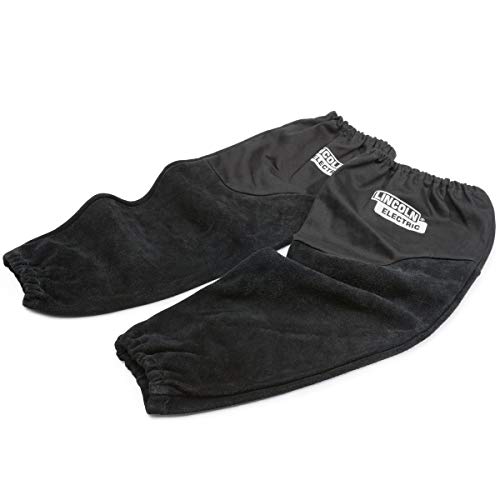
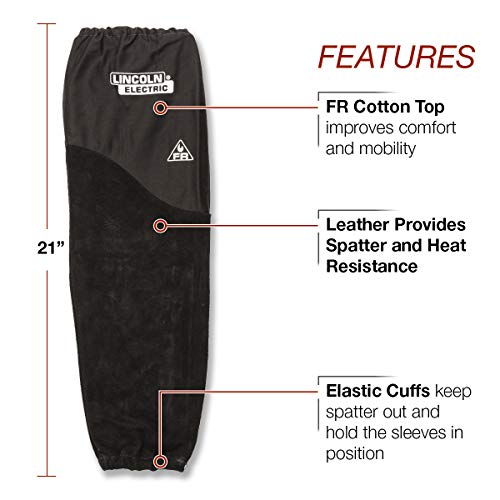
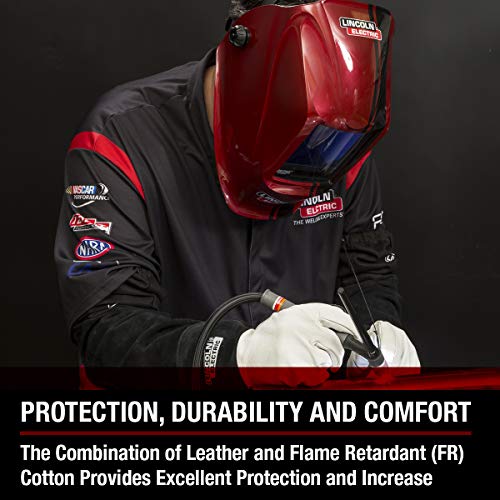
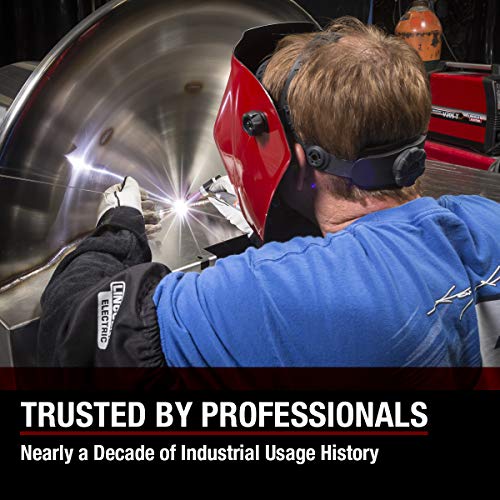
The 75% split leather / 25% FR cotton split makes this a smart hybrid, leather where you need heat resistance, cotton where you need breathability. At 21 inches, it covers the full forearm and part of the bicep, aligning well with standard welding jackets. The high-strength thread and elastic closures deliver a secure, durable fit, and owners report these hold up well under daily shop use.
Compared to the all-cotton Lincoln KH813, this is a significant step up in protection and longevity. It doesn’t match Tillman’s goatskin in refinement, but it’s a strong, proven design that professionals have relied on for years. For welders wanting more than cotton but not full leather bulk, this is the smarter buy.
Product photos

MAGID 24″ Flame Resistant Sleeves with Thumb Slot
Strengths
- Full 24-inch coverage
- Flame resistant cotton
- Reinforced thumb slot
Trade-offs
- No cut resistance
- Cotton only
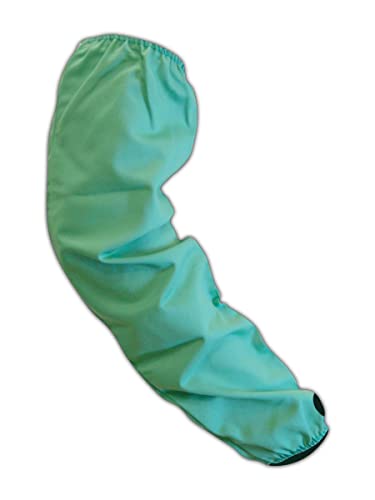
These sleeves stand out for their full 24-inch coverage, which is a real advantage when you’re working in positions where sparks can creep above the elbow. The 100 percent cotton build is comfortable and remains flame resistant after repeated washes, something many owners confirm in feedback about long-term reliability. The vibrant green color isn’t just for show, it makes compliance checks easier on job sites, which I appreciate from a safety management standpoint.
What seals the deal is the reinforced thumb slot and elastic cuffs. They keep the sleeve in place without excessive tightness, and the fit stays consistent across different arm sizes. While they don’t offer cut resistance, their specialization in spark and flame protection makes them a solid pick for welders who prioritize heat defense over multi-threat coverage.
Product photos
How We Picked These welding sleeves
My approach to evaluating welding sleeves at PowerToolGuide.net wasn’t about personal use – rather than a hands-on lab test, this is a research-led comparison of published specs and owner feedback. I started by compiling a detailed spreadsheet of available sleeves, noting materials, lengths, construction details, and stated protective qualities. Then, I weighed those specifications against thousands of owner reviews from multiple retailers and reputable expert opinions found across welding forums and trade publications.
For welding sleeves, the most important factors are clearly heat resistance and durability. A sleeve needs to reliably shield your arms from sparks and spatter, and it needs to withstand repeated use without falling apart. Cut resistance is also a significant consideration, especially for those working with sheet metal or in environments with sharp edges. Length and fit play a role too, ensuring adequate coverage and staying securely in place during work.
Specifications reliably indicate material composition – the percentage of leather, cotton, or aramid fiber – and construction details like Kevlar stitching. However, real-world performance, especially regarding comfort, longevity, and how well a sleeve holds up to repeated washing, comes down to owner experiences. I gave significant weight to patterns in those reviews, looking for consistent feedback regarding fit issues, material breakdown, or unexpected limitations. If you’re also looking for complete protection, consider pairing your sleeves with some flame-resistant welding shirts for full coverage.
What To Look For In welding sleeves
Choosing the right welding sleeves is crucial for safety and comfort in the workshop.
Welding sleeves are designed to protect arms from sparks, spatter, UV radiation, and heat. A good pair will balance protection with flexibility, be made from durable, flame-resistant materials, and offer a secure fit to stay in place during work. Consider the type of welding you do, the materials you work with, and the level of heat exposure when making your selection.
Material Composition
The material of your welding sleeves is the biggest determinant of their performance. While cotton is common and affordable, it’s the blends and treatments that truly matter. Look for sleeves labeled as flame-resistant (FR) cotton, meaning they’ve been chemically treated to resist ignition. Leather, particularly goatskin or split cowhide, offers superior heat and abrasion resistance, but can be bulkier and less breathable. Some sleeves combine both materials, offering a balance of protection and comfort. If you are also looking for complete protection, consider investing in some protective welding pants to go with your sleeves.
Length and Fit
Sleeve length is another key consideration. Standard lengths around 18-21 inches are common, but for maximum coverage, particularly with overhead welding or when working in tight spaces, you’ll want to consider extended-length sleeves (24 inches or longer). Beyond length, a secure fit is vital. Elastic cuffs at both ends help keep sleeves from riding up or down, and some models include thumbholes for an even more secure hold.
Here’s what to look for in a good fit: * A snug but not restrictive fit at the wrists. * Sleeves long enough to overlap your gloves and clothing. * A design that allows for a full range of motion without feeling bulky or hindering your work.
Cut and Abrasion Resistance
While flame resistance is paramount, don’t overlook cut and abrasion protection, especially if you work with materials prone to sharp edges. Aramid fibers like Kevlar are often incorporated into welding sleeves to provide excellent cut resistance.
A rule of thumb: if your work involves handling sharp metal or working in environments with a high risk of abrasions, prioritize sleeves with a high ANSI cut level rating.
Welding Sleeves Compared
Here’s a comparison of key specifications for various welding sleeves to help you make an informed decision.
| Product Name | Material | Length (in) | Cut Resistance | Flame Resistance | Features |
|---|---|---|---|---|---|
| Tillman 9215 Goatskin/FR Cotton Welding Sleeves | Goatskin/FR Cotton | 18/22 | N/A | Yes | Elastic Cuff |
| Leather Welding Sleeves with Kevlar Stitching | Cowhide/FR Cotton | 20 | N/A | Yes | Kevlar Stitching |
| KLEIN TOOLS 21″ FR Cotton Welding Sleeves | FR Cotton | 21 | N/A | Yes | Elastic Cuff |
| Schwer CORE Cut & Flame Resistant Sleeves | Aramid/Steel | 18 | ANSI A5 | Yes | Thumbhole |
| Lincoln Electric KH813 Black FR Cotton Sleeves | FR Cotton | 21 | N/A | Yes | Elastic Cuff |
| YESWELDER Extra-Long Flame Resistant Sleeves | FR Cotton | 26.6 | N/A | Yes | Thumbhole |
| Lincoln Electric Split Leather & FR Cotton Sleeves | Leather/FR Cotton | 21 | N/A | Yes | Elastic Cuff |
| MAGID 24″ Flame Resistant Sleeves with Thumb Slot | FR Cotton | 24 | N/A | Yes | Thumb Slot |
Frequently Asked Questions
What level of heat protection should I expect from welding sleeves?
Welding sleeves primarily offer protection against radiant heat and spatter, but the degree varies by material. Sleeves with a higher percentage of leather or aramid fibers (like Kevlar) will provide superior heat resistance compared to those made solely of cotton, even flame-resistant cotton.
Are longer welding sleeves always better?
Longer sleeves (over 21 inches) are beneficial if your work involves overhead welding or reaching into tight spaces where more coverage is needed. However, excessively long sleeves can sometimes hinder movement, so prioritize a length that balances protection with dexterity for your specific tasks.
How do I clean welding sleeves without damaging them?
Most welding sleeves should be spot cleaned with a mild detergent and water. Avoid harsh chemicals or machine washing, as this can damage the flame-resistant treatments or the materials themselves. Always check the manufacturer’s instructions for specific care guidelines.
What’s the difference between FR cotton and regular cotton welding sleeves?
Flame-resistant (FR) cotton welding sleeves have been chemically treated to resist ignition, offering significantly better protection than standard cotton sleeves. Untreated cotton will readily catch fire and burn, while FR cotton will self-extinguish, giving you valuable time to react in a hazardous situation.
Do I really need welding sleeves if I have a welding jacket?
While a welding jacket offers substantial upper body protection, sleeves provide critical arm coverage that jackets often don’t fully address. For complete welding apparel, sleeves are a valuable addition, especially for tasks requiring extensive arm movement or when working in awkward positions.
The Bottom Line
Choosing welding sleeves often comes down to balancing how much protection you absolutely require versus how much you’re willing to spend for added comfort and features. Ultimately, for a strong mix of durability, heat resistance, and a reasonable price, I recommend the Tillman 9215 Goatskin/FR Cotton Welding Sleeves. They represent a solid middle ground for most hobbyists and professionals.
If budget is your primary concern, the KLEIN TOOLS 21″ FR Cotton Welding Sleeves offer reliable flame resistance at a lower price point. For those needing extended coverage and a secure fit, the YESWELDER Extra-Long Flame Resistant Sleeves are a great choice, and for maximum cut resistance, the Schwer CORE Cut & Flame Resistant Sleeves stand out. Don’t forget to consider pairing your sleeves with welding-specific shirts for complete protection.
At the end of the day, the materials and construction matter more than any single flashy feature. Prioritize flame-resistant fabrics, secure fit, and a length that provides adequate coverage for your typical welding tasks. A well-made sleeve that fits properly and is used consistently will always offer better protection than the most expensive sleeve worn incorrectly or infrequently.
