
5 Best Welding Pants of 2026
This post contains affiliate links. As an Amazon Associate, we earn from qualifying purchases.
The TICOMELA FR Cotton Welding Pants are the best overall, offering solid HRC2 protection, a comfortable fit, and practical pocket layout. For heavy-duty work, the Leather Welding Pants Split Leg deliver unmatched durability and heat resistance, while the BOCOMAL 9-Pocket FR Cargo Pants stand out as a strong budget-friendly option with extra storage.
Welding pants aren’t just another piece of workwear, they’re what stand between you and serious injury. Sparks, molten metal, and arc flash don’t care about your schedule, so your gear has to hold up under real conditions.
I researched these picks based on flame resistance ratings, material quality, owner feedback, and functional design. These recommendations reflect what matters most in the field: reliable protection, long-term durability, and comfort that lasts through the full shift.
Top 5 Welding Pants in the Market
The Best Welding Pants, Reviewed
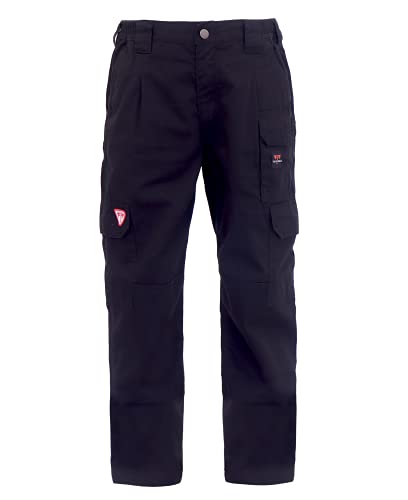
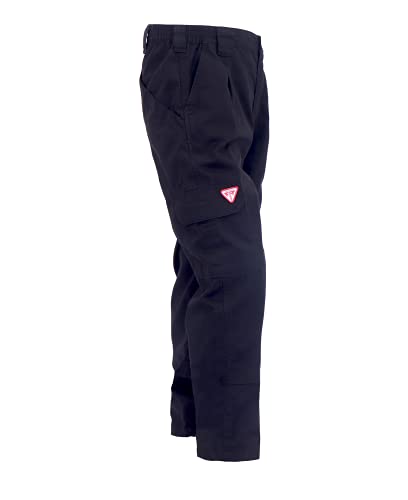
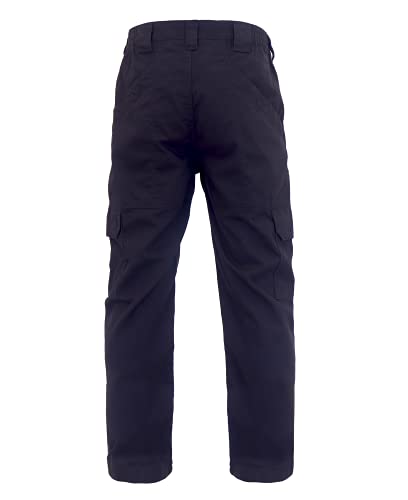
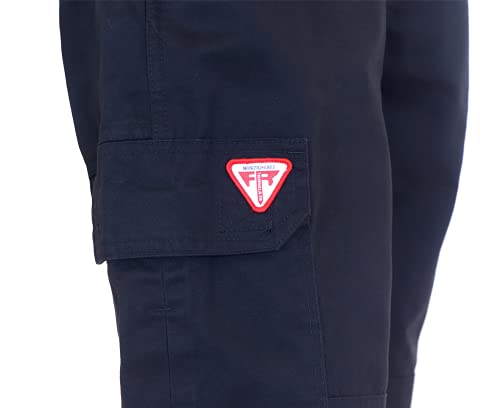
TICOMELA FR Cotton Welding Pants
Strengths
- High arc rating
- Elastic waistband
- 7 pockets
- Preshrunk fabric
Trade-offs
- Slightly snug cargo pockets
- Not for extreme heat
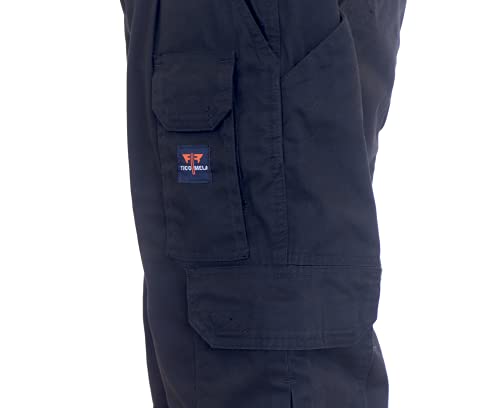
This is the kind of FR pant that makes you wonder why more brands aren’t doing it this way. The TICOMELA FR cargo pants combine 7.5oz cotton twill with full NFPA 2112 and CAT II certification, giving you a legit arc rating of 9.8 cal/cm², that’s serious protection in a lightweight, mobile package. Reviewers repeatedly praise how comfortable they are, thanks to the elastic waist and pre-washed fabric, and I’d argue they’re among the most wearable FR pants in this lineup.
They’re also built smart, with seven pockets and double-stitched seams, making them ideal for welders who move between tasks. Compared to the Magid pair, these offer more utility and a looser fit, which some will prefer. My recommendation? If you want one pair of FR pants that can handle welding, electrical work, and general shop duty, this is the smarter buy.
Product photos

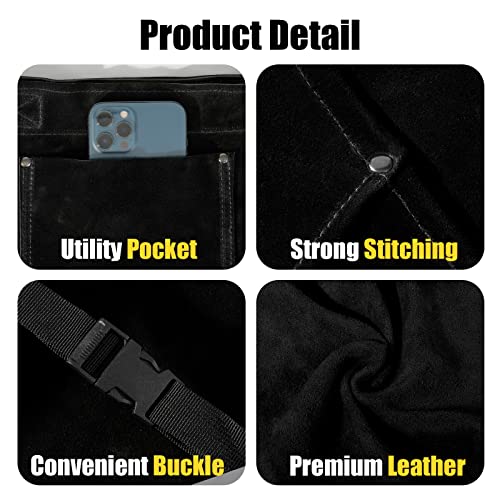
Leather Welding Pants Split Leg

Strengths
- Split-leg mobility
- Kevlar stitching
- Adjustable fit
Trade-offs
- Not full pants
- Single pocket
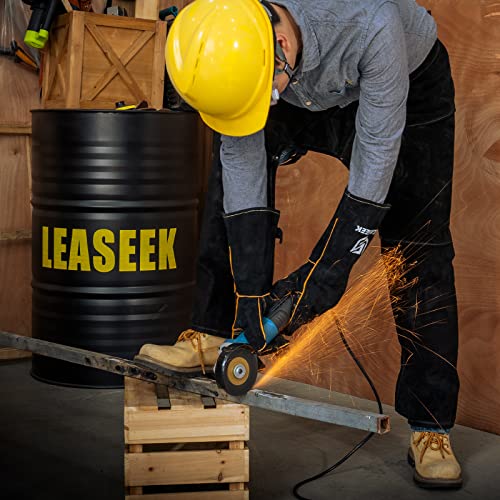
Leather welding pants are in a different class, and this split-leg apron design from this brand brings real protection without locking you into a full pant. Made from double-layer cowhide and stitched with Kevlar thread, it’s meant to take direct spark and heat exposure, something cotton FR pants can’t handle. The split-leg design is key here, allowing mobility that most full leather pants sacrifice, and owners say it’s easy to throw on over regular work pants.
Still, it’s not a standalone garment. Think of it as a secondary shield, like a heavy-duty apron. Compared to the ONETIAN leather pants, this one trades full coverage for flexibility and airflow. I’d recommend it for welders who move around a lot or work in warm environments but still need serious leg protection.
Product photos


ONETIAN Leather Chainsaw Welding Pants

Strengths
- Full leather coverage
- Cut and spark resistant
- Four pockets
Trade-offs
- Stiff out of box
- Heavy for long shifts
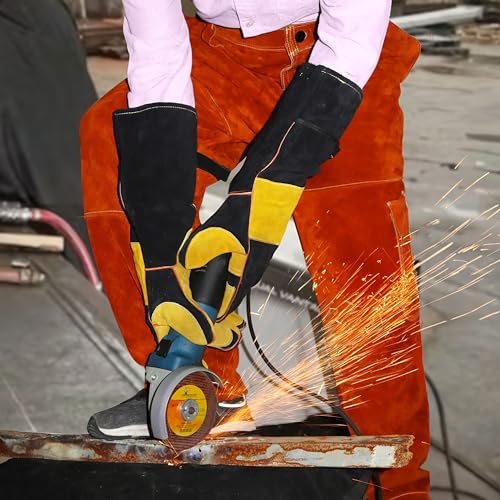
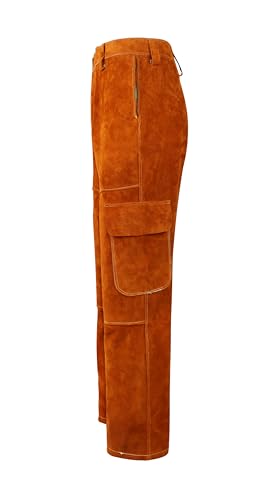
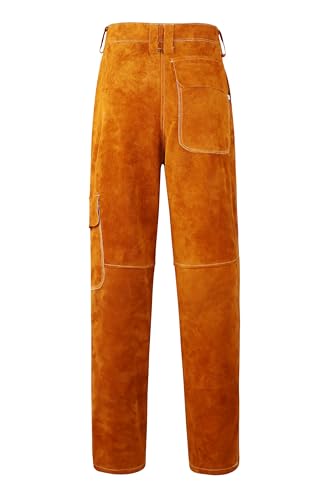
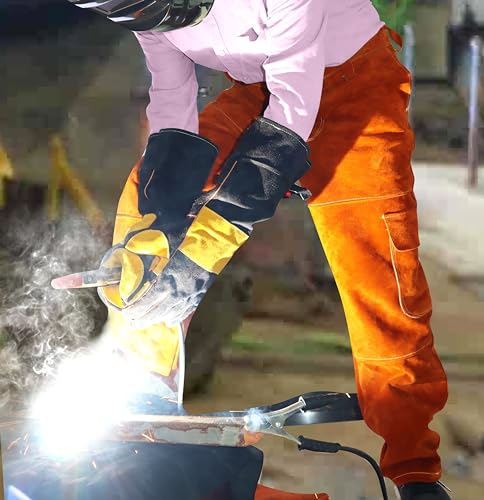
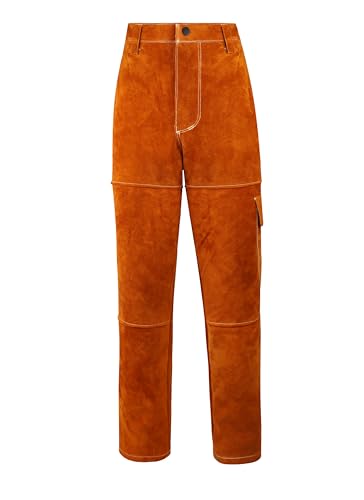
If you’re working in a steel mill, foundry, or doing heavy-duty welding, the ONETIAN leather pants are worth serious consideration. These are full-coverage cowhide pants, not an apron, and they’re built to last with fire-resistant stitching and four well-placed pockets, rare in full leather designs. The material is thick and rugged, offering real defense against sparks, cuts, and abrasion, which reviewers confirm after months of daily use.
Compared to the split-leg leather option, these offer more protection but less breathability. The fit is snug, and breaking them in takes time, but for high-risk environments, that trade-off makes sense. I’d pick these over any cotton FR pant when safety is essential.
Product photos
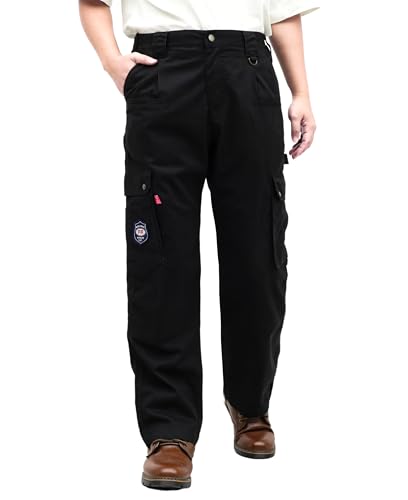
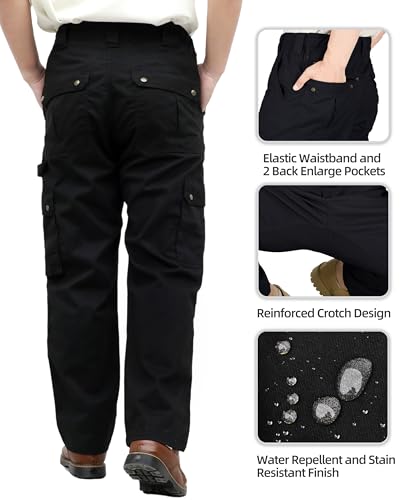
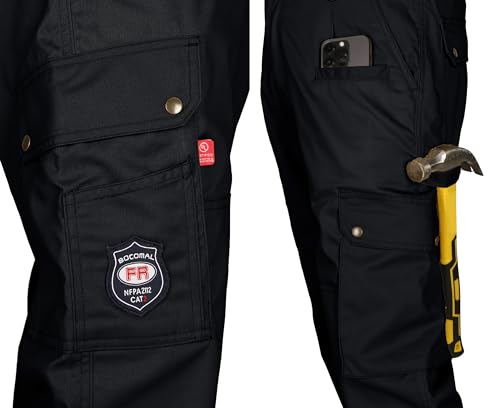
BOCOMAL 9-Pocket FR Cargo Pants
Strengths
- 9 total pockets
- FR certified
- Elastic waist
- Wrinkle-free
Trade-offs
- Bulkier silhouette
- Slight break-in needed
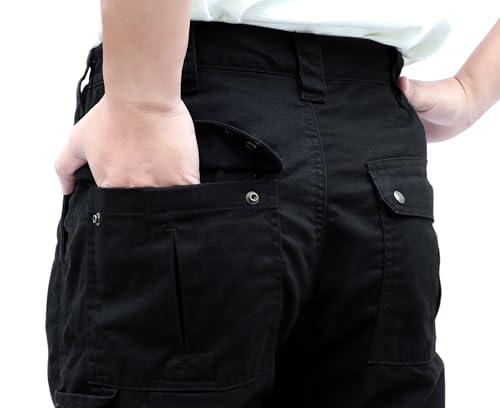
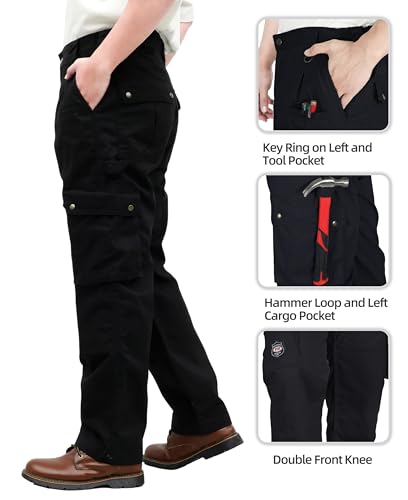
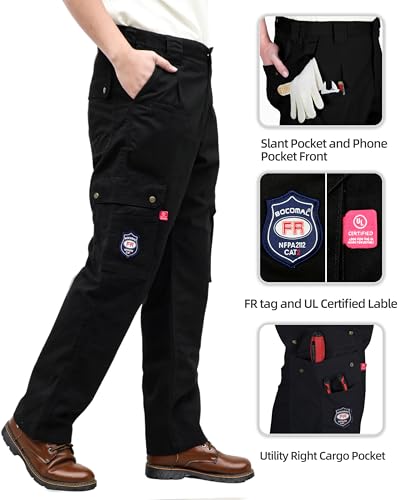
BOCOMAL steps into the FR cargo game with a strong contender, nine pockets, elastic waist, and the same solid 7.5oz FR cotton as others in this class. On paper, it’s nearly identical to the TICOMELA model, but the extra pockets push it ahead for welders who carry a lot of tools or small parts. The double-needle stitching and NFPA 2112 / CAT II certification mean protection isn’t sacrificed for utility.
Owners note these hold up well after repeated washing, and the wrinkle-free finish keeps them looking sharp on job sites where appearance matters. I’d recommend these over the TICOMELA if pocket count is a priority, say, for welders who also do field repairs or maintenance. Otherwise, the two are neck and neck.
Product photos
Magid SparkGuard Flame-Resistant Pants
Strengths
- Flame resistant
- Tapered leg fit
- Durable cotton fabric
Trade-offs
- Not for heavy sparks
- No extra pockets
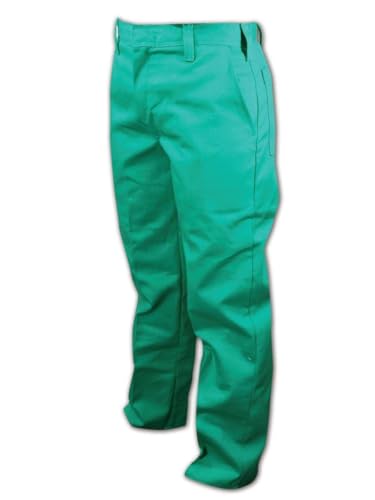
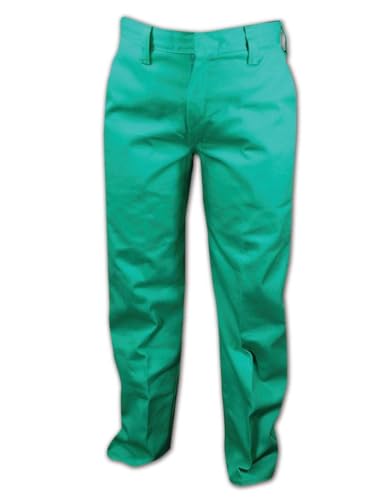
The Magid SparkGuard 2831 pants are built for welders who want solid flame resistance without the weight of leather. On paper, they deliver what they promise, a heavyweight cotton whipcord that’s NFPA 2112 compliant and holds up well to repeated exposure to sparks and heat. Owners consistently report these hold their shape and protection over dozens of washes, which matters when you’re relying on FR performance day after day.
I’d pick these over standard work pants for general welding or fabrication shop use, especially in indoor settings. The tapered leg is a smart safety feature, reducing snag risk around equipment. That said, they’re not as rugged as leather for high-intensity work, and if you’re grinding or doing overhead welding, you’ll want more coverage. For light to medium-duty welding, though, these strike a good balance.
Product photos
How We Evaluated welding pants
Rather than a hands-on lab test, my research for these recommendations centered on a detailed comparison of published specifications and features across numerous welding pant models. I weighed owner reviews from multiple sources – including major retailers and welding forums – alongside assessments from reputable trade publications and safety equipment reviewers. This data was then ranked against criteria important to welders, prioritizing protection, durability, and comfort.
For welding pants, the most critical factors are flame resistance (FR) rating and the materials used in construction. A higher Arc Rating (ATPV) indicates better protection against arc flash, and is a primary deciding factor. Beyond that, the type of leather or FR-treated cotton directly impacts durability and resistance to punctures and abrasions. Pocket configuration and waist adjustability also played a significant role in ranking, as practical functionality is key for working welders.
Specifications reliably indicate FR ratings (like ATPV and NFPA compliance) and material composition. However, I relied heavily on owner feedback to gauge real-world durability, comfort over long periods, and how well the pants hold up to repeated washing. Reputation and brand history were also considered, as established manufacturers generally have more consistent quality control and a commitment to safety standards. Don’t forget to check out our guide to the best flame-resistant welding shirts for completing your protective ensemble.
How To Choose The welding pants
Choosing the right welding pants is as critical as selecting a quality welding machine; they’re your first line of defense against serious burns.
A good pair of welding pants balances flame resistance (FR) with durability, fit, and practical features like pocket placement. Look for compliance with relevant standards (NFPA 2112 is common) and materials suited to the type of welding you do. Consider the environment – indoor, outdoor, heavy fabrication, or light maintenance – and select pants that offer appropriate protection and comfort for those conditions.
Material and Flame Resistance
The core function of welding pants is protection, and that starts with the material. While leather offers excellent resistance to sparks and abrasion, it can be hot and less flexible. FR-treated cotton twill is common, providing a balance of protection and comfort, but the level of FR treatment matters. Look for pants meeting standards like NFPA 2112, and pay attention to the Arc Thermal Performance Value (ATPV) rating. A higher ATPV indicates greater protection against arc flash. Don’t assume all “FR” fabrics are created equal; some offer significantly more protection than others.
Design and Mobility
Welding often involves awkward positions, so mobility is key. Split-leg designs, like those found in some leather options, are popular because they allow for greater freedom of movement. However, these can sometimes feel less secure. Consider whether you prioritize maximum range of motion or a more fitted, protective feel. I’ve seen welders modify standard work pants with leather chaps for a custom solution, but a well-designed pair of dedicated welding pants will usually offer a better balance of protection and usability. If you’re also considering your overall welding apparel essentials, remember that layering can impact comfort and mobility.
Pockets and Practicality
Beyond safety, convenience matters. The number, size, and placement of pockets can make a big difference throughout a long workday. * A single small phone pocket might be enough for minimalists. * A few basic pockets are useful for small tools and accessories. * Multiple cargo pockets, strategically placed, can hold everything from welding rods and gloves to notepads and measuring tools, reducing the need to constantly return to a toolbox.
Remember this rule of thumb:
A well-placed pocket saves you ten trips back to your workbench.
Finally, don’t overlook the importance of proper protective welding pants alongside reliable welding safety boots. Your feet and legs need equal consideration when it comes to safety.
Welding Pants Compared
Here’s a comparison of key specifications for different welding pants.
| Product Name | Material | Flame Resistance | Pockets | Waist Style | Leg Style |
|---|---|---|---|---|---|
| TICOMELA FR Cotton Welding Pants | 7.5oz Cotton Twill | HRC2, 9.8 ATpv | 7 | Elastic | Relaxed |
| Leather Welding Pants Split Leg | Cowhide Leather | Heat/Flame Resistant | 1 | Buckle | Split Leg |
| ONETIAN Leather Chainsaw Welding Pants | Cowhide Leather | Fire Resistant | 4 | N/A | N/A |
| BOCOMAL 9-Pocket FR Cargo Pants | 7.5oz Cotton Twill | HRC2, 9.8 ATpv | 9 | Elastic | Cargo |
| Magid SparkGuard Flame-Resistant Pants | Cotton | Flame Resistant | N/A | Zipper | Tapered |
Frequently Asked Questions
What FR rating do I actually need in welding pants?
A rating of HRC2 (Hazard Risk Category 2) with an ATPV of at least 9.8 calories per square centimeter is generally sufficient for most common welding applications. However, higher risk work – like high-ampage welding or working with exposed live electrical circuits – demands a higher ATPV rating, potentially HRC3 or even HRC4.
Are leather welding pants hotter to wear than FR cotton?
Yes, leather welding pants can be significantly hotter and less breathable than FR-treated cotton options. While leather offers superior spark and abrasion resistance, it traps heat against the skin, making it less comfortable for prolonged use, especially in warmer environments.
Can I wash and dry my welding pants like regular work pants?
No, most welding pants require special care to maintain their flame-resistant properties. Typically, they should be washed in cold water with a mild detergent and hung to dry. Machine drying can damage the FR treatment and reduce the pants’ protective capabilities.
What’s the benefit of a split-leg design in leather welding pants?
A split-leg design allows for a greater range of motion and prevents the leather from binding when you bend or squat. This increased flexibility is preferred by many welders who need to maneuver into tight spaces or assume awkward positions, but it may offer slightly less overall coverage.
Where can I find welding apparel for a better overall fit?
You’ll find a wide selection of options for completing your protective gear, including men’s welding shirts for men, alongside your welding pants, to ensure a complete and safe outfit. Don’t overlook the importance of proper fit for both comfort and protection.
The Bottom Line
Choosing welding pants often comes down to balancing cost with the level of protection and convenience you require. While a substantial investment, the TICOMELA FR Cotton Welding Pants stand out as the strongest overall choice, offering a solid blend of flame resistance, durability, and a reasonable price point for most welding applications.
For those on a tighter budget, or needing a versatile option for lighter tasks, the BOCOMAL 9-Pocket FR Cargo Pants provide excellent pocket capacity and comparable flame resistance at a lower cost. If you frequently work with heavy materials or require maximum protection, the Leather Welding Pants Split Leg offer superior abrasion resistance and heat shielding, though they come with a trade-off in comfort and flexibility.
Ultimately, remember that the ATPV rating and material quality are more crucial than the number of pockets or specific style. Don’t skimp on protection, and always pair your pants with reliable safety boots and – for completing your protective ensemble – the right top welding shirts.
