
6 Best Welding Clothes of 2026
This post contains affiliate links. As an Amazon Associate, we earn from qualifying purchases.
The ARCCAPTAIN Leather Welding Jacket stands out as the best overall choice for serious welders who need maximum spark and abrasion resistance, while the BOCOMAL FR Lightweight Welding Shirt offers a solid budget-friendly option for lighter tasks without sacrificing certified protection. For versatility, the YESWELDER FR Cotton Welding Jacket balances durability and comfort for frequent use.
Welding throws intense heat, sparks, and UV radiation at your body, and regular work clothes won’t cut it. Choose wrong, and you’re risking burns, degradation of fabric over time, or gear that’s so uncomfortable you won’t wear it consistently.
This guide cuts through the marketing by focusing on verified protection levels, material durability, and real-world usability. I compared arc ratings, NFPA compliance, fabric weight, and owner feedback to find clothes that deliver safety and value across different welding needs.
Top 6 Welding Clothes in the Market
The Best Welding Clothes, Reviewed
ARCCAPTAIN Leather Welding Jacket
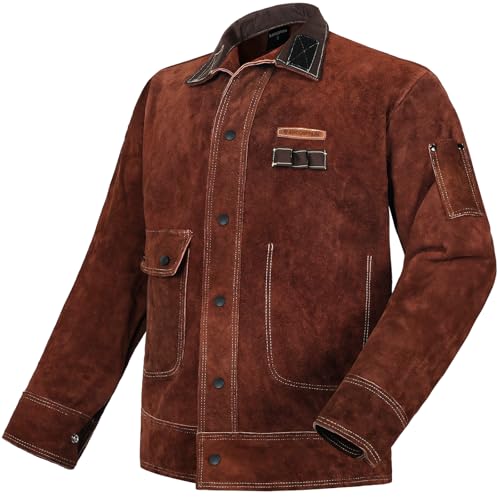
Strengths
- Full cowhide leather
- Double-stitched Kevlar seams
- Multiple storage pockets
- Adjustable cuffs
- Cotton lining for comfort
Trade-offs
- Heavier than fabric alternatives
- Less breathable in warm shops
- Break-in period needed
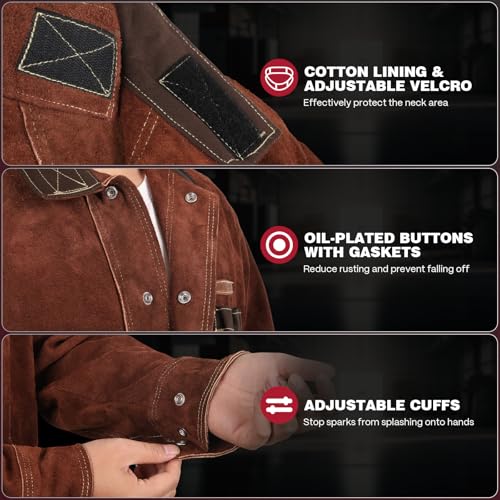
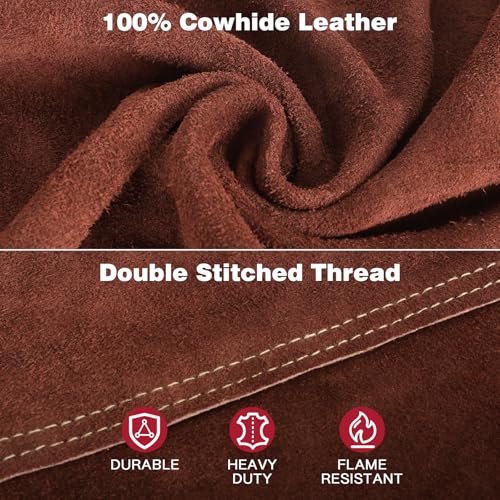
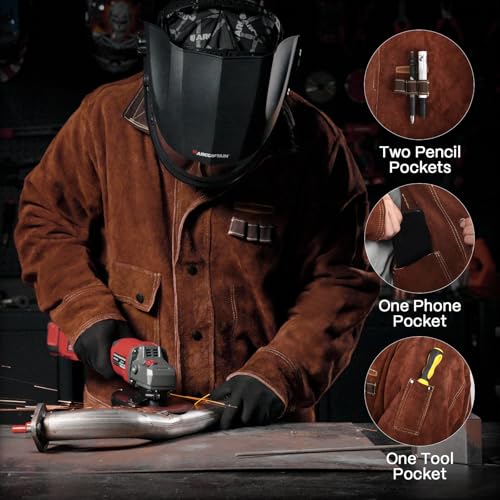
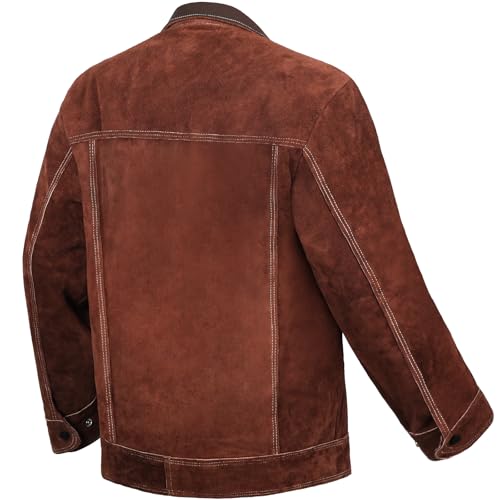
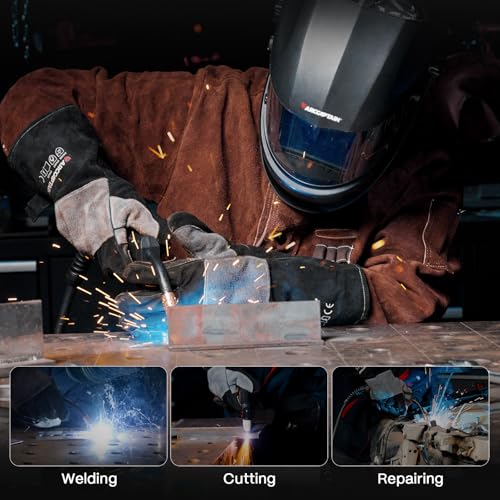
This jacket leans hard into traditional protection, and on paper, it’s built like a bunker. The full cowhide leather construction means serious resistance to sparks, spatter, and abrasion, the kind of material that doesn’t flinch during heavy welding or grinding. Owners consistently report it holding up over months of frequent use, especially in industrial settings like auto shops and metal fabrication. The double-stitched Kevlar seams and oil-plated buttons are smart touches that address common failure points in lesser jackets.
I’d pick this over lighter cotton FR jackets if you’re doing MIG or stick welding all day. It’s not the most breathable option, but the cotton lining helps manage heat and wicks moisture better than bare leather. Compared to the YESWELDER cotton jacket, this one trades some comfort for raw durability. If you’re chasing maximum protection and don’t mind the weight, this is a solid long-term investment.
Product photos
BOCOMAL FR Lightweight Welding Shirt

Strengths
- Lightweight and breathable
- Prewashed and wrinkle-free
- Oil/stain resistant
- Arc rating 8.2 cal
- Up to 100 washes
Trade-offs
- Lower arc rating than top-tier shirts
- Not for direct welding
- Minimal tool storage
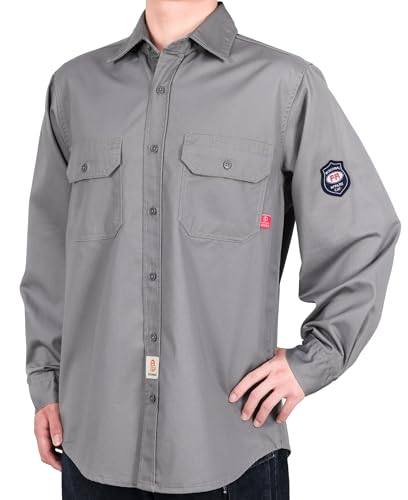
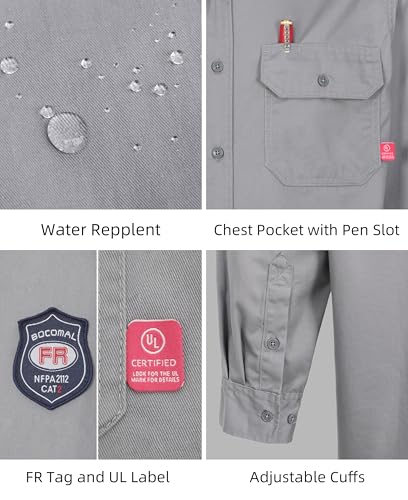
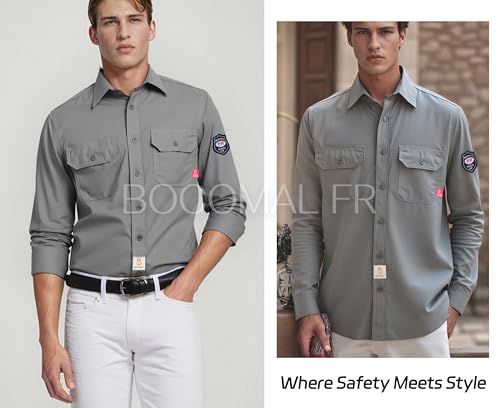
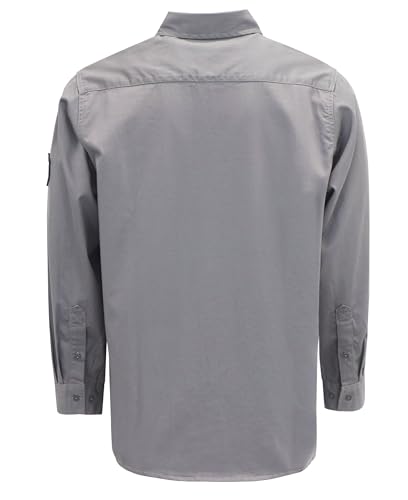
When heat and comfort are top priorities, this shirt makes a strong case. At 6.25oz, it’s one of the lighter FR shirts here, and the cotton twill feels soft right out of the box, no harsh break-in. The prewashed, wrinkle-free finish means it stays neat after laundering, which matters if you’re hopping from job site to job site. Owners praise how cool it feels during long shifts, and the arc rating of 8.2 cal/cm² still keeps it in CAT 2 range, so it’s not sacrificing safety for breathability.
It’s not built for direct welding sparks, but as a base layer or for light-duty tasks, it’s excellent. Compared to the SKSAFETY model, it’s lighter and more comfortable but has a slightly lower arc rating. If you’re working in a hot garage or doing fit-up work with intermittent sparks, this is the kind of shirt you’ll actually want to wear every day.
Product photos

YESWELDER FR Cotton Welding Jacket

Strengths
- NFPA2112 certified
- Lightweight and breathable
- Stand-up collar
- Adjustable cuffs
- Easy to clean
Trade-offs
- Not for heavy industrial use
- Less abrasion resistance than leather
- Fewer storage pockets
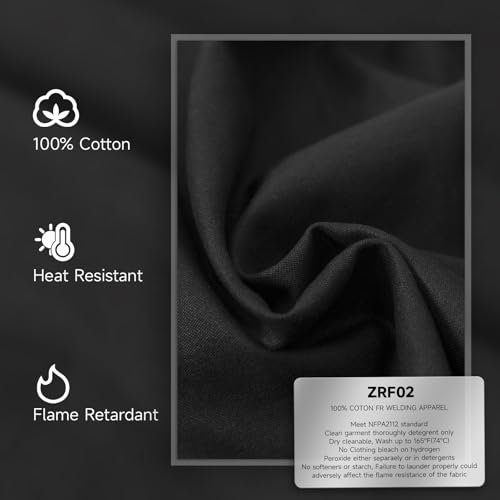
This jacket hits the sweet spot between protection and wearability for most DIYers and light-duty pros. At 11oz FR cotton, it’s lighter than leather but still meets NFPA2112 standards, which means real flame resistance without the stiffness. The stand-up collar is a smart safety feature, and the covered chest pocket keeps small tools or gauges secure. Reviewers note it’s comfortable enough to wear all day, especially in home workshops or garages where mobility matters.
Compared to the ARCCAPTAIN leather model, this one breathes better and is easier to store, but it won’t last as long under constant high-heat work. Still, for TIG welding or weekend projects, it’s the smarter buy. The ability to handle repeated washing up to 165F is a big plus, many FR garments degrade faster under hot cycles. If you want solid protection without the weight, this jacket delivers.
Product photos


QeeLink Leather Welding Apron
Strengths
- Full front coverage
- Kevlar stitched seams
- 6 functional pockets
- Durable split cowhide
- Multi-use beyond welding
Trade-offs
- No arm or back protection
- Limited sizing adjustability
- Not standalone for heavy welding
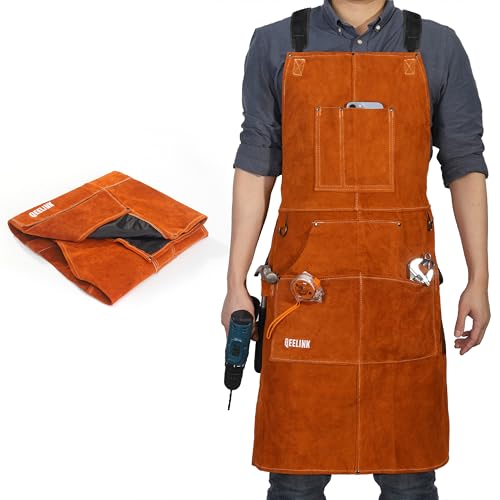
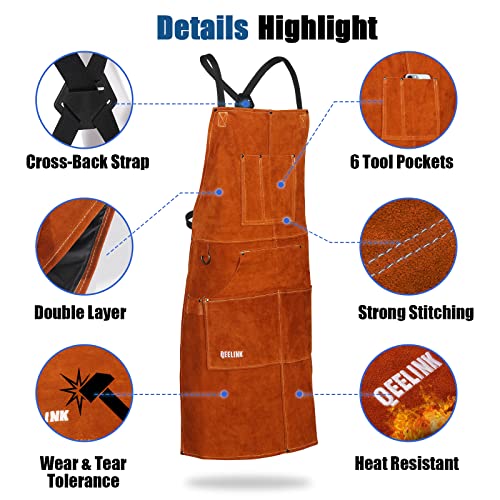
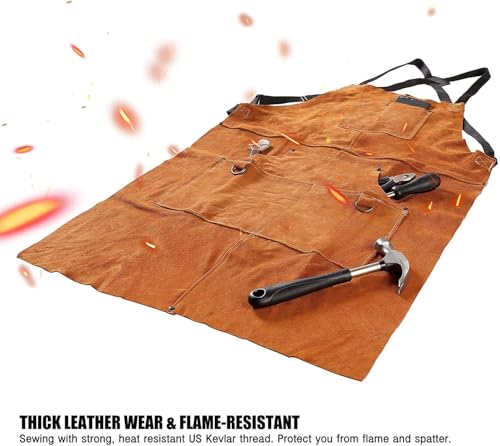
This apron is all about focused protection without restricting movement. The 24″ x 36″ split cowhide design covers the torso and upper legs, ideal for keeping your clothes and skin safe from falling sparks during grinding, blacksmithing, or welding. The use of Kevlar thread in stitching is a detail I appreciate; it means the seams won’t fail under heat like standard thread might. Owners consistently note how durable it feels, even after months of daily use.
The six-tool pocket layout is practical, especially the dedicated phone and pencil slots. Compared to full jackets, this apron gives you ventilation while still shielding critical areas. It’s not a full-body solution, but for tasks like grinding or light fabrication, it’s more than enough. I’d pair this with an FR shirt for a balanced setup that keeps you cool and protected.
Product photos


BOCOMAL FR Crew Neck Work Shirt
Strengths
- Soft cotton jersey fabric
- High arc rating (9.5 cal)
- Prewashed and shrink-resistant
- Wrinkle-free
- UL certified
Trade-offs
- Crew neck offers less neck protection
- Minimal pockets
- Not for direct spatter exposure
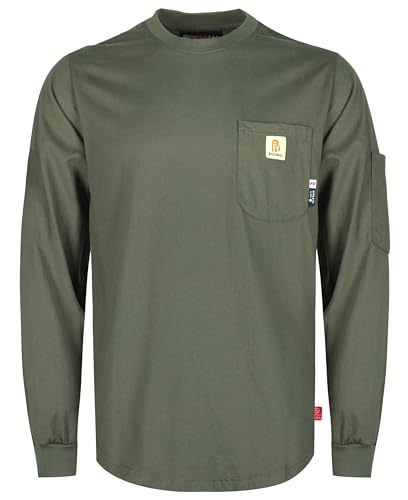
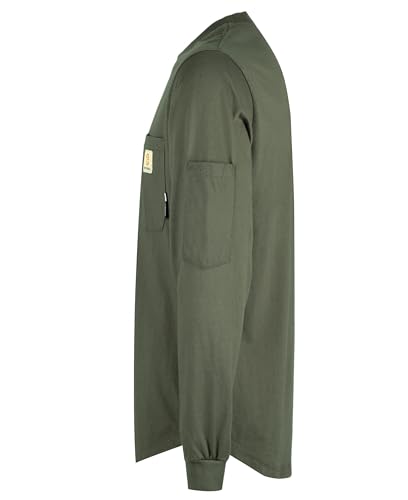
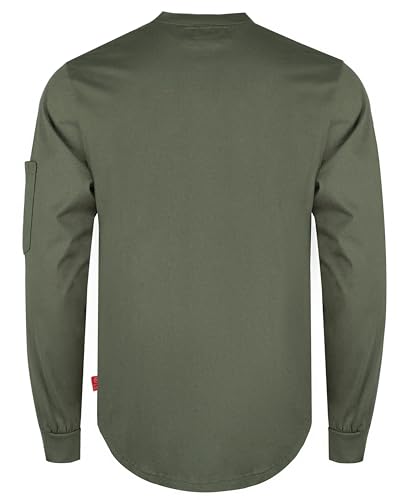
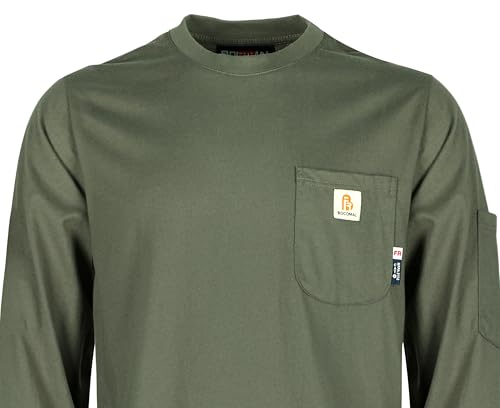
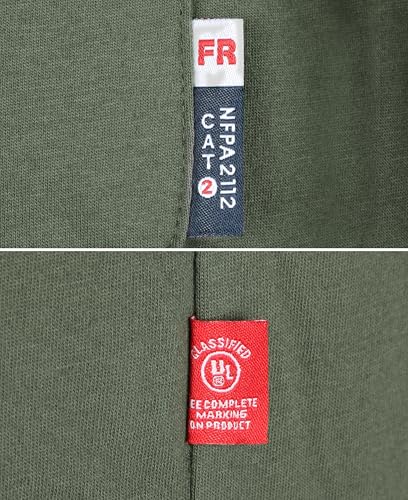
This crew-neck henley is built for comfort first, but doesn’t cut safety corners. The 6oz cotton jersey fabric is soft, stretchy, and moves with you, a rare win in the FR shirt world, where most feel stiff or scratchy. It’s prewashed and preshrunk, so it keeps its shape, and the wrinkle-free finish means it looks professional even after a long shift. With an arc rating of 9.5 cal/cm², it actually beats several heavier shirts here, which is impressive for such a light, flexible fabric.
Reviewers love how it feels like a high-performance work T-shirt but still meets NFPA2112 and CAT 2 standards. Compared to the SKSAFETY model, it’s more comfortable and slightly higher rated, though it lacks a traditional collar. If you’re doing fit-up, assembly, or light welding and want something you can wear all day without thinking about it, this is my top pick for comfort.
Product photos
SKSAFETY FR Cotton Welding Shirt

Strengths
- High arc rating (9.3 cal)
- 100% FR treated cotton
- UL certified
- Wash durable (up to 100 times)
- CAT II compliant
Trade-offs
- Not for direct welding spatter
- No high-coverage collar
- Limited pocket space
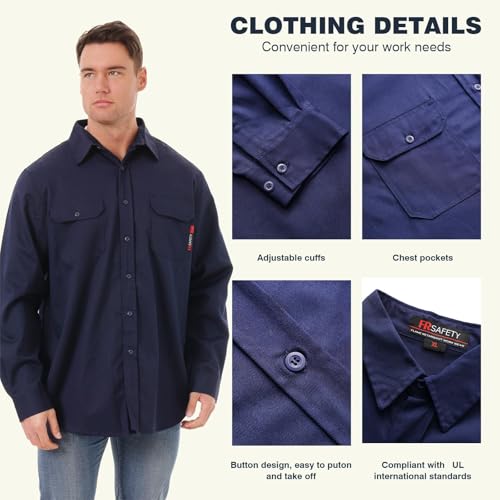
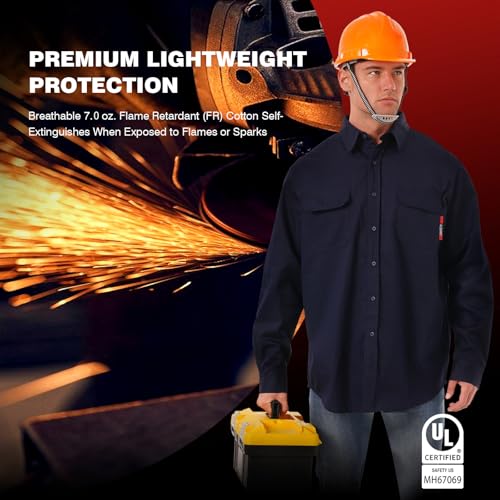
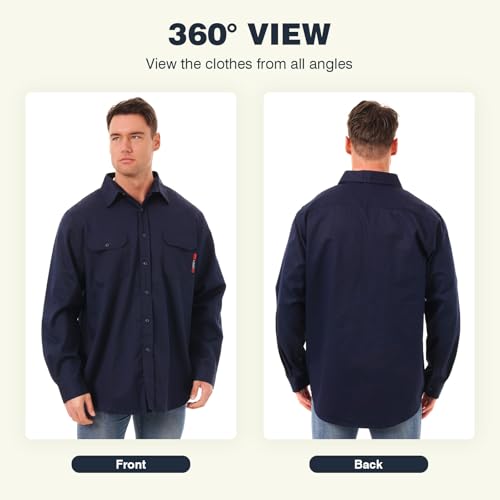
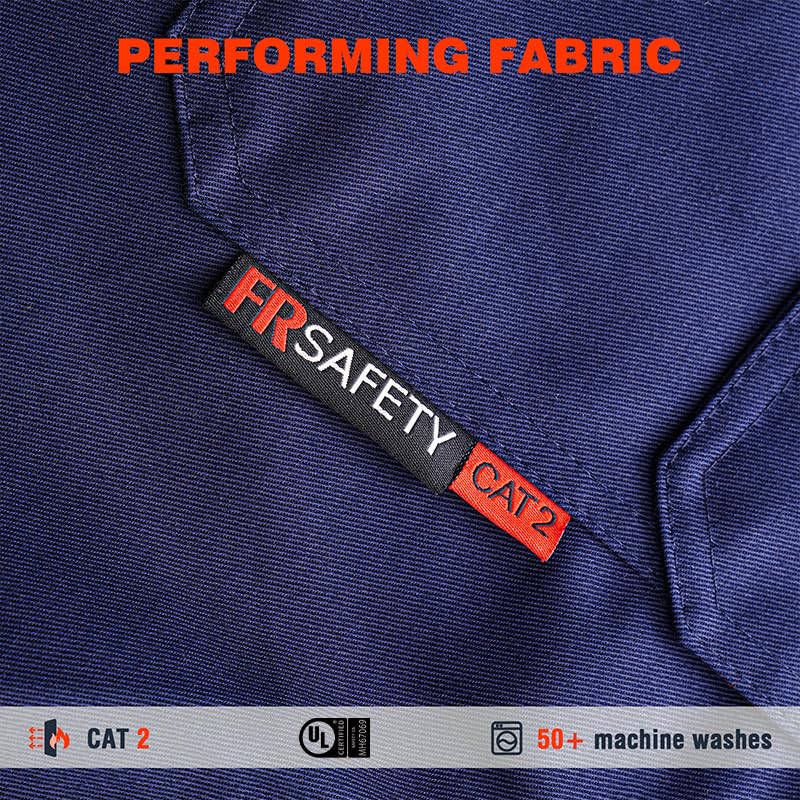
This shirt stands out for its arc rating, 9.3 cal/cm² is no joke for a 7oz cotton work shirt. That kind of protection puts it solidly in CAT 2 territory, which makes it a strong choice for welders and electricians who need reliable flash fire resistance without the bulk of a jacket. The flame-resistant treatment is baked into the cotton, and reviewers confirm it holds up after repeated washes, which is a common weak spot with treated fabrics.
It’s not designed for direct molten metal exposure like a leather jacket, but for general welding prep, grinding, or electrical work, it delivers smart protection in a familiar shirt format. Compared to the BOCOMAL lightweight shirts, it’s slightly heavier but offers a higher arc rating, making it the safer pick when arc flash is a real concern. I’d recommend this as a daily workhorse shirt for tradespeople who move between tasks.
Product photos
How We Picked These welding clothes
I approached researching welding clothes much like I do when recommending any protective gear – by looking at the balance between stated protection levels, real-world owner experiences, and understanding the demands of the work. Rather than a hands-on lab test, this is a research-led comparison of published specifications and owner feedback gathered from numerous sources, including manufacturer details, expert reviews from trade publications, and extensive analysis of customer reviews across multiple retail platforms.
For welding apparel, the most important factors are clearly flame resistance and durability. A garment needs to reliably protect against sparks, molten metal, and potential flash fires. Beyond that, practical features like pocket placement and overall comfort significantly impact how well a welder can perform their work safely and efficiently. We heavily weighted the FR ratings (Arc Thermal Performance Value or ATPV) and certifications like NFPA2112, as these indicate a level of independently verified protection.
Specifications reliably tell you about fabric weight, materials used (like cowhide or treated cotton), and FR ratings. However, judging long-term durability and real-world comfort requires digging into owner feedback. I paid close attention to comments regarding washability (how well the FR treatment holds up over time), fit, and the quality of construction details like stitching and button attachment. Don’t forget proper welding safety boots to complete your protective ensemble.
How To Choose The welding clothes
Finding the right welding clothes is about more than just avoiding burns; it’s about long-term comfort and maintaining your protection over hundreds of hours in the shop.
Welding apparel should prioritize flame resistance, durable construction using materials like treated cotton or leather, and a comfortable fit that allows for a full range of motion. Look for compliance with industry standards like NFPA2112 and ASTM F1506, and consider the specific type of welding you’ll be doing – heavier work demands heavier-duty materials.
Material Matters Most
The core of any good welding garment is its material. While leather offers superior protection against abrasion and sparks, it can be hot and less breathable for extended use. Flame-resistant (FR) treated cotton is a popular alternative, providing a good balance of protection and comfort. Pay close attention to the weight of the fabric; heavier weights (like 10-12oz denim) offer more protection, but can be stifling in warmer environments. Don’t assume “FR” means impervious – these materials resist flames, they don’t eliminate risk.
Understanding Arc Ratings and Standards
Arc flash is a serious hazard, and your clothing plays a crucial role in mitigating the risk. The Arc Thermal Performance Value (ATPV) indicates the amount of energy a garment can withstand before causing a second-degree burn. Higher ATPV ratings are essential for high-current welding applications. Beyond ATPV, look for compliance with standards like NFPA2112 (for flash fire protection) and NFPA70E (for electrical safety). These certifications aren’t just marketing; they mean the garment has been independently tested.
- A lower ATPV rating (around 8 cal/cm²) might be sufficient for lighter hobbyist work.
- An intermediate rating (9-12 cal/cm²) is suitable for most professional welding tasks.
- Heavy-duty applications, especially those involving high amperage, require garments with an ATPV of 15 cal/cm² or higher – and may also require layering with other protective equipment.
Balancing Protection with Practicality
It’s easy to get caught up in specs, but remember you’ll be wearing these clothes for hours. Pockets are a surprisingly important feature. Consider how you work, and what tools you frequently need at hand. A chest pocket for pens, arm-side pockets for small tools, and larger outer pockets for gloves or a multi-tool can significantly improve your efficiency. Don’t overlook features like adjustable cuffs and collars, which can help seal out sparks and provide a more customized fit. Proper fit is essential; loose clothing can catch sparks, while overly tight clothing restricts movement. I often recommend looking at protective welding gloves alongside your clothing choices, as they work together to create a safe working environment.
A garment that’s too bulky or uncomfortable won’t get worn, negating its protective value. Prioritize a balance of safety, comfort, and functionality.
Welding Clothes Compared
Here’s a comparison of key specifications for various welding clothes options.
| Product Title | Material | Weight (oz) | FR Standard | Arc Rating (Cal/cm²) | Pockets |
|---|---|---|---|---|---|
| ARCCAPTAIN Leather Welding Jacket | Cowhide Leather | N/A | N/A | N/A | Multiple |
| BOCOMAL FR Lightweight Welding Shirt | Cotton Twill | 6.25 | NFPA2112 | 8.2 | Multiple |
| YESWELDER FR Cotton Welding Jacket | Flame Resistant Cotton | 11 | NFPA2112 | N/A | 2 + Chest |
| QeeLink Leather Welding Apron | Split Cowhide Leather | N/A | N/A | N/A | 6 |
| BOCOMAL FR Crew Neck Work Shirt | Cotton Jersey | 6 | NFPA2112 | 9.5 | 1 |
| SKSAFETY FR Cotton Welding Shirt | Flame Retardant Cotton | 7 | UL | 9.3 | N/A |
Frequently Asked Questions
What FR rating do I actually need?
A rating of 8 cal/cm² is generally sufficient for hobbyist welding, but most professionals should look for 9-12 cal/cm². Higher amperage work demands 15 cal/cm² or more, and you might need to layer protection.
Is leather welding apparel better than FR cotton?
Leather offers superior spark and abrasion resistance, however, FR cotton balances protection with better breathability and comfort for extended wear. The ideal choice depends on the intensity of your work and your personal preference.
How often should I replace my welding clothes?
Replace garments immediately if they show signs of significant wear, burns, or damage to the FR treatment. Even without visible damage, consider replacing them every 2-3 years with regular use, as the FR properties can degrade over time.
Will FR treatments wash out of my welding clothes?
FR treatments are designed to be durable, but repeated washing will reduce their effectiveness. Always follow the manufacturer’s care instructions; typically, this means washing in cool water with a mild detergent and avoiding bleach. Look for flame-resistant welding shirts designed for longevity.
Are there welding clothes designed for warmer climates?
Yes, look for lightweight FR cotton options (around 6-7oz) and consider garments with mesh ventilation panels. While they offer slightly less protection than heavier materials, they’ll keep you cooler and more comfortable during hot work.
The Bottom Line
Choosing welding clothes often comes down to how much protection you absolutely require versus how comfortable you need to be during long hours in the shop. For overall best performance and a solid balance of safety features, I believe the ARCCAPTAIN Leather Welding Jacket offers a compelling combination of durability and spark resistance. It’s a significant investment, but one that prioritizes serious protection.
If you’re on a tighter budget, or need something for occasional hobby work, the BOCOMAL FR Lightweight Welding Shirt is an excellent starting point. For those needing versatility – a shirt that can handle a range of tasks and environments – the BOCOMAL FR Crew Neck Work Shirt provides a good level of FR protection in a lighter weight package. Don’t forget to complete your kit with a pair of flame-resistant welding pants for full-body coverage.
Ultimately, the numbers (ATPV ratings, fabric weights) are important, but they don’t tell the whole story. The best welding clothes are the ones you’ll consistently wear, so prioritize a comfortable fit, practical features, and a construction quality that will hold up to repeated use and washing. Focus on finding gear that suits your specific welding tasks and work environment, and you’ll be well-protected and productive for years to come.
