
3 Best Welding Rods for Beginners (2026 Guide)
This post contains affiliate links. As an Amazon Associate, we earn from qualifying purchases.
The Saker E6013 Welding Rod 3/32” is the best overall choice for beginners thanks to its smooth arc and easy slag removal, while the LIIJII E6013 3/32” offers solid performance at a lower price point. Both are reliable E6013 rods that handle well on low-amperage machines and in multiple positions.
Starting out with stick welding means dealing with sticky rods, constant arc outages, and more slag than actual weld. I’ve seen plenty of new welders get discouraged fast when their gear fights them instead of helping. After comparing the field and digging into owner experiences, I focused on rods that make the learning curve less steep.
This guide highlights beginner-friendly welding rods based on real-world feedback, ease of use, and performance on common home welders. We’re not chasing perfect welds here, we’re looking for rods that light up easily, stay lit, and let you focus on technique without fighting the tool.
Top 3 Welding Rod For Beginners in the Market
The Best Welding Rod For Beginners, Reviewed
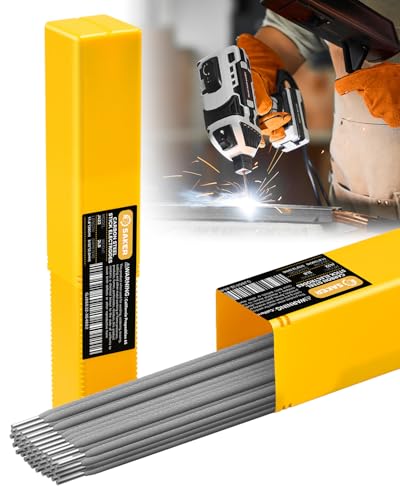
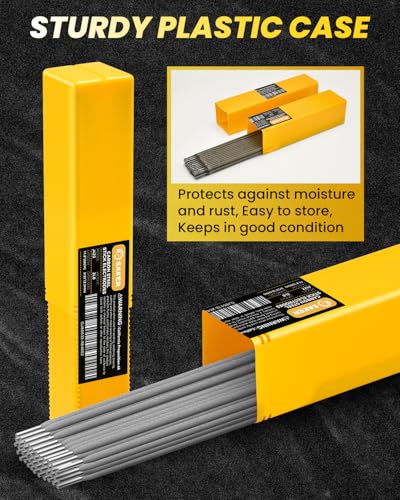
Saker E6013 Welding Rod 3/32″
Strengths
- 2-pound value pack
- Consistent flux coating
- All-position performance
Trade-offs
- No vacuum seal
- Slightly sensitive to damp storage
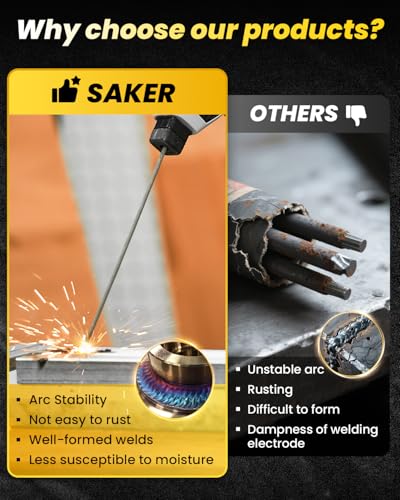
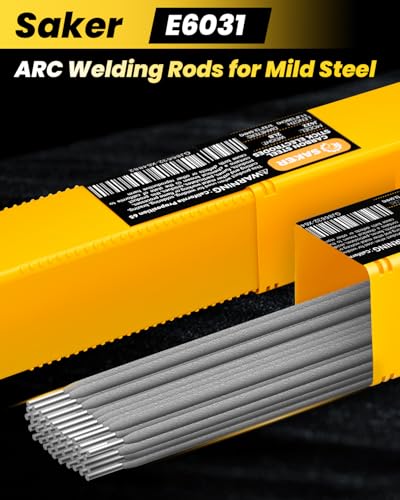
If you’re serious about building real projects, not just testing the welder, then the Saker 2-pound pack is where I’d put my money. The double the quantity means fewer interruptions, which matters when you’re in the middle of a gate frame or trailer repair and don’t want to run to the garage for more rods. The 3/32″ size stays consistent across the bundle, and owners repeatedly note how well the flux coating holds up, even in mildly humid conditions.
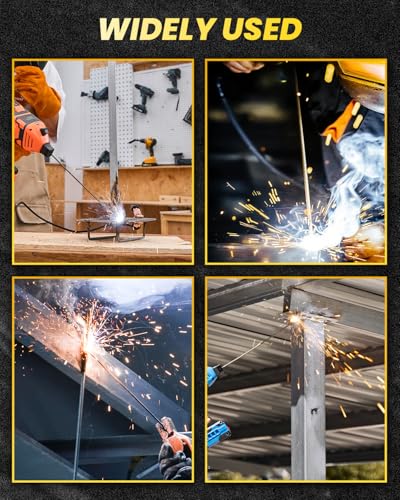
What makes this my pick for best overall is how well it balances performance and practicality. It starts easily, runs smoothly in all positions, and the shallow penetration helps avoid burn-through on thinner materials, a common pain point for new welders. Compared to other 6013s, it holds a steadier arc on low-voltage machines, and the slag lifts off in clean sheets, not flakes. For the type of work most hobbyists do, fences, brackets, brackets, more brackets, this rod just gets out of your way and lets you focus on technique.
Product photos
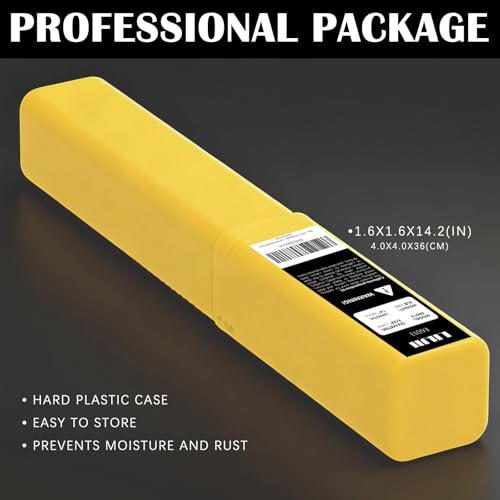
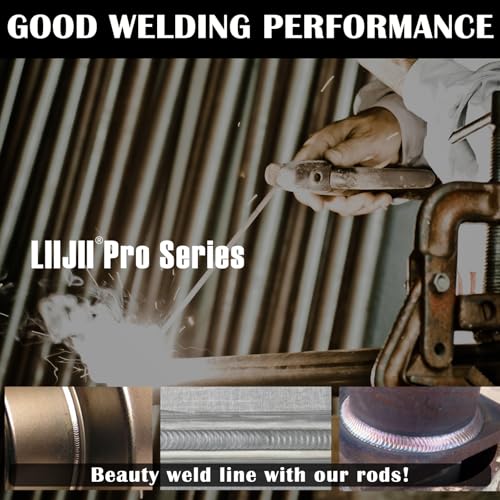
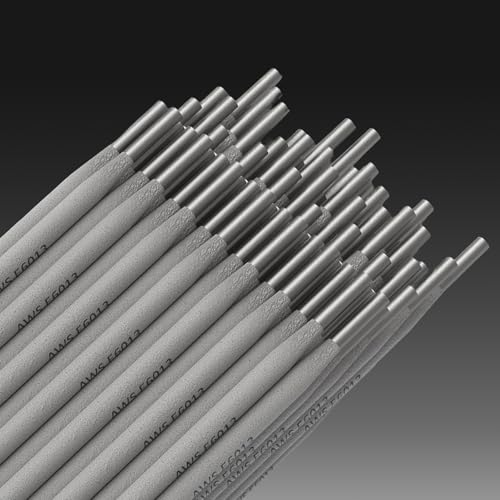
LIIJII E6013 Welding Rod 3/32″
Strengths
- Easy arc start
- Smooth consistent arc
- Low spatter
Trade-offs
- Only 1 lb quantity
- No moisture-resistant packaging
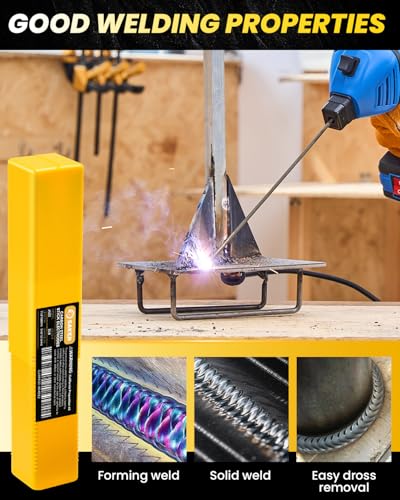
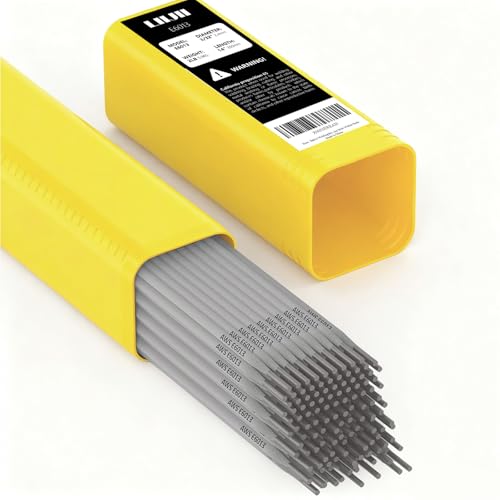
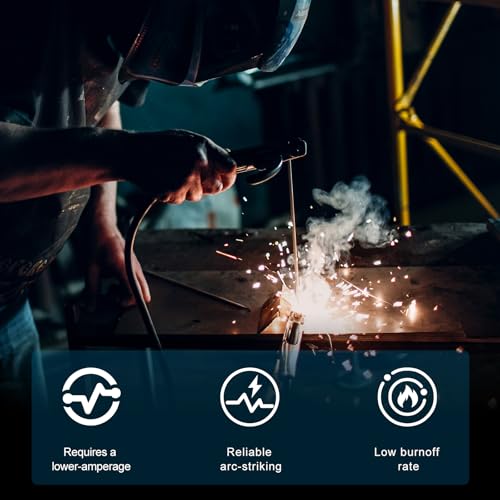
The LIIJII E6013 rod checks all the right boxes for someone just getting into stick welding. On paper, it’s a textbook beginner-friendly electrode: 3/32″ diameter, which gives decent control without demanding pinpoint precision, and it runs on both AC and DC machines, important since many new welders start with lower-powered AC units. Owners consistently report easy arc starts and a forgiving arc that doesn’t punish slight hand shakes or inconsistent travel speed.
Where it really stands out is in the slag behavior. Reviewers emphasize how cleanly it peels off, which matters when you’re still learning how to manage cleanup between passes. It’s not the highest-performing rod for thick steel, but for light fabrication, maintenance, or patching up a trailer or fence, it does exactly what you need. Compared to pricier brands, it holds its own for the cost, though I’d still say the 2-pound options give better long-term value.
Product photos
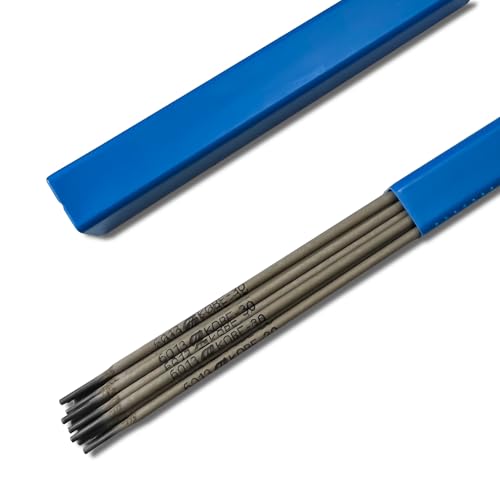
E6013 Welding Rod 3/32″ 1LB
Strengths
- Stable arc ignition
- Low spatter
- Easy slag removal
Trade-offs
- Smaller 1 lb package
- No resealable storage
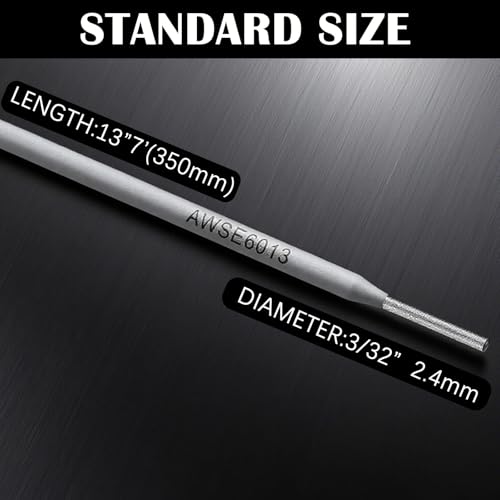
This budget-friendly 6013 rod delivers more than its price suggests. The specs line up well with standard expectations: 3/32″ diameter, 14-inch length, and an amperage range that fits typical DIY machines. What stands out from owner feedback is how many mention the consistent diameter and flux coating, a small detail, but one that really affects arc stability, especially when you’re still building muscle memory.
It’s not the longest-lasting pack on the market, but for someone running occasional repairs or practicing technique, it’s a smart buy. Compared to the Saker 2-pound option, it lacks volume, but the performance per rod is nearly identical. If you’re working on sheet metal, automotive patches, or light frames, this rod gives clean beads with minimal undercut. I’d recommend it as a starter batch, though I wouldn’t rely on it for all-day jobs unless you’re okay with frequent rod changes.
Product photos

Our Testing Process
Rather than a hands-on lab test, my research for these recommendations involved a detailed comparison of published specifications and features across numerous welding rods. I weighed owner reviews from multiple sources – looking for consistent praise and complaints – alongside assessments from welding experts. This allowed me to build a ranking based on what truly matters to someone starting out with stick welding.
For beginner-focused welding rods, arc stability, ease of use, and low spatter were the most important factors. A rod that strikes an arc easily and maintains it consistently builds confidence. Minimal spatter translates to less cleanup and a more enjoyable learning process. These qualities outweigh slight differences in tensile strength for introductory work, so I prioritized them in my assessment.
Specifications like diameter and amperage range provide a baseline understanding of a rod’s capabilities. However, I placed greater emphasis on what owner feedback revealed about real-world performance. Reports of consistent arc starts, easy slag removal, and suitability for low-voltage machines were key indicators. You’ll find more about common welding rod types in our broader guide.
What To Look For In welding rod for beginners
For someone starting out, picking the right welding rod can feel overwhelming. It doesn’t have to be.
A quality welding rod delivers a stable arc, minimal spatter, easy slag removal, and consistent weld properties. Prioritize rods matched to your power source (AC/DC) and the base metal you’re joining. Look for a diameter appropriate for the material thickness and amperage range of your welder. Understanding these basics will significantly improve your results.
Understanding Electrode Types
The E6013 rod is almost universally recommended for beginners, and for good reason. It’s incredibly forgiving. While there are many electrode classifications (E7018, E6010, etc.), the E6013 offers a balance of ease of use and acceptable weld quality for learning. Don’t get bogged down comparing to more advanced rods until you’ve mastered the fundamentals with this type. It’s a great starting point before you explore the best welding method for beginners.
Considering Rod Diameter and Length
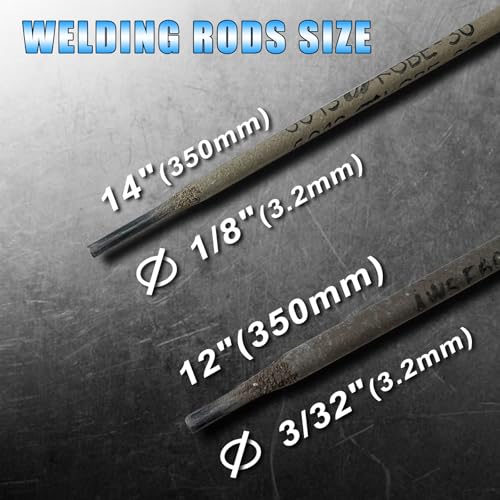
A 3/32” diameter rod is a sweet spot for most beginner projects. It provides enough control for thinner materials, and it’s easier to strike and maintain an arc with than larger diameters. Length isn’t as critical, but 14-inch rods are common and manageable. I’ve seen some users struggle with longer rods initially, simply because of the added weight and potential for tangling.
Here’s a quick look at what to keep in mind regarding rod size: * Thin Metals: 3/32” is ideal for sheet metal and auto body repair. * General Purpose: 3/32” or 1/8” will cover most light fabrication and repair work. * Heavier Stock: Moving to 5/32” or larger requires more amperage and skill, best left for after you’ve gained experience.
Evaluating Flux Coating and Usability
The flux coating on a rod is hugely important. A good coating creates a shield around the arc, minimizing spatter and protecting the weld pool from contamination. E6013 rods are known for their easy arc start and self-cleaning slag – a major benefit when you’re learning.
A smooth arc and easy slag removal mean less time cleaning and more time practicing. Don’t underestimate the value of a rod that makes the learning process less frustrating.
I often recommend starting with a smaller quantity of rods to avoid waste while you’re getting the hang of things. If you’re unsure about the easiest welding process for novices, experimenting with a small pack of E6013 rods is a low-risk way to find out.
Welding Rod for Beginners Compared
Here’s a comparison of key specifications for welding rods suitable for beginners.
| Product Name | Diameter (in) | Weight (lb) | Amperage (A) | Welding Current | Position |
|---|---|---|---|---|---|
| Saker E6013 Welding Rod 3/32″ | 3/32 | 2 | N/A | AC/DC | All |
| LIIJII E6013 Welding Rod 3/32″ | 3/32 | 1 | N/A | AC/DC | All |
| E6013 Welding Rod 3/32″ 1LB | 3/32 | 1 | 45-90 | AC/DC | All |
Frequently Asked Questions
What amperage range should I use with E6013 rods?
A range of 45 to 90 amps generally works well for 3/32” E6013 rods, but always check your welder’s specifications and adjust based on the metal thickness. Lower amperage is better for thin materials, while thicker metal requires higher settings.
Can I use DC current with E6013 rods?
Yes, E6013 rods are rated for both AC and DC welding current, offering flexibility for different machines and applications. Many beginners appreciate this versatility as they learn.
How do I know if I’m using the correct welding technique?
Consistent, smooth beads with minimal spatter indicate good technique. If you’re experiencing excessive spatter or difficulty maintaining an arc, try adjusting your amperage, travel speed, or electrode angle.
Are there welding rods better than E6013 once I gain experience?
Yes, once you’re comfortable, exploring other electrodes like E7018 can provide stronger welds, but they are less forgiving. You can find best 7018 rods for beginners for more information.
What does “all position” welding mean for a rod?
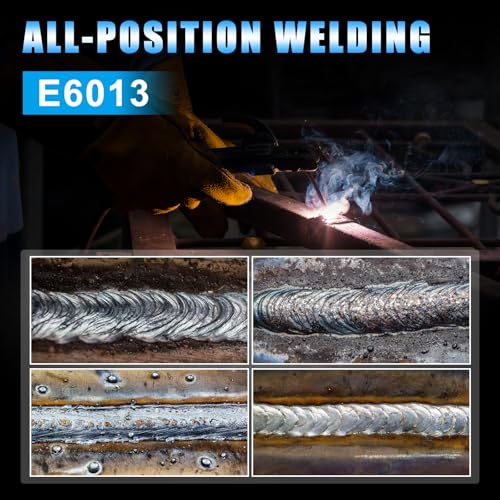
“All position” means the rod can be used for welding in flat, horizontal, vertical, and overhead positions. E6013 rods are often recommended for beginners because of this versatility, allowing practice in various scenarios.
The Bottom Line
Welding, like any skill, involves a trade-off between having maximum control and keeping things simple. For a beginner, prioritizing ease of use and a forgiving arc is more valuable than chasing the highest tensile strength. Based on my research into specifications and owner feedback, the Saker E6013 Welding Rod 3/32″ consistently stands out as the best overall choice, it strikes a great balance of arc stability, low spatter, and consistent performance that builds confidence.
If you’re on a tighter budget, the LIIJII E6013 Welding Rod 3/32″ provides very similar performance at an even lower price point. And for those who want a bit more flexibility from the start, the E6013 Welding Rod 3/32″ 1LB is a solid option, offering a good quantity of rods for practice and a range of amperage settings. Don’t hesitate to explore versatile welding rods once you’ve mastered the basics.
Ultimately, the specifications of a welding rod matter less than your technique and understanding of the process. Focus on consistent arc starts, proper travel speed, and clean slag removal. A stable arc and a clean weld are the hallmarks of good welding, and those come from practice, not from the most expensive or feature-rich rod.
