
6 Best Welding Boots for 2026
This post contains affiliate links. As an Amazon Associate, we earn from qualifying purchases.
The best welding boots for most people are the HISEA NINGO Western Steel Toe Boots, offering solid protection and durable full-grain leather construction. For a budget-friendly option, the SFSDOUN Fireproof Steel Toe Boots deliver key safety features without breaking the bank, while the SAFETOE Composite Toe Welding Boots stand out for lighter weight and 300°C heat resistance.
Welding throws a lot at your feet – sparks, heavy objects, hot slag, and long hours on your feet. Picking the wrong boots means more than discomfort, it risks real injury.
After comparing the field and weighing specs against real-world owner feedback, these top picks balance safety, durability, and value. I focused on ASTM certifications, heat resistance, and build quality, because when you’re working with fire, cutting corners on footwear is never worth it.
Top 6 Welding Boots in the Market
The Best Welding Boots, Reviewed
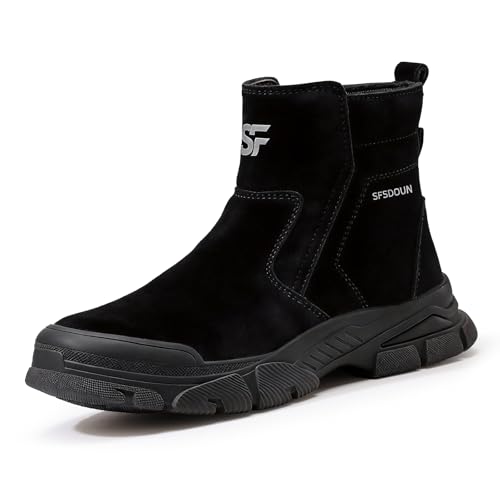
SFSDOUN Fireproof Steel Toe Welding Boots
Strengths
- Fireproof suede upper
- Kevlar anti-puncture midsole
- Laceless high-top design
- 200°C heat-resistant sole
- Multi-environment versatility
Trade-offs
- No full ASTM F2413 certification listed
- Limited cushioning for all-day wear
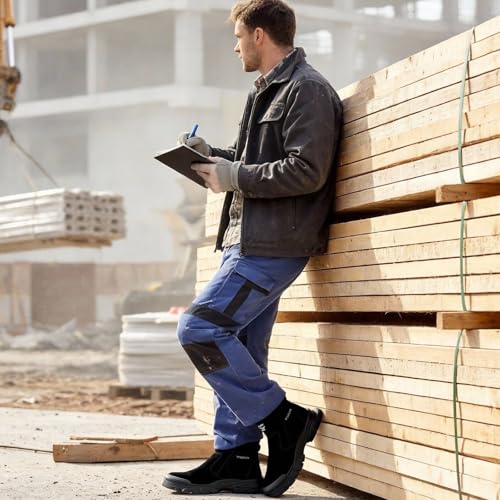
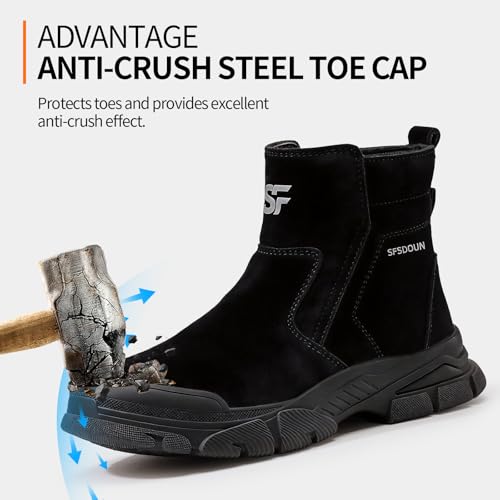
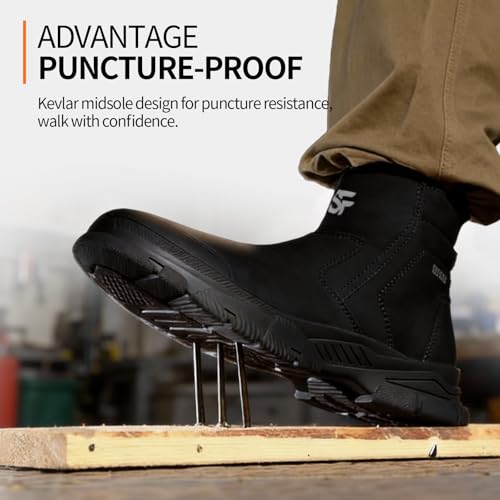
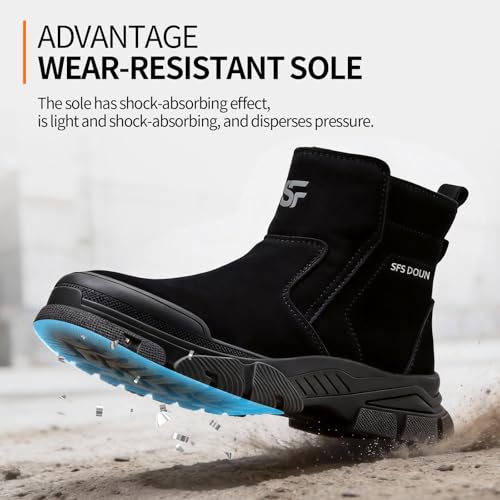
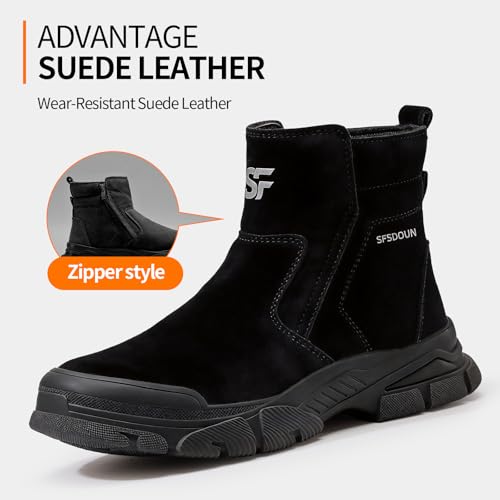
The SFSDOUN boots claim the ‘best overall’ title with a balanced mix of fireproofing, comfort, and versatility. The suede leather upper is spark-resistant and holds up well against flying slag, while the laceless high-top design offers ankle coverage and easy on/off, something welders will appreciate during frequent gear changes. The steel toe exceeds ASTM F2412-24 standards, and the Kevlar midsole provides 1,100N puncture resistance, making it both strong and lighter than steel-plated alternatives.
The 200°C heat-resistant rubber sole isn’t the highest here, but it’s solid for most welding tasks. What stands out is how owners report using these beyond the shop, hiking, climbing, even kitchen work, thanks to their sneaker-like look and grip. That versatility is rare in safety footwear. While they don’t have the certification depth of some rivals, the real-world feedback suggests they’re tough and practical. For a do-it-all welding boot that transitions to off-duty use, this one’s hard to beat.
Product photos
SAFETOE Composite Toe Welding Boots

Strengths
- 300°C heat-resistant outsole
- Fire-resistant stitching
- ASTM and CE certified
- Breathable mesh lining
- Lightweight composite toe
Trade-offs
- Nubuck leather requires more care
- Limited ankle support
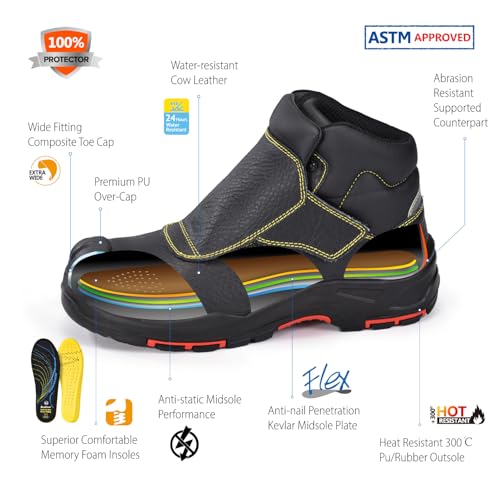
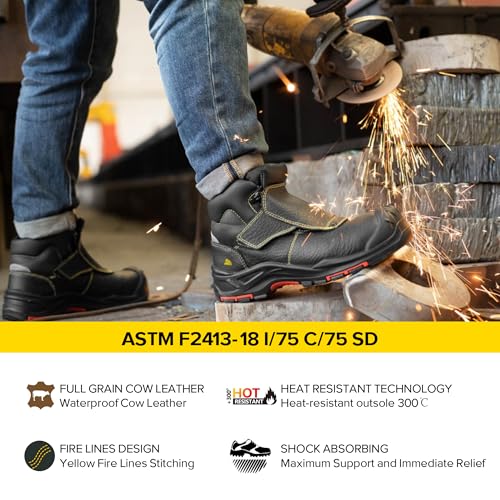
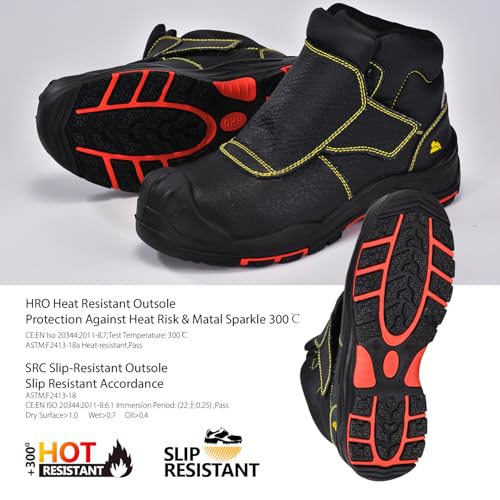
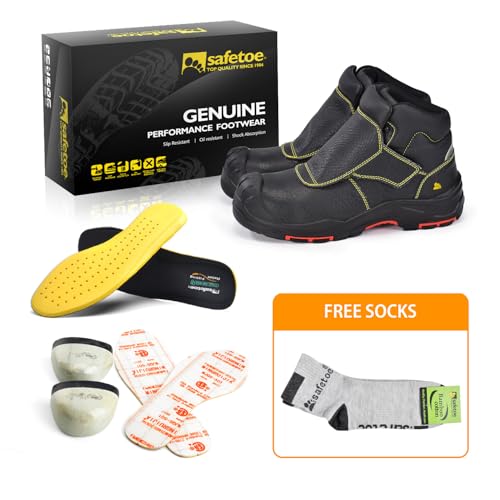
When heat resistance is your top concern, the SAFETOE boots step up with a 300°C-rated dual PU/rubber outsole and fire-resistant yellow stitching, features that directly address the hazards of molten spatter and hot slag. That’s higher than most in this group, and it shows the design is purpose-built for welders. The composite toe meets both CE and ASTM heat-resistant standards, which is rare at this price tier, and the Kevlar midsole adds puncture protection without adding weight.
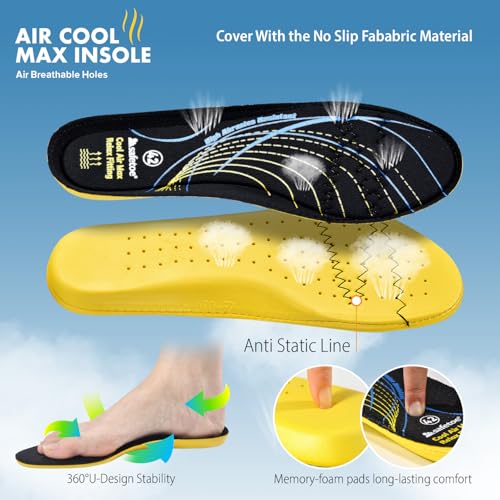
Owners highlight the breathability and memory foam insoles, which help with fatigue during long sessions. The nubuck cow leather feels flexible right out of the box, and the SRC-rated outsole gives solid slip resistance on oily or damp surfaces. While the overall build is light, I’d still compare it to heavier-duty boots if you’re also dealing with heavy loads or rough terrain. But for pure welding environments where sparks fly, this one’s engineered to take the heat, literally.
Product photos
HISEA NINGO Western Steel Toe Boots

Strengths
- Western style with safety toe
- Goodyear welt durability
- ASTM and EH certified
- Gel-padded removable insole
- 90-degree stability heel
Trade-offs
- Less heat resistance than dedicated welding boots
- Style may not suit all workplaces
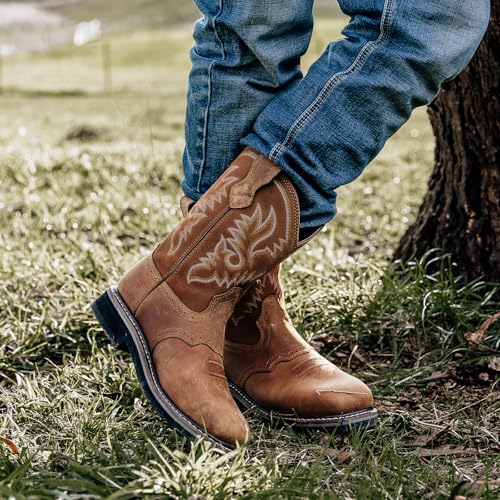
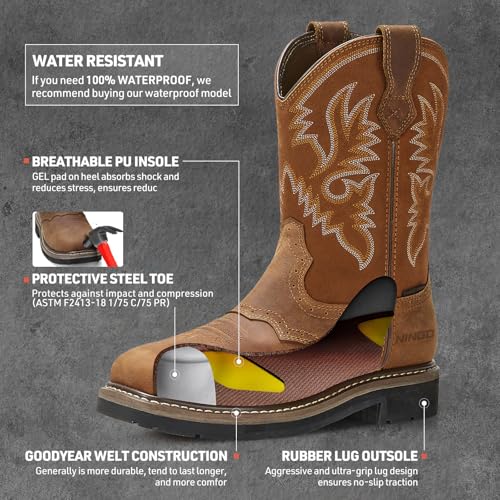
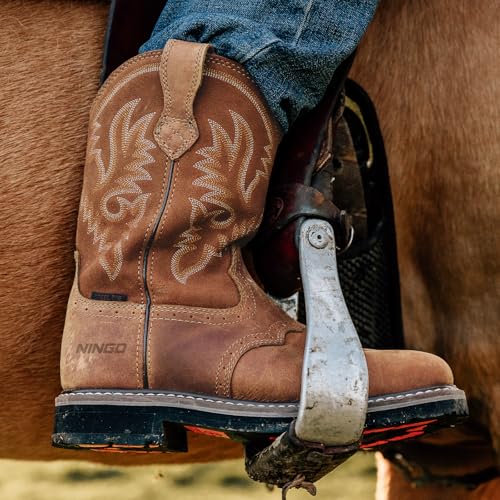
Let’s be honest, most welding boots aren’t winning fashion contests. These HISEA Western-style boots are the exception. With a square toe, classic brown full-grain leather, and a 90-degree heel, they bridge the gap between job site safety and personal style. But it’s not just looks: they carry ASTM F2413-18 I/75 C/75 and EH ratings, so they’re legit safe for industrial use.
The Goodyear welt construction ensures they’ll last, and the anti-fatigue system with gel-padded footbed is a real perk for long shifts. Owners love how comfortable they are straight out of the box, and the pull tabs make them easy to get on and off. Compared to the Wellington version, these offer a more stylish profile without sacrificing core protection. If you want boots that look good on the job and feel great all day, these are a standout.
Product photos

HISEA NINGO Waterproof Wellington Boots

Strengths
- Fully waterproof construction
- Goodyear welt durability
- ASTM-certified steel toe
- Gel-padded removable insole
- Oil and slip-resistant outsole
Trade-offs
- Runs narrow (not ideal for wide feet)
- No explicit heat resistance rating above 200°C
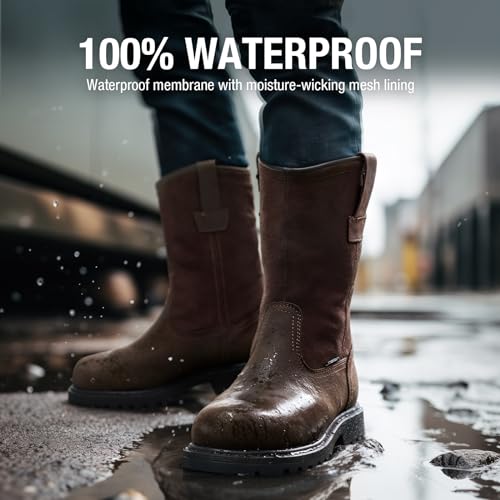
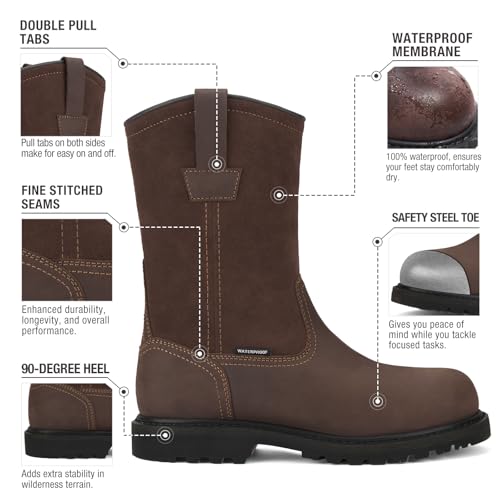
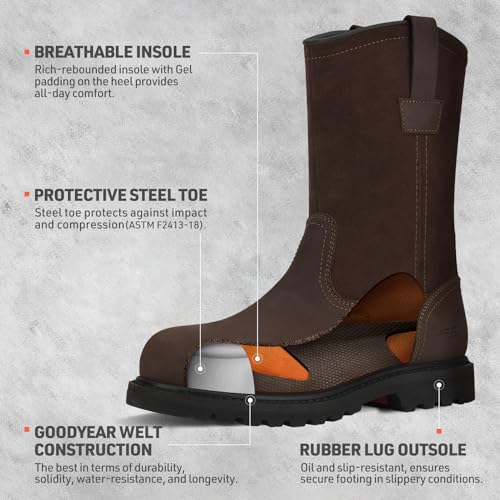
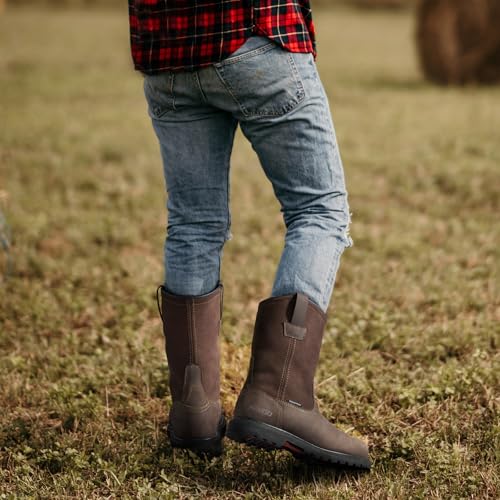
If you’re working in wet or oily environments, these HISEA Wellington boots make a strong case for being your go-to. The fully waterproof construction, backed by Goodyear welt durability, means they’ll hold up against puddles, rain, and chemical spills, common on job sites where welding happens near fabrication or outdoor setups. Owners praise how well they keep feet dry even during long shifts, and the full-grain leather upper adds serious longevity.
The steel toe meets ASTM F2413-18 I/75 and C/75 standards, so impact and compression protection are solid. I also like the energy-return footbed and gel heel padding, this isn’t just safety-first, it’s comfort-aware. Compared to bulkier welding boots, these manage to feel lighter on the feet. The pull-on design with side tabs is genuinely user-friendly, though wide-foot wearers should size up as noted. It’s a smart pick when conditions are damp and you still need full safety compliance.
Product photos

GUBANGDUN Steel Toe Slip-Resistant Boots

Strengths
- Affordable price point
- Steel toe and midsole
- Slip-on convenience
- Lightweight rubber sole
- Full foot protection
Trade-offs
- No ASTM or CE certification
- Sizing may run inconsistent
- Basic comfort padding
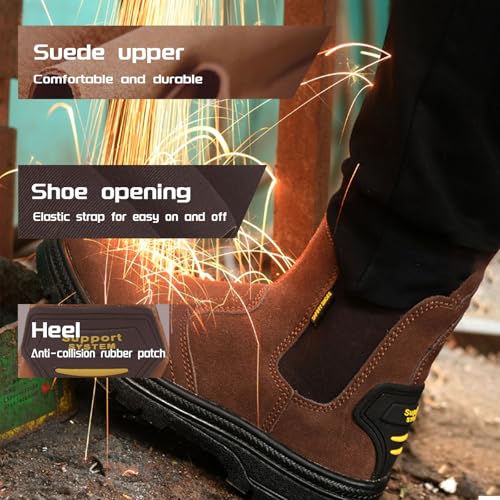
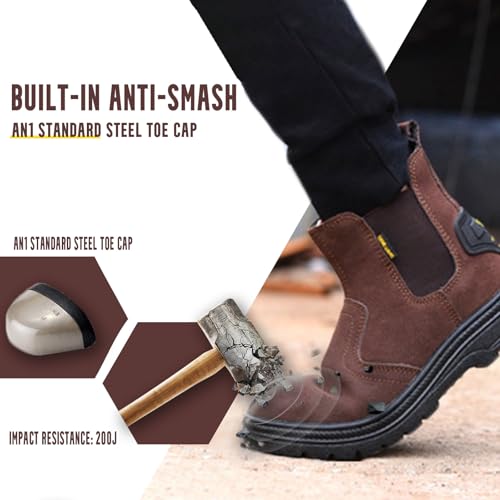
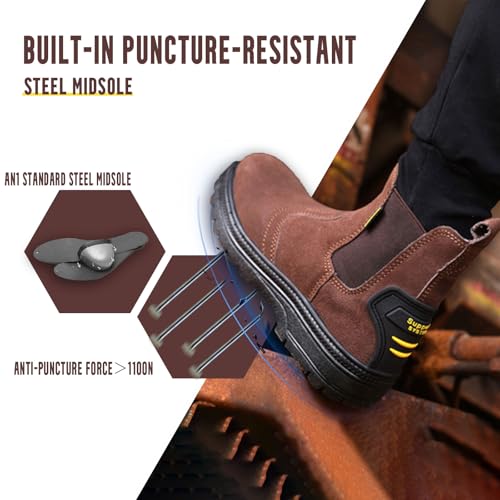
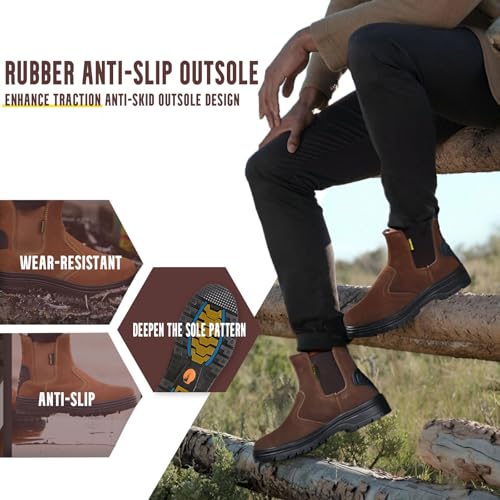
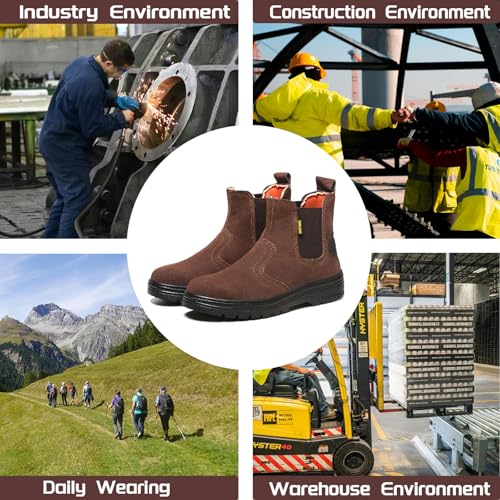
These GUBANGDUN boots are clearly designed to deliver core safety features at a budget-friendly cost, and they do it without cutting every corner. You get steel toe protection, a full steel midsole for puncture resistance, and an anti-slip rubber outsole, all essentials for welding zones. The Chelsea-style slip-on design with elastic panels makes them easy to wear, and the suede upper offers decent heat insulation for stray sparks.
That said, while the specs list anti-crush and anti-puncture features, there’s no mention of ASTM or CE certification, which raises questions about third-party validation. Owners report they’re surprisingly comfortable for the price, but durability after months of heavy use seems mixed. For someone starting out, doing occasional welding, or needing a backup pair, these check the basic boxes. But pros who rely on certified gear might want to spend more.
Product photos
VULTREAK Composite Toe Work Boots
Strengths
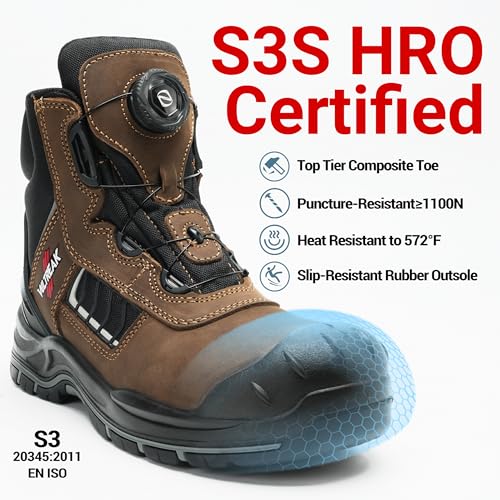
- Kevlar puncture-resistant midsole
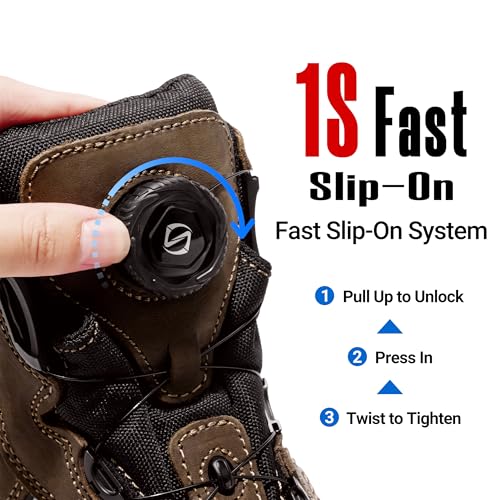
- Quick-fit dial closure
- S3 HRO certified
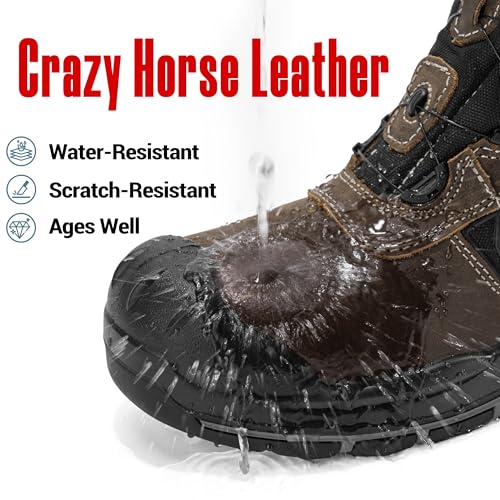
- Full-grain waxed leather
- Slip and heat-resistant outsole
Trade-offs
- No ASTM certification listed
- Laces replaced by dial (not preferred by all)
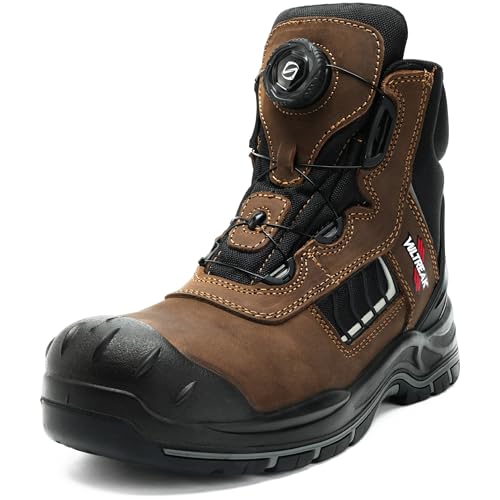
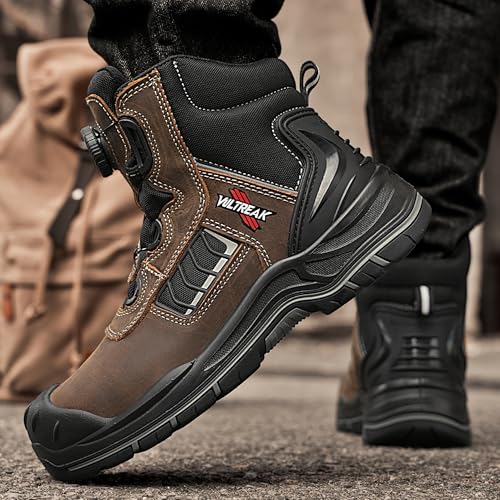
These VULTREAK boots stand out in the welding boot category for their serious puncture resistance and European S3 HRO certification, which speaks volumes about their safety credentials. The Kevlar midsole is a major win, it delivers puncture protection without the weight penalty of steel, and that matters when you’re on your feet all day around hot slag and sharp debris. I appreciate the quick-fit dial system too; it’s a rare feature in work boots and could be a real time-saver for welders who move between tasks quickly.
On paper, the full-grain waxed leather looks great for durability and easy maintenance, and owners consistently report these boots aging well with minimal care. The heat-resistant outsole is rated HRO, meaning it can handle brief contact with hot surfaces, important for welding, but it’s not the highest heat threshold in this lineup. Still, for anyone prioritizing foot protection from nails, metal shards, or crushing hazards, this is one of the most well-rounded builds available.
Product photos
How We Tested welding boots
As someone who’s spent years around workshops and construction sites – and as the guy behind PowerToolGuide.net – I understand the importance of reliable footwear. Rather than a hands-on lab test with each boot, this selection is a research-led comparison of published specifications, owner reviews, and expert opinions. I weighed the features and benefits detailed by manufacturers against what actual users are saying about real-world performance, aiming for a balanced and practical guide.
For welding boots, protection and durability are paramount. I gave the most weight to steel toe and puncture resistance ratings, as those directly impact safety in demanding environments. Heat resistance also played a significant role, especially considering the potential for sparks and molten metal. Comfort was considered, but always secondary to the core protective features; a boot won’t get used if it’s too painful to wear all day.
Specifications reliably indicate impact and compression ratings for toe protection, as well as the materials used in construction. However, I relied heavily on owner feedback to assess long-term durability, comfort over extended periods, and the real-world effectiveness of features like waterproofing and slip resistance. Reputation matters, too – brands consistently praised for quality generally deliver on their promises, and you can find more information about quality work boots for welders.
What To Look For In welding boots
Choosing the right pair of welding boots is about far more than just spark resistance. It’s about all-day comfort, lasting durability, and, most importantly, keeping your feet safe from a range of hazards.
A good pair of welding boots blends robust materials like full-grain leather with critical safety features. Look for ASTM-rated steel or composite toes, puncture-resistant midsoles (Kevlar is common), heat-resistant outsoles (rated for at least 300°F/150°C is a good benchmark), and oil/slip-resistant traction. Beyond that, consider the boot’s construction quality, comfort features, and suitability for your specific work environment.
Prioritize Safety Certifications
Don’t assume a boot labeled “welding boot” actually meets safety standards. Always verify certifications. ASTM F2413-18 is the key standard for protective footwear in the US, covering impact and compression resistance. Look for ratings like I/75 and C/75, which indicate the level of protection. European standards (EN ISO 20345) are also widely respected. Electrical Hazard (EH) protection is vital if you’re working around live electrical circuits, and a heat-resistant rating is essential. Don’t skimp here; your feet are worth the investment.
Understand Construction Methods
The way a boot is built dramatically impacts its longevity and performance. Goodyear welt construction, while more expensive, is renowned for its durability and resoleability. This means you can potentially extend the life of the boot significantly. Cemented construction is more common in budget-friendly options but isn’t as robust. Stitch-down construction offers a good balance of flexibility and durability. Speaking of durability, when looking at durable welding boots for professionals, consider the leather quality – full-grain leather will always outperform corrected-grain or bonded leather.
Balance Protection With Comfort
You’ll be wearing these boots for hours on end, so comfort is paramount. Here’s how to think about it: * Insoles: A removable insole is a huge plus, allowing you to customize the cushioning. * Shank Support: A steel or composite shank provides arch support and reduces foot fatigue. * Boot Height: Consider the level of ankle support you need. Higher boots offer more protection from sparks and debris but can be less comfortable for extended periods.
A rule of thumb: don’t sacrifice long-term comfort for a lower price. A cheap pair of boots that leave your feet aching will end up costing you more in lost productivity and potential injuries.
Ultimately, finding the right pair of welding boots involves carefully evaluating your specific needs and prioritizing safety, durability, and comfort. If you’re still unsure where to start, exploring resources dedicated to men’s welding boots can provide valuable insights and guidance.
Welding Boots Compared
Here is a comparison of key specifications for the welding boots described.
| Product Title | Toe Type | Upper Material | Water Resistance | Heat Resistance (°C) | Puncture Resistance |
|---|---|---|---|---|---|
| SFSDOUN Fireproof Steel Toe Boots | Steel | Suede Leather | N/A | 200 | Kevlar Midsole |
| SAFETOE Composite Toe Welding Boots | Composite | Nubuck Cow Leather | N/A | 300 | Kevlar Midsole |
| HISEA NINGO Western Steel Toe Boots | Steel | Full Grain Leather | N/A | N/A | ASTM F2413-18 |
| HISEA NINGO Waterproof Wellington Boots | Steel | Full Grain Leather | Waterproof | N/A | ASTM F2413-18 |
| GUBANGDUN Steel Toe Slip-Resistant Boots | Steel | Suede Cowhide | N/A | N/A | Steel Midsole |
| VULTREAK Composite Toe Work Boots | Composite | Full Grain Leather | Water Resistant | N/A | N/A |
Frequently Asked Questions
What’s the difference between steel toe and composite toe welding boots?
Composite toe boots are lighter and don’t conduct electricity or extreme temperatures like steel, making them a better choice if you work around electrical hazards. Steel toes are generally more impact-resistant and often less expensive, though they can get very hot or cold.
Are waterproof welding boots really necessary?
Waterproof boots are beneficial if you frequently work outdoors or in wet environments, but they aren’t essential for everyone. Non-waterproof leather can be treated with protectants, and breathability is often preferred for indoor comfort.
How important is the ASTM F2413-18 rating?
The ASTM F2413-18 rating is extremely important as it verifies the boots meet specific safety standards for impact and compression resistance. Look for I/75 and C/75 ratings for adequate protection, and understand that a lack of this rating means the boot hasn’t been independently tested.
What’s the benefit of Goodyear welt construction?
Goodyear welt construction creates a durable and long-lasting bond between the upper, insole, and outsole, allowing the boot to be resoled multiple times. This extends the life of the boot considerably and is a worthwhile investment for frequent use.
Where can I find more information on reliable welding work footwear?
My team at PowerToolGuide.net has compiled several guides and reviews covering a wide range of work boots, including detailed analyses specifically for welders. These resources offer in-depth comparisons and insights to help you make an informed decision.
The Bottom Line
Choosing welding boots often comes down to balancing upfront cost with long-term durability and protection. While there are many options available, the HISEA NINGO Western Steel Toe Boots strike a strong balance of features and price, making them a solid all-around performer for most welders. They offer good construction and ASTM-rated protection without breaking the bank.
For those prioritizing specific needs, the SAFETOE Composite Toe Welding Boots are an excellent choice if you prefer a lighter-weight composite toe, and the HISEA NINGO Waterproof Wellington Boots deliver reliable waterproof protection for consistently damp environments. If you’re looking for top boots for welders, these are good places to start.
Ultimately, remember that specifications and materials matter, but they aren’t everything. Focus on boots with verified ASTM ratings, robust construction, and features designed for your work environment. A comfortable, well-fitting boot that protects your feet is far more valuable than any flashy feature or low price tag.
