7 Best Trash Compactors of 2026
This post contains affiliate links. As an Amazon Associate, we earn from qualifying purchases.
The Joseph Joseph Titan Trash Compactor stands out as the best overall pick for most homes, delivering strong performance in a simple, reliable design. For those tackling large outdoor bins, the BINGOX Manual Wheelie Bin Compactor is a rugged, adjustable option that handles heavy loads. If you’re on a tight budget, the Waste Smasher Hand-Held Compactor offers basic functionality at a low price.
Most people don’t realize how much time and effort they waste wrestling with overstuffed trash bins until they try a real compactor. It’s not just about convenience, it’s about reducing bag use, cutting down on trips to the curb, and keeping pests and odors under control.
This guide cuts through the noise, highlighting models that deliver real results based on compaction performance, build quality, and what actual users report. We focused on durability, ease of use, and compatibility with common bin sizes so you can pick one that fits your home and routine.
Top 7 Trash Compactors in the Market
The Best Trash Compactors, Reviewed
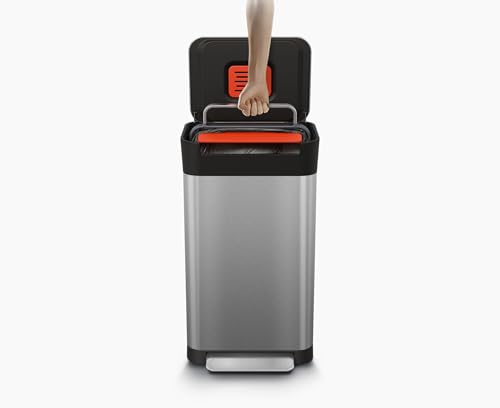
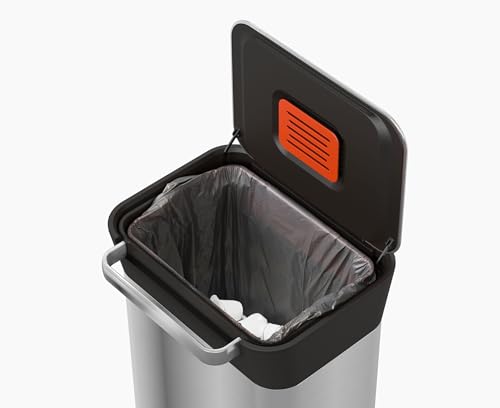
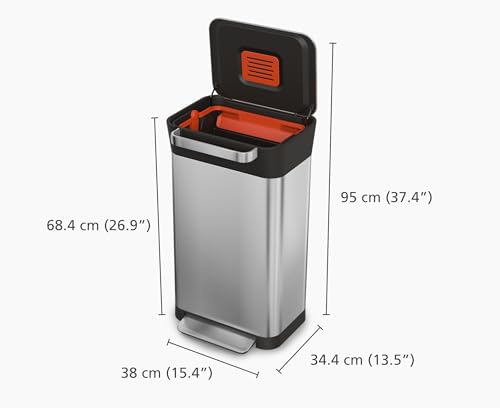
Joseph Joseph Titan Trash Compactor

Strengths
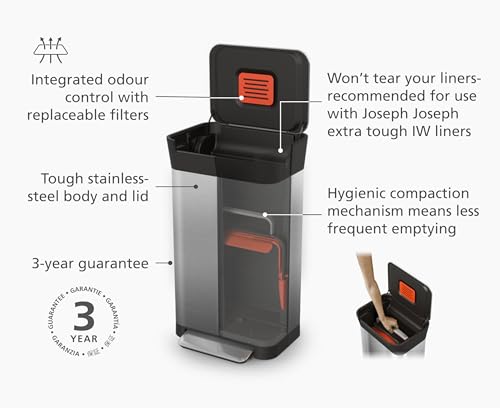
- Odor-filtering lid
- Anti-tear bag design
- 10-year warranty
Trade-offs
- Fixed capacity
- Higher upfront cost
- Not for large bins
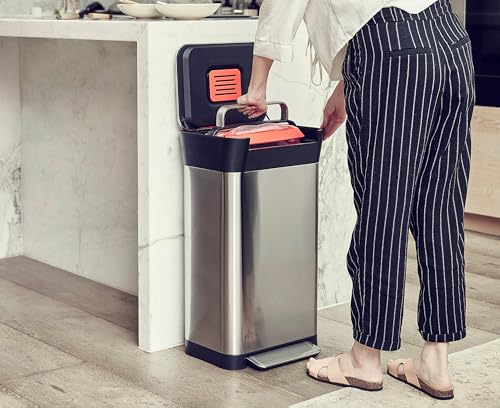
This is the only integrated trash can + compactor in the lineup, and it shows in the thoughtful design. The 30L bin with foot pedal compaction delivers on its promise: users consistently report cutting trips to the curb by half. The real standout is the odor filter, a small feature, but one that makes a big difference in kitchens where smells build up fast.
The anti-tear compaction plate is another smart touch. Many compactors stretch or puncture bags, but this one seals the deal with clean, consistent pressure. Backed by a 10-year guarantee and tested for over 100,000 cycles, it’s clearly built for long-term home use. While it’s pricier on paper, the durability and hygiene features justify it for serious home organizers.
Product photos
Waste Smasher Hand-Held Compactor

Strengths
- Dishwasher safe
- Built-in storage hook
- Budget-friendly
Trade-offs
- Plastic construction
- Less use
- Not for heavy waste
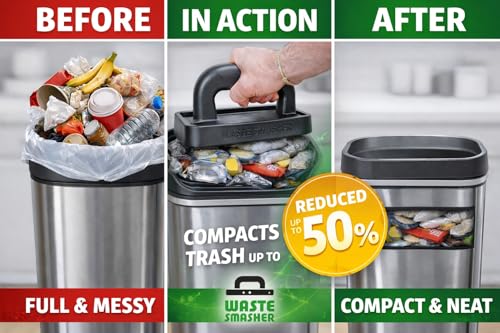
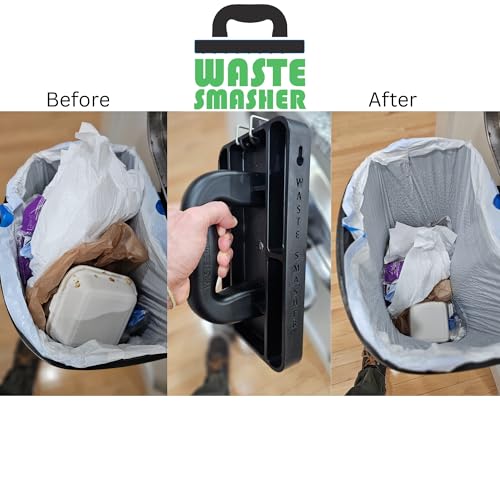
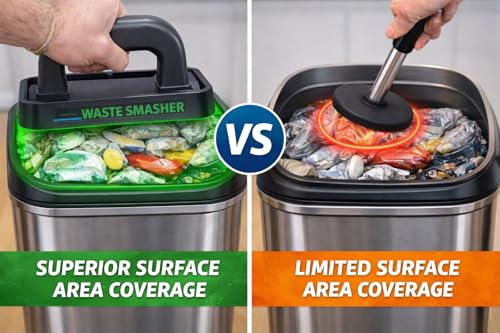
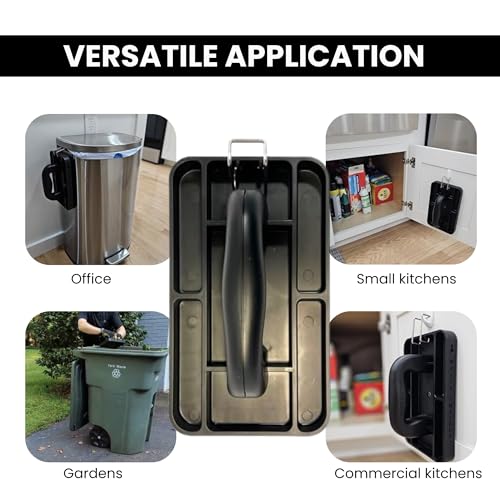
If you’re on a tight budget but still want to reduce bag waste and curb trips, this is the one to grab. Made from recycled plastic, it’s lightweight and surprisingly sturdy for daily kitchen use. The built-in hook is a small but smart feature, keeping it clipped to the bin means it’s always within reach, and the freestanding base keeps the floor clean.
It won’t handle dense cardboard or yard clippings like steel models, but for compressing food wrappers, cans, and paper, it works fine. Owners praise how easy it is to toss in the dishwasher, a rare perk in this category. It’s not built to last 10 years, but for a simple, eco-friendly upgrade to your kitchen routine, it delivers.
Product photos
BINGOX Manual Wheelie Bin Compactor
Strengths
- Fits bins up to 660L
- 100kg compaction force
- Rustproof iron build
Trade-offs
- Very large footprint
- Overbuilt for small homes
- No rotating plate
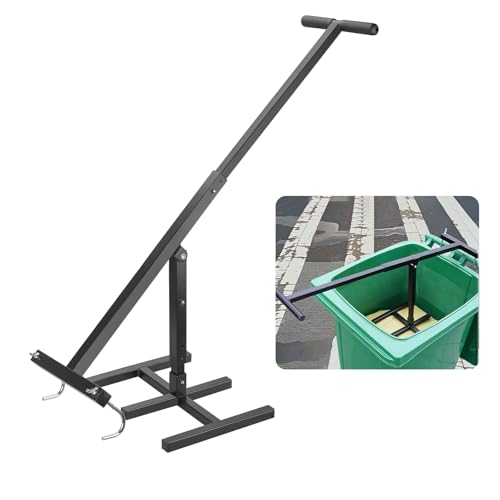
This is one of the few manual compactors built to handle bins as large as 660L, a massive range that makes it unusually flexible. The 35.4-inch handle with padded grip reduces strain, which matters when you’re compressing dozens of pounds of mixed waste. With up to 100kg of pressure, it delivers serious force, and the rustproof iron build means it can stay outside year-round without degrading.
Owners using it for municipal or property management work say it cuts disposal frequency significantly. The touchless design keeps hands clean, and the wide compatibility means one tool fits multiple bin sizes across a neighborhood or facility. It’s overkill for a single-family home, but for anyone managing multiple large bins, this is the workhorse.
Product photos
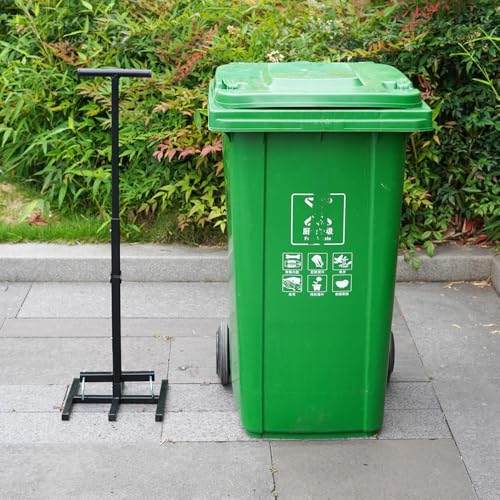
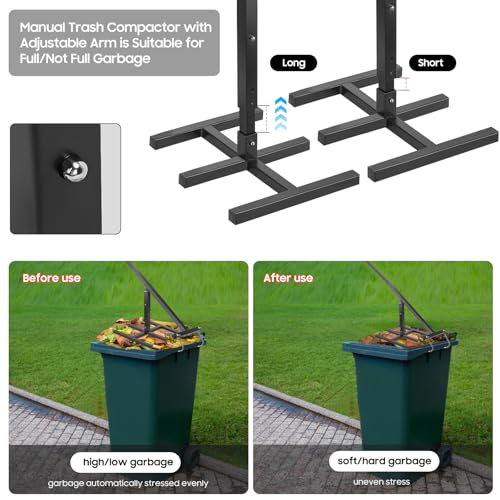
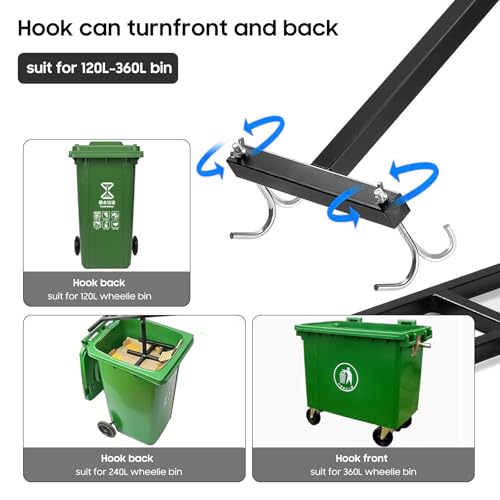
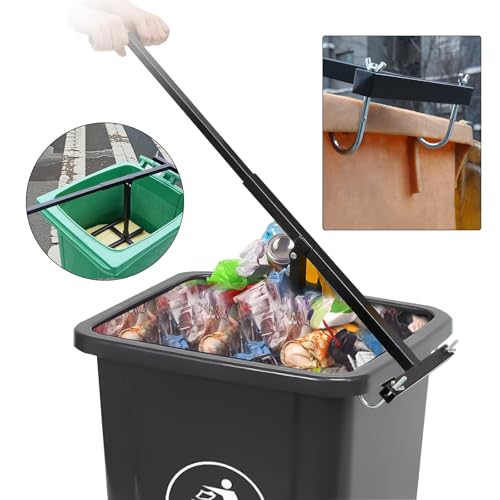
NEWRTY 3-Level Adjustable Compactor
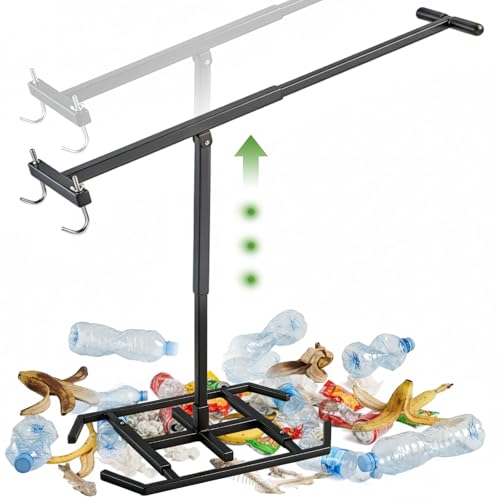
Strengths
- 3-level height adjustment
- Rotating wide plate
- Secure bin hook
Trade-offs
- Only fits 360L bins
- No indoor storage design
- Heavier than average
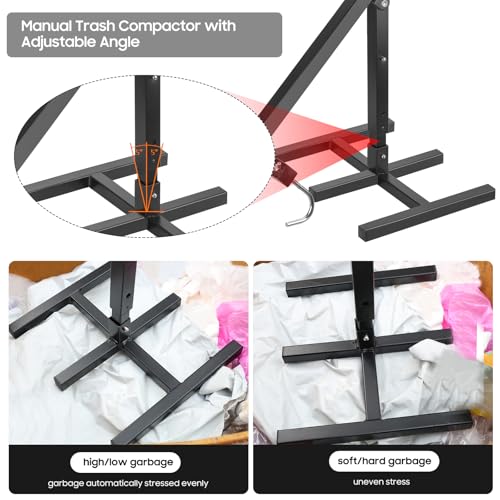
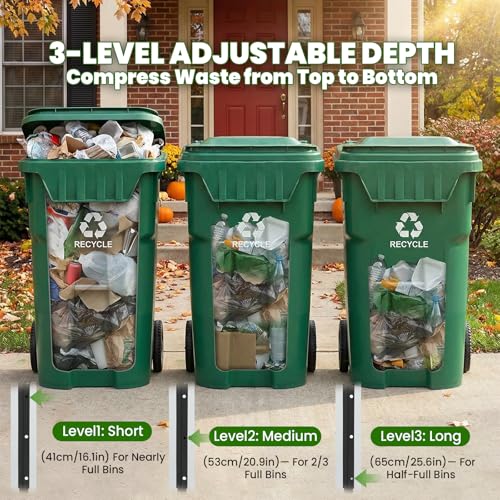
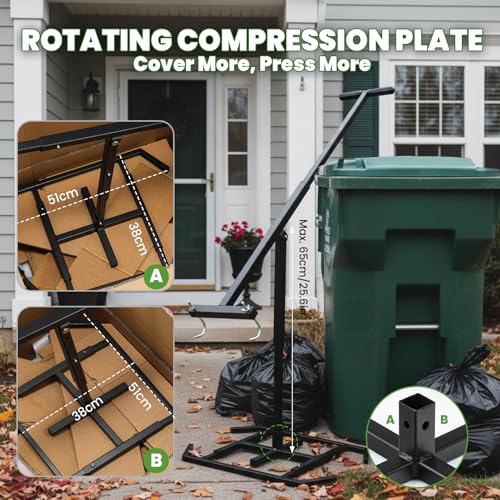
The NEWRTY compactor wins on adjustability, its 3-level telescopic lever lets you keep pressing efficiently even as the bin fills up, which most fixed-length tampers can’t match. The large 38x51cm rotating plate is another standout, covering more surface area than round tampers and letting you angle-press bulky items like flattened boxes or garden waste.
It’s purpose-built for 360L bins, so fit is secure, and the spring-ball lock keeps each extension stable. The long handle reduces effort, and the anti-slip grip makes full-force pressing safer. Reviewers note it’s one of the smoother manual experiences in the outdoor compactor class. If you’re tired of fighting half-full bins, this one solves that frustration.
Product photos

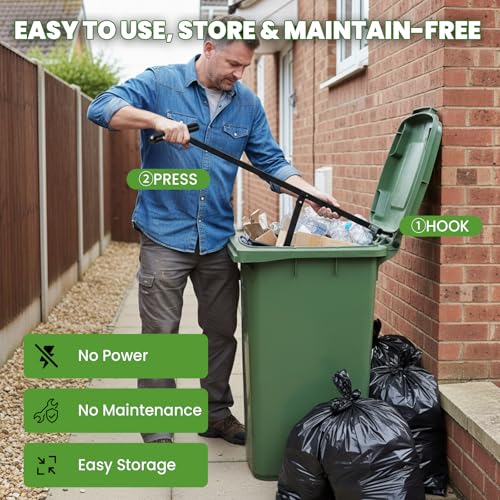
TAMP-IT Next Gen Steel Tamper
Strengths
- Doubles as soil tamper
- Steel construction
- Non-slip D-handle
Trade-offs
- No height adjustment
- Fixed plate
- Minimal storage hook
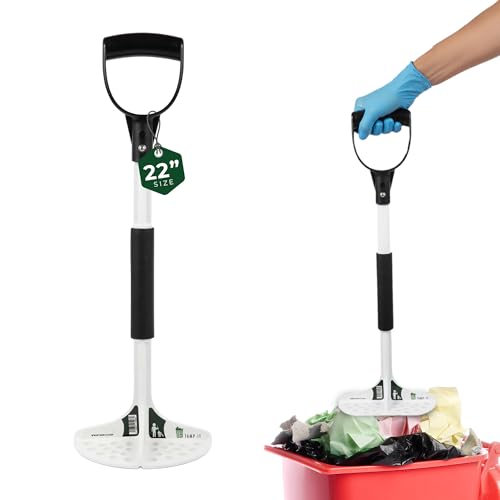
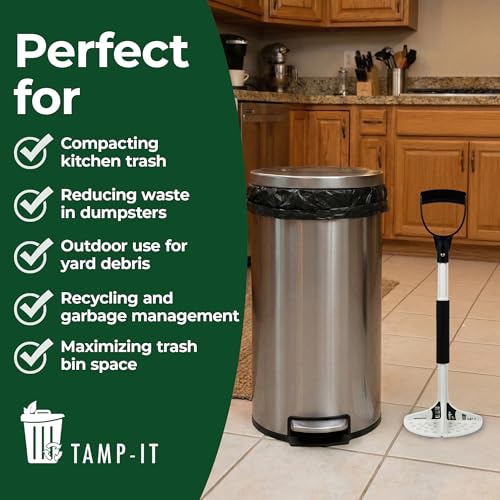
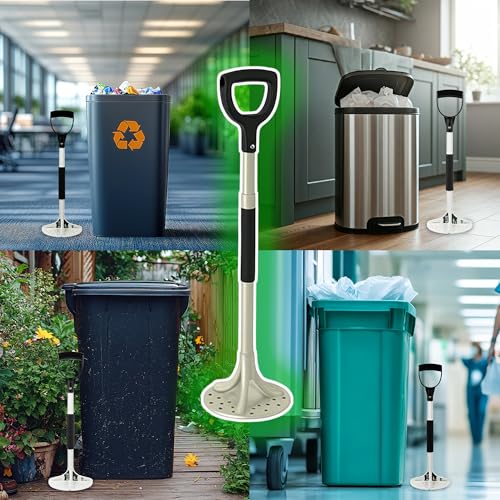
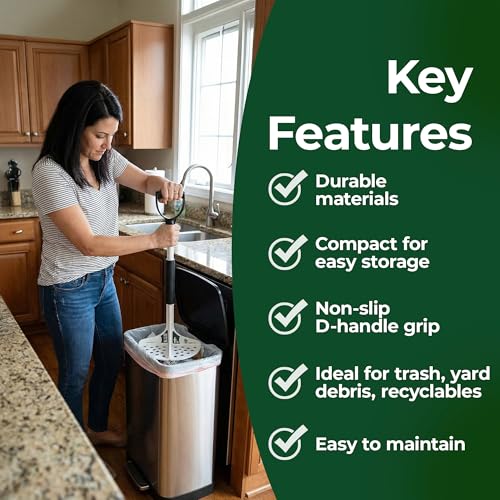
The TAMP-IT Next Gen isn’t just a trash compactor, it’s a legit multi-tool, and that versatility is its biggest selling point. At 22 inches with a sturdy D-handle, it gives solid use for kitchen and outdoor bins, but what sets it apart is the dual-use design: owners love using it to tamp soil in garden beds or pack gravel in pathways. That kind of crossover value is rare in this category.
It’s built from steel, so it won’t bend under pressure, and the non-slip handle makes repeated use less tiring. While it doesn’t have height adjustments or rotating plates, it’s reliable for daily trash duties. If you already keep a hand tamper in your garage for landscaping, this one replaces two tools with one. For the DIYer or homeowner with yard projects, it’s the smarter buy.
Product photos
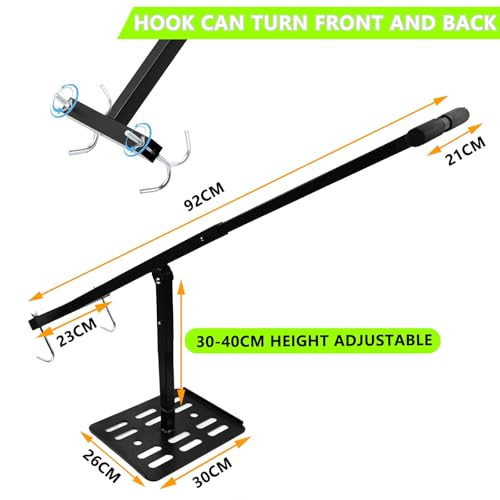
Manual Compactor for 240L Bin
Strengths
- Heavy-duty iron build
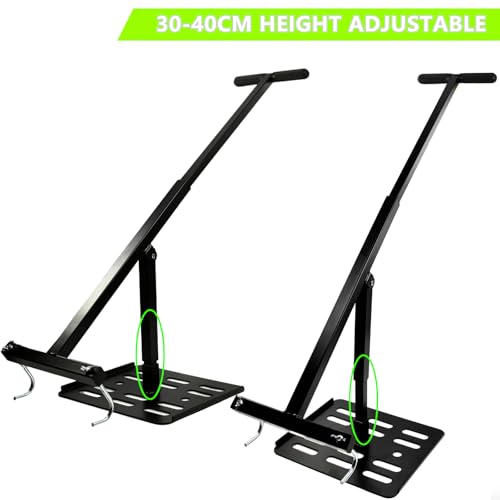
- Adjustable handle height
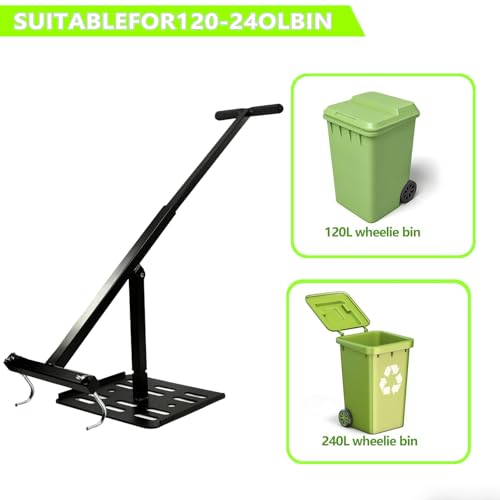
- Ideal for 240L bins
Trade-offs
- Bulky for small spaces
- No rotating plate
- Limited bin compatibility
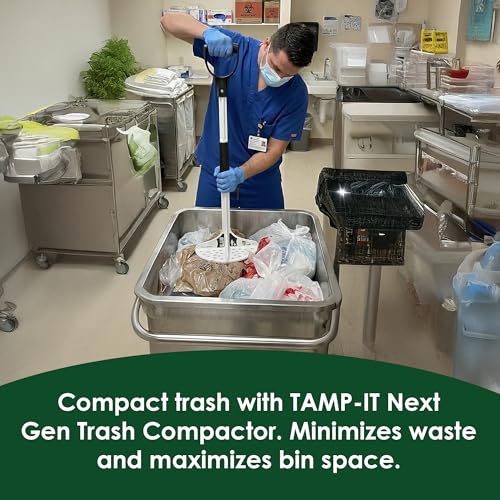
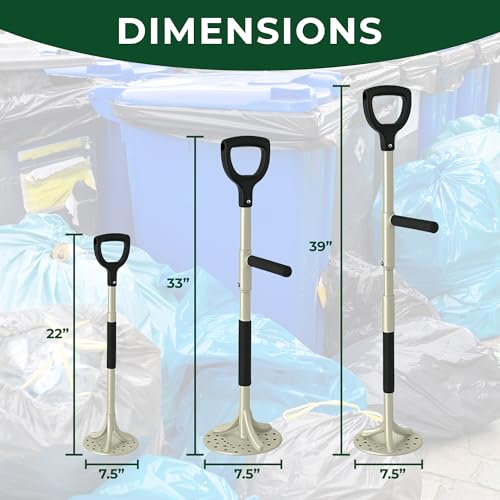
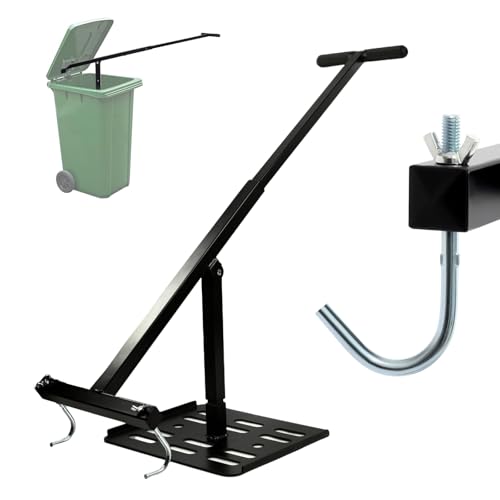
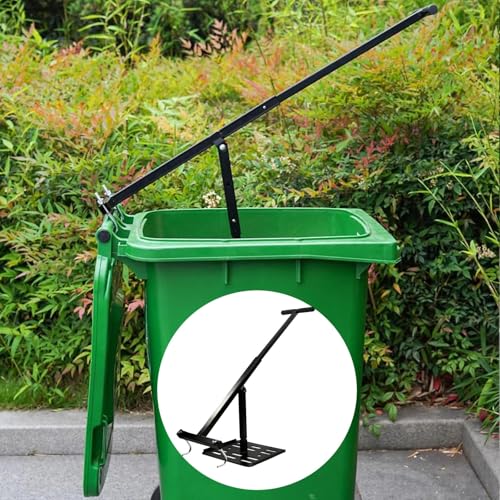
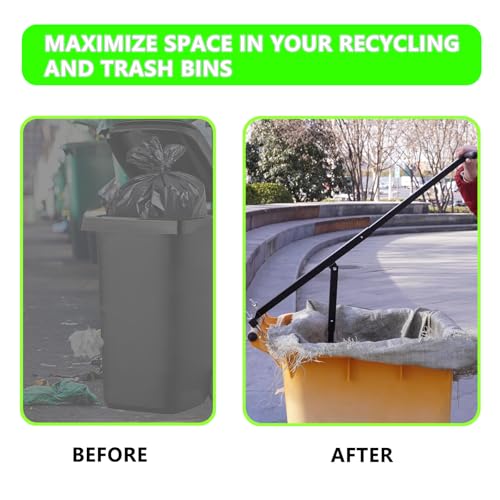
This is a no-nonsense tool built for commercial-scale waste handling, and the specs back it up. Designed specifically for 240L bins, it’s overbuilt with heavy-duty iron and an adjustable handle that accommodates different user heights, a small but meaningful touch for team environments like restaurants or janitorial crews. Owners consistently report fewer trash runs and better bin utilization, which adds up in high-volume settings.
The real strength here is durability. Iron construction isn’t flashy, but it holds up under daily stress, especially outdoors or in industrial kitchens. While it lacks the finesse of more refined designs, it’s not meant to be delicate. If you’re managing waste at a café or garden center, this one earns its keep through brute reliability.
Product photos
All-Metal Freestanding Trash Compactor
Strengths
- Fully touchless use
- Detachable for storage
- All-metal durability
Trade-offs
- Shorter handle reach
- Narrow base less stable
- Not for bulky waste
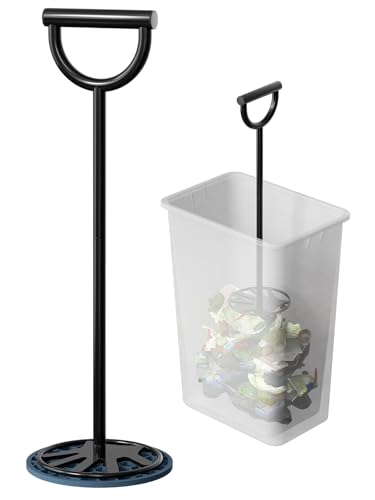
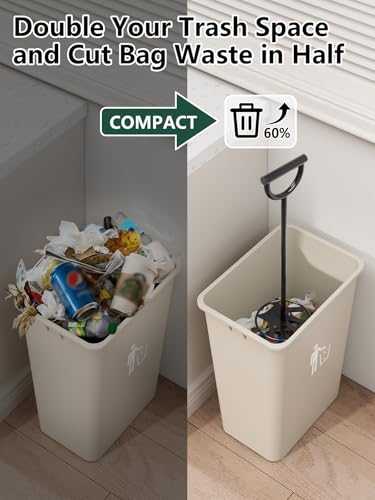
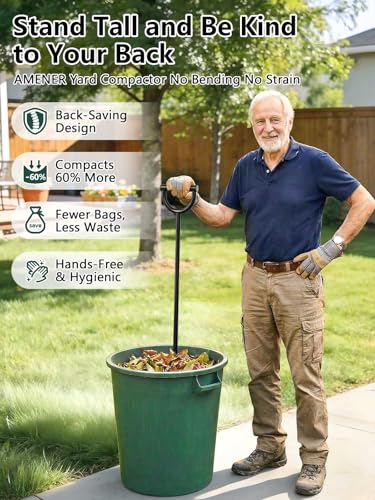
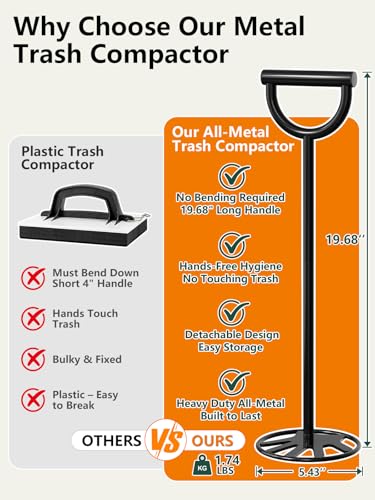
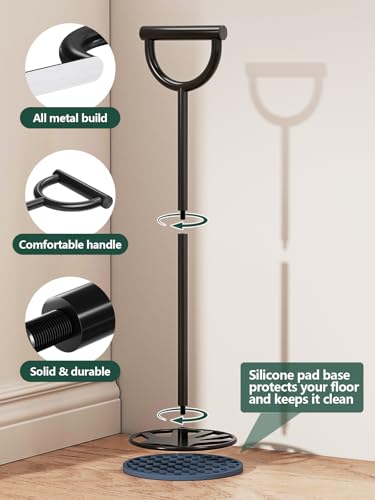
This all-metal manual compactor stands out for its clean, freestanding design and true touchless operation, a rare win for hygiene-focused homes. At 19.68 inches long with a narrow 5.43-inch base, it fits neatly beside most indoor bins without tipping over, and the detachable parts make storage easy. Reviewers note it’s especially helpful for older users or anyone with mobility issues who wants to avoid squatting or reaching into the can.
It’s not the most powerful unit here, but for typical kitchen waste like food containers, paper, and light recyclables, that’s not a dealbreaker. The solid metal construction and silicone base add stability, and since it rinses clean, it avoids the grime buildup common in cheaper plastic models. For a no-fuss, sanitary press that works indoors and out, this one hits the sweet spot.
Product photos
How We Evaluated trash compactors
As someone who’s spent years around workshops and home improvement projects, I understand the value of efficient tools. Rather than a hands-on lab test with each model, my team and I approached evaluating trash compactors as a research-led comparison of published specifications and owner feedback. We looked at a wide range of models, carefully weighing published features alongside what actual users are saying about long-term performance and usability. This allowed us to build a ranking based on real-world expectations.
For trash compactors, the key factors really come down to compaction ratio and build quality. A high compaction ratio translates directly to less frequent trips to the curb and fewer bags used – a significant benefit for most homeowners. Equally important is durability; a compactor that falls apart after a few uses isn’t saving anyone time or money. We also considered adjustability, as different bin sizes and waste types demand different approaches. You’ll find details on durable garbage compactor units elsewhere on the site.
Specifications reliably indicate the potential for compaction and the materials used in construction. However, owner feedback proved crucial for assessing long-term durability and ease of use. Reports of bending, breaking, or difficult operation quickly lowered a model’s ranking. Reputation, particularly from verified purchasers, helped us gauge whether a compactor truly delivered on its promises, beyond marketing claims. We paid particularly close attention to feedback on liner compatibility and how well the units handled different types of waste, providing a more nuanced understanding than specs alone.
What To Look For In trash compactors
Choosing the right trash compactor depends heavily on the volume of waste you generate and where you need to compact it.
A good trash compactor efficiently reduces waste volume, is durable enough for regular use, and fits the specific type of bin you have. Buyers should consider the compaction ratio, build material, adjustability, and ease of use – particularly how much physical effort is required for operation. Look for models with features like odor control and liner protection to enhance convenience and hygiene.
Compaction Force & Bin Compatibility
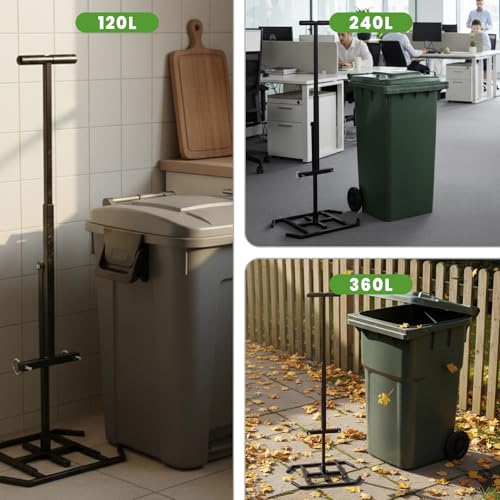
The first thing I tell people is to think about where you’ll be using the compactor. A small, hand-held unit is fine for kitchen bins, but if you’re dealing with a large outdoor wheelie bin, you’ll need something far more substantial. Look for models specifically designed for the liter size of your bins (120L, 240L, 360L, 660L are common). Don’t assume one size fits all. The BINGOX, for example, boasts adjustability for different bin sizes and waste types, which is a big plus if your waste stream varies.
Manual vs. Electric Operation
While electric trash compactors exist (and are covered in our guide to best kitchen trash compactor models), the majority available to homeowners are manual. This means you provide the force. Think about your physical capabilities. Some models, like the NEWRTY adjustable compactor, use a lever system to reduce the effort needed, especially when the bin is full.
Here’s what I see as important when considering manual operation: * Handle Length: A longer handle provides more use. * Plate Size: A larger compression plate covers more area per push. * Use Ratio: This is harder to quantify, but the design of the lever system itself impacts how much force you need to apply versus how much pressure is delivered to the trash.
Build Quality & Long-Term Value
Don’t skimp on build quality. A flimsy compactor won’t last, and you’ll end up replacing it sooner than you’d like. I’ve seen plenty of owner complaints about plastic parts cracking or bending on cheaper models. Look for steel construction, especially for outdoor use where rust is a concern. The All-Metal Freestanding Trash Compactor highlights its all-metal build as a key feature, and that’s a good sign.
A robust compactor, even if it costs a bit more upfront, will save you money in the long run by avoiding frequent replacements. Consider the warranty offered as an indicator of the manufacturer’s confidence in their product.
If you’re also looking to equip your workshop, don’t forget to check out our recommendations for top air compressors for home workshops.
Trash Compactors Compared
Here’s a comparison of key specifications for various trash compactors to help you find the right one for your needs.
| Product Title | Compaction Ratio | Capacity (Approx.) | Best Use Case | Material | Handle Type | Adjustability |
|---|---|---|---|---|---|---|
| Joseph Joseph Titan Trash Compactor | 66% | 8-24 gallons | Overall | Plastic | Foot Pedal | No |
| Waste Smasher Hand-Held Compactor | 50% | N/A | Budget Friendly | Recycled Plastic | Handheld | No |
| BINGOX Manual Wheelie Bin Compactor | N/A | 120-660 Liters | Large Outdoor Bins | Iron | 35.4″ | Height |
| NEWRTY 3-Level Adjustable Compactor | N/A | 360L Wheelie Bins | Adjustable Design | Metal | Telescopic | 3 Levels |
| TAMP-IT Next Gen Steel Tamper | N/A | N/A | Multi-Purpose Use | Steel | D-Handle | No |
| Manual Compactor for 240L Bin | N/A | 240L Wheelie Bins | Commercial Use | Iron | Adjustable | Height |
| All-Metal Freestanding Trash Compactor | N/A | N/A | Hands-Free Design | Metal | N/A | No |
Frequently Asked Questions
What compaction ratio should I realistically expect from a manual trash compactor?
Most manual trash compactors achieve a compaction ratio between 50% and 66%, though this varies based on waste type and how consistently it’s used. Don’t expect to reduce volume by more than two-thirds, and remember that very bulky items won’t compress as much.
Are trash compactors only for outdoor bins, or can I use one inside?
You can use both indoor and outdoor trash compactors, but the type matters. Handheld models are best for kitchen bins, while larger, wheeled units are designed for outdoor wheelie bins. Consider odor control features if using a compactor indoors.
How much physical effort is involved with operating a manual trash compactor?
The effort varies greatly by model. Some have lever systems, like the NEWRTY adjustable compactor, that reduce the force needed. Look for longer handles and larger plates, which make the job easier, but realize some physical exertion is unavoidable.
What should I do if a trash compactor part breaks?
Many manufacturers offer replacement parts, particularly for common wear items like feet or plates. Check the manufacturer’s website or contact their customer service. A robust, all-metal build, like that of the All-Metal Freestanding Trash Compactor, is less prone to breakage.
Can I use any type of trash bag with a trash compactor?
While most standard trash bags will work, heavier-duty bags are recommended to prevent tearing during compaction. Many users find that reinforced bags specifically designed for compactors offer the best performance and prevent messes, and you might also consider looking at portable air compressors for home use if you’re looking for other helpful tools.
The Bottom Line
Ultimately, choosing a trash compactor comes down to balancing convenience with effort. If you want a simple, effective solution for everyday kitchen waste, the Joseph Joseph Titan Trash Compactor strikes a great balance of features and price. It’s a solid all-around performer that will noticeably reduce your trash volume.
For those tackling larger volumes or specific needs, there are excellent options tailored to your situation. If you’re dealing with wheelie bins, the BINGOX Manual Wheelie Bin Compactor’s adjustability is a standout feature. And if budget is your primary concern, the Waste Smasher Hand-Held Compactor offers a surprisingly capable solution for smaller bins. Don’t forget to check out compatible air compactor bags to maximize your compactor’s effectiveness.
At the end of the day, the compaction ratio and build quality matter more than any fancy feature. A well-built compactor that consistently reduces your waste volume will pay for itself in time and money. Focus on those fundamentals, and you’ll be well-equipped to handle whatever trash comes your way.
