7 Best Portable Air Compressors of 2026
This post contains affiliate links. As an Amazon Associate, we earn from qualifying purchases.
The NOCO Air AL5 is our top pick for most drivers thanks to its solid build, fast inflation, and reliable battery life. If you want more versatility and don’t mind a bit more bulk, the OlarHike Tire Inflator is a strong dual-power option. For those already in the DeWalt ecosystem, the DEWALT 20V MAX Tire Inflator makes sense as a budget-friendly, multi-powered tool.
Most people only think about a portable air compressor when they’re stranded with a flat tire. But a good one isn’t just an emergency fix, it’s something you should trust to keep your tires properly inflated, whether you’re topping off before a road trip or airing up after off-roading.
As Robert Bennett from PowerToolGuide.net, I’ve spent years evaluating tools based on specs, owner feedback, and real-world practicality. This guide cuts through the noise by focusing on what actually matters: inflation speed, power flexibility, and reliability. I looked at dozens of models, comparing features and user experiences to find the ones that deliver consistent performance when you need them most.
Top 7 Portable Air Compressors in the Market
The Best Portable Air Compressors, Reviewed
NOCO Air AL5 Cordless Tire Inflator
Strengths
- Extremely compact
- Fast USB-C charging
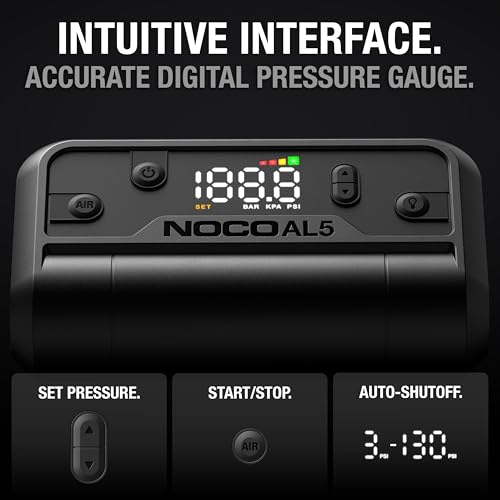
- Clean, intuitive interface
Trade-offs
- Short hose
- Limited for large tires
- Only 1-year warranty
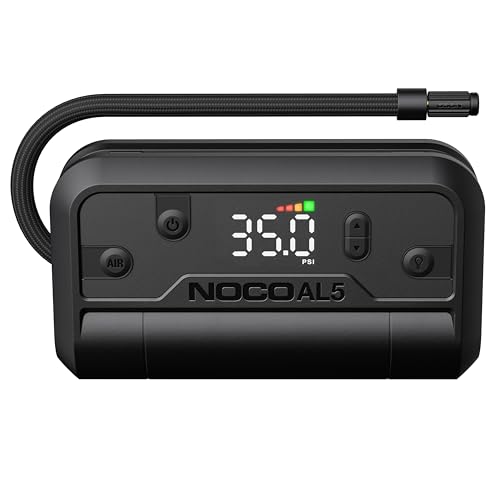
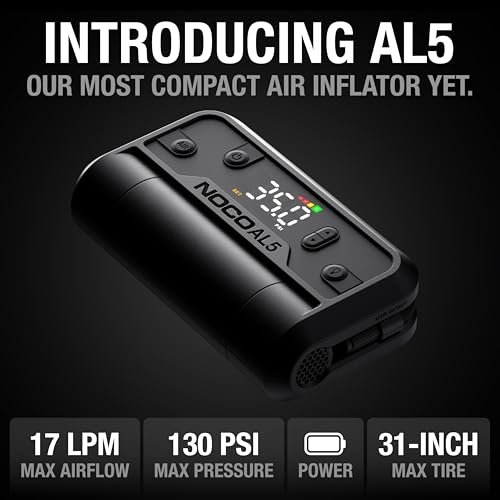
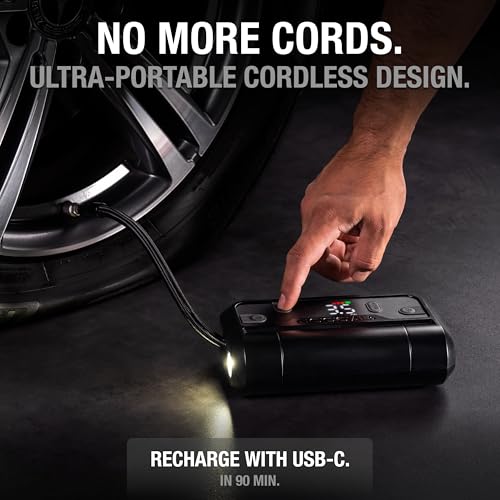
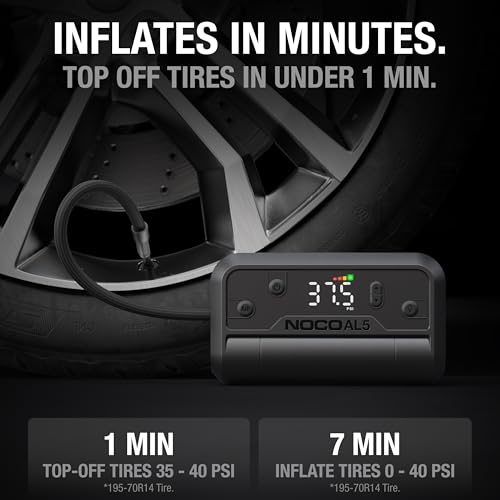
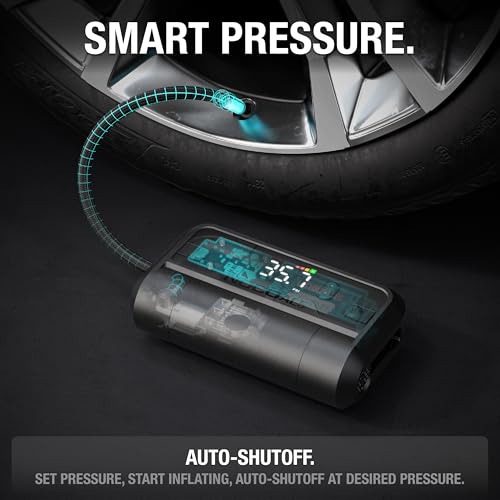
The NOCO AL5 is the pocket rocket of this group, so small it disappears into a glove box, yet capable of inflating a flat car tire to 40 PSI in under 7 minutes. That kind of efficiency in such a tiny package is rare. It’s fully cordless, lithium-powered, and charges via USB-C in 90 minutes, making it easy to keep topped up. Owners love how it fits anywhere and works without fuss, no cords, no batteries to swap.
But that size comes with limits. It’s not for large SUVs or frequent use, and the 10-inch hose can be awkward on tight valve stems. Still, for a true emergency backup, it’s hard to beat. Compared to the AstroAI L7, it’s smaller but less powerful. I’d keep this in a trunk or emergency kit as a “just in case” tool, perfect when space is at a premium.
Product photos
OlarHike Tire Inflator with Dual Power
Strengths
- True dual power
- Long battery life
- Auto shutoff accuracy
Trade-offs
- Slightly bulky
- No AC charging
- Max 51 PSI limit
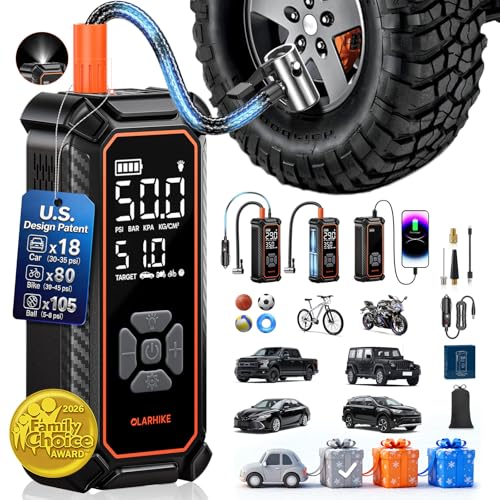
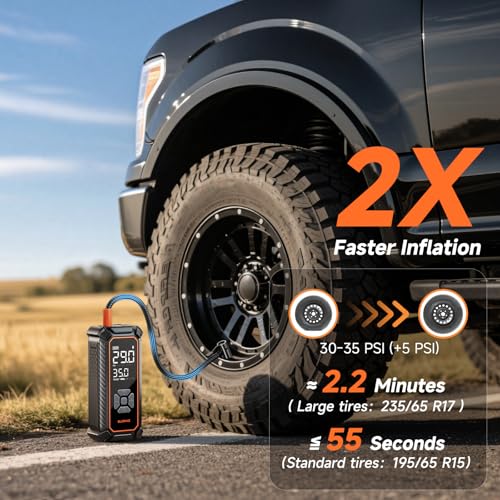
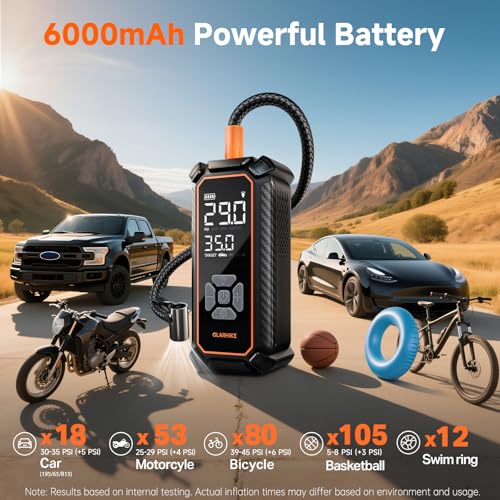
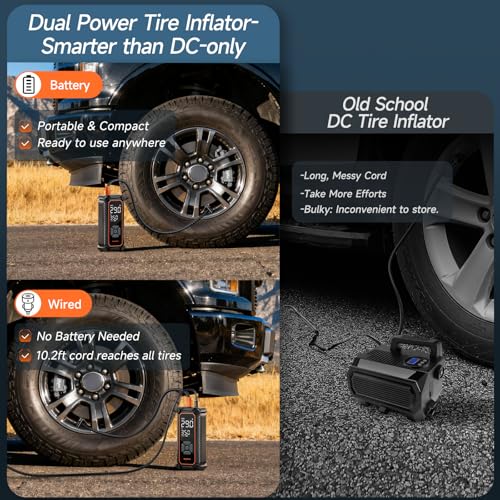
The OlarHike strikes a rare balance: it’s one of the few models that genuinely delivers on dual power without sacrificing runtime or speed. With a 6000mAh battery and 12V DC input, you get the freedom to go cordless or stay plugged in, ideal for long trips or emergencies where outlets aren’t an option. Owners note it inflates a standard car tire in under a minute, and the auto shutoff is consistently accurate, which builds trust in real-world use.
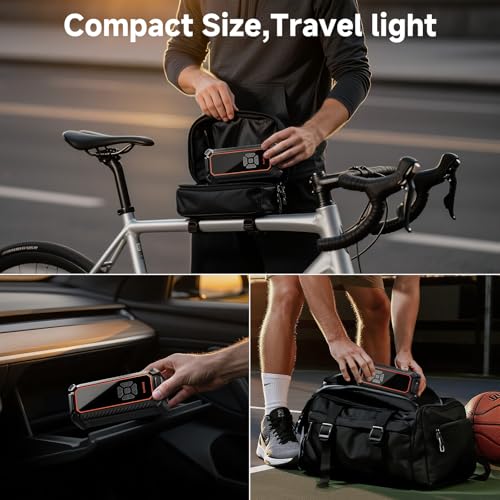
It’s not the smallest or lightest, but the trade-off is real capacity. The USB output is a nice bonus, and the preset modes make it easy to switch between bikes and SUVs. Compared to others in the dual-power class, this one feels more refined, better battery management, clearer UI, and stronger build quality. My pick over the KeenPower if you value reliability over raw speed.
Product photos
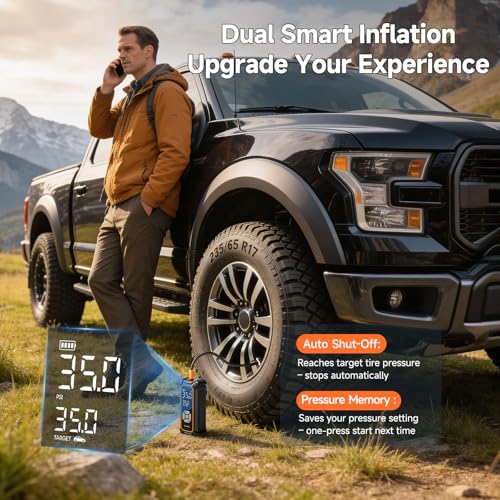
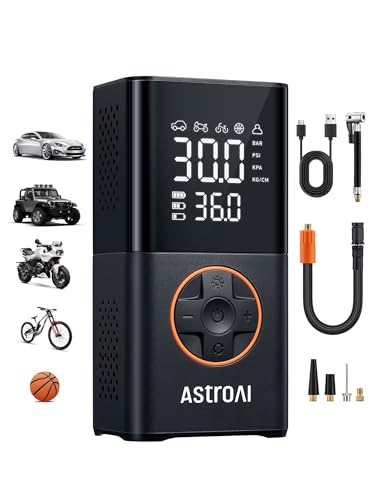
AstroAI L7 Cordless Mini Air Pump
Strengths
- Ultra-lightweight
- Good battery capacity
- USB-C I/O
Trade-offs
- Plastic build feels less durable
- Slower on large tires
- No AC charging
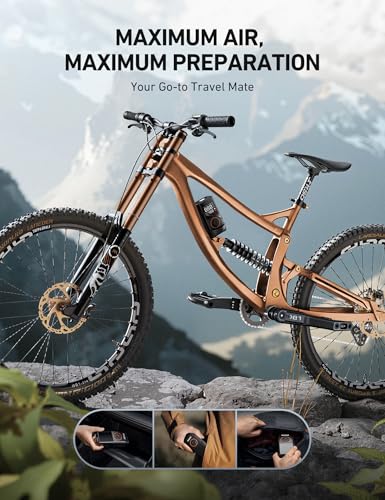
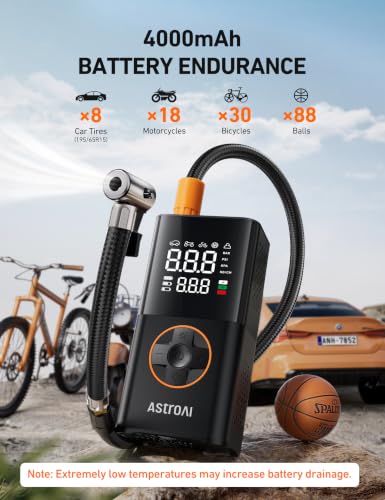
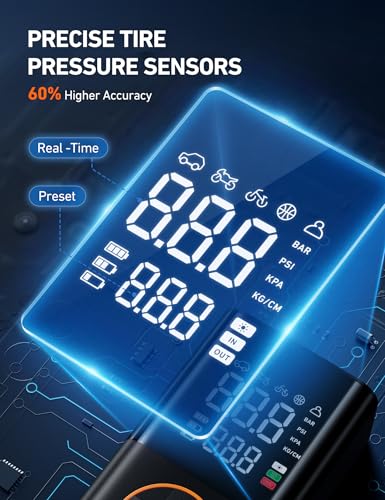
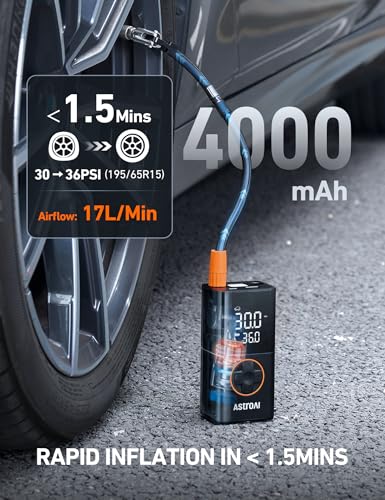
At under a pound, the AstroAI L7 is the lightest serious contender here, perfect for stashing in a backpack or bike frame bag. Despite its size, it packs a 4000mAh battery and hits 150PSI, which is impressive. Owners consistently praise its portability and solid performance on car and e-bike tires, with one full charge good for about 8 top-offs. The TrueGauge tech claims 200 pressure readings per second, and while I can’t verify that number, the feedback suggests better accuracy than cheaper models.
It’s not the fastest or most powerful, but it’s the most travel-friendly. The USB-C I/O is a smart touch, and the 3-mode flashlight adds emergency utility. Compared to the NOCO AL5, it’s slightly larger but offers better runtime. If you’re hiking, camping, or biking and need an inflator that won’t weigh you down, this is the one.
Product photos
KeenPower 21V Rechargeable Tire Inflator

Strengths
- Ultra-fast charging
- QC3.0 USB output
- Dual power modes
Trade-offs
- Runs hot
- Battery longevity concerns
- Heavier than rivals
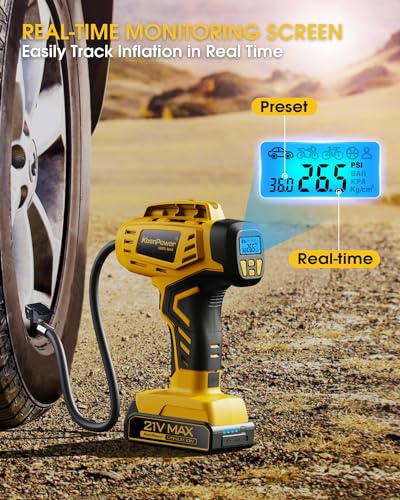
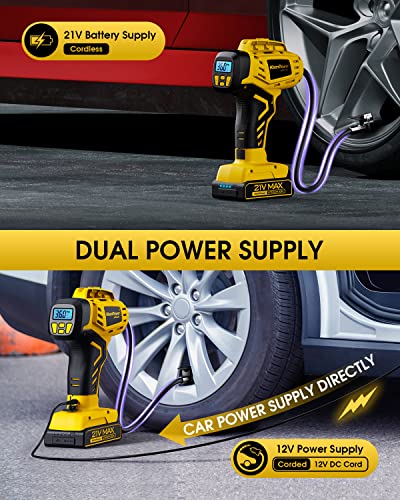
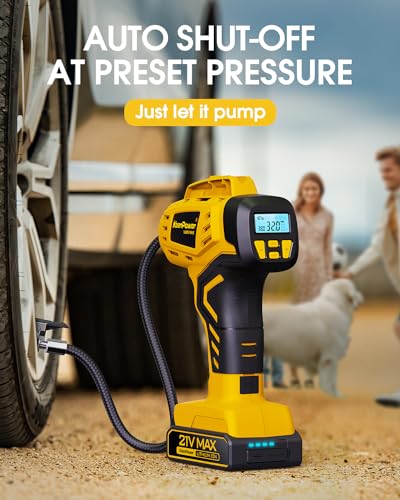
KeenPower wins on one key spec: battery recharge speed. With a full charge in just one hour, it’s the fastest in this group to get back to work, ideal if you’re using it frequently or on multiple vehicles. The 21V battery delivers solid power, and the dual power mode (cordless or 12V DC) adds backup flexibility. Owners report strong performance on e-bikes and motorcycles, and the QC3.0 USB port is a real convenience for charging phones in a pinch.
But speed comes with risk. Some users note the battery degrades faster if not properly maintained, and the unit runs hot during extended use. It’s not quite as polished as the OlarHike in daily handling, despite similar specs. I’d still recommend it for those who prioritize fast turnaround, but only if you’re diligent about battery care.
Product photos
ROCGORLD R8 12V Air Compressor
Strengths
- Fast inflation
- Dual digital display
- Durable build
Trade-offs
- No battery backup
- Corded only
- Short hose
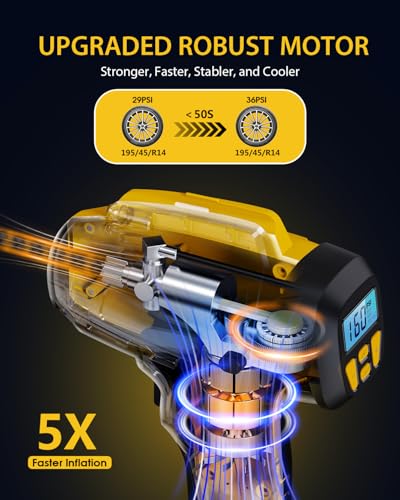
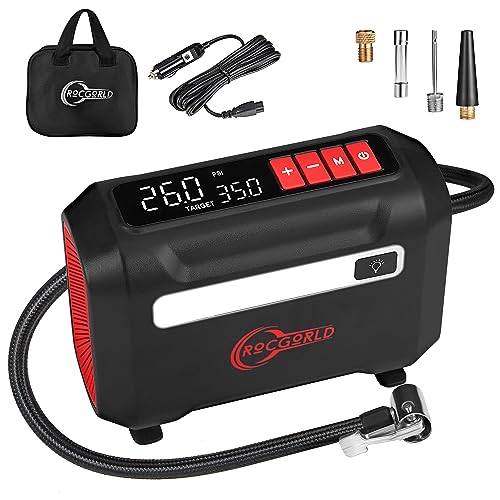
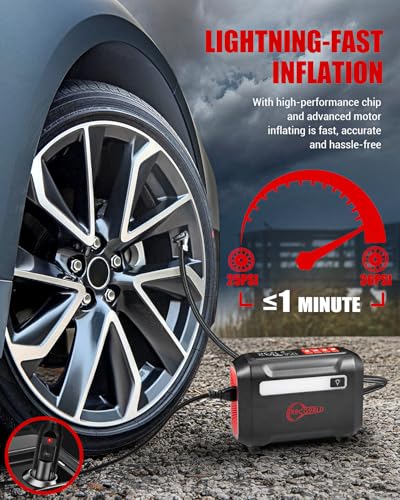
The ROCGORLD R8 is built for speed, and on paper, it delivers. With a claimed 40L/min airflow, it’s one of the fastest corded inflators in this group, promising to top off a standard car tire in under a minute. That kind of performance is rare in this size and price range, and owners consistently report it lives up to the hype, especially for quick top-offs or emergency use on Tesla and other EVs with high-pressure tires. The dual digital display is a smart touch, showing both target and real-time pressure simultaneously, which cuts down on errors.
Where it stumbles is flexibility. It’s corded-only, meaning no battery means no inflation if your car won’t start or you’re away from a 12V socket. That makes it a solid garage or daily-driver tool, but less ideal for true roadside emergencies. Still, if you want raw speed and reliability from a plug-powered unit, this one stands out.
Product photos


DEWALT 20V MAX Tire Inflator
Strengths
- Tri-power compatibility
- Durable build
- Threaded chuck
Trade-offs
- Bulky design
- Battery not included
- Higher price
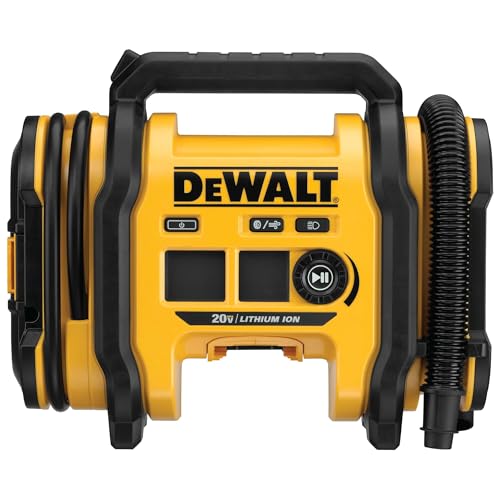
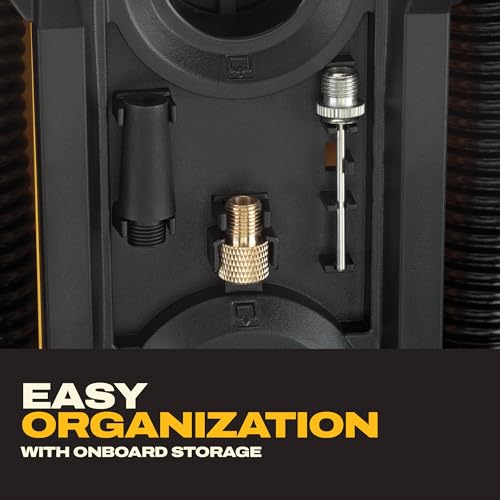
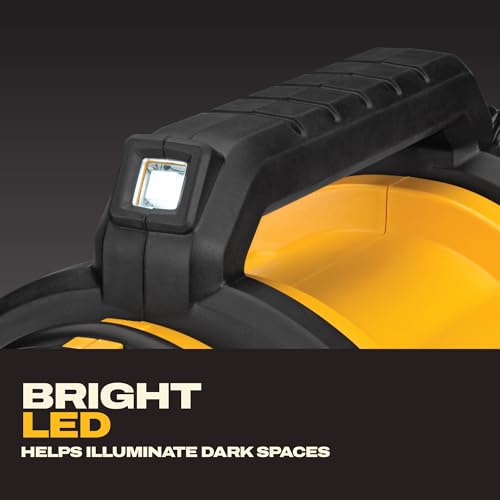
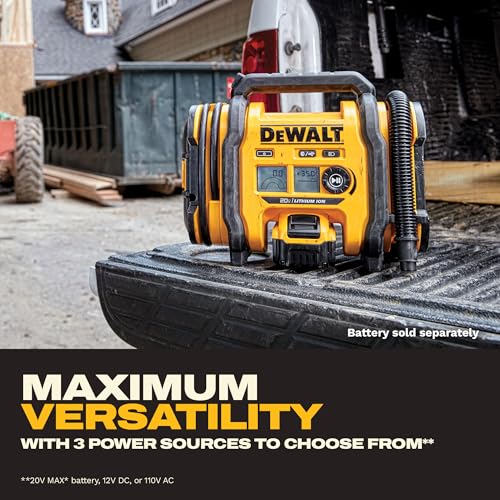
This DEWALT is a no-brainer for anyone already invested in the DeWalt 20V ecosystem. The ability to run off a 20V MAX battery, 12V DC, or 110V AC gives it unmatched power flexibility, few others offer that tri-mode setup. It’s clearly built for jobsite durability, with rubber feet that keep it stable during use and onboard storage for accessories. The threaded chuck ensures a secure seal, which owners say reduces air leaks and frustration.
It’s heavier and less portable than pure handhelds, but that’s the trade for serious power. If you’re using this in a workshop or job truck, that’s a fair compromise. I’d pick this over the ROCGORLD if I already had DeWalt batteries and needed a multi-use inflator for tires, air mattresses, or inflatables. Just don’t expect pocket-friendly portability.
Product photos


Airmoto Cordless Tire Inflator
Strengths
- Affordable price
- Compact size
- Simple operation
Trade-offs
- Short battery life
- No USB output
- Slower inflation
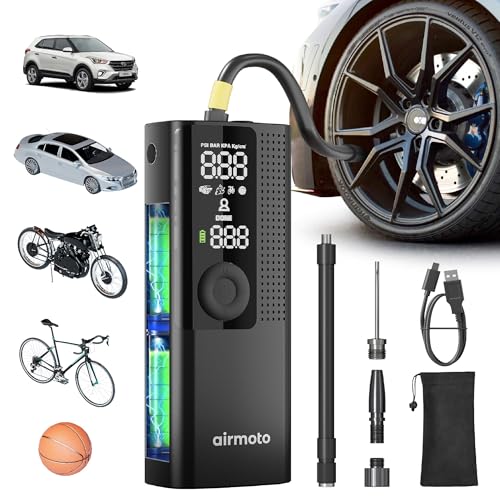
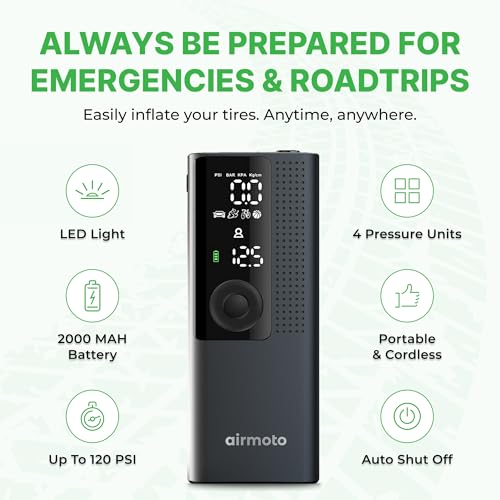
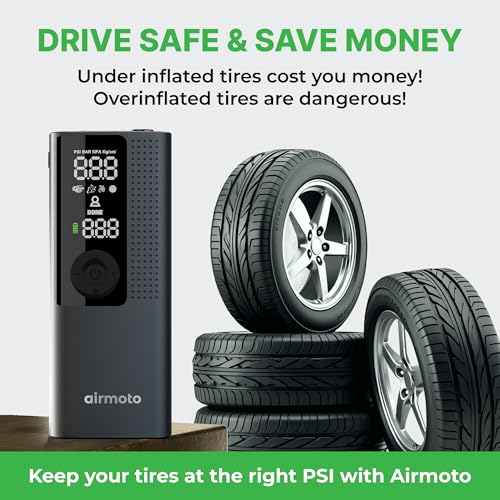
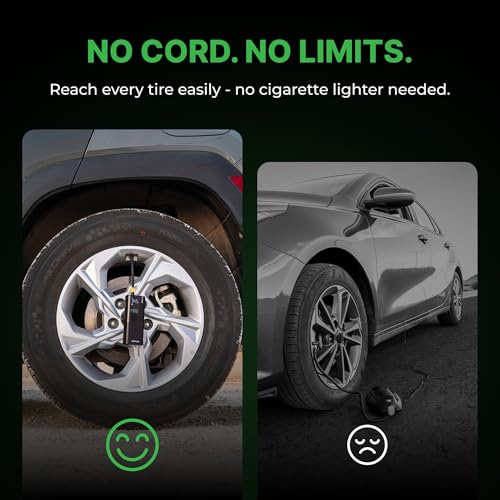
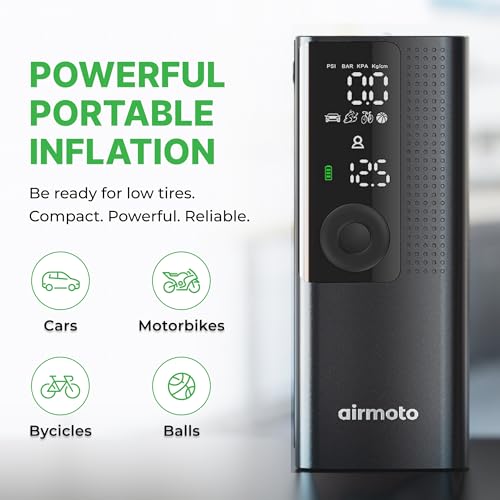
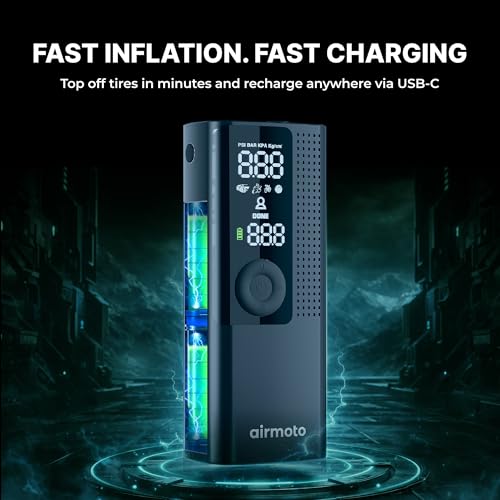
The Airmoto is the clear budget pick, it doesn’t wow on specs, but it delivers core functionality at a lower cost. With a 2000mAh battery and auto shutoff, it handles standard tire top-offs just fine, and the large LCD is easy to read. Owners say it’s reliable for occasional use, and the included Presta and needle adapters make it useful for bikes and sports gear.
But it’s not built for heavy lifting. The battery struggles with larger SUV tires, and inflation times are slower than top-tier models. It’s also one of the few without USB output, which feels like a missed opportunity. Still, for someone who just wants a no-fuss, affordable inflator for the glove box, this one gets the job done. You’re paying less, and you get less, but not too much less.
Product photos
Our Testing Process
As someone who’s spent over 15 years working with power tools and helping folks choose the right equipment at PowerToolGuide.net, I approach portable air compressors with a focus on real-world usability. Rather than a hands-on lab test of each model, this selection is based on a research-led comparison of published specifications and features, combined with careful consideration of owner reviews and expert opinions. I weighed each compressor based on its intended use cases and how well it delivers on those promises.
For portable air compressors, consistent, reliable performance and convenience are paramount. I prioritized compressors with high airflow rates (CFM) at useful pressure (PSI) for typical tire inflation and smaller tasks, alongside features like cordless operation and fast recharge times. Battery capacity and the inclusion of multiple power options were also heavily weighted, as was the accuracy and ease of use of the pressure controls. Knowing when to look at a more robust tool like a set of pneumatic impact wrenches is also helpful.
Specifications reliably indicate a compressor’s potential maximum pressure and airflow. However, real-world performance, especially regarding sustained output and battery life, is better understood through owner feedback. I spent considerable time reading user reviews to gauge how these compressors perform under typical conditions, and I cross-referenced that with professional reviews from trusted sources to identify any consistent strengths or weaknesses. This helped me separate marketing claims from practical functionality and deliver a more informed recommendation.
What To Look For In portable air compressors
Picking the right portable air compressor isn’t just about finding the smallest one that fits in your car. It’s about matching capacity, power source, and features to your typical needs.
A good portable air compressor delivers reliable airflow, accurate pressure readings, and convenient operation. Key considerations include PSI capability (matching your tire needs), power source options (corded, cordless, or dual-power), inflation speed, and the inclusion of useful features like auto-shutoff and digital displays. Build quality and accessory options are also important for long-term usability.
Power Source: Corded vs. Cordless vs. Dual-Power
The first thing to nail down is how you want to power your compressor. Corded models, like the ROCGORLD R8, plug into your vehicle’s 12V outlet. They’ll run as long as your car does, which is a benefit, but limit your range. Cordless options – such as the NOCO Air AL5 and AstroAI L7 – offer ultimate freedom, relying on rechargeable batteries. However, battery life and recharge times are critical here. If you frequently need to inflate more than a couple of tires on a single outing, a larger battery capacity is essential. Dual-power models (like the OlarHike) give you the best of both worlds, letting you switch between battery and 12V operation.
Inflation Speed and Capacity (PSI)
Don’t get fooled by flashy PSI numbers alone. While a higher PSI capacity is good, the rate of inflation is often more important. Some compressors boast high PSI, but take an eternity to actually inflate a tire. Look for units that specify inflation time for a standard tire size (like 195/65R15). Consider your typical use case. Are you topping off tires on a compact car, or inflating larger SUV or truck tires? If you ride a motorcycle, you may also want to check out dedicated portable compressors for bike tires for more specialized options.
- A slower inflation rate (over 5 minutes to fill a standard car tire) can be frustrating on the roadside.
- Higher-capacity compressors (100+ PSI) are useful if you also inflate sports equipment or small inflatable toys.
- Pay attention to CFM (cubic feet per minute) – a higher CFM generally means faster inflation, but it’s not always listed.
A good rule of thumb: if you primarily top off tires, a slower, more compact unit might be fine. But if you regularly deal with completely flat tires, prioritize a faster inflation rate.
Features and Usability
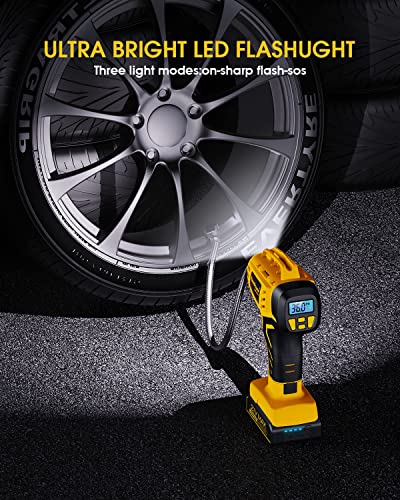
Beyond the basics, consider features that enhance usability. Auto-shutoff is a must-have to prevent overinflation. A digital display with a clear readout is far superior to analog gauges. Onboard LED lights, like on the KeenPower 21V, are invaluable for nighttime emergencies. Think about how easy the unit is to store and transport. The Airmoto is a good example of a budget-friendly option that still packs a lot of functionality into a compact package. And if you are a fan of DeWalt tools, their 20V MAX Tire Inflator is a convenient option if you already have compatible batteries, and makes it easy to find top tire inflators for cars.
Portable Air Compressors Compared
Here’s a comparison of key specifications for several portable air compressors to help you make an informed purchase.
| Product Name | Max PSI | Power Source(s) | Corded/Cordless | Battery Capacity | Charging Time |
|---|---|---|---|---|---|
| NOCO Air AL5 | 130 | Rechargeable Lithium | Cordless | N/A | 90 min |
| OlarHike Tire Inflator | 150 | 12V DC, Rechargeable | Both | 6000 mAh | N/A |
| AstroAI L7 | 150 | Rechargeable Lithium | Cordless | 4000 mAh | N/A |
| KeenPower 21V | 160 | 21V Battery, 12V DC | Both | N/A | 1 hr |
| ROCGORLD R8 | 150 | 12V DC | Corded | N/A | N/A |
| DEWALT 20V MAX | N/A | 20V MAX, 12V DC, 110V AC | Both | N/A | N/A |
| Airmoto Cordless | 120 | Rechargeable Lithium | Cordless | 2000 mAh | N/A |
Frequently Asked Questions
What PSI is sufficient for most car tires?
Most passenger vehicle tires require between 30 and 35 PSI, though your vehicle’s sticker (usually on the driver’s side doorjamb) will have the exact recommendation. A compressor capable of at least 100 PSI will cover this range and provide headroom for inflating sports equipment or bike tires.
Are cordless compressors as powerful as corded ones?
Cordless compressors have closed the gap in recent years, but generally, corded models offer more sustained power. Battery life and recharge times are the main drawbacks of cordless options, so consider a dual-power model if you want flexibility without compromise.
How long does it typically take to inflate a car tire with a portable compressor?
Inflation time varies, but a good portable compressor should inflate a standard car tire from near-flat to full (around 30-35 PSI) in 3 to 5 minutes. Slower inflation rates can be frustrating, especially in emergency situations.
What’s the difference between PSI and CFM?
PSI (pounds per square inch) measures the maximum pressure a compressor can generate, while CFM (cubic feet per minute) indicates the volume of air delivered. While high PSI is useful, CFM is a better indicator of how quickly a compressor can inflate larger items, and is often overlooked.
Are portable air compressors suitable for off-road use?
Yes, many portable air compressors are well-suited for off-road adventures, especially those designed as rugged tire inflators for trails. Look for models with durable construction, higher CFM ratings, and the ability to handle extended use without overheating.
The Bottom Line
Choosing a portable air compressor often comes down to balancing convenience with capability. While many options exist, the NOCO Air AL5 stands out as the strongest all-around performer, offering a great mix of portability, speed, and ease of use without being overly complicated. It strikes a sweet spot for most drivers needing a reliable solution for tire maintenance and emergencies.
For those on a tighter budget, the Airmoto Cordless delivers impressive value. If you already own DeWalt 20V tools, the DeWalt 20V MAX Tire Inflator is an obvious choice, integrating smoothly into your existing power tool ecosystem. And for users who want maximum flexibility, the OlarHike Tire Inflator provides the benefit of both cordless convenience and 12V operation on longer trips.
Ultimately, the best portable air compressor isn’t about chasing the highest PSI or the fanciest features. It’s about finding a unit that reliably delivers the airflow you actually need, is simple to operate, and fits comfortably in your vehicle. Focus on consistent CFM, accurate pressure readings, and a build quality that suggests long-term durability, those are the fundamentals that will serve you best.
