
7 Best Garbage Compactors of 2026
This post contains affiliate links. As an Amazon Associate, we earn from qualifying purchases.
The best overall garbage compactor is the BINGOX Manual Trash Compactor, thanks to its rugged iron build and compatibility with large wheelie bins. For those on a budget, the Joseph Joseph Titan offers a functional foot-pedal design, while the Adjustable Handle Wheelie Bin Compactor stands out for its ergonomic flexibility and solid performance across bin sizes.
Dealing with overflowing trash is a pain, especially when you’re hauling it out weekly or dealing with limited bin space. A reliable compactor can cut that volume dramatically, but too many models fail after a few months or are awkward to use.
This guide cuts through the noise, focusing on what actually matters: real compaction power, durable materials, and designs you’ll actually want to use. I looked at specs, owner feedback, and long-term reliability trends to find compactors that deliver without the gimmicks.
Top 7 Garbage Compactors in the Market
The Best Garbage Compactors, Reviewed
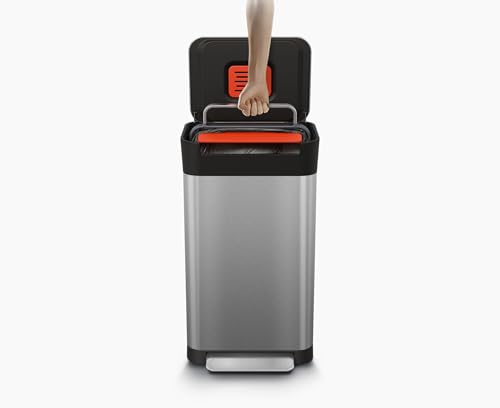
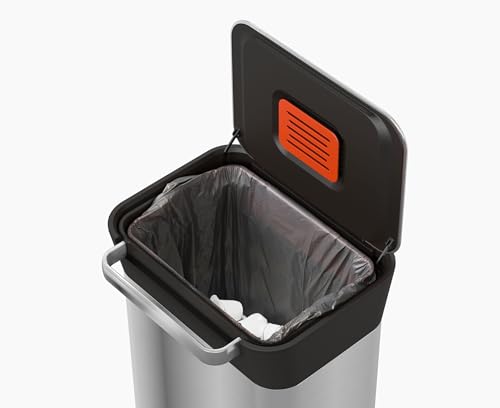
Joseph Joseph Titan Trash Compactor

Strengths
- Integrated compaction system
- Odor-filtering lid
- 10-year guarantee
Trade-offs
- Fixed capacity
- Higher upfront cost
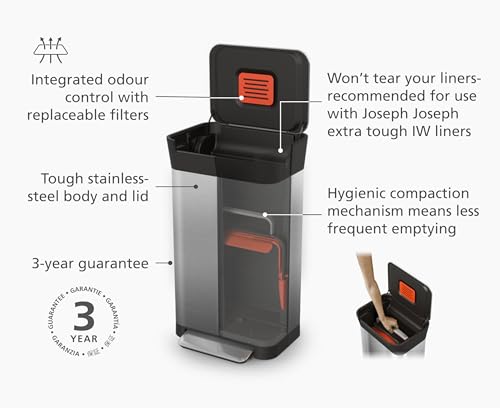
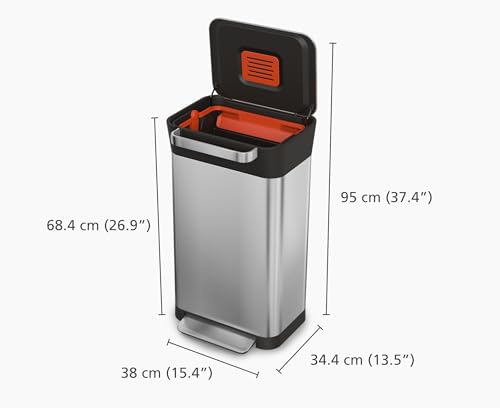
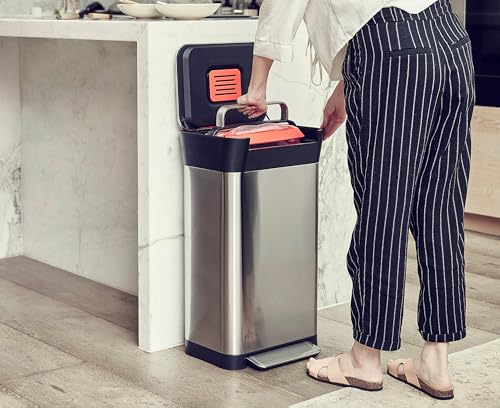
This is the complete package, a self-contained trash can with a built-in compactor, not just a tool. The 30L capacity expands to hold the equivalent of a 90L bin after compaction, which is massive for a kitchen footprint. The foot pedal system is smooth, hygienic, and tested to 100,000 cycles, so durability isn’t a question. The odor filter is a standout for food waste, and the anti-tear design actually works, owners rarely report liner ruptures.
It’s more expensive than add-on tools, but you’re paying for integration. Compared to manual smashers, this eliminates guesswork and maximizes efficiency. The stainless steel build resists dents and stains, and the 10-year guarantee signals real confidence. For most households, this is the smarter long-term buy.
Product photos
Waste Smasher Hand-Held Garbage Press

Strengths
- Dishwasher safe
- Built-in storage hook
- Budget-friendly
Trade-offs
- Plastic construction
- Limited durability
- Less use
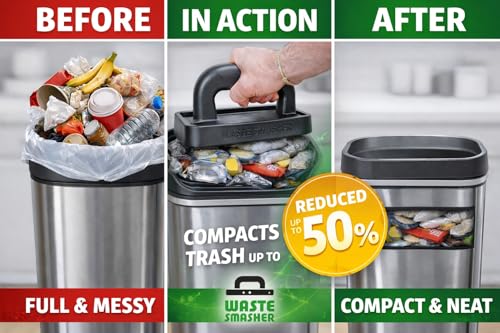
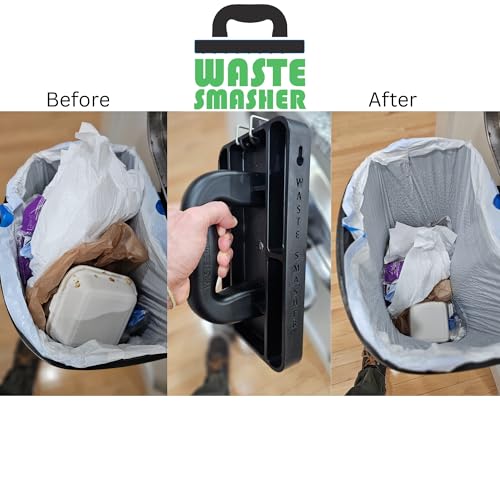
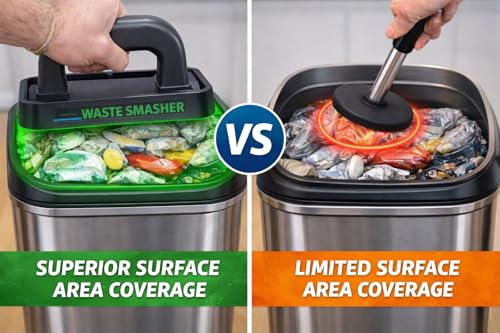
This is the budget play, lightweight, made of recycled plastic, and priced to move. It delivers on basic functionality, reducing waste volume by up to 50% with minimal effort. The built-in hook is a thoughtful touch, keeping it handy on the bin side. And being dishwasher safe? That’s a rare win for hygiene-focused users.
But let’s be clear: it’s not built for heavy loads. The plastic construction flexes under pressure, and it’s best suited for soft waste like paper, food scraps, and light packaging. Compared to metal models, it feels flimsy, but for renters or those testing the concept, it’s a low-risk starting point. Owners say it lasts longer than expected, but it’s not a lifetime tool.
Product photos

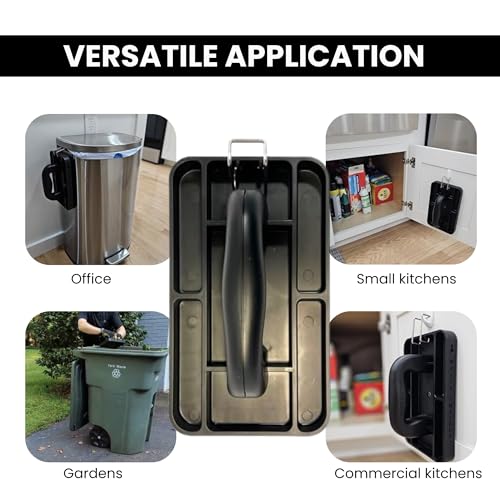
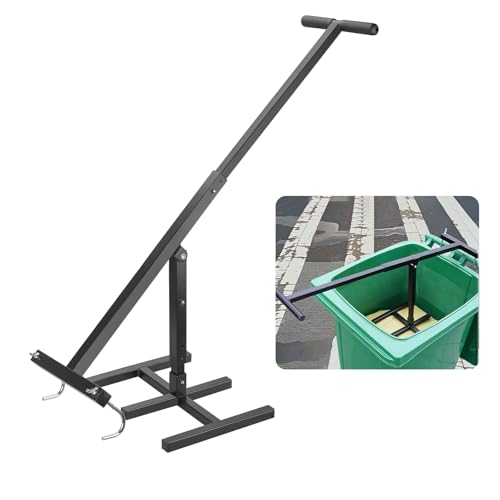
BINGOX Manual Trash Compactor
Strengths
- High compression force
- Padded ergonomic grip
- Weather-resistant build
Trade-offs
- Too tall for indoor use
- Bulky to store
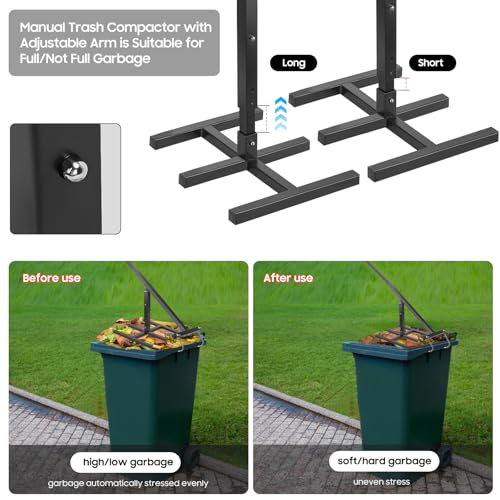
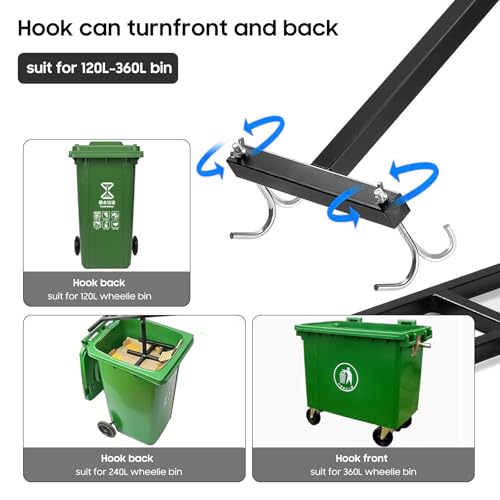
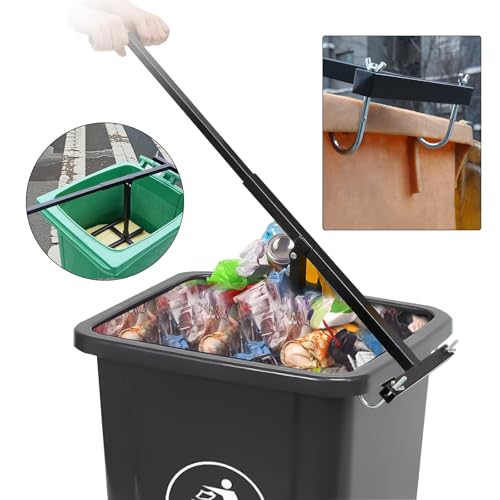
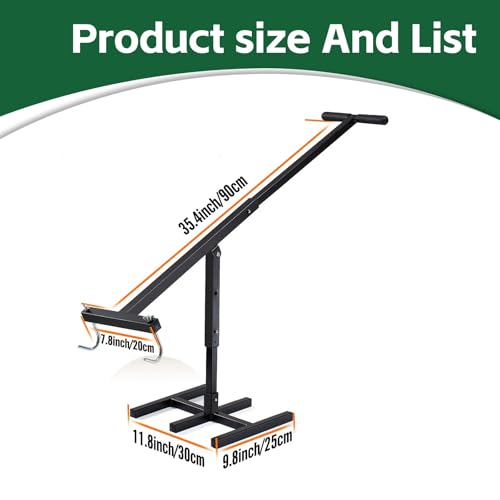
With a 35.4-inch handle and 100kg of applied pressure, this compactor is built for brute force. The height adjustment range is wider than most, and the padded grip adds comfort during repeated use. It’s clearly designed for large outdoor bins, the 120L to 660L compatibility matches commercial-grade carts, and the rustproof iron construction holds up to all weather.
Owners using it for curbside wheelie bins love the touchless operation and back-saving height. Compared to shorter models, this one reduces physical strain significantly. The only downside? Its size makes indoor storage awkward. But if you’re tackling weekly yard waste or family-sized trash loads, this delivers real volume reduction.
Product photos
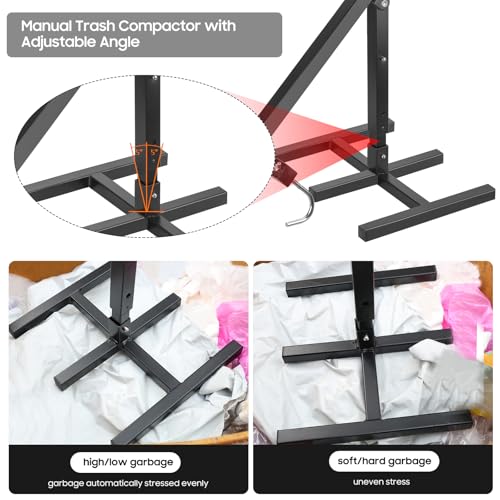
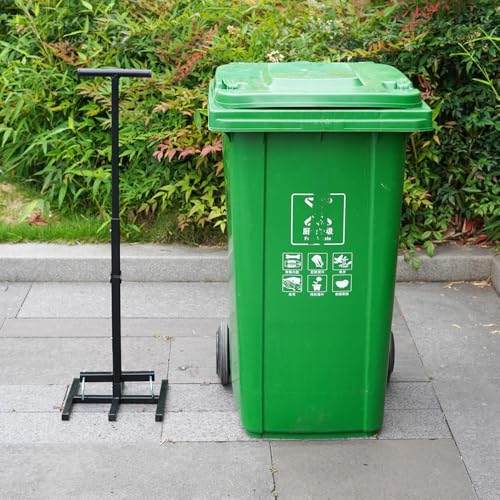
All-Metal Kitchen Trash Compactor
Strengths
- Full-height 30-inch reach
- All-metal durability
- Fits most trash cans
Trade-offs
- No height adjustment
- Heavier than plastic models
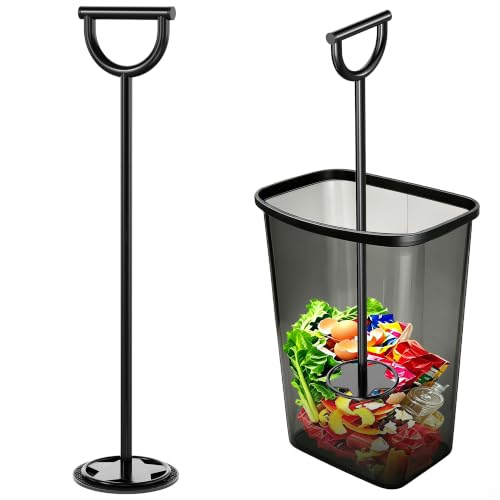
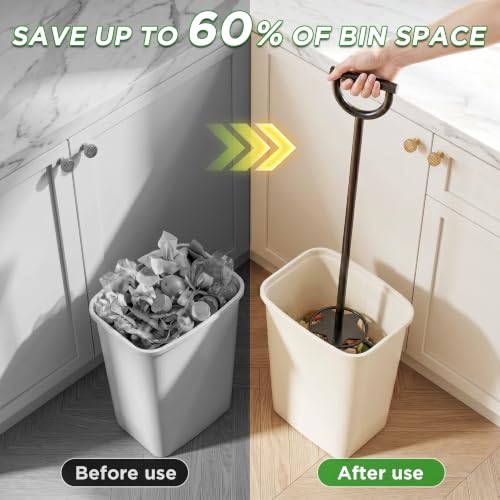
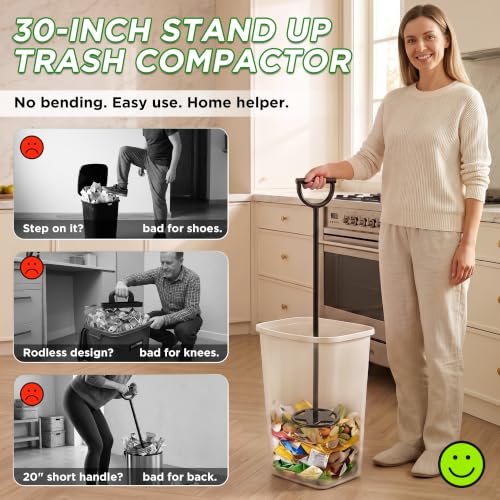
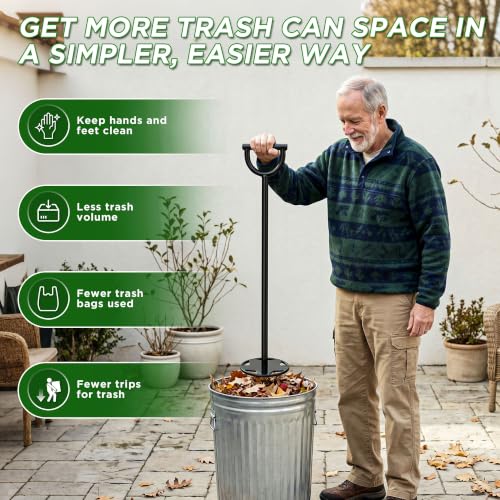
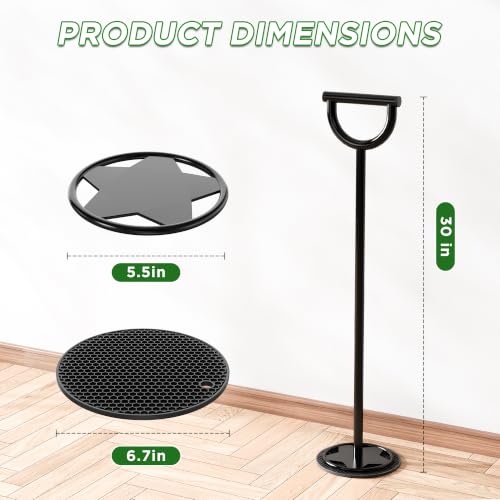
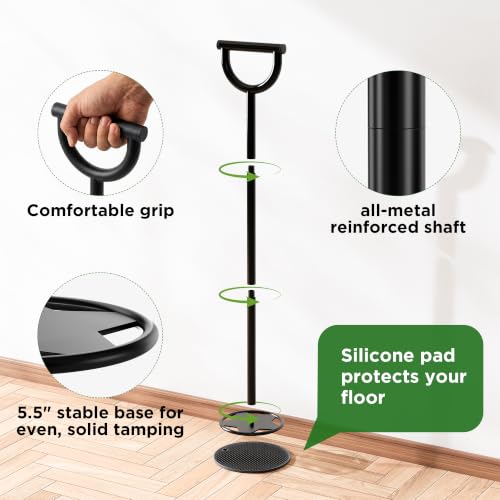
At 30 inches tall, this model hits the sweet spot for home use, long enough to compress without bending, yet narrow enough to store in a corner. The all-metal construction matches the durability of pricier models, and the 5.5-inch base fits most standard and slim kitchen cans. It’s essentially a beefed-up version of the B0FF9M2RSL, with the added benefit of better reach and stability.
Owners say it handles daily kitchen waste with ease, from crumpled paper to flattened cans. The included silicone base keeps it upright and floor-friendly. While it doesn’t match commercial units in force, it’s more than sufficient for households that want fewer trips to the curb. Compared to plastic-handled options, this one feels like it’ll last years without cracking.
Product photos
Heavy Duty Iron Trash Compactor
Strengths
- Heavy-duty iron build
- Fits large bins
- Long ergonomic handle
Trade-offs
- Overbuilt for home use
- Bulky storage
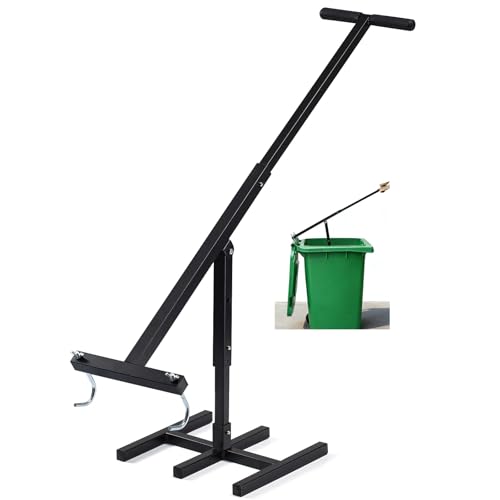
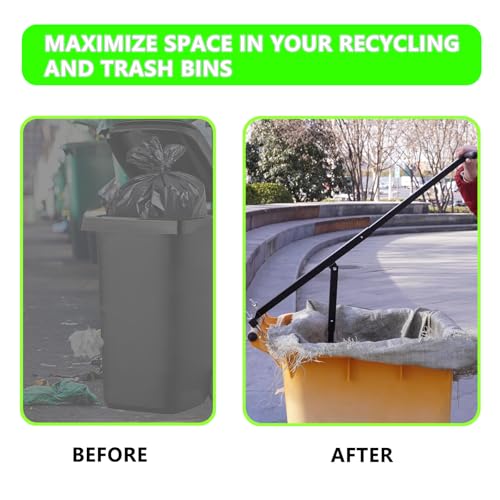
Built like industrial equipment, this forged iron compactor is overkill for most kitchens but makes sense for commercial or high-volume outdoor use. The wide pressing plate and long handle deliver serious use, and the rust-resistant coating means it won’t degrade in rain or snow. Reviewers note it’s a staple at gas stations, rental properties, and small restaurants where reducing dumpster pickups saves real money.
Its compatibility with bins from 120L to 660L gives it unmatched versatility. The adjustable height helps fine-tune compression depth, but the real win is the long handle, it keeps users clean and avoids back strain. Compared to lighter models, this one feels like a permanent tool, not a convenience gadget.
Product photos
Adjustable Handle Wheelie Bin Compactor
Strengths
- Adjustable handle height
- Durable iron construction
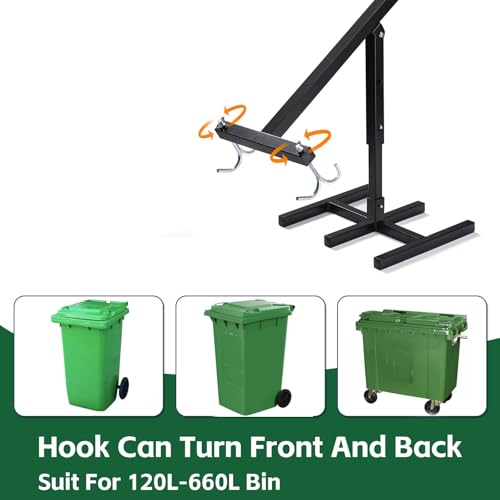
- Optimized for 240L bins
Trade-offs
- Narrow bin compatibility
- Requires maintenance
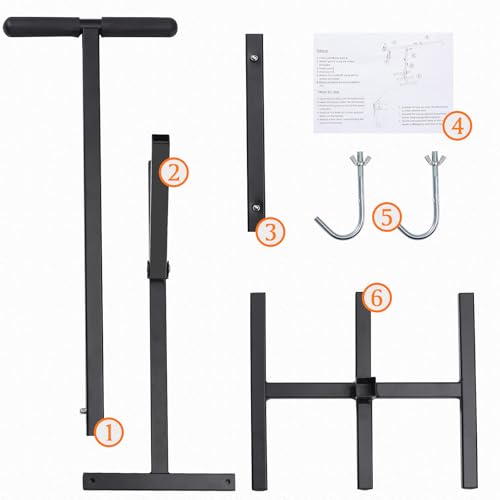
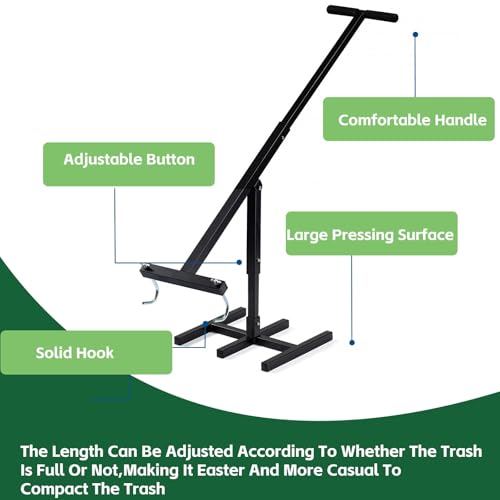
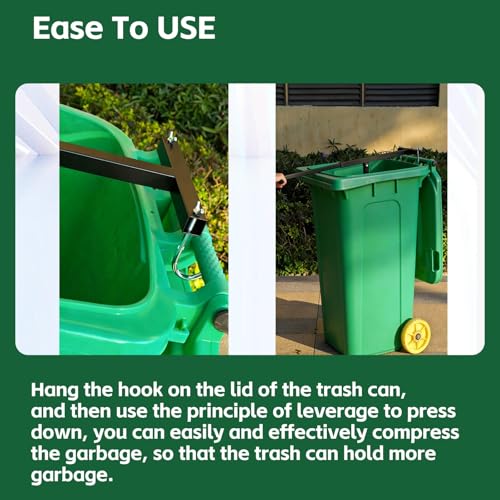
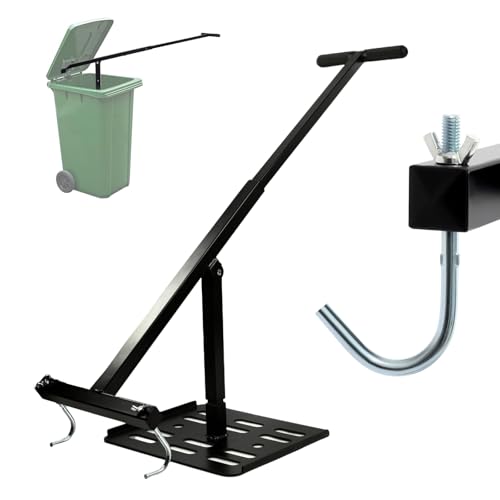
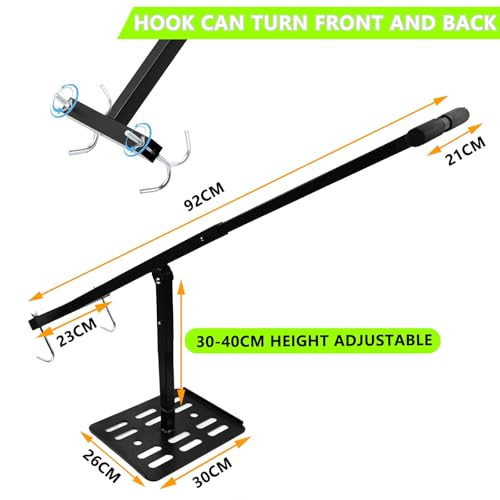
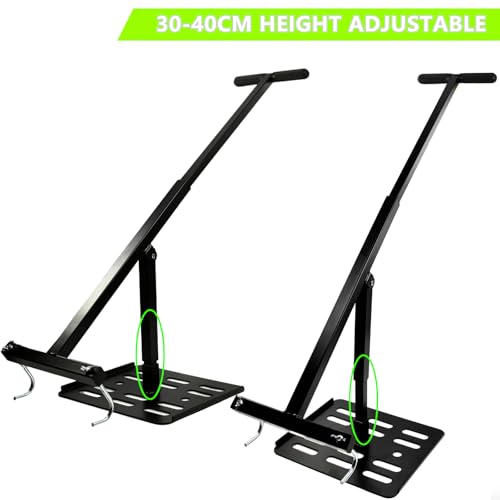
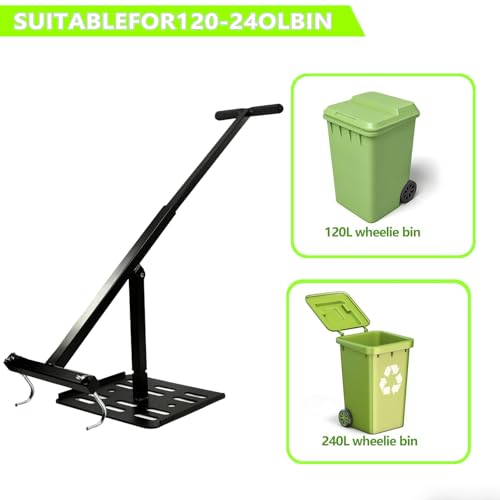
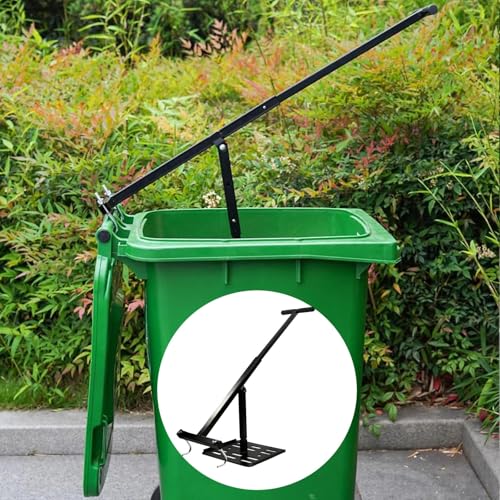
This model is purpose-built for 240L wheelie bins, and it shows in the design. The adjustable handle is its standout feature, you can set it to match your height, which makes repeated use far less tiring. That’s a big deal if you’re managing waste for a restaurant, garden center, or multi-unit property. The iron build inspires confidence, and the wide plate ensures even compression across the bin’s surface.
Reviewers in commercial settings praise its consistency, though some note the adjustment mechanism can stiffen over time without lubrication. Compared to fixed-height models, this one offers better ergonomics for shared use. It’s not the heaviest-duty option, but for daily residential or light commercial use, it strikes a smart balance.
Product photos
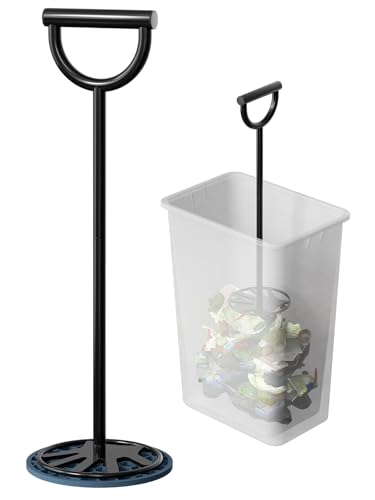
Freestanding All-Metal Trash Compactor
Strengths
- All-metal construction
- Compact footprint
- Detachable for storage
Trade-offs
- Limited use
- Not for large bins
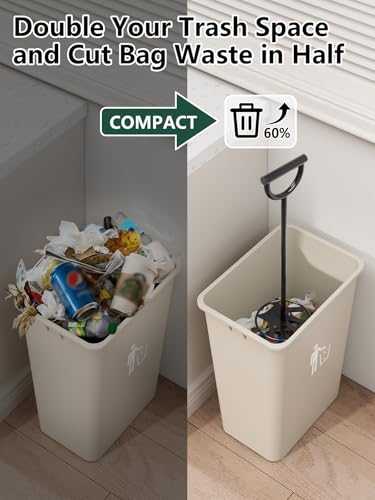
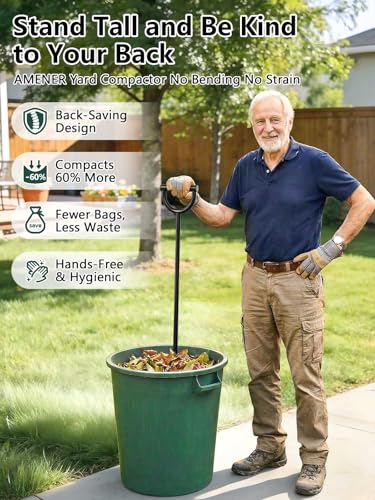
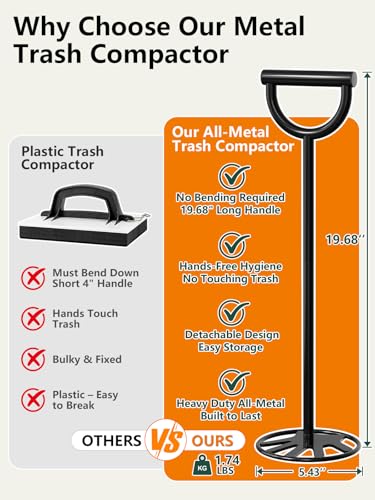
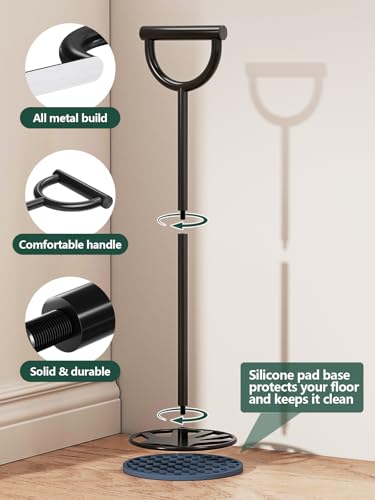
This manual compactor stands out for its clean, minimalist all-metal build and compact footprint. The 5.43-inch base slips into most standard kitchen bins without issue, and the screw-fixed rod adds stability during use. On paper, it’s ideal for smaller households that want to reduce bag use without dedicating cabinet space to a permanent unit. Owners consistently report it’s a solid performer for light kitchen waste and occasional yard debris, though it doesn’t offer the use needed for dense or bulky loads.
Compared to bulkier models, this one wins on storage, it detaches quickly and stands neatly on its silicone base. But that compact size also limits its effectiveness in larger bins. If you’re dealing with more than a standard 13-16 gallon can, you’ll feel the difference in downward force.
Product photos
How We Chose These garbage compactors
Rather than a hands-on lab test, my research for these recommendations involved a detailed comparison of published specifications and features across numerous models. I weighed owner reviews from multiple sources – focusing on long-term reliability and real-world usability – alongside assessments from reputable review sites. My background working with tools and home renovation allowed me to apply category expertise to prioritize features that genuinely impact performance.
For garbage compactors, the most significant factors were compaction ratio and build quality. A higher compaction ratio directly translates to less frequent trash disposal, which is the primary benefit of these units. Equally important is durable construction; these devices apply significant force, and flimsy materials won’t hold up over time. Ergonomics also played a role, particularly for larger, manually operated models. You’ll find more information on excellent options in our guide to the best kitchen trash compactors.
Product specifications reliably indicate compaction force and capacity, but owner feedback was crucial for assessing long-term durability and ease of use. Specs don’t tell you if a handle is truly comfortable, or if a unit will actually withstand repeated use without failing. Reputation and the consistency of positive reviews were strong indicators of a product’s overall value and the likelihood of customer satisfaction. We also looked at warranty length as a signal of manufacturer confidence.
Choosing The Right garbage compactors
I’ve spent years around workshops and home improvement projects, and one thing I’ve learned is that dealing with trash is unavoidable. A good garbage compactor can really simplify life, but knowing what to look for is key.
A quality garbage compactor efficiently reduces waste volume, saving space and reducing disposal frequency. Key considerations include build material (for durability), compaction force (for effectiveness), bin compatibility (for versatility), and ergonomics (for ease of use). Look for models with durable construction, sufficient use, and features like adjustable heights or handles to suit your needs.
Compaction Force & Mechanism
The core of any garbage compactor is its ability to actually compress trash. Don’t assume more force is always better, though. For household use, something in the 50-100kg range is generally sufficient. Commercial operations, naturally, will want to look at models boasting higher pressure. More importantly, consider the mechanism. Hand-operated presses are simple and reliable, while foot-pedal models offer convenience. I’ve seen a lot of complaints about cheaply made foot pedals failing, so if you go that route, check owner feedback specifically about that component.
Build Quality & Materials
This is where you really separate the wheat from the chaff. Plastic components, even “durable recycled plastic” as some manufacturers claim, are prone to cracking or breaking, especially with repeated use or in colder temperatures. I consistently recommend looking for models constructed primarily from metal – steel or iron are best. Rustproofing or a durable coating is essential if the compactor will be used outdoors. If you’re looking for more information on other essential tools for your home, check out our best residential trash compactors.
Ergonomics & Usability
A compactor is only useful if you’ll actually use it. A long handle is crucial for avoiding back strain, particularly when dealing with larger bins. Adjustable height is a fantastic feature, allowing you to customize the compactor to your height and the bin you’re using.
Here’s what I tell folks when they ask about ease of use: * A short handle will quickly become a pain. * Adjustable height is great, but make sure the adjustment mechanism feels solid. * Consider storage. Some models are designed to stand upright or disassemble for compact storage, which can be a real benefit if you have limited space.
A good rule of thumb: if you find yourself dreading the task of compacting trash, the compactor isn’t ergonomic enough for you.
It’s easy to get lost in the details when choosing tools, and sometimes you need to step back and look at the big picture. If you’re also considering other workshop tools, our top-rated trash compactor models guide can help you make an informed decision. And don’t forget that a well-maintained workshop also requires tools like best air compressors for various tasks.
Garbage Compactors Compared
Here’s a comparison of key specifications for various garbage compactors to help you choose the right one.
| Product Title | Compaction Ratio | Capacity (Approx.) | Material | Handle Type | Bin Compatibility |
|---|---|---|---|---|---|
| Joseph Joseph Titan Trash Compactor | 66% | 8-24 gallons | Plastic | Foot Pedal | Standard/IW4 |
| Waste Smasher Hand-Held Garbage Press | 50% | N/A | Recycled Plastic | Handheld | N/A |
| BINGOX Manual Trash Compactor | N/A | 120-660L | Iron | Long (35.4″) | Wheelie Bins |
| All-Metal Kitchen Trash Compactor | 50% | N/A | Metal | Long | Any |
| Heavy Duty Iron Trash Compactor | N/A | 120-660L | Iron | Long | Wheelie Bins |
| Adjustable Handle Wheelie Bin Compactor | N/A | 240L | Iron | Adjustable | 240L Wheelie Bins |
| Freestanding All-Metal Trash Compactor | N/A | N/A | Metal | N/A | Any |
Frequently Asked Questions
What compaction ratio should I realistically expect from a home garbage compactor?
A typical home garbage compactor will achieve a compaction ratio of around 50% to 66%, meaning it reduces the volume of your trash by roughly half to two-thirds. Don’t expect dramatic reductions beyond that with most models intended for residential use.
Are plastic garbage compactors durable enough for regular use?
While some plastic models use durable materials, I generally advise prioritizing those with metal construction (steel or iron) for longevity. Plastic is more susceptible to cracking or breaking under repeated stress, especially in colder conditions.
Will a garbage compactor work with any size or type of trash bin?
Many compactors are designed for standard wheelie bins (120-240L) or kitchen trash cans. However, bin compatibility varies, so always check the product specifications to confirm it will work with your existing bins before purchasing.
How much physical effort is required to operate a manual garbage compactor?
The effort depends on the model, but most manual compactors use use to multiply your force. Look for models with long handles (35 inches or more) to minimize strain. If you struggle with physical exertion, consider a foot-pedal operated model, but be mindful of potential reliability issues with the pedal mechanism.
Are there compactors suitable for more than just household trash?
Yes, if you need something for larger-scale waste reduction, consider looking at best jumping jack compactors or other types of heavy-duty compaction tools for more significant projects. These are typically used for construction debris or landscaping.
The Bottom Line
Ultimately, choosing a garbage compactor comes down to balancing convenience with durability. You can spend less and accept more plastic in the construction, or you can invest in a robust, all-metal unit built to last. For most homeowners, I recommend the BINGOX Manual Trash Compactor. It offers a solid iron build, a long handle for comfortable use, and the capacity to handle large wheelie bins – a great combination of features for the price.
If you’re on a tighter budget, the Waste Smasher Hand-Held Garbage Press is a surprisingly effective option for smaller jobs. And for those who prioritize versatility and don’t mind a plastic build, the Joseph Joseph Titan Trash Compactor remains a popular choice, especially for standard kitchen bins. For larger properties or frequent waste disposal, take a look at our guide to the best plate compactors for more heavy-duty compaction options.
Don’t get too hung up on specific compaction ratios or fancy features. The most important thing is to find a compactor that feels solid, is comfortable to use, and fits your typical waste volume. A well-built tool used consistently will always outperform a feature-rich one that ends up collecting dust in the garage.
