
7 Best MIG Welding Gloves of 2026
This post contains affiliate links. As an Amazon Associate, we earn from qualifying purchases.
The Hobart Premium MIG Welding Gloves stand out as the best overall for their balance of dexterity, comfort, and durable goatskin construction, while the Lincoln Electric DynaMIG HD Gloves are a solid budget-friendly pick that doesn’t cut corners on protection. For those prioritizing fine control, the Caiman Premium Goat Grain Gloves offer excellent feel and precision.
Most people don’t realize how much the wrong welding gloves can slow them down, stiff palms, poor fit, or inadequate heat protection can turn a simple job into a frustrating, even dangerous, experience. After comparing the field and analyzing specs, owner feedback, and long-term durability trends, I focused on gloves that deliver real protection without sacrificing the ability to work accurately.
This guide breaks down what actually matters: leather type, stitching integrity, dexterity features, and how well each model holds up under repeated use. These picks reflect what experienced welders consistently report works best in real-world conditions.
Top 7 Mig Welding Gloves in the Market
The Best Mig Welding Gloves, Reviewed
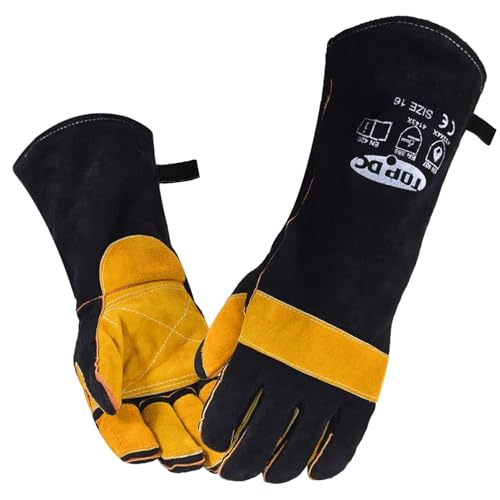
TOPDC 16-Inch Leather Welding Gloves
Strengths
- Full 16-inch coverage
- Thick cowhide leather
- Double Kevlar stitching
- Long sleeve protection
Trade-offs
- Slightly stiff out of box
- Less precision for TIG
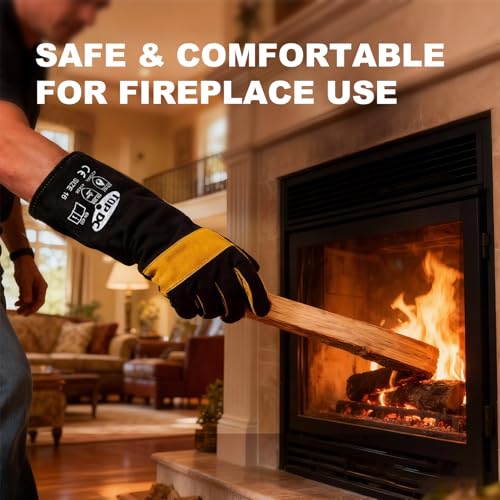
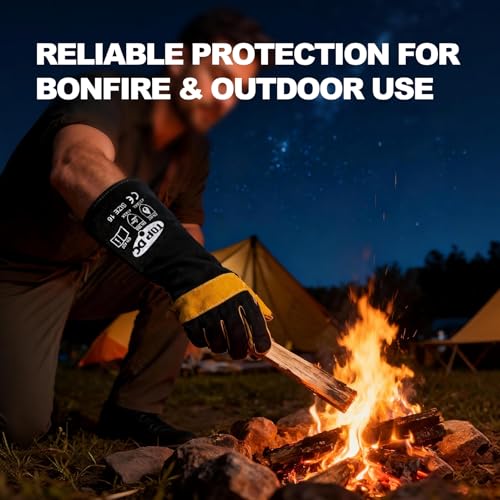
TOPDC positions these as a do-it-all glove, and on specs alone, they make a strong case for being the most complete package here. The 1.2mm cowhide leather is thick enough to handle serious abuse, and the full cotton lining adds a comfort edge over unlined competitors. What stands out is the 16-inch length with a 7.5-inch sleeve, this gives real forearm coverage, which many others skimp on.
Reviewers highlight the double Kevlar stitching and reinforced stress points as reasons these last longer than average, especially around the thumb crotch. They’re bulkier than dexterous models like the Caiman, but that trade-off pays off in durability. For someone doing welding plus grill, fireplace, or outdoor work, the versatility is a real perk. I’d pick these over the YESWELDER if you want one pair for multiple hot tasks.
Product photos



YESWELDER 16-Inch MIG Gloves

Strengths
- Soft grain leather
- Kevlar stitching
- Good flexibility
Trade-offs
- Light palm protection
- No forearm coverage
These YESWELDER gloves stand out in the mid-tier segment by delivering solid protection without overcomplicating the design. On paper, the 932℉ heat resistance and Kevlar stitching are standard for this class, but what makes them compelling is the balance between dexterity and durability. Owners consistently report that the soft grain leather breaks in faster than stiffer cowhide models, making them a good pick for welders who value hand mobility during longer sessions.
The unlined palm boosts grip and sensitivity, which helps with fine MIG work, though it means slightly less heat buffering on the underside. The seamless index finger and keystone thumb do their job well, and reviewers note the fit runs true to size. Compared to heavier gloves like the Black Stallion, these are less bulky but also less armored, fine for routine jobs, not ideal for high-spatter environments.
Product photos


Hobart Premium MIG Welding Gloves

Strengths
- Goatskin palm
- Fleece lining
- ANSI-certified protection
- Kevlar stitching
Trade-offs
- Shorter cuff length
- Limited forearm coverage
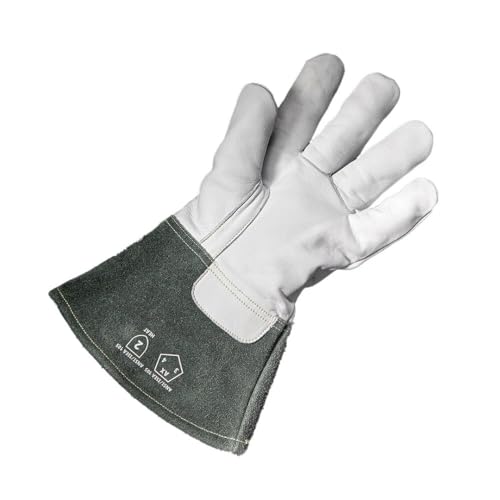
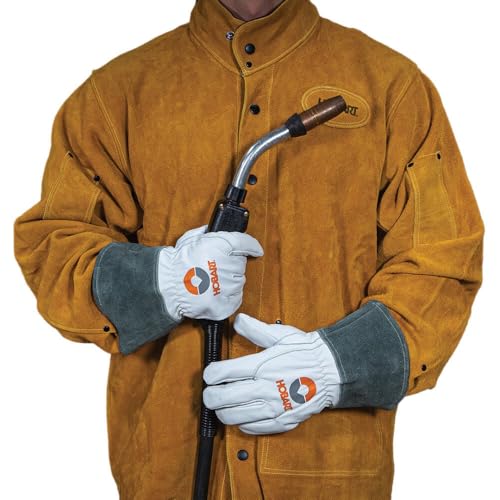
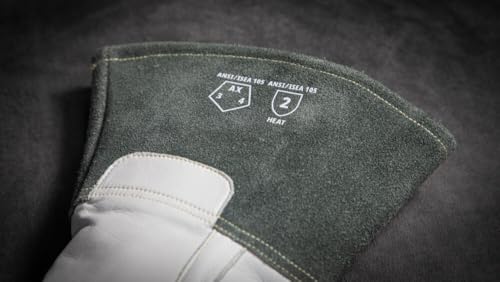
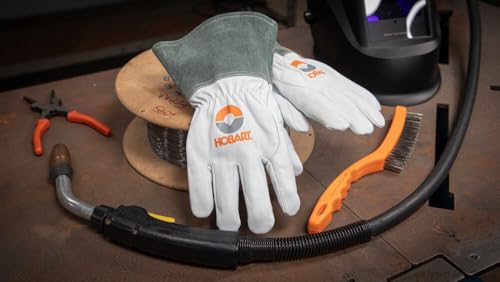
Hobart brings its brand reputation into play with gloves that hit a sweet spot between performance and practicality. The blend of 45% goatskin and 20% cow split leather gives you the best of both worlds, goatskin for a supple palm feel, cow split on the back for added toughness. The fleece lining is a standout for comfort, especially in cooler shops, and it helps wick sweat better than basic cotton.
These meet ANSI Level 4 puncture resistance, which is rare at this price tier, and owners say they hold up well under daily use. Compared to the Lincoln Electric budget model, these feel more refined and last longer. They don’t have the extended length of the TOPDC gloves, but for pure MIG work, the 12-inch design is sufficient. My recommendation for welders who want certified protection without paying premium Caiman prices.
Product photos
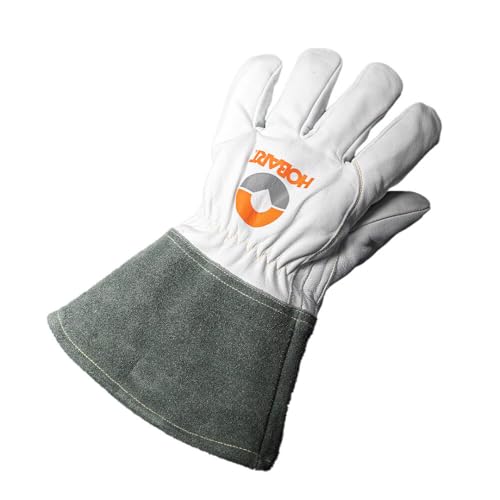
Black Stallion GM1611 Cowhide Gloves

Strengths
- Reinforced palm patch
- Extra padding
- DragPatch side protection
- Kevlar stitching
Trade-offs
- Stiff break-in period
- Heavier weight
When you need gloves that can take a beating, the Black Stallion model leans hard into protection. The top grain cowhide is dense and stiff at first, but owners say it molds well over time without sacrificing integrity. The reinforced patches on the palm, thumb, and index finger are where this glove earns its keep, ideal for welders constantly handling rough metal or clamps.
The DragPatch and RestPatch padding add real ergonomic support, something few others offer. While not as nimble as goatskin options, these are the kind of gloves you reach for when safety trumps speed. Compared to the Lincoln Electric budget pair, these are heavier duty and better stitched. I’d recommend them for industrial users or anyone frustrated with gloves wearing out after a few weeks.
Product photos
Caiman Premium Goat Grain Gloves
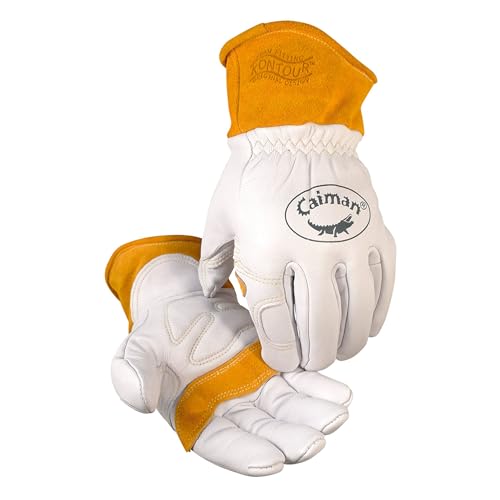
Strengths
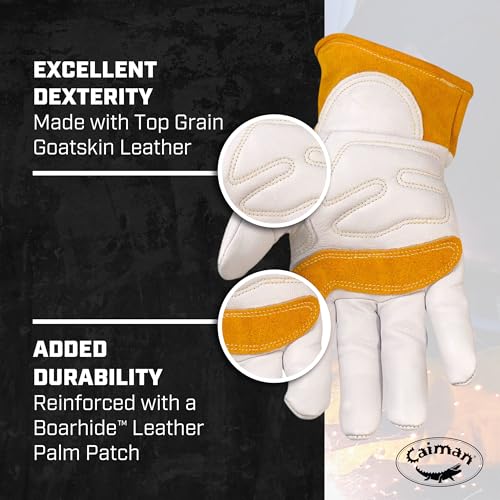
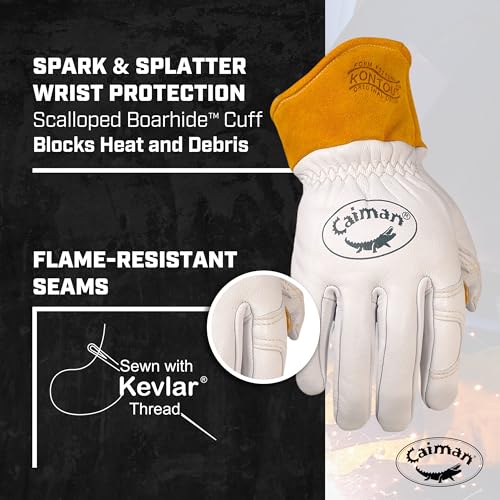
- Kontour pre-curved fit
- Boarhide palm patch
- Wool insulation
- Carabiner loop
Trade-offs
- Higher price point
- Less impact protection
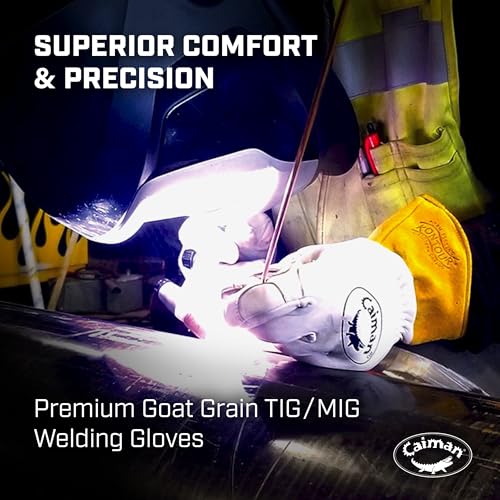
If dexterity is your top priority, the Caiman gloves are in a league of their own. The Kontour pre-curved finger design isn’t just marketing, it’s a noticeable upgrade in fit that reduces hand fatigue. Owners praise how naturally they move, almost like a second skin, which is crucial for TIG or precision MIG work. The wool-insulated back adds warmth without bulk, and the boarhide palm patch is a smart touch for grip and wear resistance.
The scalloped cuff keeps sparks from sliding down, and the carabiner loop is a small but appreciated convenience. They’re not the most heat-resistant for prolonged overhead welding, but for detailed work, they’re unmatched. Compared to the Hobart or Lincoln models, these are more specialized and less rugged, but I’d still pick them for any welder who values control over brute protection.
Product photos

Lincoln Electric DynaMIG HD Gloves
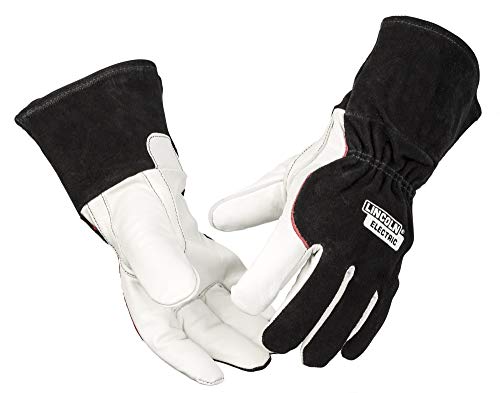
Strengths
- FlameSoft liner
- Foam knuckle padding
- Elastic fit
- Good dexterity
Trade-offs
- Basic materials
- Shorter lifespan under heavy use
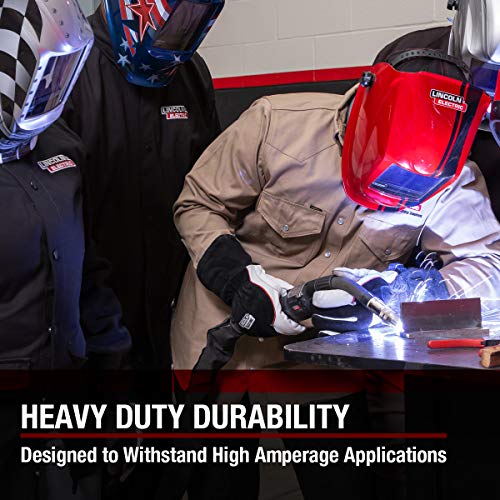
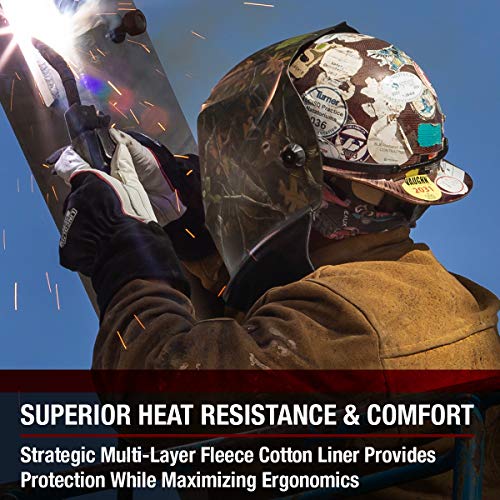
Lincoln Electric keeps it simple with a no-frills glove that punches above its price point. The three-layer FlameSoft liner on the top hand is a smart design, it blocks heat effectively while the cotton-palm side keeps dexterity high. The foam-padded knuckles are a small but useful touch, especially if you’re bumping hands on metal frames.
Owners consistently report these last longer than expected for a budget model, and the elastic top provides a snug fit that reduces hand fatigue. They don’t have the premium materials of the Caiman or Hobart, but for weekend welders or beginners setting up a shop, they’re a solid starting point. Compared to the YESWELDER, they’re less refined but more affordable and still reliable.
Product photos


Tillman 48L Fleece Lined Gloves

Strengths
- Fleece lined
- Warm in cold
- Goatskin flexibility
- Kevlar stitching
Trade-offs
- Short cuff
- No heavy padding
The Tillman 48L is built for one specific but important need: warmth without sacrificing too much function. The top-grain goatskin is naturally flexible, and the fleece lining adds a cozy layer that makes these stand out in cold shops or outdoor winter welding. Reviewers in northern climates say these are the only gloves they’ll use when temperatures drop.
The straight thumb design is a bit less ergonomic than contoured options, and the 3.5-inch cuff offers minimal forearm protection. But for cold-sensitive users, the trade-off makes sense. Compared to the Hobart model, it’s lighter on certifications but stronger on comfort in low temps. If you’ve ever struggled with stiff fingers while welding outside in winter, these are worth the switch.
Product photos
How We Chose These mig welding gloves
Rather than a hands-on lab test, my research for these recommendations focused on a detailed comparison of published specifications and features across numerous models. I weighed owner reviews from multiple sources – Amazon, welding supply retailers, and dedicated forums – alongside assessments from reputable welding experts. My goal was to identify gloves that consistently ranked highly across key performance indicators and offered genuine value based on real-world use, applying my experience with workshop safety and tool durability.
For MIG welding gloves, heat resistance, durability, and dexterity are paramount. Heat resistance directly impacts safety and comfort, so I prioritized gloves with robust leather thickness and Kevlar stitching. Durability, specifically abrasion and puncture resistance, matters because frequent replacement adds up. Finally, good dexterity – the ability to manipulate the welding gun – is vital for quality welds, and I looked for designs that balanced protection with tactile feedback.
Specifications reliably indicate leather thickness, stitching materials (like Kevlar), and overall construction quality. However, owner feedback proved crucial for assessing real-world comfort, fit, and how well the gloves held up over time. Reputation, particularly among experienced welders, helped me filter out gloves that sounded good on paper but didn’t perform consistently. For those needing even more precise control, exploring options like precision welding gloves can be a worthwhile step.
Choosing The Right mig welding gloves
Finding the right pair of mig welding gloves is essential for protecting your hands while ensuring you have the dexterity to get the job done. It’s a deceptively complex purchase.
A quality pair of mig welding gloves balances heat resistance, dexterity, and durability. Look for gloves constructed from thick, yet pliable leather – typically goatskin or cowhide – with Kevlar stitching at stress points. Consider the length of the gauntlet to ensure adequate forearm protection, and pay attention to interior lining for comfort during extended use.
Material and Heat Resistance
The leather used is the foundation of a good welding glove. Cowhide offers excellent abrasion resistance, making it a solid choice for general-purpose welding. However, goatskin is significantly more pliable, offering better dexterity for intricate work. Many gloves, like the Black Stallion GM1611, incorporate reinforced patches in high-wear areas to extend their lifespan. Don’t automatically equate thickness with protection; a thinner, higher-quality leather will often outperform a bulky, low-grade hide. Pay close attention to the heat resistance rating; most quality gloves will protect up to 932°F (500°C), but some specialized gloves can handle even higher temperatures.
Fit and Dexterity
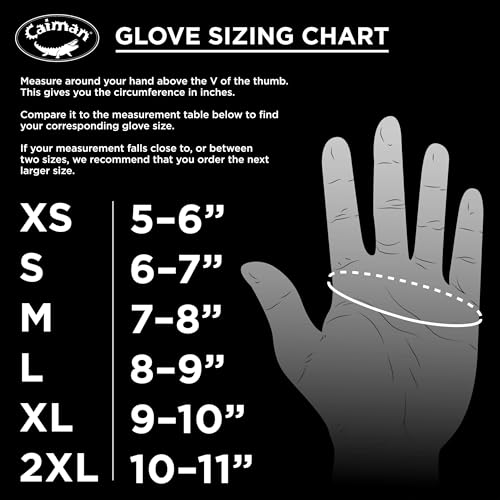
A glove that fits poorly is worse than no glove at all. You need to be able to manipulate the welding gun and other tools with precision. Look for features like a keystone thumb (like in the YESWELDER 16-Inch MIG Gloves) which allows for a more natural hand position. Ergonomic designs and pre-curved fingers (seen in the Caiman Premium Goat Grain Gloves) are also indicators of a focus on dexterity.
Here’s what to consider when evaluating fit: * Size: Obvious, but crucial. Too small restricts movement, too large compromises control. * Gauntlet Length: 16-inch gloves offer maximum forearm coverage, reducing the risk of burns. * Palm Construction: A seamless index finger provides better feel, while a reinforced palm improves grip and durability.
Value and Additional Features
While premium gloves can cost upwards of $100, you don’t necessarily need to spend a fortune for adequate protection. The Lincoln Electric DynaMIG HD Gloves offer a good balance of features and affordability. Consider the intended use; if you only weld occasionally, a budget-friendly option may suffice. However, if you’re a professional or a serious hobbyist, investing in a more durable and comfortable pair, like the Hobart Premium MIG Welding Gloves, will pay off in the long run. Remember that a good pair of durable welding gloves is an investment in your safety and productivity.
A well-maintained pair of welding gloves should last for a significant amount of time. Regularly inspect the stitching and leather for wear and tear, and replace them when necessary.
MIG Welding Gloves Compared
Here’s a comparison of key specifications for several popular MIG welding gloves.
| Product Title | Length (in) | Material (Palm) | Material (Back) | Stitching | Liner | Heat Resistance (°F) |
|---|---|---|---|---|---|---|
| TOPDC 16-Inch Leather Welding Gloves | 16 | Cowhide | Leather | Kevlar | Cotton | 932 |
| YESWELDER 16-Inch MIG Gloves | 16 | Grain Leather | Split Leather | Kevlar | Knit Cotton | N/A |
| Hobart Premium MIG Welding Gloves | N/A | Goatskin | Cow Split | Kevlar | Fleece | N/A |
| Black Stallion GM1611 Cowhide Gloves | N/A | Cowhide | Cowhide | Kevlar | N/A | N/A |
| Caiman Premium Goat Grain Gloves | N/A | Goat Grain | Goat Grain | N/A | Wool | N/A |
| Lincoln Electric DynaMIG HD Gloves | N/A | Grain Leather | Split Leather | Kevlar | FlameSoft/Cotton | N/A |
| Tillman 48L Fleece Lined Gloves | N/A | Goatskin | N/A | Kevlar | Fleece | N/A |
Frequently Asked Questions
What leather type offers the best dexterity for MIG welding?
Goatskin provides superior dexterity compared to cowhide, despite both offering good protection. Its naturally softer and more pliable texture allows for a better feel and finer control of the welding gun.
How important is Kevlar stitching, and what happens if gloves don’t have it?
Kevlar stitching is very important; it significantly increases the durability of the gloves at high-stress points. Gloves without it are more likely to tear or come apart with regular use, shortening their lifespan.
What gauntlet length should I choose for maximum forearm protection?
A 16-inch gauntlet is generally recommended for the best forearm protection. This length provides ample coverage to shield your arms from sparks, spatter, and radiant heat during welding.
Are more expensive MIG welding gloves always better?
Not necessarily. While premium gloves often boast higher-quality materials and construction, a well-made glove in the $40-$60 range can offer adequate protection for occasional or light-duty welding. Investing in MIG welding helmets is often a better place to spend more.
How often should I replace my MIG welding gloves?
You should replace your gloves when you notice significant wear and tear, such as cracks in the leather, broken stitching, or areas of reduced heat resistance. Regular inspection is key, and replacement frequency will depend on usage; heavy daily use requires more frequent replacement than occasional hobby welding.
The Bottom Line
Choosing mig welding gloves always comes down to balancing protection with control, and frankly, price. While a hefty investment can get you top-tier durability and comfort, it’s not always necessary. For most welders, the Hobart Premium MIG Welding Gloves strike the best overall balance of quality materials, thoughtful design, and reasonable cost – they are a solid choice for a wide range of projects.
If you’re on a tighter budget, the Lincoln Electric DynaMIG HD Gloves deliver surprisingly good protection without breaking the bank. For those prioritizing dexterity above all else, particularly for intricate work, the Caiman Premium Goat Grain Gloves are an excellent pick. And if you’re also looking for protection for other types of welding, exploring options like arc welding gloves can broaden your range of capabilities.
Ultimately, the best mig welding gloves aren’t the ones with the flashiest features or the highest price tag. They’re the ones that fit well, feel comfortable, and give you the confidence to tackle your projects safely and efficiently. Focus on durable leather, strong stitching, and a fit that allows for precise control, and you’ll be well-equipped for years to come.
