7 Best Small Lathes of 2026
This post contains affiliate links. As an Amazon Associate, we earn from qualifying purchases.
The WEN 8-Inch Benchtop Wood Lathe stands out as the best overall for woodworkers, combining solid capacity and smooth variable speed control. For those on a tighter budget, the BACHIN 2.76″x6.3″ Mini Lathe offers basic functionality at a low price, while the VEVOR 8″x14″ Precision Mini Lathe delivers the most versatility, especially for metal and larger wood projects.
Most people shopping for a small lathe want something affordable and compact, but end up frustrated by wobbly performance or machines that can’t handle anything beyond soft wood. The real challenge isn’t just size or price, it’s finding a lathe that’s rigid enough to deliver clean, accurate results without breaking down.
This guide cuts through the noise by focusing on models with proven build quality, reliable motor performance, and real-world usability based on specs and owner feedback. I looked at what actually matters, metal construction, speed control, capacity, and included accessories, to help you pick a lathe that won’t hold you back as your skills grow.
Top 7 Small Lathes in the Market
The Best Small Lathes, Reviewed
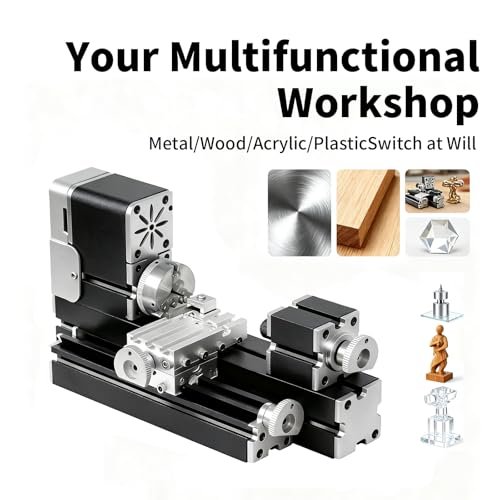
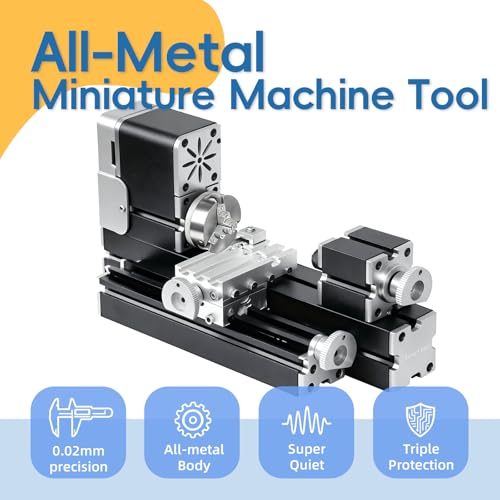
AcmeFlare All-Metal Mini Lathe
Strengths
- All-metal gears and construction
- 0.02mm molded scales
- T-slot bed for fixturing
Trade-offs
- Lower torque than metal-focused lathes
- No included chuck option
- Small swing diameter
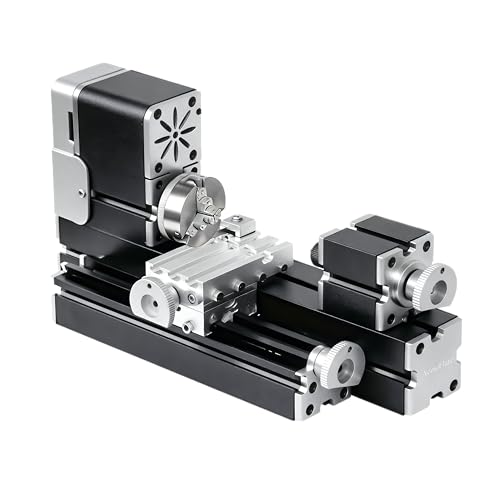
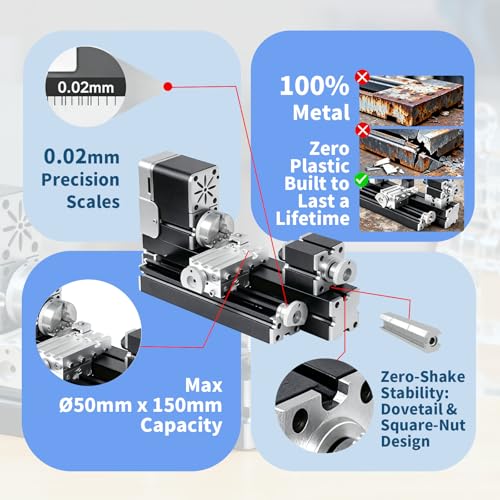
This AcmeFlare model hits a sweet spot that few mini lathes do, it combines serious build quality with thoughtful design and real precision. The 100% all-metal construction, including gears and handwheels, means less flex and better longevity than plastic-gear competitors. The 0.02mm molded-in scale is a standout feature, and owners confirm it holds up over time, unlike sticker-based scales that peel.
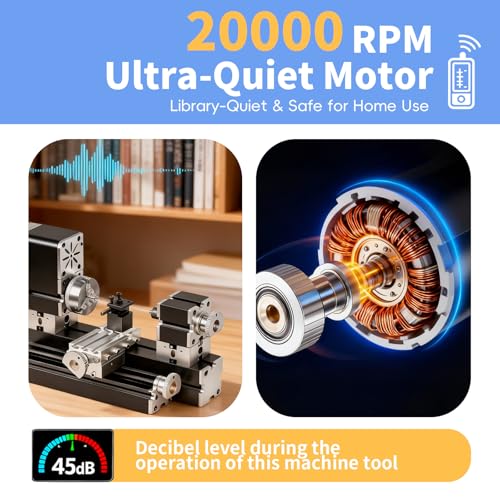
The 20,000 RPM motor isn’t the most powerful, but it’s efficient and quiet, ideal for small-diameter work in wood, aluminum, or plastic. What seals the deal is the European-standard T-slot bed, which opens up fixturing options for jigs and custom setups. Compared to the ZHRUI, it offers similar precision but with better ergonomics and a more serviceable design. My take? This is the best overall pick for most hobbyists who want one lathe for multiple materials.
Product photos

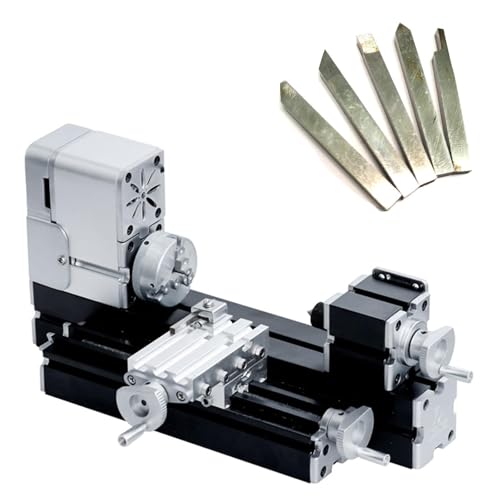
ZHRUI Mini Metal Lathe 20000RPM
Strengths
- All-metal construction
- 0.02mm precision scale
- Includes 5 carbide cutters
Trade-offs
- Limited swing diameter
- Not for heavy cuts
- Low torque at high RPM
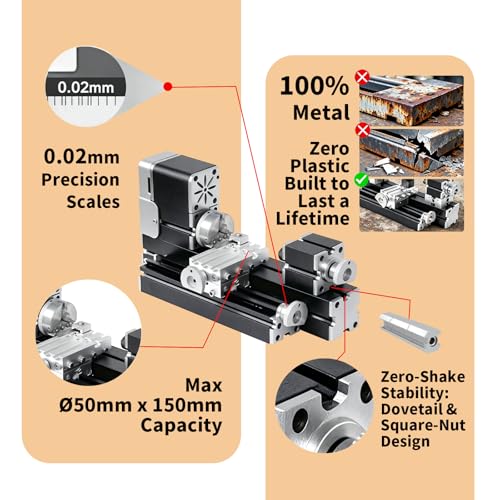
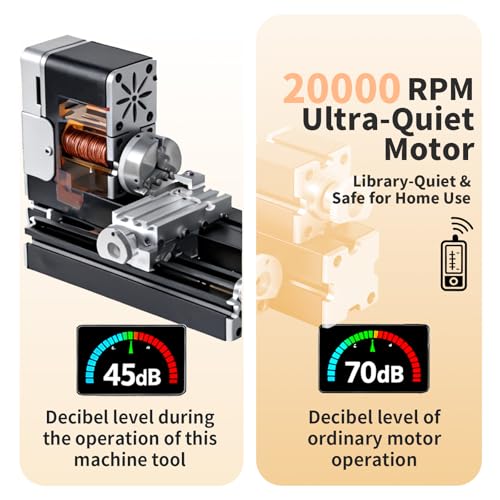
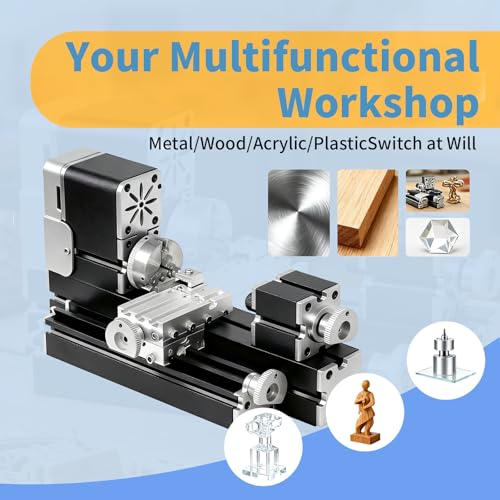
This ZHRUI lathe stands out in the mini metal lathe class for its rigid all-metal construction and fine 0.02mm scale markings. On paper, it’s built like a benchtop version of industrial machines, no plastic, dovetail bed, square-nut sliders, which owners consistently report translates to noticeably less vibration during cuts. The 20,000 RPM motor is high-speed by most standards, making it well-suited for light work on aluminum, acrylic, and soft steels.
The inclusion of five carbide-tipped cutters right out of the box is a real plus, especially for beginners who don’t want to chase down tooling. While it won’t replace a full-sized metal lathe, it delivers where it counts: precision and repeatability for small parts like pen blanks, fittings, or model components. Compared to the VEVOR 8″x14″ model, it lacks spindle power and bed length, but for tight tolerances and clean finishes on small work, I’d lean toward this one.
Product photos
WEN 8-Inch Benchtop Wood Lathe
Strengths
- Variable speed control
- Soft-start motor
- Two-year warranty
Trade-offs
- Limited to wood
- No quick tool change
- Basic tool rests
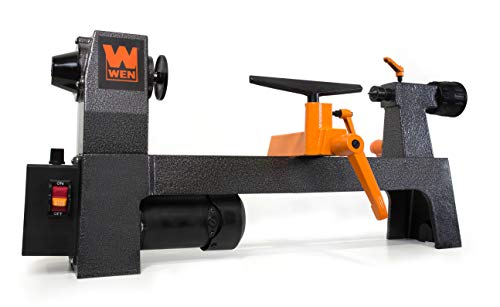
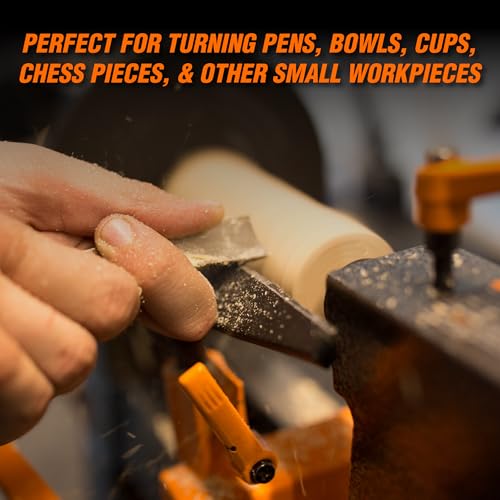
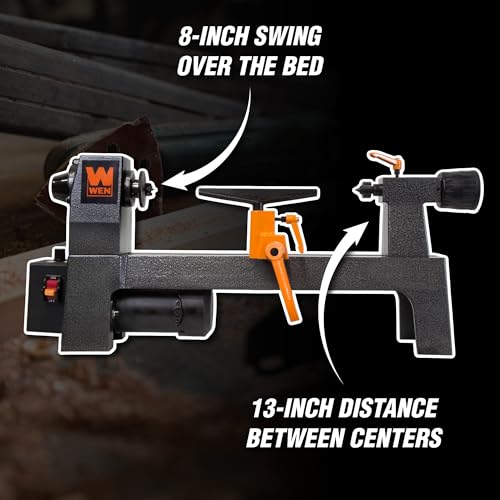
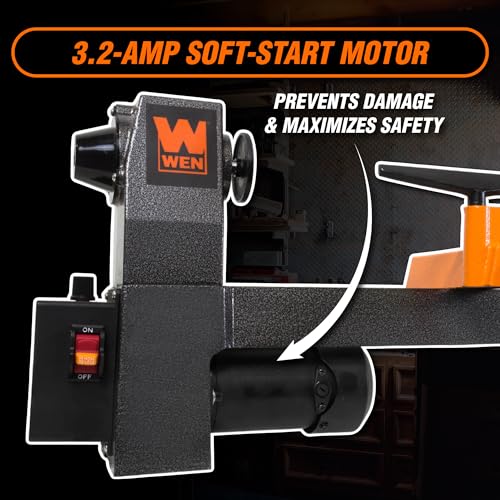
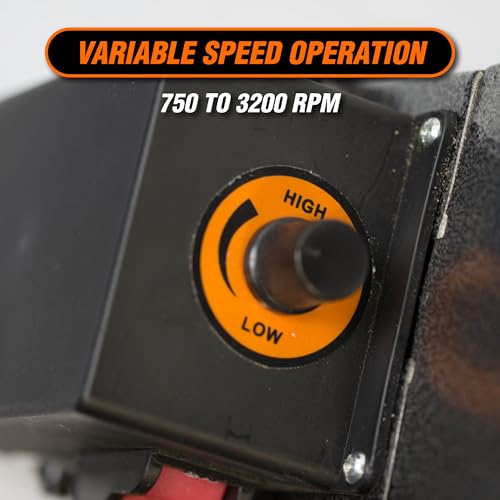
The WEN LA3421 is a no-nonsense lathe built for beginners who want reliability without complexity. Its 8-inch swing and 13-inch between centers give it room for small bowls or cup blanks, more than most micro-lathes offer. The soft-start motor is a thoughtful touch, reducing startup jolt and extending motor life, and the variable speed (750–3200 RPM) covers the sweet spot for most woodturning tasks.
Owners consistently praise its smooth operation and the fact it comes with a two-year warranty, rare in this category. It doesn’t have the high-speed range of the ZHRUI or the metal-cutting chops of the VEVOR 8″x14″, but for pure wood-focused beginners, it’s hard to beat. I’d pick this over the VEVOR wood model for its smoother speed control and better reputation for durability.
Product photos

VEVOR 96W Mini Wood Lathe

Strengths
- Good accessory bundle
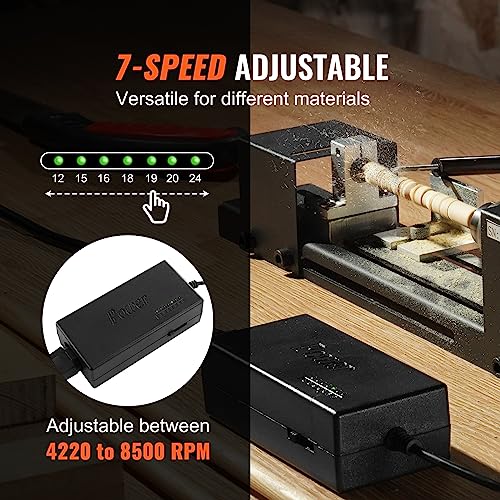
- 7-speed control
- Stable aluminum base
Trade-offs
- Fixed speed steps
- Not for hardwoods
- Plastic components
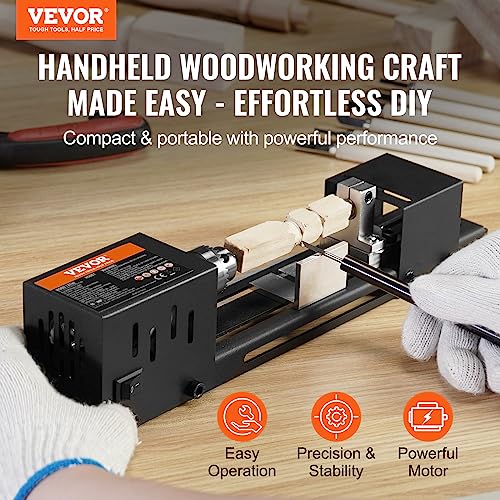
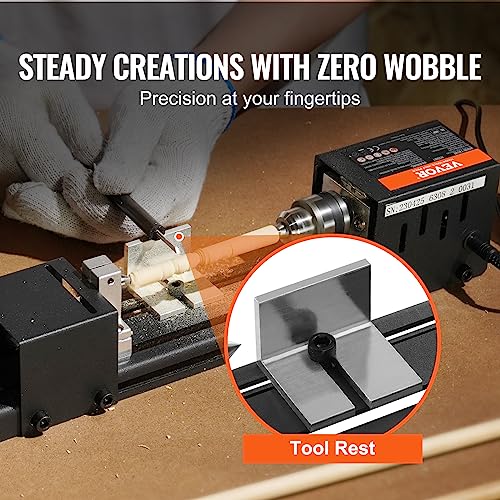
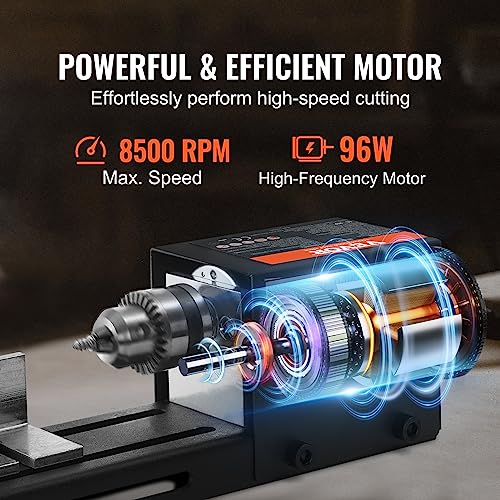
This VEVOR mini wood lathe is clearly aimed at beginners who want a functional, portable machine without breaking the bank. The 96W motor and seven fixed speed settings give decent control for softwood turning, and the aluminum base does a decent job minimizing vibration. Owners note it’s quiet and stable for its size, though it’s not designed for hardwoods or aggressive cuts.
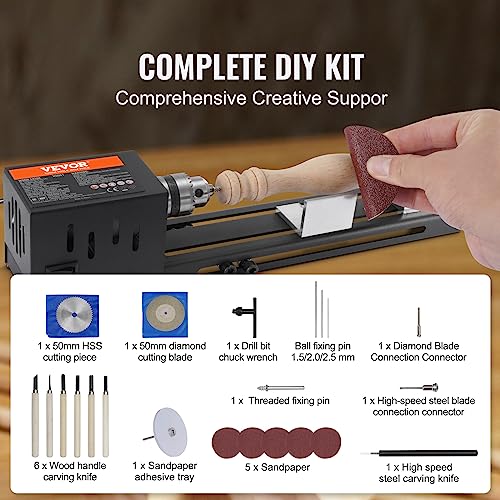
What pushes this model ahead of similarly priced competitors is the included accessory bundle, sanding papers, fixturing pins, tools, which makes it a true starter kit. It’s not as precise as the AcmeFlare or as powerful as the WEN, but for someone just getting into pen turning or small decorative pieces, it covers the basics well. I’d recommend it over the BACHIN model simply because of better build consistency in owner feedback.
Product photos
ArtyMaster WM101A-Plus Mini Lathe
Strengths
- Infinitely variable speed
- Full tool kit included
- UL-certified power supply
Trade-offs
- Limited to small stock
- Not for metal
- Chuck size is small
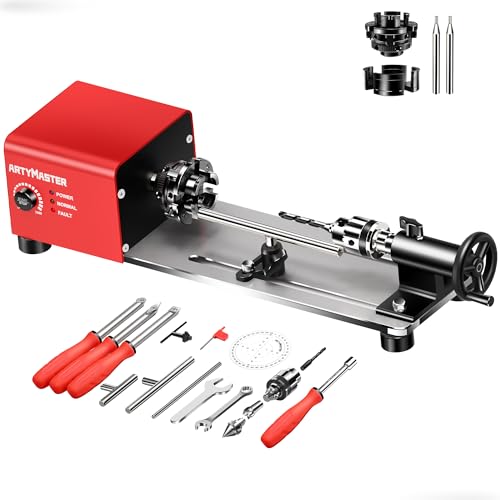
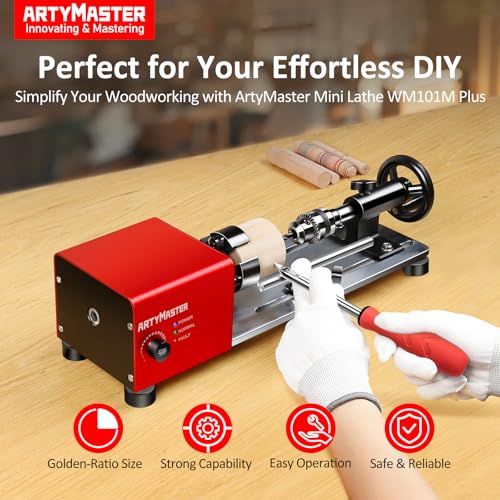
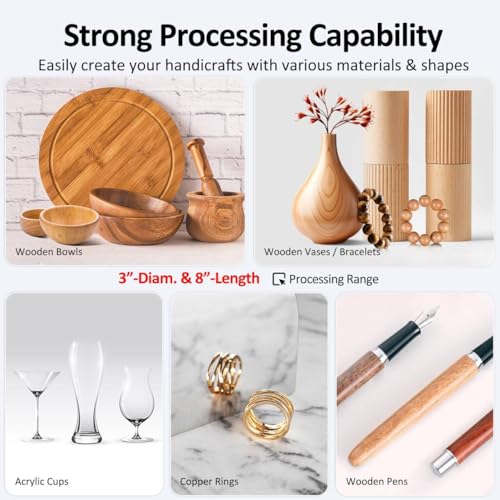
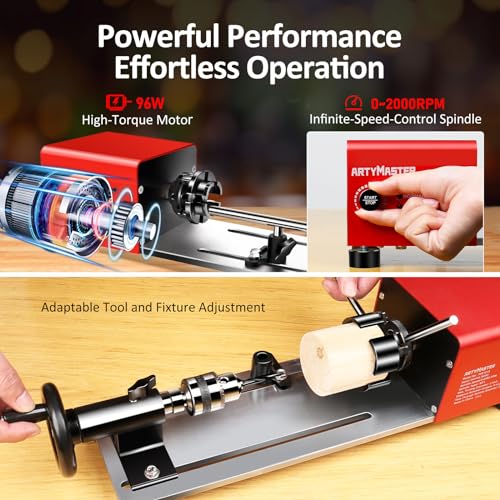
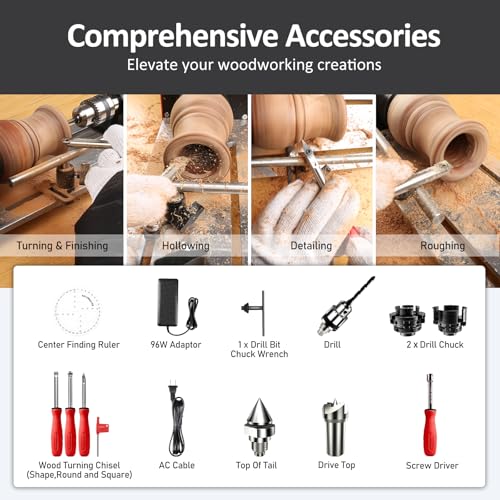
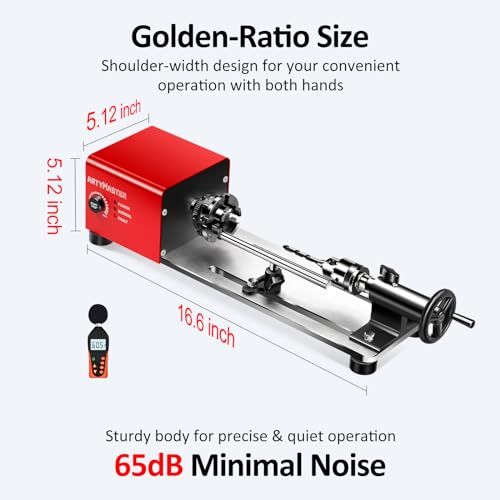
The WM101A-Plus by ArtyMaster is a well-rounded machine for home DIYers who want versatility without stepping into pro-tier pricing. The infinitely variable speed control gives smoother adjustments than the stepped-speed VEVOR, and the UL-certified power supply adds real peace of mind. Owners appreciate the full tool kit, especially the changeable cutter heads and 2-inch chuck, which makes it ready for pens, rings, or small bowls right out of the box.
It’s built with high-strength steel and premium bearings, and claims over 2000 hours of motor life, which suggests durability. While it can’t match the WEN for pure woodturning stability or the VEVOR metal lathe for cutting force, it bridges the gap between hobby and light professional use. For most home users, this is the smarter buy over the basic VEVOR wood model.
Product photos
VEVOR 8″x14″ Precision Mini Lathe

Strengths
- 650W motor
- Cast iron construction
- MT2 tailstock
Trade-offs
- Heavy and bulky
- No included cutting tools
- Larger footprint
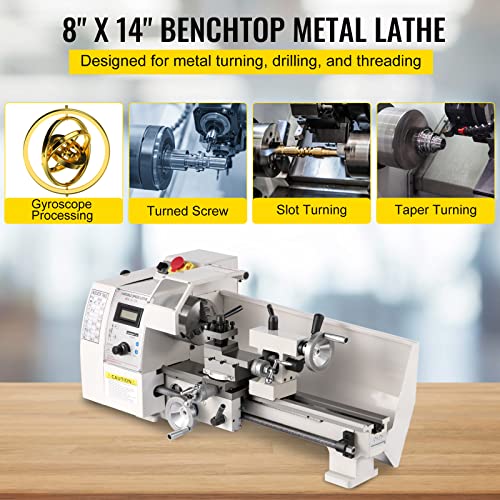
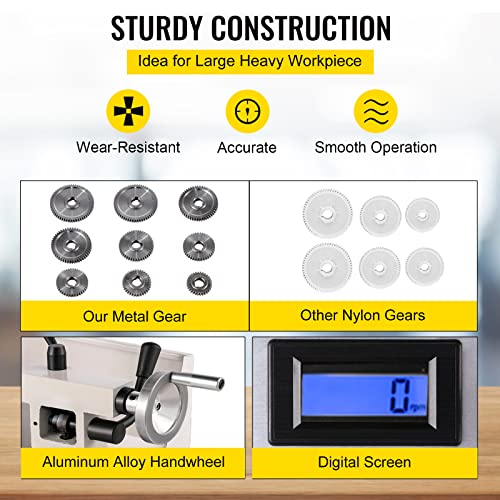
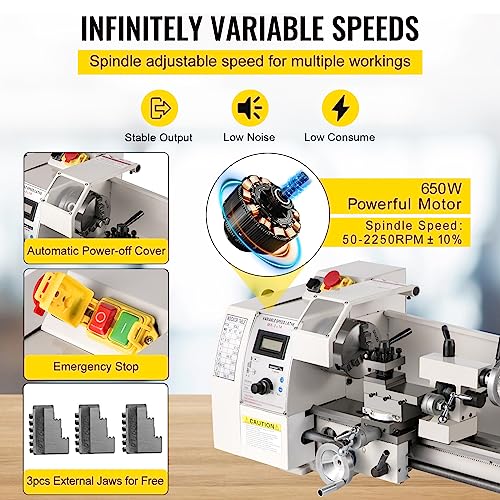
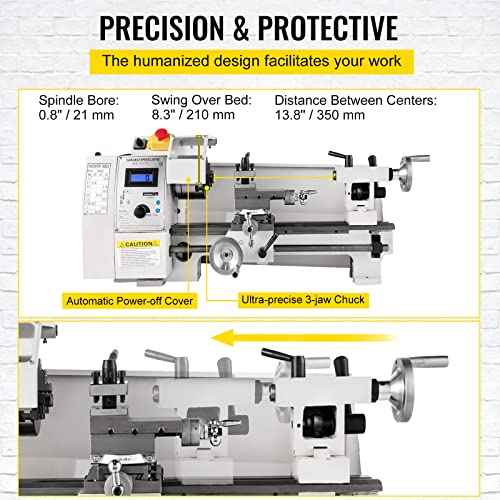
If you’re serious about turning metal and need real capacity, this 8″x14″ VEVOR model is one of the few mini lathes that feels like a scaled-down professional machine. The 650W motor and cast iron bed give it serious heft, owners report it handles aluminum and mild steel with confidence, and the variable speed dial (50–2250 RPM) lets you match spindle speed to material, which is critical for clean cuts.
The cross slide, turret post, and MT2 tailstock make tool changes fast and support taper turning, which elevates it above basic models. Compared to the ZHRUI, this one trades high RPM for real torque and rigidity. It’s heavier and less compact, but for metalworkers making functional parts, that’s a fair trade. My recommendation? This is the smarter buy if you’re doing more than just light hobby machining.
Product photos

BACHIN 2.76″x6.3″ Mini Lathe
Strengths
- Extremely compact
- Low noise
- Good for light materials
Trade-offs
- Weak under load
- Acrylic cover flexes
- No fine scale markings
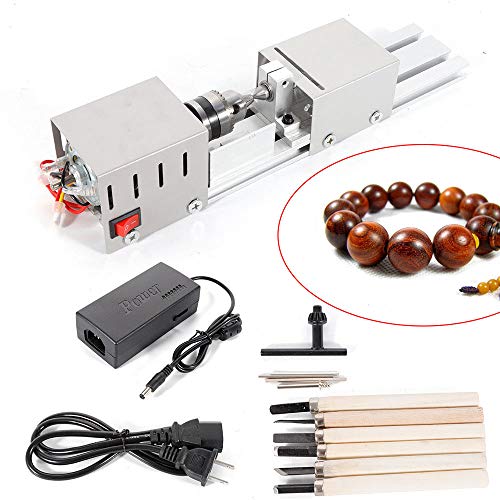
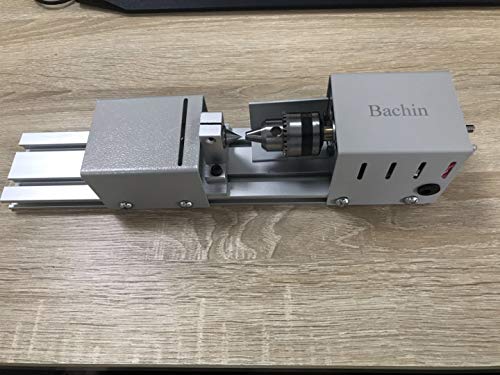
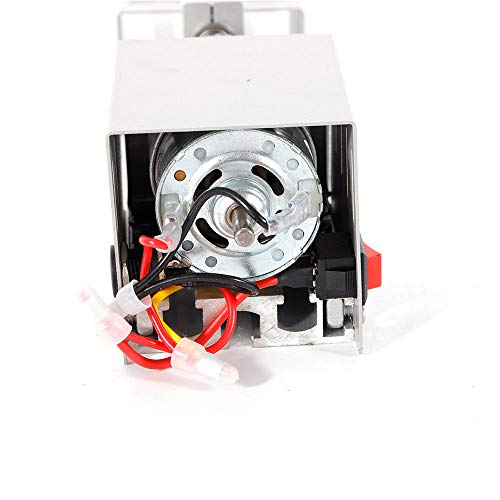
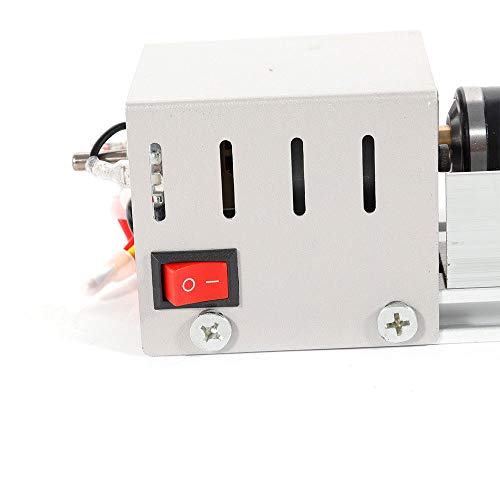
The BACHIN lathe wins on size alone, at just over 12 inches long, it’s one of the most compact options here, making it ideal for tight workbenches or portable setups. The 96W motor and 5000–8000 RPM range are decent on paper, but owner feedback suggests it struggles with anything beyond soft wood or light acrylic. The acrylic dust cover looks nice but doesn’t add rigidity, and the aluminum base, while thick, doesn’t dampen vibration as well as steel or cast iron.
It’s clearly not built for heavy use, and the lack of precision scales hurts its appeal for detailed work. Still, for someone who needs a space-saving lathe for occasional light turning, it has its place. But for just a bit more, the AcmeFlare delivers better precision and build. I’d only recommend this if bench space is your top priority.
Product photos


How We Picked These small lathes
Rather than a hands-on lab test, my research for these recommendations involved a detailed comparison of published specifications and features across numerous models. I weighed owner reviews from multiple sources – focusing on long-term usability and reported accuracy – alongside assessments from reputable tool review sites. This process allowed me to rank these small lathes based on what matters most to users, applying my experience with power tools and woodworking to identify key strengths and weaknesses.
For small lathes, precision, build quality, and versatility were the primary factors guiding my choices. A robust, all-metal construction is crucial for minimizing vibration and ensuring accurate cuts, especially when working with harder materials. Motor power and speed control are also vital; the ability to adjust speed allows for greater control and prevents damage to the workpiece. Finally, included accessories and ease of setup significantly impact the value proposition for hobbyists and beginners.
Specifications reliably indicate a lathe’s capacity (swing and length) and motor power, but owner feedback proved invaluable in assessing real-world performance and durability. I paid close attention to reports of accuracy, particularly regarding the precision of scales and handwheel adjustments. Reputation and brand reliability also factored heavily, as consistent positive feedback suggests a commitment to quality control. You can find more information on related models in our guide to versatile mini lathes for wood.
How To Choose The small lathes
Choosing the right lathe depends heavily on what you plan to make, and how seriously you take your projects.
A good lathe prioritizes rigidity in its construction, offering minimal vibration during operation. Look for all-metal builds over plastic components, precise scale markings (0.02mm or better), and a motor powerful enough for your intended materials. Variable speed control is essential, as is a robust chuck to securely hold your workpieces. Consider the swing and distance between centers to ensure it can handle your project dimensions.
Build Quality & Rigidity
The foundation of any lathe is its build quality. Don’t underestimate the importance of a solid, rigid frame. Many affordable options use a lot of plastic, which just won’t cut it if you’re working with anything beyond very soft materials. All-metal construction, like you see in the AcmeFlare and ZHRUI models, is ideal for dampening vibrations and maintaining accuracy. Even if it adds to the price, the difference in performance and longevity is well worth it. Look for dovetail slides with square nuts rather than relying on simple screws – these provide a far more stable connection.
Motor Power & Speed Control
Motor power dictates what materials you can realistically work with. A 36W motor (like the AcmeFlare) is sufficient for plastics and soft metals, but if you plan on turning harder materials, or larger pieces, you’ll want something more substantial. The VEVOR 96W or 600W options offer significantly more power. Equally important is variable speed control. You’ll need to slow down for larger cuts and increase the speed for finishing work. A wider speed range gives you more flexibility.
- A very low speed (under 1000 RPM) is essential for roughing out large pieces of material.
- Medium speeds (1000-4000 RPM) are good for general turning and shaping.
- Higher speeds (4000+ RPM) are best for finishing cuts and polishing, but require a stable setup and careful technique to avoid chatter.
Don’t chase the highest RPM number. Controlled power and a stable base are always more important than sheer speed.
Capacity & Accessories
Think about the size of the projects you’ll be tackling. The swing (maximum diameter) and distance between centers (maximum length) define the limits of what the lathe can handle. For beginners focusing on pens and small projects, a smaller lathe like the BACHIN might suffice. However, if you want to turn bowls, larger spindles, or more complex shapes, you’ll need a lathe with greater capacity. Also, consider the included accessories. A good starter kit, like those offered with the ZHRUI, can save you money and hassle down the line. If you’re interested in exploring options for larger-scale metalworking, checking out top benchtop metal lathes can provide a broader perspective. Many hobbyists find that starting with compact hobby lathes is a great way to learn the basics before investing in more advanced equipment.
Small Lathes Compared
Here’s a comparison of key specifications for several small lathes to help you choose the right model.
| Product Title | Max Turning Diameter | Max Length | Motor Power | Max RPM | Key Features |
|---|---|---|---|---|---|
| AcmeFlare All-Metal Mini Lathe | 50mm | 150mm | 36W | 20,000 | All-Metal, 0.02mm Scale |
| ZHRUI Mini Metal Lathe 20000RPM | 50mm | 150mm | N/A | 20,000 | All-Metal, 5 Carbide Cutters |
| WEN 8-Inch Benchtop Wood Lathe | 8in | 13in | 3.2amp | 3,200 | Woodworking Focused, Variable Speed |
| VEVOR 96W Mini Wood Lathe | N/A | N/A | 96W | 8,500 | 7-Speed Control, Accessories Included |
| ArtyMaster WM101A-Plus Mini Lathe | 3in | 8in | 96W | N/A | Accessories, <65dB Noise |
| VEVOR 8″x14″ Precision Mini Lathe | 8.3in | 14in | 600W | 2,250 | Metal Turning, Variable Speed |
| BACHIN 2.76″x6.3″ Mini Lathe | 70mm | 180mm | 100W | 8,000 | Compact, Aluminum/Acrylic Construction |
Frequently Asked Questions
What lathe size should a beginner start with?
I recommend starting with a smaller lathe, like the BACHIN, with a swing around 70mm and a length of 180mm. These are easier to learn on and less intimidating than larger models, while still allowing you to practice essential techniques.
Are plastic components acceptable in a mini lathe?
While some plastic is common, a lathe with primarily metal components is significantly better. Metal builds offer greater rigidity and reduce vibration, leading to more accurate results, and especially important when considering affordable wood lathe models.
What motor power is sufficient for turning hardwood?
For hardwoods, a motor of at least 96W is preferable, but 600W (as found in the VEVOR 8″x14″) provides ample power for larger projects and harder materials. Lower-powered motors will struggle and may damage both the lathe and the workpiece.
How important is variable speed control?
Variable speed control is very important, allowing you to adjust the cutting speed for different materials and project stages. Slower speeds are needed for roughing out material, while faster speeds are ideal for finishing cuts, and the best compact lathes for woodworkers all offer this.
What is the difference between swing and distance between centers?
Swing refers to the maximum diameter of a workpiece you can turn, while distance between centers is the maximum length. A larger swing allows for wider pieces, and a greater distance between centers accommodates longer projects, making it crucial when choosing from the different entry-level woodturning lathes.
The Bottom Line
Choosing a small lathe often comes down to balancing control and convenience. You can spend less and accept limitations in power and precision, or invest in a more robust machine that offers greater versatility and accuracy. For the broadest appeal and a solid foundation for learning, I recommend the ZHRUI Mini Metal Lathe 20000RPM. Its all-metal construction and included accessories provide a good starting point for many projects.
If budget is your primary concern, the BACHIN 2.76″x6.3″ Mini Lathe offers a surprisingly capable entry point. For those needing more power and capacity, especially for metalworking, the VEVOR 8″x14″ Precision Mini Lathe is a clear step up. And for hobbyists looking for compact metal lathe reviews, the AcmeFlare All-Metal Mini Lathe is a solid choice, especially for smaller projects where precision is paramount.
Ultimately, the best lathe isn’t about the highest specs on paper. It’s about finding a machine that’s rigid enough to minimize vibrations, powerful enough for your materials, and equipped with the features you need to confidently tackle your projects. Don’t get lost in RPM numbers; focus on build quality and a stable base, those fundamentals matter far more in the long run.
