8 Best Small Bandsaws of 2026
This post contains affiliate links. As an Amazon Associate, we earn from qualifying purchases.
The WEN 10-Inch Two-Speed Band Saw stands out as the best overall small bandsaw for its solid 6-inch cutting depth, dual speed settings, and reliable performance. For tight budgets, the WEN 9-Inch Benchtop Band Saw delivers strong value without sacrificing core functionality. And if portability is key, the Milwaukee M12 Fuel Compact is the top cordless pick, offering impressive control in a compact form.
Small bandsaws are easy to overlook, but they fill a critical gap in any workshop, whether you’re trimming dowels, cutting curves in plywood, or needing a portable option for job-site work. Many buyers end up frustrated by flimsy tables, poor blade tracking, or underpowered motors that can’t handle more than light cuts.
This guide cuts through the noise. I focused on real-world usability, comparing specs and owner feedback to find models that deliver consistent performance, durability, and value. These picks reflect what actually matters when you’re standing in your garage or on a construction site, ready to make clean, accurate cuts.
Top 8 Small Bandsaws in the Market
The Best Small Bandsaws, Reviewed
WEN 10-Inch Two-Speed Band Saw
Strengths
- Two-speed motor
- Includes stand and fence
- 6-inch cut depth
- Dust port included
- 2-year warranty
Trade-offs
- 3.5-amp motor modest for hardwood
- Stand assembly required
- Blade quality could be better
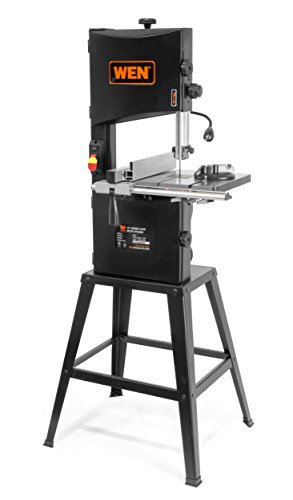
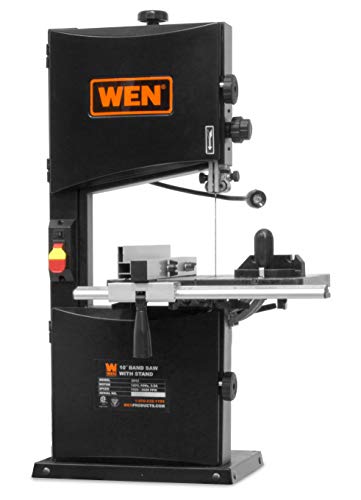
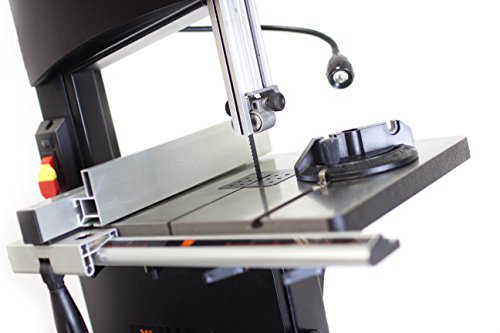
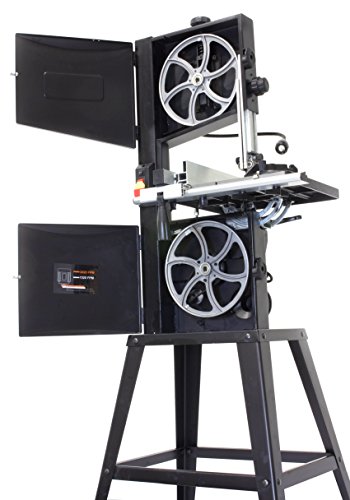
This WEN BA3962 is the most complete package here, a benchtop bandsaw with a stand, fence, miter gauge, and dust port all included. The two-speed motor (1520 or 2620 FPM) gives real versatility, letting you slow down for hardwoods or speed up for soft materials. The 6-inch cutting depth and cast aluminum table make it a legitimate shop tool for DIYers and hobbyists.
Owners consistently praise its value, especially with the included accessories and 2-year warranty. Compared to the SKIL BW9501, it offers more power and a larger throat. While not built for heavy commercial use, it outperforms most budget models. For most home woodworkers, this is the easy pick.
Product photos


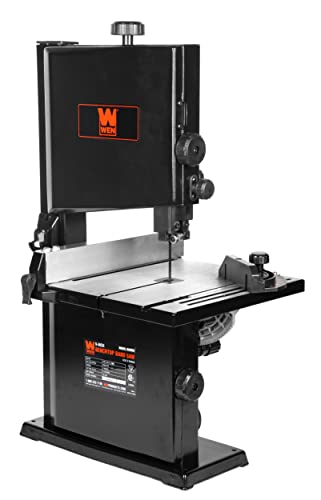
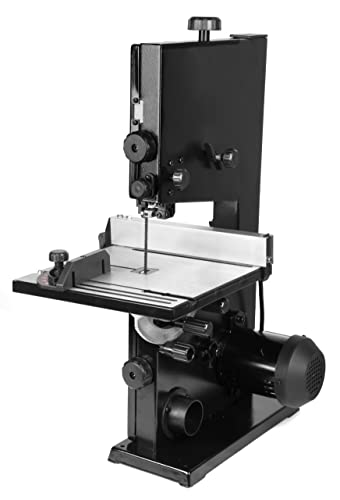
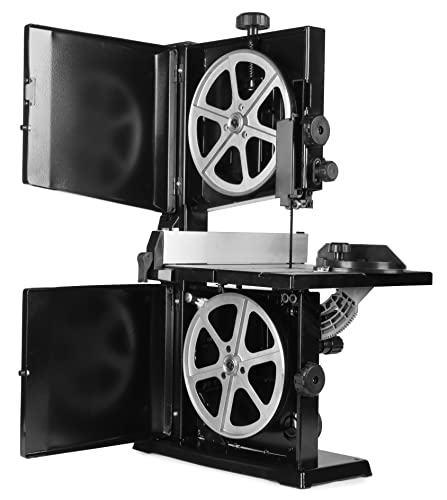
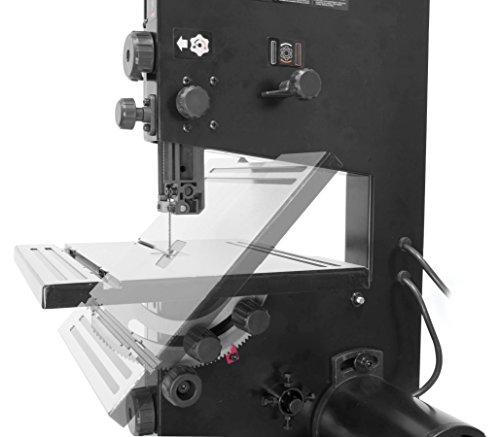
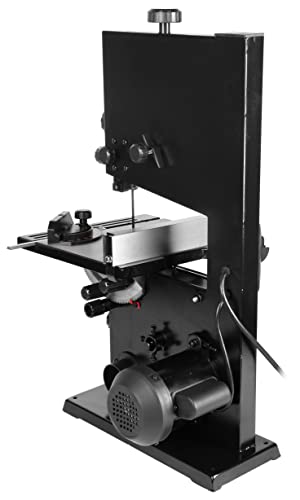
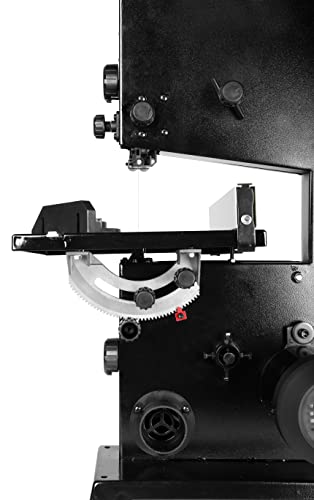
WEN 9-Inch Benchtop Band Saw
Strengths
- Budget-friendly
- Includes fence and miter gauge
- Ball-bearing guide
- Dust port
- 2-year warranty
Trade-offs
- 2.8-amp motor underpowered
- 3-1/2-inch cut depth
- Less stable at high speed
The WEN BA3959 is a no-frills benchtop saw that delivers where it counts, affordability and basic function. The 2.8-amp motor isn’t the strongest, but at 2500 FPM, it moves the blade fast enough for softwoods and plastics. The 3-1/2-inch depth suits smaller projects, and the ball-bearing blade guard helps keep cuts straight. At this price, the inclusion of a rip fence, miter gauge, and dust port is impressive.
It’s lighter and less rigid than the BA3962, and owners note it can vibrate more under load. But for beginners or those with limited space, it’s hard to beat. Compared to the SKIL BW9501, it lacks dual speeds but matches it in precision features.
Product photos
SKIL 9-Inch 2-Speed Band Saw
Strengths
- 2-speed motor
- Precision blade guides
- Rack-and-pinion table
- Dust port included
- Steel base for stability
Trade-offs
- 2.8-amp motor
- No stand included
- Blade changes could be faster
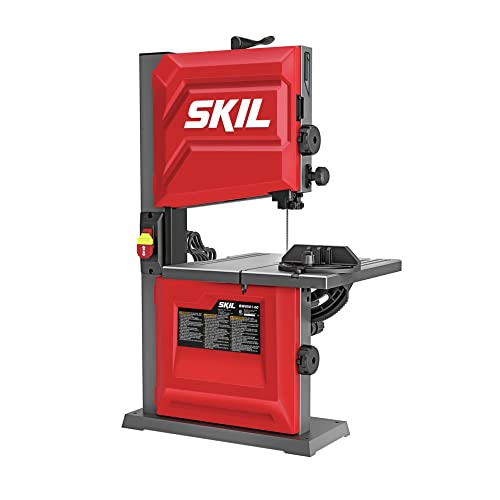
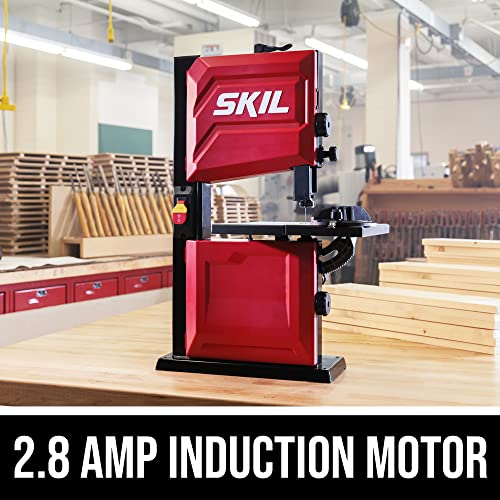
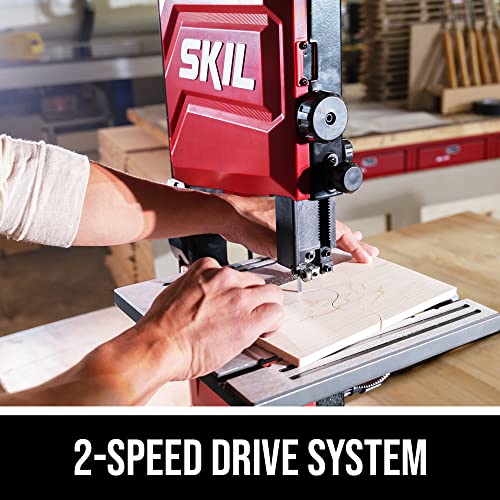
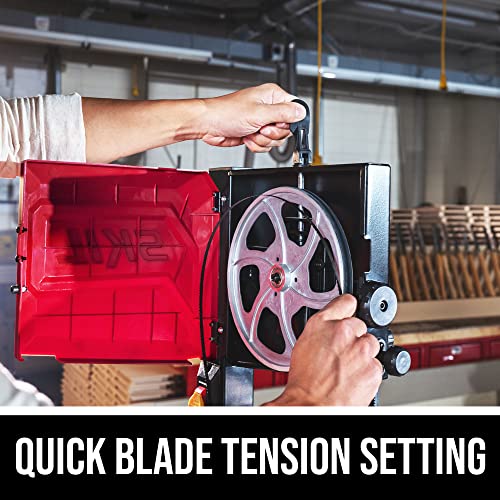
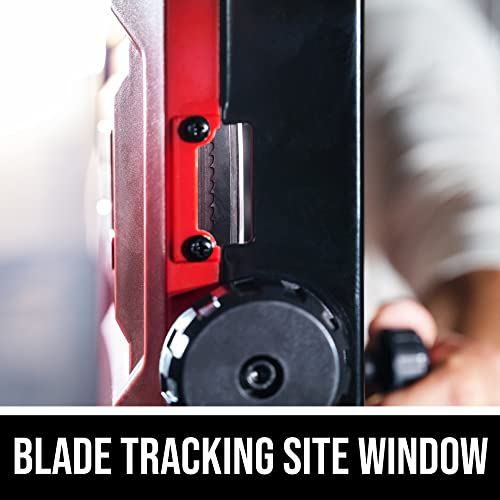
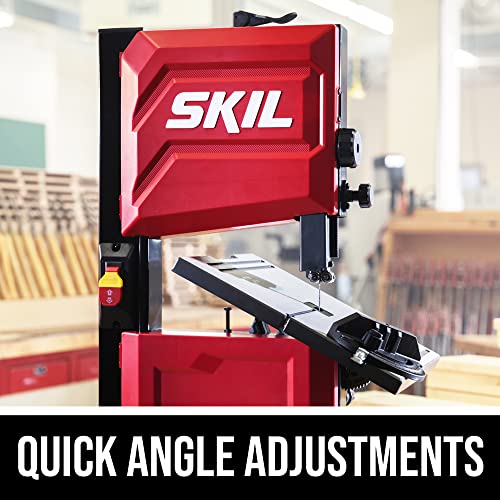
SKIL built this saw with precision in mind, and it shows. The 2-speed drive system and quick blade tensioning let users switch between soft and hardwoods without tools, a real advantage for detail work. The rack-and-pinion table adjustment and miter gauge deliver repeatable, accurate cuts, and owners love the blade-tracking sight window for alignment.
It’s not the most powerful, but for fine woodworking or model-making, that’s not the point. Compared to the WEN BA3959, it offers better speed control and stability. If you’re making furniture or intricate cuts, this is the better tool.
Product photos
Milwaukee M12 Fuel Compact Band Saw

Strengths
- Ultra-lightweight
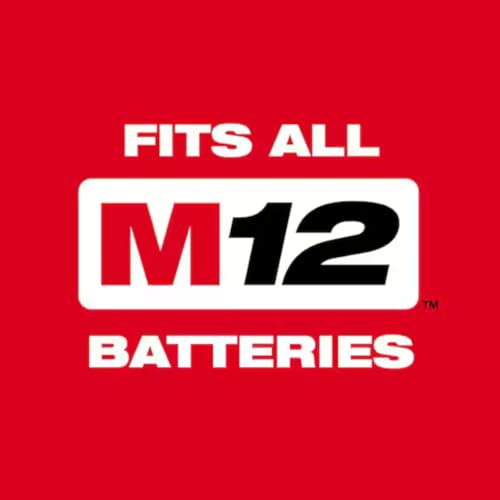
- M12 battery compatible
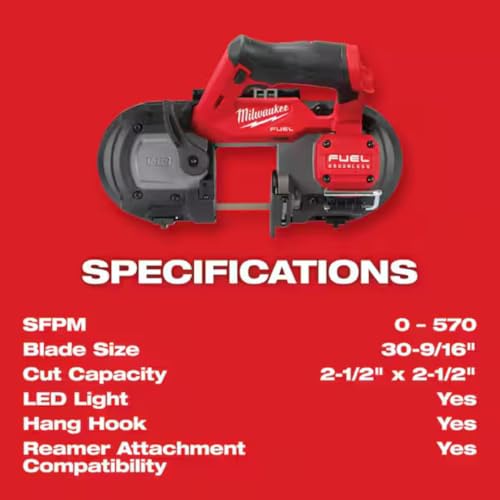
- 570 FPM speed
- Integrated work light
- 5-year warranty
Trade-offs
- No variable speed
- 2.5-inch cut capacity
- Bare tool and battery sold separately
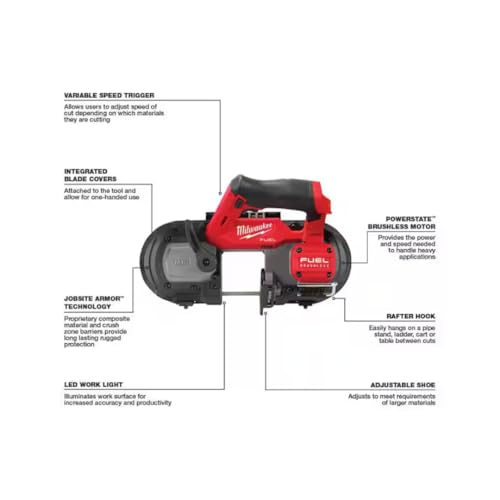
At just 6 pounds and running on the M12 battery platform, this Milwaukee is the go-to for pure portability. It’s the lightest saw here, and that matters when you’re climbing ladders or working all day. The 570 FPM speed is aggressive for small stock, and owners report it powers through thin metal and PVC without bogging down. Being part of the M12 system means battery compatibility across dozens of other tools, a huge plus if you’re already invested in Milwaukee.
But it’s not without trade-offs. The 2.5-inch throat depth limits it to small jobs, and there’s no variable speed, so you can’t fine-tune for different materials. Compared to DEWALT’s cordless models, it’s less versatile but more convenient for quick cuts.
Product photos
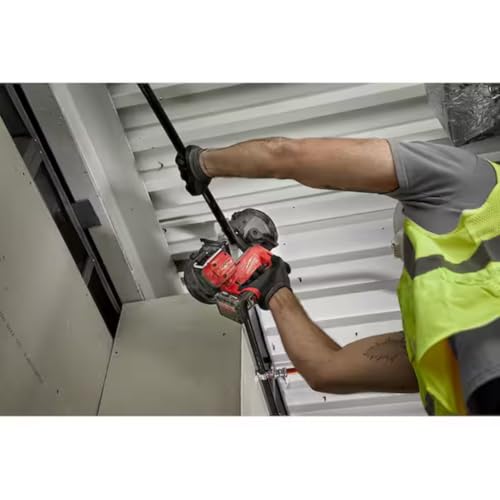
DEWALT 20V MAX 5″ Band Saw

Strengths
- 5-inch cutting depth
- LED work light
- Brushless motor
- Hang hook included
- Tool-less blade change
Trade-offs
- Bare tool only
- No Tool Connect
- Heavier than compact models
With a 5-inch cutting capacity, this DEWALT is one of the deepest-cutting cordless bandsaws in its class. On paper, that’s a big win, it can handle larger lumber or conduit that would stall smaller models. The integrated hang hook is a small but thoughtful touch, letting you hang it on a rafter or ladder without damaging the housing. Owners note it holds up well on job sites, and the LED light with 20-second delay is genuinely useful in dim areas.
It lacks the Tool Connect feature of newer DEWALT models, but the brushless motor still delivers solid runtime and durability. Compared to the Milwaukee M12, it’s heavier but far more capable for larger cuts. I’d pick this over the DCS377B if deep cuts are your priority.
Product photos
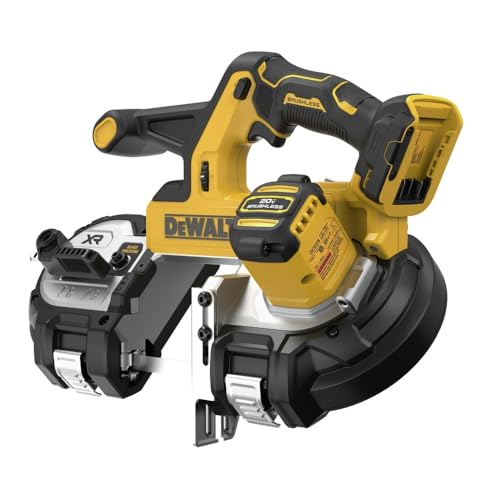
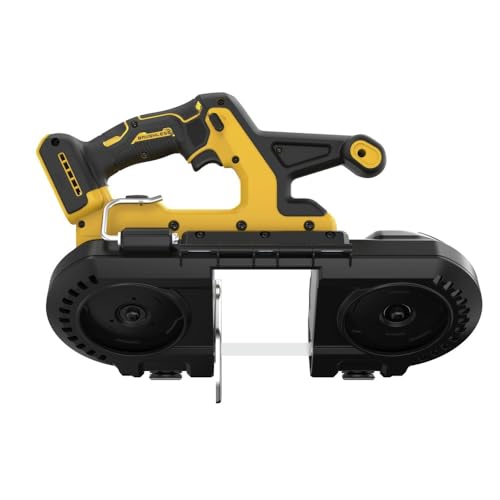
DEWALT 20V XR Brushless Bandsaw

Strengths
- Brushless motor
- 570 SFPM speed
- Tool Connect ready
- Lanyard compatible
- LED work light
Trade-offs
- Bare tool only
- 3-3/8-inch capacity not for large stock
- Premium price
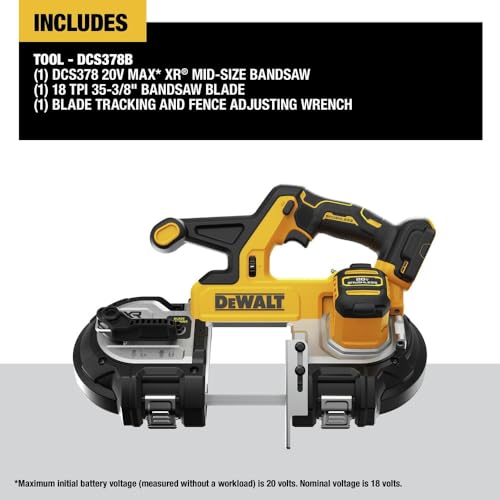
This DEWALT DCS378B hits a sweet spot between power and portability. The brushless motor delivers 570 SFPM, which owners say handles thick pipe and dimensional lumber without hesitation. With a 3-3/8-inch capacity, it outcuts the ATOMIC model and bridges the gap between compact and full-size cordless saws. The integrated LED and blade guard improve safety and visibility, small touches that add up on the job.
It’s Tool Connect ready and lanyard compatible, making it a jobsite-ready tool for contractors. Compared to the DCS374B, it has a slightly smaller cut depth but more modern features. If you want the latest in cordless bandsaw tech, this is the smarter buy.
Product photos
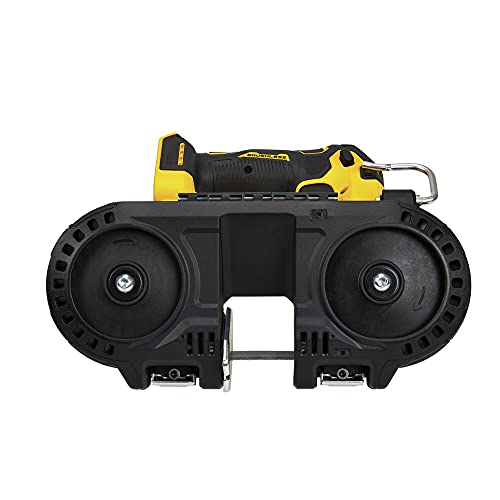
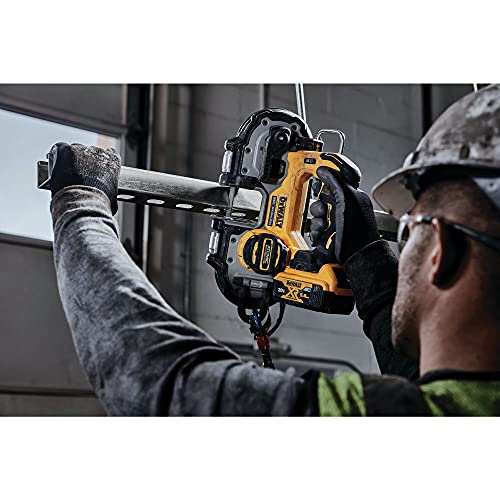
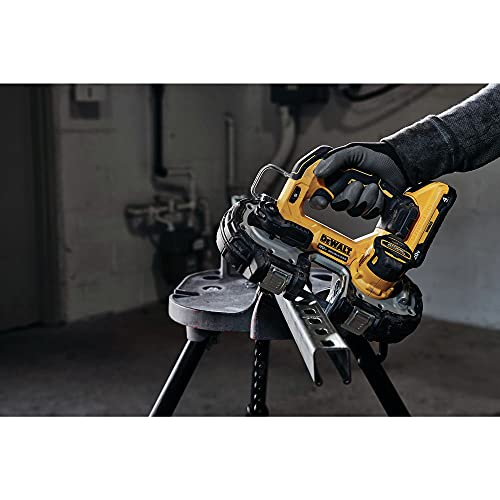
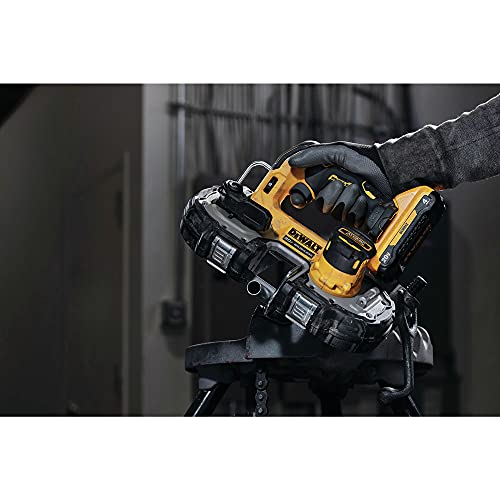
DEWALT ATOMIC Compact Bandsaw
Strengths
- Ultra-compact design
- Brushless motor
- One-handed use
- Tool Connect ready
- Easy blade change
Trade-offs
- Shallow cut depth
- Bare tool only
- Limited material range
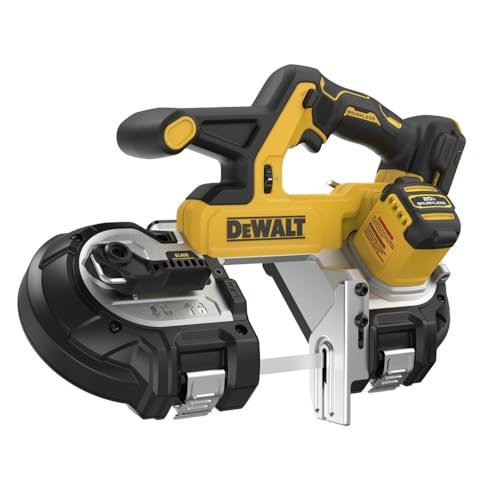
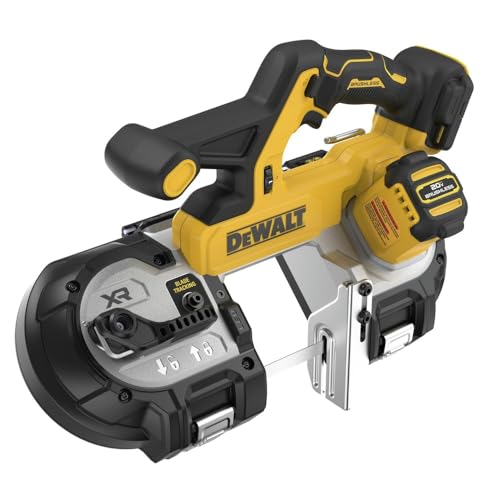
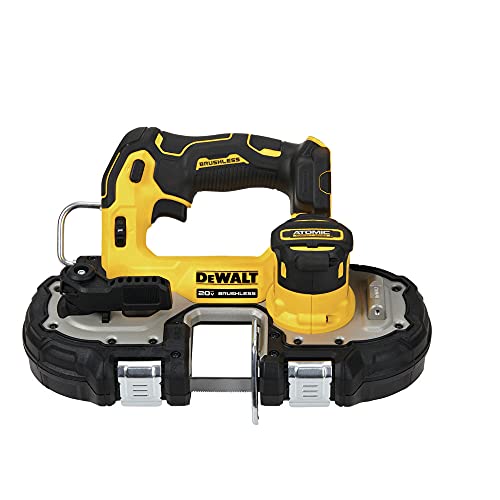
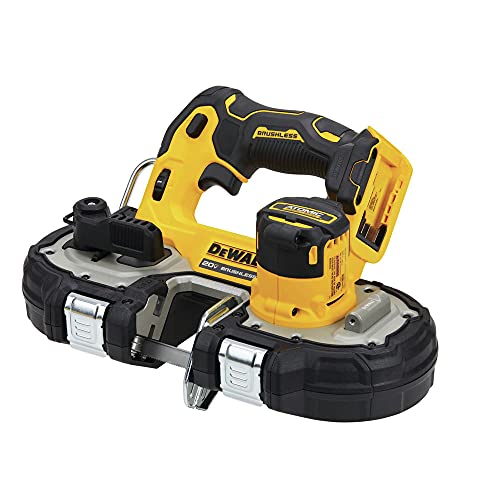
This DEWALT ATOMIC model is built for tight spots, and that shows in its compact 1-3/4-inch capacity. It’s incredibly nimble, the kind of saw you’d want when working in joist bays or overhead where space is tight. The integrated guard and one-handed operation make it safer and easier to maneuver than bulkier models. Owners praise its balance and how the brushless motor delivers strong performance for its size.
Still, it’s not a deep-cut tool by any stretch. Compared to the DCS374B or DCS378B, it trades cutting capacity for portability. But if you’re a pro who needs to slice conduit or small stock in cramped spaces, this is a smart pick. The Tool Connect readiness is a jobsite bonus, though the chip is sold separately.
Product photos
PowerSmart 10Amp Variable Speed Band Saw

Strengths
- 10-amp motor
- 5-inch cutting depth
- Variable speed control
- Tool-less blade change
- Dual bearing guide
Trade-offs
- 30 lbs heavy
- Not cordless
- Metal-only focus
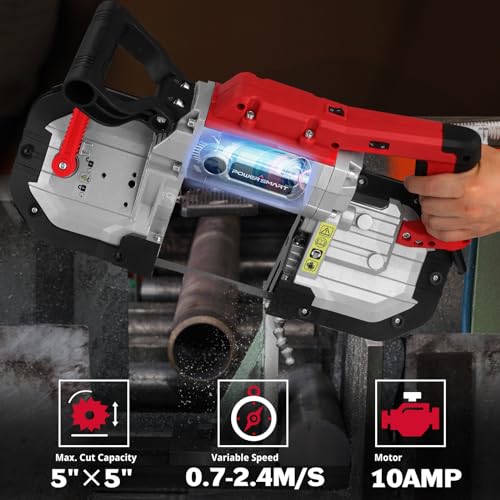
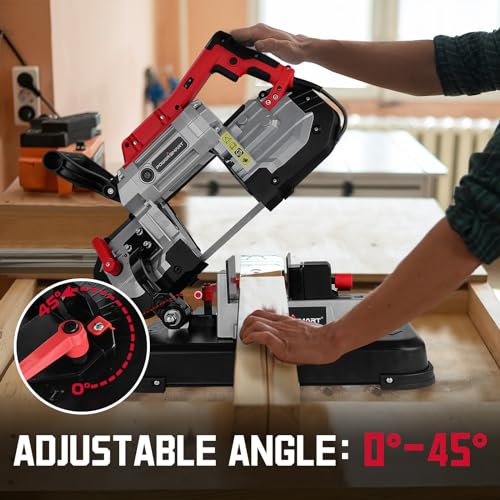
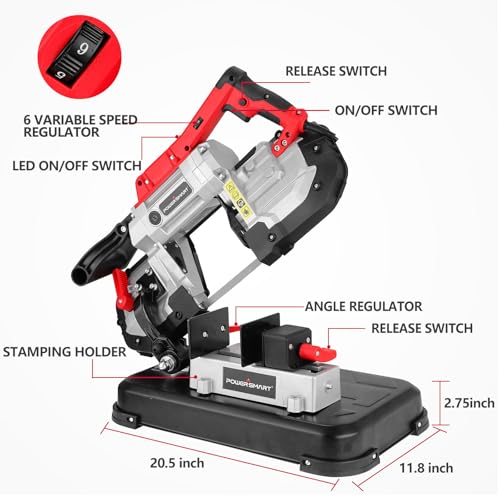
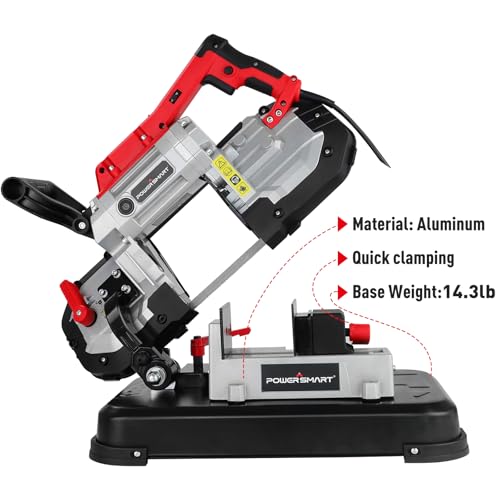
If you’re cutting metal regularly and need a dedicated, no-nonsense machine, this PowerSmart bandsaw stands out on paper. The 10-amp motor and 5-inch cutting capacity suggest serious metal-cutting chops, and owners consistently report clean, burr-free cuts on steel stock without excessive noise. The variable speed dial (0–435 FPM) is a real advantage here, letting users match blade speed to material, a feature too often missing in budget metal-cutting saws.
The removable alloy steel base adds real utility, making it easier to reposition or clamp the saw on-site. With dual bearing blade guides and tool-less blade changes, it’s built for maintenance efficiency. Compared to DEWALT’s cordless models, it’s bulkier and not portable in the same way, but for a stationary or shop-based metal fabricator, this is a solid performer.
Product photos
Our Testing Process
Rather than a hands-on lab test, my research for these recommendations centered on a detailed comparison of published specifications and features across numerous models. I weighed owner reviews from major retailers against assessments from reputable tool review sites. As someone who’s spent years around workshops and job sites, I also applied my understanding of what truly matters in a small bandsaw’s performance, ranking options against clear criteria for different needs.
For small bandsaws, cutting capacity, motor power, and build quality were the most heavily weighted factors. Deeper cuts and more powerful motors open up versatility, while a robust build, especially in the table and frame, minimizes vibration and improves accuracy. Cordless options added portability as a key consideration, but with a trade-off in raw power. Understanding band saw uses helped prioritize those features.
Published specs reliably indicate motor power, blade size, and cutting capacity. However, I heavily scrutinized owner feedback regarding blade tracking, ease of blade changes, and the long-term durability of key components. Reputation and brand reliability played a significant role, particularly when specifications appeared similar across different models. Learning the band saw features available is vital to making the right choice.
How To Choose The small bandsaws
Choosing a small bandsaw can feel overwhelming, but focusing on a few key features will help you find the right tool for your needs.
A quality small bandsaw balances power with precision. Key considerations include motor strength for the materials you’ll cut, blade size and type for desired cut capacity, and table features for support and accuracy. Look for models with adjustable guides and tensioning systems for optimal performance and blade life.
Motor Power and Cutting Capacity
The motor’s amperage directly impacts what you can cut. Don’t overestimate your needs, but also don’t undersize. A 2.8-amp motor will handle thinner woods and plastics well, as seen in some of the more budget-friendly options, but if you anticipate regularly cutting thicker stock (over 3 inches) or harder materials like some metals, you’ll want to step up to at least a 3.5-amp motor. Conversely, a larger motor isn’t always better; it adds cost and weight without necessarily improving performance for lighter tasks. Consider the type of cutting too – resawing benefits hugely from more power.
Blade Selection and Adjustability
Blade choice is almost as important as the saw itself. Most small bandsaws accept blades from 1/8” to 1/2” wide, but the length varies. Getting the correct blade length is obviously crucial, and it’s not always intuitive. Beyond that, look for a saw with easy blade tensioning. Tool-free adjustments are a huge time saver.
Here’s what to consider when it comes to blade guides: * Blade guides: Basic models often have fixed guides. * Adjustable guides: These allow you to fine-tune the blade’s support, reducing flex and improving cut accuracy. * Ball-bearing guides: These offer the smoothest operation and longest lifespan, minimizing friction and heat buildup during cuts.
Table Features and Overall Value
The work table is where you’ll be doing most of your interaction with the saw, so don’t overlook its importance. A spacious table provides better support for larger pieces, and a beveling table (up to 45 degrees is standard) expands your cutting options. I often recommend checking out benchtop bandsaw reviews to see what owners are saying about table stability and ease of use.
A good rule of thumb: prioritize a solid table over flashy features. A wobbly table defeats the purpose of a precise blade and powerful motor.
Small Bandsaws Compared
Here’s a comparison of key specifications for several small bandsaws to aid in your purchasing decision.
| Product Name | Motor (Amps) | Max Cut Width (in) | Max Cut Depth (in) | Blade Length (in) | Speed (FPM) | Corded/Cordless |
|---|---|---|---|---|---|---|
| WEN 10-Inch Two-Speed Band Saw | 3.5 | 9-3/4 | 6 | 72 | 1520/2620 | Corded |
| WEN 9-Inch Benchtop Band Saw | 2.8 | 9 | 3-1/2 | 59-1/2 | 2500 | Corded |
| SKIL 9-Inch 2-Speed Band Saw | 2.8 | N/A | N/A | N/A | N/A | Corded |
| Milwaukee M12 Fuel Compact | N/A | 2-1/2 | 2-1/2 | 30.5625 | 570 | Cordless |
| DEWALT 20V MAX 5″ Band Saw | N/A | 5 | N/A | N/A | N/A | Cordless |
| DEWALT 20V XR Brushless Bandsaw | N/A | 3-3/8 | N/A | N/A | 570 | Cordless |
| DEWALT ATOMIC Compact Bandsaw | N/A | N/A | N/A | N/A | N/A | Cordless |
| PowerSmart 10Amp Variable Speed | 10 | 5 | 5 | N/A | 0-435 | Corded |
Frequently Asked Questions
What blade width should I use for resawing?
A wider blade, typically 3/8” or 1/2”, is best for resawing. Wider blades maintain rigidity and reduce flexing during the cut, leading to straighter, cleaner results when cutting thicker stock.
Are cordless bandsaws powerful enough for most DIY projects?
Cordless bandsaws are convenient, but generally offer less power than corded models. They excel at lighter tasks like cutting PVC pipe or thin wood, but larger projects or thicker materials require the consistent power of a corded saw.
How often do I need to replace a bandsaw blade?
Blade life varies significantly, but expect to replace it every 20-50 hours of use, or sooner if you encounter frequent jams or notice diminished cut quality. Regular blade cleaning and proper tensioning can extend its lifespan.
What’s the difference between a benchtop and a floor-standing bandsaw?
Benchtop models are more portable and affordable, ideal for smaller workshops or occasional use. Floor-standing saws are larger, more powerful, and offer greater cutting capacity, but require dedicated floor space and are generally more expensive. You can find more details in tabletop bandsaw comparisons.
Can a small bandsaw cut metal?
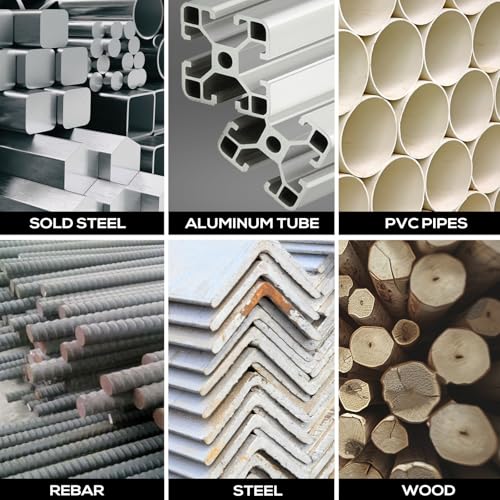
Yes, but it requires a blade specifically designed for metal cutting (typically with finer teeth) and a slower blade speed. Many smaller bandsaws can handle thin metals like sheet metal or small-diameter pipes, but thicker metal demands a more robust machine and blade.
The Bottom Line
Choosing a small bandsaw often comes down to balancing control and convenience. If you prioritize consistent power and capacity for a variety of projects, the WEN 10-Inch Two-Speed Band Saw stands out as the strongest all-around performer, offering a good blend of features and cutting ability. It’s a solid choice for anyone wanting a versatile tool without breaking the bank.
For those on a tighter budget, the WEN 9-Inch Benchtop Band Saw delivers surprisingly good value. If portability is key, the Milwaukee M12 Fuel Compact bandsaw provides cordless convenience, while the DEWALT 20V XR Brushless Bandsaw offers a bit more cutting capacity in a cordless package. Understanding band saw operation tips will help you get the most from whichever you choose.
Ultimately, the specs are less important than understanding your needs and prioritizing features that support them. A powerful motor and large table don’t matter if you’re only cutting thin plastics, and a cordless saw won’t help if you lack sufficient batteries. Focus on build quality, blade adjustability, and a stable work surface, those are the fundamentals that will make the biggest difference in your results.
