
8 Best Sheet Metal Shears of 2026
This post contains affiliate links. As an Amazon Associate, we earn from qualifying purchases.
The DEWALT 20V MAX Cordless Metal Shear is the best overall for its power and swivel head, making it ideal for tough, precise cuts. For a budget-friendly manual option, the HURRICANE 3-Piece Aviation Snips Set delivers solid performance and versatility across common gauges.
If you’ve ever tried cutting sheet metal with the wrong tool, you know how frustrating it can be, jagged edges, uneven lines, and sore hands. The right shears make all the difference, whether you’re repairing ductwork or building a custom enclosure.
This guide cuts through the noise, focusing on real-world performance, build quality, and value. I researched the top models based on specs, user feedback, and how well they match common DIY and pro needs.
Top 8 Sheet Metal Shears in the Market
The Best Sheet Metal Shears, Reviewed
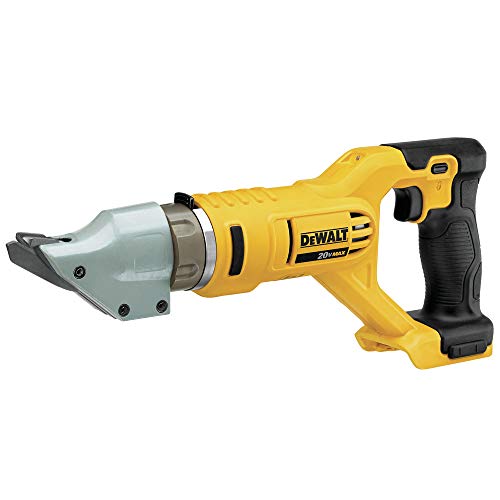
DEWALT 20V MAX Cordless Metal Shear
Strengths
- 360-degree pivoting head
- LED work light
- DEWALT 20V compatibility
Trade-offs
- Battery not included
- Higher cost bare tool
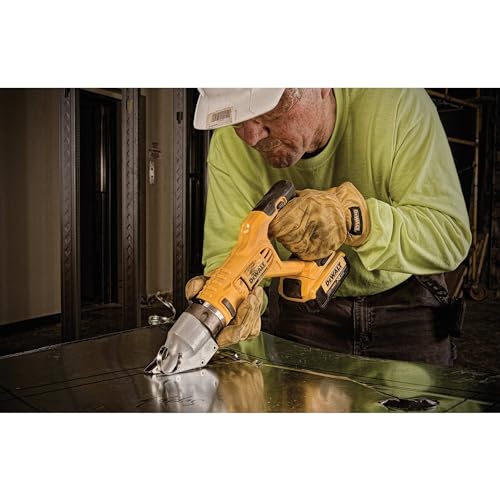
For anyone already in the DEWALT 20V ecosystem, this cordless shear is the most practical all-rounder. The 360-degree pivoting head is a standout for awkward angles, owners consistently praise its ability to maneuver in tight duct chases or roofing seams. It chews through 14-gauge material cleanly, and the LED light helps in dark spaces.
Battery sold separately is a pain, but the bare tool pricing keeps it accessible. Compared to the Labfintom cordless model, DEWALT’s build quality and brand support give it an edge in reliability. If you need one tool to handle most sheet metal jobs without cords, this is my pick.
Product photos
Cordless Brushless Sheet Metal Cutter

Strengths
- High torque brushless motor
- 360-degree adjustable head
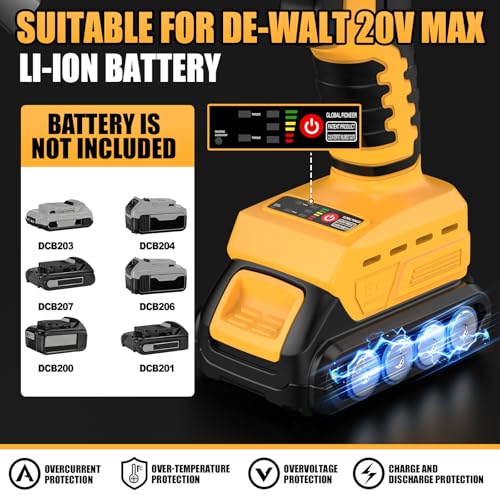
- Compatible with DEWALT 20V
Trade-offs
- Manual head adjustment
- Battery-sensitive performance
- Not for wavy metal
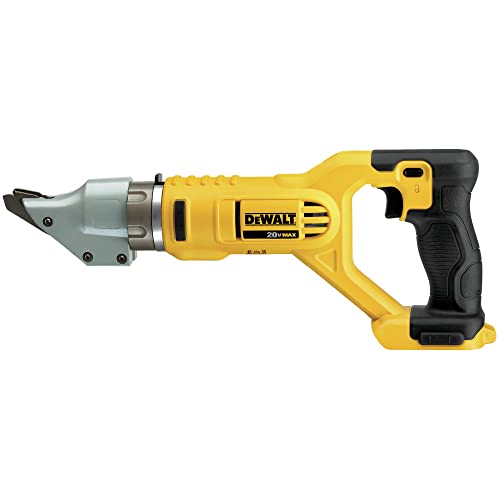
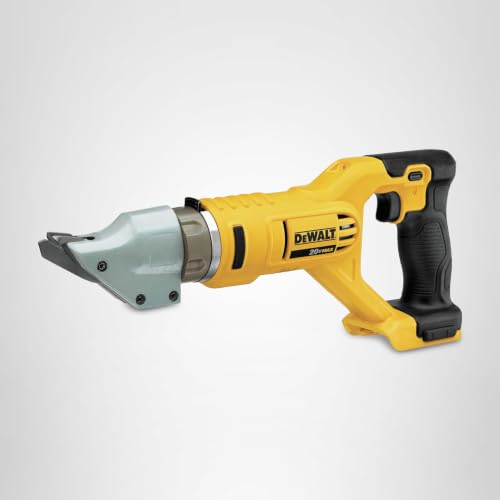
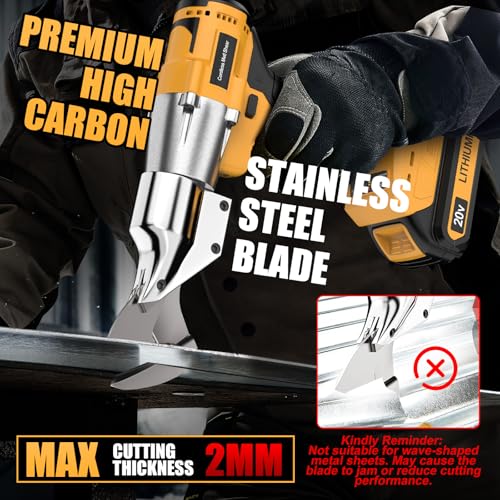
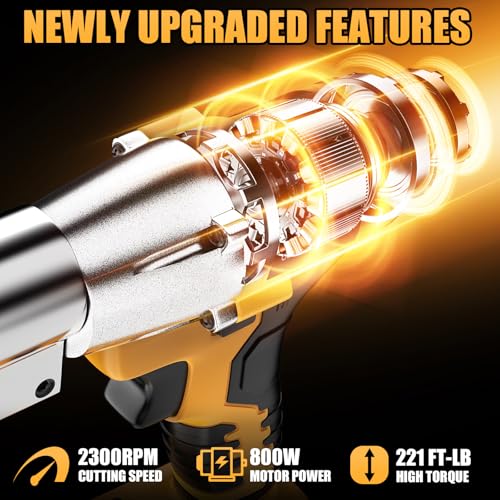
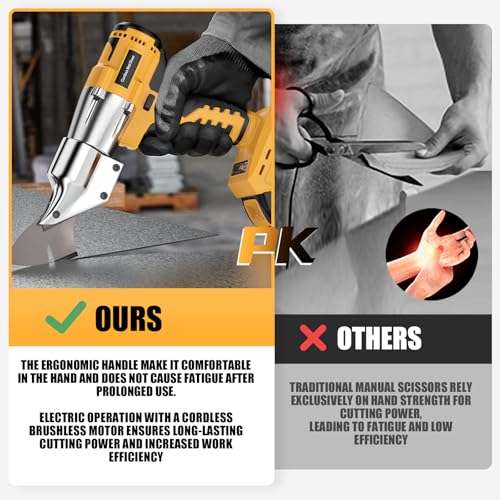
This cordless shear packs serious specs, 2300RPM brushless motor, 221 Ft-Lbs torque, and 360-degree manual-adjust head, but real-world performance hinges on battery quality. Owners report excellent cutting on 18-gauge steel when using high-capacity DEWALT 20V batteries, but struggle with thicker material on weaker packs. The safety lock and forward/reverse buttons add control, though the manual head adjustment feels clunky compared to DEWALT’s smoother system.
It’s a strong performer on paper and in owner feedback, especially for the price. But the lack of automatic head rotation and compatibility quirks make it a step behind the DEWALT in workflow. Still, for budget-conscious pros, it’s a compelling alternative.
Product photos

HURRICANE 3-Piece Aviation Snips Set

Strengths
- True left/right/straight cutting
- Serrated Cr-V blades
- Ergonomic non-slip handles
Trade-offs
- Blades not replaceable
- Slightly bulky for tight spaces
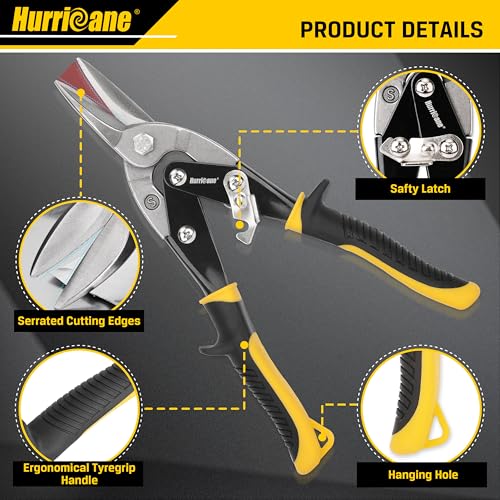
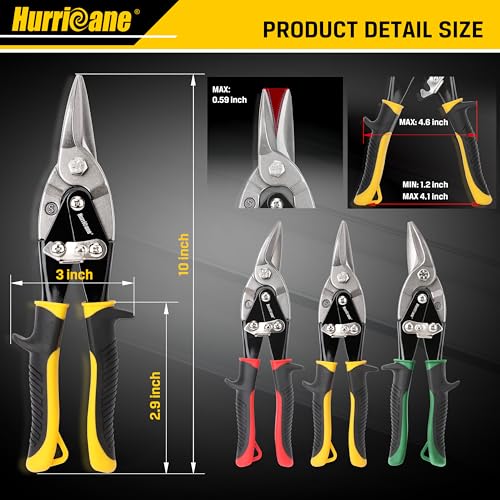
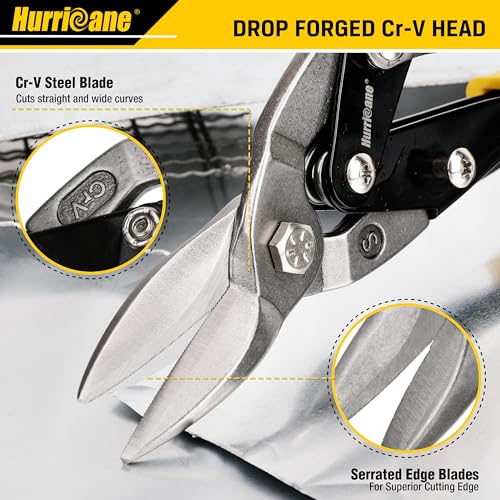
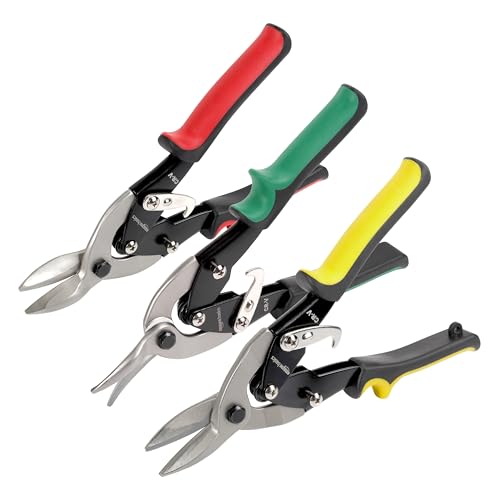
If you’re cutting complex shapes in sheet metal, say, custom duct transitions or intricate gutter repairs, this 3-piece set is where I’d lean over the Amazon Basics option. The color-coded snips (yellow, red, green) deliver true left, right, and straight capabilities, and owners report smooth transitions between curves without repositioning. The Cr-V steel blades with micro-serrations grip metal well, reducing slippage on slick surfaces.
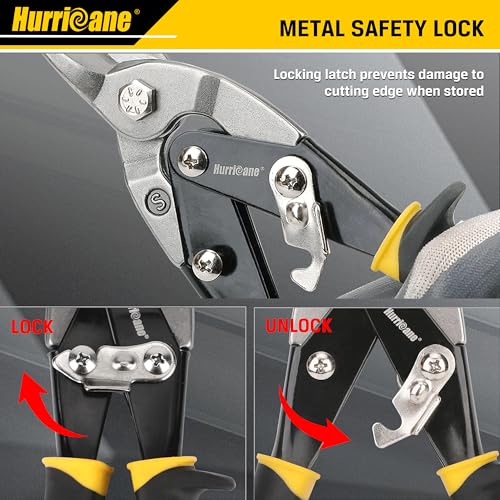
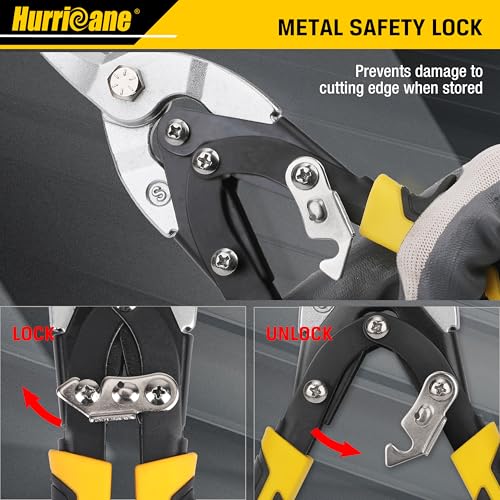
The 10-inch size offers good use, and the TyreGrip handles cut down on fatigue. It’s not quite as refined as Crescent Wiss, but it’s closer in performance at a better price. The manual safety latches are a small but appreciated touch for storage.
Product photos

Klein Tools 12-Inch Metal Cutter
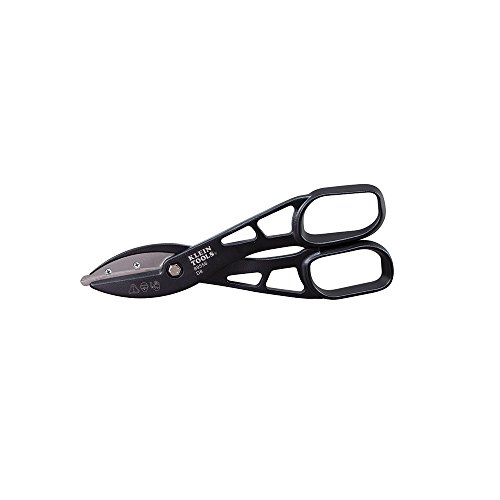
Strengths
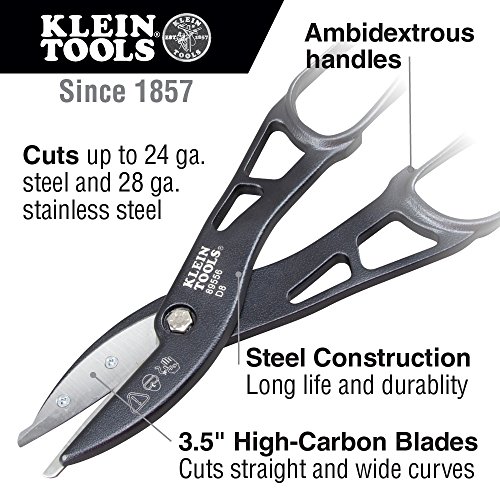
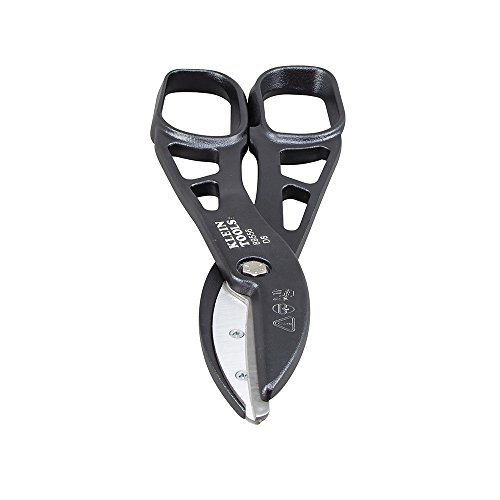
- All-steel construction
- Replaceable high-carbon blades
- Full-length 3.5-inch cutting edge
Trade-offs
- Heavier than aluminum models
- Higher price for manual snips
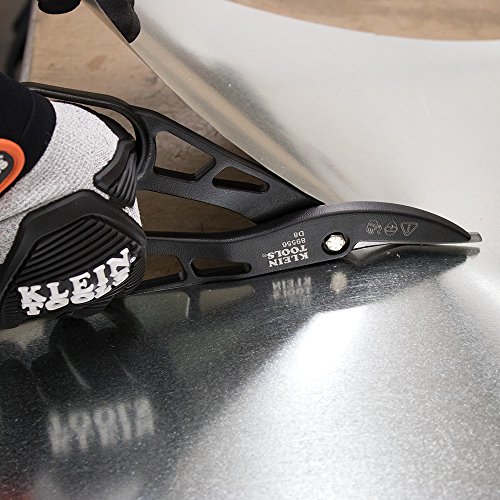
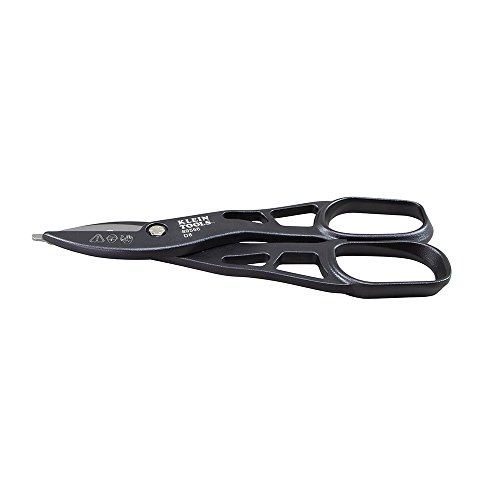
When you want manual snips that feel like they’ll outlive your workshop, the Klein 89556 stands out. The full all-steel build screams durability, and owners consistently praise how well they handle repeated 24-gauge steel cuts without flex or failure. The 3.5-inch full blades allow for longer, cleaner strokes, great for straight runs or wide curves in ductwork.
It’s heavier than aluminum models, yes, but that weight translates to sturdiness. The replaceable blades are a big plus, and the large handles work with gloves without pinching. Compared to the Hurricane aluminum snips, this is the pick if you prioritize toughness over ease of carry.
Product photos

HURRICANE High-Use Straight Cut Snips

Strengths
- Dual-pivot reduces hand strain
- Durable Cr-Mo steel blades
- Soft rubberized handles
Trade-offs
- Straight cut only
- Not for hardened materials
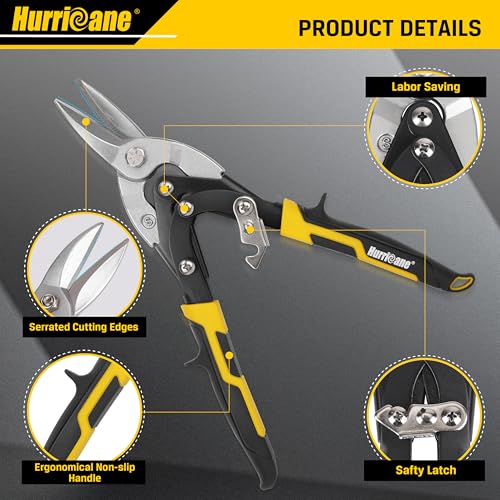
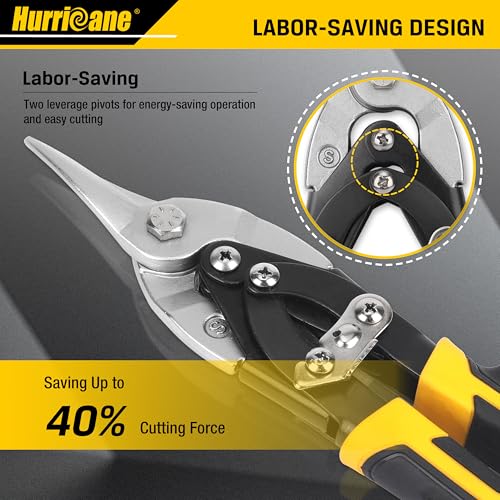
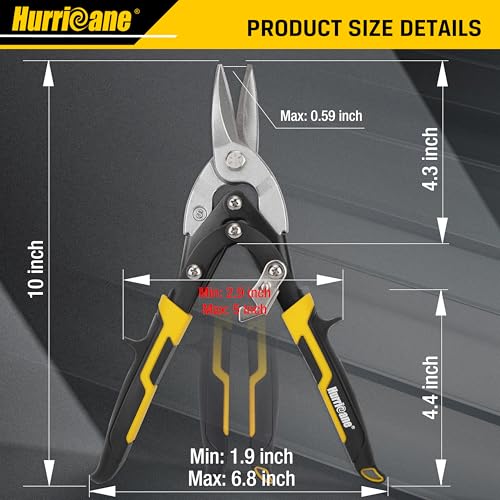
The dual-pivot use system here is the real story, owners consistently report up to 40% less hand fatigue, which is huge if you’re doing long runs in ductwork or roofing. The Chrome Molybdenum steel blades hold an edge well, and the rubberized handles add comfort without sacrificing grip. For anyone with hand strain issues, this is a strong contender.
It’s a straight-cut only model, so it lacks the versatility of a full set. But if your work is mostly linear, like cutting flashing or metal roofing panels, this delivers cleaner, easier cuts than standard snips. Compared to the Klein 12-inch, it’s lighter and less fatiguing, though not as rugged for daily pro use.
Product photos
Crescent Wiss 2-Piece Offset Snips
Strengths
- Offset design for visibility
- Spring-assisted return
- Precision blade serrations
Trade-offs
- Higher price point
- Only two snips in set
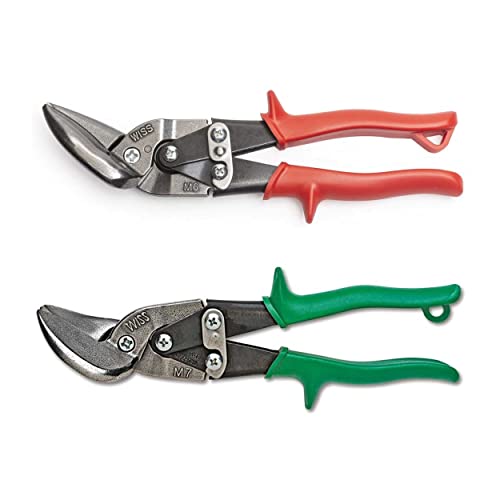
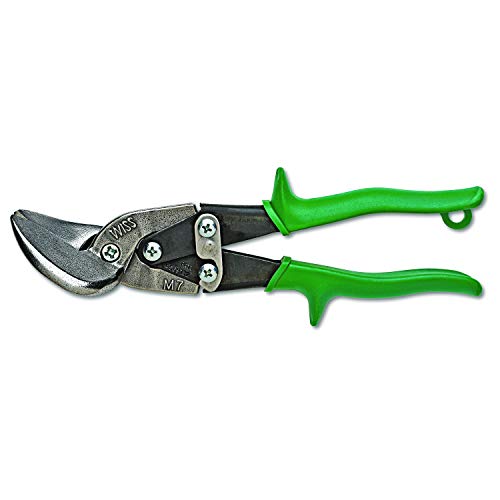
The offset blade design is what sells me here, your hands stay clear of the work surface, which improves visibility and comfort, especially on overhead or tight-space jobs. The M6R and M7R combo covers straight cuts and arcs in both directions, and the spring-action handle makes feeding the cut smoother than manual return models. Owners highlight the precision for detailed HVAC or auto body work.
Blade life is solid thanks to the serrations that spread force evenly, but the cutting capacity (18-gauge steel) is on par, not ahead, of rivals. Still, the handling edge is real. Compared to the Hurricane 3-piece, this set feels more refined, though it costs more.
Product photos



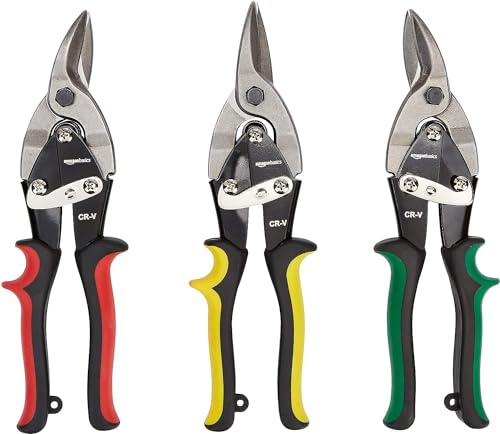
Amazon Basics 3-Piece Aviation Snips
Strengths
- Affordable 3-piece set
- Decent blade hardness
- Color-coded for quick ID
Trade-offs
- Shorter lifespan under load
- Less use than premium sets
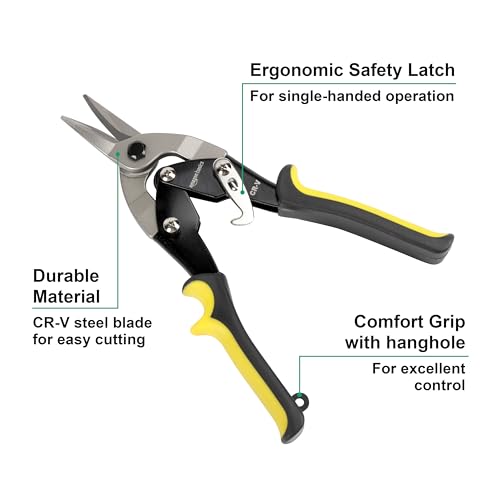
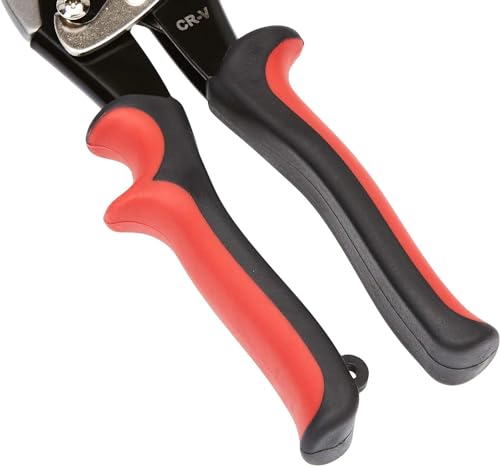
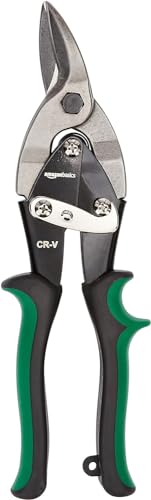
This set is the budget gateway into color-coded aviation snips, and it works well enough for light, infrequent cuts. The left, right, and straight-cut trio covers basic directional needs, and the chrome vanadium steel blades with high-frequency heat treatment hold an edge better than you’d expect at this tier. Owners note they handle 18-gauge cold-rolled steel without immediate dulling, which is competitive.
But don’t expect precision or long life. The rubberized grips help, but use isn’t as refined as in pricier sets like the Hurricane 3-piece or Crescent Wiss. If you’re just patching gutters or trimming HVAC ducts once a year, this is the smarter buy. For pros or frequent users, the durability gap becomes obvious fast.
Product photos

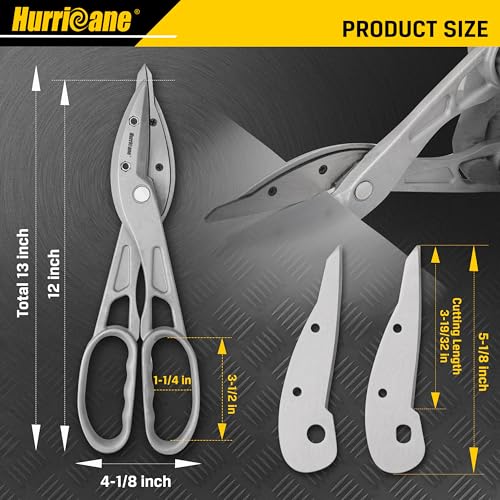
HURRICANE 12-Inch Aluminum Tin Snips
Strengths
- Lightweight aluminum body
- Replaceable blades included
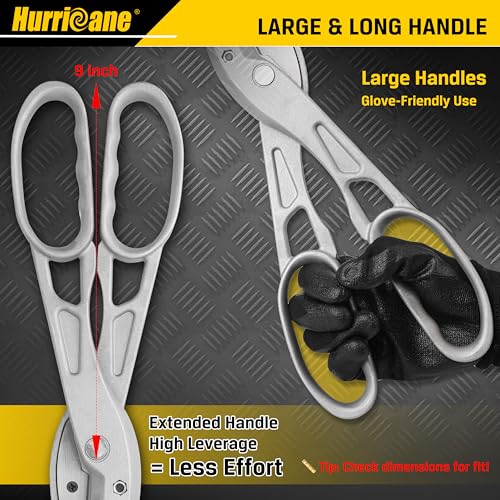
- Glove-friendly large handles
Trade-offs
- Less durable than steel snips
- Not for heavy or frequent use
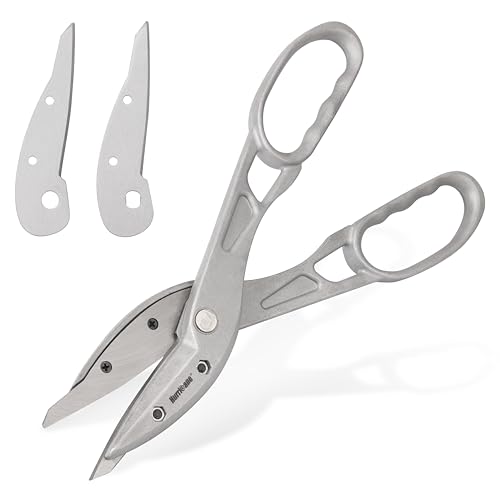
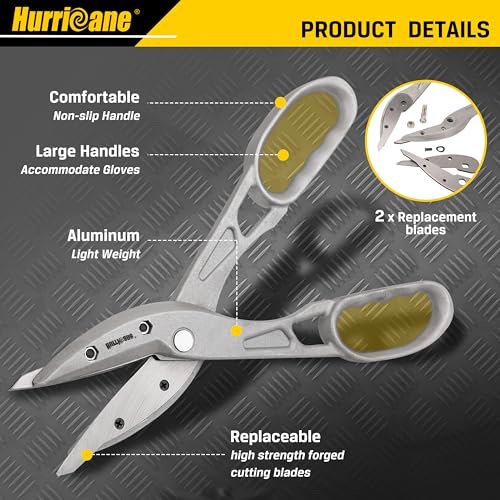
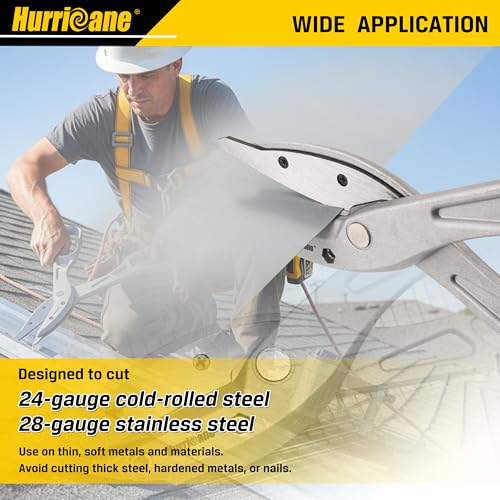
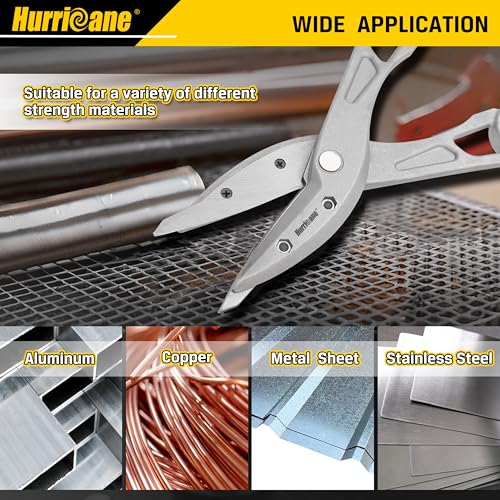
For DIYers tackling light-duty metal jobs, think HVAC tweaks, vinyl siding patches, or craft builds, these aluminum snips make a lot of sense on paper. The lightweight body reduces strain during longer cuts, which owners consistently report as a win for weekend warriors not used to heavy tools. The replaceable high-carbon steel blades are a standout feature, letting you refresh the edge instead of buying a whole new tool.
Still, aluminum construction means less durability under constant stress. Compared to full-steel rivals like the Klein 89556, these won’t hold up as well if you’re cutting 24-gauge steel all day. But for their intended use, sporadic home repairs and soft metals, they deliver solid value and comfort, especially with gloves on.
Product photos
How We Evaluated sheet metal shears
Rather than a hands-on lab test, my research for these recommendations focused on a detailed comparison of published specifications and features across numerous models. I weighed owner reviews from multiple sources, alongside professional assessments from reputable tool review sites. My goal was to identify the shears that consistently delivered on performance expectations, factoring in intended use cases and price points. This process allowed me to rank candidates against clear criteria for cutting capacity, ease of use, and durability.
For sheet metal shears, cutting capacity and build quality were the biggest deciding factors. A tool’s ability to cleanly handle different gauges of steel and aluminum is paramount. Equally important is the overall robustness; flimsy construction leads to quick wear and tear and impacts precision. I also prioritized features like adjustable heads and ergonomic grips, as they contribute significantly to user comfort and control during extended use.
Specifications reliably indicate a shear’s maximum cutting capacity, but owner feedback provides critical context. I paid close attention to reports of blade durability, ease of use in real-world scenarios, and any common issues. Reputations, especially among professional metalworkers, carry significant weight. Understanding how to properly select a blade selection for metal is also helpful when assessing cutting performance, as some shears may perform better with specific materials.
How To Choose The sheet metal shears
I’ve spent a lot of time around sheet metal, and choosing the right shears can make or break a project. Don’t just grab the cheapest option; a well-chosen tool will last, cut cleanly, and save you a ton of frustration.
A quality sheet metal shear prioritizes blade material (high-carbon or chrome vanadium steel are common), cutting capacity matched to typical project materials (gauge matters!), and ergonomic features that reduce hand fatigue. Consider the type of cuts needed – straight, curved, or a mix – and choose a tool accordingly. Look for features like serrated blades for grip and locking mechanisms for safety.
Cutting Capacity and Material
The first thing I look at is what I’ll be cutting most of the time. Sheet metal comes in different gauges, and a shear that struggles with 20-gauge steel is going to be useless on anything thicker. Don’t overestimate your needs, but also don’t undershoot. Many homeowners will find that a shear capable of handling up to 18-gauge steel is sufficient for common tasks like HVAC work or flashing repair. If you anticipate working with stainless steel, pay close attention to the stated capacity for that material, as it’s harder to cut than mild steel.
Power Source and Maneuverability
Cordless shears, like the DEWALT 20V MAX, offer incredible convenience. Being able to move around a job site without being tethered to an outlet is a huge advantage. However, the battery adds weight, and runtimes can be a limitation. Manual snips, on the other hand, are lighter and always ready to go. Think about the scale of your projects. For small, quick cuts, manual snips are often faster to deploy. For larger jobs, a powered option might save your hands. To learn more about other power tool options, check out a guide to top sheet metal shears.
Ergonomics and Cutting Style
Hand fatigue is real, especially when working with metal. Look for shears with comfortable grips, ideally rubberized or overmolded. Use plays a big role here. High-use designs, like those found on some HURRICANE snips, reduce the amount of force you need to apply. Also, consider the type of cuts you’ll be making most often.
- Straight cuts are easiest with straight-cut snips.
- Left and right cuts require dedicated snips (red and green, respectively) for clean, controlled curves.
- A three-piece set, like the HURRICANE Aviation Snips Set, gives you the most versatility, but if you know you’ll only be doing straight cuts, a dedicated straight-cut snip will likely be more comfortable and efficient.
A good rule of thumb: If you find yourself fighting the tool to make a cut, it’s the wrong tool for the job.
Sheet Metal Shears Compared
Here’s a comparison of the specifications for various sheet metal shears to help you make an informed decision.
| Product Title | Voltage | Max Gauge (Steel) | Blade Material | Cutting Action | Head Type |
|---|---|---|---|---|---|
| DEWALT 20V MAX Cordless Metal Shear | 20V | 7/32″ | N/A | Rotary | 360° Swivel |
| Cordless Brushless Sheet Metal Cutter | 20V | 18 gauge | N/A | Rotary | Adjustable |
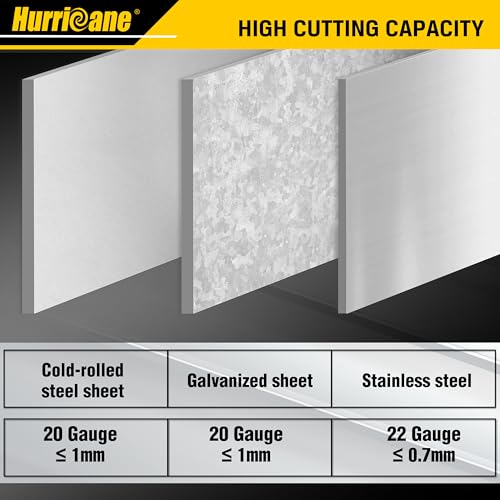
| HURRICANE 3-Piece Aviation Snips Set | N/A | 20 gauge | Cr-V Steel | Manual | Straight/Left/Right |
| Klein Tools 12-Inch Metal Cutter | N/A | 24 gauge | High-Carbon Steel | Manual | Straight |
| HURRICANE High-Use Straight Cut Snips | N/A | 20 gauge | Cr-Mo Steel | Manual | Straight |
| Crescent Wiss 2-Piece Offset Snips | N/A | 18 gauge | N/A | Manual | Offset |
| Amazon Basics 3-Piece Aviation Snips | N/A | 18 gauge | Chrome Vanadium Steel | Manual | Straight/Left/Right |
| HURRICANE 12-Inch Aluminum Tin Snips | N/A | 24 gauge | High-Carbon Steel | Manual | Straight |
Frequently Asked Questions
What gauge of sheet metal should I realistically be able to cut with a manual snip?
Most manual snips comfortably handle up to 18-gauge steel, though some high-quality models can manage 20-gauge. Remember that harder metals like stainless steel will require more force and may reduce the effective gauge capacity.
Are cordless metal shears really powerful enough for thicker materials?
Cordless shears offer convenience, but generally sacrifice some cutting power. While models like the DEWALT 20V MAX can manage up to 7/32″ steel, for consistently thicker materials, a manual shear or a more robust powered option is preferable. For more details, read about the best cordless metal shears.
What’s the difference between straight-cut, left-cut, and right-cut snips?
Straight-cut snips are designed for, predictably, straight lines. Left-cut snips (usually red-handled) cut curves to the left, while right-cut snips (usually green-handled) cut curves to the right. Using the correct snip for the curve direction ensures a clean, controlled cut.
What blade material is best for durability in sheet metal shears?
Chrome vanadium steel and chrome-molybdenum steel are excellent choices for blade material because they resist wear and maintain their sharpness longer than standard steel. High-carbon steel is also common, especially in less expensive models, but may require more frequent sharpening.
How can I minimize hand fatigue when using manual sheet metal shears?
Look for shears with high-use designs and comfortable, overmolded grips. These features reduce the amount of force needed to make a cut, and improve ergonomics. You can also explore portable metal cutting shears if hand fatigue is a major concern.
The Bottom Line
Choosing sheet metal shears often comes down to balancing convenience with control. If you need to tackle a lot of cutting, especially in awkward spaces, the DEWALT 20V MAX Cordless Metal Shear is a solid choice. It provides power and maneuverability that manual options simply can’t match, and it’s a great all-around performer for a wide range of projects.
For those on a tighter budget, or who only have occasional needs, the HURRICANE 3-Piece Aviation Snips Set delivers excellent versatility. It covers straight, left, and right cuts, and the durable construction ensures it will last. If you primarily work with softer metals like aluminum, the HURRICANE 12-Inch Aluminum Tin Snips are a good value, but remember to research blades for sheet metal if you plan to switch materials.
Ultimately, the best sheet metal shears are the ones that fit your hands and your projects. Don’t get caught up in chasing the highest specs; focus on build quality, comfortable ergonomics, and a cutting capacity that realistically matches the materials you’ll be working with most often. A well-maintained, properly-used tool will always outperform a fancy one that’s a poor fit.
