
9 Best Saw Mills of 2026
This post contains affiliate links. As an Amazon Associate, we earn from qualifying purchases.
The BILT HARD 36″ Portable Sawmill stands out as the best overall option, combining a powerful 760cc engine with a 307-inch cut length and solid 45.3-inch track for stability. For budget-focused buyers, the BILT HARD 32″ Portable Sawmill offers strong performance at a lower price, while the Granberg Alaskan MKIV 36″ Mill is the top chainsaw-driven choice for those prioritizing versatility and portability.
Most people looking for a saw mill aren’t just after a tool, they’re after the ability to turn raw logs into usable lumber, on their own terms. But with so many designs, power sources, and price points, it’s easy to end up with a mill that’s underpowered, unstable, or overkill for your needs.
This guide cuts through the noise by focusing on real-world performance factors: engine strength, log capacity, track stability, and owner feedback. We compared gas-powered portable mills and chainsaw attachments to find models that deliver accurate, reliable cuts without constant maintenance or frustration.
Top 9 Saw Mills in the Market
The Best Saw Mills, Reviewed
BILT HARD 36″ Portable Sawmill
Strengths
- 25HP engine with E-start
- Includes extension track & blades
- Wide, stable track base
Trade-offs
- Heavy setup
- Higher fuel use
- Bulky storage needs
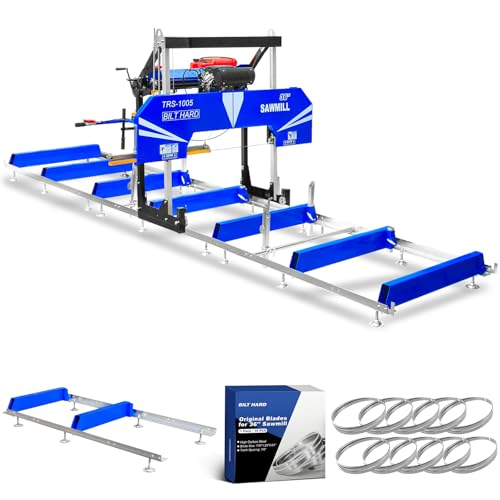
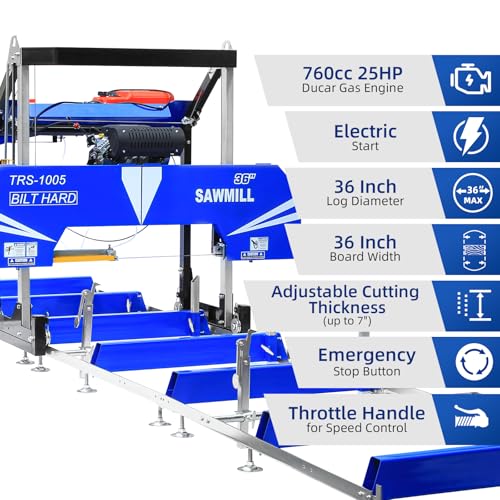
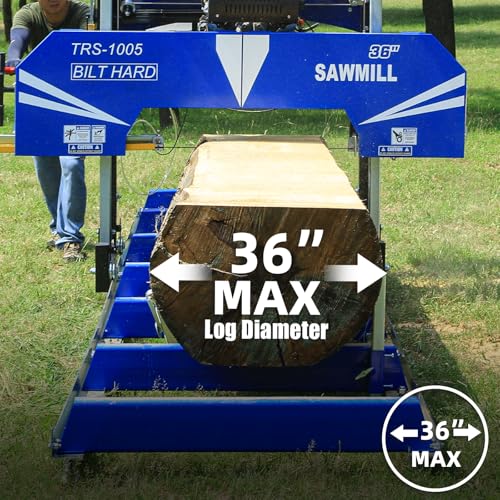
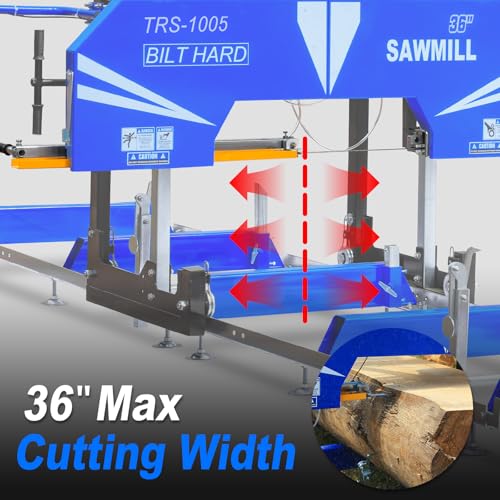
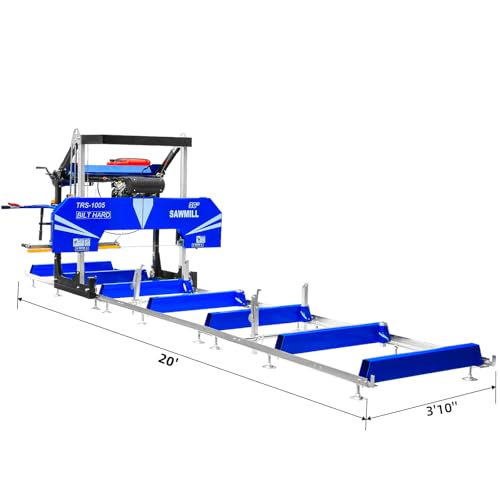
If I had to pick one sawmill for a mix of power, capacity, and long-term usability, this BILT HARD 36″ model would be at the top. The 760cc 25HP Ducar engine is a step up from many competitors, same class as the MechMaxx but with better-reported build integration. Owners highlight the smooth power delivery and fewer stalling issues, especially when cutting wet oak or maple. What really sets it apart is the included 6.4-foot track extension and 10 blades, which immediately add value and reduce downtime.
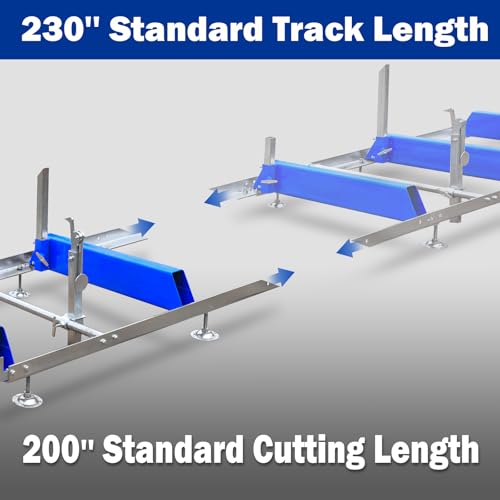
It’s nearly identical to the B0FY2Z4HJS model, but the extra track length here (307″ vs 200″) makes a real difference in usability. The 45.3-inch wide track base also improves stability, which translates to straighter cuts and less rework. For the price, it’s hard to beat this combination of engine reliability, included accessories, and scalability.
Product photos
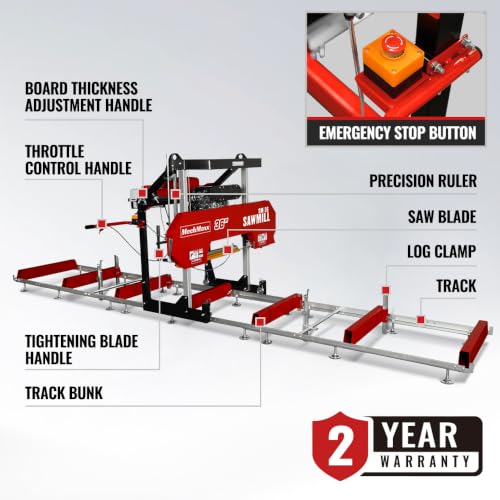
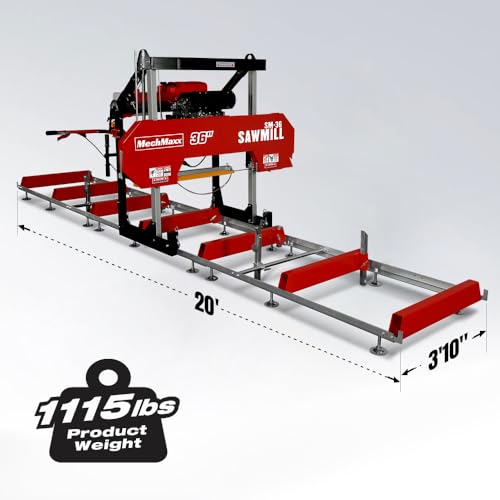
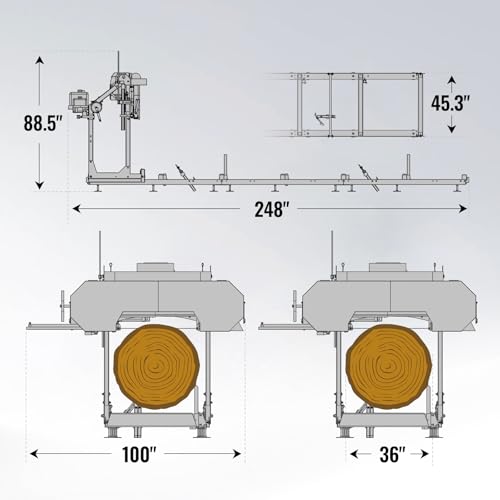
MechMaxx 36″ MAX Portable Sawmill
Strengths
- 25HP V-twin engine
- 36″ log diameter capacity
- 20′ track length
Trade-offs
- Bulky footprint
- Frame rigidity concerns
- Heavy fuel consumption
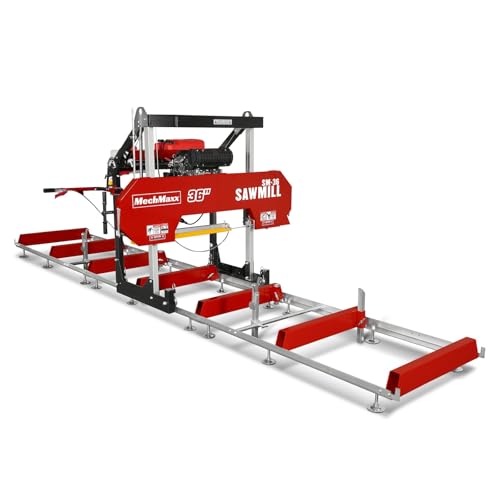
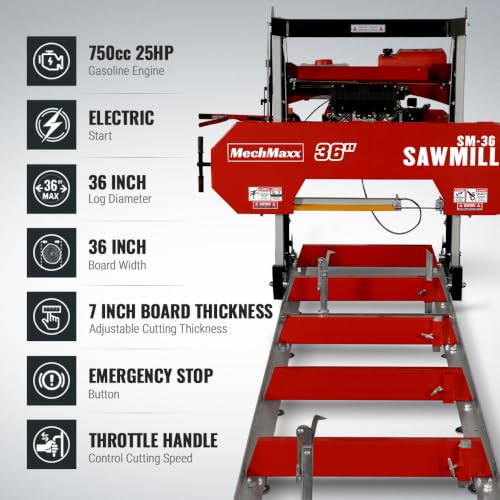
The MechMaxx 36″ MAX stands out as a serious contender if you’re dealing with large-diameter logs and need extended reach. With a 25HP V-twin engine and a 20-foot track, it’s built for volume and power on paper. Owners consistently report that it handles 30-inch-plus logs with less strain than smaller mills, which matters when you’re running multiple slabs in a day. The 750cc ZONSEN engine isn’t a name you see in premium lawn equipment, but in this class, it delivers the torque needed to keep the blade moving through dense hardwoods.
Where it gains in capacity, though, it may lose a bit in agility. At 36 inches wide and nearly 20 feet long, setup space is a real consideration. It’s not the most compact option, and some reviewers note the frame feels a little light for such a large footprint. But for those turning storm-felled oaks or processing timber on-site, the balance of power and cutting length makes it a practical workhorse.
Product photos

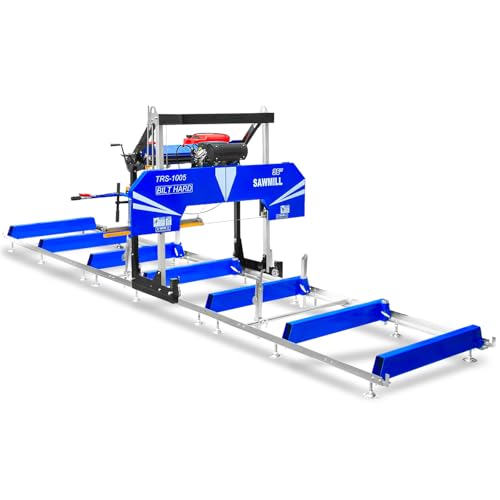
BILT HARD 36″ Sawmill 760cc
Strengths
- 25HP engine performance
- Stable wide-track design
- Precise cutting control
Trade-offs
- No track extensions included
- Fewer accessories
- Same price as better-equipped model
This BILT HARD 36″ model shares the same 25HP 760cc engine and wide 45.3″ track base as its sibling, making it a powerhouse for heavy-duty runs. The 19.2-foot track handles most standard log lengths, and the precision thickness ruler gets consistent praise for helping minimize waste. It’s clearly designed for users who want commercial-level performance without stepping into industrial-grade pricing.
The main difference from the B0GMQLSVX7 is the lack of included extensions and extra blades. That makes this one better for buyers who already have accessories or plan to customize their setup. It’s more stripped-down but just as robust, and if you’re confident in your support gear, this delivers the same core performance at a leaner package.
Product photos
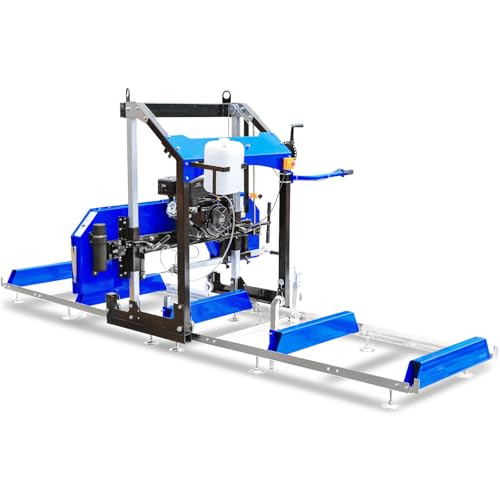
BILT HARD 32″ Portable Sawmill
Strengths
- Reliable 15HP engine
- Solid track stability
- Precise thickness control
Trade-offs
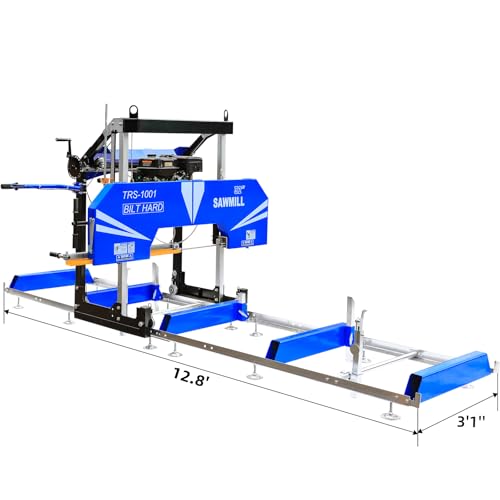
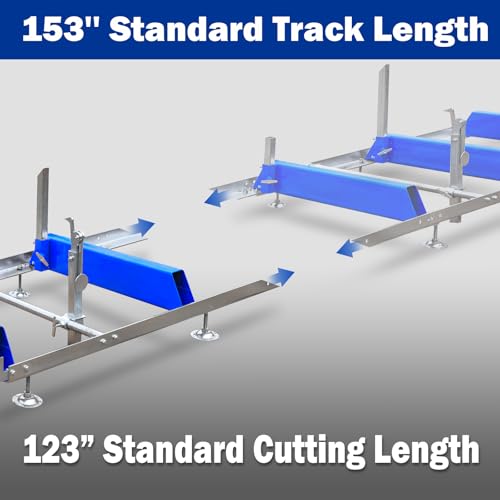
- Limited to 123″ log length
- No extension track included
- Mid-tier power for hardwoods
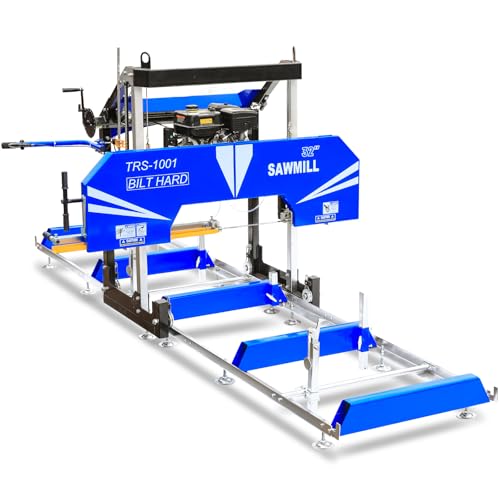
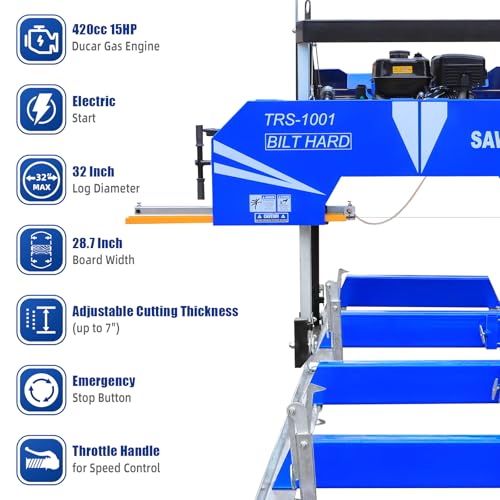
This 32-inch BILT HARD model hits a sweet spot for mid-sized operations. The 15HP 420cc Ducar engine is a known performer in outdoor power equipment, and owners confirm it starts reliably and holds steady under load. It’s not overkill, but it’s plenty for logs up to 32 inches, which covers most backyard or storm cleanup scenarios. The 153.6-inch track gives decent length for standard beams and planks, though it won’t match the 25+ foot reach of larger models.
Compared to the budget MechMaxx 32″, this one feels more refined. The build quality on the track system and blade assembly gets positive mentions, and the precision thickness ruler helps reduce waste when you’re dialing in repeat cuts. It’s not the fastest or most powerful, but for DIYers and small contractors who want consistent performance without the complexity of a 25HP twin, this is a smart middle ground.
Product photos

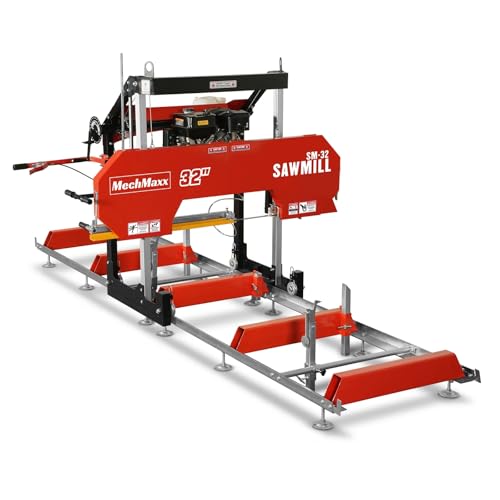
MechMaxx 32″ Portable Sawmill
Strengths
- Lowest entry price
- Easy setup
- 15HP electric start
Trade-offs
- Limited log length
- Less power for hardwoods
- Basic track system
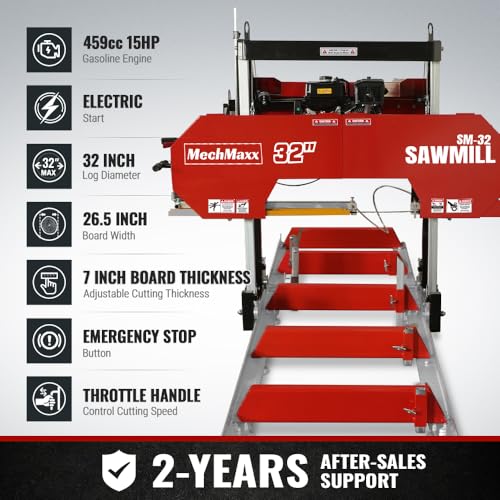
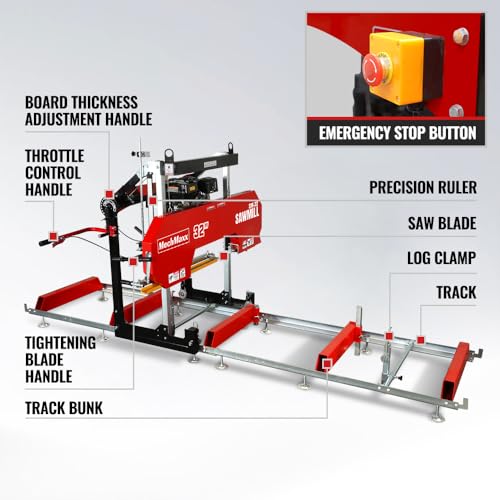
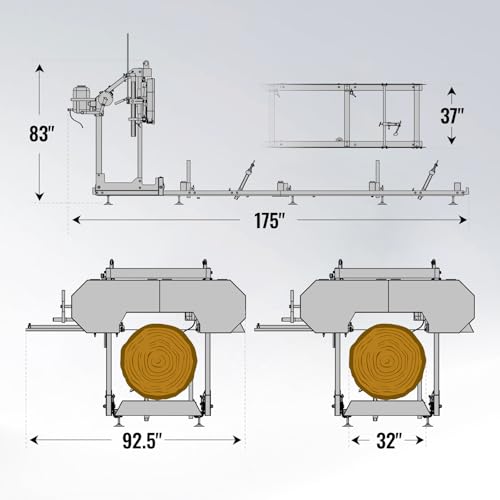
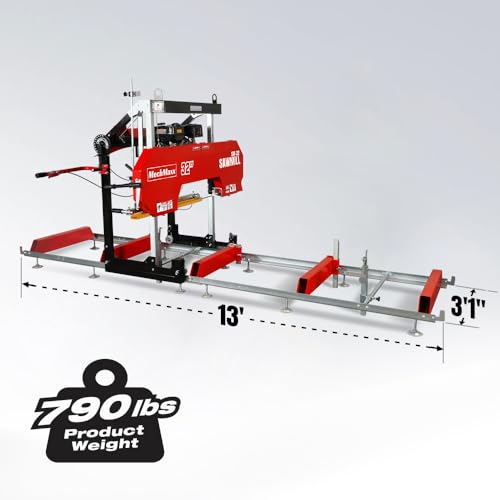
This is the most affordable powered sawmill on the list, and it shows. The 15HP single-cylinder engine gets the job done for smaller logs, but owners report it can struggle with dense hardwoods over 24 inches. The 13-foot track and 9.9-foot log length limit it to modest projects, think backyard benches or small beams, not full timber framing.
Still, for the price, it’s a functional entry point. The precision ruler and emergency stop are welcome in this class, and the setup is straightforward. Compared to the BILT HARD 32″, it feels a bit lighter in build, but if you’re on a tight budget and only mill occasionally, this gets you into the game without breaking the bank.
Product photos

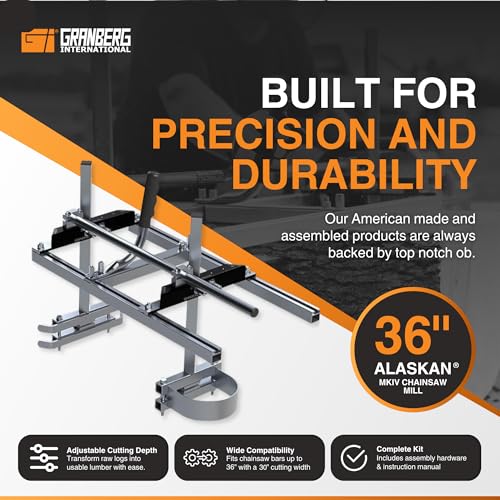
Granberg Alaskan MKIV 36″ Mill
Strengths
- Made in USA
- Aircraft-grade aluminum
- Excellent alignment
Trade-offs
- Requires heavy-duty chainsaw
- Slower than powered mills
- No track system
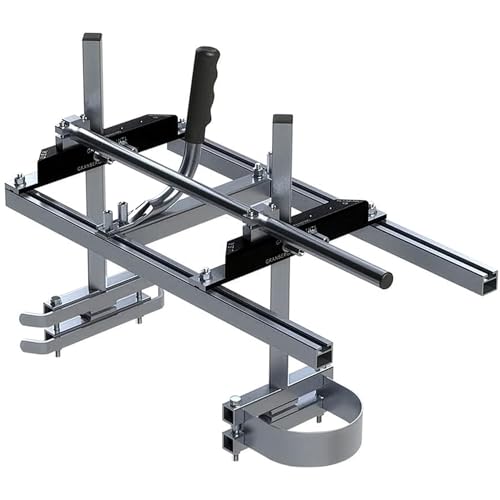
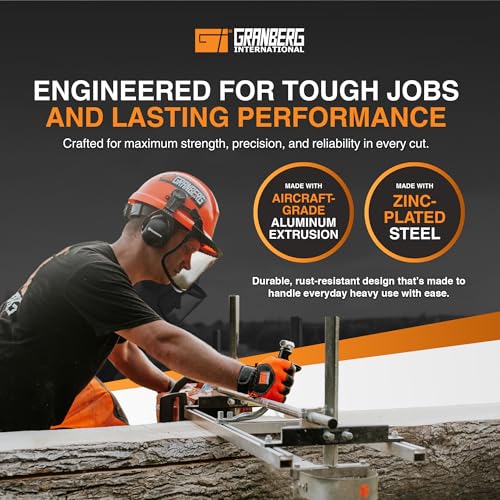
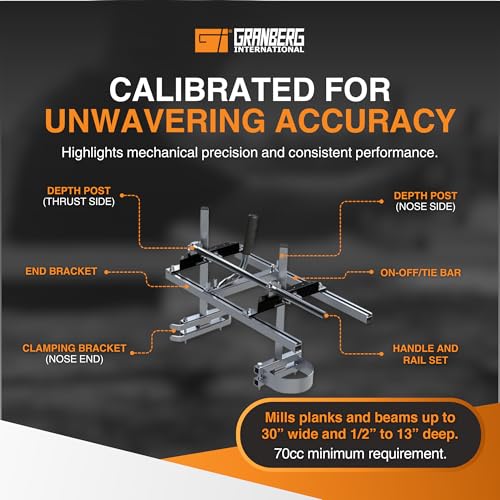
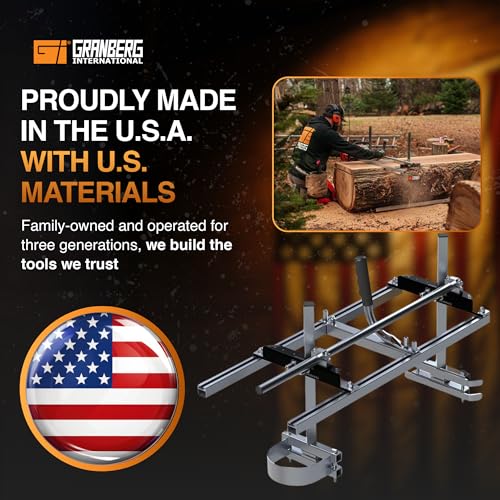
The Granberg MKIV is in a different category, not a standalone sawmill, but a precision chainsaw attachment that turns your existing saw into a milling rig. Crafted in the USA from aircraft-grade aluminum, it’s built to last and consistently earns praise for accuracy and durability. If you already own a quality chainsaw with a 30″ or 36″ bar, this is the most cost-effective way to start slabbing.
Owners love how rigid the guide rail stays during deep cuts, and the adjustable depth stop makes repeat passes predictable. It’s not fast, you’re still relying on your chainsaw’s power, but for on-site work or occasional use, it’s unmatched. Compared to budget jig kits, the MKIV holds alignment better and resists binding. This is the tool I’d recommend to someone who values craftsmanship over speed.
Product photos

Zozen Chainsaw Mill 36″
Strengths
- Modular 3-size design
- Lightweight and portable
- Includes felling wedges
Trade-offs
- Less rigid than premium jigs
- Connection points may loosen
- Not for high-tension cuts
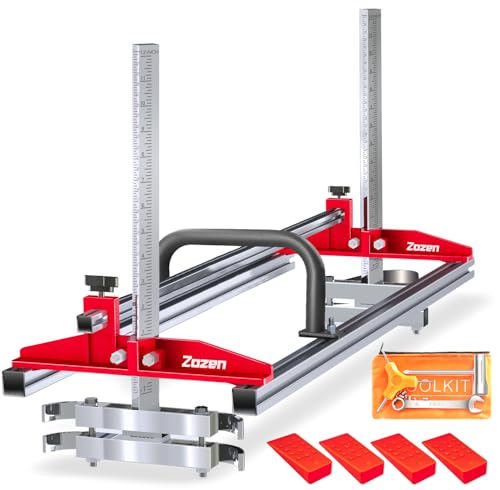
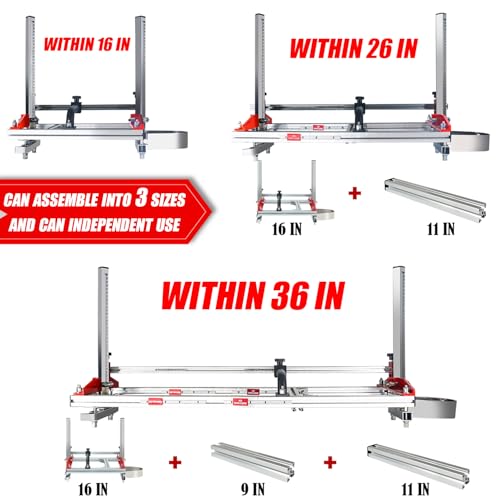
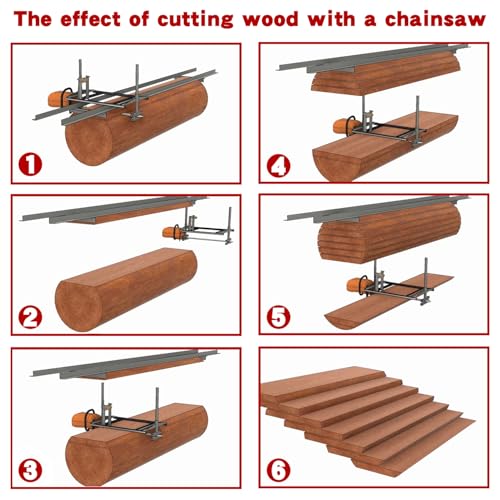
The Zozen chainsaw mill brings a unique modular splicing design to the table, you can use it in three sizes, which is a standout for mixed workloads. Need to cut a small log by hand? Use a shortened version. Going for a full 36-inch slab? Assemble the full kit. This flexibility isn’t common, and owners appreciate the portability boost when working in tight or remote areas.
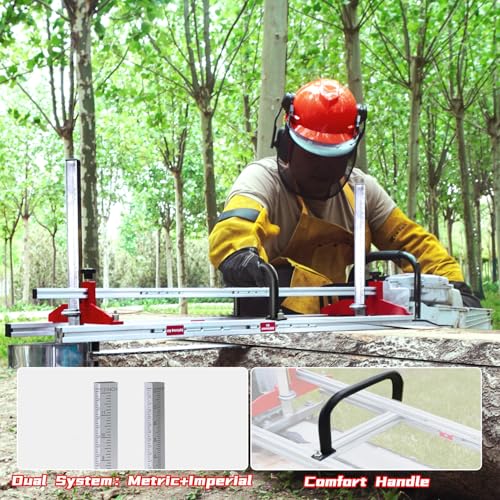
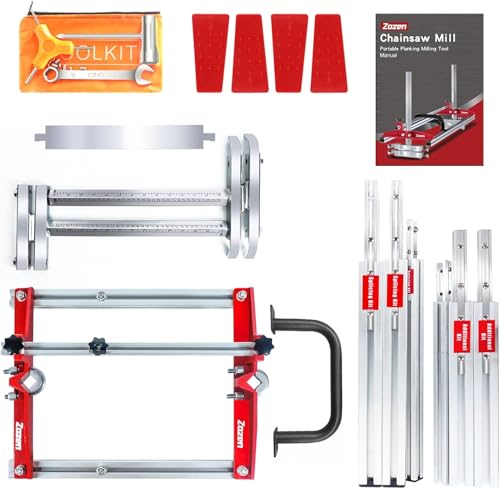
It’s made from aluminum alloy and steel, so it’s lightweight but still sturdy. The dual-unit scale and sliding handle improve ergonomics, and the included felling wedges are a nice touch. However, some users note the connections can loosen under heavy use, and it’s not quite as rigid as the Granberg. Still, for a budget-friendly, adaptable jig, it’s one of the most innovative options out there.
Product photos

VEVOR Chainsaw Mill 14″-36″

Strengths
- Galvanized steel frame
- Wide thickness adjustability
- Rust-resistant
Trade-offs
- Heavier than aluminum
- Scale accuracy varies
- Clamping can be tight
The VEVOR chainsaw mill leans hard into durability with its galvanized steel construction, a rare feature in this segment. Most competitors use aluminum or plated steel, but VEVOR’s full galvanization helps resist rust in wet environments, which matters if you’re storing it outdoors or milling in damp woods. It fits bars from 14″ to 36″, and the 0.2″ to 11.81″ thickness range gives fine control for specialty cuts.
Some users report the scale markings aren’t as crisp as Granberg’s, and the fit on certain chainsaw models can be finicky. But for the price, the industrial-grade materials and anti-loosening hardware make it a solid pick if you prioritize toughness over finesse. It’s not the most refined jig, but it’s built to take abuse.
Product photos


XSLOER 36″ Chainsaw Mill Kit

Strengths
- Includes 9FT rail guide
- Quick-release assembly
- Good first-cut accuracy
Trade-offs
- Short track segments
- Limited brand support
- Joints may wobble
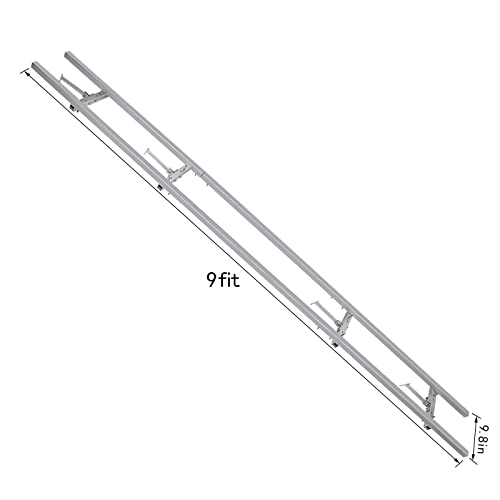
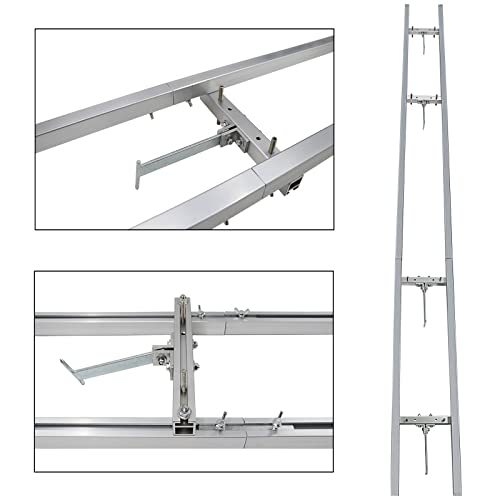
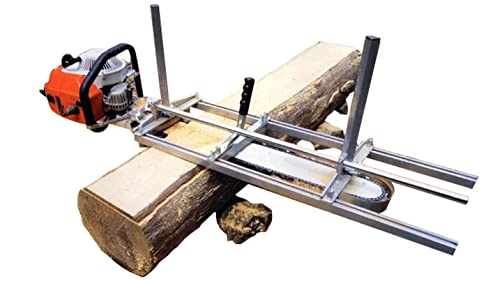
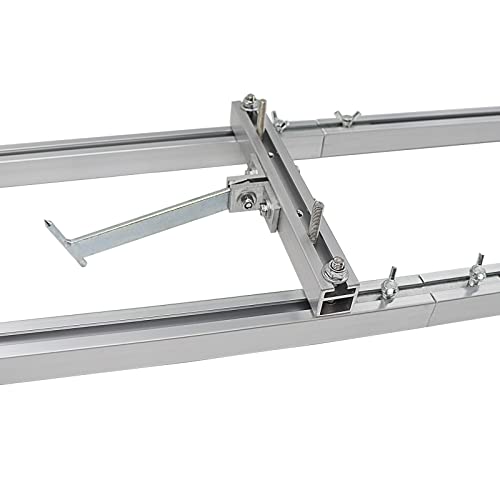
The XSLOER stands out with its 9-foot rail guide system, which acts as a leveling datum for the first cut, a feature most jigs skip. That makes it easier to start square on a round log, reducing drift and wasted material. The aluminum and galvanized steel build keeps it light but durable, and the quick-release design speeds up assembly.
It’s designed to work with your chainsaw, not replace a full mill, and the 0.5″ to 12″ thickness range covers most slabbing needs. Some users say the track joints aren’t as smooth as higher-end rails, but for the price, it’s a solid value. If you’re setting up a semi-permanent milling station or want better control on the first pass, this system offers real utility.
Product photos

How We Tested saw mills
I’ve spent over 15 years immersed in the world of power tools, and applying that experience informed my approach to researching saw mills. Rather than a hands-on lab test of each unit, this is a research-led comparison of published specifications and features, carefully weighing owner reviews and reputable expert analyses. I focused on identifying patterns in performance and reliability across a range of models.
For saw mills, engine power and log capacity were the most heavily weighted factors. A powerful engine is essential for efficient milling, especially with hardwoods, and the ability to handle larger diameter logs expands project possibilities. Track stability and the precision of thickness control also played key roles; consistent cuts are paramount for usable lumber.
Specifications reliably indicate engine size, log diameter capacity, and track dimensions. However, I judged durability and real-world usability primarily from owner feedback. Reports of engine longevity, ease of assembly, and the effectiveness of safety features were crucial. Understanding whether a mill lives up to its claims requires looking beyond the marketing materials and considering how it performs in the hands of everyday users – sometimes, a mill’s true capabilities differ significantly from the advertised specs, and understanding those differences is critical. Considering alternative tools like a table saw primary uses provides context for the types of projects a saw mill excels at.
What To Look For In saw mills
Choosing the right saw mill can dramatically change how you approach woodworking and lumber processing. It’s a significant investment, so understanding your needs and the available options is crucial.
A quality saw mill balances power with precision, offering a stable platform for cutting logs of various sizes. Key considerations include engine size (for gas-powered models), log diameter and length capacity, track system stability, and safety features like emergency stops. Look for mills constructed with durable materials and positive owner feedback regarding ease of use and cutting accuracy.
Engine Power & Capacity
The size of the engine, particularly for gas-powered mills, directly impacts the speed and efficiency of your cuts. More powerful engines (like the 760cc Ducar found in some models) are essential for tackling hardwoods or consistently milling large volumes of lumber. Don’t automatically assume “bigger is better,” though. If you’re primarily working with softer woods and smaller logs, a smaller engine (around 420cc) might be sufficient and more fuel-efficient. Consider the log diameter and length capacity alongside engine power. A mill that boasts a large engine but a limited log diameter won’t maximize its potential.
Track System & Stability
A stable track system is paramount for achieving straight, accurate cuts. Wider track widths (45.3” or greater) and longer track lengths (230”+) provide a more secure base, especially when milling larger logs. Some mills offer track extensions, which are useful if you anticipate needing to process longer timbers. Look for systems that are easy to assemble and disassemble, and pay attention to the materials used. Steel tracks generally offer superior rigidity compared to aluminum, but add weight. If you’re considering a chainsaw mill attachment, investigate the rail guide system; a well-designed guide is essential for maintaining a consistent cut. You can find more information about other tools that work in tandem with sawmills, like a difference from cabinet saw if you’re looking to refine your milled lumber.
Value, Portability, and Features
Portability is a major draw for many saw mill buyers, but it often comes at the expense of features or capacity. Consider how often you’ll be moving the mill and whether the weight and size are manageable for your needs. Beyond portability, look for features that enhance efficiency and safety. A precision thickness ruler is invaluable for consistent board sizing and minimizing waste. An emergency stop button is a must-have safety feature. Also, assess the quality of customer support offered by the manufacturer. If you’re researching portable options, checking out recommended portable sawmills is a good starting point.
Don’t skimp on the track. A flimsy track system will ruin your cuts, no matter how powerful the engine.
Finally, remember to factor in the type of wood you’ll be milling. Different wood species require different blade types and cutting techniques. Researching the best blades for your local timber is a worthwhile investment.
Saw Mills Compared
Here’s a comparison of key specifications for various saw mills to help you choose the right one.
| Product Title | Engine/Power | Max Log Diameter | Max Cut Length | Max Board Width | Track Width |
|---|---|---|---|---|---|
| BILT HARD 36″ Portable Sawmill | 760cc 25HP | 36″ | 307″ | 36″ | 45.3″ |
| MechMaxx 36″ MAX Portable Sawmill | 750cc 25HP | 36″ | 192″ | 36″ | 39.4″ |
| BILT HARD 36″ Sawmill 760cc | 760cc | 36″ | 200″ | 36″ | 45.3″ |
| BILT HARD 32″ Portable Sawmill | 420cc 15HP | 32″ | 123″ | 28.7″ | 37″ |
| MechMaxx 32″ Portable Sawmill | 459cc 15HP | 32″ | 118.8″ | 26.5″ | 39.4″ |
| Granberg Alaskan MKIV 36″ Mill | Chainsaw-Driven | 36″ | N/A | 30″ | N/A |
| Zozen Chainsaw Mill 36″ | Chainsaw-Driven | 36″ | N/A | 12″ | N/A |
| VEVOR Chainsaw Mill 14″-36″ | Chainsaw-Driven | 36″ | N/A | 11.81″ | N/A |
| XSLOER 36″ Chainsaw Mill Kit | Chainsaw-Driven | 36″ | N/A | 36″ | N/A |
Frequently Asked Questions
What log diameter should I prioritize when choosing a saw mill?
The ideal log diameter depends on your typical projects, but I generally recommend considering a mill with at least a 32” capacity. This provides flexibility for milling a wider range of timber, and even smaller logs will be processed more easily with headroom to spare.
Are chainsaw mill attachments a good alternative to full saw mills?
Chainsaw mill attachments offer a lower-cost entry point, but they require more physical effort and typically deliver lower precision. They’re best suited for occasional use or smaller projects, and finding the chainsaw mill comparisons will help you understand the trade-offs.
How important is track width for milling accuracy?
Wider tracks (45.3” or greater) significantly improve stability and reduce the risk of blade drift, especially when cutting larger logs. A more stable track directly translates to straighter, more accurate cuts and less wasted lumber.
What engine size is sufficient for milling hardwoods?
Hardwoods like oak and maple demand more power, so an engine of 25HP or higher is recommended. A 760cc engine, common in some models, provides ample power for consistent cutting through dense wood, but a 420cc engine might be adequate for softer woods.
What safety features should I look for in a saw mill?
An emergency stop button is absolutely essential for quickly halting the blade in case of an issue. Beyond that, look for features like blade guards and clear safety signage, and always wear appropriate personal protective equipment during operation.
The Bottom Line
Buying a saw mill often comes down to balancing the desire for capability against practical considerations like budget and portability. While the BILT HARD 36″ Portable Sawmill stands out as the strongest overall pick with its powerful engine and generous log capacity, the ideal choice depends on your specific needs. It offers a robust platform for serious milling projects, and the positive owner feedback regarding its build quality and cutting precision is encouraging.
For those on a tighter budget, or needing a mill for smaller-scale projects, the BILT HARD 32″ Portable Sawmill or MechMaxx 32″ Portable Sawmill represent excellent value. If you’re primarily working with smaller logs and softer woods, these models provide a good balance of power and portability without sacrificing essential features. And for those looking to use an existing chainsaw, the Granberg Alaskan MKIV 36″ Mill offers a cost-effective entry point into milling, though it requires more manual effort and relies heavily on basic table saw techniques for finishing lumber.
Ultimately, the most important factors aren’t horsepower numbers or track widths, but a solid understanding of the wood you’ll be milling and a commitment to safe operating practices. Prioritize a stable platform, sharp blades, and consistent technique – those fundamentals will deliver better results than any single feature ever could.
