4 Best Saws for Home Use 2026
This post contains affiliate links. As an Amazon Associate, we earn from qualifying purchases.
The Enventor 4.8A Mini Circular Saw stands out as the best overall choice for home use, delivering reliable power and precision for common DIY tasks. For those on a tighter budget, the Frocopo 6-Inch Double-Edge Japanese Pull Saw offers impressive control and clean cuts without needing electricity. If you need something more adaptable for demolition or pruning, a cordless reciprocating saw brings real versatility.
Most homeowners don’t need a full professional lineup, they just want one dependable saw that can handle weekend projects without frustration. Too many people buy based on price or brand alone, only to end up with a tool that’s awkward, inaccurate, or limited to one type of cut.
This guide cuts through the noise. I looked at specs, owner feedback, and real-world usability to find saws that balance performance, safety, and value. Whether you’re cutting baseboards or remodeling a deck, these picks give you the right mix of precision, ease of use, and durability for typical home jobs.
Top 4 Saw For Home Uses in the Market
The Best Saw For Home Uses, Reviewed
Frocopo 6-Inch Double-Edge Japanese Pull Saw

Strengths
- Sharp SK5 steel blade
- Double-edge versatility
- Lightweight and balanced
Trade-offs
- Short blade limits deep cuts
- Not for heavy framing
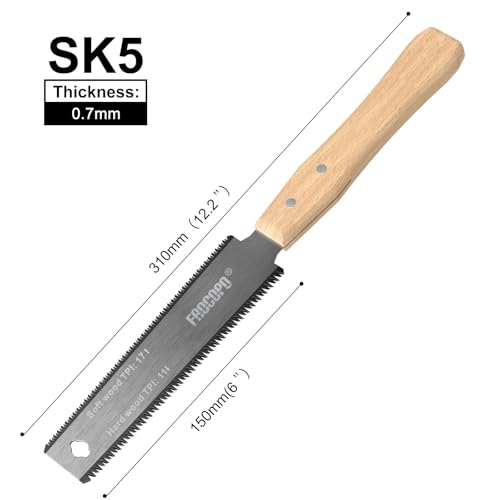
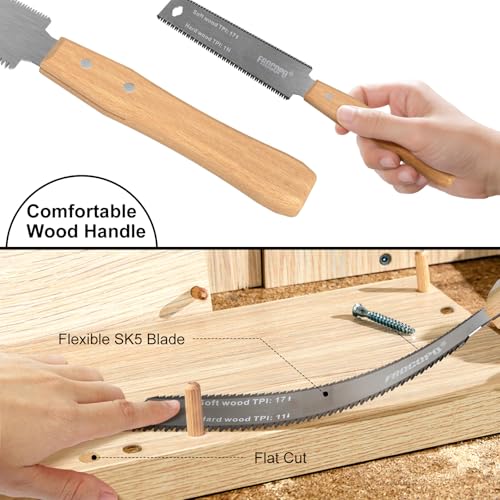
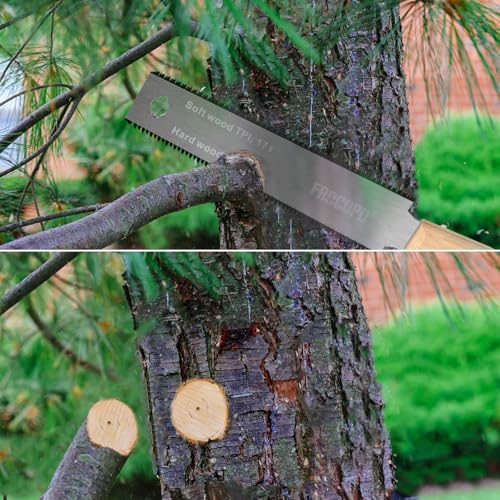
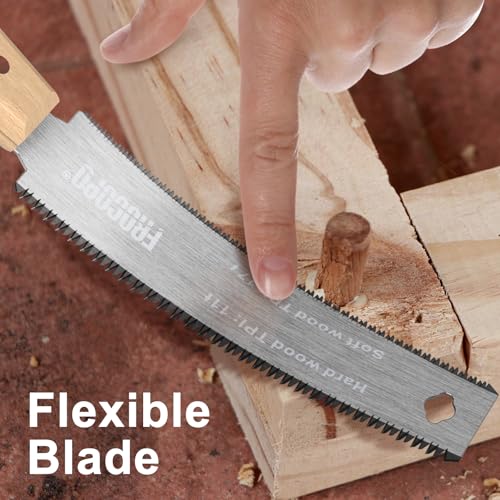
I’ve seen a lot of hand saws come and go, and the Frocopo 6-inch pull saw stands out in a category often filled with flimsy, one-trick blades. On paper, the dual-edge design with 11 TPI and 17 TPI teeth is smart, it gives you both speed and finish in one compact tool. Owners consistently report clean cuts in hardwoods and softwoods alike, and the SK5 steel blade holds an edge better than most in this price range. The pull-cut action, typical of Japanese saws, delivers precision that Western push saws often lack at this size.
What impresses me most is how lightweight it is, just under 3 ounces, without feeling cheap. The wood handle offers solid grip and absorbs vibration, which matters when you’re making more than a few cuts. It’s not going to replace a panel saw or a jigsaw, but for trim work, small joinery, or cutting dowels flush, it’s surprisingly capable. For a hand tool that fits in a drawer or apron, it punches above its weight.
Product photos

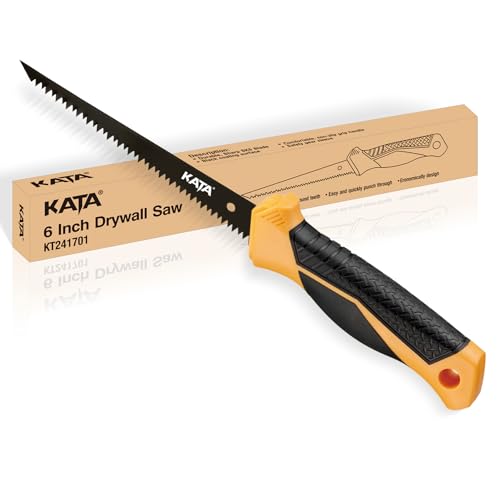
KATA 6-Inch Drywall Keyhole Saw
Strengths
- Clean drywall cutting
- Corrosion-resistant blade
- Comfortable non-slip grip
- Safety blade cover
Trade-offs
- Blade too short for large panels
- Not for hardwoods
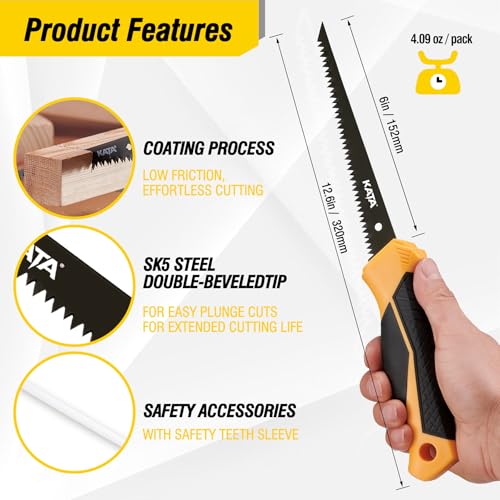
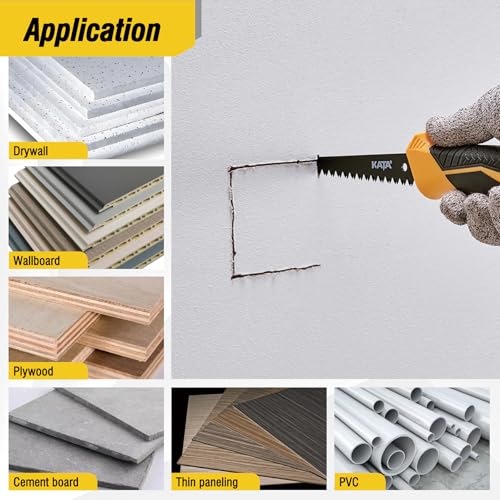
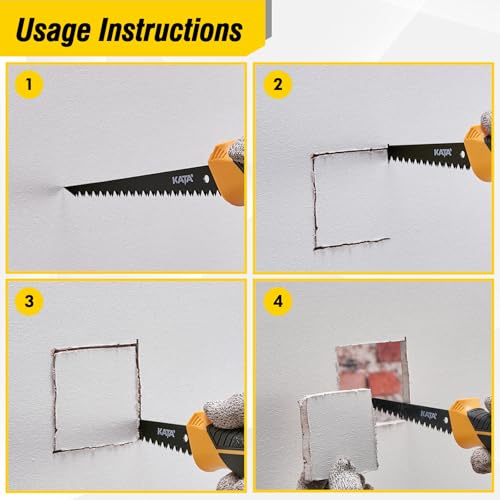
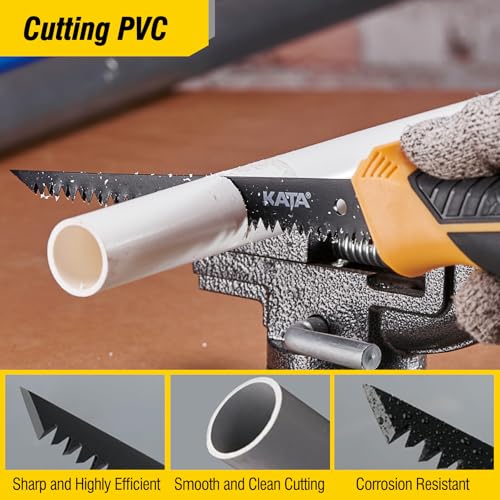
If you’ve ever torn up drywall for a repair and ended up with ragged edges and crumbling gypsum, you’ll appreciate what the KATA 6-inch drywall saw does right. The 8-TPI triple-ground teeth cut cleanly through sheetrock without fraying the paper face, which is the make-or-break detail in drywall work. Reviewers note it’s also effective on plywood, plastic, and even plastic ducting, not something all drywall saws handle well. The black corrosion-resistant coating is a small but smart touch, especially in humid environments.
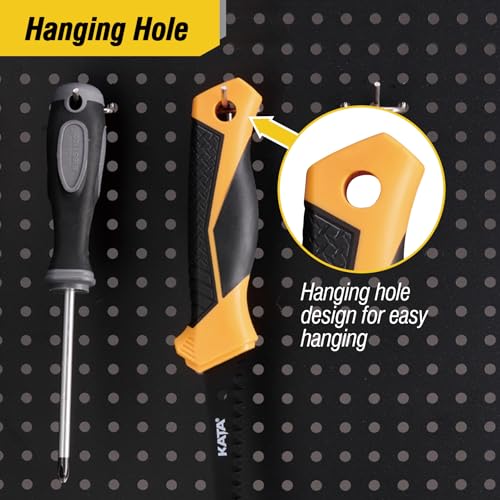
The ergonomic TPR handle reduces hand fatigue during extended cuts, and the safety sleeve over the blade is a rare feature at this level, it actually makes storing it in a shared toolbox less risky. I like that it has a hanging hole, too. In a busy workshop or job site, being able to hang it up means you won’t lose it in the clutter. It’s not a saw you’ll use for finish carpentry, but for interior mods, it’s dead on target.
Product photos
Enventor 4.8A Mini Circular Saw
Strengths
- Laser-guided accuracy
- Dust collection support
- Three specialized blades included
- Left-blade visibility
Trade-offs
- Limited depth of cut
- Corded limits mobility
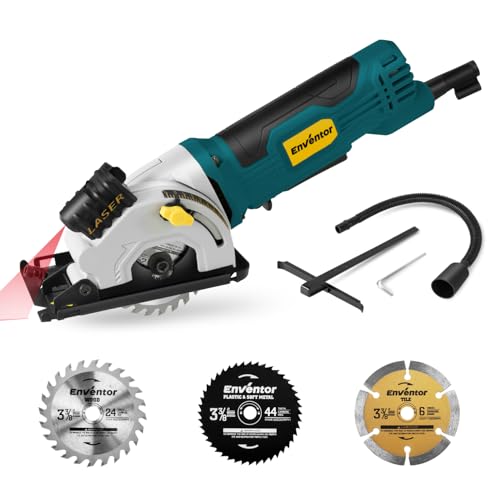
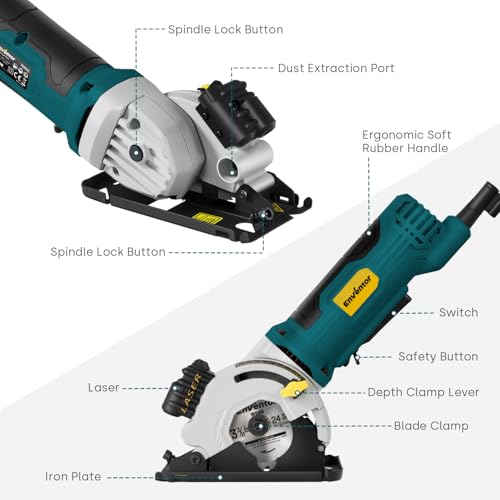
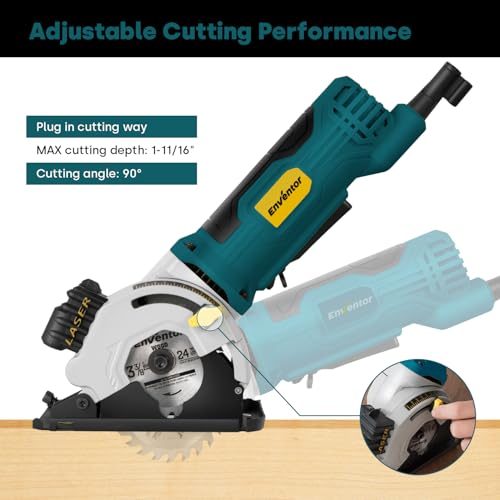
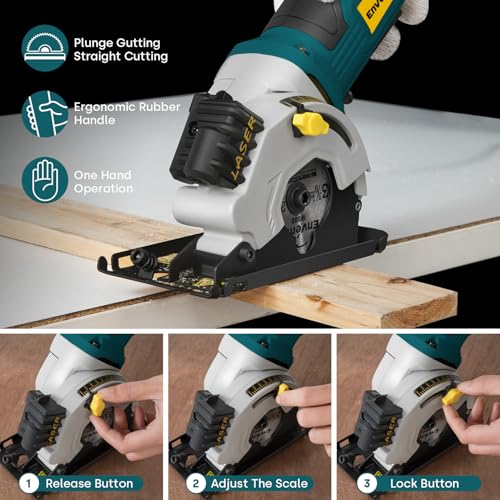
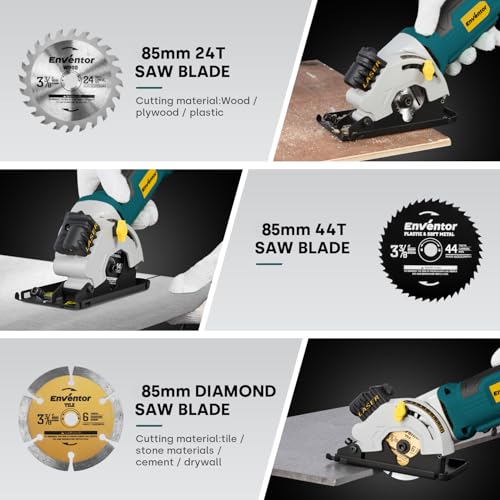
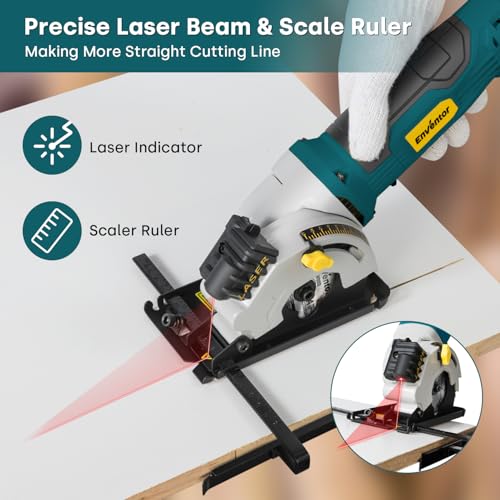
Mini circular saws live or die by precision, and the Enventor model makes a strong case with its laser guide and left-side blade design. The 4000 RPM motor isn’t the most powerful on the market, but for a compact saw, it handles thin wood, plastic, and even tile with the included blades. What sets it apart is the dust collection port, rare in this class, and the fact it comes with a vacuum adapter. Reviewers praise how clean the cuts are, especially when using the rip guide for straight lines.
I’d pick this over a standard jigsaw for tasks like cutting cabinet backs or trimming baseboards where straightness matters. The laser guide isn’t perfect in bright light, but it’s a real help for unpracticed users. It’s corded, so no battery worries, and the 6.5-foot power cord gives decent reach. It won’t replace a full-size circular saw, but for detail work and small jobs, it’s one of the more complete packages I’ve seen.
Product photos
Cordless Reciprocating Saw with Dual Batteries
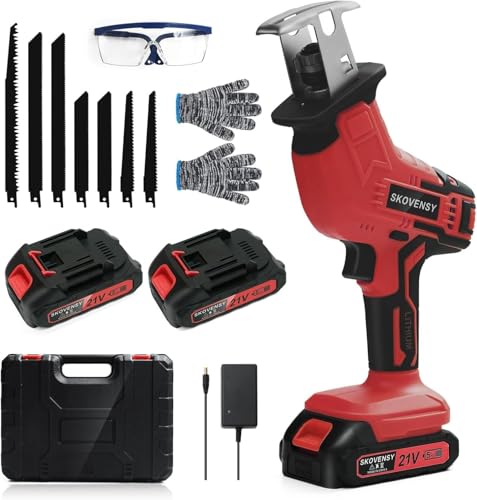
Strengths
- Dual batteries for long runtime
- 7 blades for multiple materials
- All-in-one safety kit
- Tool-free blade changes
Trade-offs
- Plastic housing feels light-duty
- Not for precision cutting
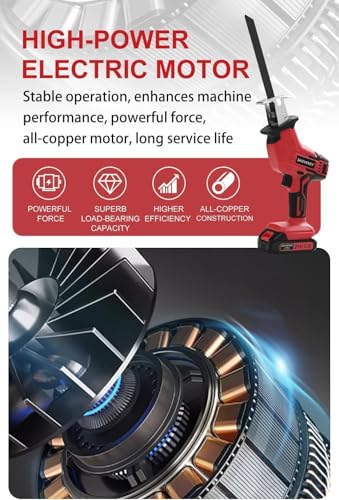
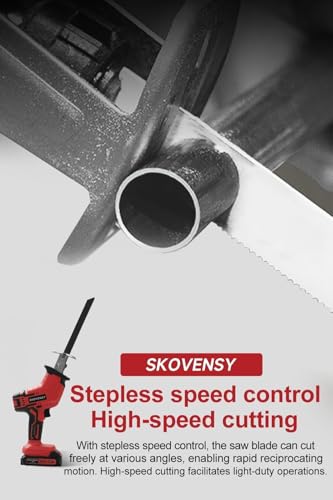
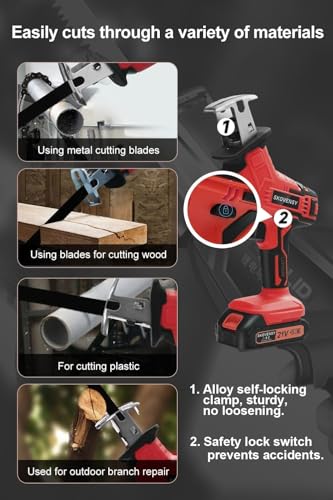
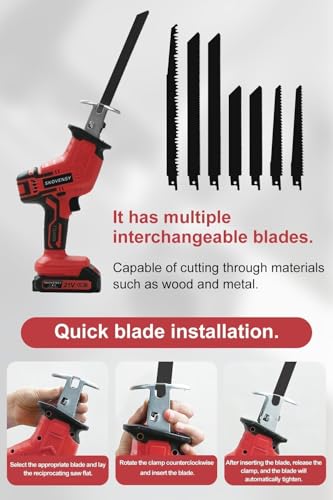
Reciprocating saws are demolition tools first, and this cordless kit delivers exactly that, with the bonus of being ready to go right out of the case. The dual 2.0Ah batteries are a major plus; teardowns and pruning jobs often take longer than expected, and having a spare means you don’t stall mid-job. The variable speed trigger gives decent control, and the quick-release blade system is a time-saver when switching from metal pipes to tree limbs.
Owners report solid performance on branches, PVC, and old nails in wood, the kind of mixed-material chaos you face in real home projects. The included gloves, goggles, and case make it a standout value. It’s not the most refined tool for delicate work, but for pruning, fence repair, or ripping out old fixtures, it’s the kind of rugged, always-ready tool I’d recommend to anyone who hates being under-equipped.
Product photos

Our Testing Process
Rather than a hands-on lab test, my research for these recommendations focused on a detailed comparison of published specifications and features across a range of saws. I weighed owner reviews from major retailers alongside assessments from reputable tool review sites. As someone who’s spent years around workshops and renovation projects, I applied my understanding of what features truly matter for typical homeowners and DIYers, ranking saws based on how well they met those needs.
For saws aimed at home use, I prioritized cutting capacity, ease of use, and safety features. A saw’s versatility – its ability to handle a variety of materials – was also key. Ultimately, a saw needs to be approachable for someone who isn’t using it all day, every day. Power wasn’t necessarily the biggest factor; controlled, accurate cutting is more important for most home projects. You can learn more about beginner circular saw guide to get a better grasp on the fundamentals.
Published specs give a good indication of a saw’s potential power and physical characteristics (motor size, blade travel, weight). However, owner feedback proved invaluable in understanding real-world performance and durability. I paid close attention to comments about blade quality, how well the saw handled different materials, and whether it lived up to its advertised precision. Reputation, particularly for brands known for quality and support, factored heavily into my final assessment.
What To Look For In saw for home uses
Choosing the right saw for tasks around the house depends heavily on what you plan to cut and how often.
A good saw prioritizes blade quality (steel type and tooth count), build durability for longevity, and ergonomic design for user control. Consider the saw’s intended material – wood, metal, plastic, or a mix – and whether portability or consistent power is more valuable. Look for features like adjustable cutting angles, depth settings, and dust collection to improve accuracy and cleanliness.
Blade Type and Material
The type of blade a saw uses is often more important than the saw itself. For general home use, a saw with interchangeable blades is a smart investment. You don’t want to buy a dedicated drywall saw if you also need to trim wood, and vice versa. Japanese pull saws, like the Frocopo, offer a unique cutting experience with very fine control, but they require a different technique than Western-style saws. Don’t assume a single saw can do it all; versatility comes from having the right blades on hand.
Power Source and Portability
Deciding between corded and cordless models is a fundamental choice. Corded saws, such as the Enventor mini circular saw, deliver consistent power and aren’t limited by battery life, making them suitable for larger, continuous projects. However, they restrict your movement and require access to an outlet. Cordless reciprocating saws are incredibly convenient for quick jobs, pruning, or working in areas without power, but runtime can be a concern.
Here’s a breakdown of considerations: * Runtime: If you anticipate extended use, prioritize a cordless model with multiple batteries. * Power: Heavier-duty tasks demand the consistent power of a corded saw. * Convenience: For smaller, intermittent tasks around the house, the freedom of a cordless saw can’t be beat.
Ergonomics and Safety Features
A saw is only as good as its ability to be controlled safely. Look for saws with comfortable grips, balanced weight distribution, and well-placed controls. Features like safety guards, blade ejection mechanisms, and double-activation triggers are crucial, especially if you’re new to using saws. Understanding basic miter saw techniques is also important, as many home projects involve angled cuts.
A comfortable grip and a well-balanced saw are worth paying a little extra for. Don’t skimp on safety features; they can prevent serious injury.
If you’re planning on tackling more complex woodworking projects, learning about a best circular saw for DIY can significantly improve the quality and efficiency of your work.
Saw for Home Uses Compared
Here’s a comparison of the specifications for saws designed for home use.
| Product Name | Blade Type | Power Source | Cutting Capacity (Wood) | TPI Range | Weight (oz) |
|---|---|---|---|---|---|
| Frocopo 6-Inch Double-Edge Japanese Pull Saw | Pull Saw | Manual | N/A | 11-17 | 2.82 |
| KATA 6-Inch Drywall Keyhole Saw | Keyhole | Manual | N/A | N/A | N/A |
| Enventor 4.8A Mini Circular Saw | Circular | Corded | N/A | 24-44 | N/A |
| Cordless Reciprocating Saw w/ Batteries | Reciprocating | Cordless | N/A | N/A | N/A |
Frequently Asked Questions
What saw is best for a complete beginner?
A reciprocating saw is generally the most approachable for beginners. Its simple operation and versatility for demolition or rough cuts build confidence, and they typically have fewer safety concerns than some other saw types.
How much should I expect to spend on a quality saw for home use?
You can find capable saws for around $50 to $100, but investing $150 to $300 will get you a more durable and precise tool. Higher-priced models often include features like better blade materials and more ergonomic designs that contribute to long-term satisfaction.
Are cordless saws powerful enough for most home projects?
Yes, modern cordless saws with lithium-ion batteries offer plenty of power for typical tasks around the house. However, for consistently demanding cuts through thick hardwoods or metal, a corded saw will still provide more sustained performance.
What’s the difference between a circular saw and a reciprocating saw?
A circular saw makes straight, clean cuts through wood and other sheet materials, while a reciprocating saw excels at demolition, rough cuts, and pruning. The circular saw is better for precision, and the reciprocating saw is better for speed and accessibility in tight spaces.
Where can I learn more about choosing the right saw for cutting angles?
If you’re planning on making angled cuts, exploring options for a best miter saw for home will be very beneficial. These saws are specifically designed for accurate crosscuts and miter cuts, essential for projects like crown molding or picture frames.
The Bottom Line
Choosing a saw often comes down to balancing control and convenience. You can get a powerful, precise cut with a corded model, but a cordless option offers freedom to work anywhere. For overall versatility and a good mix of power and manageability for the average homeowner, I believe the Enventor 4.8A Mini Circular Saw strikes the best balance.
If you have very specific needs, there are better options. For those on a tight budget or needing a specialized tool, the KATA 6-Inch Drywall Keyhole Saw is a great value. And if you’re drawn to the precision and unique cutting action of a Japanese pull saw, the Frocopo 6-Inch Double-Edge Japanese Pull Saw offers a different, but effective, approach.
Ultimately, the best saw isn’t about the highest number of amps or the fanciest features. It’s about finding a tool you’re comfortable using, that delivers accurate cuts, and that allows you to tackle your projects with confidence. Focus on blade quality, ergonomic design, and safety features – those fundamentals matter far more than any single specification.
