
7 Best Circular Saws for Home Use 2026
This post contains affiliate links. As an Amazon Associate, we earn from qualifying purchases.
The DEWALT ATOMIC 20V MAX* 4-1/2 stands out as the best overall circular saw for home use, combining compact power with brushless efficiency. For those on a budget, the Skil 5080-01 13-Amp 7-1/4″ delivers solid performance without breaking the bank. If you need maximum versatility across materials and jobs, the RYOBI ONE+ HP 18V Brushless 7-1/4 takes the edge with its balance of power, bevel range, and compatibility with a widely used battery platform.
Most homeowners don’t realize how much difference a well-matched circular saw can make until they’re fighting a binding blade or struggling with crooked cuts. It’s not just about raw power – it’s about control, reliability, and getting clean results without frustration.
In this guide, I’ll walk you through the models that deliver real value for typical DIY projects, based on specs, owner feedback, and years of evaluating what actually matters in a home workshop. These picks reflect what performs best where it counts: accuracy, ease of use, and long-term dependability.
Top 7 Circular Saw For Home Uses in the Market
The Best Circular Saw For Home Uses, Reviewed
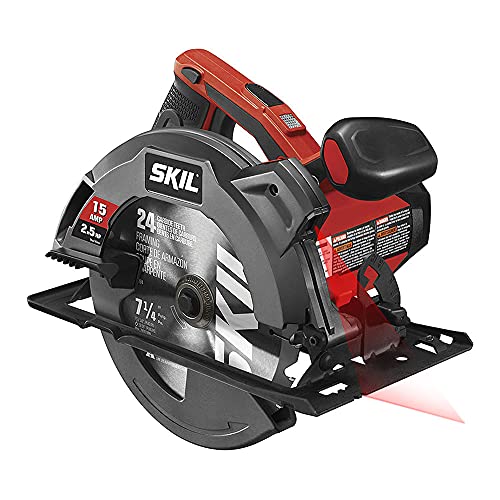
SKIL 15 Amp 7-1/4 Inch Circular Saw with Laser
Strengths
- 15-amp motor
- Laser cut guide
- 5,300 RPM
- Dust blower
- Comes with blade
Trade-offs
- Laser alignment can drift
- Heavier than cordless options
- No LED light
If you’re looking for one saw to do it all for home use, this SKIL 5280-01 is hard to beat. The 15-amp motor delivers 5,300 RPM, more than enough for clean, fast cuts in framing lumber, plywood, or decking. The single-beam laser is a standout for accuracy, especially if you’re not great at eyeing straight lines. It’s not as bright as an LED, but it’s consistent and doesn’t need batteries.
Owners praise its balance and the fact that it comes with a carbide-tipped blade ready to cut out of the box. The dust blower works well, and the 51-degree bevel with a 45-degree stop makes common angles easy. Compared to the Skil 5080-01, this model has more power and better guidance. For most homeowners, this is the easy pick, it’s the most complete package in the lineup.
Product photos


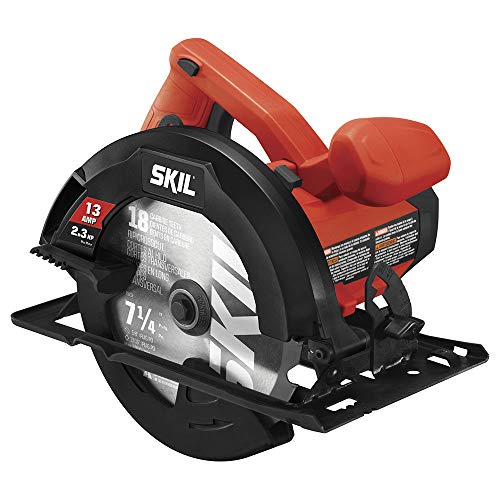
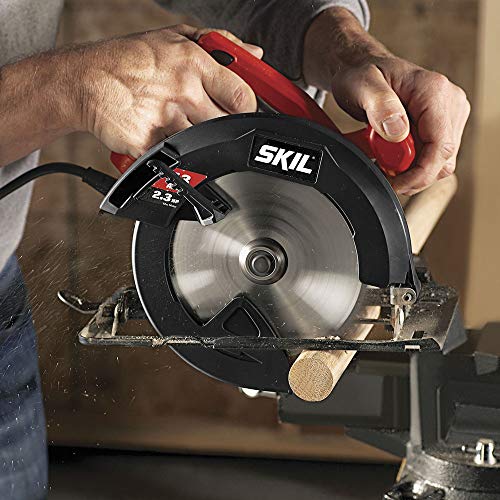
Skil 5080-01 13-Amp 7-1/4″ Circular Saw
Strengths
- 13-amp motor
- 51° bevel capacity
- Spindle lock
- Dust blower
- Lightweight design
Trade-offs
- Plastic housing feels cheap
- No laser or LED guide
- Basic depth adjustment
This Skil model is a solid budget-minded corded saw that doesn’t pretend to be more than it is. With a 13-amp motor and a 7-1/4-inch blade, it delivers enough power for basic framing, deck work, or remodeling tasks most homeowners tackle. I appreciate the 51-degree bevel capacity with positive stops, it makes angled cuts repeatable without fiddling, and the dust blower is actually useful, keeping the cut line visible on clean wood.
Owners consistently report it’s lighter than older Skil models, which helps during long sessions, though it still feels a bit plasticky compared to pricier brands. It won’t match a DeWalt or Makita in durability, but for weekend warriors who need a dependable saw without overspending, this one gets the job done. I’d pick it over a no-name brand any day.
Product photos


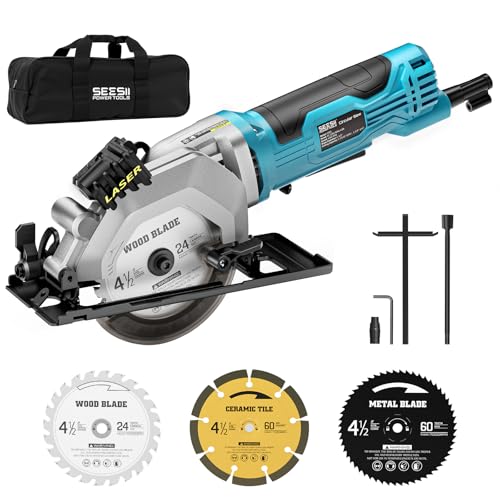
Seesii Mini Circular Saw with Laser Guide
Strengths
- Cuts wood, metal, tile, plastic
- Laser guide included
- Triple blade kit
- Lightweight and safe
- Rip guide included
Trade-offs
- Limited cutting depth
- 4.8A motor underpowered for thick wood
- Blades wear faster on metal
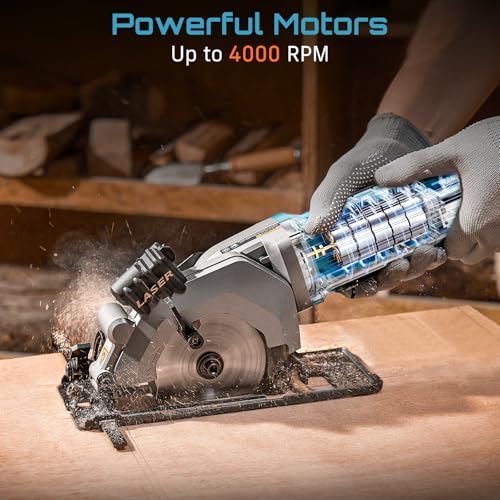
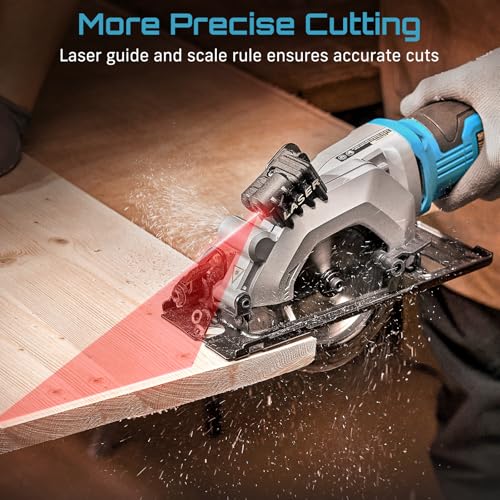
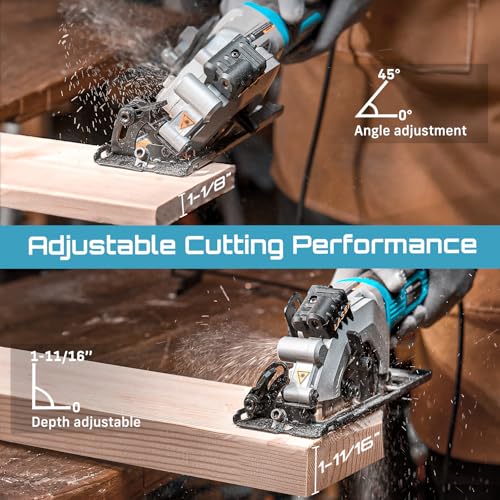
This isn’t your dad’s circular saw, and that’s the point. The Seesii mini saw trades size for versatility, cutting wood, soft metal, tile, and plastic thanks to its included triple-blade setup. The laser guide actually works, helping keep cuts straight without a clamped edge, and the rip guide adds control for longer cuts. At just over half the weight of a standard 7-1/4-inch saw, it’s easy to handle for beginners, older users, or anyone doing precision work.
It won’t rip through 2x6s, but that’s not what it’s for. The 1-11/16-inch max depth is fine for trim, paneling, or PVC, and the dual safety switches prevent accidental starts, a real plus in homes with kids. Compared to the Skil 5280, it’s less powerful but far more flexible. For multi-material DIYers, this is the underrated gem.
Product photos


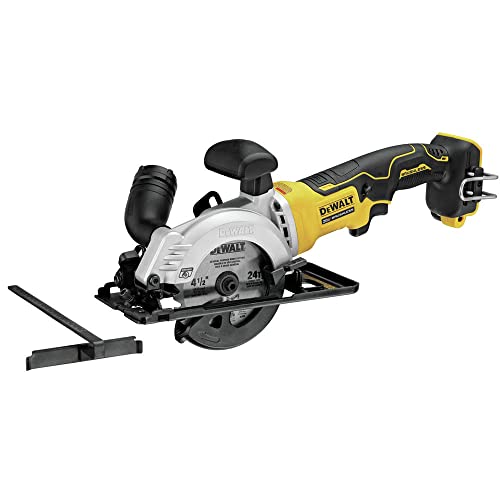
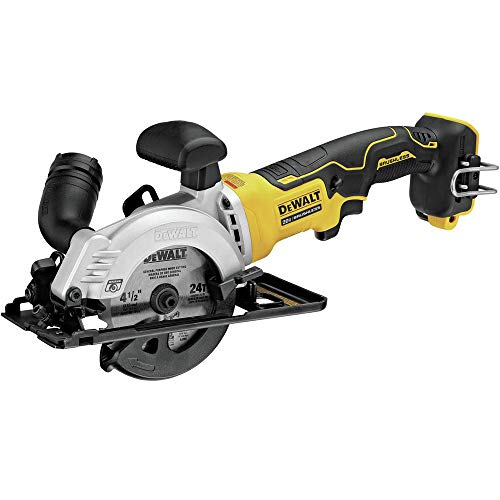
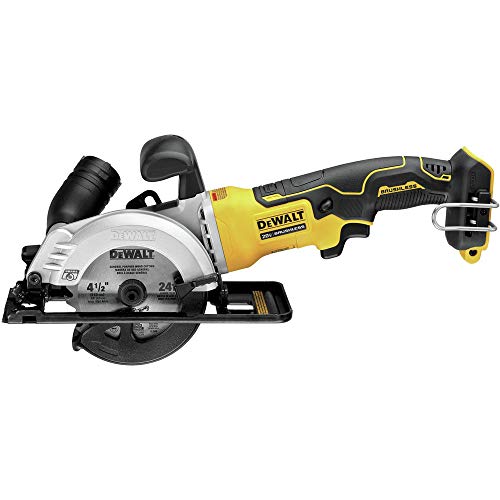
DEWALT ATOMIC 20V MAX* 4-1/2-Inch Circular Saw

Strengths
- Compact 4-1/2-inch design
- Electronic blade brake
- Bevel gear for 2x cuts
- Onboard blade key
- Hang hook included
Trade-offs
- Limited cutting depth
- Bare tool only
- Smaller blade = more passes
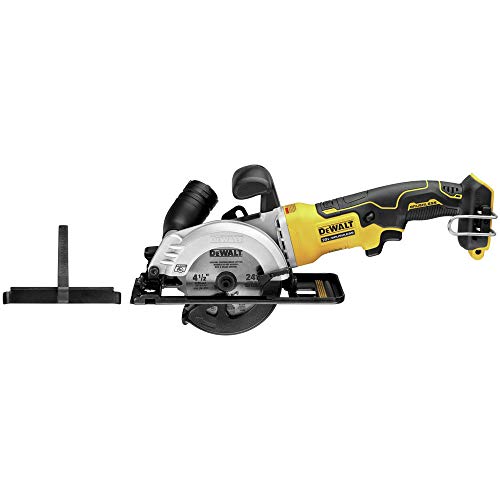
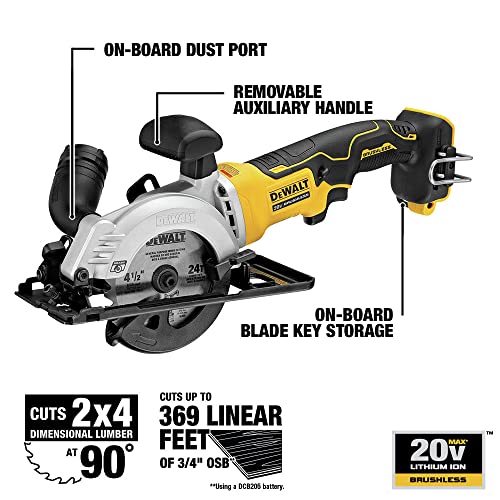
DEWALT’s ATOMIC line proves small doesn’t mean weak. The 4-1/2-inch blade may raise eyebrows, but the bevel gear design lets it cut through 2x material at 90 degrees, a clever workaround for a compact tool. I like the electronic brake; it stops the blade fast, which matters when you’re working overhead or in tight spots. The hang hook and onboard blade key are small touches, but they add up in real-world use.
Owners praise its balance and control, especially with the auxiliary handle removed for flush cuts. It’s not meant to replace your primary saw, but as a go-to for tight spaces, flooring, or finish work, it excels. Compared to the RYOBI 7-1/4-inch, it’s less powerful but far more maneuverable. If you need compact power and already run DEWALT 20V, this is a no-brainer.
Product photos
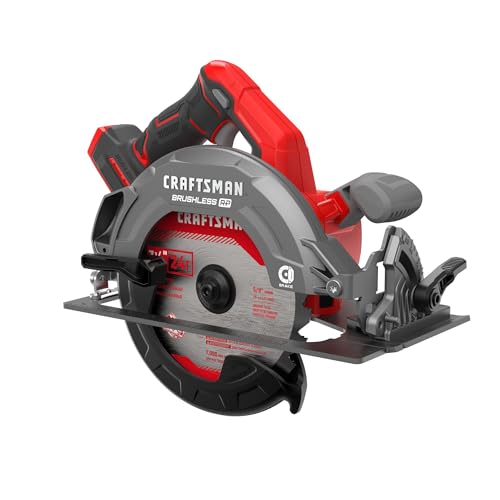
CRAFTSMAN V20 RP 7-1/4 inch Cordless Circular Saw
Strengths
- Brushless motor
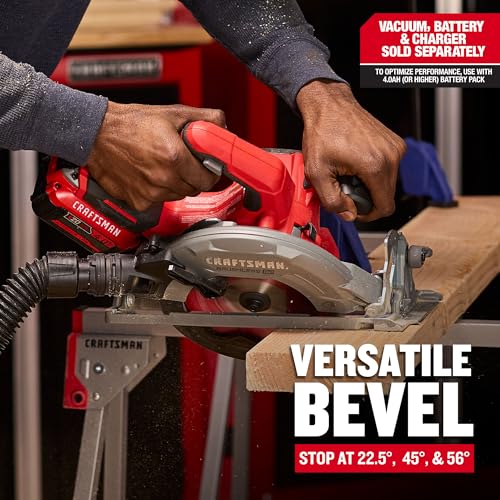
- 56° max bevel
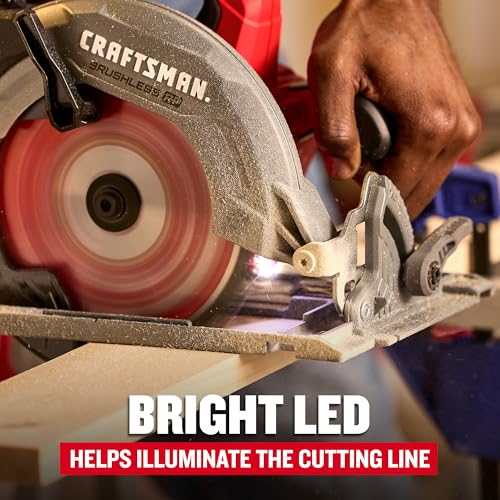
- LED work light
- Metal upper guard
- Positive bevel stops
Trade-offs
- Bare tool only
- No included battery
- Heavier than some cordless models
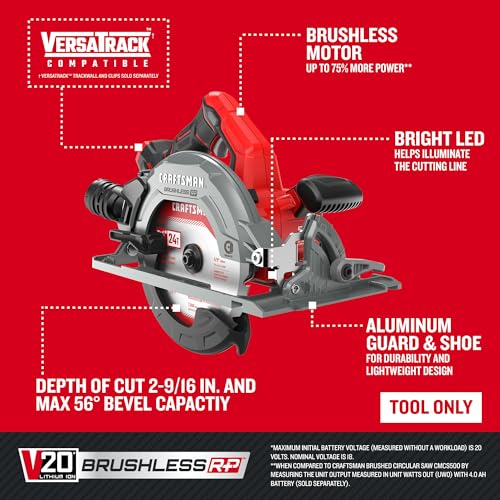
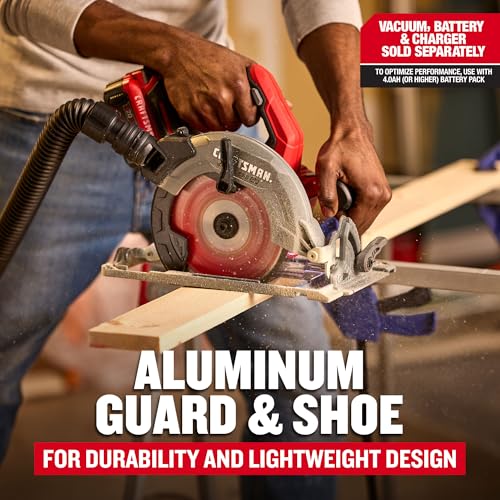
CRAFTSMAN has leaned hard into durability here, and it shows. The upper metal guard is a standout, most budget and mid-tier saws use plastic, which cracks under stress. Paired with a brushless motor and a 56-degree max bevel, this saw is built to last on job sites and in busy home workshops. The LED work light is bright and actually helps in dim garages or basements, making it easier to line up cuts without dragging in extra lighting.
On paper, it matches the power specs of similar 7-1/4-inch cordless saws, and owner feedback suggests solid runtime with V20 batteries. It doesn’t include a battery, so if you’re not already in the CRAFTSMAN ecosystem, that’s a cost to consider. But if you are, this is one of the tougher compact corded alternatives out there. I’d take this over the Skil 5080 for long-term use.
Product photos

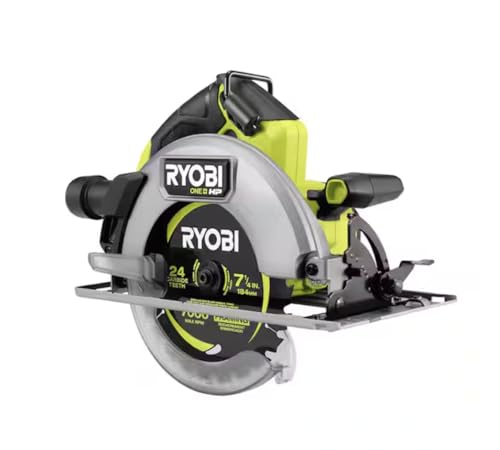
RYOBI ONE+ HP 18V Brushless 7-1/4 in. Circular Saw
Strengths
- Brushless motor
- Long runtime
- 56° bevel detents
- LED worklight
- Vacuum port included
Trade-offs
- Bare tool only
- Plastic housing
- No included battery
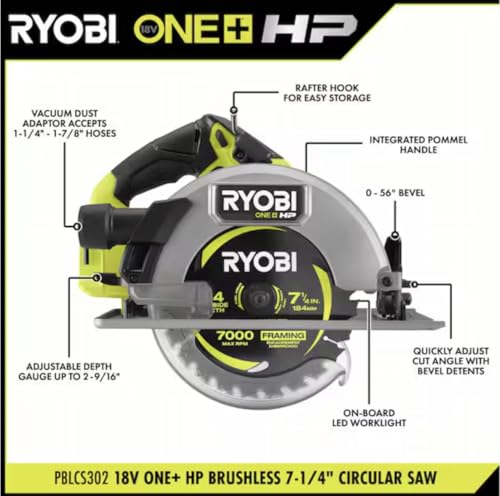
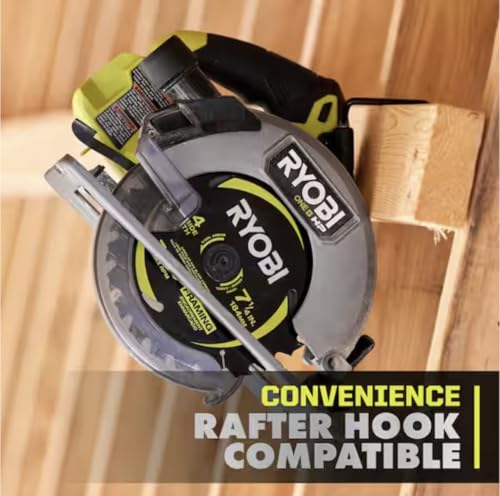
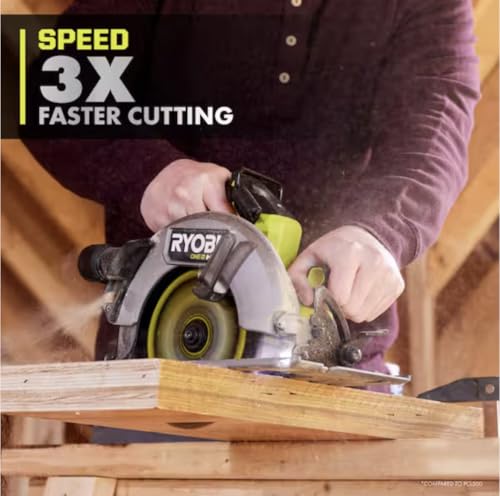
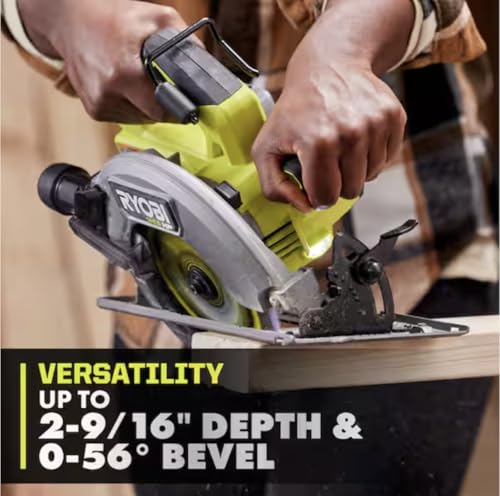
RYOBI’s 7-1/4-inch brushless saw punches above its weight. With 5,000 RPM and up to 370 cuts per charge, it’s one of the most efficient cordless saws in its class. The 2-9/16-inch cutting depth at 90 degrees matches most corded models, and the multiple bevel detents, including 15, 30, and 56 degrees, make repeat angled cuts fast and accurate. The LED light and vacuum port are practical upgrades that boost usability.
For homeowners already in the RYOBI ONE+ ecosystem, this is the smarter buy over buying corded. It doesn’t feel as rugged as DEWALT or CRAFTSMAN, but the value is undeniable. Compared to the Skil 5080, it’s more advanced, quieter, and just as capable for home use, just without the cord. I’d recommend it as the best cordless value if you’ve got the batteries.
Product photos
6-Inch Cordless Circular Saw Compatible with DeWalt 20V
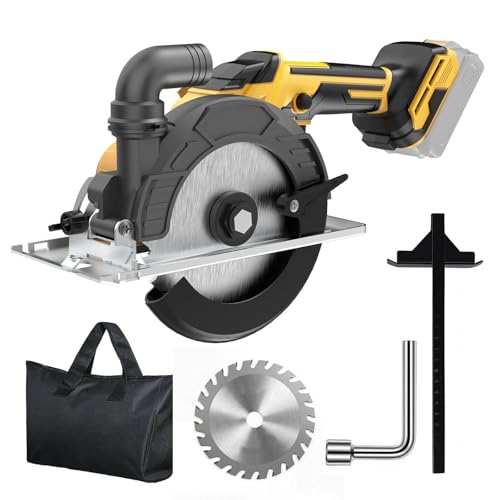
Strengths
- Ultra-lightweight
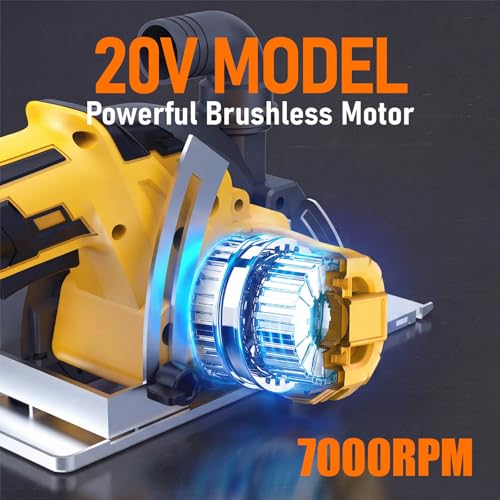
- 7000 RPM brushless motor
- Includes rip guide
- DeWalt 20V compatible
- Quiet and cool operation
Trade-offs
- 6-inch blade limits depth
- No battery included
- Shorter runtime under load
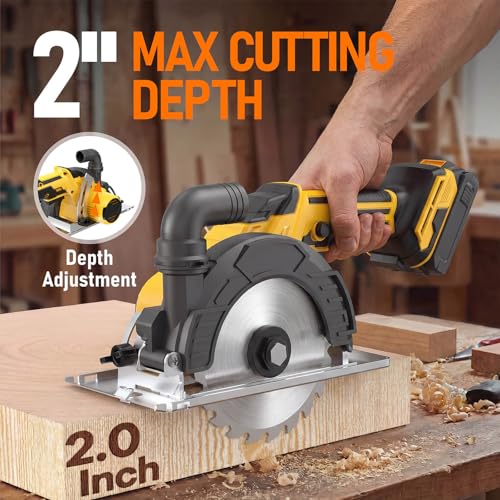
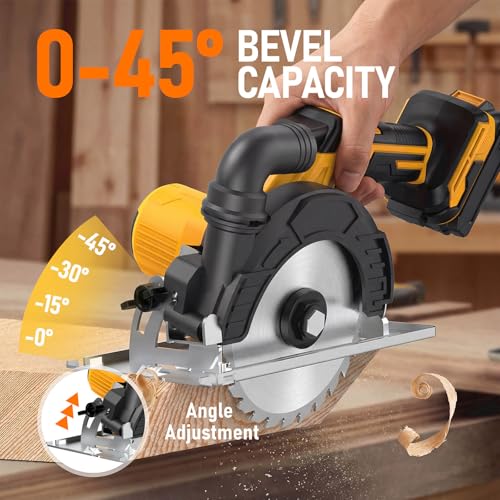
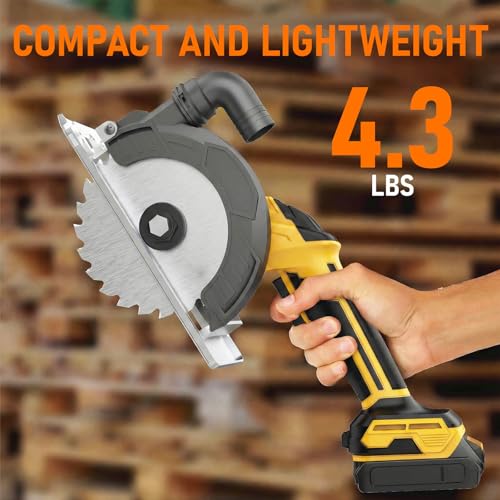
At 4.3 pounds and running on DeWalt 20V Max batteries, this saw is all about portability and convenience. The 7000 RPM brushless motor sounds impressive on paper, and owners confirm it cuts through 2x4s and plywood with ease, surprising power for such a light tool. The included rip guide and aluminum blade are legit upgrades you don’t always get at this price, and the rubberized grip makes overhead or tight-space cuts way more manageable.
It’s not a replacement for a full-size 7-1/4-inch saw if you’re framing a house, but for trim work, shelf building, or quick cuts in tight spots, it’s hard to beat. The variable speed trigger gives real control, and the brushless motor runs cooler and quieter than brushed competitors. If you already have DeWalt 20V batteries, this is a smart secondary saw to keep in the truck or on the shelf.
Product photos

How We Chose These circular saw for home uses
Rather than a hands-on lab test, my research for this guide involved a detailed comparison of published specifications and features across numerous models. I weighed owner reviews from major retailers alongside expert opinions found in trade publications and tool review sites. Ultimately, I ranked saws based on how well they performed against criteria important for typical homeowners and DIYers – balancing power, precision, and ease of use.
For home use circular saws, I prioritized consistent cutting power, blade change simplicity, and integrated safety features. A saw’s ability to make accurate bevel cuts was also heavily weighted, as this is key for projects like trim work and shelving. Durability factored in too, but ease of handling and overall value proved more decisive than extreme-duty construction for this category.
Specifications reliably indicate motor amperage and maximum cut depth. However, owner feedback was crucial for assessing real-world issues like blade wobble, dust management effectiveness, and the long-term reliability of key components. Reputation played a role as well; brands known for quality control and customer support naturally ranked higher. You can learn more about proper circular saw operation on our site.
What To Look For In circular saw for home uses
Picking the right circular saw can feel overwhelming, but focusing on a few key areas will quickly narrow down your options.
A good circular saw balances power with control and precision. Buyers should prioritize motor amperage (or voltage for cordless models), blade quality, safety features like blade guards and electric brakes, and the saw’s overall build quality to withstand regular use. Don’t overlook features like bevel capacity and dust management for cleaner, more accurate cuts.
Motor Power and Application
The motor is the heart of any circular saw, and choosing the right one depends heavily on what you plan to cut. For basic around-the-house tasks – think framing, plywood, and dimensional lumber – a 13- to 15-amp corded saw will usually suffice. If you’re tackling thicker hardwoods, engineered wood products, or doing a lot of repetitive cutting, you’ll want to step up to a more powerful 15-amp model, or consider a brushless cordless option. Brushless motors deliver more power and runtime than brushed motors, but come at a higher price. Don’t assume more amps always means better; consider the specific materials you’ll be working with.
Blade Quality and Versatility
Many saws come with a general-purpose blade, but upgrading is often worthwhile. Carbide-tipped blades are the standard for most applications, but the tooth count affects the cut. Fewer teeth (24-30) are better for fast, rough cuts in softwoods, while more teeth (40-60) give cleaner, smoother cuts in hardwoods and non-ferrous metals. Beyond the tooth count, look for blades made from high-quality steel. And remember, learning how to perform a safe blade swap procedure is essential for maximizing your saw’s versatility.
- A basic 40-tooth blade is fine for general purpose cuts.
- Consider a dedicated blade for plywood and melamine to minimize splintering – these often have a high tooth count (60-80).
- If you’re planning on cutting metal, you’ll need a specialized metal-cutting blade (often abrasive) and a saw capable of handling the slower speed required.
Features and Ergonomics
Beyond the core cutting ability, features can significantly impact usability. A laser guide can be helpful for straight cuts, but don’t rely on it entirely; accuracy can vary. Positive stops at common bevel angles (45 and 22.5 degrees) are invaluable for framing and roofing work. Cordless saws offer freedom from outlets, but battery life and weight become important considerations. If you’re new to using circular saws, exploring resources like a best circular saw for beginners guide can provide valuable insights.
A comfortable grip and well-balanced saw make a huge difference when you’re making repeated cuts. Prioritize ergonomics, even if it means spending a little more upfront.
Circular Saw for Home Uses Compared
Here’s a comparison of specifications for several circular saws suitable for home use.
| Product Title | Amp/Voltage | Blade Size (in) | Max. Cut Depth (at 90°) | Bevel Capacity | Motor Type | Weight (lbs) |
|---|---|---|---|---|---|---|
| SKIL 15 Amp 7-1/4 Inch | 15 | 7-1/4 | N/A | 51° | Brushed | N/A |
| Skil 5080-01 13-Amp 7-1/4″ | 13 | 7-1/4 | N/A | 51° | Brushed | N/A |
| Seesii Mini Circular Saw | 4.8 | 4-1/2 | 1-11/16 | 0-45° | Brushed | N/A |
| DEWALT ATOMIC 20V MAX* 4-1/2 | 20V | 4-1/2 | N/A | 45° | Brushless | N/A |
| CRAFTSMAN V20 RP 7-1/4 inch | 20V | 7-1/4 | N/A | 56° | Brushless | N/A |
| RYOBI ONE+ HP 18V Brushless 7-1/4 | 18V | 7-1/4 | 2-9/16 | 56° | Brushless | N/A |
| 6-Inch Cordless Circular Saw | 20V | 6 | 2.2 | 0-45° | Brushless | 4.3 |
Frequently Asked Questions
What blade size should I get for most home improvement projects?
A 7-1/4 inch blade is generally the most versatile size for homeowners. It balances cutting capacity with maneuverability, handling most common lumber dimensions and sheet goods with ease. Smaller 4-1/2 or 6-inch saws are available, but they limit your maximum cut depth.
Are cordless circular saws as powerful as corded models?
Cordless saws have closed the performance gap, especially brushless models. While earlier cordless versions lacked the consistent power of corded saws, modern 20V or 18V options, particularly those with brushless motors, deliver comparable cutting ability for many tasks.
What’s the difference between a bevel cut and a miter cut?
A bevel cut angles the blade to cut across the width of the board, creating a slanted edge, while a miter cut angles the blade to cut with the width, creating a crosscut at an angle. Bevel cuts are essential for trim and crown molding, and many saws have positive stops for common angles.
How much should I expect to spend on a good quality circular saw for home use?
You can find capable circular saws for under $100, but expect to spend between $100 and $250 for a model with better features and durability. Exploring affordable corded circular saws can help you maximize value.
What safety features are most important when using a circular saw?
A sharp blade guard that retracts smoothly is critical, as is an electric brake that stops the blade quickly after triggering the power switch. Look for saws with a comfortable, secure grip and consider wearing safety glasses and hearing protection during operation.
The Bottom Line
Choosing a circular saw inevitably comes down to balancing how much control and precision you want against how much fuss you’re willing to put up with. For most homeowners, the SKIL 15 Amp 7-1/4 Inch offers the best overall combination of power, features, and value. It’s a workhorse that can handle a wide range of projects without breaking the bank, and its reputation for durability is solid.
If budget is your primary concern, the Seesii Mini Circular Saw is an excellent entry point. For those prioritizing versatility and the convenience of cordless operation, the CRAFTSMAN V20 RP 7-1/4 inch stands out with its brushless motor and impressive bevel capacity. And for smaller projects and tight spaces, the DEWALT ATOMIC 20V MAX* 4-1/2 is a surprisingly capable option.
Ultimately, specs and features only tell part of the story. Consistent performance and long-term reliability depend heavily on performing essential circular saw care and maintaining a sharp blade. Focus on building a solid foundation of technique and safety, and the right saw will become a valuable partner for years to come.
