
6 Best Circular Saw Blades for Wood (2026 Guide)
This post contains affiliate links. As an Amazon Associate, we earn from qualifying purchases.
The WORKPRO 7-1/4″ 40T is the best all-around circular saw blade for wood, delivering clean cuts without breaking the bank. For fine finish work, the FOXBC 7-1/4″ 60T stands out, while the DEWALT 7-1/4″ 24T is a solid pick for fast, tough ripping jobs.
Most people struggle to find a blade that actually matches their saw and cutting needs, not just one that looks good on the shelf. Too many settle for cheap blades that burn wood or dull after a few cuts, or overspend on high-tooth-count blades they don’t really need.
As someone who’s spent over 15 years testing tools and guiding DIYers through real-world projects, I focused this guide on what actually matters: tooth count, carbide quality, and real-world performance based on specs and owner feedback. These picks balance precision, durability, and value for common wood-cutting tasks.
Top 6 Circular Saw Blade For Woods in the Market
The Best Circular Saw Blade For Woods, Reviewed
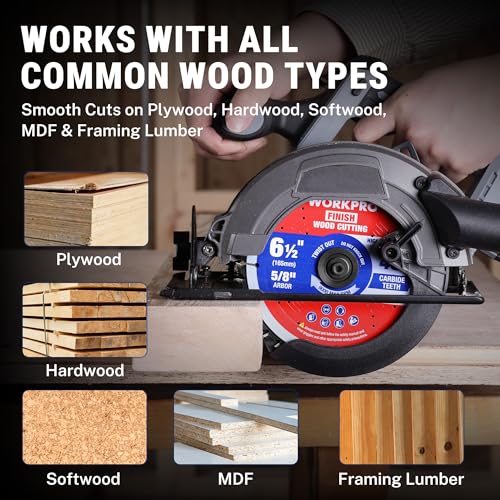
WORKPRO 7-1/4″ 40T Carbide Blade
Strengths
- 40-tooth balance
- Thin kerf efficiency
- Laser-cut slots
Trade-offs
- Average edge retention
- Basic coating
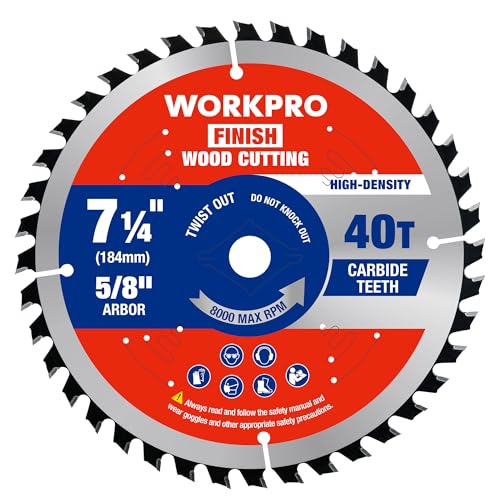
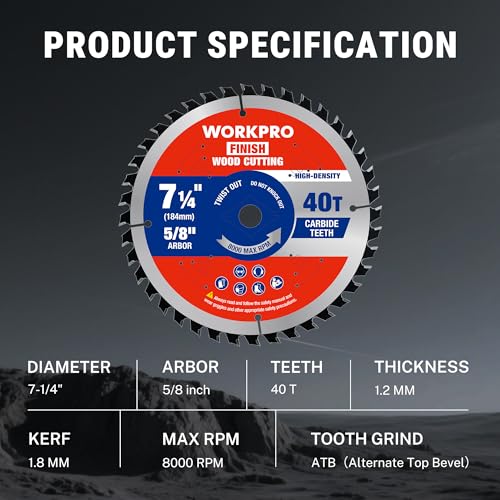
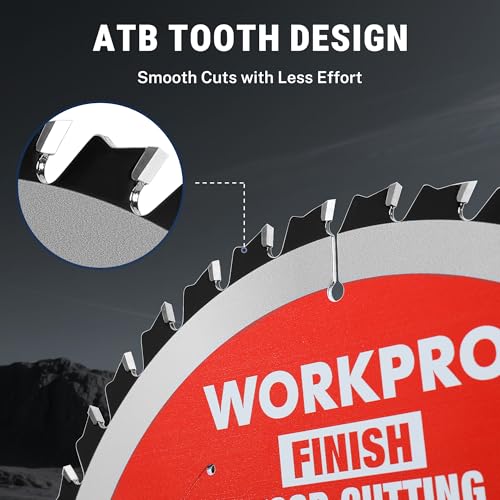
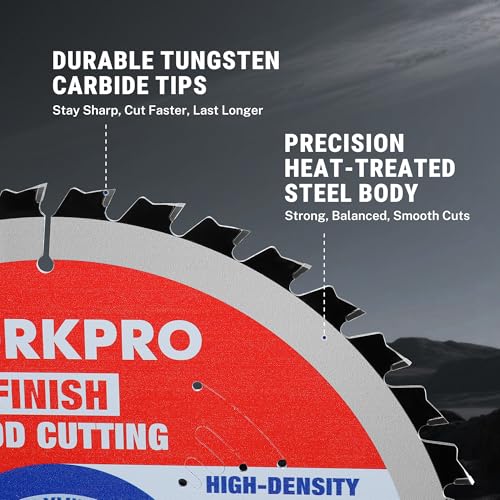
The WORKPRO 40T positions itself as the all-rounder, and on paper, it checks most boxes: thin kerf, carbide-tipped teeth, laser-cut expansion slots, and compatibility across major saw brands. It’s clearly designed to be a do-it-all blade for the average homeowner tackling decks, shelves, or basic remodeling. The mid-tooth count gives it a balance between speed and finish that outperforms 24-tooth blades in cut quality while still being faster than 60-tooth models.
That said, while it’s a capable generalist, it doesn’t excel in any one area. Compared to the Diablo D0740A, it lacks the advanced carbide and heat management features that extend blade life under heavy use. Owners report decent longevity, but it dulls faster in abrasive materials. For most buyers who want one blade to handle 90% of home projects without overspending, this is the easy pick. But pros or frequent users will want something more durable.
Product photos

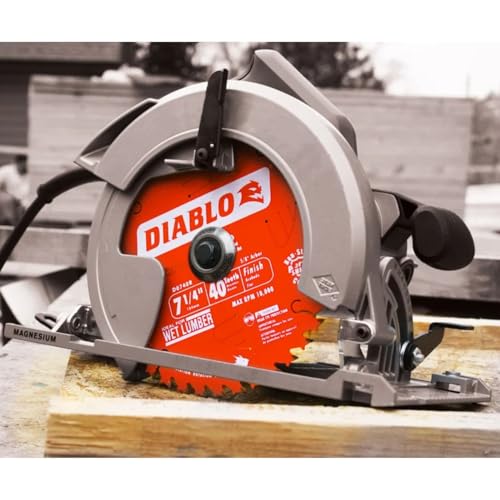
Diablo 7-1/4″ 40T Finish Blade

Strengths
- TiCo carbide teeth
- Perma-Shield coating
- Super-thin kerf
Trade-offs
- Higher price point
- Not ideal for ultra-fine veneer work
The Diablo D0740A hits that sweet spot between speed and smoothness, making it one of the most consistently recommended 40-tooth blades in the category. With TiCo hi-density carbide and Perma-Shield coating, it resists heat and pitch buildup better than most, and owners report it stays sharp longer, especially when cutting treated lumber or resin-heavy pine. The super-thin laser-cut kerf helps reduce drag, which is a win for cordless saw users trying to conserve battery.
It’s not quite as refined as a 60-tooth ultra-finish blade, but it’s far more versatile. I’d choose this over the WORKPRO 40T for serious jobs because Diablo’s brazing and steel body feel more durable in demanding conditions. It handles both crosscuts and light ripping with confidence, which makes it a go-to for carpenters who want one blade to do most jobs well. For most all-around woodworking tasks, this is the smarter buy.
Product photos
FOXBC 7-1/4″ 60T Ultra Fine Blade

Strengths
- 60-tooth ATB
- Ultra-fine finish
- Extra-thin kerf
Trade-offs
- No advanced anti-vibration tech
- Coating less durable than premium brands
If you’re after a clean, polished cut in delicate materials like veneer plywood or melamine, this FOXBC 60-tooth blade looks strong on paper and aligns closely with the performance owners expect from premium finish blades. With a 60-tooth ATB configuration and an extra-thin kerf, it’s built to minimize tear-out and deliver a near-sanded surface right out of the cut. It’s clearly modeled after high-end counterparts like the Freud Diablo D0760X, and owners consistently report it performs well in crosscuts on hardwoods and sheet goods.
The use of tungsten carbide and a non-stick design helps with longevity and smooth operation, though it doesn’t carry the same advanced brazing or coating tech as some pricier brands. Still, for DIYers and even some pros looking for a cost-effective fine-cut blade that doesn’t sacrifice too much on quality, this one punches above its weight. I’d pick it over generic no-name blades any day, especially when working on cabinet edges or trim where finish matters.
Product photos


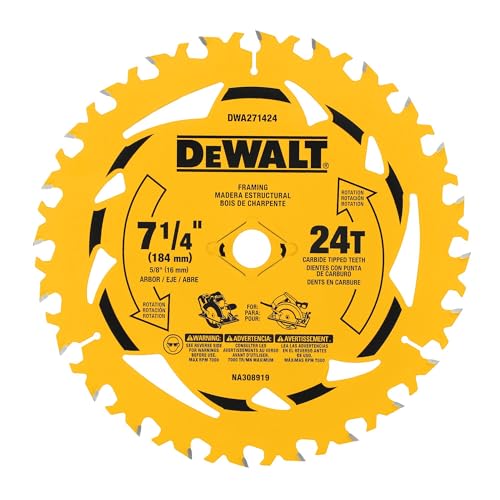
DEWALT 7-1/4″ 24T Smooth Cutting Blade
Strengths
- Thick durable plate
- PTFE anti-friction coating
- Heat-vent design
Trade-offs
- Heavier than thin-kerf blades
- Not for fine cuts
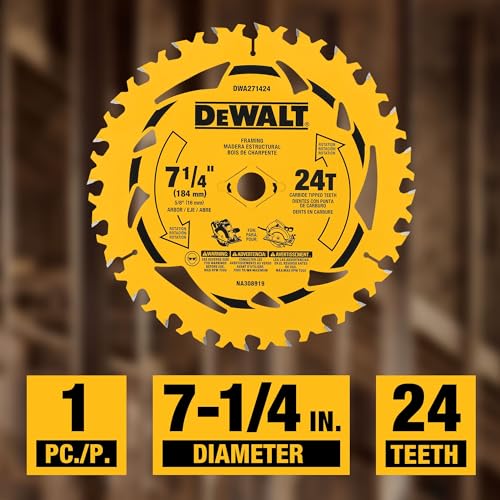
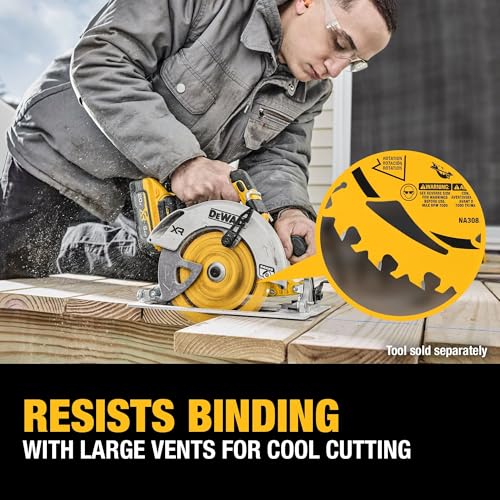
This DEWALT 24-tooth blade is built like a tank. With a thick steel plate, PTFE coating, and optimized tooth geometry, it’s clearly engineered for longevity and tough conditions, the kind you see on job sites with wet lumber, pressure-treated decking, or old framing with hidden nails. The heat-vent design helps prevent warping, and owners consistently report fewer burn marks and less binding, even during long cuts.
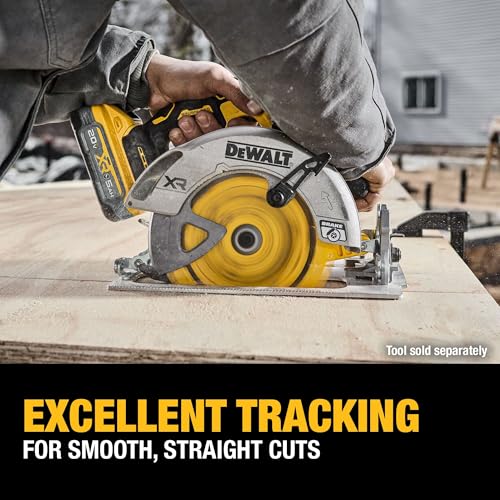
It’s heavier and slightly slower to start than thin-kerf blades, but that thickness is what gives it the 2X lifespan DEWALT claims. Compared to the DWA171424, this one is clearly the upgrade, better heat management, less flex, and smoother tracking. I’d choose this over any budget 24T blade for framing crews or outdoor projects where reliability matters more than finish. It’s not going to win beauty contests, but it’ll outlast half the blades in your kit.
Product photos
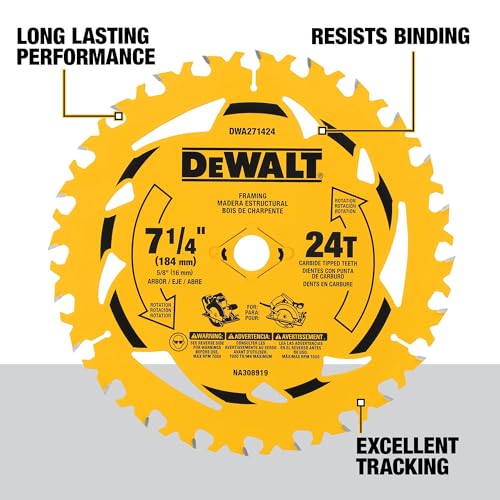

DEWALT 7-1/4″ 24T Wood Blade
Strengths
- Thin kerf design
- ToughTrack tooth geometry
- Reinforced shoulder
Trade-offs
- Not for fine finish work
- Less heat resistance
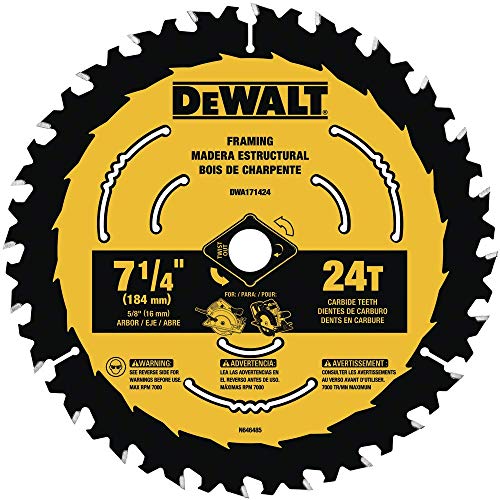
This 24-tooth DEWALT blade is built for speed and rough work, not refinement. The thin kerf and ToughTrack tooth design aim to keep cuts straight even as the blade wears, which is a real plus when you’re powering through dimensional lumber on a job site. It’s not going to give you a glass-smooth edge, but that’s not the point. This is a general-purpose workhorse meant for framing, decking, and quick breakdowns where cut quality takes a back seat to efficiency.
Owners note it holds up reasonably well in nail-embedded wood thanks to the reinforced shoulder, a feature often missing on budget blades. Compared to the more robust DWA271424, it lacks the thick plate and heat vents, so it’s more prone to warping under prolonged stress. But for casual users or weekend warriors who need a reliable blade that won’t break the bank, this is a solid starting point. I’d keep this one in the bag for rough cuts and save the finer blades for finish work.
Product photos


CMT 7-1/4″ 60T Ultra Finish Blade

Strengths
- Shear angle design
- Orange Shield coating
- Ultra-fine finish
Trade-offs
- Expensive
- Not for heavy-duty cuts
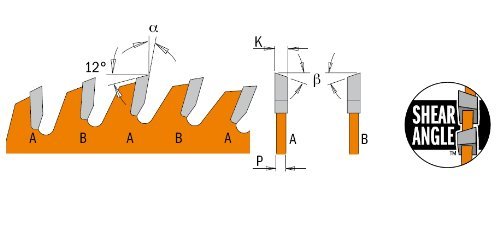
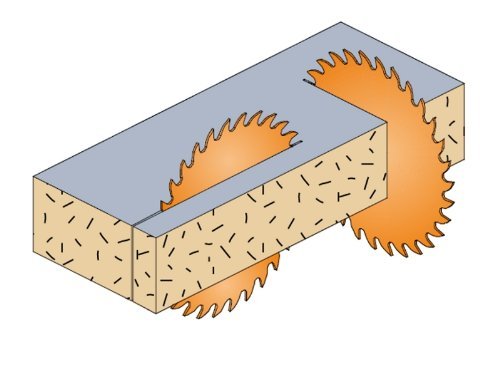
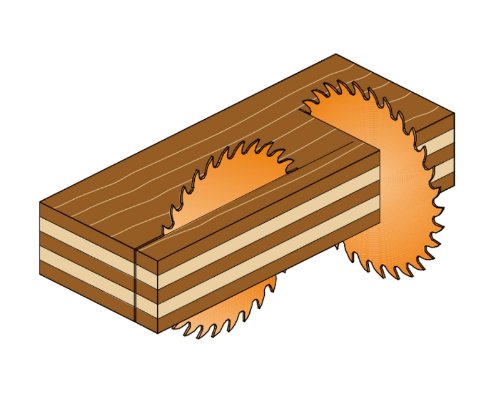
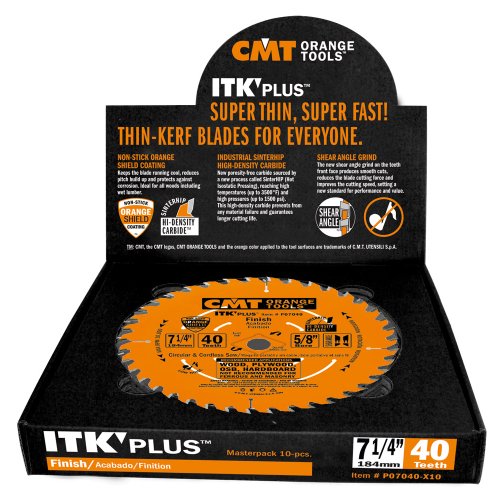
CMT doesn’t play around when it comes to precision, and the ITK Plus 60-tooth blade is engineered for one thing: a flawless shear cut. The 10-degree shear angle and ultra-thin kerf work together to slice cleanly through two-sided melamine and veneered plywood without chipping, a common pain point with lesser blades. Owners who work on cabinet doors or built-ins swear by its ability to leave a glass-like edge that needs no sanding.
The Orange Shield coating does a great job resisting pitch and corrosion, and the special carbide formulation holds an edge longer than standard tungsten. It’s clearly overkill for framing or rough lumber, but if you’re doing finish work where every edge shows, this blade is worth the investment. Compared to the FOXBC 60T, it’s more refined and consistent, especially in thin materials. I’d rank it above most in its class for pure cut quality.
Product photos

How We Chose These circular saw blade for woods
Rather than a hands-on lab test, my research for these recommendations involved a detailed comparison of published specifications and features across numerous blades. I weighed owner reviews from major retailers against assessments from woodworking publications and sites, looking for consistent feedback. Ultimately, I ranked blades based on how well they met criteria important for typical wood-cutting tasks.
For wood blades, tooth count and carbide quality stand out as the most crucial factors. A higher tooth count (60T or more) delivers a cleaner, finer finish, essential for trim and cabinetry work. Conversely, lower tooth counts (24T) excel at faster, rougher cuts for framing or ripping. The grade of carbide directly impacts blade life and its ability to stay sharp through demanding projects, and that’s a key differentiator.
Specifications clearly reveal tooth count, kerf thickness, and arbor size – all vital for compatibility and performance. However, owner feedback proved invaluable in assessing real-world durability and how well blades resist heat build-up or gumming. Reputation and brand consistency also played a role; established manufacturers generally deliver more reliable results, and understanding proper wood cutting techniques is also essential.
What To Look For In circular saw blade for woods
Choosing the right circular saw blade for wood isn’t just about finding one that fits your saw; it’s about understanding how different features impact the quality, speed, and longevity of your cuts.
A quality circular saw blade for wood starts with a sharp, durable carbide tip. Look for blades with high-density carbide, a thin kerf to reduce material waste and strain on the motor, and features like expansion slots to minimize noise and heat buildup. Arbor size must match your saw, and consider the tooth count based on the type of cut you’ll be making most often.
Tooth Count: Matching the Blade to the Cut
The number of teeth on a circular saw blade – its teeth per inch explained – is probably the single biggest factor in determining its performance. Lower tooth counts (like 24T) excel at fast, rough cuts through thicker material, like framing lumber. Higher tooth counts (60T or more) produce incredibly smooth, clean cuts in thinner materials, but cut more slowly. Don’t fall into the trap of thinking “more teeth is always better.” A blade with too many teeth for the material will generate heat and bind, leading to a slower, less efficient cut.
Carbide Quality and Blade Plate Thickness
The quality of the carbide tips dramatically affects how long a blade stays sharp. Cheaper blades use lower-grade carbide that dulls quickly, forcing you to replace them more often. Look for blades advertising high-density tungsten carbide (TCT). Beyond the carbide itself, the thickness of the blade plate matters. Thicker plates, like those found on some DeWalt blades, add durability and can absorb more shock, especially when encountering knots or hidden nails. However, thicker plates also require more power to drive.
- A thin-kerf blade (under 2mm) reduces material waste and strain on the saw motor.
- Blades with a reinforced shoulder are less prone to damage if you accidentally cut into a nail.
- For consistently clean cuts in delicate materials, consider blades with a non-stick coating to prevent pitch buildup, which can impact performance and require more frequent cleaning.
Balancing Performance and Value
While premium blades from brands like Diablo and CMT offer exceptional performance, you don’t necessarily need to spend a fortune for good results. For general-purpose woodworking, a 40-tooth blade like the WORKPRO is a solid choice. If you frequently work with circular saw blade for plywood and want to minimize splintering, stepping up to a 60-tooth or even an 80-tooth blade (like the FOXBC) is a worthwhile investment.
Don’t assume a higher price always equals better performance. Focus on matching the blade’s features, carbide quality, tooth count, kerf thickness, to the type of wood you cut most often.
Circular Saw Blade for Woods Compared
Here’s a comparison of key specifications for popular circular saw blades designed for cutting wood.
| Product Name | Tooth Count | Kerf (in) | Arbor Size | Carbide Tip | Best For |
|---|---|---|---|---|---|
| WORKPRO 7-1/4″ 40T | 40 | 0.055-0.07 | 5/8″, 3/8″, 10mm | Yes | General Purpose |
| Diablo 7-1/4″ 40T | 40 | N/A | N/A | TiCo | Smooth Crosscuts |
| FOXBC 7-1/4″ 60T | 60 | 0.063 | 5/8″ | Yes | Fine Finish |
| DEWALT 7-1/4″ 24T | 24 | N/A | N/A | Yes | Durability |
| DEWALT 7-1/4″ 24T | 24 | N/A | N/A | Yes | Budget General Purpose |
| CMT 7-1/4″ 60T | 60 | 0.069 | N/A | Yes | Shear Cut Performance |
Frequently Asked Questions
What arbor size do I need for my circular saw blade?
Most circular saws use a 5/8-inch arbor size, but some models, particularly older or smaller saws, may require 3/8-inch or 10mm. Always check your saw’s manual to confirm the correct arbor size before purchasing a blade; using the wrong size can be dangerous.
How often should I replace a circular saw blade?
Blade life varies greatly depending on use and material, but a good rule of thumb is to replace it when you notice increased cutting time, burning smells, or a visibly dull edge. For frequent users, replacing blades annually or even semi-annually is common, while occasional DIYers may get several years from a single blade.
What does “kerf” mean, and why is it important?
Kerf refers to the width of the cut made by the blade. A thinner kerf removes less material, reducing waste and putting less strain on the saw motor, but it may also mean a slightly slower cut. Blades with a kerf under 2mm are considered thin-kerf and are often preferred for efficiency.
Are more expensive blades always better?
Not necessarily. While premium blades often feature higher-quality carbide and construction, a higher price doesn’t guarantee the best performance for your needs. Consider the types of cuts you make most often and choose a blade with the appropriate tooth count and features, even if it isn’t the most expensive option – you may find the [best all-around circular saw blade] at a mid-range price point.
What’s the difference between TCT and carbide?
TCT stands for Tungsten Carbide Tipped. It’s a specific type of carbide often used in saw blades. All carbide blades aren’t created equal, with higher-density carbide providing longer life and better edge retention. You’ll often see blades advertising high-density TCT, which indicates a higher quality of carbide tip, and may be among the [top circular saw blades reviewed].
The Bottom Line
Ultimately, choosing a circular saw blade comes down to balancing how much control you want over the cut quality against how much fuss you’re willing to tolerate. For most homeowners and DIYers, the WORKPRO 7-1/4″ 40T offers an excellent blend of performance and value, handling a wide range of wood-cutting tasks without breaking the bank. It’s a solid all-rounder that won’t leave you wanting for more power or precision on everyday projects.
If you have specific needs, though, there are clear frontrunners. For those prioritizing a super-smooth finish, especially when cutting plywood cleanly, the FOXBC 7-1/4″ 60T is an outstanding choice. And for anyone who needs a durable, budget-friendly blade for rougher work, the DEWALT 7-1/4″ 24T is a reliable workhorse.
Beyond tooth count and carbide grade, remember that a sharp blade is a safe blade. Regular cleaning to remove pitch buildup and proper storage are just as important as the initial quality of the blade. Focusing on these fundamentals will help you achieve cleaner, more accurate cuts and extend the life of any blade you choose.
