9 Best Sanders for Furniture of 2026
This post contains affiliate links. As an Amazon Associate, we earn from qualifying purchases.
The SKIL 5” Random Orbital Sander stands out as the best overall for furniture work, delivering smooth results with solid dust control. For tight corners and intricate details, the TOVPADE Micro Sander Kit is our top precision pick, while the DEKOPRO 5” offers excellent finishing performance at a mid-range price.
Furniture sanding isn’t just about removing material, it’s about preparing a surface for a flawless finish, without gouges, swirls, or missed spots. Most people end up frustrated because they’re using the wrong type of sander or one that lacks control and dust management.
In this guide, I’ll walk you through the top models based on specs, owner feedback, and real-world performance. We focused on smooth operation, dust collection, ergonomics, and versatility, because the right sander should handle both broad panels and delicate edges without breaking your stride.
Top 9 Sander For Furnitures in the Market
The Best Sander For Furnitures, Reviewed
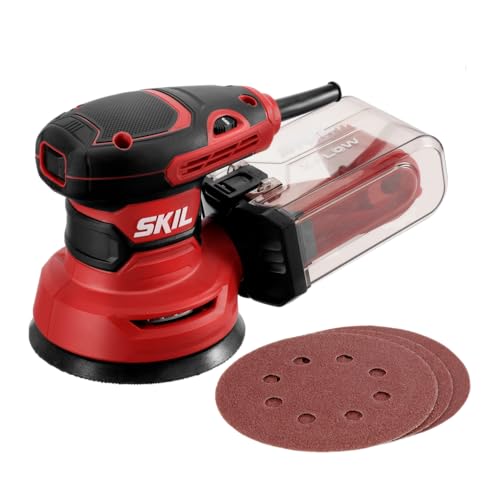
SKIL 5” Random Orbital Sander
Strengths
- Excellent dust collection
- Low vibration
- Compact and balanced
Trade-offs
- Pad can clog slightly
- No sandpaper included
- Switch placement awkward
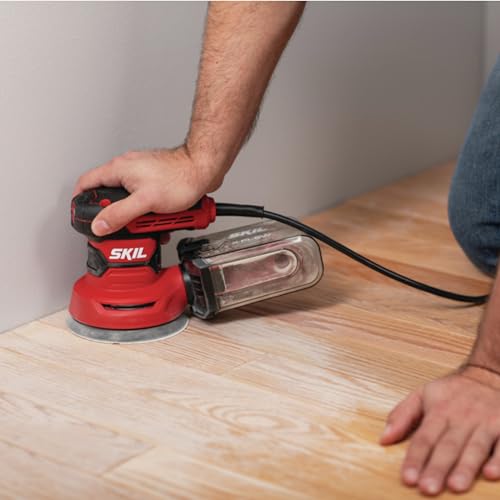
If I had to recommend one orbital sander for most furniture projects, it’d be the SKIL SR211601. The 2.8A motor and 13,000 OPM strike a sweet spot between power and finesse. What really sets it apart is the cyclonic dust box, owners consistently say it captures more than bag systems and is a breeze to empty. That matters when you’re sanding multiple pieces and don’t want cleanup to eat half your time.
It’s compact enough to use one-handed in tight spots, and the counterweight design cuts vibration noticeably. Compared to the DEWALT DWE6421K, it’s lighter and easier to control for long sessions. The variable speed dial is responsive, and the soft grip stays comfortable. This is the kind of sander that feels like it’s built to last beyond a few weekend projects.
Product photos


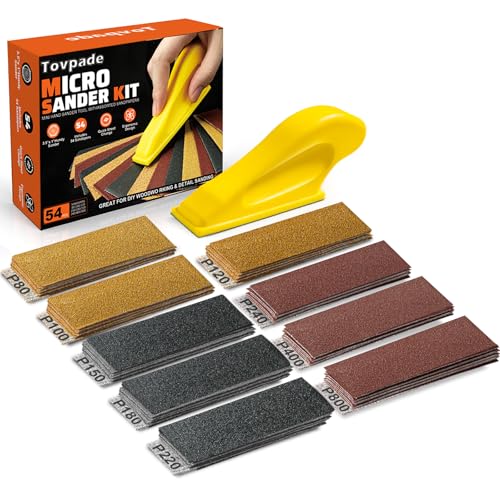
TOVPADE 54PCS Micro Sander Kit
Strengths
- 54 grits included
- Color-coded system
- Fits tight spaces
Trade-offs
- Hand-powered only
- Not for large areas
- Pad small
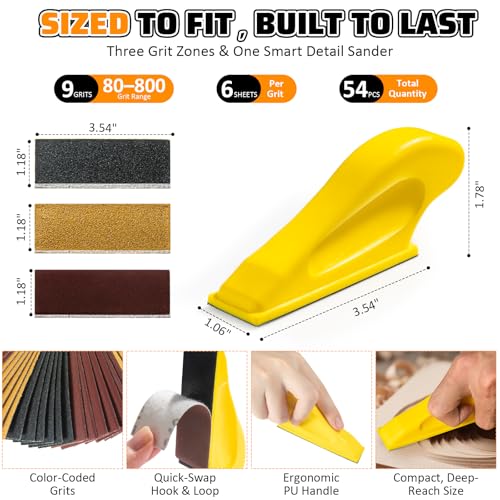
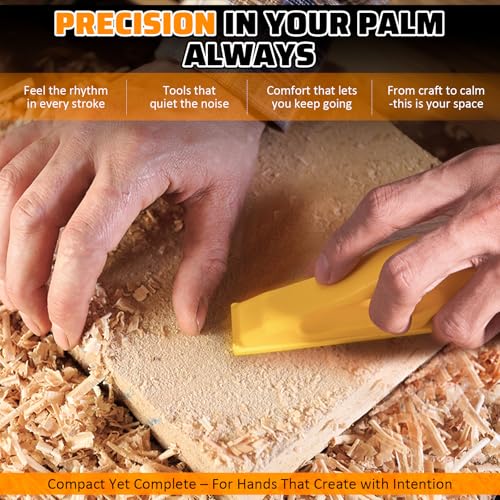
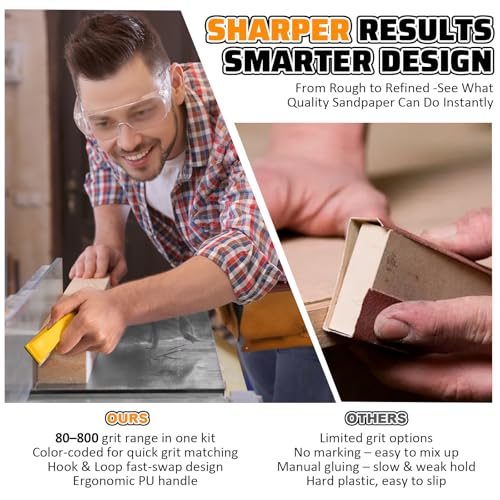
This isn’t a power tool, it’s a precision hand sander, and it excels where machines can’t go. The 54-piece grit range from 80 to 800 is exceptional, and the color-coded system actually helps avoid mistakes. Reviewers love how the hook-and-loop backing holds sheets securely, even in curved or recessed areas.
At 3.5 x 1 inches, it slips into grooves, carvings, and joints with ease. The ergonomic grip reduces hand strain during long detailing sessions. For final smoothing after power sanding, or for small wooden crafts, this kit is unmatched. It won’t replace a power sander, but it complements one perfectly.
Product photos


DEKOPRO 5″ Random Orbital Sander

Strengths
- Powerful motor
- 6 variable speeds
- Good dust containment
Trade-offs
- Pad durability concerns
- Sander slightly bulky
- Noise level average
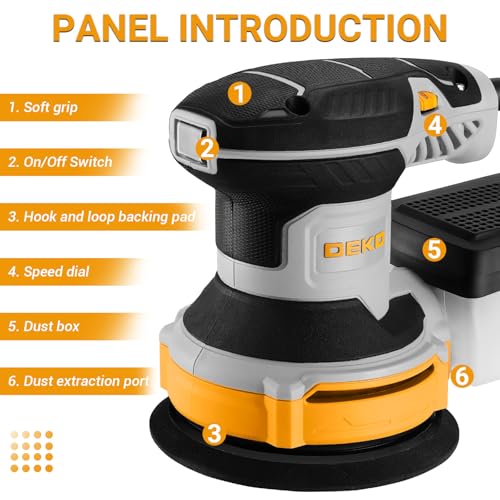
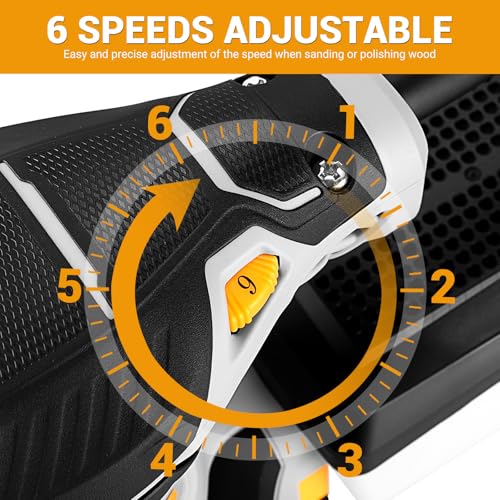
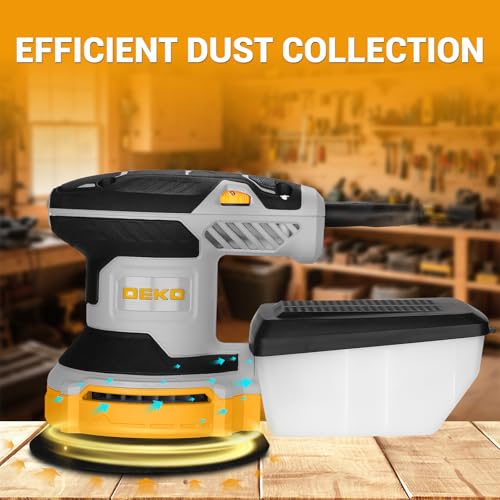
On paper, the DEKOPRO 5″ sander looks like a solid pick for finish work, especially with its 2.5A motor and 14,000 RPM max speed. Owners consistently report it handles hardwoods and painted surfaces without bogging down, and the 6-speed dial gives real control across materials. The 16 included sandpapers cover a broad range, from aggressive material removal to ultra-fine polishing, something I appreciate for furniture refinishing where transitions matter.
The dust box is a standout. Reviewers note it captures more than most bag systems in this tier, and the hook-and-loop pad is as fast as expected. But some mention the pad can wear faster under heavy use, so longevity might depend on workload. Still, for a corded orbital in this price range, it balances performance and cleanup well.
Product photos


HYCHIKA Detail Sander 14,000 OPM
Strengths
- High speed
- Good dust extraction
- Comfortable grip
Trade-offs
- Dust bag attachment weak
- Cord stiffness
- Not for large areas
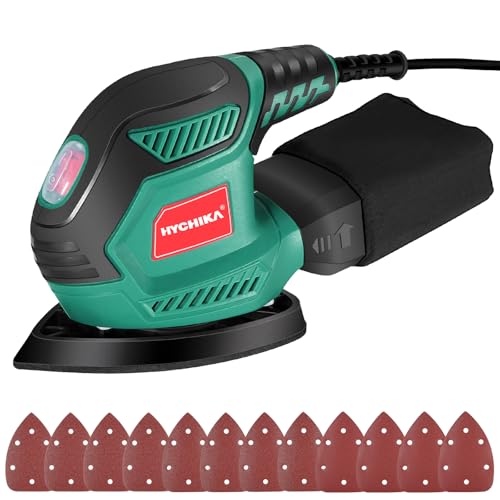
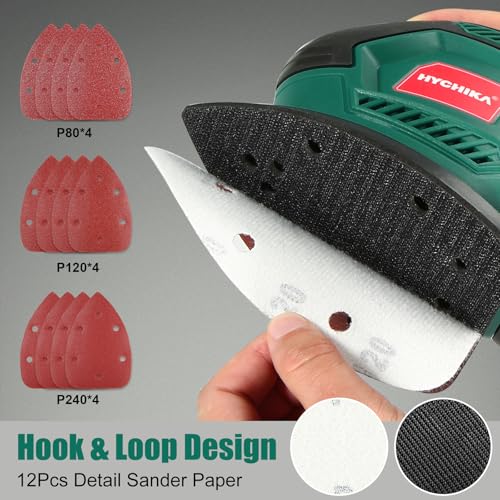
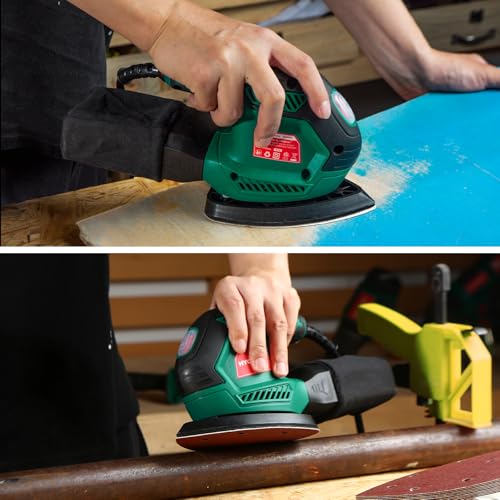
The HYCHIKA detail sander is built for the kind of work most orbital sanders can’t reach, tight corners, moldings, and furniture joints. At 14,000 OPM, it’s one of the faster models here, and the 1.6A motor gives it a bit more punch than entry-level units. The 12 included sandpapers cover coarse to fine, and the 6-hole dust system actually works, reviewers say it keeps the air cleaner than expected for such a compact tool.
It’s lightweight and fits snugly in the hand, which helps with precision. But I’ve seen feedback about the dust bag detaching if bumped, and the cord isn’t the most flexible. Still, for detail work on furniture, it outperforms most in its class. I’d take this over the THINKLEARN model for sheer consistency.
Product photos


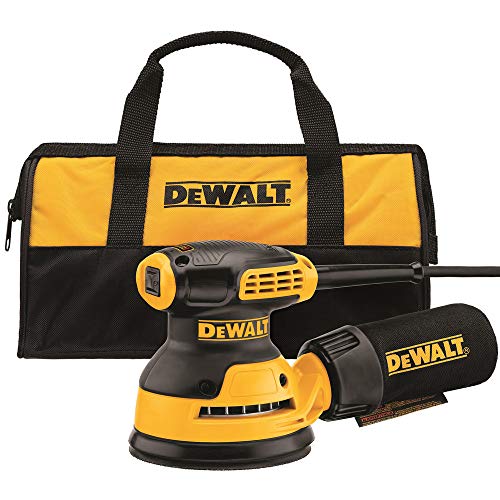
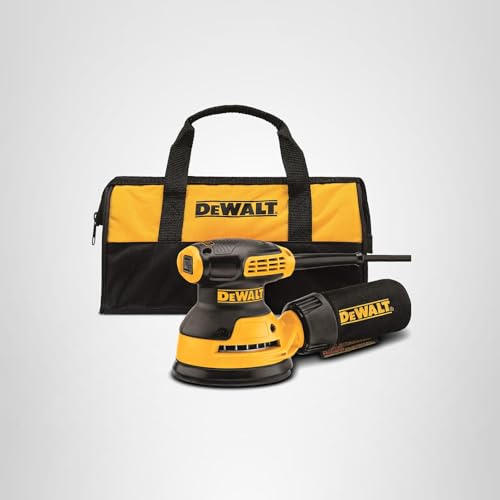
DEWALT 5-Inch Orbital Sander Kit
Strengths
- Durable build
- Strong motor
- Good dust port
Trade-offs
- No sandpaper included
- Heavier than rivals
- Dust bag not sealed
The DEWALT DWE6421K is a workhorse in a budget-friendly shell. With a 3.0 amp motor and 12,000 OPM, it delivers pro-level power, and owners say it holds up well over time. The one-handed locking dust bag is a small convenience that makes cleanup faster, and the rubber over-mold improves grip in sweaty or dusty conditions.
It’s not the lightest, but the counterweight system keeps vibration manageable. What I like most is the dust port compatibility with DEWALT vacuums, serious users will appreciate that. It doesn’t come with sandpaper, which is a downside, but the performance justifies it. Compared to the SKIL model, it’s more durable but less refined in dust handling.
Product photos

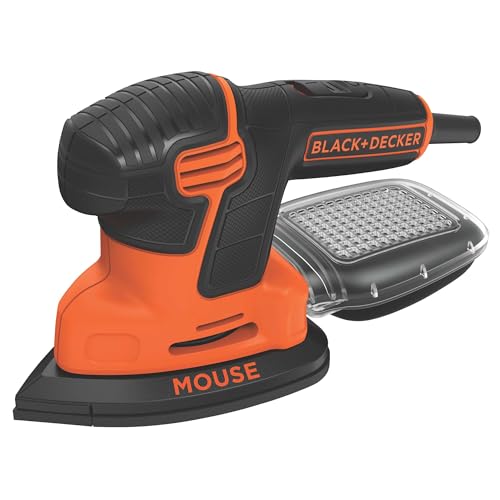
BLACK+DECKER Detail Sander BDEMS600

Strengths
- High speed
- 3-position grip
- Good for tight spots
Trade-offs
- Noisy
- Dust canister fills fast
- Vibration noticeable
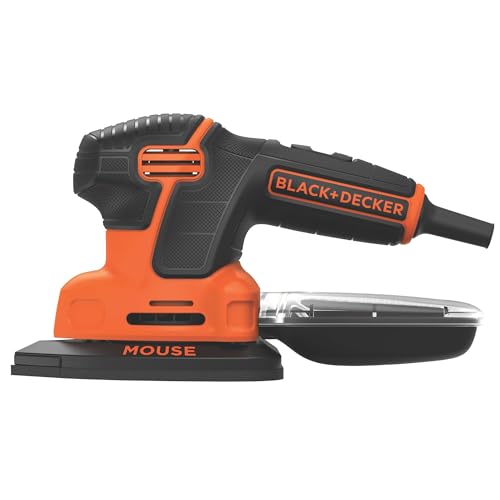
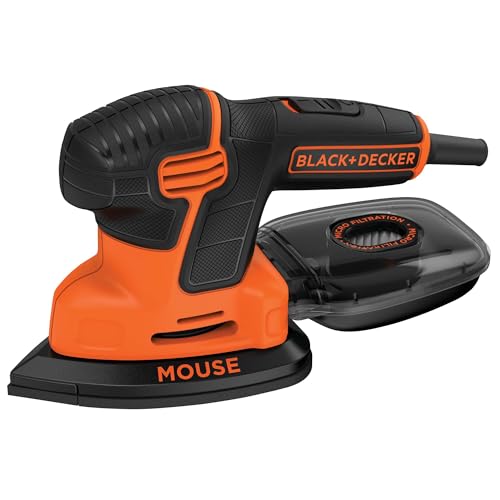
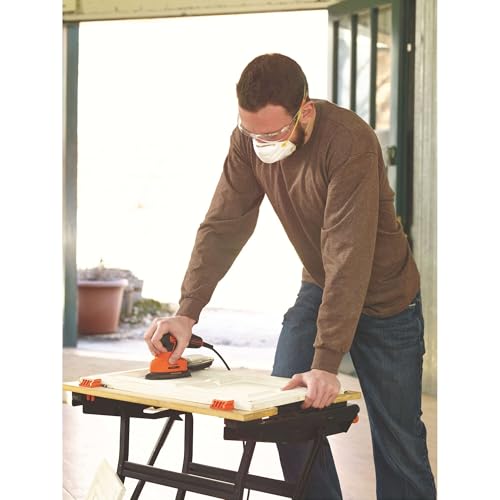
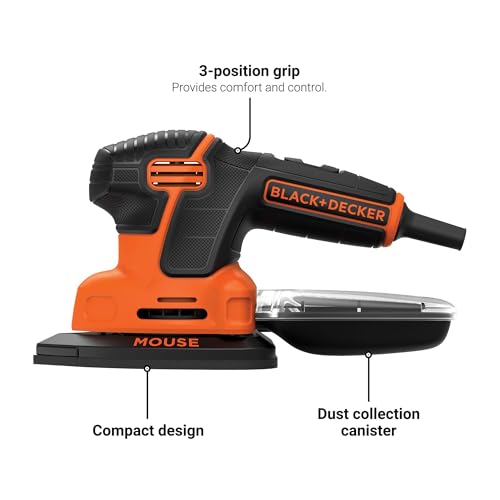
The BDEMS600 is a no-nonsense tool built for corners. Its 16,000 OPM is the highest here, and that speed pays off when stripping paint from tight moldings or window frames. The 3-position grip is a standout, owners say it lets you angle the sander comfortably no matter the joint. The detail finger attachment is also a real help for spots where even triangular pads struggle.
It’s corded, so no runtime limits, and the dust canister does a decent job, though it needs frequent emptying. Build quality is typical BLACK+DECKER, solid for the price, but not rugged. Compared to the HYCHIKA, it’s less refined but more aggressive. If you’re restoring old furniture with layered paint, this one will push through.
Product photos
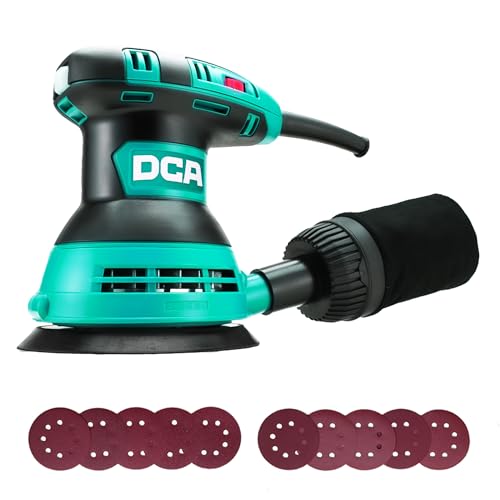
DCA 3.0 AMP Random Orbital Sander
Strengths
- Strong motor
- Effective dust seal
- Comfortable grip
Trade-offs
- Limited fine grits included
- Dust bag fills quickly
- Not for heavy stripping
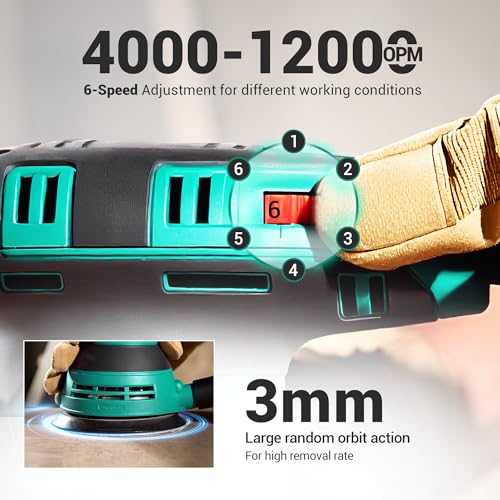
The DCA ASA125 stands out in the mid-tier bracket with a 3.0 AMP motor and solid dust sealing, two things I’ve found make or break a sander over time. Its 12,000 OPM max and 6-speed range give it flexibility, and owners report it handles both bare wood and painted finishes without swirls when used properly. The rubber seal around the dust port is a small detail, but it makes a real difference in keeping fine dust out of the motor.
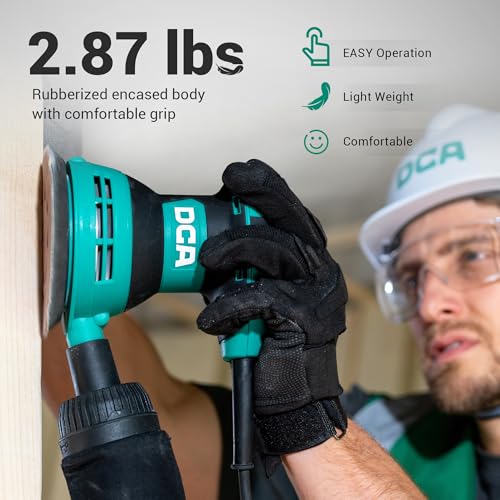
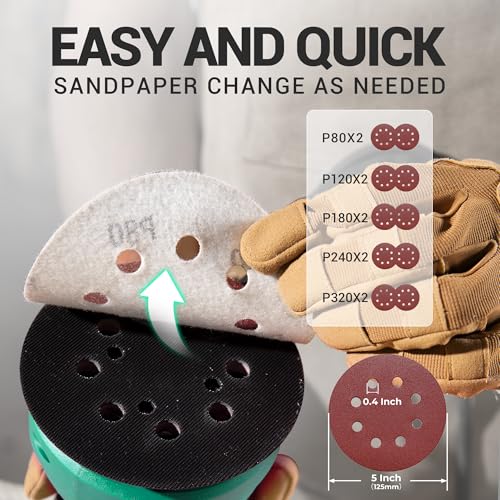
I like that it comes with 10 sandpapers across common grits, though the highest is 320, fine for prep, but not enough for final polishing unless you buy extras. The 2.87 lb weight helps reduce fatigue, and the soft grip is well-placed. Compared to the DEWALT DWE6421K, it’s quieter and collects dust slightly better, though not quite as durable under daily pro use.
Product photos


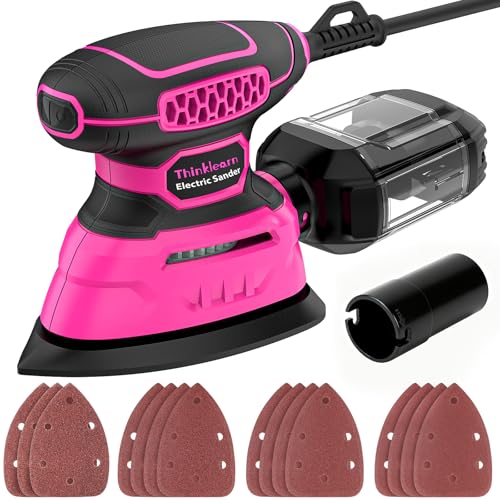
THINKLEARN Detail Sander with Dust Box
Strengths
- Beginner-friendly
- Good grit variety
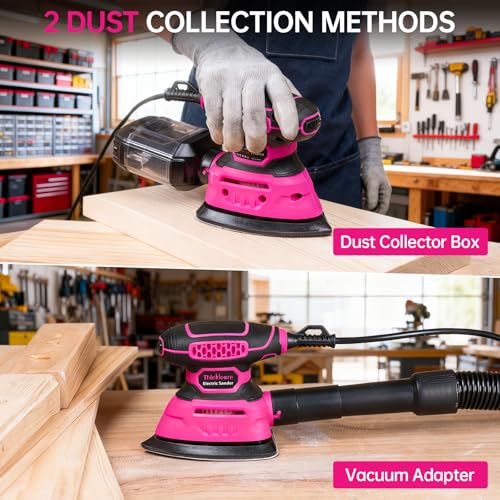
- Vacuum adapter included
Trade-offs
- Underpowered for thick finishes
- Dust box small
- Plastic build feels light
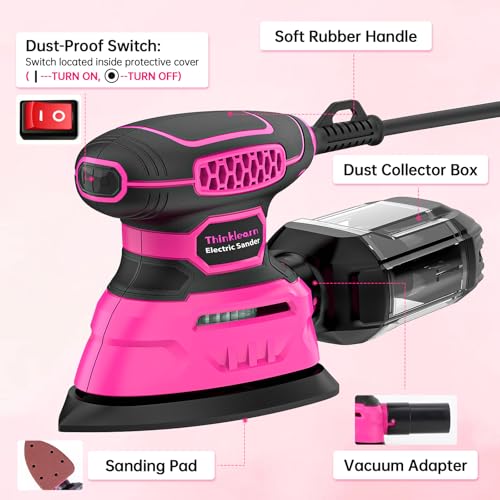
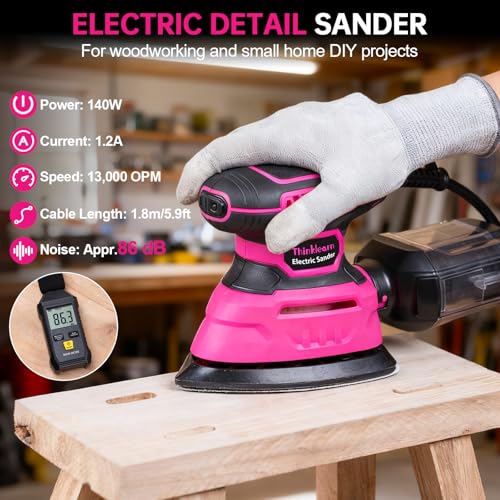
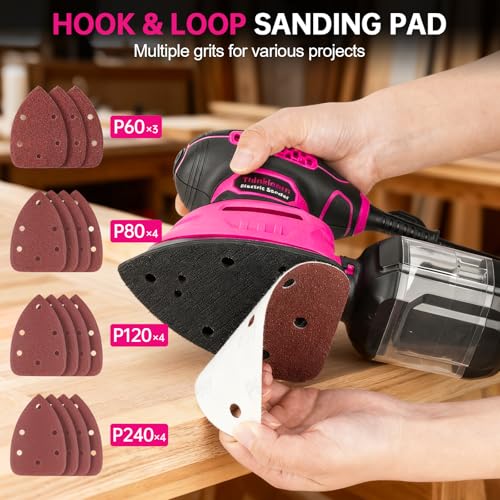
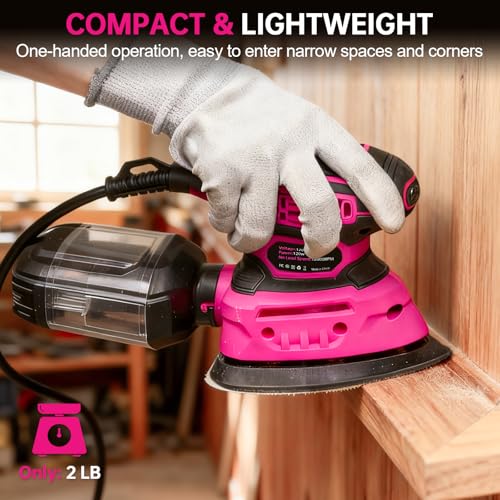
This sander screams ‘starter tool,’ and that’s not a bad thing. At 1.2A and 13,000 OPM, it’s modest but capable for light furniture touch-ups, especially with the 15 included sandpapers across four grits. The dust box works well for small jobs, and the vacuum adapter is a nice bonus, something not all budget models include.
Owners say it’s comfortable to hold and quiet, which makes it a solid first sander. The pink color might not be for everyone, but it’s a fun touch for gift-giving. Compared to the BLACK+DECKER BDEMS600, it’s lighter and has more grits, but less power and no multi-position grip. For beginners, that trade-off makes sense.
Product photos
Hammerhead Multi-Function Detail Sander

Strengths
- Quick-change detail head
- Dust-sealed switch
- Good value
Trade-offs
- Motor underpowered for heavy jobs
- Dust box capacity low
- No fine grits included
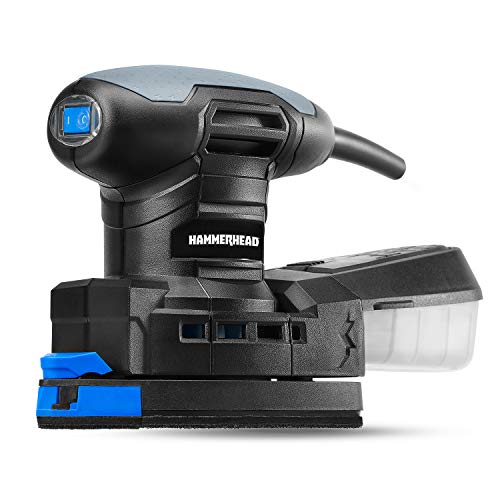
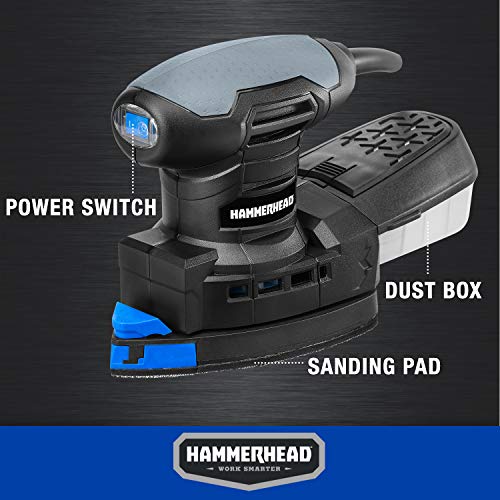
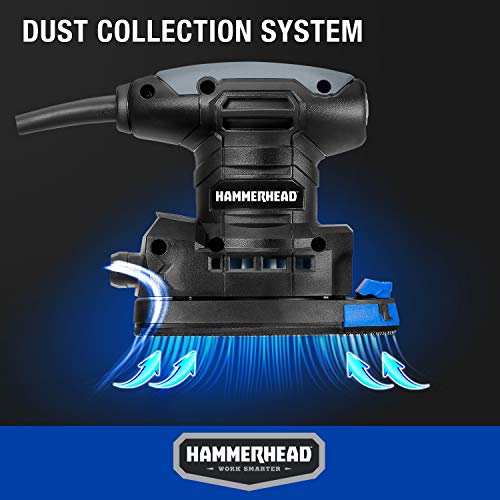
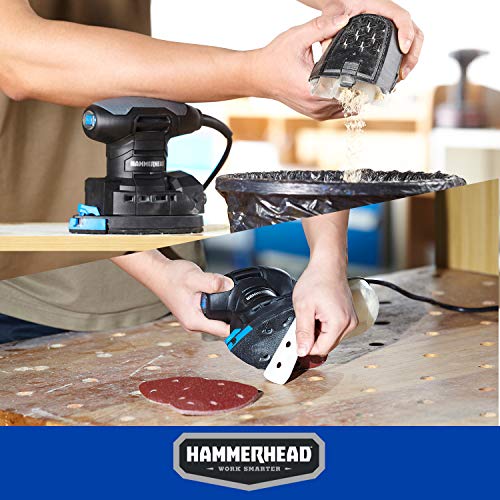
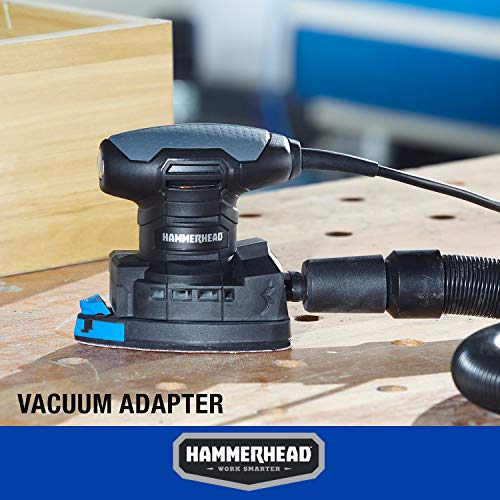
This is one of those tools that shines when you need to pivot between flat surfaces and tight corners. The quick-swap triangular attachment is a real win, owners love how fast it clicks in and out, no tools needed. At 12,000 OPM, it’s not the fastest, but it’s plenty for detail work on furniture edges or carvings. The 1.4A motor won’t rip through thick paint, but it handles light stripping and smoothing just fine.
The dust box works, but it’s small. Reviewers note you’ll empty it often on bigger jobs. Still, the dust-sealed switch is a thoughtful touch, and the hook-and-loop system is reliable. For the price, it delivers more versatility than most detail sanders. I’d pick this over basic mouse sanders if you’re doing more than just touch-ups.
Product photos
How We Picked These sander for furnitures
As someone who’s spent years around power tools – both professionally and as a hobbyist – I know choosing the right sander can make or break a furniture project. Rather than a hands-on lab test with each model, this selection is a research-led comparison of published specifications, features, and a deep explore owner and expert reviews. I focused on identifying models consistently praised for performance on furniture-related tasks.
For sanders intended for furniture, I weighted several factors above all others. Smoothness of finish was paramount, as furniture demands a refined result. Equally important was versatility – the ability to handle both large surfaces and detailed work. Finally, dust collection played a big role, as a clean workspace is crucial for achieving a professional-looking finish. You can even use a [jig saw for detailed cuts] to prepare the furniture before sanding.
Specifications tell you about motor power (amps) and orbital speed (OPM), which give a general idea of aggressiveness and efficiency. However, I relied heavily on owner feedback to gauge real-world vibration levels, ergonomics, and long-term durability. Reputable expert reviews helped confirm performance claims and identify potential weaknesses not immediately apparent from specs alone. This blend of data provided a well-rounded view of each sander’s capabilities.
What To Look For In sander for furnitures
Choosing the right sander for furniture projects isn’t as simple as grabbing the cheapest option. It’s about matching the tool to the task – and understanding what makes a sander truly effective for woodworking.
A quality furniture sander balances power with control. Look for variable speed settings, efficient dust collection (a must for finishing work!), and ergonomics that allow for extended use without fatigue. Pad size matters, too; smaller pads for detail work, larger for broad surfaces. Pay attention to the amperage and OPM (orbits per minute) ratings, but remember those are just numbers – owner reviews are crucial for understanding real-world performance.
Understanding Sander Types
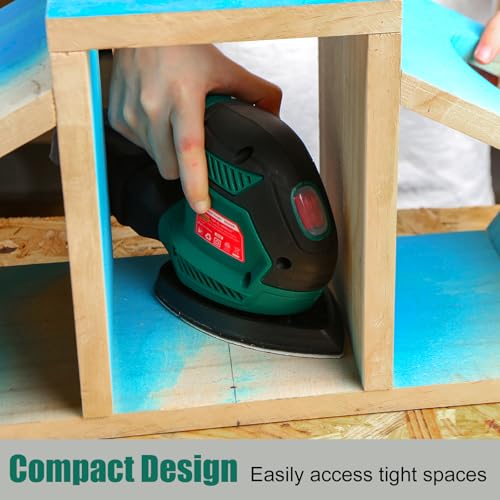
There are a lot of sanders out there, but for furniture work, you’ll primarily be looking at random orbital and detail sanders. Random orbital sanders, like the SKIL 5” or DEKOPRO 5”, are your workhorses for general surface preparation and smoothing. They move in both circular and oscillating patterns, minimizing swirl marks. Detail sanders (like the TOVPADE or HYCHIKA) are for corners, curves, and intricate areas. Don’t try to force a random orbital into a tight spot – you’ll end up with uneven results and a frustrated afternoon. Consider getting both, or a multi-function model like the Hammerhead, if you tackle diverse projects.
Variable Speed Control is Key
Variable speed control isn’t just a nice-to-have; it’s essential for furniture sanding. Different wood types and finishes require different speeds. Higher speeds are great for rapid material removal on softer woods, but can quickly cause burn-through on hardwoods or delicate veneers. Lower speeds offer more control and are ideal for finishing coats and preventing swirl marks. Look for a sander with a wide range of speeds, like the DCA with its 6 variable speeds, allowing you to fine-tune the process.
Here’s how to think about speed settings:
- Rough Stock: High speed (8,000 – 12,000 OPM) for quick leveling.
- Between Coats: Medium speed (4,000 – 8,000 OPM) for light abrasion and adhesion.
- Final Finish: Low speed (2,000 – 4,000 OPM) for smoothing and polishing.
- Veneer: Always start low and increase gradually to avoid damage.
A good rule of thumb: when in doubt, start with a lower speed and gradually increase it until you achieve the desired results. It’s much easier to add speed than to fix damage from going too fast.
Dust Collection & Ergonomics
Furniture sanding creates fine dust, and breathing that in isn’t good for anyone. A good dust collection system is absolutely critical. While most sanders come with a dust bag, consider a model with a dust port that can connect to a shop vac (the DEWALT 5-Inch has this feature). Beyond the health aspect, efficient dust collection also improves visibility and prevents the dust from gumming up the sandpaper. Equally important is ergonomics. You’ll likely be sanding for extended periods, so a comfortable grip and balanced weight distribution are vital. If you are planning on shaping pieces with a band saw for curved cuts, remember to sand those curves as well! The BLACK+DECKER Detail Sander highlights a “comfort grip” as a key feature, and that’s a good indicator of a well-designed tool.
If you’re looking to tackle larger furniture refinishing projects, you might also want to check out our guide to the best sander for refinishing furniture.
Sander for Furnitures Compared
Here’s a comparison of key specifications for sanders suitable for furniture projects.
| Product Name | Motor Amps | Max OPM | Variable Speed | Sandpaper Included | Dust Collection | Best For |
|---|---|---|---|---|---|---|
| SKIL 5” Random Orbital Sander | 2.8 | 13,000 | Yes | No | Dust Container | Best Overall |
| TOVPADE 54PCS Micro Sander Kit | N/A | N/A | No | 54 pcs | N/A | Best for Precision Detailing |
| DEKOPRO 5″ Random Orbital Sander | 2.5 | 14,000 | 6 | 16 pcs | Dust Bag | Best for Fine Finishing |
| HYCHIKA Detail Sander 14,000 OPM | 1.6 | 14,000 | No | 12 pcs | Dust Bag | Best Compact Detail Sander |
| DEWALT 5-Inch Orbital Sander Kit | 3.0 | 12,000 | N/A | No | Dust Port | Best Budget Friendly |
| BLACK+DECKER Detail Sander BDEMS600 | 1.2 | 16,000 | N/A | No | Dust Canister | Best for Tight Corners |
| DCA 3.0 AMP Random Orbital Sander | 3.0 | 12,000 | 6 | 10 pcs | Dust Bag | Best Mid Range |
| THINKLEARN Detail Sander | 1.2 | 13,000 | N/A | 15 pcs | Dust Box/Vacuum | Best for Beginners |
| Hammerhead Multi-Function Detail Sander | 1.4 | 12,000 | N/A | N/A | Dust Box/Vacuum | Best Value Pack |
Frequently Asked Questions
What grit sandpaper should I start with for furniture sanding?
Generally, begin with 80-grit to remove old finishes or level uneven surfaces. Then, progress through 120-grit, 180-grit, and finally 220-grit for a smooth, paint-ready surface; the specific grits depend on the wood and the finish you’re aiming for.
Can I use a belt sander on furniture?
While possible, a belt sander is usually too aggressive for most furniture projects. It removes material quickly, increasing the risk of gouging or uneven sanding, especially on veneers or softer woods.
How do I prevent swirl marks when sanding furniture?
Using a random orbital sander is the best first step, as its random motion minimizes swirls. Also, avoid applying too much pressure and always move the sander with the grain, not against it.
What’s the difference between a detail sander and a corner sander?
They’re often used interchangeably, but a detail sander typically has a triangular or pointed head for reaching tight spots. A corner sander focuses specifically on 90-degree angles, while a detail sander for tight corners is more versatile for various shapes.
Are more expensive sanders always better for furniture work?
Not necessarily. While higher-priced models often have features like better dust collection and vibration reduction, a mid-range sander with variable speed control and good owner reviews can deliver excellent results for most furniture projects.
The Bottom Line
Ultimately, choosing a sander for furniture comes down to balancing control with convenience. You can spend a lot of money on a top-of-the-line model with all the bells and whistles, or you can get excellent results with a simpler, more focused tool. For the best overall performance and versatility across a wide range of furniture projects, I recommend the SKIL 5” Random Orbital Sander.
If you have very specific needs, there are other excellent options. For detailed work and tight spaces, the TOVPADE 54PCS Micro Sander Kit is a fantastic value. Those looking for a budget-friendly option without sacrificing too much quality should seriously consider the DEWALT 5-Inch Orbital Sander Kit.
Don’t get too hung up on specs like amperage or OPM. Those numbers matter, but they don’t tell the whole story. Focus on finding a sander that feels comfortable in your hand, offers the features you need for your projects, and, most importantly, helps you achieve a smooth, professional finish. And if you’re planning on cutting intricate designs, a scroll saw for intricate work can complement your sanding beautifully.
