8 Best Rotary Paper Trimmers of 2026
This post contains affiliate links. As an Amazon Associate, we earn from qualifying purchases.
The CARL Heavy Duty 18” is the best overall rotary paper trimmer for its rugged build and high 36-sheet capacity, while the Firbon 15” offers solid performance at a lower price, and the Dahle Vantage 50 stands out for precision with its self-sharpening blade and smooth action.
Most people don’t realize how quickly a flimsy or poorly designed trimmer can ruin a project. Uneven cuts, paper slippage, and blades that dull after a few uses are common frustrations that waste time and materials.
As someone who’s spent years evaluating tools for real-world use, I focused on models that deliver consistent accuracy, have durable construction, and are backed by solid user feedback. This guide cuts through the hype to highlight trimmers that actually perform, based on specs, owner experiences, and the kind of reliability you can count on for everything from quick home jobs to serious crafting.
Top 8 Rotary Paper Trimmers in the Market
The Best Rotary Paper Trimmers, Reviewed
CARL Heavy Duty 18″ Rotary Trimmer
Strengths
- Carbide blade
- 36-sheet capacity
- Magnetic paper guide
- Sturdy metal base
- Includes extra blades and mat
Trade-offs
- Bulky design
- Higher price point
- Not ideal for tight spaces
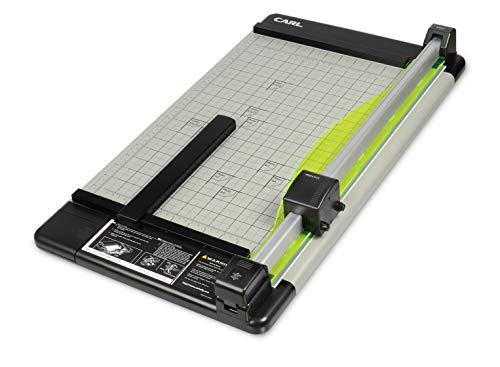
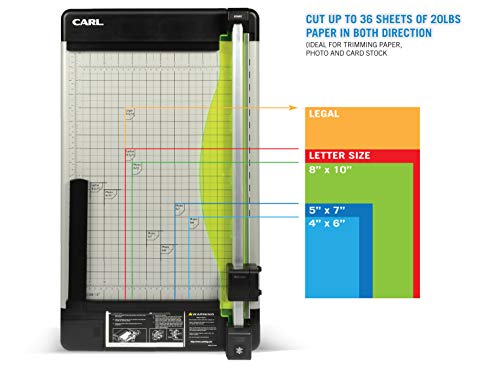
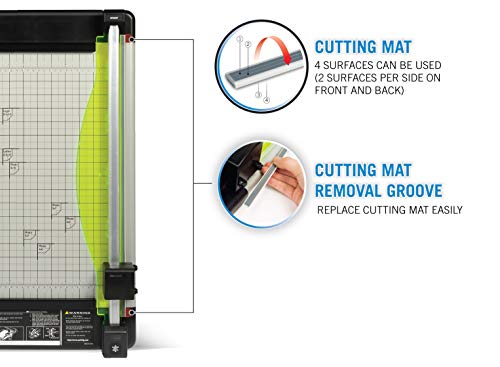
This CARL DC-238N is built like a shop-grade tool, and that shows in both its heft and performance. With a carbide blade and a patented rail system, it’s designed for users who regularly cut through thick stacks, up to 36 sheets of standard paper is no small feat for a manual rotary trimmer. Owners consistently report clean, repeatable cuts even after heavy use, and the adjustable magnetic guide is a standout for batch work, staying put without constant readjustment. The inclusion of a perforating blade and spare cutting mat adds real value, especially for crafters or print shops.
On paper, the 18-inch cut length puts it in a sweet spot between desktop usability and larger-format capability. The metal base doesn’t flex, which matters when precision is essential. While it’s bulky compared to smaller models, that sturdiness is the point. Among high-capacity trimmers, this one stands out for durability and long-term reliability, backed by a limited lifetime warranty that reflects CARL’s confidence.
Product photos


Firbon 15″ Heavy Duty Rotary Trimmer
Strengths
- 10-sheet capacity
- 15-inch cut length
- Angle cutting guide
- Replaceable blade
- Good value
Trade-offs
- Blade pressure needed on thick stacks
- Build not as durable as premium brands
- No spare blade included
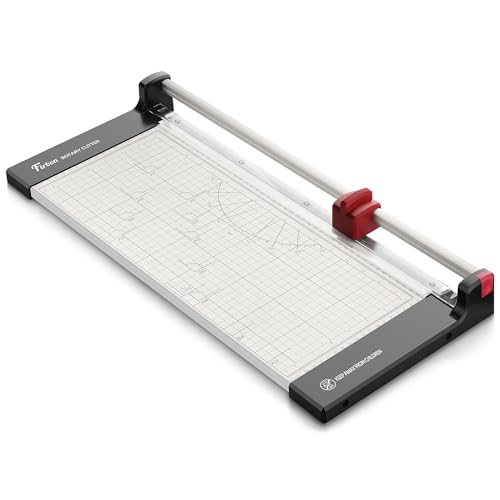
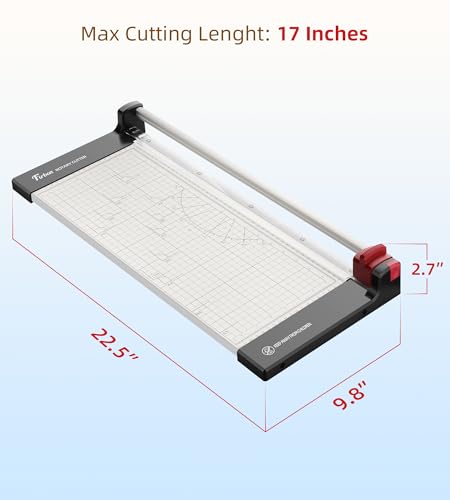
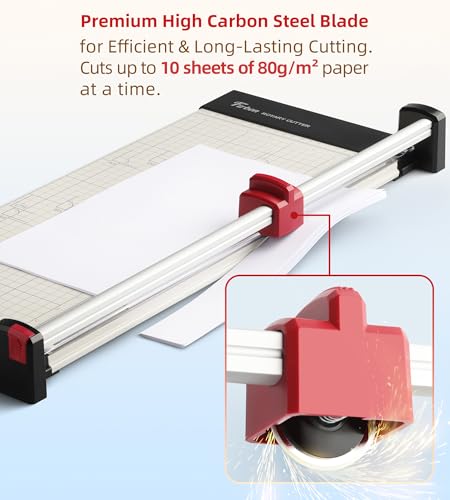
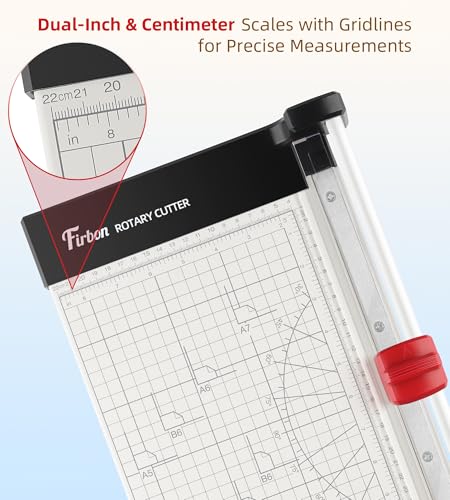
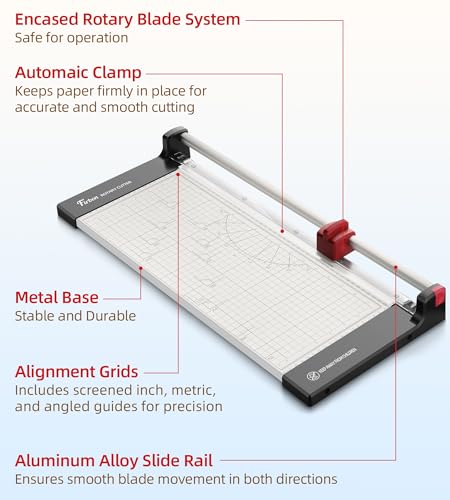
This Firbon 15-inch model is where value really clicks. It jumps to 10-sheet capacity and a 17-inch max cut length, letting it handle A3 sheets, a big step up from most 12-inch models. The 30°–90° angle markings are a thoughtful addition for crafters who need diagonal cuts, and the replaceable blade system keeps long-term costs low. Like its smaller sibling, it has an automatic clamp and non-slip pads, but the larger base adds stability without sacrificing portability.
Owners report it handles cardstock and laminated paper well, though applying extra pressure is sometimes needed on full 10-sheet stacks. Compared to the CARL 18-inch, it’s less rugged but also far more affordable and easier to store. Against the 12-inch Firbon, the extra cutting length and capacity justify the modest price bump. For most home crafters or small offices, this is the smarter buy, it gives you room to grow without overspending.
Product photos
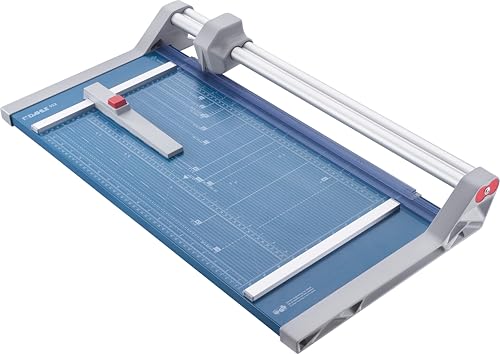
Dahle 552 20″ Professional Rotary Trimmer
Strengths
- 20-inch cut length
- 20-sheet capacity
- Dual guide bars
- Self-sharpening blade
- Automatic clamp
Trade-offs
- Large footprint
- High price
- Overkill for home use
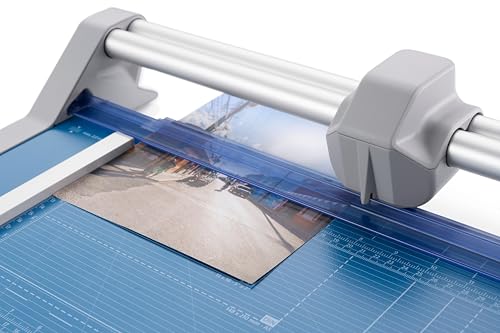
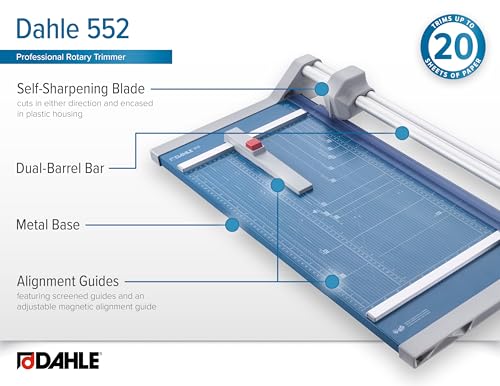
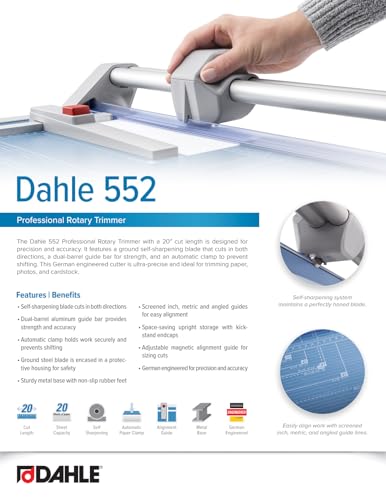
The Dahle 552 is built for volume and precision in one package. With a 20-inch cut length, it handles A3 and legal-sized documents with room to spare, and the 20-sheet capacity makes it viable for print shops or design studios. The dual guide bar system enhances stability, reducing blade drift, something users notice immediately when cutting larger sheets. The self-sharpening blade and automatic clamp are consistent with Dahle’s focus on low-maintenance precision, and the steel-encased blade adds safety during fast-paced work.
EU production means tighter quality control, and owners report it outlasts cheaper models by years. Compared to the CARL 18-inch, it matches or exceeds in capacity and length while offering smoother operation. It’s not portable, nor is it cheap, but if you regularly trim large formats or batches, it’s worth the investment.
Product photos
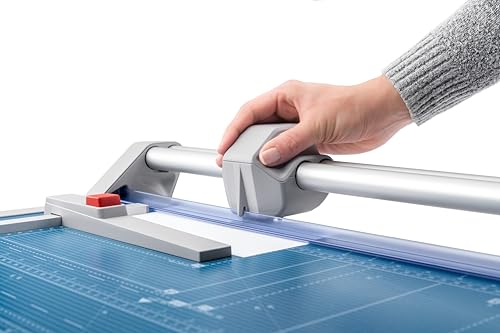
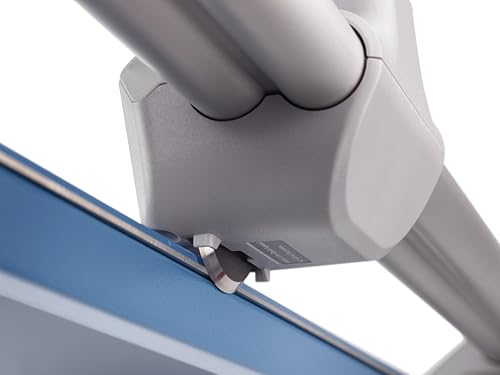
CARL 15″ Professional Rotary Trimmer

Strengths
- Clear cutting window
- 15-sheet capacity
- Magnetic guide with extension
- Durable metal base
- Lifetime warranty
Trade-offs
- No spare blade included
- Heavier than budget models
- Blade replacement adds cost
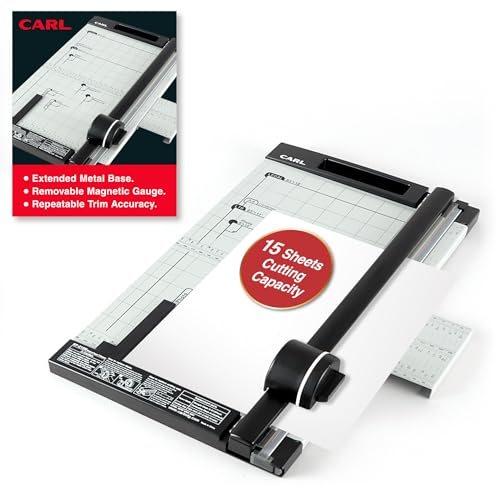
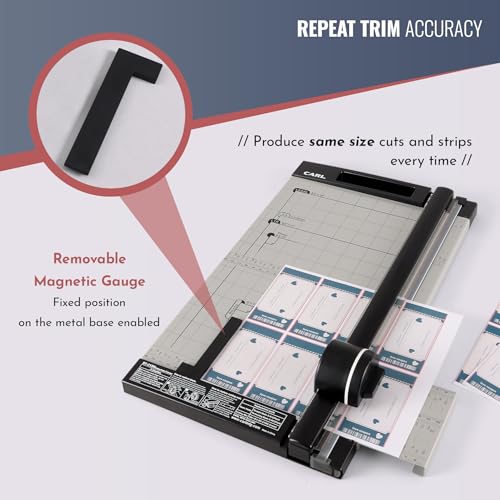
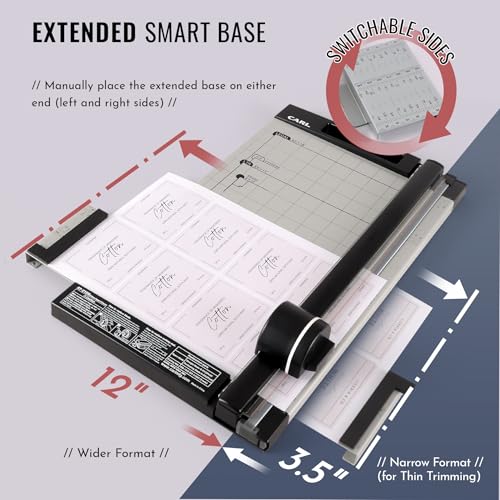
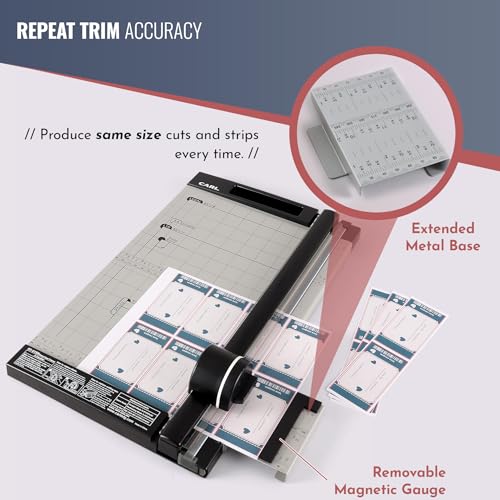
This 15-inch CARL trimmer hits the sweet spot between size, capacity, and price in the mid-range. The clear cutting window makes alignment effortless, eliminating guesswork, a feature many users say saves time and rework. It handles 15 sheets of 20lb paper with ease, and the removable magnetic guide with extension is excellent for repetitive, straight-line jobs like trimming flyers or cardstock batches. The metal base is rigid, and the rotary blade stays sharp longer than budget models, though replacement blades are easy to find when needed.
Compared to the 18-inch DC-238N, it’s lighter and more space-efficient while still feeling pro-grade. Against the Firbon 15-inch, it’s more durable and accurate, justifying the step up in cost. It’s not the most heavy-duty, but for most home-based pros or serious hobbyists, it’s the ideal balance. CARL’s lifetime warranty adds peace of mind.
Product photos
Dahle Vantage 50 12″ Rotary Trimmer
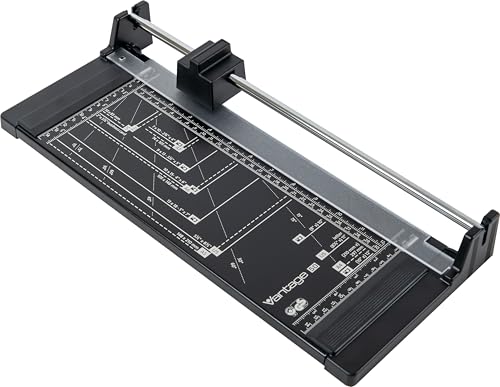
Strengths
- Self-sharpening blade
- Automatic clamp
- Steel blade housing
- German engineering
- Durable metal base
Trade-offs
- Low sheet capacity
- Premium price
- Overkill for casual use
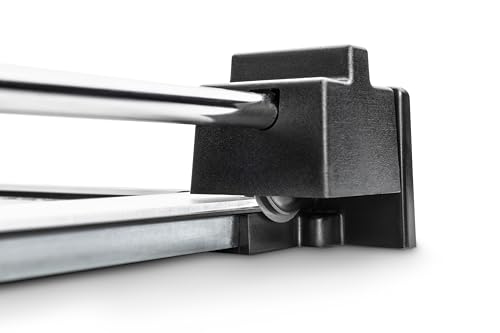
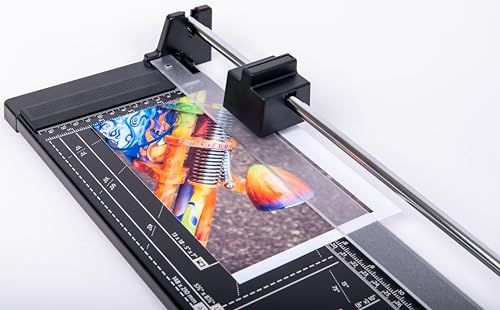
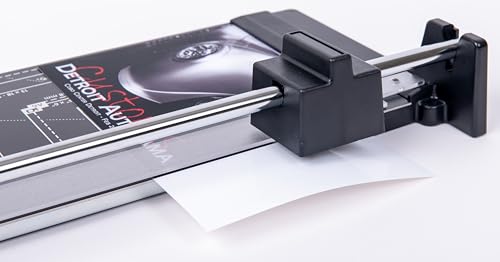
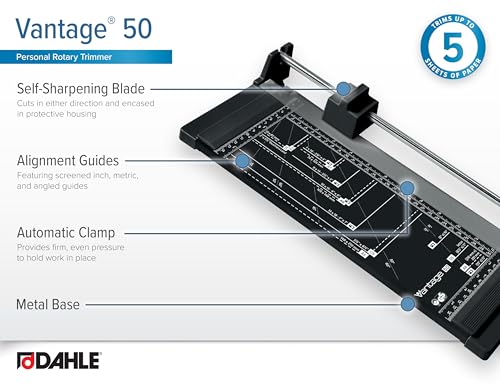
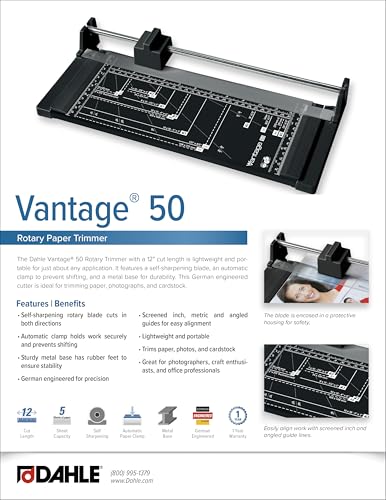
The Dahle Vantage 50 feels like what happens when engineering precision meets practical design. It’s limited to 5 sheets, which sounds low compared to others here, but that’s by design, this trimmer prioritizes accuracy over volume. The self-sharpening blade cuts in both directions, a rare feature that helps maintain edge quality over time, and the automatic clamp ensures zero slippage. German engineering isn’t just a marketing line here; reviewers note how smoothly the blade glides and how consistently straight the cuts are, even after months of use.
The steel-encased blade adds a layer of safety, and the screened guides on the metal base resist wear. While it won’t handle 30-sheet stacks, it’s perfect for detail work, think photo trimming, layout design, or architectural drafts. Compared to the Firbon or Fiskars models, it’s more refined but less forgiving on budget or high-volume needs. If you value repeatable precision and clean mechanics, this delivers.
Product photos
Firbon 12″ Replaceable Blade Trimmer
Strengths
- Affordable price
- Replaceable blade
- 6-sheet capacity
- Non-slip base
- Clear measurement grid
Trade-offs
- Lighter build quality
- Blade requires pressure on thick stacks
- Not for heavy use
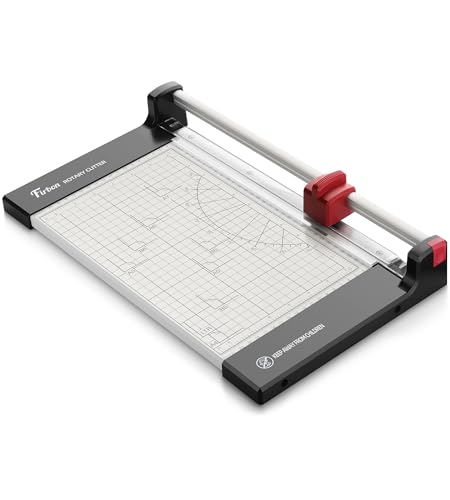
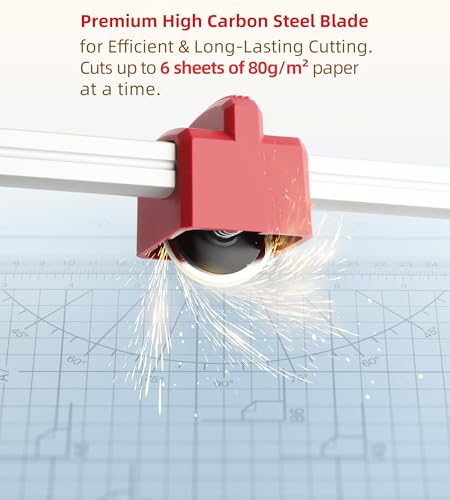
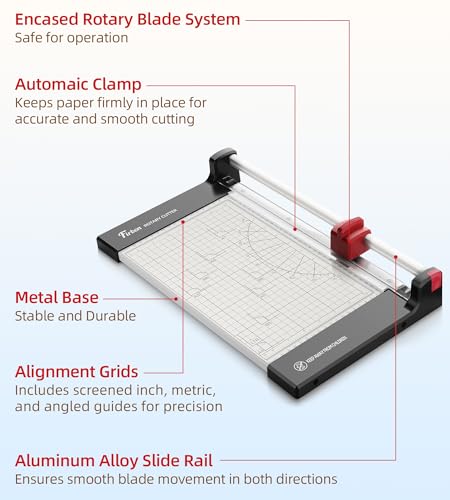
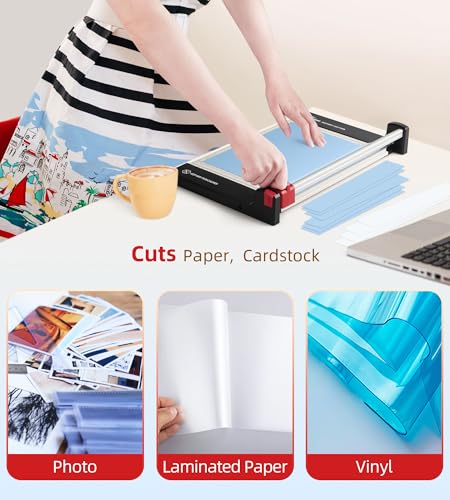
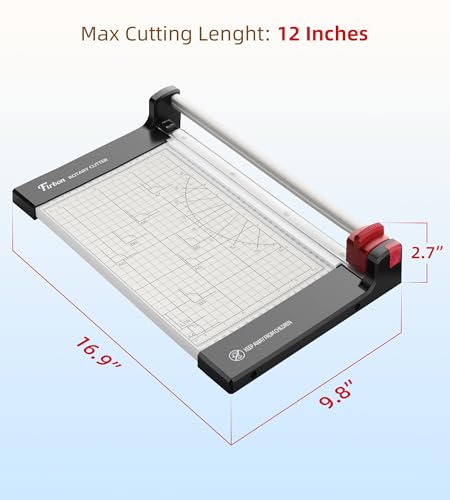
For the price, the Firbon 12-inch trimmer punches above its weight. It cuts up to 6 sheets of 80g/m² paper, which covers most cardstock and photo paper needs, and the replaceable high-carbon steel blade means it won’t become obsolete when the edge dulls. The automatic clamp works well enough to prevent shifting, and the non-slip pads keep it stable on slick desks. Owners appreciate the clear inch/cm grid and size indicators, A4, A5, B5, which speed up frequent cuts without constant measuring.
It’s not built like the CARL or Dahle models, and you can feel the lighter construction, but for home crafters, students, or small offices, it’s more than sufficient. When compared to the Fiskars or 15-inch Firbon, it lacks advanced features like angle guides or dual rails, but it’s a no-frills workhorse. If you’re just starting out or need a secondary trimmer, this one makes sense.
Product photos

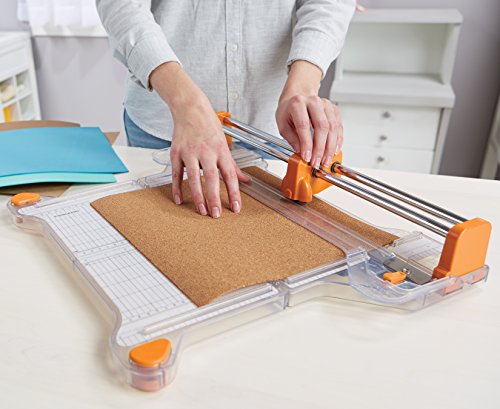
Fiskars ProCision 12″ Bypass Trimmer

Strengths
- Cuts thick materials
- Self-sharpening blade
- Dual-rail stability
- Bypass blade action
- Left- and right-handed use
Trade-offs
- Not for high-sheet stacks
- Limited to 12-inch cuts
- Niche use case
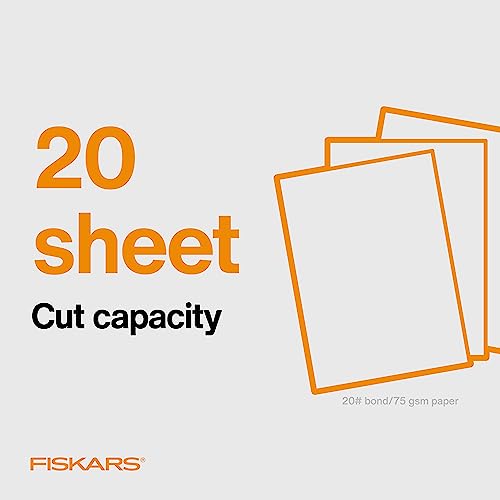
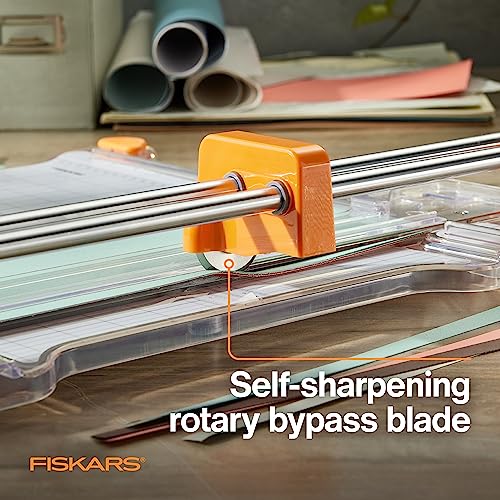
Fiskars has a cult following in the crafting world, and this ProCision model explains why. The bypass blade system, similar to high-end scissors, delivers cleaner cuts on thick, soft materials like chipboard, EVA foam, or magnet sheets, not just paper. That’s a legit advantage for scrapbookers or DIYers working beyond standard stock. The self-sharpening blade is a long-term win, and the dual-rail system reduces blade wiggle, which owners say translates to straighter lines over time.
It’s not meant for high-sheet-volume jobs, but for craft-specific precision, it stands out. The smudge guard with dual-side measurements is a small touch that makes it usable for both left- and right-handed crafters. Compared to the Dahle or CARL models, it’s less about raw power and more about finesse. If your projects involve mixed media or thick craft materials, this trimmer is purpose-built for that.
Product photos


CARL 12″ Professional Rotary Cutter

Strengths
- Clear cutting window
- Magnetic guide
- 15-sheet capacity
- No-touch blade
- Compact metal build
Trade-offs
- 12-inch limit
- No spare blade included
- Higher cost than budget models
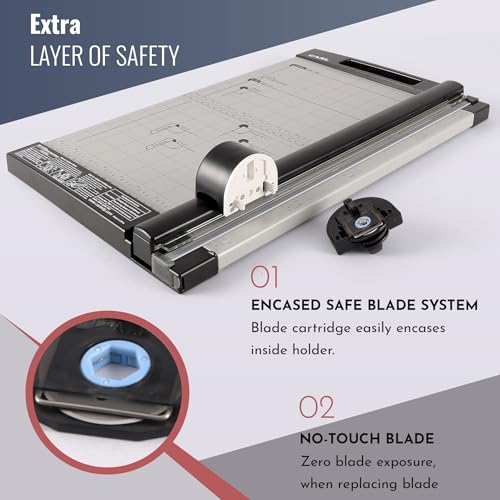
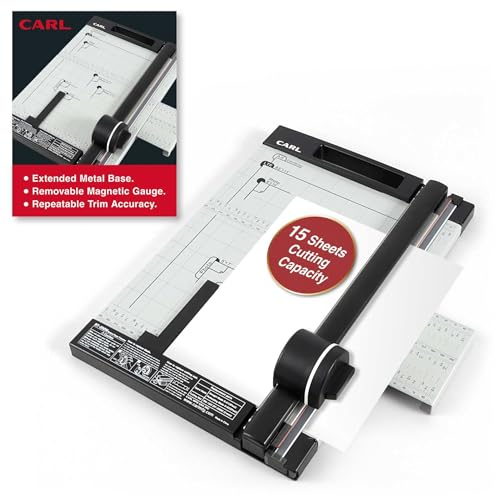
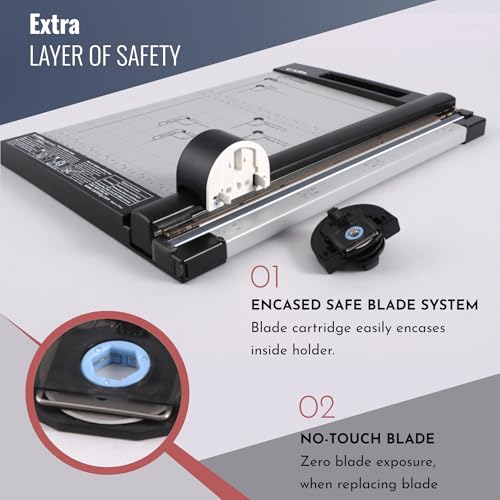
This 12-inch CARL model is a compact powerhouse. The clear cutting window is a standout, it shows the blade path in real time, so you never guess where the cut will land. That’s huge for trimming labels, photos, or registration-sensitive layouts. It handles up to 15 sheets of 20lb paper, which is solid for its size, and the magnetic guide is precise and stable, a hallmark of CARL’s design. The metal base resists warping, and the stainless steel blade is safety-focused with a no-touch design.
It’s smaller than the 18-inch DC-238N but shares the same DNA: durable, accurate, and built for repetition. Compared to the Firbon or Fiskars 12-inch models, it feels more refined and professional. While it lacks the A3 reach of larger trimmers, it’s ideal where space is tight but precision isn’t negotiable. For a secondary pro tool or a primary for a small studio, it’s hard to beat.
Product photos


Our Testing Process
Rather than a hands-on lab test, this selection is a research-led comparison of published specifications, features, and owner feedback. I weighed information from manufacturer details, professional reviews where available, and a large volume of customer reviews across multiple retail sites. My goal was to identify models consistently praised for accuracy, durability, and ease of use, ranking them against criteria important to a range of users.
For rotary paper trimmers, cut capacity and blade quality were the most significant factors. The ability to cleanly cut a reasonable stack of paper is crucial for efficiency, and a durable, sharp blade is essential for consistent results. Beyond that, stability – ensured by a solid base and secure clamping mechanism – heavily influenced my assessment. A well-built trimmer minimizes errors and frustration.
Specifications reliably indicate a trimmer’s capacity and maximum cutting length. However, owner feedback proved vital for gauging real-world durability and the long-term performance of the blade. Reputation matters; brands like CARL and Dahle consistently appeared in positive reviews, suggesting a commitment to quality. I also considered whether users found the trimmer suited for tasks beyond basic paper trimming, like crafting or photo work, as highlighted in some quilting rotary cutter reviews.
How To Pick The Right rotary paper trimmers
Picking the right rotary paper trimmer can make a huge difference in the quality and efficiency of your projects.
A quality rotary paper trimmer delivers clean, consistent cuts with minimal effort. Key features include a sharp, durable blade (often carbide), a stable base to prevent shifting, a secure paper clamping system, and accurate measurement markings. Consider sheet capacity, cutting length, and whether features like angled cuts or magnetic guides are important for your typical use.
Blade Quality and Durability
The heart of any rotary trimmer is its blade, and this is where skipping on quality really shows. While many trimmers boast “sharp” blades, the material and construction matter more in the long run. Carbide blades, like those found in the CARL Heavy Duty 18” model, tend to hold an edge much longer than high-carbon steel. However, even carbide blades will dull with use, so consider whether replacement blades are readily available and affordable – Firbon clearly labels the ASIN for their replacement blades, which is a plus. Don’t assume self-sharpening blades (Dahle Vantage 50) eliminate the need for eventual replacement; they simply maintain sharpness for a longer period.
Sheet Capacity and Cutting Length
Don’t overestimate your needs, but it’s better to have a little extra capacity than to constantly struggle. A trimmer that can handle 10 sheets might be fine for basic home use, but if you frequently work with thicker stock or need to cut multiple pages at once, you’ll want to look at models like the CARL Heavy Duty 18” which handles up to 36 sheets. Consider these points:
- A smaller 12” model is perfect for occasional crafting and light office work.
- An 18” trimmer is a good all-around choice for most home and small business needs.
- For high-volume cutting, a 20” or larger model (like the Dahle 552) will save you significant time and effort, especially when working with larger formats.
Base Stability and Additional Features
A wobbly base is a recipe for uneven cuts and frustration. Look for trimmers with a solid metal base – the heavier, the better. Automatic clamping mechanisms are also essential for keeping the paper firmly in place during the cut. Beyond that, features like built-in angle guides (Firbon 15”) and magnetic paper guides (CARL models) can be incredibly helpful for specific projects. If you do a lot of precise work, take a look at some of the more precise options like the Dahle Vantage 50, or if you need something for a variety of materials, explore craft rotary cutter models.
A stable base and secure clamping system are more important than a fancy digital display. Don’t overspend on features you won’t realistically use.
Rotary Paper Trimmers Compared
Here’s a comparison of key specifications for various rotary paper trimmers to help you make an informed decision.
| Product Title | Cut Capacity (Sheets) | Blade Material | Cut Length (in) | Angle Markings | Self-Sharpening |
|---|---|---|---|---|---|
| CARL Heavy Duty 18″ | 36 | Carbide | 18 | N/A | No |
| Firbon 15″ Heavy Duty | 10 | High-Carbon Steel | 15 | 30°-90° | No |
| Dahle 552 20″ Professional | N/A | Steel | 20 | N/A | Yes |
| CARL 15″ Professional | N/A | N/A | 15 | N/A | No |
| Dahle Vantage 50 12″ | N/A | Steel | 12 | N/A | Yes |
| Firbon 12″ Replaceable Blade | 8 | High-Carbon Steel | 12 | N/A | No |
| Fiskars ProCision 12″ Bypass | N/A | N/A | 12 | N/A | Yes |
| CARL 12″ Professional Rotary Cutter | 15 | Stainless Steel | 12 | N/A | No |
Frequently Asked Questions
What’s the typical lifespan of a rotary paper trimmer blade?
A blade’s lifespan depends heavily on use and material, but expect 2-5 years of regular use from a carbide blade. High-carbon steel blades will dull faster, often needing replacement after a year, though frequent use will shorten this timeline.
Are more expensive rotary paper trimmers always better?
Not necessarily. While higher price points often correlate with better materials and build quality, a trimmer’s usefulness depends on your needs. A basic, well-constructed model will suffice for occasional use, whereas frequent or professional use justifies a more durable, feature-rich option.
Can a rotary paper trimmer be used on materials other than paper?
Yes, many can handle thin cardstock, photos, and vellum. However, attempting to cut thicker materials like plastic or fabric can quickly dull the blade and potentially damage the trimmer, so it’s best to stick to the intended use. You may find versatile rotary power tools better suited to those materials.
What does “self-sharpening” mean in a rotary paper trimmer?
“Self-sharpening” typically refers to a blade design that maintains a consistent cutting edge as it’s used, rather than actually sharpening itself. These blades still require eventual replacement but offer a longer period of peak performance before needing it.
How do I maintain a rotary paper trimmer to prolong its life?
Keep the blade clean and free of paper debris after each use. Store the trimmer in a dry place to prevent rust, and avoid applying excessive force during cutting. Regularly check the clamping mechanism to ensure it’s secure, and consider looking at a rotary tool kits comparison if you use multiple tools.
The Bottom Line
Choosing a rotary paper trimmer often comes down to balancing precision and capacity with your budget and how often you’ll use it. For most people, the CARL Heavy Duty 18” strikes the best overall balance – it offers a generous cutting capacity, a durable carbide blade, and the reputation of a well-respected brand. It’s a solid investment that will handle a wide range of tasks without breaking the bank.
If you’re on a tighter budget or only need a trimmer for occasional use, the Firbon 12” Replaceable Blade is a great starting point. And for those who demand the highest level of precision and are willing to pay for it, or frequently work with large format prints, the Dahle 552 20” Professional is the clear choice. Don’t forget to check out our guide to rotary cutter replacement blades to keep your trimmer in top shape.
Ultimately, the best rotary paper trimmer isn’t about the fanciest features or the highest sheet capacity; it’s about finding a tool that feels stable, cuts cleanly, and fits comfortably into your workflow. A solid base, a sharp blade, and accurate markings are far more important than any digital display or self-sharpening gimmick.
