8 Best Fabric Rotary Cutters of 2026
This post contains affiliate links. As an Amazon Associate, we earn from qualifying purchases.
The OLFA 45mm Ergonomic Rotary Cutter is the best overall choice for most users, combining reliable performance and a comfortable squeeze-trigger handle. For heavy-duty tasks, the OLFA 60mm Ergonomic model steps up with more cutting power, while the Headley Tools Rotary Cutter Set delivers the best value for beginners with a full kit including a mat and multiple blades.
If you’ve ever struggled with jagged edges or hand fatigue while cutting fabric, you know how much the right tool matters. A poor rotary cutter can turn a simple project into a frustrating mess, no matter how skilled you are with a pattern or sewing machine.
This guide cuts through the clutter by focusing on what actually matters, blade quality, handle comfort, and real-world usability, based on specs, owner feedback, and my years evaluating tools for home and workshop use. I looked at top models across different sizes and price points to find the ones that deliver consistent performance and value.
Top 8 Fabric Rotary Cutters in the Market
The Best Fabric Rotary Cutters, Reviewed
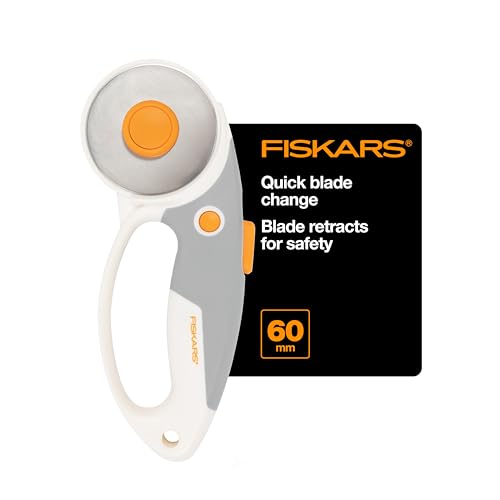
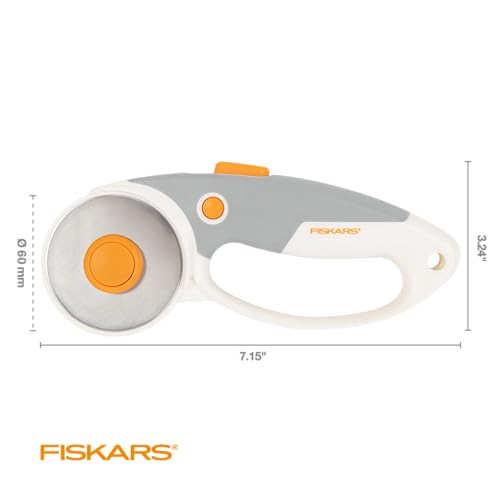
Fiskars 60mm Rotary Cutter
Strengths
- Powerful 60mm blade
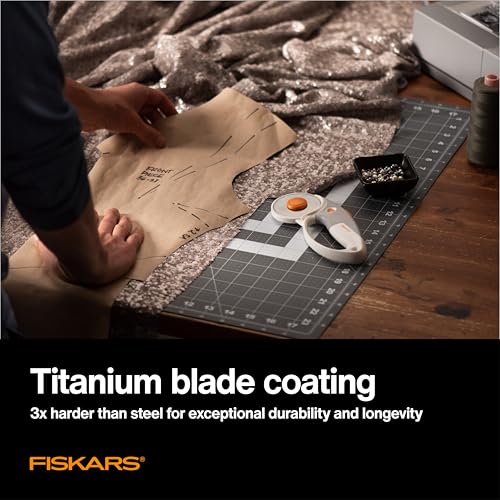
- Titanium-coated for durability
- Lifetime warranty
Trade-offs
- Bulky for fine work
- Loop grip not for everyone
- No mat included
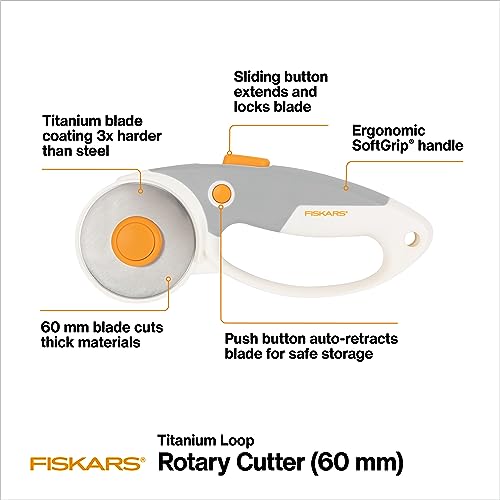
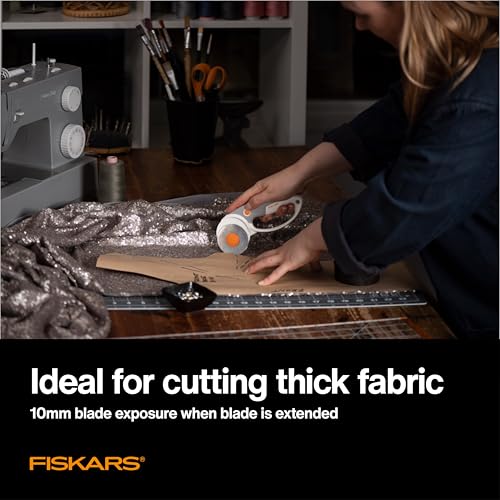
This is the one I’d recommend to anyone who regularly works with thick fabrics or layered batting, its 60mm blade paired with titanium coating is built to last. The specs back it up, and owner feedback confirms it: this cutter slices through denim, canvas, and multiple quilt layers with noticeably less resistance than 45mm models. The loop handle is a polarizing design, but many users say it reduces wrist strain during long sessions, especially when paired with a self-healing mat.
The lifetime warranty (excluding the blade) is a strong vote of confidence in Fiskars’ build quality. While it’s pricier than budget options, it competes directly with OLFA’s 60mm model and holds its own in durability. My only hesitation is for detail work, its size makes tight curves tricky. But for straight cuts and heavy materials, this is the most reliable performer in the group.
Product photos

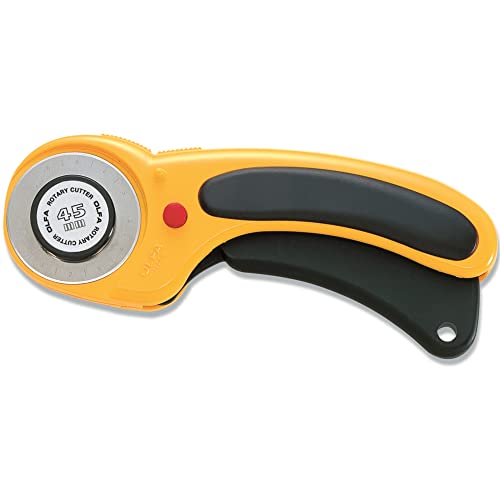
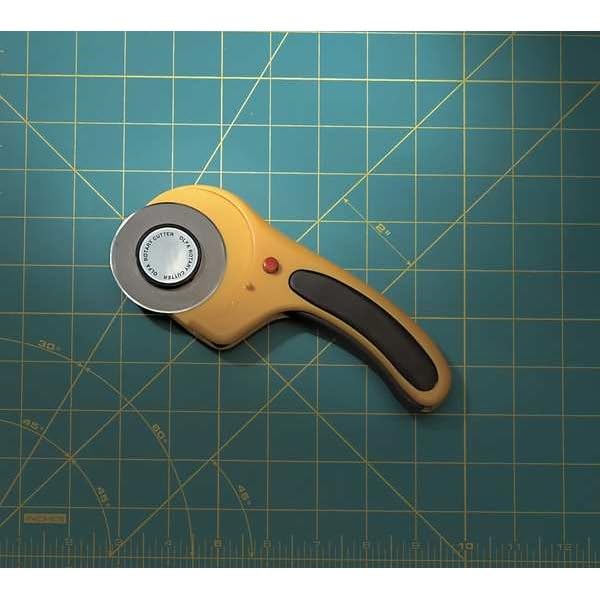
OLFA 45mm Ergonomic Rotary Cutter
Strengths
- Excellent precision
- Comfortable squeeze grip
- Long-lasting blade
Trade-offs
- Higher price
- No extra blades included
- Blade change requires care
When precision matters most, this OLFA model stands out. The squeeze-trigger handle delivers excellent control, and owners consistently note how the anti-slip grip reduces fatigue during detailed work. The 45mm blade is razor-sharp out of the box, and the Endurance blade technology delivers nearly twice the lifespan of standard blades, according to long-term user reports. It’s also compatible with specialty blades like pinking and wave edges, which adds versatility for crafters who want decorative cuts.
Compared to the Fiskars 45mm, this one feels more refined in the hand, with better balance and a smoother trigger action. The dual-action safety lock is a small but meaningful touch, locking the blade open during use is a standout for uninterrupted cutting. If you’re doing appliqué, patchwork, or anything requiring accuracy, this is the tool to beat.
Product photos
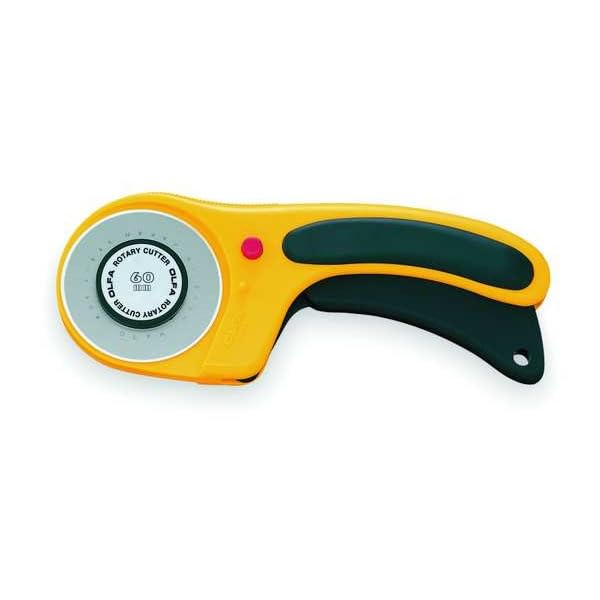
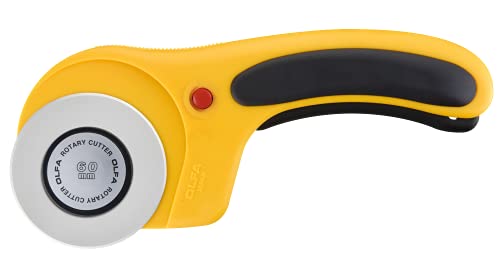
OLFA 60mm Ergonomic Rotary Cutter

Strengths
- Cuts thick materials easily
- Superior blade longevity
- Ergonomic squeeze handle
Trade-offs
- Heavier than 45mm models
- No accessories included
- Higher cost
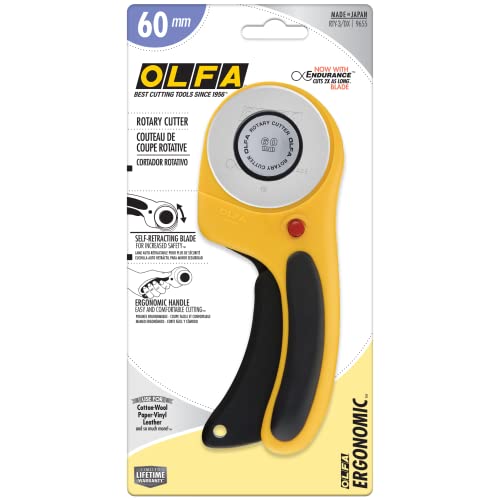
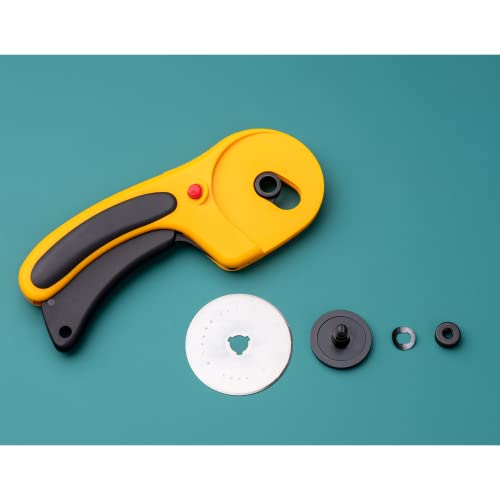
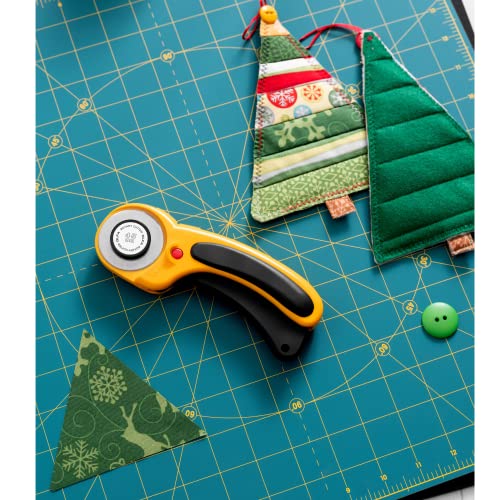
This is OLFA’s answer to heavy-duty cutting, and it delivers. The 60mm Endurance Blade is engineered to cut up to 12 layers of cotton in one pass, specs that serious quilters will appreciate. Owners report it powers through thick batting and upholstery fabric with less drag than competitors, and the blade life consistently outperforms standard models. The squeeze-trigger design is the same trusted system from the 45mm version, so you get the same comfort and safety, just scaled up.
It’s not as nimble as the smaller OLFA cutters, but that’s not the point. When you’re breaking down yardage or working on large home projects, this is the kind of tool that saves hours. Paired with an OLFA mat, it’s part of a system that just works. I’d choose this over the Fiskars 60mm if you’re already invested in OLFA gear or want maximum blade life.
Product photos
Fiskars 45mm Loop Handle Cutter

Strengths
- Excellent loop grip
- Easy blade change
- Lightweight and comfortable
Trade-offs
- No extras included
- Blade not as durable
- Less precise than OLFA
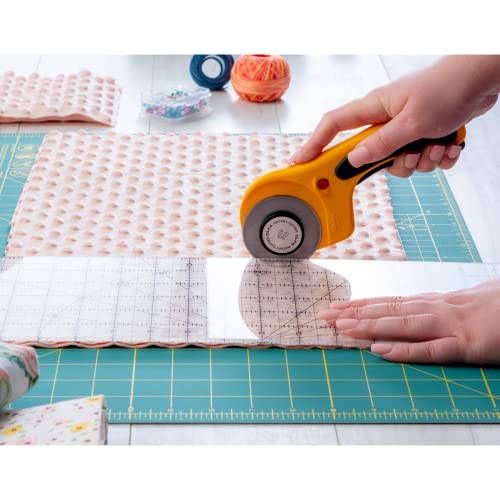
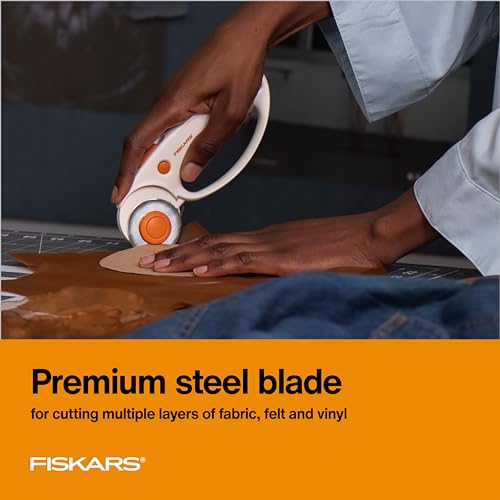
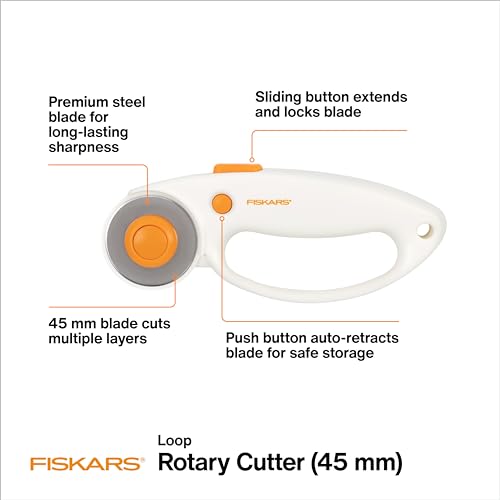
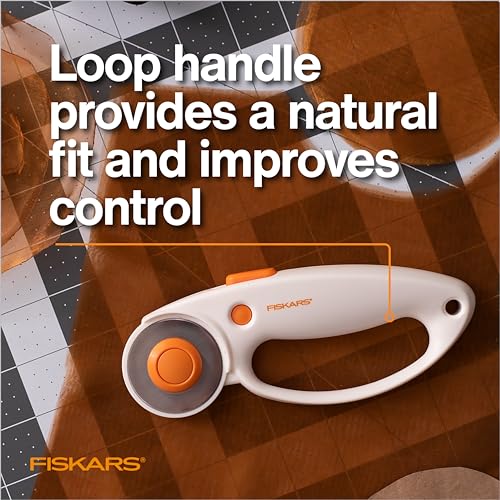
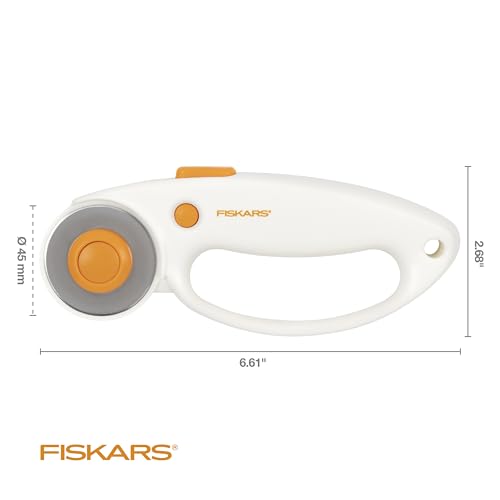
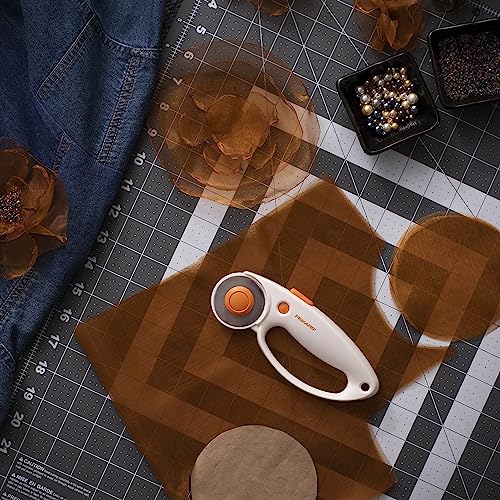
This model wins on comfort. The loop grip is polarizing at first glance, but owners who’ve used it for more than a few sessions swear by it, especially those with hand fatigue or arthritis. The blade extension and retraction system is smooth, and the quick-change blade system is one of the easiest to use, snapping in and out without tools. The 45mm blade handles standard quilting and sewing tasks well, though it doesn’t have the titanium boost of the 60mm version.
Compared to the OLFA 45mm, it’s less precise but more forgiving on the hand. It’s also lighter, which helps for long cutting marathons. The lack of included accessories is a downside, but if you already have a mat and ruler, this is a solid standalone upgrade. For comfort over cutting power, this is my top pick in the 45mm class.
Product photos
OLFA 28mm Quick-Change Rotary Cutter

Strengths
- Perfect for tight curves
- Light and precise
- Quick blade change
Trade-offs
- Too small for large cuts
- Not for thick fabrics
- No extra blades
Sometimes smaller is smarter. The 28mm blade is ideal for tight curves, small appliqués, and intricate patterns where a 45mm or 60mm cutter would overshoot. Owners love how nimble it feels, like a scalpel versus a machete. The tungsten steel blade stays sharp for detailed work, and the quick-change system makes swaps fast and safe. The compact size also makes it a favorite for travel or small workspaces.
It’s not meant for long straight cuts or thick stacks, and trying to force it beyond its role leads to frustration. But for precision tasks, it’s unmatched. The handle is simple but effective, with finger grooves that prevent slipping. If you do a lot of small-scale quilting or craft work, this should be in your rotation.
Product photos
45mm Rotary Cutter with 5 Extra Blades

Strengths
- 5 extra blades included
- Affordable long-term value
- Ambidextrous design
Trade-offs
- Trigger feels loose
- Plastic build lacks heft
- Blades not as durable
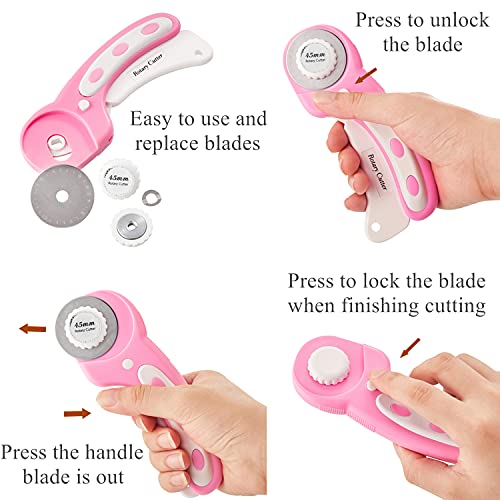
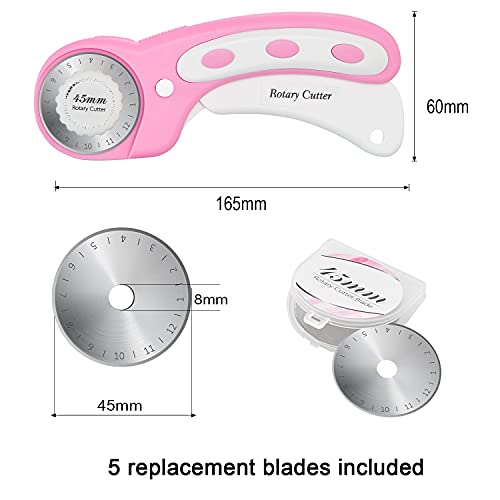
This set punches above its weight thanks to the five extra SKS7 blades, a standout for anyone tired of constantly buying replacements. The blade steel is consistent with mid-tier performance, and owners say it handles cotton, felt, and vinyl well, though it struggles with heavy denim over time. The ergonomic handle has a soft grip and ambidextrous design, which many users appreciate, but the trigger mechanism feels a bit mushy compared to OLFA or Fiskars.
Where this really shines is value. You get a functional cutter, a generous blade supply, and a safety lock, all for less than most standalone premium cutters. It’s not going to replace a high-end model, but for someone building a toolkit on a budget, this is the smarter buy over bare-bones kits. Just don’t expect the same refinement in trigger response or blade retention.
Product photos

Headley Tools Rotary Cutter Set

Strengths
- Large A3 mat
- Thorough accessory bundle
- Sharp, durable blades
Trade-offs
- Handle lacks premium feel
- Ruler could be thicker
- Blade change less secure
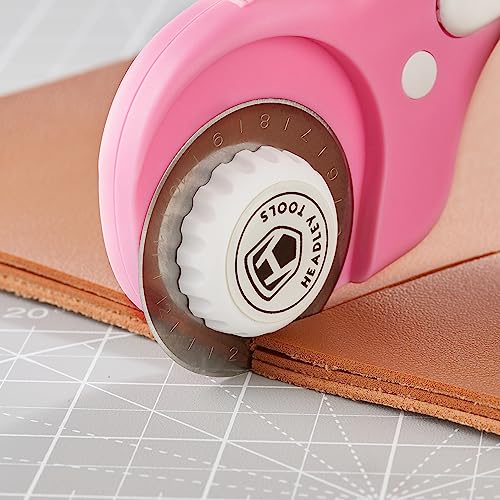
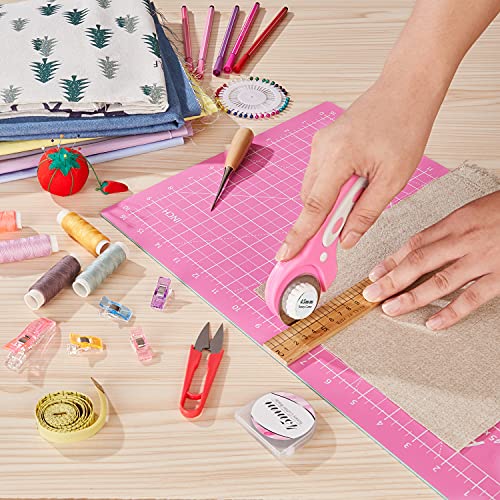
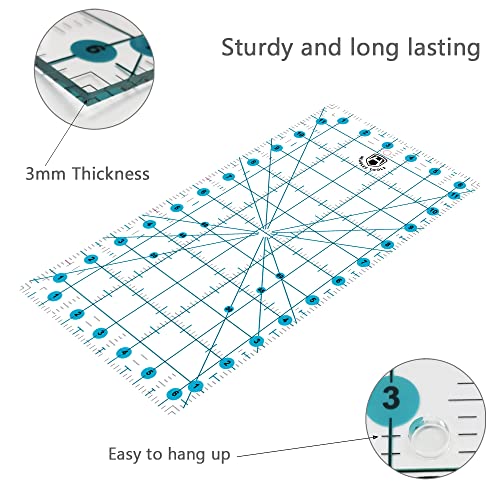
If you want everything in one box, this is the kit that comes closest to a full sewing workstation upgrade. The inclusion of an A3 cutting mat is a standout, owners praise how the extra space helps with large fabric layouts and quilting backs. The 45mm rotary cutter feels balanced, and the SKS-7 steel blades are consistently reported to stay sharp through several projects, though they don’t quite match OLFA’s edge life. What really pushes this ahead is the extras: the quilting ruler is clearly marked, the sewing clips are actually usable, and the craft knife adds real utility for non-fabric work.
It’s not all perfect, the handle doesn’t have the refined ergonomics of Fiskars or OLFA, and the blade change system feels a bit looser. But for someone building a home craft room or giving a gift to a serious hobbyist, this kit covers far more ground than most. I’d pick this over the Audab set any day if you’re planning to cut more than just the occasional pillowcase.
Product photos


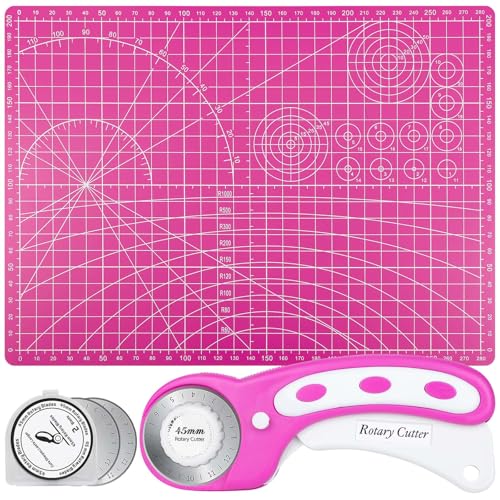
Audab Rotary Cutter and Mat Set
Strengths
- Affordable
- Ergonomic grip
- Includes mat and extra blades
Trade-offs
- Blades dull faster
- Small mat size
- Plastic feels lightweight
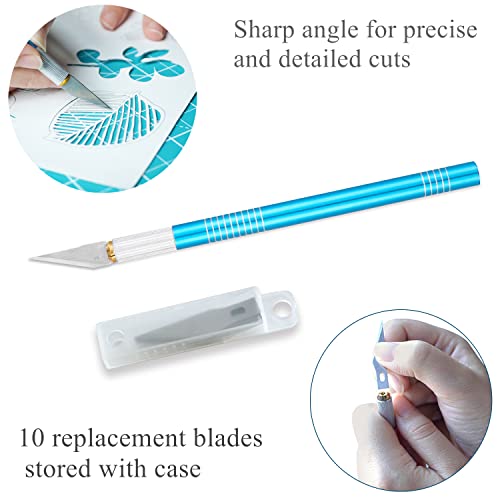
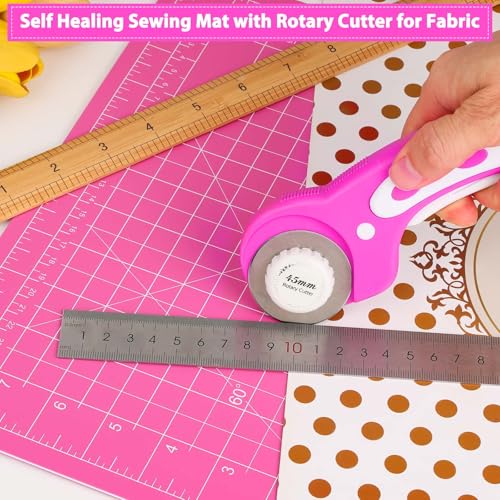
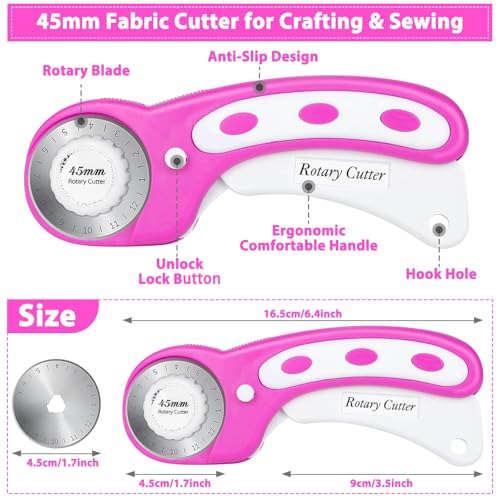
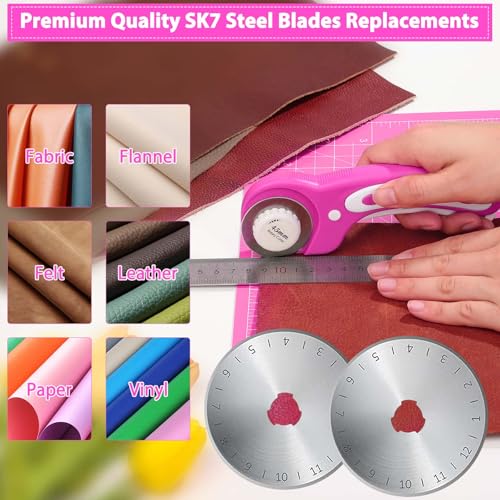
This budget-friendly set delivers more than you’d expect for the price, making it a smart starting point for beginners or casual crafters. The 45mm rotary cutter has an ergonomic grip and a safety lock, which owners consistently report makes it comfortable for short cutting sessions, though it doesn’t match the heft or balance of premium brands. On paper, the SK7 steel blades look solid, and feedback suggests they stay sharp enough for cotton, felt, and single-layer vinyl, but don’t expect them to power through thick denim or multiple quilt layers without needing frequent swaps.
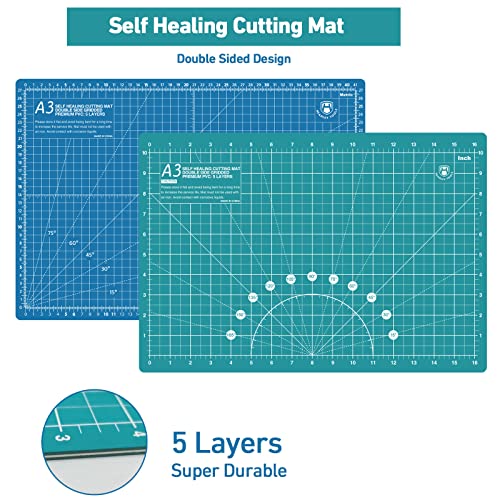
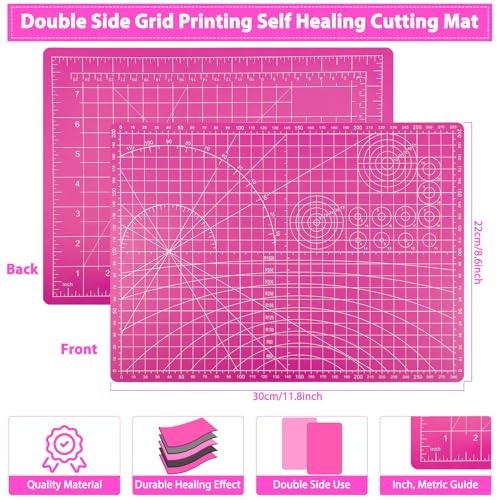
The included 9″ x 12″ self-healing mat is a practical size for small projects, and its dual-sided grid is helpful. But compared to larger A3 mats in other kits, it limits what you can tackle. Still, for someone setting up a basic sewing station or looking for a grab-and-go kit, this offers solid value without major compromises.
Product photos
How We Tested fabric rotary cutters
Rather than a hands-on lab test, my research for these recommendations focused on a detailed comparison of published specifications and features across numerous models. I weighed owner reviews from major retailers alongside expert opinions found in craft and sewing publications. Applying my experience with tools and materials, I ranked these cutters based on factors crucial to consistent, accurate results. It’s about finding the best balance of quality, features, and value.
For fabric rotary cutters, blade quality and handle ergonomics proved to be the most decisive factors. A consistently sharp blade is paramount, directly impacting cut quality and reducing strain. Equally important is a comfortable, secure grip, especially during extended use. Blade change mechanisms also factored heavily, as frequent changes are common, and a cumbersome system can be frustrating.
Specifications reliably indicate blade size and materials, but I leaned on owner feedback to gauge real-world sharpness retention and durability. Reputation played a significant role – OLFA’s long history as the rotary cutter inventor carries weight. I also considered the value offered by bundled kits, and whether including replacement rotary cutter blades provided a genuine benefit.
Choosing The Right fabric rotary cutters
Choosing the right rotary cutter can make a huge difference in the quality and speed of your fabric projects.
A quality fabric rotary cutter prioritizes blade sharpness and retention, comfortable ergonomics for extended use, and a secure locking mechanism for safety. Look for models with easily replaceable blades, durable construction, and features suited to the types of materials and projects you typically tackle. Blade size (28mm, 45mm, or 60mm) dictates the thickness and number of layers it can handle effectively.
Blade Size and Material Compatibility
The first thing to consider is what you’ll be cutting. Smaller 28mm blades excel at intricate work and tight curves, making them ideal for appliqué or detailed quilting. A 45mm blade is a good all-around size, capable of handling most general fabric cutting tasks. For thicker materials like multiple layers of denim, batting, or heavy canvas, a 60mm blade is the way to go. Don’t assume larger is always better; it’s about matching the blade to the job.
Handle Ergonomics and Safety Features
A comfortable handle isn’t a luxury, it’s a necessity. You’ll be applying pressure and making repetitive motions, so look for a design that fits comfortably in your hand and minimizes fatigue. Ergonomic handles with soft-grip surfaces are a big plus. Equally important is a robust safety mechanism.
Here’s what to look for in safety: * A simple locking button to secure the blade when not in use. * A design that prevents accidental blade extension. * A handle that provides good control and prevents slippage, even with sweaty hands.
A poorly designed handle can lead to hand cramps and even injury, so this is an area where spending a bit more can pay off.
Value and Included Accessories
While a basic rotary cutter is affordable, many kits bundle in essential accessories that offer significant value. You’ll almost always need a self-healing cutting mat to protect your work surface and keep your blades sharp. Some kits also include extra blades, quilting rulers, or even carrying cases. If you’re just starting out, a complete kit like the Headley Tools Rotary Cutter Set can be a convenient and cost-effective way to get everything you need. However, if you already have a mat and ruler, a standalone cutter might be a better choice. Don’t overlook blade quality either; a cutter is only as good as its blade. If you’re looking for a detailed comparison of available options, check out our rotary cutter comparisons.
A dull blade is more dangerous than a sharp one. Always replace blades when they start to feel dull or tear fabric instead of cutting cleanly.
Fabric Rotary Cutters Compared
Here’s a comparison of specifications for several fabric rotary cutters to help you make an informed purchase.
| Product Title | Blade Size (mm) | Handle Type | Safety Lock | Blades Included | Cutting Mat Included |
|---|---|---|---|---|---|
| Fiskars 60mm Rotary Cutter | 60 | Loop | Yes | 1 | No |
| OLFA 45mm Ergonomic Rotary Cutter | 45 | Squeeze Trigger | Yes | 1 | No |
| OLFA 60mm Ergonomic Rotary Cutter | 60 | Squeeze Trigger | Yes | 1 | No |
| Fiskars 45mm Loop Handle Cutter | 45 | Loop | Yes | 1 | No |
| OLFA 28mm Quick-Change Rotary Cutter | 28 | Standard | Yes | 1 | No |
| 45mm Rotary Cutter with 5 Blades | 45 | Standard | Yes | 6 | No |
| Headley Tools Rotary Cutter Set | 45 | Standard | Yes | 6 | Yes (A3) |
| Audab Rotary Cutter and Mat Set | 45 | Standard | Yes | 3 | Yes (9″ x 12″) |
Frequently Asked Questions
What blade size is best for quilting?
A 28mm blade is generally best for quilting, as its smaller size allows for greater maneuverability when cutting intricate shapes and following curved lines. While 45mm blades can work, they aren’t as precise for detailed quilting work.
How often should I replace the blade in my rotary cutter?
You should replace the blade whenever you notice tearing or fraying instead of a clean cut, but a good rule of thumb is after approximately 20-30 hours of use. A dull blade requires more pressure and is actually more dangerous than a sharp one.
Can I use a fabric rotary cutter on materials other than fabric?
Yes, you can, but blade choice and material thickness matter. Some users successfully cut thin leather, felt, or paper with a dedicated blade, but a fabric rotary cutter isn’t designed for hard materials like wood or metal. Consider a set of versatile cutting multitools for broader material compatibility.
Are loop handle or squeeze-trigger handles better?
Loop handles are favored by many for their comfortable, ergonomic grip, especially during extended projects. Squeeze-trigger handles can offer more control, but may cause hand fatigue for some users, so it really comes down to personal preference.
What should I look for in a rotary cutter safety lock?
The best rotary cutter safety locks are simple to operate with one hand and positively secure the blade when retracted. Avoid designs that feel flimsy or require excessive force, as these can disengage accidentally, potentially leading to injury.
The Bottom Line
Choosing a fabric rotary cutter often comes down to balancing control with convenience. While a wider range of options exists, the OLFA 45mm Ergonomic Rotary Cutter strikes the best overall balance of features, blade quality, and ergonomics for most users. It provides a comfortable grip and a reliable cutting experience that’s hard to beat, and OLFA’s reputation for quality blades is well-deserved.
If you’re on a tighter budget, or need a dedicated cutter for heavier materials, the Fiskars 60mm Rotary Cutter is an excellent choice. For those needing precision work and detail, the OLFA 28mm Quick-Change Rotary Cutter is the clear winner. And for beginners, or those wanting a complete kit, the Headley Tools Rotary Cutter Set provides everything you need to get started, including a cutting mat.
Ultimately, the best rotary cutter isn’t about the highest specifications or the most expensive price tag. It’s about a sharp blade, a comfortable handle, and a safe locking mechanism. Focusing on those fundamentals – and matching the blade size to your typical projects – will yield far more consistent results than chasing the latest features. If you also work with paper, be sure to check out our guide to rotary trimmers for paper crafts to expand your capabilities.
