
8 Best Rotary Cutters of 2026
This post contains affiliate links. As an Amazon Associate, we earn from qualifying purchases.
The OLFA 60mm Ergonomic Rotary Cutter stands out as the best overall, delivering smooth, precise cuts through thick fabrics with its reliable squeeze trigger and durable build. For beginners or budget-focused crafters, the 45mm Rotary Cutter with 5 Extra Blades offers solid performance and excellent value.
Rotary cutters seem simple, but a poor choice can lead to jagged edges, hand strain, and frustration mid-project. Many buyers don’t realize how much blade size, handle shape, and safety design impact real-world use.
Based on specs, owner feedback, and years of evaluating cutting tools, I focused on sharpness, ergonomics, and long-term usability. This guide cuts through the noise to highlight models that actually perform, whether you’re quilting, sewing, or tackling DIY fabric projects.
Top 8 Rotary Cutters in the Market
The Best Rotary Cutters, Reviewed
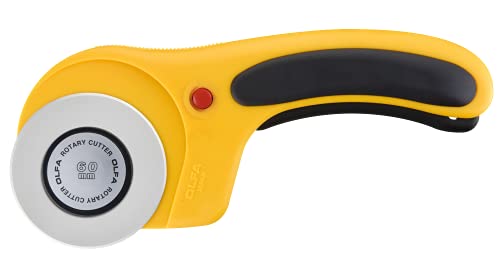
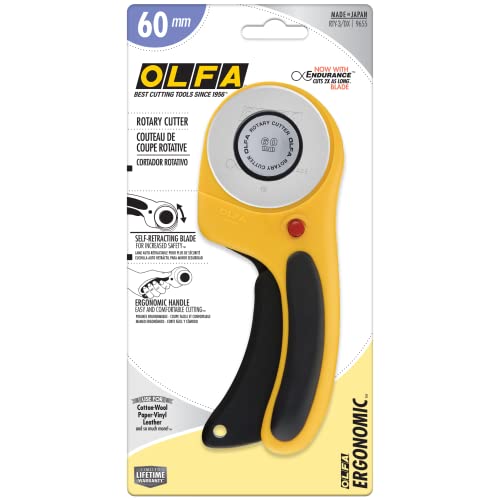
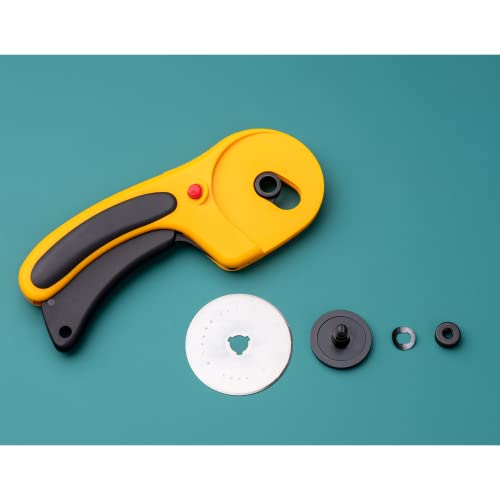
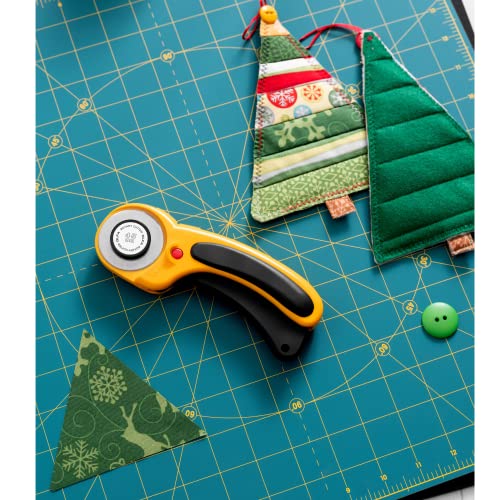
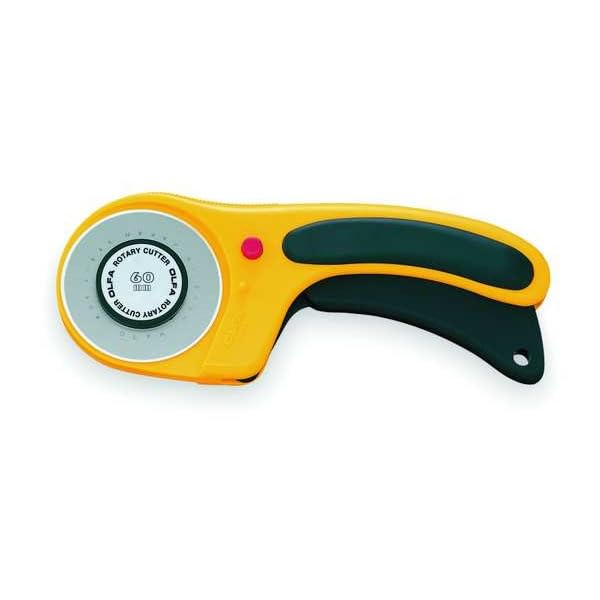
OLFA 60mm Ergonomic Rotary Cutter

Strengths
- Squeeze trigger control
- Dual safety lock
- Cuts 12 fabric layers
- Superior blade life
- Ergonomic rubber grip
Trade-offs
- Higher price point
- Blades cost more
- Heavier than smaller models
When you need to power through thick stacks of fabric or demand consistent precision on long cuts, the OLFA 60mm Ergonomic Rotary Cutter stands out. The squeeze trigger is a game-winner for control and safety, letting you expose the blade only when pressing down, this reduces fatigue and keeps fingers safer during marathon quilting sessions. Owners consistently report getting clean cuts through up to 12 layers of cotton, which is no small feat, and the Endurance Blade (RB60H) lives up to its name with noticeably longer life than standard blades.
OLFA invented the rotary cutter, and that legacy shows in the details. The rubberized grip fits snugly in the hand, and the dual-action safety lock, locking both open and closed, is something more brands should copy. Compared to the Fiskars 60mm, this one feels more refined in hand placement and blade control, even if both tackle thick materials well. For heavy-duty work without sacrificing accuracy, this is my go-to pick in the 60mm class.
Product photos
Fiskars 60mm Titanium Rotary Cutter
Strengths
- Titanium-coated durable blade
- Lifetime warranty
- Loop handle for control
- Easy blade snap-in
- Good for thick fabrics
Trade-offs
- No dual safety lock
- Heavier than OLFA
- Less refined grip
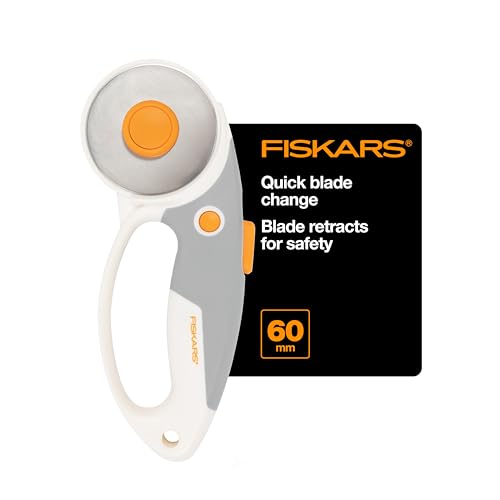
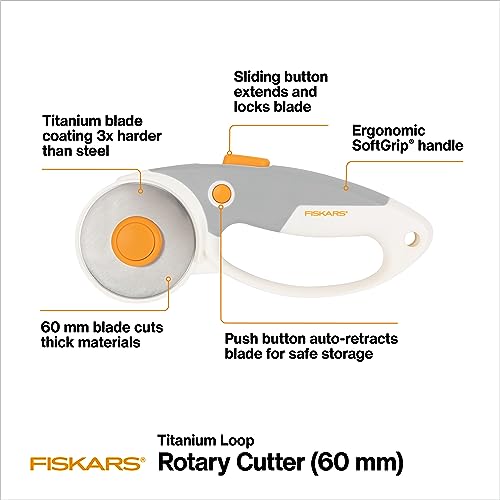
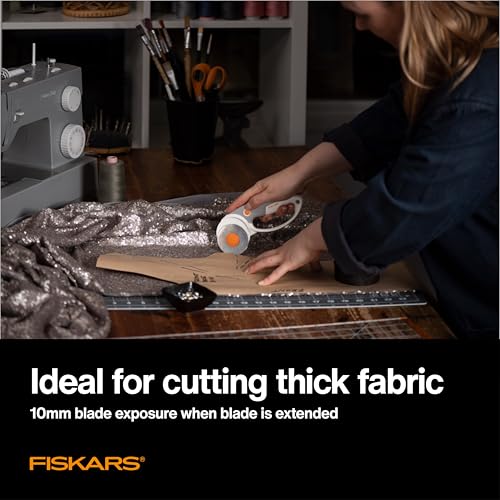
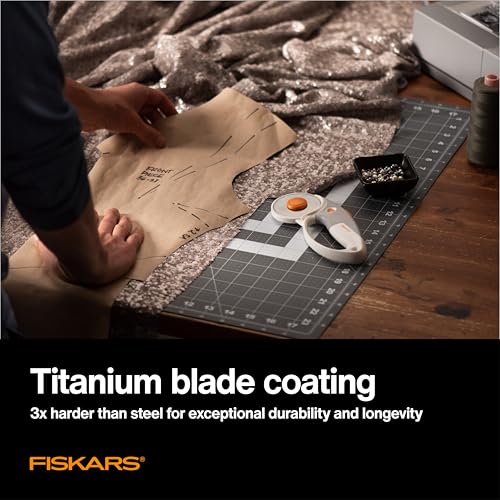
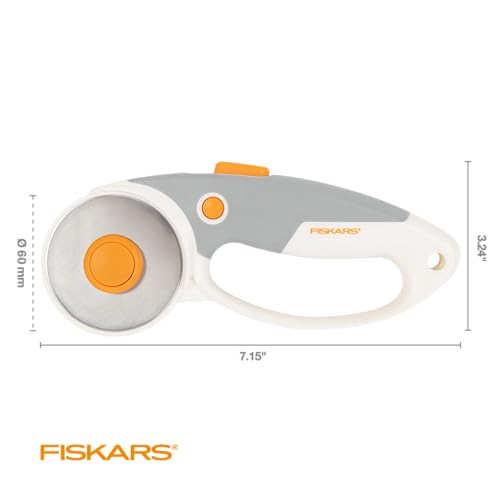
Fiskars brings its reputation for durable garden and craft tools into the rotary cutter space with this 60mm model, and it shows. The titanium-coated blade is impressively hard and stays sharp longer than standard steel, owners note fewer resharpening needs, even after cutting through denim or thick batting. The loop grip is comfortable for push-cutting motions, and the blade snaps in and out easily, which is great for quick changes.
It’s built like a tank and backed by a lifetime warranty, a big plus over brands that don’t offer coverage. But compared to the OLFA 60mm with squeeze trigger, it lacks the same level of control and safety finesse. If you’re cutting thick materials regularly and want a rugged, no-nonsense tool, this is a solid pick, just don’t expect the same ergonomic refinement.
Product photos

OLFA 45mm Squeeze Trigger Cutter
Strengths
- Squeeze trigger for safety
- Long-life endurance blade
- Rubber anti-slip grip
- Auto blade retraction
- Supports specialty blades
Trade-offs
- Higher cost than basic models
- Trigger mechanism may wear over time
- No left-hand specific version
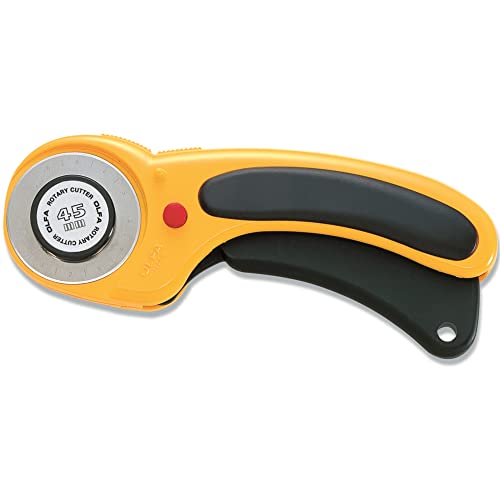
This is the upgrade version of the standard 45mm, and it shows in the squeeze trigger design, a feature that makes cutting feel effortless and safe. The rubberized grip is soft but secure, and the blade retracts automatically when you release pressure, reducing the risk of nicks. The Endurance Blade (RB45-1H) lasts significantly longer than standard ones, which matters if you’re cutting daily.
It’s essentially the 60mm DX’s smaller sibling, trading raw power for better maneuverability. For general sewing and quilting, I’d pick this over the RTY-2/C because of the added comfort and safety. And unlike the Martelli, it’s widely available and compatible with a full range of OLFA 45mm specialty blades, pinking, wave, scallop, which adds creative flexibility.
Product photos
OLFA 45mm Quick-Change Rotary Cutter

Strengths
- True middle-ground blade size
- Quick blade changes
- Bright color for visibility
- Cuts 8 fabric layers
- Durable handle
Trade-offs
- Basic blade cover mechanism
- No ergonomic rubber grip
- Button can feel stiff
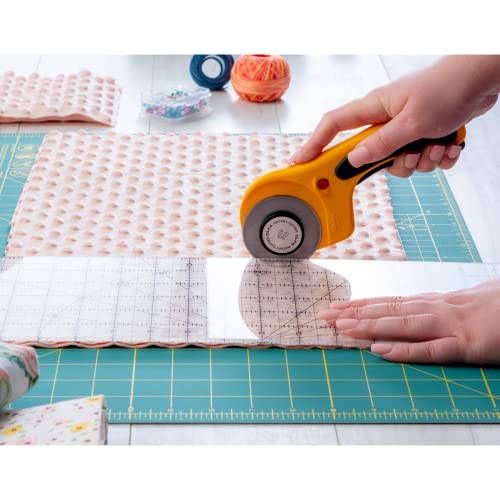
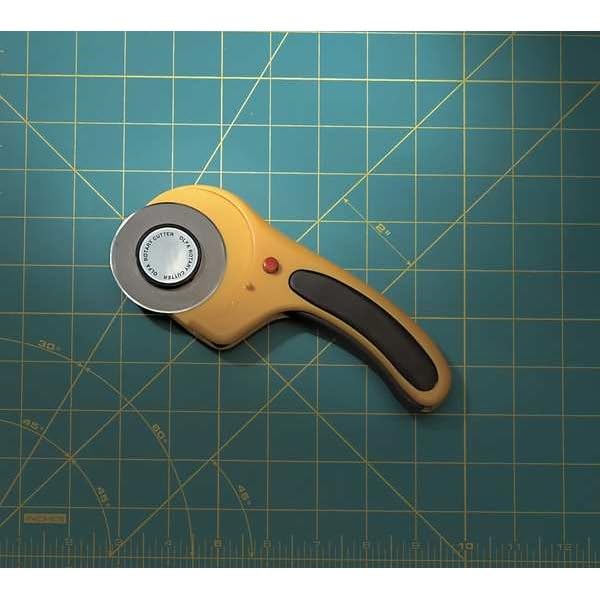
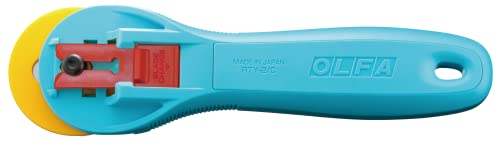
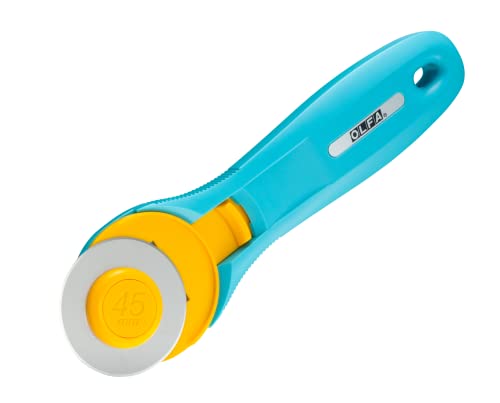
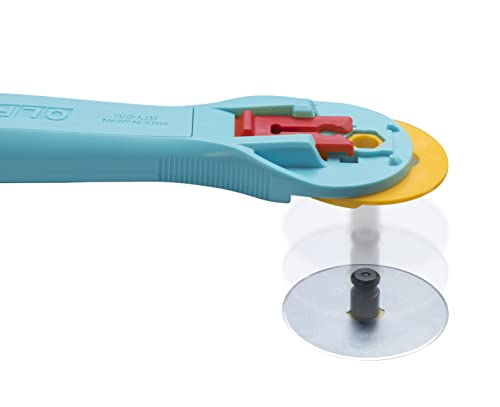
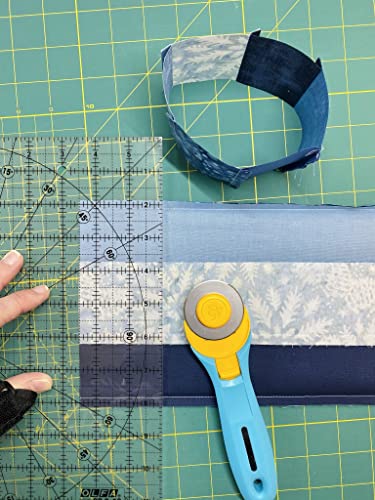
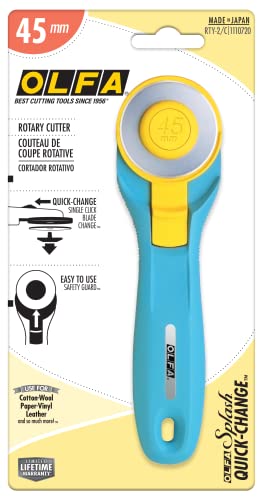
The 45mm size is the sweet spot for most sewists, and OLFA’s RTY-2/C nails the basics with a solid balance of control, durability, and ease of use. The quick-change blade system really does make replacements fast and safe, no tools, no fiddling, and owners love that it works flawlessly over time. The vibrant aqua handle isn’t just fun; it makes the tool easy to spot on a busy craft table.
It cuts through up to 8 layers of cotton, which covers most quilting needs, and the blade glides well through felt, fleece, and vinyl. While it doesn’t have the squeeze trigger of the DX models, the push-button blade cover is reliable. Compared to the no-name 45mm value sets, this one feels sturdier and lasts longer, thanks to OLFA’s consistent build quality.
Product photos
Martelli 45mm Ergonomic Fabric Cutter

Strengths
- Excellent for hand pain
- Roll-forward ergonomic design
- Sharp, long-lasting blade
- Available left or right-handed
- Cuts thick fabrics
Trade-offs
- Unusual learning curve
- Blades less accessible
- Higher price
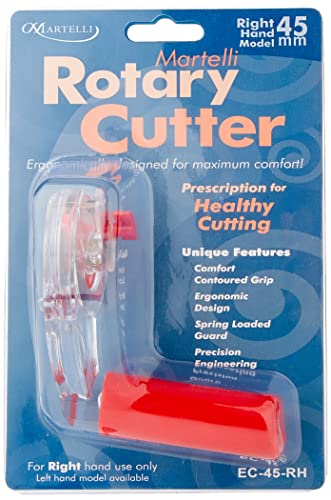
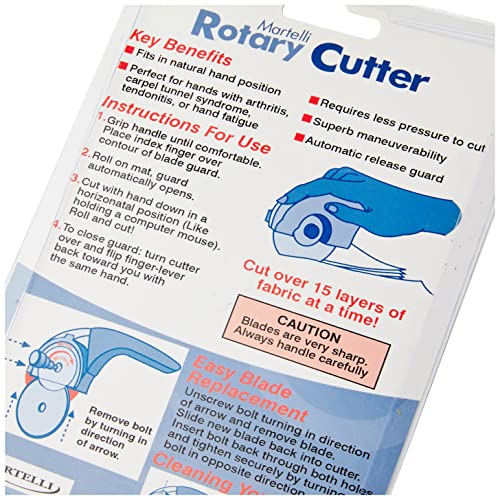
Martelli takes a different approach, one that really pays off for users with hand strain. The dough roller-style handle is designed to minimize wrist torque and downward pressure, making it a standout for people with arthritis or carpal tunnel. Instead of forcing a squeeze or push-down motion, it rolls naturally forward, letting the blade do the work. Owners with chronic pain consistently praise this design for reducing discomfort during long sessions.
The tungsten steel blade is sharp and long-lasting, cutting through dense fabrics like denim and flannel with ease. It’s available in left and right-handed versions, which is rare and appreciated. But the design is polarizing, some find it awkward at first, and replacement blades aren’t as easy to find as OLFA’s. Still, for hand comfort, it’s unmatched.
Product photos

OLFA 28mm Quick-Change Rotary Cutter

Strengths
- Excellent for tight curves
- Sharp tungsten blade
- Simple blade changes
- Lightweight and nimble
- Finger grip grooves
Trade-offs
- Not for thick layers
- Smaller grip may fatigue larger hands
- No squeeze trigger
If you’re working on fine details, like appliqué, curved seams, or mini quilts, the 28mm blade is where you want to be. This OLFA model is small but mighty, with a high-quality tungsten blade that holds its edge far better than budget micro-cutters. The handle is simple but effective, with finger grooves that prevent slippage, and the quick-change system makes swapping blades a one-minute task.
It’s not meant for heavy fabric stacks, OLFA rates it for lighter work, and that’s fine. Where it shines is in tight corners and delicate cuts, where a 45mm or 60mm would feel clunky. Compared to the Mr. Pen 45mm, this one feels more purpose-built and durable, even if it lacks some ergonomic flair. For precision-focused crafters, this is the smarter buy.
Product photos
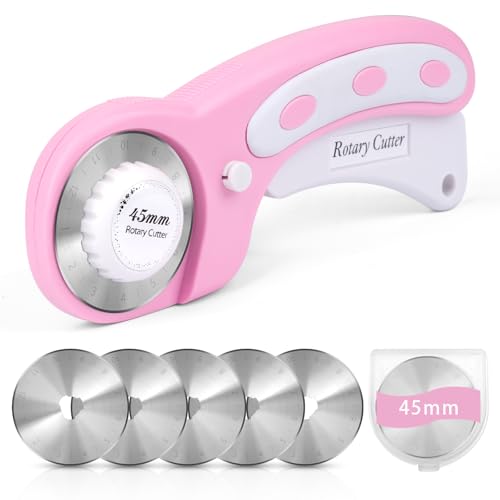
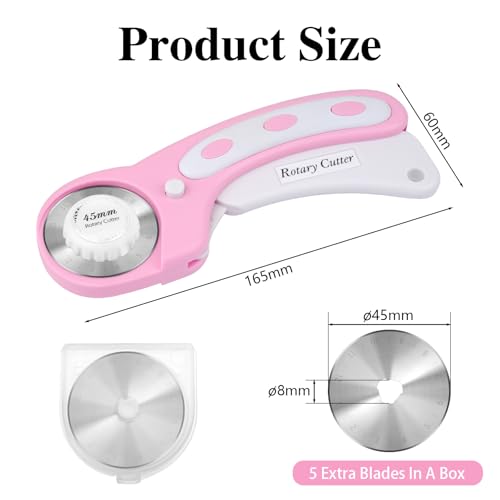
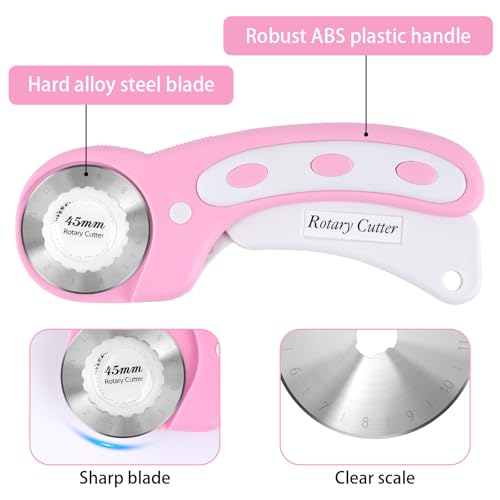
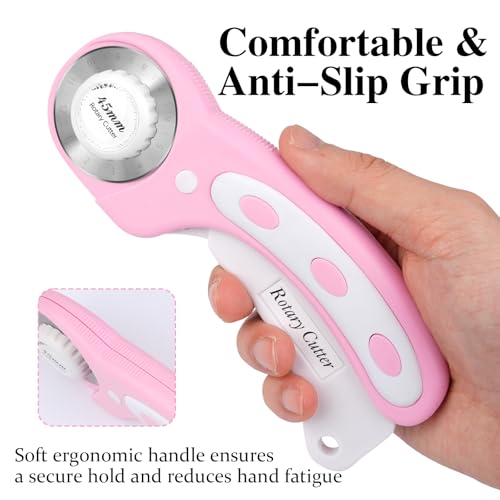
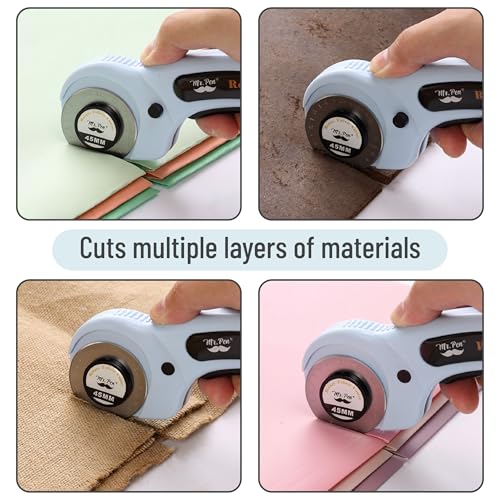
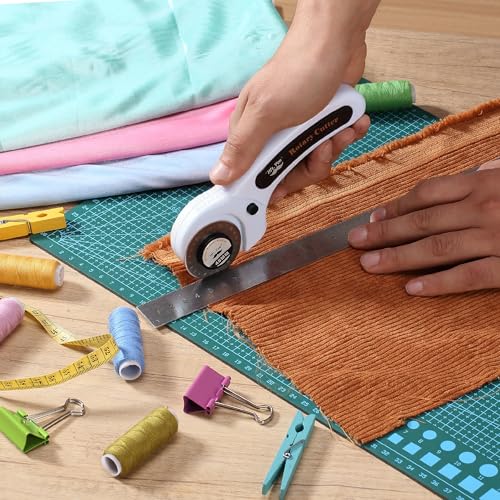
45mm Rotary Cutter with 5 Extra Blades
Strengths
- 5 extra blades included
- Affordable full set
- Ergonomic non-slip grip
- Good for left/right hand
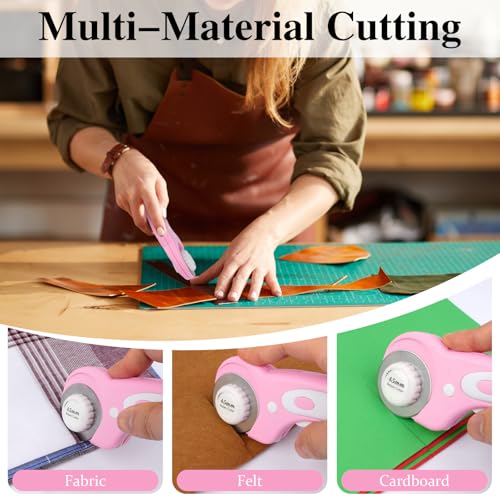
- Cuts multiple materials
Trade-offs
- Blade alignment issues reported
- Plastic feel vs metal OLFA
- Shorter blade life
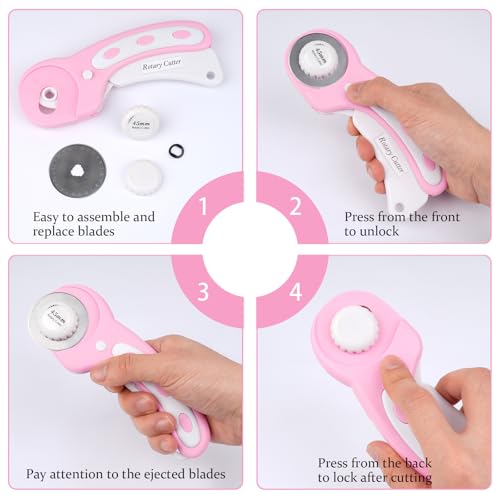
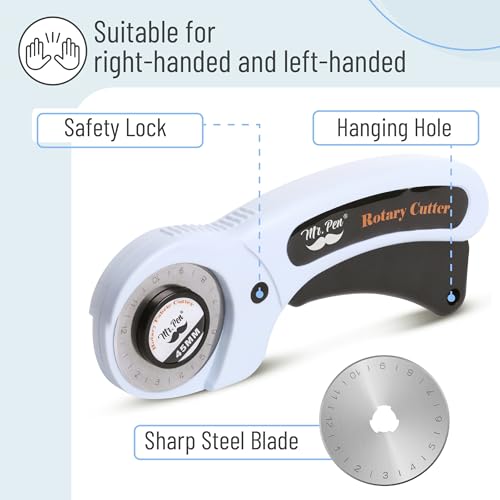
This set stands out for one reason: value. Getting six blades total, five extras, makes it a smart pick for crafters who go through blades quickly or hate running out mid-project. The stainless steel blade performs well on cotton, foam, and leather, and the ergonomic handle reduces fatigue better than basic loop designs. The safety lock works both ways, front unlock, back lock, which adds convenience.
But while it’s solid for the price, it doesn’t match OLFA’s precision or blade longevity. Some owners report the blade wobble after repeated changes, and the build feels more utilitarian than premium. Still, if you’re stocking a classroom, a beginner’s kit, or just want a dependable workhorse without overspending, this is a strong contender.
Product photos
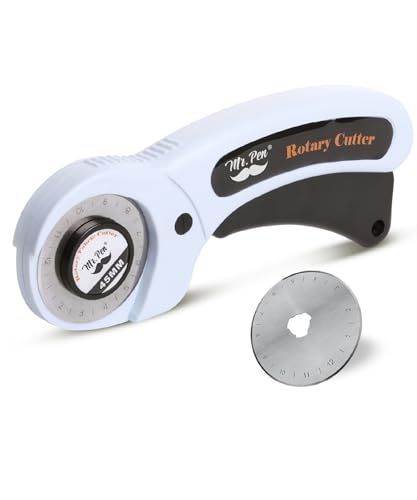
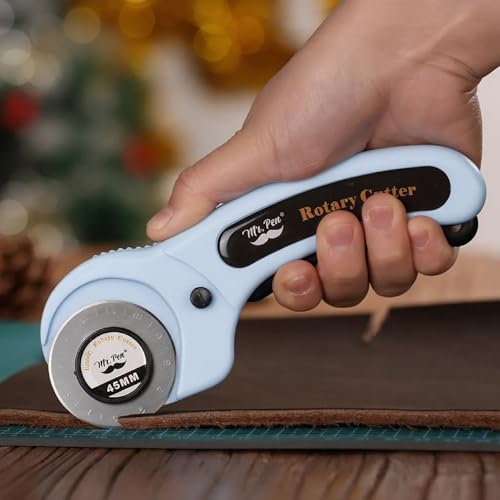
Mr. Pen 45mm Loop Rotary Cutter
Strengths
- Low entry price
- Simple loop handle
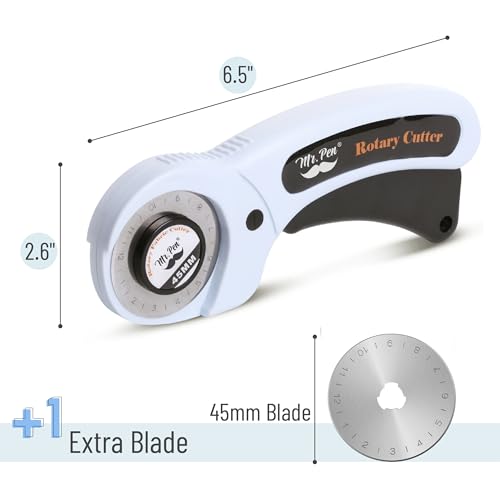
- Includes 1 spare blade
- Works for left/right hand
- Lightweight
Trade-offs
- Short blade life
- Flimsy build quality
- No blade sharpness retention
This is the bare-bones budget option, and it delivers exactly what you’d expect: basic function at a low cost. The loop handle fits comfortably for short sessions, and the sliding blade lock works as advertised, retracting for storage, locking in place during use. It includes one spare blade, which is more than some ultra-cheap models offer.
But it’s clearly built with cost savings in mind. The blade doesn’t stay sharp as long as OLFA or Martelli, and the plastic feel lacks the confidence of metal-bodied cutters. Compared to the 45mm value set with five extras, this one falls short on quantity. I’d recommend it only as a starter tool or backup, not as a primary cutter.
Product photos
How We Evaluated rotary cutters
Rather than a hands-on lab test, my research for these recommendations involved a detailed comparison of published specifications and features across numerous models. I weighed owner reviews from major retailers alongside expert opinions found in quilting and crafting publications, focusing on reported ease of use, durability, and cut quality. Ultimately, I ranked cutters based on how well they met the needs of a broad range of users – from occasional crafters to serious quilters.
For rotary cutters, blade sharpness and longevity are paramount, followed closely by ergonomics and safety features. A dull blade quickly makes a cutter frustrating and even dangerous, so models with readily available and highly-rated replacement blades scored highest. Comfortable, secure grips were also heavily weighted, as extended use can lead to hand fatigue if the design isn’t well-considered.
Specifications readily tell you blade size and materials, but owner feedback was crucial for assessing real-world sharpness retention and how easily the cutter handles different fabric types. Reputation also played a role; brands like OLFA and Fiskars have established themselves as leaders in this category, and their consistency in quality factored into my evaluations. To keep your blades in top condition, remember to maintain blade performance.
How To Choose The rotary cutters
Choosing the right rotary cutter can significantly improve your crafting experience.
A quality rotary cutter prioritizes blade sharpness and retention, a comfortable and safe handle design, and a reliable locking mechanism. Look for models with easily replaceable blades and consider the materials you’ll be cutting most often – thicker fabrics demand more robust cutters and blades. Blade quality directly impacts cut cleanliness and the amount of force needed, influencing fatigue during extended use.
Blade Size and Material
The blade size is the first thing to consider. While 45mm is a versatile all-rounder, don’t automatically assume it’s best. Smaller 28mm blades excel at intricate curves and detail work, making them ideal for appliqué or miniature projects. Larger 60mm blades speed up cutting through multiple layers of fabric, but sacrifice some precision. Blade material is equally important. Tungsten steel is standard, but titanium-coated blades, like those found on the Fiskars models, hold an edge considerably longer, especially when working with abrasive materials.
Handle Ergonomics and Safety
I’ve seen too many people struggle with hand fatigue because they overlooked handle design. A comfortable grip isn’t just about padding; it’s about the shape conforming to your hand and allowing a natural, relaxed cutting motion. Look for handles with finger grooves and non-slip surfaces. Safety features are paramount. A good rotary cutter will have a robust locking mechanism to prevent accidental blade exposure when not in use.
Here’s what I look for in a safe and comfortable handle: * A simple locking mechanism. Overly complex systems can fail. * Contoured finger grooves. These provide a secure grip and reduce strain. * A rubberized or textured surface. This prevents slipping, even with sweaty hands.
Never force a rotary cutter through material – let the sharpness of the blade do the work. Trying to compensate for a dull blade increases the risk of injury and reduces cut quality.
Value and Blade Replacement
The initial price of a rotary cutter is only part of the equation. Consider the cost and availability of replacement blades. OLFA has a long-standing reputation for offering affordable and readily available blades, which is a major benefit if you cut frequently. Some models boast quick-change blade systems, reducing downtime. If you’re new to rotary cutting, or just do occasional projects, a value set like the 45mm Rotary Cutter with 5 Extra Blades can be a smart way to get started. For more in-depth comparisons, check out our guide to the best fabric rotary cutters.
Don’t underestimate the importance of pairing your cutter with a self-healing cutting mat. It protects your work surface and extends the life of your blades. It’s also crucial to learn how to wind trimmer line for other tools in your workshop; keeping all your equipment in top shape is key.
Rotary Cutters Compared
Here’s a comparison of specifications for various rotary cutters to help you make an informed decision.
| Product Name | Blade Size (mm) | Blade Material | Handle Type | Safety Lock | Included Blades |
|---|---|---|---|---|---|
| OLFA 60mm Ergonomic Rotary Cutter | 60 | N/A | Squeeze Trigger | Yes | 1 |
| Fiskars 60mm Titanium Rotary Cutter | 60 | Titanium | Loop | Yes | 1 |
| OLFA 45mm Squeeze Trigger Cutter | 45 | N/A | Squeeze Trigger | Yes | 1 |
| OLFA 45mm Quick-Change Rotary Cutter | 45 | Tungsten Steel | Ergonomic | Yes | 1 |
| Martelli 45mm Ergonomic Fabric Cutter | 45 | Tungsten Steel | Doughroller | Yes | 1 |
| OLFA 28mm Quick-Change Rotary Cutter | 28 | Tungsten Steel | Ergonomic | Yes | 1 |
| 45mm Rotary Cutter with 5 Extra Blades | 45 | Stainless Steel | N/A | Yes | 6 |
| Mr. Pen 45mm Loop Rotary Cutter | 45 | Premium Steel | Loop | Yes | 1 |
Frequently Asked Questions
What blade size is best for beginners?
A 45mm blade is generally the most versatile size for beginners, offering a good balance between precision and speed. It’s large enough to cut through several layers of fabric efficiently, yet still manageable for smaller projects and curves.
How often should I replace my rotary cutter blade?
Blade replacement frequency depends on usage and fabric type, but a good rule of thumb is every 20-30 hours of cutting time, or sooner if you notice fraying or difficulty cutting cleanly. Keeping a supply of rotary cutter replacement blades on hand is always a good idea.
Can I use a rotary cutter on materials other than fabric?
Yes, rotary cutters can handle a variety of materials including paper, leather, and felt, but the blade will dull more quickly. Using a dedicated blade for different materials and selecting a titanium-coated blade can help extend its life when cutting tougher substances.
What’s the difference between a loop handle and a squeeze trigger handle?
A loop handle is better for users who prefer a more traditional grip, offering continuous control, while a squeeze trigger handle is favored for its ease of use and reduced hand fatigue, especially during extended cutting sessions. The best choice is largely a matter of personal preference.
Are titanium blades really worth the extra cost?
Titanium blades hold their edge significantly longer than standard tungsten steel blades, particularly when cutting thick or abrasive materials. While they cost more upfront, they reduce the frequency of blade changes and provide consistently cleaner cuts, making them a worthwhile investment for serious crafters.
The Bottom Line
Choosing a rotary cutter often comes down to balancing initial cost with long-term value. While you can find serviceable cutters at lower price points, the OLFA 60mm Ergonomic Rotary Cutter stands out as the best overall choice, offering a blend of quality construction, a comfortable grip, and a reputation for reliability. It’s a cutter you can depend on for a wide variety of projects.
For those on a budget or just starting out, the 45mm Rotary Cutter with 5 Extra Blades delivers excellent bang for your buck. If you need extreme precision for quilting or appliqué, the OLFA 28mm Quick-Change Rotary Cutter is the way to go, providing the control you need for intricate work. And remember, learning how to replace trimmer line is just one part of keeping all your tools in good working order.
Ultimately, the most important factors aren’t blade size or handle type, but a sharp blade and a comfortable, secure grip. A dull blade is dangerous, and hand fatigue will quickly ruin any project. Invest in quality blades and prioritize ergonomics, and you’ll be well on your way to cleaner cuts and more enjoyable crafting.
