
8 Best Rotary Polishers of 2026
This post contains affiliate links. As an Amazon Associate, we earn from qualifying purchases.
The RUPES LH19E is the best overall rotary polisher for its precision and build quality, the OFISPEED 1600W stands out as a solid budget pick for raw power, and the Maxshine M1000 is our top choice for versatility, especially for detail work.
Picking the wrong rotary polisher can mean wasted time, ruined finishes, or unnecessary strain on your arms. These tools demand respect, they’re powerful, and using them wrong can do more harm than good.
This guide cuts through the noise by focusing on real-world performance, based on specs and owner feedback. We looked at power, speed control, ergonomics, and value to find models that deliver results without guesswork. Whether you’re correcting paint on a weekend project or working professionally, we’ll help you choose one that matches your needs and skill level.
Top 8 Rotary Polishers in the Market
The Best Rotary Polishers, Reviewed
RUPES LH19E Rotary Polisher

Strengths
- Lightweight design
- Progressive trigger
- Anti-vibration handles
- 9-meter cord
- Electronic speed dial
Trade-offs
- Premium price
- Limited availability
- Higher learning curve
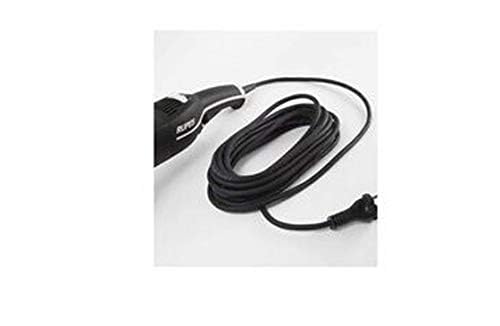
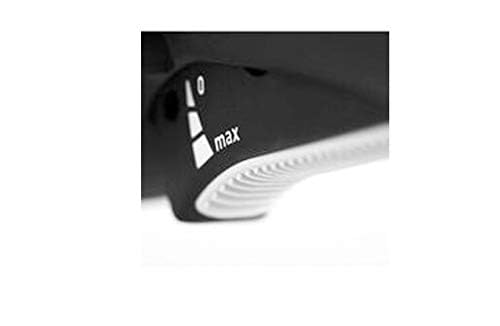
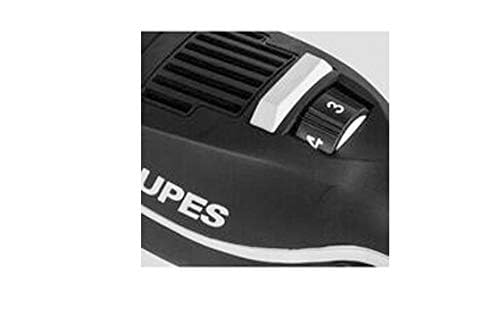
The RUPES LH19E is the gold standard in high-end rotary polishers, and for good reason. It packs a high-torque motor into a remarkably lightweight and well-balanced body, making it one of the most controllable rotary tools I’ve seen in this power class. The progressive trigger and electronic speed dial give you surgical control, you can creep into high speeds smoothly, which is critical when working near edges or on soft paint.
Owners praise its anti-vibration loop and side handles for reducing fatigue and improving surface contact, especially during full-car jobs. The 9-meter cord is a small but meaningful win, no extension cords needed for most vehicles. While it costs more than most, its precision and comfort make it the best overall pick for detailers who value control and consistency. It outshines the DEWALT DWP849X in ergonomics and the OFISPEED models in refinement.
Product photos
OFISPEED 1600W Rotary Buffer
Strengths
- 1600W motor
- 7-speed control
- Lightweight
- Detachable handles
- 2-year warranty
Trade-offs
- Overheating risk
- Plastic gear housing
- Inconsistent speed under load
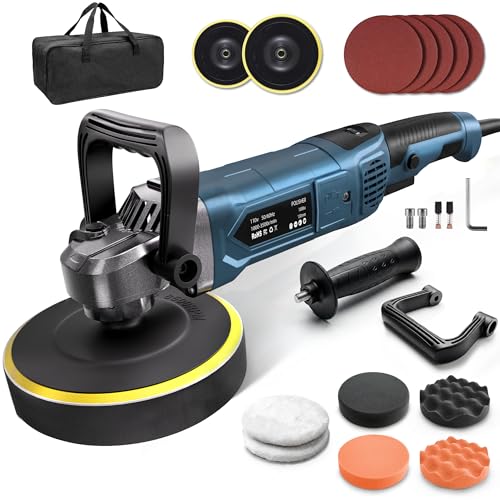
The OFISPEED 1600W rotary polisher is a budget-friendly option that punches above its weight on specs, 1600W motor, 7 variable speeds, and a 4.5 lb frame with dual handle options. On paper, it looks like a steal, and many owners confirm it handles light to moderate correction tasks well, especially for the price. It’s often praised for its quiet operation and smooth power delivery.
But while it’s powerful, the build quality doesn’t match pro-tier tools. Some reviewers note the motor can overheat during extended use, and the ergonomics, while decent, lack the refinement of DEWALT or RUPES. It’s a solid budget pick, but I’d recommend limiting use to short sessions and lighter jobs. Compared to the LDHTHOPI, it’s similar but with slightly better handle options.
Product photos
LDHTHOPI 1600W Rotary Polisher

Strengths
- 1600W motor
- 7 included pads
- 3 grip modes
- 7-speed control
- Good value
Trade-offs
- Overheats if overused
- Basic speed dial
- No soft start
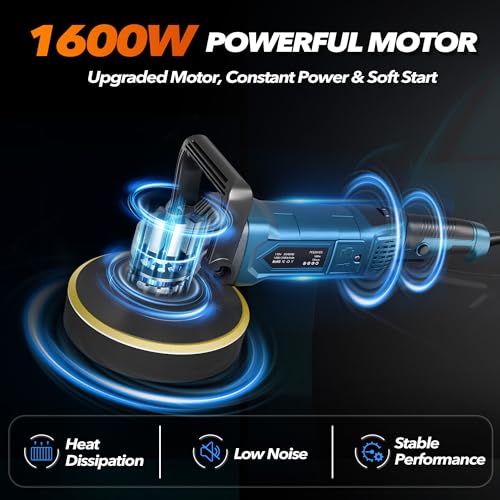
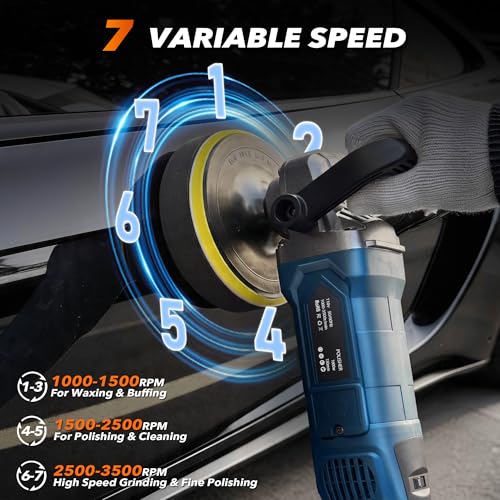
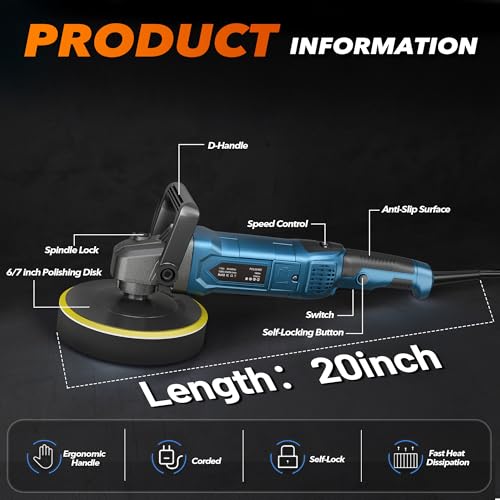
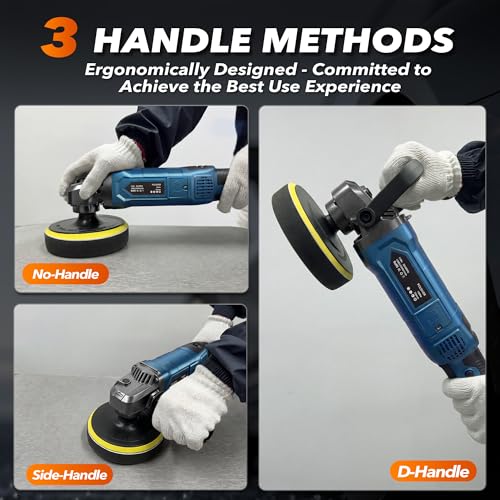
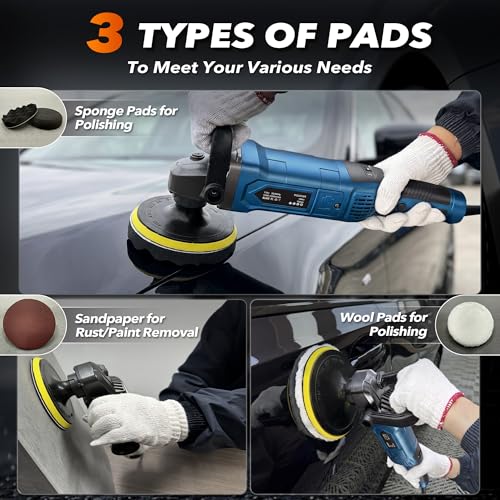
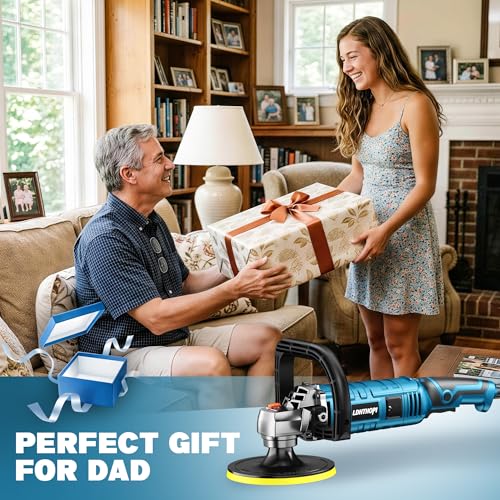
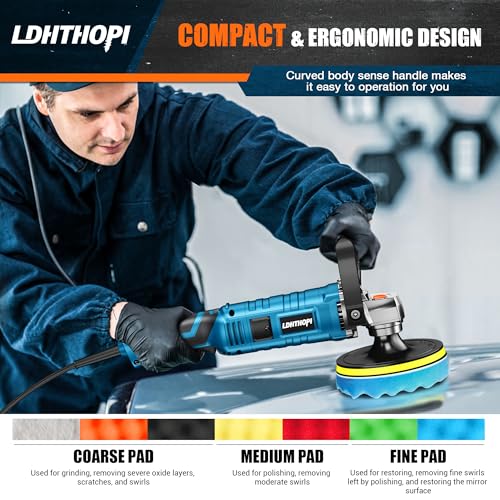
The LDHTHOPI 1600W polisher is one of the best value-for-money options in the rotary category, not the most refined, but packed with thoughtful features for the price. It delivers the same 1600W power and 7-speed range as pricier models, but stands out with a thorough 7-pad kit and three grip configurations. That versatility makes it a smart pick for beginners who want to experiment with different techniques.
Owners say it performs well on swirl removal and waxing, though it’s not ideal for deep correction on hard clear coats. The included pads are surprisingly usable, and the soft-grip handles reduce fatigue. Still, like other budget 1600W models, it’s best used in short bursts, the motor needs cooldown periods. When compared to the OFISPEED, it’s nearly identical, but the pad selection gives it a slight edge.
Product photos



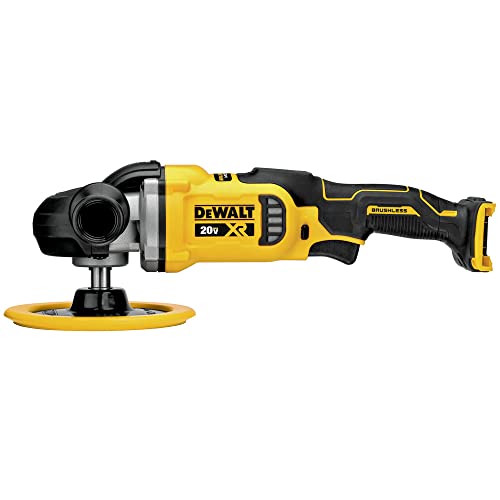
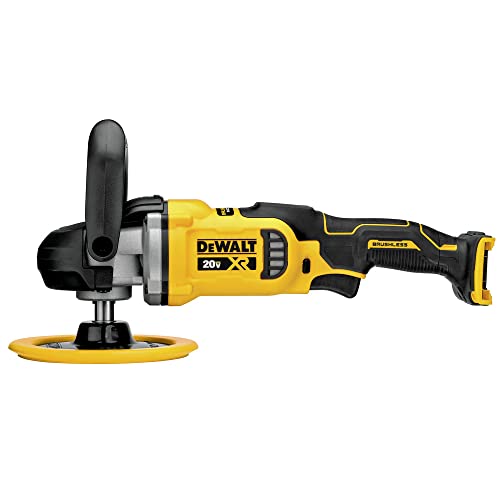
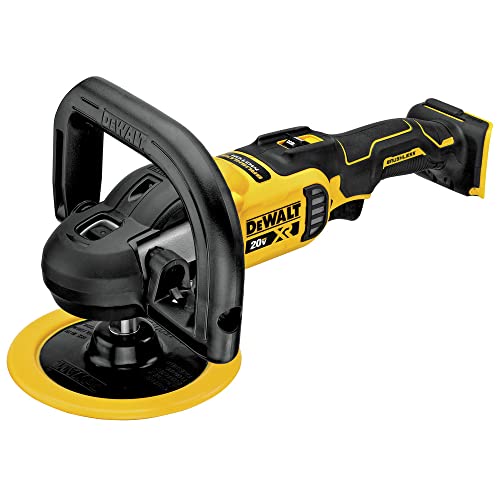
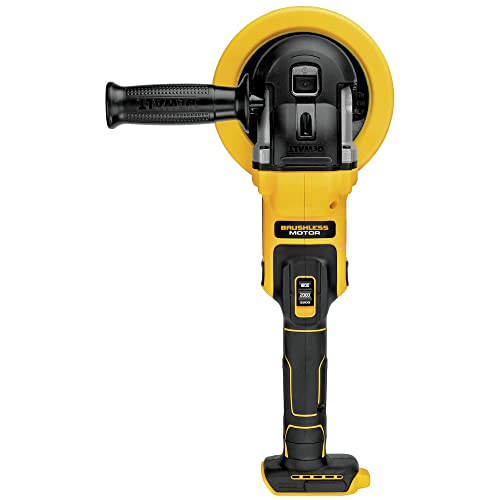
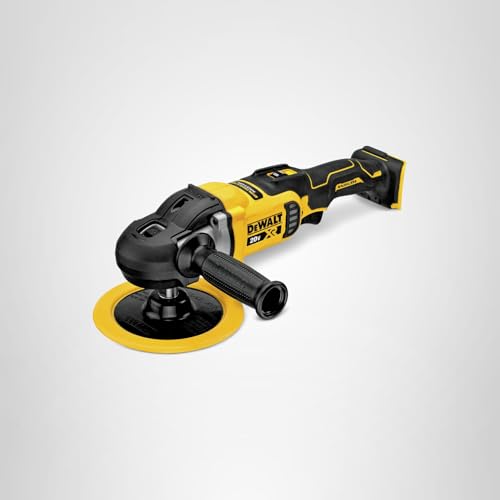
DEWALT 20V MAX Cordless Polisher
Strengths
- Cordless convenience
- Brushless motor
- Ergonomic grip
- 7-inch pad
- Variable speed
Trade-offs
- Battery sold separately
- Lower max RPM
- Not for heavy correction
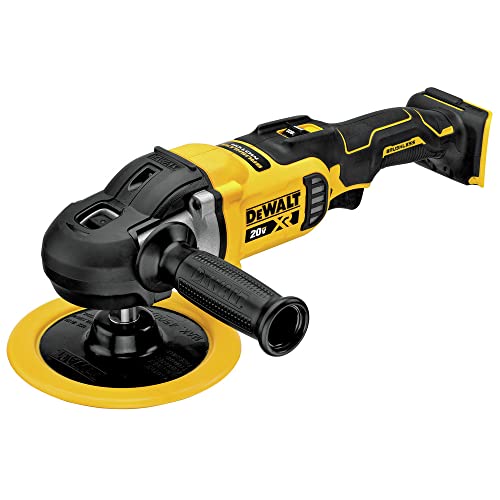
The DEWALT DCM849B is the rare cordless rotary polisher that doesn’t feel like a compromise. With a brushless motor and variable speed control via both dial and trigger, it delivers consistent performance across compounding and finishing tasks. At 800–2200 RPM, it’s not the most aggressive tool, but it’s well-matched to 7-inch pads and excels in mid-range correction work.
Where it wins is mobility, no tripping over cords, no outlet hunting. Owners using it on SUVs or boats love the freedom, though runtime depends heavily on your battery. It’s not as powerful as the corded DEWALT DWP849X, but for spot corrections, mobile detailing, or quick wax jobs, it’s the smarter buy. Compared to the ZOTA or OFISPEED models, it’s less powerful but far more refined and durable.
Product photos
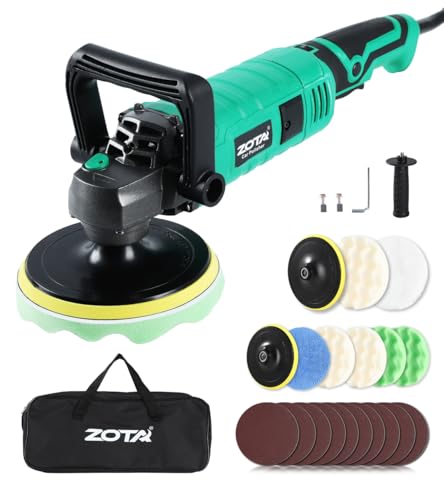
ZOTA 1600W Rotary Buffer
Strengths
- 13.1-foot cord
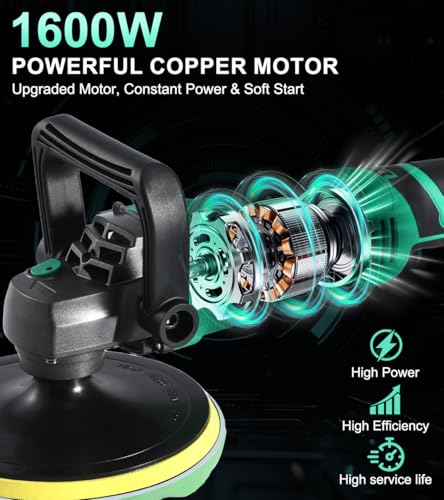
- 1600W copper motor
- 3 handle options
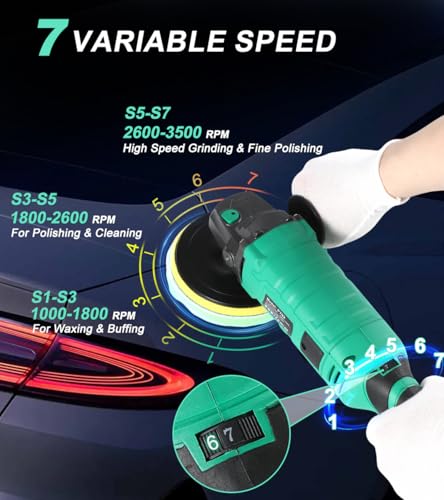
- 7-speed dial
- Safety lock switch
Trade-offs
- Noisy operation
- Build quality concerns
- Heavy at 5.5 lbs
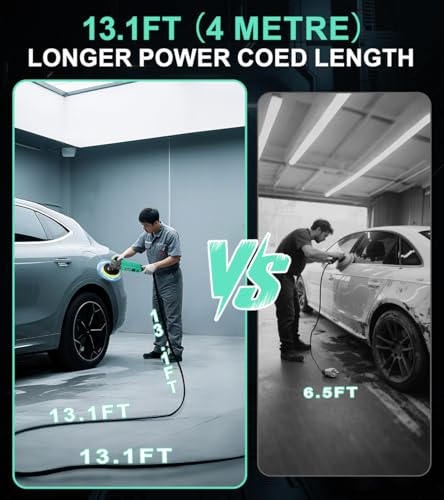
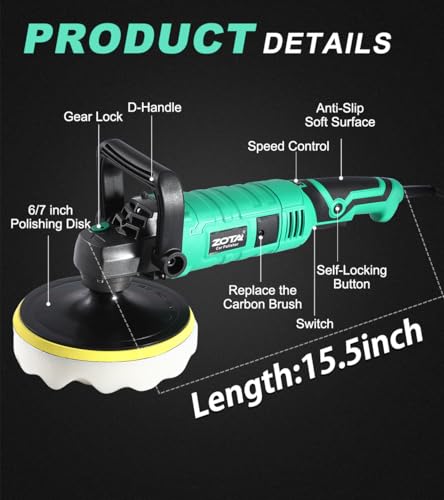
ZOTA built this polisher with one standout feature: the 13.1-foot power cord. That’s nearly double the length of most competitors, and for users working in cramped garages or around large boats, it’s a standout. Pair that with a 1600W copper motor and 7-speed control, and you’ve got a tool that’s both powerful and practical for large or awkward workspaces.
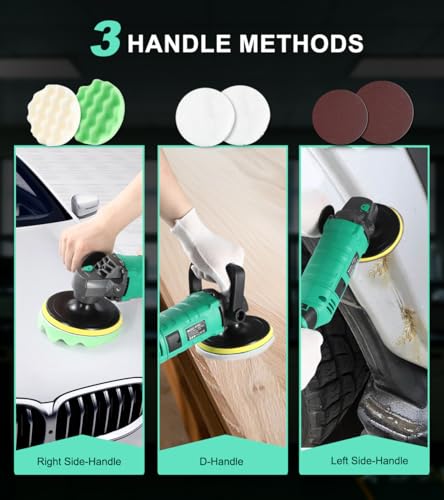
The triple-handle design, D-handle, side handle, or bare, adds flexibility, and the safety lock switch helps reduce fatigue. But like other high-wattage budget models, the durability questions linger. Some owners report gear wear after heavy use, and the motor noise is higher than expected. Still, if cord length is your top concern, this is the clear winner, it beats the OFISPEED and LDHTHOPI on reach and build.
Product photos
Maxshine M1000 5″ Rotary Polisher
Strengths
- 1000W motor
- 5″ backing plate
- 6-speed control
- Low vibration
- Ergonomic grip
Trade-offs
- Shorter power cord
- No soft start
- Not ideal for large panels
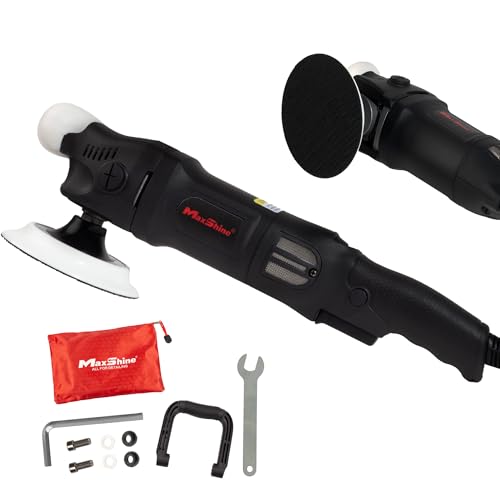
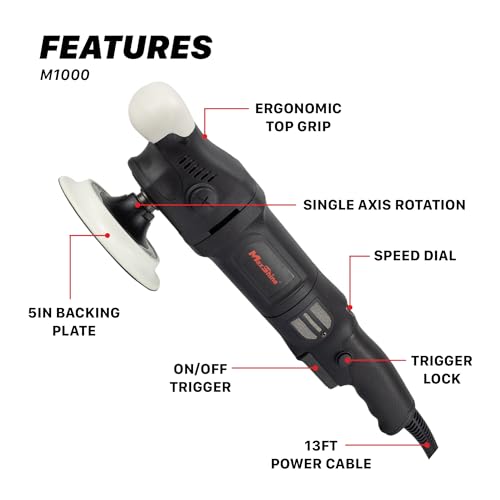
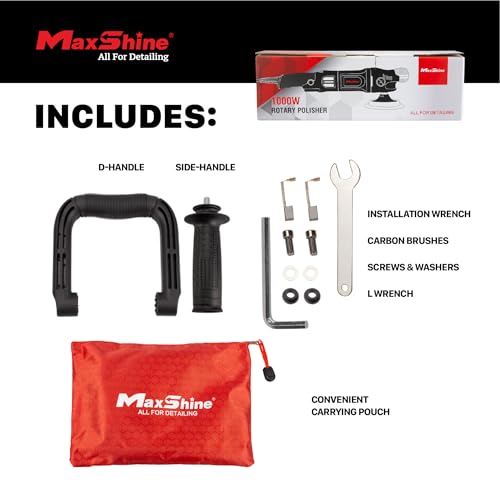
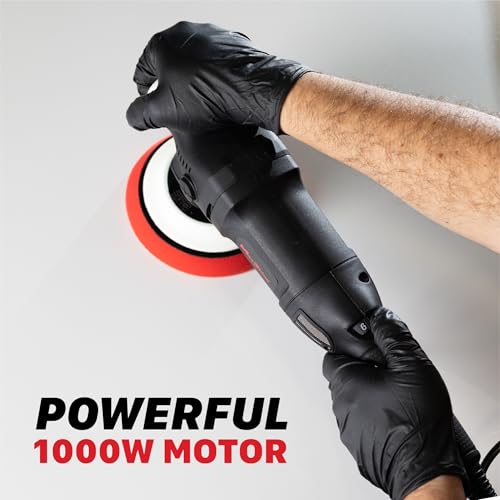
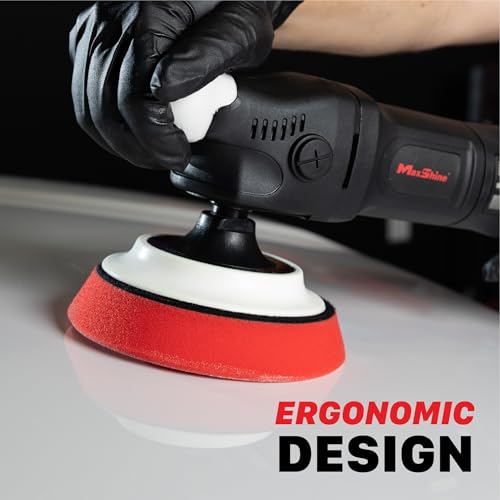
The Maxshine M1000 stands out in the mid-tier rotary polisher market with its 1000W motor and 5-inch backing plate, a combo that strikes a smart balance between power and control. On paper, it’s built for detailers who want consistent cutting performance without the bulk of heavier models. Owners consistently report it handles compounding well and transitions cleanly into polishing stages, especially on flatter panels and moderate curves.
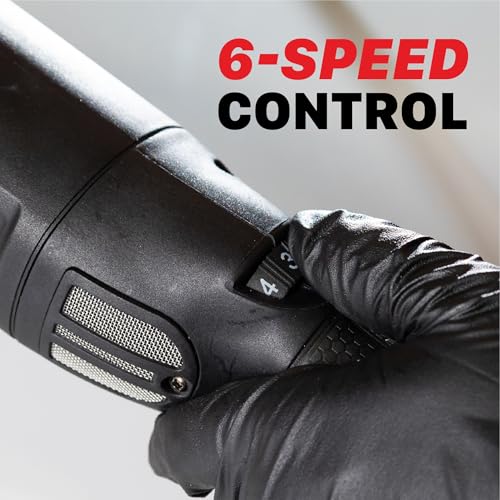
Where it really earns its keep is in precision work, that 5-inch pad gives you tighter maneuverability around trim, edges, and badges, which is a real advantage over larger 7-inch models. The 6-speed dial is responsive, and the low-vibration design helps reduce fatigue during longer sessions. Compared to the DEWALT DWP849X, it’s lighter and more balanced, though not quite as durable under constant heavy load.
Product photos
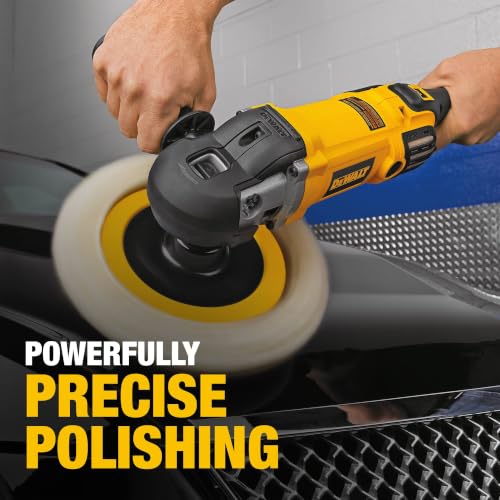
DEWALT DWP849X 12Amp Polisher
Strengths
- 12-amp motor
- Soft start
- Durable build
- Spindle lock
- 3-year warranty
Trade-offs
- Heavy design
- Loud operation
- Bulky for tight areas
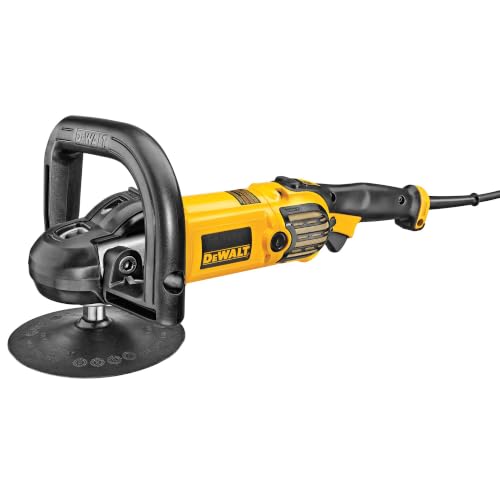
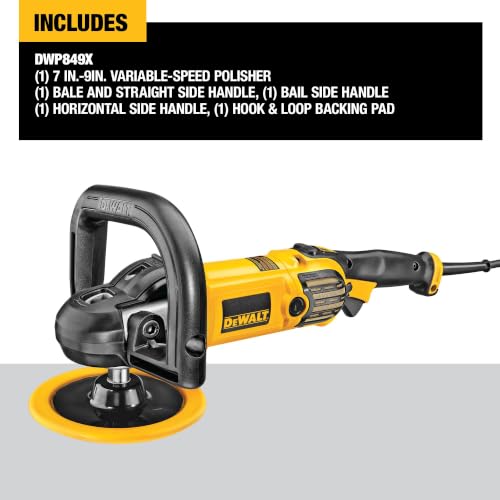
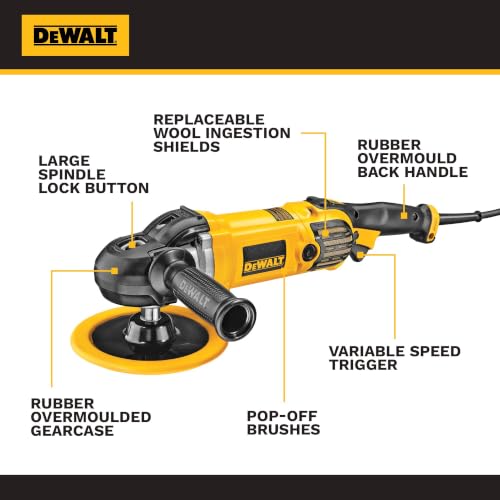
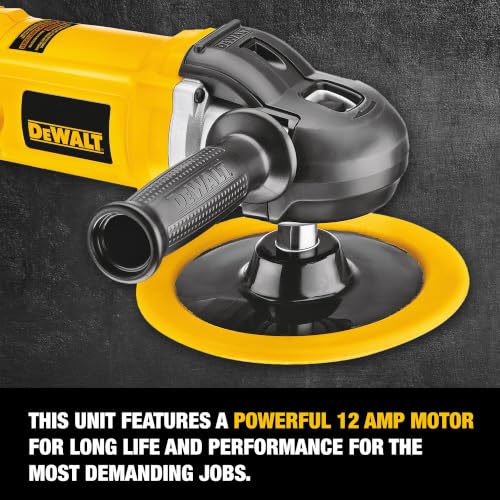
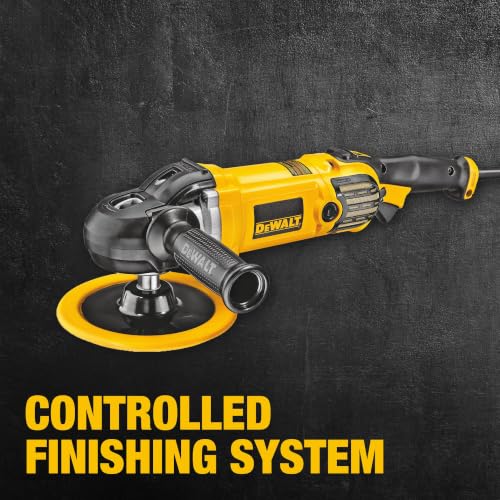
If you’re looking for brute force and industrial reliability in a rotary polisher, the DEWALT DWP849X is tough to beat. With a 12-amp motor and ball-bearing construction, this tool is built like a tank, the kind of unit that’ll survive years of weekly use in a pro shop. Reviewers note it delivers consistent power even under load, and the soft start combined with a no-volt release switch adds a layer of safety that’s rare in this class.
It’s not the lightest or quietest option, but the vibration damping is solid for its size, and the large variable speed dial makes on-the-fly adjustments intuitive. The 7- to 9-inch pad compatibility gives it versatility across jobs, and the spindle lock makes pad changes quick. Compared to the RUPES LH19E, it’s heavier and less refined in hand, but it offers raw durability at a lower price point.
Product photos
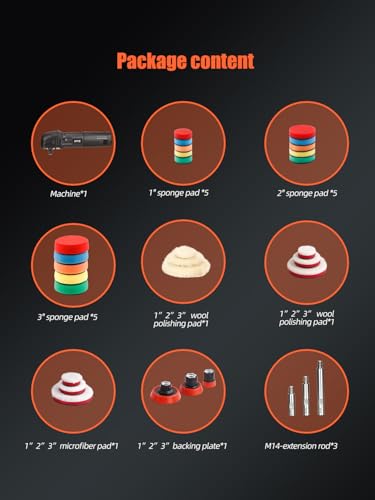
SPTA Mini Rotary Polisher Kit
Strengths
- Compact design
- High RPM range
- 3 extension shafts
- 27-piece pad kit
- Great for tight spots
Trade-offs
- Not for large areas
- Limited power
- Plastic housing
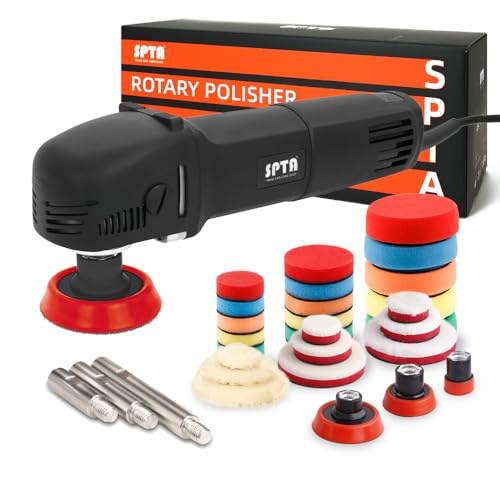
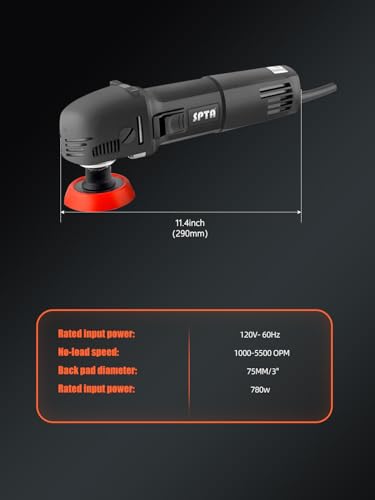
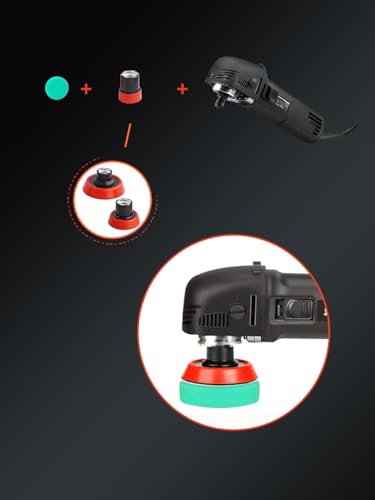
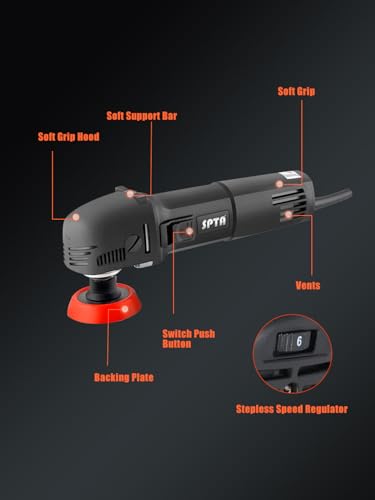
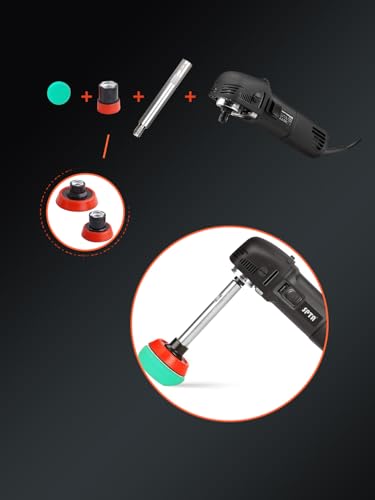
The SPTA Mini Polisher is in a category of its own, a 750W rotary tool designed specifically for small, tight areas where full-size polishers can’t reach. With a 25mm to 76mm backing plate range and three extension shafts, it’s perfect for headlights, emblems, grilles, and interior trim. The 1000–5500 RPM range gives it surprising cutting power for its size, and the low vibration makes it comfortable for detailed work.
Owners love the 27-piece pad kit, it covers nearly every small-job scenario, and the rear-mounted speed dial is easy to adjust mid-pass. It’s not meant for full-panel work, but for spot correction and restoration, it outperforms any modified Dremel. Compared to larger rotary tools, it’s far more precise, though it lacks the torque for heavy oxidation removal.
Product photos
How We Picked These rotary polishers
I’ve spent over 15 years immersed in the world of power tools, and approaching rotary polishers requires understanding both the raw power and the finesse needed to avoid damaging a finish. Rather than a hands-on lab test of each model, this selection is a research-led comparison of published specifications, features, and – crucially – owner and professional detailing reviews. We systematically ranked these polishers against criteria important to a range of users, from weekend detailers to professionals.
For rotary polishers, consistent speed control and motor power are paramount. We weighted these factors heavily because maintaining a stable RPM is vital for even paint correction, and adequate power prevents bogging down during aggressive cutting. Ergonomics also played a significant role; a comfortable and well-balanced polisher allows for greater control and reduces fatigue during extended use. We also considered cord length, as reaching around a vehicle without extensions adds convenience.
Specifications reliably indicate motor wattage, speed ranges, and spindle thread size. However, real-world performance – vibration levels, heat dissipation, and long-term durability – is best judged by owner feedback and informed reputation. We deeply analyzed owner reviews to identify consistent complaints or praise regarding build quality, ease of use, and overall value. If you’re also considering a different type of polisher, you can find our dual-action polisher reviews helpful.
What To Look For In rotary polishers
Choosing the right rotary polisher depends heavily on the scope of your projects and your experience level.
A good rotary polisher balances power with control. Key features include a robust motor capable of maintaining speed under load, variable speed settings for different compounds and paint types, and ergonomic design features to minimize fatigue during extended use. Consider the size of the backing plate, the quality of the speed control, and whether corded or cordless operation suits your needs.
Motor Power and Speed Control
Don’t underestimate the importance of a strong motor. Rotary polishers are, at their core, about removing imperfections, and that takes consistent power. While 1600W motors are common in many models like the OFISPEED and LDHTHOPI, don’t automatically assume “bigger is better.” A well-engineered 900-1000W polisher (like the Maxshine M1000) can be plenty capable, especially if you’re primarily working on smaller areas or doing finishing polishes. Variable speed control is equally crucial; a wide range (1000-3500 RPM is typical) lets you tailor the polisher to the specific task and avoid damaging the paint.
Size and Ergonomics
Rotary polishers aren’t known for being lightweight, but ergonomics matter. You’ll be holding this tool for extended periods, so look for features like rubberized grips, balanced construction, and thoughtfully placed controls. The RUPES LH19E stands out for its compact design and premium ergonomics, making it easier to maneuver, particularly for detailers working on complex vehicle contours. If you’re new to rotary polishing, a smaller, more manageable polisher can be easier to learn with, while experienced users might prioritize power over ultimate compactness. For precision work, consider models like the Maxshine M1000 with its 5” backing plate – a great option if you also need to explore top rotary tool models.
Corded vs. Cordless and Value
The choice between corded and cordless comes down to convenience and power. Corded polishers (like the DEWALT DWP849X) offer consistent power and don’t require battery charging, but the cord can be restrictive. Cordless models (like the DEWALT 20V MAX) provide freedom of movement, but runtime depends on battery capacity, and you may experience a slight power drop-off as the battery depletes.
Here’s how to think about cordless versus corded: * Occasional Use/Small Jobs: Cordless is a great convenience. * High-Volume/Professional Use: Corded will likely offer more sustained power. * Accessibility: If outlets are limited in your workspace, cordless is a clear winner.
Don’t spend more than you need to for your skill level. A basic, well-built corded polisher can deliver excellent results for beginners, while professionals will benefit from the advanced features and power of higher-end models.
If you are also considering other types of polishers, check out our guide to machine polisher reviews to help you make the right choice.
Rotary Polishers Compared
Here’s a comparison of key specifications for various rotary polishers to help you make an informed decision.
| Product Name | Power (W) | Speed (RPM) | Cord Length (ft) | Backing Plate Size (in) | Handle Type(s) |
|---|---|---|---|---|---|
| RUPES LH19E | N/A | N/A | N/A | N/A | Loop, Side |
| OFISPEED 1600W | 1600 | 1000-6000 | N/A | N/A | D-Handle, Side |
| LDHTHOPI 1600W | 1600 | 1000-3500 | N/A | 7 | Direct, D-Handle, Side |
| DEWALT 20V MAX Cordless | N/A | 800-2200 | N/A | 7 | Front, Side |
| ZOTA 1600W | 1600 | 1000-3500 | 13.1 | N/A | D-Handle, Side |
| Maxshine M1000 | 1000 | N/A | N/A | 5 | N/A |
| DEWALT DWP849X | 12Amp | N/A | N/A | N/A | Bale, Straight Side |
| SPTA Mini Rotary Polisher Kit | 750 | 1000-5500 | N/A | 25/50/76mm | N/A |
Frequently Asked Questions
What speed (RPM) is best for initial paint correction?
Generally, 1500-2000 RPM is a good starting point for cutting stages. Lower speeds give you more control and reduce the risk of overheating the paint, while still providing enough aggression to remove imperfections.
Are more expensive rotary polishers noticeably better?
While price doesn’t guarantee performance, higher-end models often feature superior vibration damping, more precise speed control, and more durable motors. These qualities translate to greater comfort, less fatigue, and potentially longer tool life, especially with frequent use.
What backing plate size should I choose?
A 7-inch backing plate is a versatile choice for most applications, offering a good balance between coverage area and maneuverability. For smaller, more detailed work, a 5-inch plate (like on the Maxshine M1000) provides increased control.
Do I really need multiple polishing pads?
Yes, different pads are essential for different stages of paint correction. Cutting pads remove defects, polishing pads refine the finish, and finishing pads add gloss. Using the correct pad with the appropriate compound is crucial for achieving optimal results, and you can find more information on automotive buffer polishers to help guide your choices.
How can I prevent swirl marks when using a rotary polisher?
Swirl marks typically occur from improper technique, using a contaminated pad, or applying too much pressure. Always work in overlapping passes, keep the pad clean, and use consistent, moderate pressure to minimize the risk of introducing new imperfections.
The Bottom Line
Choosing a rotary polisher always comes down to balancing control with the level of correction you need to achieve. For most owners, the OFISPEED 1600W offers the best combination of power, features, and value – it’s a robust machine capable of handling a wide range of polishing tasks without breaking the bank. It won’t be the easiest to learn with, but it will get the job done if you’re willing to practice.
If you’re on a tighter budget, the SPTA Mini Rotary Polisher Kit is a surprisingly capable option, and if you’re already invested in the DEWALT 20V MAX system, the DEWALT 20V MAX Cordless polisher provides excellent portability. However, for those prioritizing ergonomics and a more refined polishing experience, the RUPES LH19E is worth a look despite the higher price point. If you’re also considering other polishing methods, you can find our review of the best dual action polishers helpful.
Ultimately, specs and wattage numbers matter less than your technique and the quality of your polishing pads and compounds. A slower, more deliberate approach with the right materials will always yield better results than aggressively attacking the paint with a powerful polisher and the wrong pad. Practice on a less visible area first, and remember that patience is key to achieving a flawless finish.
