
3 Best Romex Stripping Tools of 2026
This post contains affiliate links. As an Amazon Associate, we earn from qualifying purchases.
The Klein Tools 11061 is the best overall Romex stripping tool for its self-adjusting design, durability, and added wire cutter. For a more budget-friendly option that still delivers precision, the Klein Tools L1412 is a solid pick, especially if you work primarily with 12/2 or 14/2 cable.
Stripping Romex with the wrong tool is a recipe for damaged wires, unsafe connections, and wasted time. I’ve seen too many DIYers ruin entire runs of cable using utility knives or poorly built strippers that slip or crush the conductors.
This guide breaks down the top performers based on specs, owner feedback, and real-world usability. I focused on adjustability, blade quality, and ergonomics, key factors that determine how cleanly and safely you can work.
Top 3 Romex Stripping Tools in the Market
The Best Romex Stripping Tools, Reviewed
Klein Tools 11061 Self-Adjusting Stripper

Strengths
- Self-adjusting mechanism
- Adjustable stopper
- Integrated wire cutter
- Handles multiple wire types
- Ergonomic grip
Trade-offs
- Bulkier than specialized tools
- No magnetic storage
- Not pocket-sized
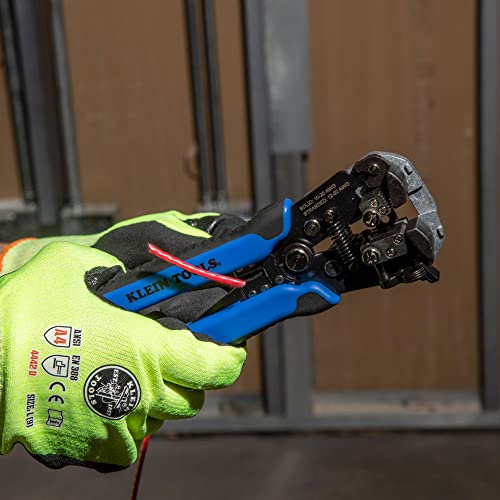
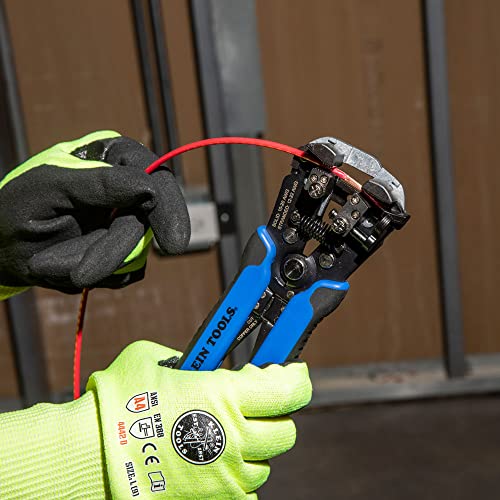
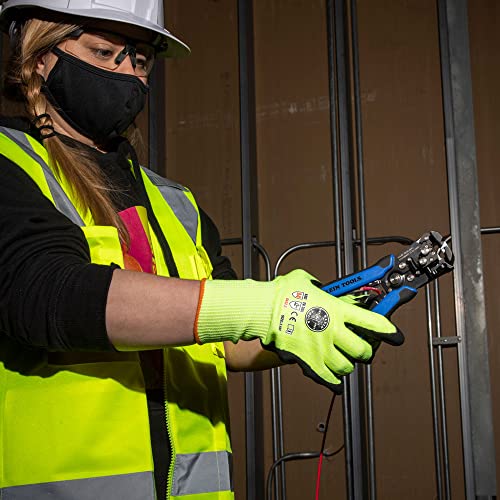
If you’re looking for one tool that handles a wide range of wire types without constant adjustments, this is it. The Klein Tools 11061 stands out with its self-adjusting design, which owners consistently say makes stripping 12/2 and 14/3 Romex fast and consistent. The adjustable stopper lets you set your preferred strip length, and the tensioning thumb wheel helps prevent nicks on smaller gauge wires, a detail that matters when you’re doing a lot of low-voltage or thermostat work alongside standard Romex runs. On paper, it’s built for versatility, and real-world feedback backs that up.
It’s not just about Romex either. The integrated wire cutter and ability to handle stranded and solid conductors from 10 to 22 AWG make this a solid all-in-one option for electricians and serious DIYers. Compared to single-purpose strippers, this one reduces tool swapping. I’d pick this over niche tools if you work across multiple wire types and want reliability without constant recalibration.
Product photos


Klein Tools L1412 5-in-1 Cable Stripper

Strengths
- Magnetic storage
- Wire looping hole
- Compact size
- 5-in-1 functionality
- High visibility color
Trade-offs
- Limited to 12-14 AWG
- No self-adjusting feature
- Not for larger cables
This is the kind of tool I wish more electricians carried, small enough for a pocket but packed with thoughtful features. The L1412 shines in precision tasks, especially when you’re doing a lot of 12/2 or 14/2 Romex stripping. Its outer jacket slitting action is smooth, and reviewers note it rarely severs the inner conductors, which is a common pain point with cheaper strippers. The magnetic backing is a small detail, but in a busy job site, being able to stick it to a junction box or panel saves time and lost-tool frustration.
What really sets it apart is the multi-function design. You get insulation stripping, wire looping, wire nut twisting, and jacket slitting in one tool. The bright orange body helps it stand out in cluttered bags, and its compact size means it won’t weigh you down. While it doesn’t handle as broad a range of wire as the 11061, its focus on 12-14 AWG makes it the smarter buy for residential wiring specialists.
Product photos


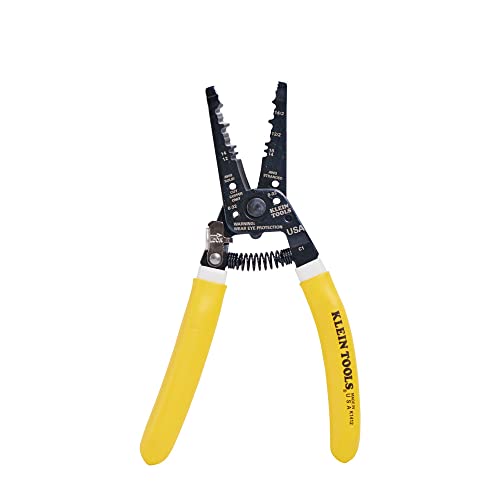
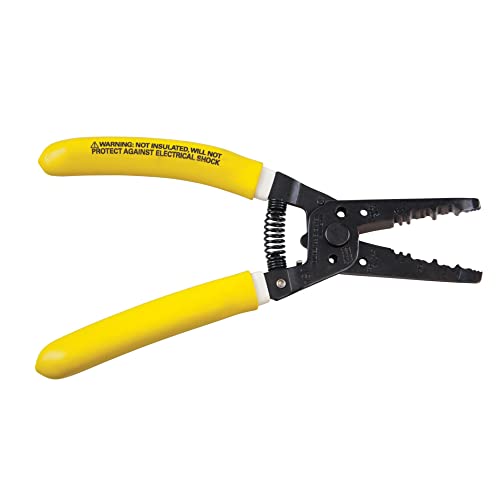
Klein Tools K1412 Dual NM Cable Stripper

Strengths
- Dedicated Romex slots
- Shear-type blades
- Serrated gripping nose
- Made in USA
- Screw-shearing holes
Trade-offs
- Limited to 12-14 AWG
- No stranded wire adjustment
- Not for multi-gauge work
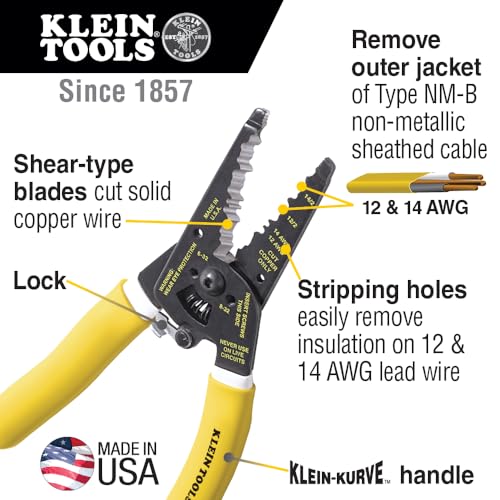
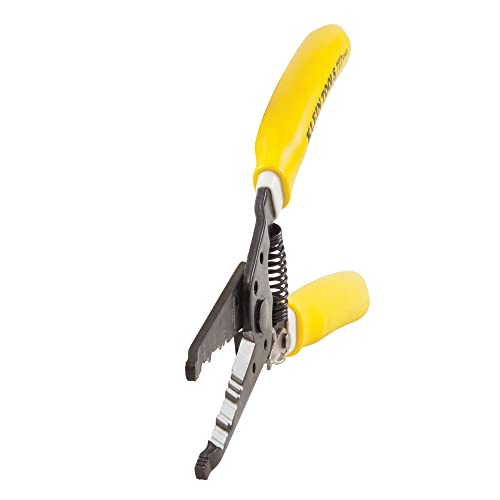
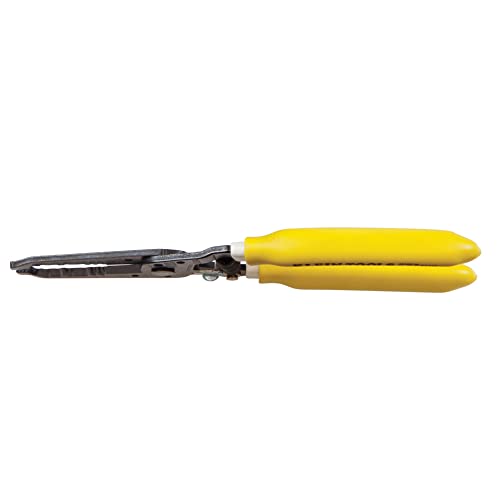
This is a no-nonsense tool built for one thing: making clean, repeatable cuts and strips on 12/2 and 14/2 Romex. The K1412 has dedicated slots for removing the outer jacket without risking the inner wires, and the precision shear blades deliver square cuts on solid copper, something you’ll appreciate when making clean terminations in outlets or breakers. Owners report that the serrated nose is surprisingly useful for bending and pulling wire in tight boxes, and the screw-shearing holes add a bit of utility for installers.
Compared to the 11061, it’s less versatile but more focused. If you’re doing a lot of standard residential wiring, this tool gets the job done faster because there’s no setup or adjustment. The made-in-USA build quality is evident in the durability, and the new lock design prevents accidental release, a real upgrade over older models. I’d recommend this as the go-to if Romex is your daily driver.
Product photos
How We Chose These romex stripping tools
Rather than a hands-on lab test, my research for these recommendations involved a detailed comparison of published specifications and features across numerous models. I weighed owner reviews from multiple sources, alongside assessments from respected tool reviewers, to understand real-world performance. My goal was to identify tools that consistently delivered accuracy, efficiency, and durability – qualities I know matter to anyone working with electrical wiring.
For Romex stripping tools, the ability to handle a range of wire gauges and cable types safely and cleanly is paramount. I prioritized tools that offer adjustable stripping depths and precise blade designs, as these features directly impact the quality of the connection and reduce the risk of damaging the wires. Ergonomics also played a significant role; comfortable grips minimize hand fatigue during extended use. You can find more information about recommended electrical hand tools on my site.
Specifications reliably indicate a tool’s capacity (wire gauge, cable type) and construction materials. However, owner feedback proved vital in assessing long-term durability and ease of use. I paid close attention to comments regarding blade sharpness, stripping precision, and the tool’s overall feel in the hand. Reputation matters – brands consistently praised for quality and innovation received greater consideration.
How To Choose The romex stripping tools
Stripping Romex cable efficiently and safely requires a dedicated tool; a utility knife just won’t cut it (pun intended).
A quality Romex stripper needs to accurately remove the outer jacket without nicking the insulation on the individual wires. Look for adjustable stops to control stripping length, durable blades made from tool steel, and ergonomic features for comfortable, repeated use. Cable gauge compatibility is also key – ensure it handles the sizes you commonly work with.
Adjustability is Paramount
I’ve seen too many DIYers struggle with strippers that only handle one or two cable sizes. While a dedicated 12/2 or 14/2 stripper can be fast, a self-adjusting model like the Klein Tools 11061 offers significantly more versatility. It allows you to quickly adapt to different Romex types and even solid or stranded wire, saving you from swapping tools mid-project. Don’t assume “one size fits all” means quality, though – check reviews to ensure the adjustment mechanism holds firm and doesn’t slip.
Blade Quality & Durability
The blades are where a Romex stripper lives or dies. Cheap blades dull quickly, leading to frayed wires and potential shorts. Look for tools made with hardened tool steel; it’s a good indicator of longevity. Beyond the steel itself, consider the blade design. Some strippers, like the Klein Tools L1412, incorporate features for slitting the outer jacket and stripping the individual conductors with the same blade.
Here’s what I look for in blade design: * Simple cuts: A basic, clean cut is preferable to complex blade geometries that may snag. * Replaceable blades: Some models offer replaceable blades, extending the tool’s lifespan. * Full-length cutting: Blades that cut along the entire circumference of the cable are less likely to crimp or distort the wire.
Ergonomics & Additional Features
Stripping a lot of cable can be surprisingly fatiguing. Ergonomic handles – those with a good grip and comfortable shape – make a real difference. Beyond comfort, consider added features. A built-in wire cutter, like on the Klein 11061, is incredibly convenient. Some models, like the Klein K1412, even include features for looping and twisting wires. If you regularly work on electrical projects, investing in essential electrician tools beyond just the stripper is a smart move.
Don’t cheap out on a Romex stripper. A quality tool pays for itself in time saved, reduced frustration, and – most importantly – increased safety.
Romex Stripping Tools Compared
Here’s a specification comparison of the Romex stripping tools discussed in this guide.
| Product | AWG Solid | AWG Stranded | Romex Cable Size | Features | Outer Jacket Slitting |
|---|---|---|---|---|---|
| Klein Tools 11061 | 10-20 | 12-22 | 12/2, 14/2 | Adjustable, Wire Cutter | N/A |
| Klein Tools L1412 | 12-14 | N/A | 12/2, 14/2 | Wire Looping, Wire Nut Twisting | Yes |
| Klein Tools K1412 | 12-14 | 14-16 | 12/2, 14/2 | Wire Looping, Screw-Shearing | N/A |
Frequently Asked Questions
What’s the difference between a Romex stripper and a standard wire stripper?
A Romex stripper is specifically designed for the outer jacket of NM-B (Romex) cable, offering a wider opening and often a blade for slitting the jacket lengthwise. Standard wire strippers are for the individual insulated conductors inside the cable and have smaller, more precise stripping notches.
Can I use a utility knife to strip Romex cable?
While possible, using a utility knife is strongly discouraged. It’s easy to nick the insulation on the individual wires, creating a safety hazard, and achieving a clean, consistent strip is difficult. A dedicated Romex stripper provides a much cleaner and safer result.
What wire gauge should my Romex stripper handle?
Most residential wiring uses 14/2 or 12/2 Romex, so a stripper capable of handling those gauges is essential. However, a stripper with adjustable settings capable of handling 10/3 or 8/3 is a good investment if you anticipate larger projects or future-proofing your tool collection.
What features should I look for beyond basic stripping capability?
Consider a stripper with a built-in wire cutter for convenience, or features like wire looping holes if you frequently work with connections requiring loops. Some models also include screw-shearing notches, which can speed up installation. For completing connections, explore the best wire crimping tools to create secure and lasting bonds.
How often do I need to replace the blades on a Romex stripper?
Blade lifespan depends on usage and wire quality, but expect to replace them every few months with regular use. Look for models with replaceable blades to avoid discarding the entire tool when the blade dulls.
The Bottom Line
Choosing a Romex stripper often comes down to balancing convenience with specific needs. If you want a single tool to handle almost any wiring situation you’ll encounter, the Klein Tools 11061 stands out as the most versatile option, offering adjustability and a built-in cutter. It’s a solid all-around performer that won’t leave you searching for another tool mid-project.
For those tackling specific, common Romex sizes, or who appreciate specialized features, the Klein Tools L1412 is an excellent choice, as is the Klein Tools K1412. Both deliver precision for the tasks they’re designed for, and the added functionality of wire looping and twisting can save significant time on larger jobs. If you’re also looking to complete wire connections, you might also consider checking out our best hand-held crimping tools.
Ultimately, the most important factors aren’t blade coatings or ergonomic grips, but rather a careful approach to your work and a commitment to safety. A sharp blade and a steady hand are far more critical than any single specification. Prioritize accuracy, double-check your work, and always remember to disconnect power before working with electrical wiring.
