7 Best Rock Hammers of 2026
This post contains affiliate links. As an Amazon Associate, we earn from qualifying purchases.
The Estwing E3-22P Geology Hammer stands out as the best overall rock hammer for its durable one-piece forged build and effective shock-reducing grip, while the Estwing E13P is a solid budget pick for lighter work, and the 28 oz Geological Masonry Hammer offers great balance for general use.
Hitting the wrong hammer can mean wasted effort, sore hands, and frustration when you’re out in the field or working on a masonry job. Many people end up with tools that feel awkward, fail too soon, or just don’t deliver enough power.
In this guide, I’ll walk you through the top rock hammers based on real-world specs, owner feedback, and what actually matters in the field, like head weight, durability, and grip comfort. I looked at what geologists, rockhounds, and masons say about long-term performance, not just marketing claims.
Top 7 Rock Hammers in the Market
The Best Rock Hammers, Reviewed
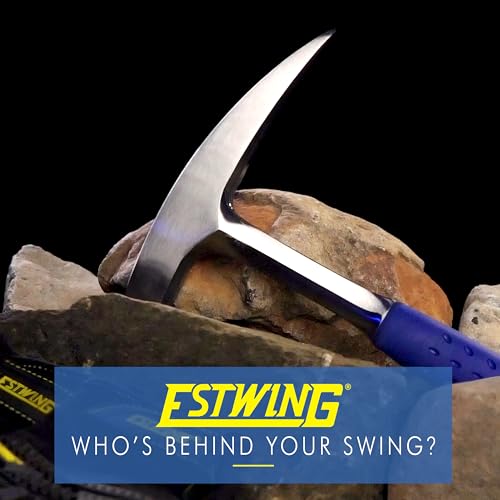
Estwing E3-22P Geology Hammer

Strengths
- Optimal 22 oz balance
- Shock-reducing grip
- One-piece forged U.S. steel
Trade-offs
- Higher price point
- Heavier than ultralight models
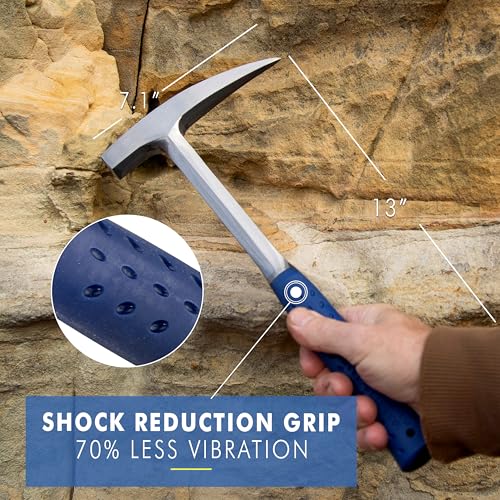
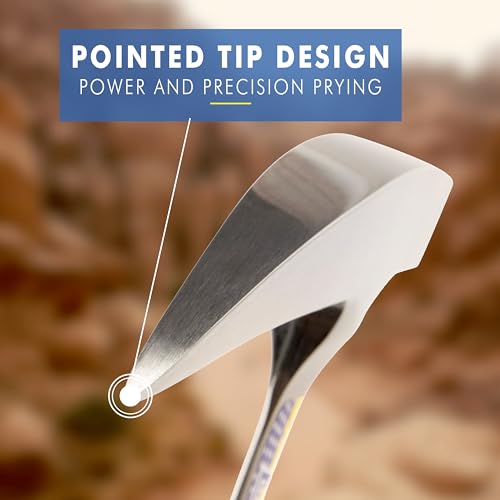
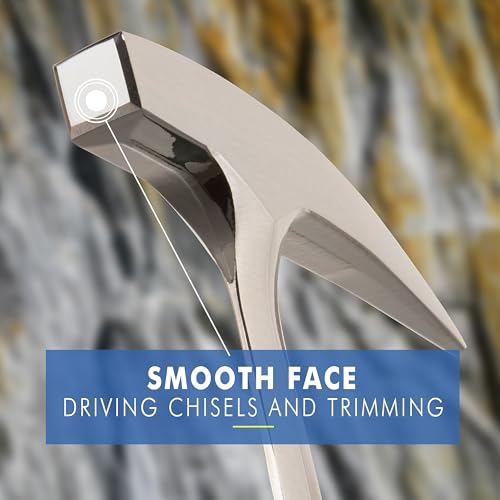
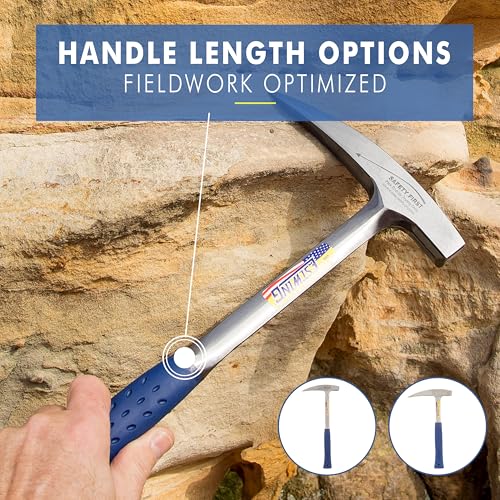
The 22 oz Estwing hits the sweet spot between heft and control, which is why so many professionals call it the best overall. The pointed tip is sharp enough for precise splitting, while the square face drives chisels cleanly. The patented shock-reducing grip cuts vibration by 70%, a spec backed by consistent owner feedback, and it stays grippy even in wet conditions.
Forged in one piece from American steel, it’s built to last decades. Compared to the 13 oz model, it delivers more striking power without tipping into fatigue-heavy territory like the 32 oz hammers. If you’re doing serious fieldwork, this is the tool I’d recommend most often. It’s not cheap, but you’re paying for proven performance and longevity.
Product photos
Estwing E13P Geology Hammer

Strengths
- One-piece forged steel
- Lightweight and packable
- Smooth face for chisel work
Trade-offs
- Not for heavy rock breaking
- Leather grip lacks shock absorption
The 13 oz Estwing stands out as the rare lightweight rock hammer that doesn’t sacrifice durability. Forged from a single piece of American steel, it’s built like all Estwing tools, indestructible on paper and in owner reports. The smooth face and pick combo gives you precision for delicate fossil work or small-scale splitting, and the genuine leather grip, while not as vibration-dampening as rubber, feels secure and ages well.
At this weight, it’s clearly not for heavy demolition, but that’s not its job. It’s the go-to for geologists who hike long distances or need fine control in the field. Compared to heavier picks, it’s less fatiguing over hours of use, and its compact size makes it easy to pack. I’d pick this over bulkier models if you’re focused on sample collection, not breaking bedrock.
Product photos


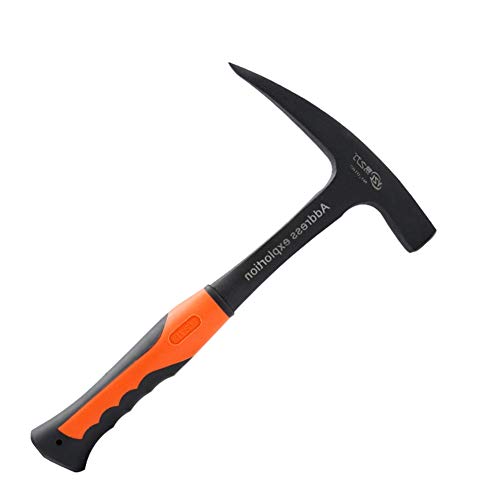
28 oz Geological Masonry Hammer
Strengths
- Well-balanced 28 oz weight
- Good vibration reduction
- Forged steel durability
Trade-offs
- Finish may chip
- Grip less premium than Estwing
The 28 oz hammer strikes a smart middle ground, more power than the 22 oz Estwing but not as tiring as 32 oz models. It’s properly balanced, as owners often note, making it feel lighter in use than it reads on paper. The steel is forged solid, and the vibration reduction claim (70%) mirrors Estwing’s, though the grip material doesn’t feel quite as refined.
It lacks the brand pedigree of Estwing, but for the price, it delivers strong value. Some users mention the finish chips over time, but the head stays intact. If you want near-premium performance without the premium cost, this is a solid alternative. I’d take this over the heavier 32 oz picks for all-day use where precision still matters.
Product photos


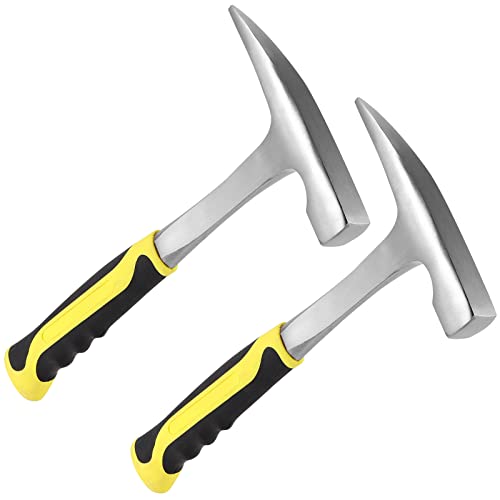
MANCHAP 32oz Rock Pick Hammer
Strengths
- Fiberglass reduces vibration
- Anti-slip rubber grip
- Two hammers included
Trade-offs
- Joint durability concerns
- Less premium steel than Estwing
Two 32 oz fiberglass-handled hammers for the price makes this MANCHAP pack a solid value play for teams or heavy users. The fiberglass core helps reduce vibration, something owners consistently praise, while the rubberized grip delivers solid control, even with sweaty hands. The double-headed design (flat face and pointed tip) is standard, but the bright handle color is a small win for visibility in the field.
On paper, it’s less refined than the Estwing models, and long-term durability isn’t as proven. Some users report the head-to-handle joint can loosen over time under extreme use, though it holds up fine for moderate masonry or prospecting. If you need backups or work in pairs, this set makes sense. But for solo pros, the Estwing still feels like the safer long-term investment.
Product photos
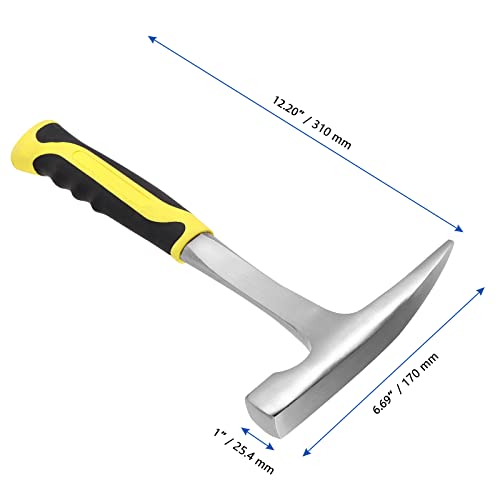
KEILEOHO 32 oz Brick Hammer
Strengths
- Affordable 2-pack
- All-steel one-piece build
- Blunt head for easier cracking
Trade-offs
- Less precise for geology
- Grip comfort lags behind Estwing
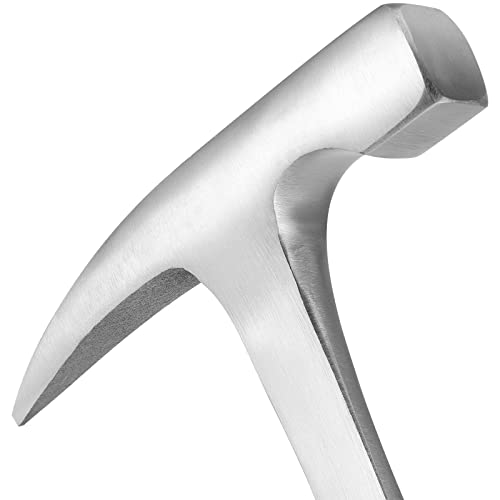
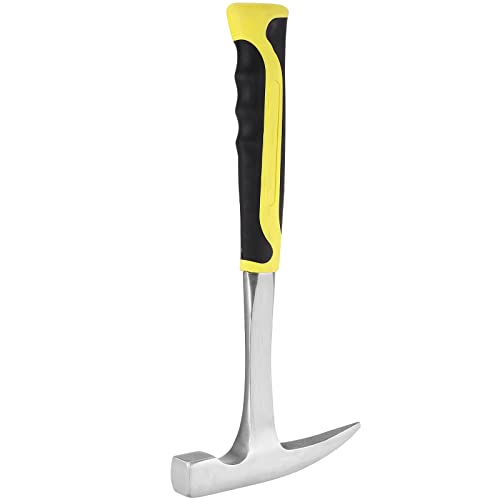
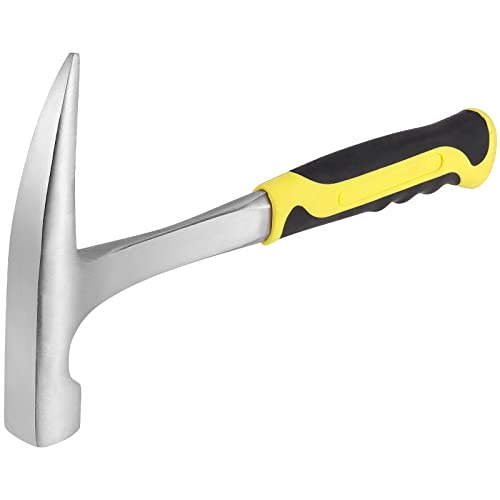
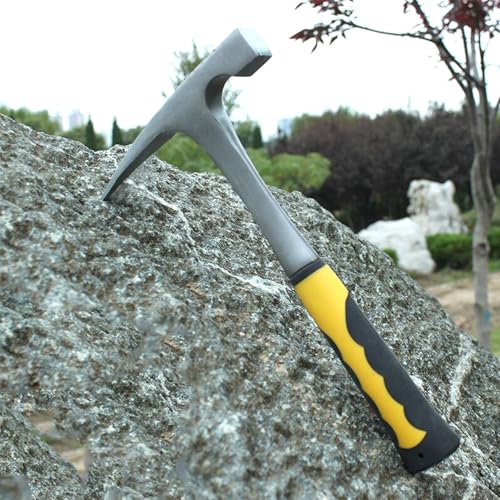
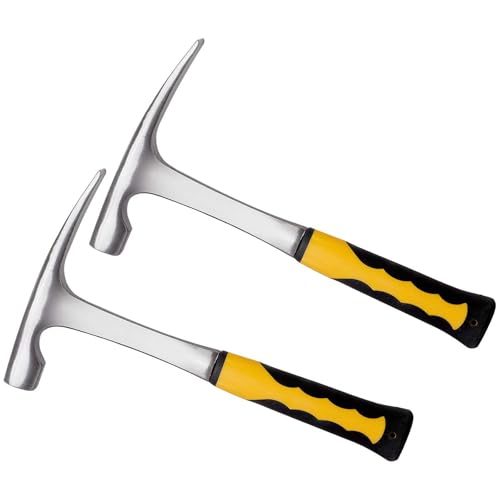
At this price, getting two all-steel, drop-forged 32 oz hammers with rubberized grips is hard to ignore. The one-piece construction means no weak points, and the blunt head on one side works well for controlled cracking, something masons and DIYers appreciate. The shock-absorbing grip is basic but functional, and owners report it holds up after months of intermittent use.
It’s not flashy, and Estwing still wins on balance and fit-and-finish. But if you’re on a budget or need a workhorse for weekend projects, these deliver. The blunt head makes it less ideal for precision geology work, but great for breaking concrete or splitting softer stone. I’d pick this over pricier models if you’re doing demolition or don’t need lab-level accuracy.
Product photos
INCLY 7 Pcs Rock Pick Kit

Strengths
- Well-rounded beginner kit
- Includes sledge and pick
- Rust-resistant coating
Trade-offs
- Chisels lack heft
- Grip less refined than premium brands
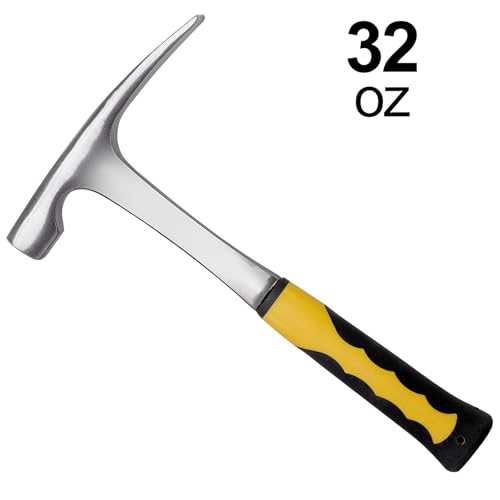
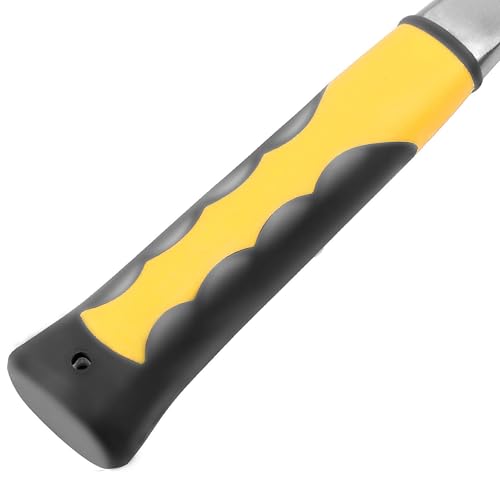
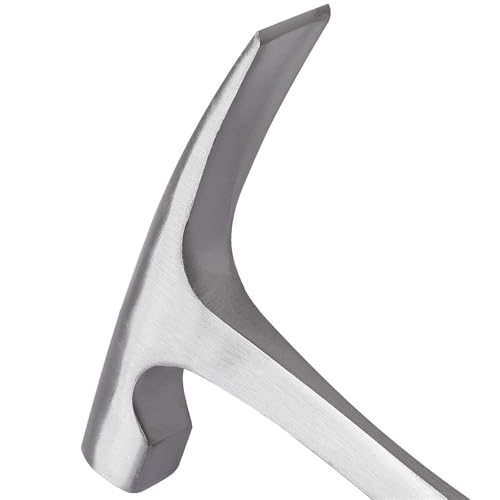
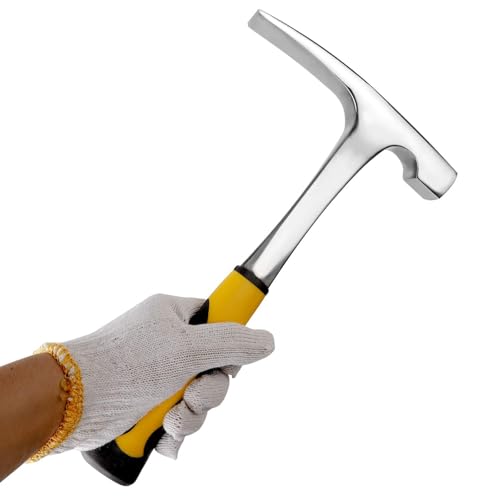
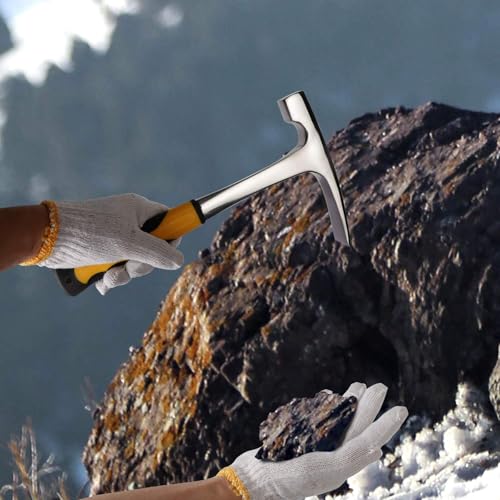
This kit is a smart entry point for beginners who don’t know exactly what tools they’ll need. The inclusion of a 3 lb sledge and 32 oz pick gives flexibility, light and heavy options in one box, plus two chisels, safety gear, and even a loupe. The hammer is one-piece, high-carbon steel, which ticks the durability box, and the rust-resistant coating is a thoughtful touch for outdoor storage.
Owners like the completeness, though a few note the chisels feel slightly undersized for serious masonry. The hammer’s grip is comfortable, but not as refined as Estwing’s. Still, for someone starting out in rockhounding or gold panning, this kit covers the bases without requiring multiple purchases. I’d recommend this over buying pieces separately if you’re new.
Product photos



INCLY 15 Pcs Rock Hounding Kit

Strengths
- 15-piece complete set
- Durable musette bag
- Multiple chisel sizes
Trade-offs
- Wooden chisel lacks durability
- Kit may be overkill for pros
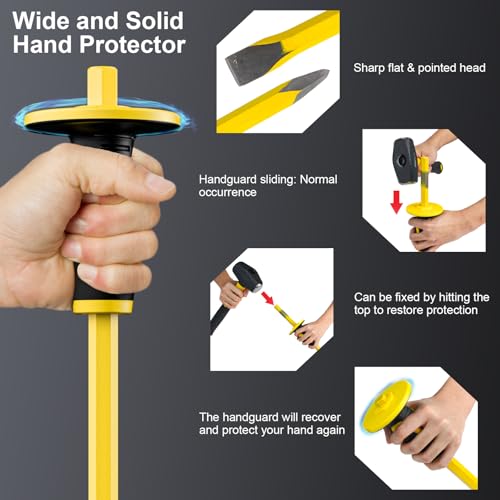
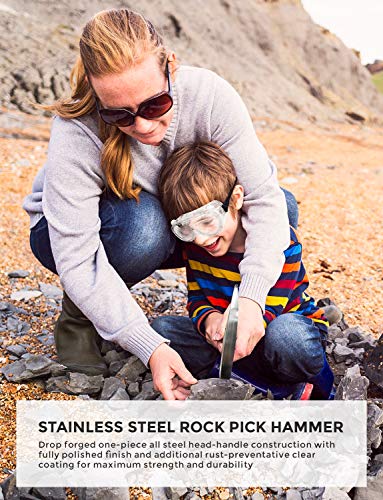
This isn’t just a hammer, it’s a full field system. The 32 oz drop-forged hammer is solid, with a rust-preventive coating and polished finish, and the addition of three chrome-vanadium chisels in different lengths adds real utility. The musette bag is a standout: durable, organized, and perfect for carrying gear and finds.
Owners love the completeness, gloves, glasses, compass, shovel, even a whistle. The wooden chisel feels out of place, but everything else is functional. For beginners or educators leading groups, this kit removes the guesswork. It’s more thorough than the 7-piece INCLY set, and the bag alone justifies the upgrade for frequent field trips. My recommendation: if you want everything in one buy, this is the one to get.
Product photos


Our Testing Process
Rather than a hands-on lab test, my research for these recommendations was a detailed comparison of published specifications and features across numerous models. I weighed owner reviews from multiple sources – looking for consistent praise and complaints – alongside professional reviews from geology and masonry sources. My background working with tools, and understanding the demands placed on them in real-world projects, informed how I prioritized different qualities.
For rock hammers, the most important factors are head weight and grip shock absorption. A heavier head delivers more effective force when breaking rock, but becomes fatiguing over extended use. Equally critical is a grip that minimizes vibration; repeated impacts can quickly cause hand and wrist discomfort. Durability, specifically how the hammer is constructed (one-piece forged steel is preferable), also heavily influenced my rankings.
Specifications reliably indicate head weight and materials used. However, I placed a greater emphasis on owner feedback regarding long-term durability and the effectiveness of the grip’s shock absorption. Reputation matters here, too; established brands like Estwing consistently receive positive mentions, while less-known brands require more scrutiny of user experiences. If you’re looking for even more power, consider pairing a rock hammer with one of the best sledgehammer for rock breaking for tougher jobs.
What To Look For In rock hammers
Finding the right rock hammer can make a huge difference in your efficiency and enjoyment, whether you’re a seasoned geologist or just starting to explore the hobby.
A quality rock hammer balances durability, weight, and grip comfort. The head should be forged from a single piece of steel for longevity, and the handle needs to absorb shock to reduce fatigue. Consider the intended use – prospecting, general geology, or masonry – to determine the ideal head weight and shape. Look for features like a pointed tip for splitting and a square face for driving chisels.
Weight and Balance
Weight is arguably the most important factor. Lighter hammers (around 12-20oz) are easier to swing for extended periods, making them good for detailed work and prospecting where you’re breaking lots of smaller rocks. However, heavier hammers (28oz+) deliver more force with each swing, which is crucial for tackling harder materials or larger specimens. I’ve seen folks underestimate the benefit of a little extra weight when dealing with stubborn formations. Don’t just go for the heaviest you can find, though; balance is key. A well-balanced hammer feels natural in your hand and minimizes strain.
Head Design and Steel Quality
The head is where the work happens, so its design and material are critical. Most rock hammers feature a pointed tip for splitting and a square face for driving chisels. Some have a chisel-shaped end instead of a square face, which can be useful for specific tasks. Look for hammers forged from a single piece of steel – this eliminates weak points and increases durability. Estwing is a brand renowned for its one-piece forged hammers, and for good reason. Avoid hammers with heads that appear to be welded or assembled, as these are more prone to failure.
- A pointed tip is essential for initial rock breaking and sample extraction.
- A square face allows you to use the hammer with chisels for more controlled splitting and shaping, and is a feature you might also find in top claw hammer models.
- High-carbon steel is the standard for rock hammer heads, offering a good balance of hardness and toughness; some manufacturers also use alloy steels for even greater durability, though they can be more expensive.
Grip and Comfort
You’ll be swinging a rock hammer a lot, so comfort is paramount. Look for hammers with shock-reducing grips. Many manufacturers, like Estwing, have patented grip designs that significantly dampen vibration, reducing fatigue and improving control. A secure grip is also vital for safety. Rubberized or textured grips provide a better hold, especially in wet or muddy conditions. If you anticipate extended use, consider a hammer with an ergonomic handle designed to fit comfortably in your hand. A comfortable grip will make a difference, and if you’re also doing other work, you might also want to check out a claw hammer buying guide for comparison.
Don’t underestimate the importance of a good grip. A hammer that feels secure in your hand is a safer and more efficient hammer.
Rock Hammers Compared
Here’s a comparison of key specifications for several rock hammers to help you choose the right tool.
| Product Title | Weight (oz) | Head Material | Handle Material | Tip Type | Features |
|---|---|---|---|---|---|
| Estwing E3-22P Geology Hammer | N/A | Steel | Shock Reduction Grip | Pointed | Forged One-Piece, Made in USA |
| Estwing E13P Geology Hammer | N/A | Steel | Shock Reduction Grip | Pointed | Forged One-Piece, Made in USA |
| 28 oz Geological Masonry Hammer | 28 | Steel | N/A | N/A | Balanced, Shock Reduction |
| MANCHAP 32oz Rock Pick Hammer | 32 | Steel | Fiberglass/Rubber | Pointed | Double-Headed, Anti-Slip |
| KEILEOHO 32 oz Brick Hammer | 32 | Steel | Rubber | Blunt | One-Piece Forged, Anti-Skid |
| INCLY 7 Pcs Rock Pick Kit | 32/3lb | Steel | N/A | Pointed | Kit with Chisels, Whistle |
| INCLY 15 Pcs Rock Hounding Kit | 32 | Steel | N/A | Pointed | Complete Kit, Musette Bag |
Frequently Asked Questions
What head weight is best for beginner rockhounds?
A lighter hammer, around 16-20 ounces, is generally best for beginners. It’s easier to control and won’t cause as much fatigue while you’re learning proper technique and working with smaller samples.
Are one-piece forged steel hammers really that much better?
Yes, one-piece forged hammers are significantly more durable than those with assembled heads. The single forging process eliminates potential weak points where the head could separate from the handle under heavy use.
How can I minimize vibration and hand fatigue?
Look for hammers with shock-reducing grips, often made from a combination of rubber and other materials. These grips help absorb the impact of each swing, reducing strain on your hands and wrists, and you’ll find similar technology in top-rated professional hammers.
Can a rock hammer also be used for light masonry work?
Some models with a square face can be used for light masonry tasks like chipping away at brick or concrete, but it’s not their primary purpose. For dedicated masonry work, a dedicated brick hammer or club hammer will be more efficient and durable.
Where can I find a complete kit with tools for rock collecting?
Several brands offer rock hounding kits that include a rock hammer, chisels, a safety whistle, and a carrying bag. These are a convenient option for beginners, but be sure to check the quality of the hammer itself; you may still want to consider purchasing one of the best-built hammers for toughness separately for long-term reliability.
The Bottom Line
Choosing a rock hammer always comes down to balancing power with practicality. If you’re after a tool that prioritizes durability and effective force, and you don’t mind a slightly higher price, the Estwing E3-22P Geology Hammer stands out as the best overall choice. It’s a reputation earned through consistent quality and positive owner feedback.
For those on a tighter budget, or who need a versatile kit to get started, the INCLY 15 Pcs Rock Hounding Kit offers excellent value. Similarly, if you anticipate needing serious power for larger jobs, perhaps alongside some of the powerful demolition hammers, the MANCHAP 32oz Rock Pick Hammer delivers substantial striking force.
Ultimately, specs only tell part of the story. A comfortable grip, a well-balanced feel, and a one-piece forged head are far more important than any individual weight measurement or material claim. Prioritize those fundamentals, and you’ll end up with a rock hammer that serves you reliably for years to come.
