
8 Best Rolling Miter Saw Stands 2026
This post contains affiliate links. As an Amazon Associate, we earn from qualifying purchases.
The Bosch T4B is the overall best rolling miter saw stand for serious users who need maximum material support, while the WEN MSA330 stands out as a smart budget pick that doesn’t skimp on key features like built-in outlets and solid wheel size.
Most people buying a rolling miter saw stand are tired of makeshift setups that wobble, limit cut length, or take forever to break down and move. You need something that’s stable enough for precise cuts, yet portable enough to shift between job sites or garage corners without frustration.
This guide cuts through the marketing noise by focusing on what actually matters, real stability, support length, and ease of transport, based on specs, owner feedback, and years of working with power tools. I looked at how each stand performs under load, how smoothly it rolls, and whether the setup is truly quick, so you can pick one that fits your workflow and sticks with you for years.
Top 8 Rolling Miter Saw Stands in the Market
The Best Rolling Miter Saw Stands, Reviewed
Bora Portamate Miter Saw Stand PM-8000

Strengths
- 400 lb capacity
- 10-inch wheels
- Folding workbench wings
- Stainless steel frame
- Multi-functional use
Trade-offs
- Higher price point
- Slightly longer setup
- No built-in outlets
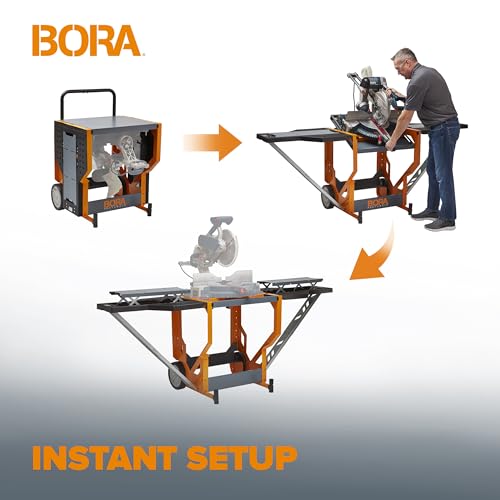
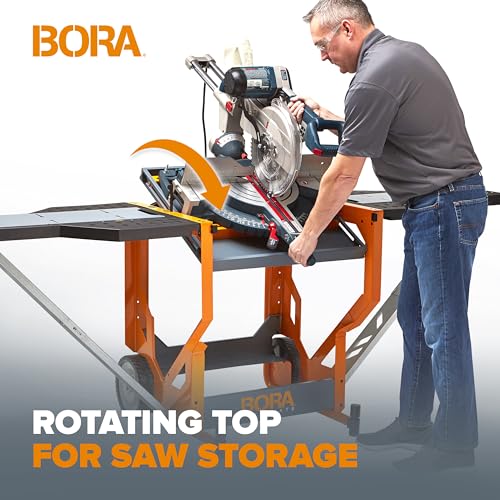
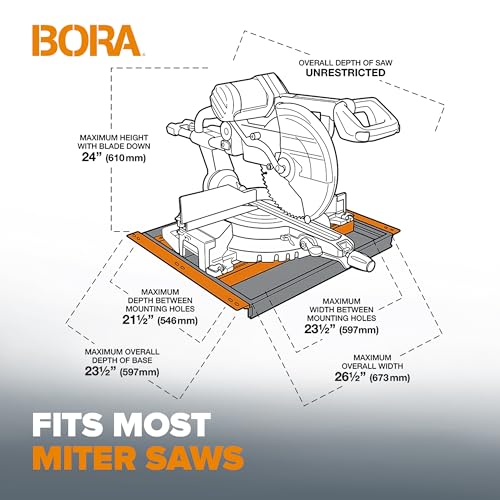
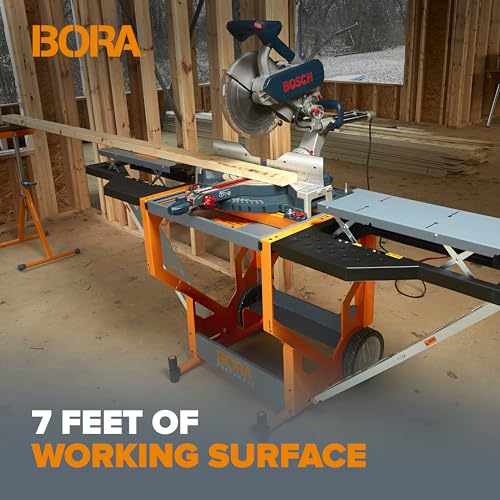
The Bora PM-8000 feels like the Swiss Army knife of miter saw stands, strong, smart, and surprisingly versatile. With a 400 lb capacity, it’s the heaviest-duty option here, and owners repeatedly mention how stable it feels, even with heavy sliding saws. The stainless steel frame resists rust and shows less flex than carbon steel alternatives. The 10-inch wheels are among the largest in class, making it easier to roll across job sites with a saw mounted.
But what really sets it apart is the multi-functional design. The folding wing extensions double as a workbench, and the integrated handle makes transport intuitive. Unlike most stands that are just for sawing, this one pulls double duty for assembly and storage. It’s not the cheapest, but when you factor in durability, capacity, and utility, it’s the smartest all-around pick for someone who wants one stand to do it all.
Product photos
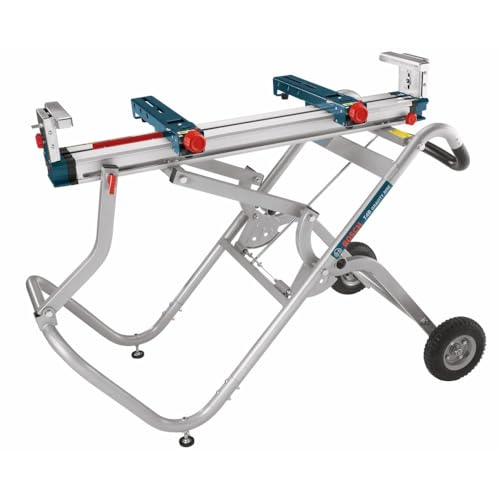
Bosch T4B Gravity-Rise Miter Saw Stand
Strengths
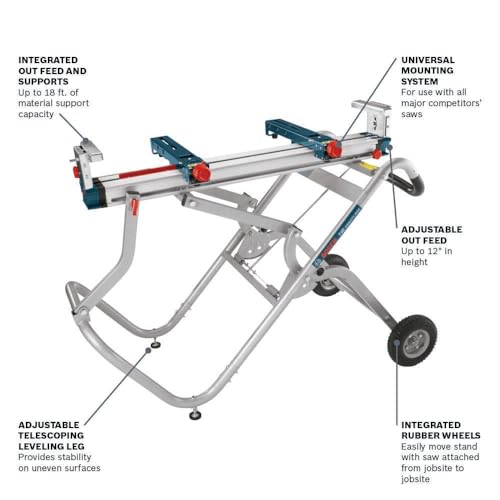
- 18 ft material support
- Telescoping leveling leg
- Gravity-rise mechanism
- Stable on uneven ground
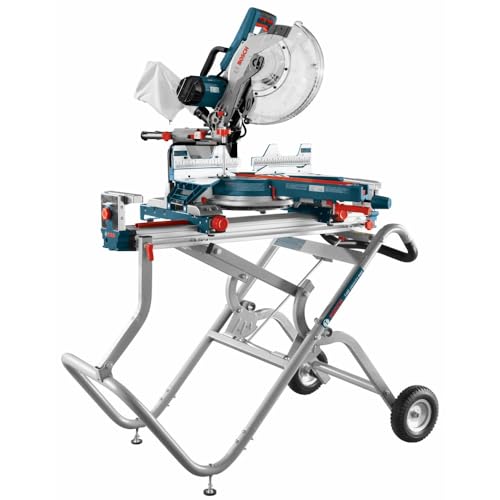
- Universal fit
Trade-offs
- Bulky when open
- No onboard storage
- Heavier than most
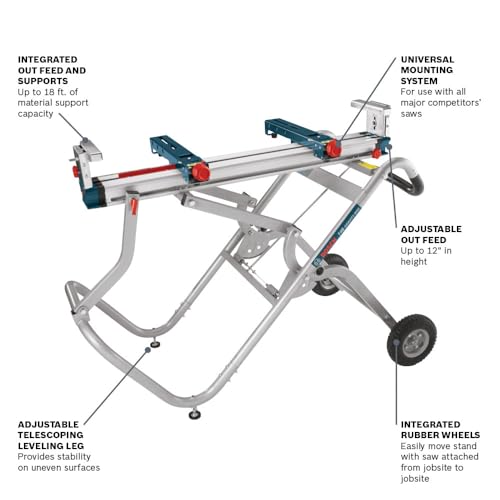
Bosch built the T4B for one thing: handling massive materials. The 18-foot outfeed support is unmatched in this lineup, and reviewers who cut long trims or decking consistently call this a game-winner. The gravity-rise mechanism works smoothly, lowering the stand with minimal effort, no cranking or pumping. The telescoping leveling leg is a small detail that makes a big difference on uneven ground, and it’s one of the few stands that really stabilizes on sloped or soft surfaces.
It doesn’t have built-in outlets or fancy storage, but it doesn’t need them. This is a no-nonsense, high-capacity solution. The universal mounts fit nearly every saw, and the rubber wheels are durable, though not as large as Bora’s. If you regularly work with long stock and need consistent support from start to finish, this is the most capable stand here, just be ready to give up some compactness and convenience features.
Product photos


WEN Miter Saw Stand MSA330
Strengths
- Affordable price
- Three power outlets
- Long support arms
- Never-flat wheels
- Easy assembly
Trade-offs
- Frame flex at full extension
- Basic finish
- Limited height adjustment
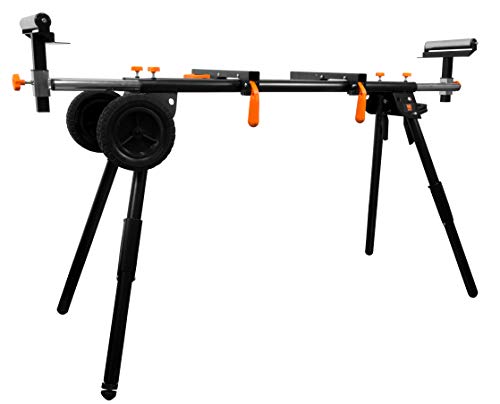
WEN has always targeted the budget-conscious DIYer, and the MSA330 delivers exactly that, no more, no less. The standout here is the three onboard outlets, which a lot of reviewers love for keeping cords tidy and tools powered without a separate power strip. The 1.5-inch steel frame is adequate, not outstanding, but for weekend projects and garage use, it holds up fine. Owners report the 8-inch never-flat wheels roll well over smooth floors and light debris, though they struggle on gravel or grass.
The extendable arms go impressively long, up to 10.5 feet, which beats many pricier models. But the trade-off is some flex in the supports when loaded at full extension. I’d still recommend this for homeowners who need decent support without breaking the bank, especially if you’re using a mid-weight miter saw under 40 lbs. Just don’t expect the rock-solid feel of a DEWALT or Bora.
Product photos


DEWALT Rolling Miter Saw Stand DWX726

Strengths
- Pneumatic assist
- Universal mounting
- 300 lb capacity
- Durable steel frame
- 3-year warranty
Trade-offs
- Heavier than average
- Slightly pricier
- Assembly required
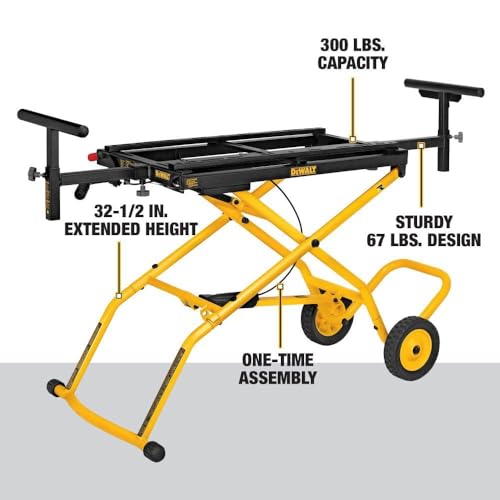
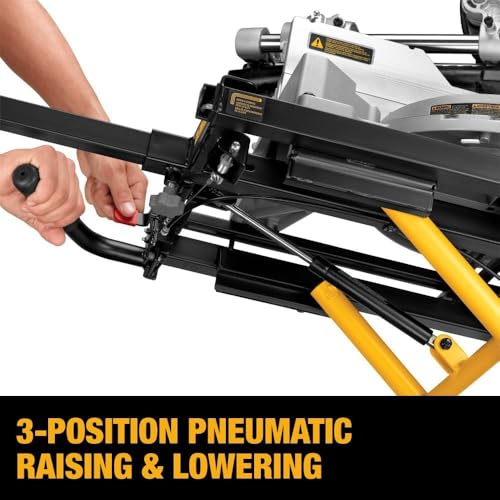
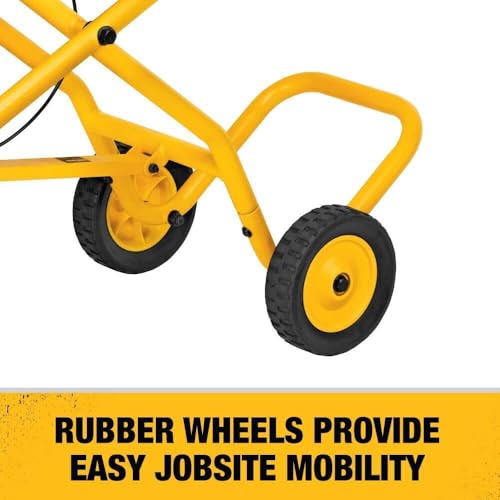
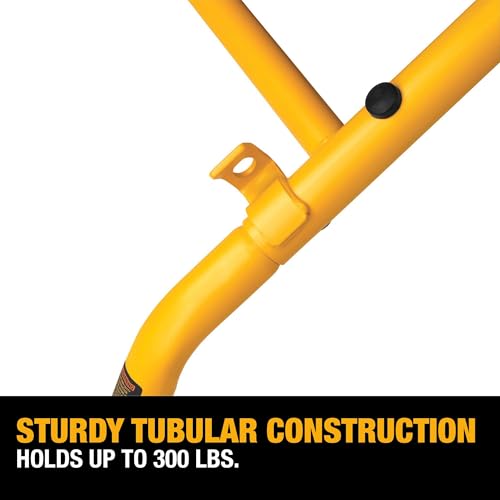
The DEWALT DWX726 stands out in a crowded field because it feels engineered, not just assembled. The three-position pneumatic assist for raising and lowering the stand is a rare feature at this level, and owners consistently report it makes setup noticeably smoother, especially when working solo. On paper, the 300 lb capacity and tubular steel frame are solid, but what really comes through in feedback is the rigidity. There’s little to no wobble, even during aggressive cuts, which speaks to how well the frame resists torsional flex.
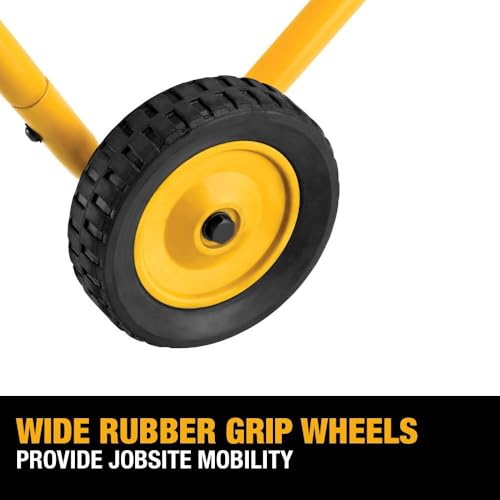
It’s not the lightest, but the wide rubber grip wheels do their job on mixed terrain. Compared to budget stands, this one holds up like a jobsite fixture. The foldable design is genuinely compact, and the universal rails really do fit nearly every major brand without fuss. If you’re someone who values long-term reliability over upfront savings, this is the kind of stand you’ll still be using five years from now.
Product photos
Channellock Folding Miter Saw Stand
Strengths
- One-handed cam locks
- Boxed steel frame
- 10 ft extension
- Built-in parts tray
- Smooth rolling tires
Trade-offs
- No height adjustment
- Heavier than some
- No power outlets
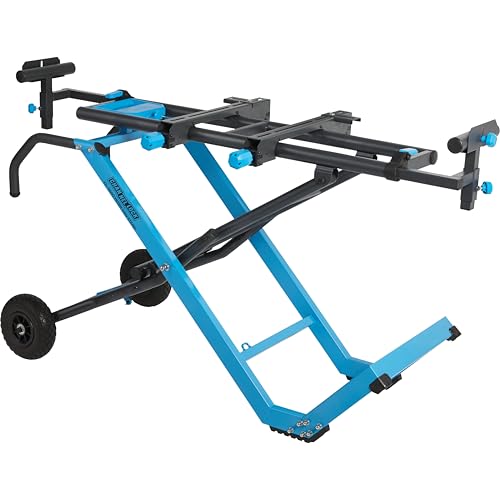
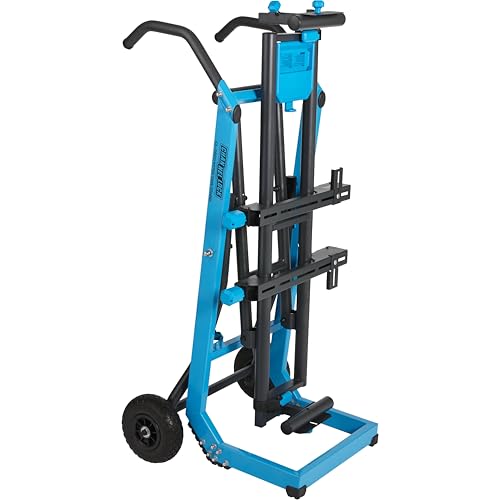
Channellock didn’t reinvent the wheel, they refined it. The one-handed cam lock system is the star here, and owners love how fast it is to deploy and collapse the stand. No tools, no fuss, just flip the levers and you’re ready. The boxed tube steel frame is noticeably stiffer than round tubing, and it shows in cut accuracy reports, where users note less vibration.
The 10-foot extension is solid, and the built-in parts tray is a small but meaningful perk for keeping clamps or blades close. It’s not the lightest, but the rubber tires roll well over rough surfaces. Compared to DEWALT, it’s faster to set up; compared to WEN, it’s far more durable. If you value speed and simplicity without sacrificing strength, this is the stand that gets you working fastest.
Product photos
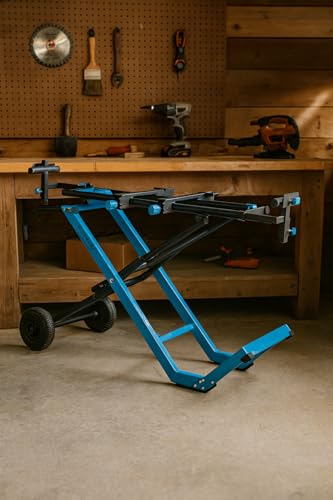
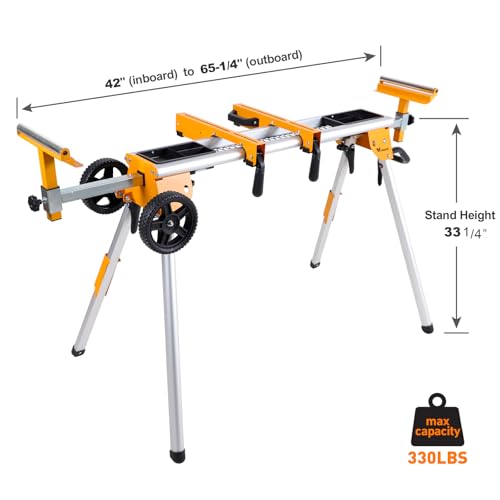
POWERTEC Miter Saw Stand MT4000V

Strengths
- Built-in power strip
- 330 lb capacity
- Quick-release brackets
- Sturdy round steel frame
- Folding design
Trade-offs
- Average wheel size
- No height adjustment
- Some bracket loosening
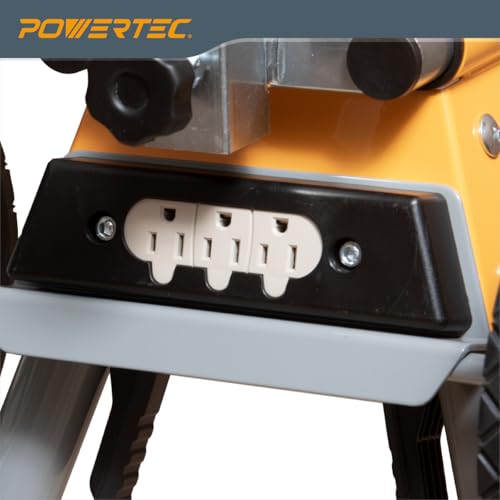
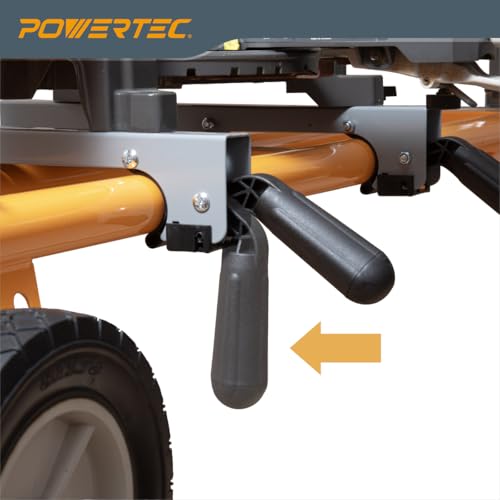
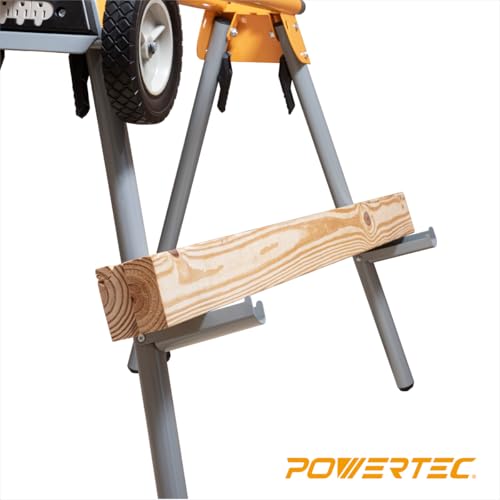
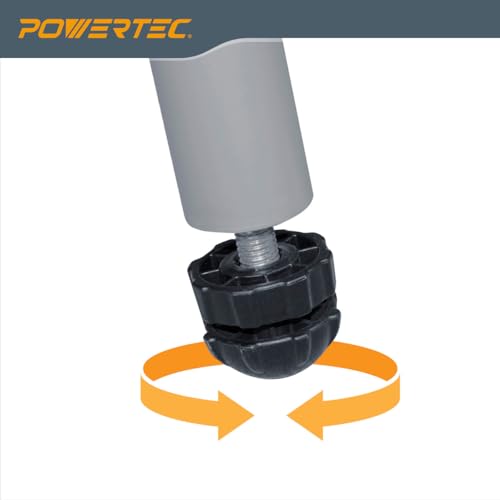
POWERTEC packed a lot into the MT4000V, but the real differentiator is the integrated 3-prong power strip mounted low on the frame. That’s a thoughtful touch, keeps outlets out of the way but always accessible. The 330 lb capacity matches top-tier models, and the round steel tubing gives it a sturdier feel than some box-frame competitors. Owners praise the quick-release brackets for making saw swaps fast, though a few note they require occasional tightening after heavy use.
The 8-inch rubber wheels are grippy but smaller than ideal for rough terrain. It folds flat, which is great for garage storage, but doesn’t collapse as compactly as the DEWALT. Compared to the WEN, it’s a step up in build but lacks the extended reach. If you want a stand that doubles as a mini workstation with reliable power access, this is a strong contender, especially if you’re running multiple tools from one mobile base.
Product photos
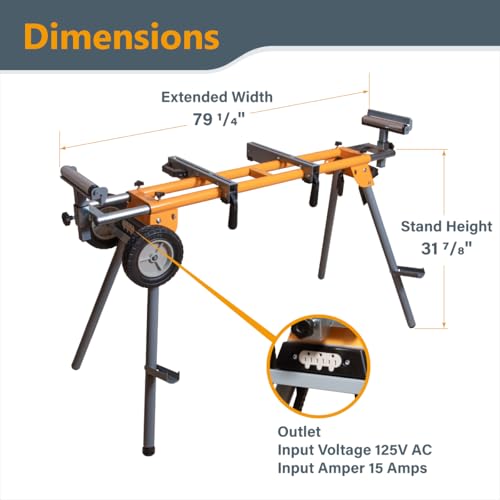
VEVOR Adjustable Height Miter Saw Stand
Strengths
- Five height settings
- Ergonomic design
- Adjustable support arms
- Quick setup
- Folding legs
Trade-offs
- Smaller wheels
- Basic build quality
- Limited brand recognition
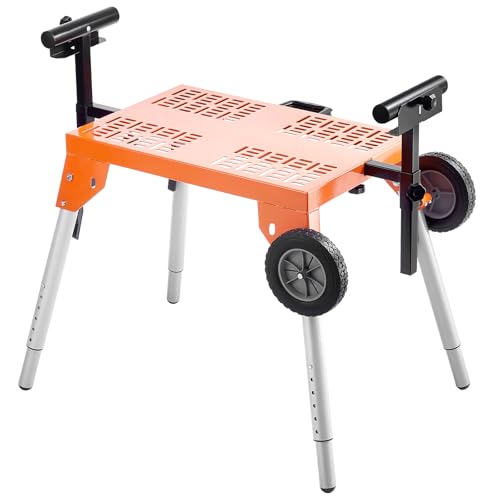
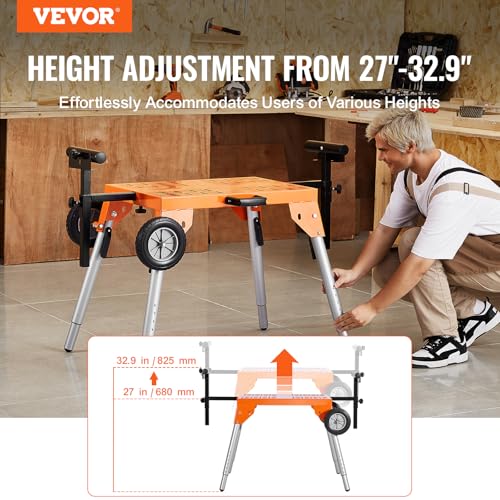
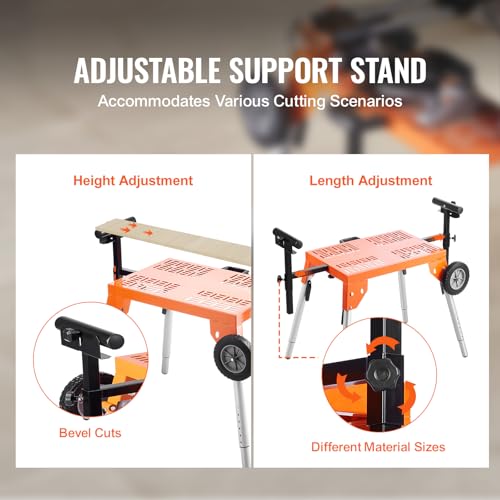
VEVOR is known for value, but the B0DMCD5X8R brings something rare at this price: five-level height adjustment from 27” to 32.9”. That range is a big deal for users of different heights or those who want to reduce back strain. Owners report the adjustable height makes a noticeable difference during long sessions, and the ability to set support arms at different heights per side is a subtle win for angled cuts.
The 330 lb capacity is standard, and the steel frame holds up well for the price. Setup is genuinely fast, three steps, as advertised. But the wheels are smaller and less rugged than Bora or DEWALT, and the folding mechanism, while easy, doesn’t feel as tight. If you prioritize comfort and ergonomics over brute strength, this is a smart pick. It’s the only stand here designed with real attention to user posture.
Product photos
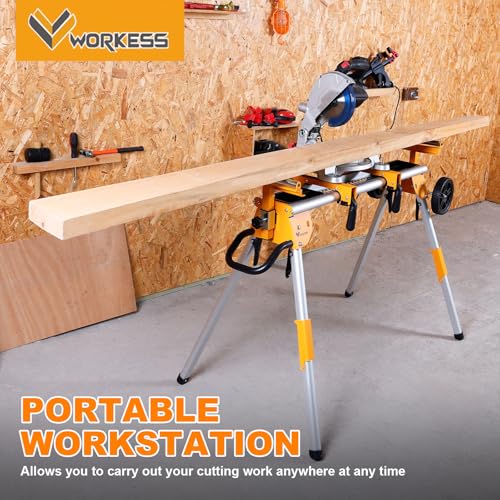
WORKESS Portable Miter Saw Stand WK-MS080

Strengths
- Integrated tool trays
- Fold-out material supports
- End stops for repeat cuts
- Non-slip feet
- Quick-release brackets
Trade-offs
- Small wheels
- No height adjustment
- Basic frame finish
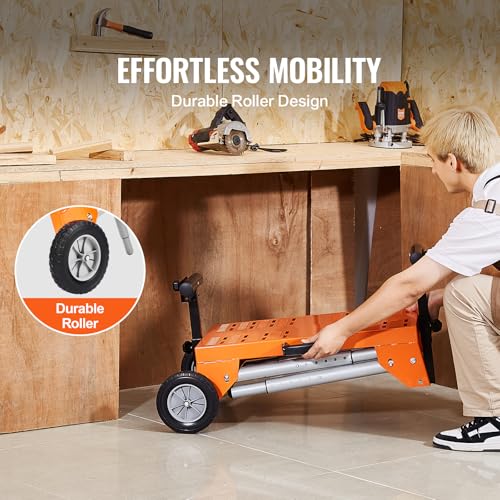
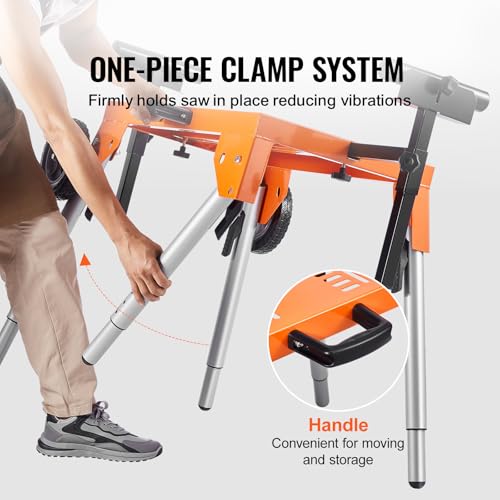
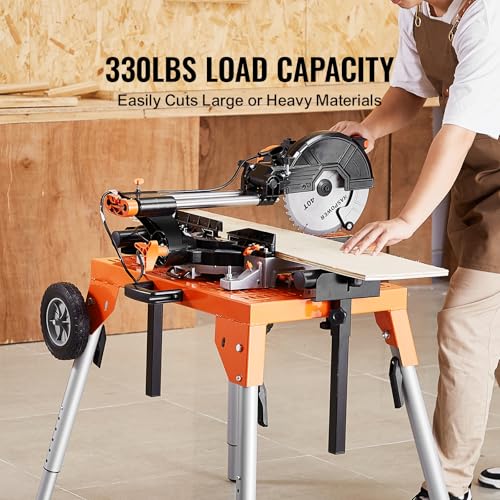
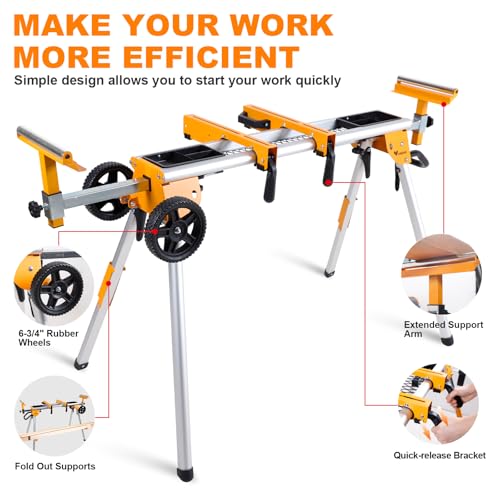
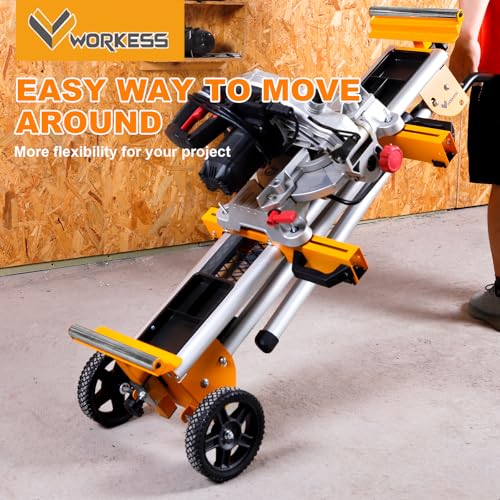
WORKESS isn’t a household name, but the WK-MS080 makes a strong case for attention, especially if you hate searching for tools mid-cut. The snap-in tool trays and fold-out supports are well-executed, and owners consistently highlight how much they appreciate having blades, clamps, and pencils within reach. The 330 lb capacity is standard, but the non-slip feet really work, even on slick garage floors.
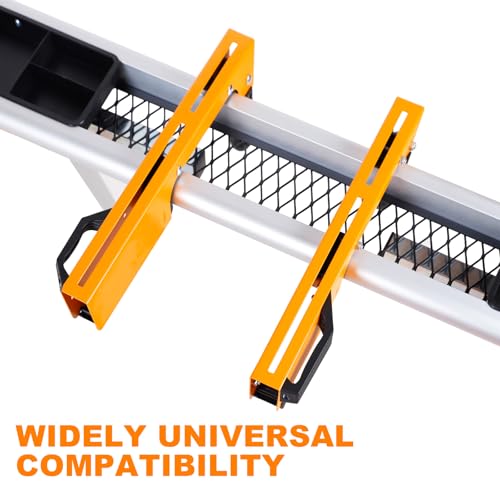
The 6.75-inch wheels are smaller than ideal, but they’re threaded for durability. The quick-release brackets are reliable across brands, and the end stops help with repeat cuts. It’s not as heavy-duty as Bora or DEWALT, but for a homeowner who values organization and workflow, this stand keeps everything in place. If clutter slows you down, this is the most thoughtfully laid-out option here.
Product photos
How We Evaluated rolling miter saw stands
Rather than a hands-on lab test, my research for these recommendations focused on a detailed comparison of published specifications and features across numerous models. I weighed owner reviews from major retailers alongside professional assessments from sites dedicated to woodworking and tool reviews. As someone who’s spent years working with power tools and advising others on tool selection, I applied my category knowledge to rank stands against clear performance criteria.
For rolling miter saw stands, stability and material support capacity were the biggest deciding factors. A wobbly stand defeats the purpose of a precise miter saw, so robust construction and a wide footprint matter immensely. Equally important is the ability to handle longer boards – many projects demand substantial support, and stands limited to shorter lengths quickly become impractical.
Specifications reliably indicate weight capacity and dimensions, while owner feedback highlighted real-world durability and ease of use. I paid close attention to comments regarding the quality of the locking mechanisms, the smoothness of the wheels, and how well the stand performed on uneven surfaces. Understanding miter saw basics is also key to choosing a stand that complements your saw’s capabilities.
How To Choose The rolling miter saw stands
Choosing the right rolling miter saw stand can dramatically improve the accuracy, efficiency, and even safety of your projects.
A quality rolling miter saw stand provides a stable, portable platform for your saw, increasing cutting capacity and reducing fatigue. Key features to evaluate include weight capacity, material support length, portability, and the universality of the mounting system. Look for robust construction, smooth-rolling wheels, and adjustability to suit your specific needs and workspace.
Capacity and Material Support
Don’t assume all stands support the same lumber dimensions. If you frequently work with larger stock – think engineered lumber or long trim boards – prioritize a stand with substantial outfeed support. The Bosch T4B, for example, boasts up to 18 feet of material support, making it a standout for those needing to handle hefty pieces. Conversely, if your work centers around smaller projects, a more compact option like the WEN MSA330 might suffice. Consider the weight of the materials you’ll be cutting, too; exceeding a stand’s capacity can lead to instability and inaccurate cuts.
Portability and Setup
The convenience of a rolling stand is diminished if it’s a pain to move or set up. Some stands, like the Channellock Folding Miter Saw Stand, really shine with one-handed setup and folding designs. This is a huge benefit if you’re constantly relocating your workstation. Others, such as the DEWALT DWX726, use pneumatic assistance for raising and lowering, which is a nice feature but adds complexity.
Here’s what I look for in terms of portability: * Lightweight frame (under 40 lbs is ideal). * Large, durable wheels (6-inch or greater diameter). * A well-placed handle for easy maneuvering.
Features and Value
Beyond the basics, consider the extras. Many stands now include built-in power outlets (like the POWERTEC MT4000V) which eliminates the need for extension cords, and integrated tool storage to keep everything organized. If you’re working with a compound miter saw, you’ll want to ensure the stand’s mounting system is compatible. Don’t automatically assume a “universal” fit will work; check owner reviews and specifications carefully. Finding the best overall miter saw stands often means balancing these features with your budget, but prioritizing a solid base and adequate support is always a smart move.
A stand should feel solid and stable, even when fully extended and loaded with material. If it wobbles or flexes significantly, it’s likely not built to handle the demands of serious work.
Rolling Miter Saw Stands Compared
This table provides a detailed specification comparison of various rolling miter saw stands to aid in your purchasing decision.
| Product Name | Weight Capacity (lbs) | Material Support Length (ft) | Height Adjustment | Power Outlet | Wheel Diameter (in) |
|---|---|---|---|---|---|
| Bora Portamate PM-8000 | 400 | N/A | N/A | No | 10 |
| Bosch T4B | N/A | 18 | N/A | No | N/A |
| WEN MSA330 | N/A | 10.5 | N/A | 3 (15A) | 8 |
| DEWALT DWX726 | 300 | N/A | Pneumatic | No | N/A |
| Channellock Folding Stand | N/A | 10 | N/A | No | N/A |
| POWERTEC MT4000V | 330 | N/A | N/A | Yes | 8 |
| VEVOR Adjustable Height Stand | N/A | N/A | 5-Level (27-32.9″) | No | N/A |
| WORKESS WK-MS080 | 330 | N/A | N/A | No | 6.75 |
Frequently Asked Questions
What’s the maximum material weight a rolling miter saw stand can typically support?
Most rolling miter saw stands handle up to 300-400 pounds, though the Bora Portamate PM-8000 is rated for 400lbs. Exceeding the weight limit compromises stability and cut accuracy.
Are pneumatic lift stands really worth the extra cost?
Pneumatic lift systems, like on the DEWALT DWX726, can ease setup and adjustment, but they add complexity and a potential point of failure. They’re best suited for professionals who frequently reposition their saw.
How important is wheel size for portability?
Larger wheels (8-10 inches) make maneuvering a rolling stand much easier, especially on uneven surfaces or job sites. Stands with wheels under six inches are noticeably harder to move when loaded with a saw and lumber.
Do I need a stand with a built-in power outlet?
A built-in power outlet (like on the POWERTEC MT4000V) is a convenience feature, eliminating the need for extension cords and reducing clutter. It’s particularly useful if you work remotely or in areas with limited outlets.
What should I look for in a stand if I need something for a job site?
If you need something for the job site, consider [jobsite miter saw stands] that prioritize portability, durability, and quick setup, such as the Channellock Folding Stand. A lightweight frame and robust wheels are essential for easy transport.
The Bottom Line
Choosing a rolling miter saw stand often comes down to balancing convenience with capability. While some prioritize portability and quick setup, a truly solid foundation is paramount for accurate work. For most homeowners and serious DIYers, the Bora Portamate PM-8000 offers the best overall combination of stability, capacity, and features – it’s a stand built to last and support a wide range of projects.
If you’re on a tighter budget, the WEN MSA330 delivers surprisingly good value. And for those who regularly handle long or heavy lumber, the Bosch T4B stands out with its exceptional 18-foot material support. But remember, even the most feature-rich stand won’t compensate for a poorly maintained or incorrectly set up saw; learning proper miter saw techniques is crucial.
Ultimately, the most important factors aren’t the bells and whistles, but a stand’s inherent stability and its ability to securely support your materials. Don’t get caught up in chasing the latest features if it means sacrificing a rock-solid base. Prioritize a stand that allows you to make consistent, accurate cuts, and you’ll be well on your way to completing projects you can be proud of.
