
8 Best Hammers for Quality (2026 Guide)
This post contains affiliate links. As an Amazon Associate, we earn from qualifying purchases.
The Estwing 16 oz Curved Claw Hammer stands out as the best overall quality hammer, combining unbeatable durability with smooth performance. For those on a budget, the Klein Tools 18 oz Framing Hammer delivers pro-level build and smart features like a magnetic nail starter. If you need specialized versatility, the Stiletto FH10C Titanium Claw Hammer offers lightweight power and reduced rebound, ideal for precision work.
Most people don’t realize how much a poor-quality hammer can slow them down, or worse, leave them with sore hands and missed strikes. A lot of hammers look similar, but small differences in balance, material, and construction make a huge difference in real use.
I focused on models with proven durability, strong owner feedback, and smart design choices based on years of working with tools. These picks reflect what actually holds up in garages, job sites, and workshops.
Top 8 Quality Hammers in the Market
The Best Quality Hammers, Reviewed
Estwing 16 oz Curved Claw Hammer

Strengths
- One-piece forged steel
- Genuine leather grip
- Made in USA
Trade-offs
- No shock absorption
- Heavier feel
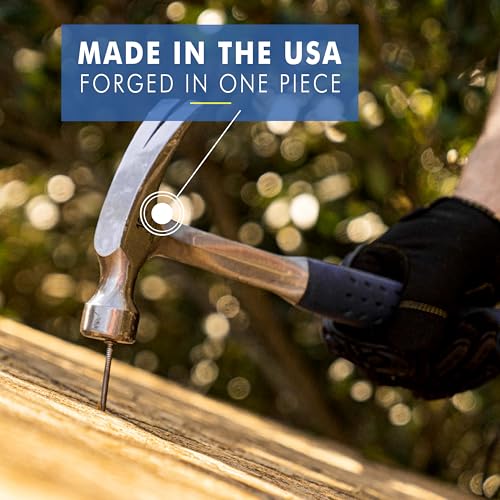
The Estwing E16C is the kind of hammer that earns loyalty fast. Forged from a single piece of solid American steel, it’s built like a tank and balanced for real-world use, this isn’t some weekend warrior tool. The smooth face delivers clean strikes without marring wood, and the curved claw gives solid use for prying. What stands out most is the genuine leather grip. It feels refined in hand, molds slightly over time, and doesn’t dampen vibration as much as rubber, but it adds a classic durability many pros still prefer.
Owners consistently report these lasting decades, even under daily job-site abuse. Compared to hammers with replaceable handles or composite grips, the one-piece build means nothing loosens over time. It’s not the lightest or most shock-absorbent option here, but for pure longevity and simplicity, it’s hard to beat. I’d pick this as the default go-to for anyone who values tradition backed by real toughness.
Product photos


Stiletto FH10C Titanium Claw Hammer
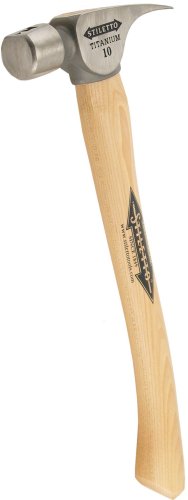
Strengths
- Titanium head reduces shock
- Lightweight yet powerful
- Hickory handle
Trade-offs
- Very expensive
- Not for heavy demolition
The Stiletto FH10C defies expectations, this 10 oz titanium hammer delivers driving force comparable to a 16 oz steel hammer, thanks to its high swing speed and low recoil. The titanium head reduces shock transfer significantly, which makes it a standout for precision work where fatigue matters. It’s light, well-balanced, and the curved hickory handle offers excellent control.
On paper, the price looks steep, but owners who use it daily say the reduced strain on their arms justifies the cost over time. Compared to standard steel hammers, it’s in a different performance class, especially for finish carpentry or trim work. The milled face gives solid grip on nail heads, though it’s not meant for heavy framing. I’d recommend this for pros who value efficiency and joint health, even if it means stretching the budget.
Product photos

Estwing 16 oz Straight Rip Claw Hammer
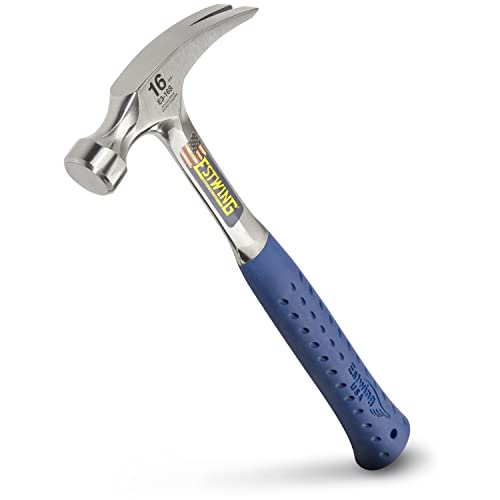
Strengths
- Straight rip claw for use
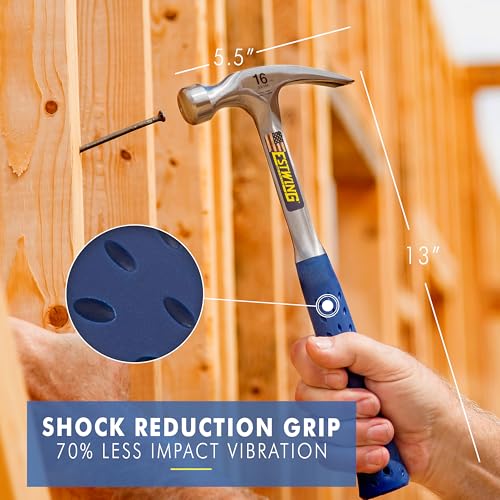
- Shock Reduction Grip
- One-piece forged build
Trade-offs
- Less precise for framing
- Claw can gouge wood
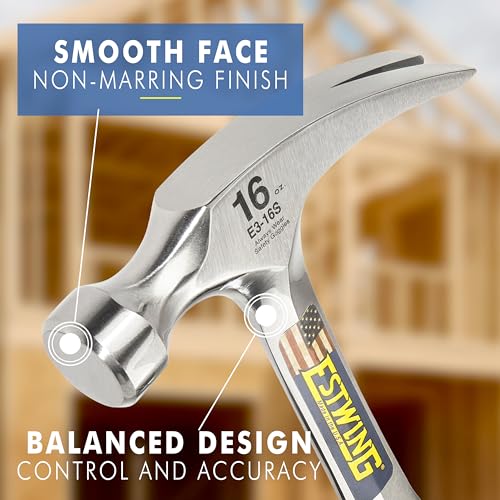
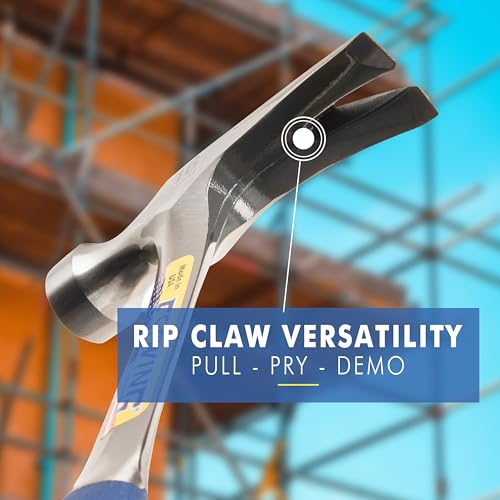
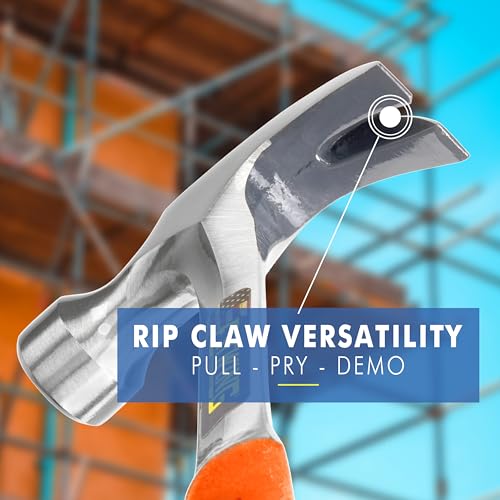
The E3-16S is built for destruction, and it does it well. The straight rip claw is longer and more aggressive than curved claws, giving it superior use when tearing apart walls or ripping up flooring. Combined with the 70% vibration-reducing grip, it makes demolition work less punishing on the body. The smooth face still allows for clean strikes when needed, but this hammer’s strength is in teardown, not fine building.
It’s essentially Estwing’s answer to the need for a dedicated demo hammer that still feels balanced and durable. Compared to the E16C, it’s less refined for framing but far more effective when you’re swinging to destroy. I’d pick this over the curved claw models if you regularly tackle renovations or tear-downs.
Product photos
Estwing 20 oz Curved Claw Hammer
Strengths
- Shock Reduction Grip
- Forged one-piece steel
- Hi-visibility handle
Trade-offs
- Slightly heavier swing
- Leather purists may dislike grip material
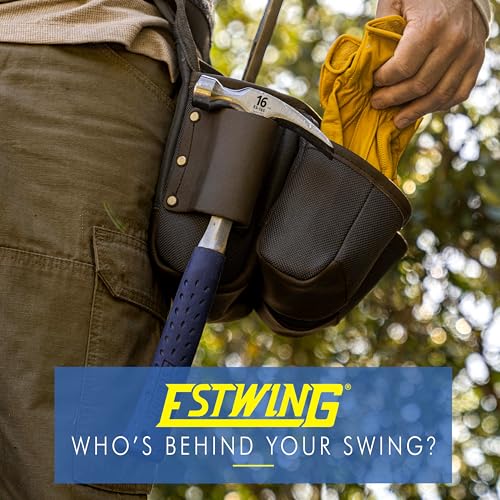
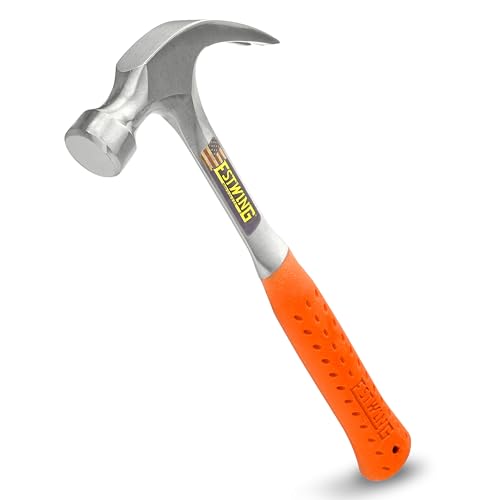
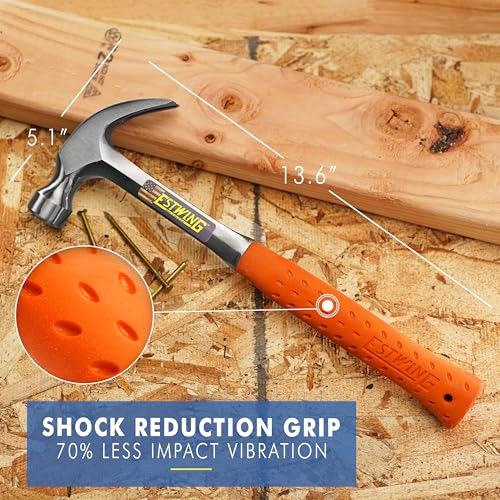
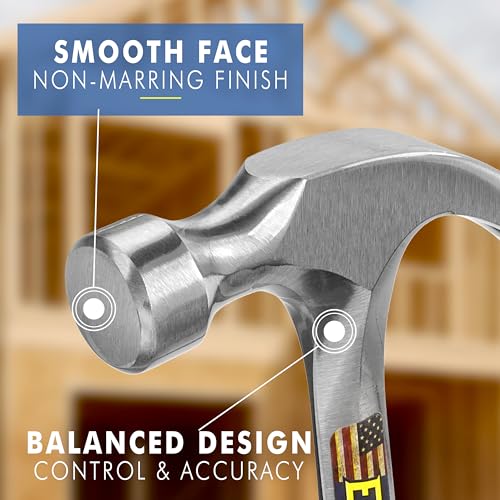
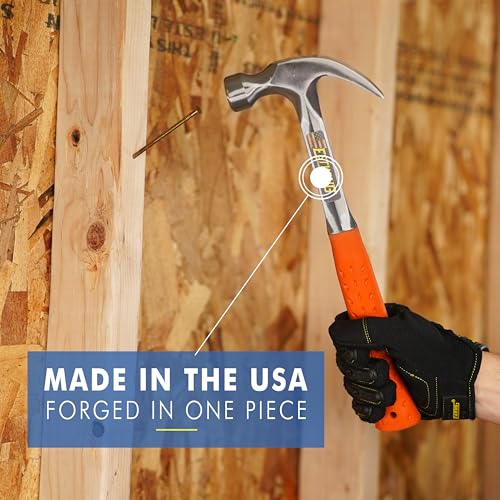
If you frame for a living, the EO-20C should be on your shortlist. At 20 ounces, it brings more striking power than the 16 oz models, and that extra weight is balanced well through the patented Shock Reduction Grip. Reviewers note the 70% vibration reduction makes a real difference during long days, your wrist and elbow will thank you. The high-visibility orange handle is a small but smart touch, making it easier to spot on a busy site.
The smooth face ensures clean hits, and the curved claw holds up well for ripping out lumber. It’s essentially the upgraded, more ergonomic version of the E16C. Compared to other 20 oz hammers without shock absorption, this one stands out for comfort without sacrificing durability. My recommendation? This is the smarter buy over the E16C if you’re doing heavy framing or roofing work.
Product photos

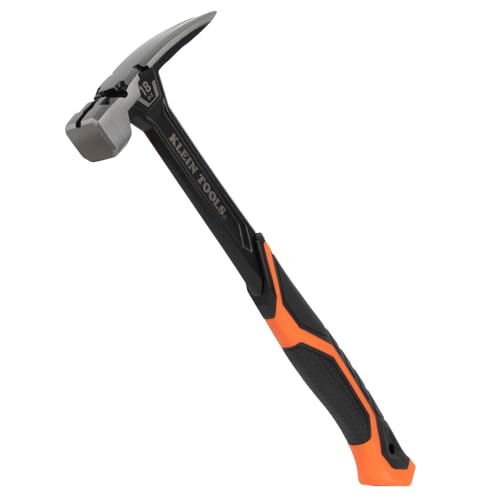
Klein Tools 18 oz Framing Hammer
Strengths
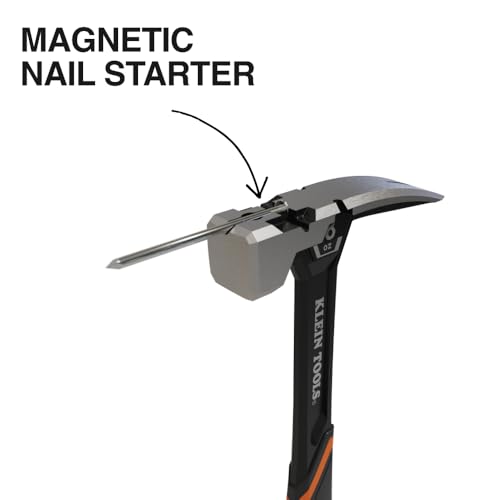
- Magnetic nail starter
- Squared strike face
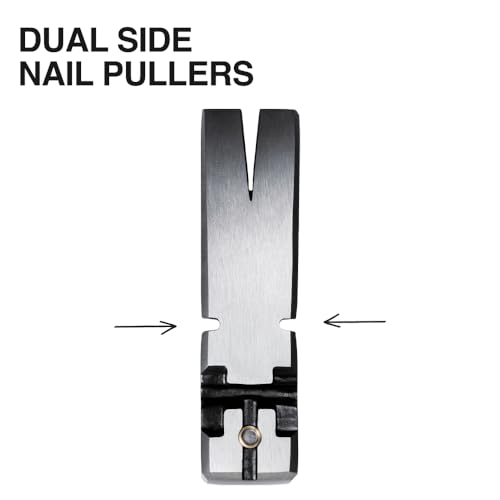
- Dual nail pullers
Trade-offs
- Lighter for heavy framing
- Fewer durability reports long-term
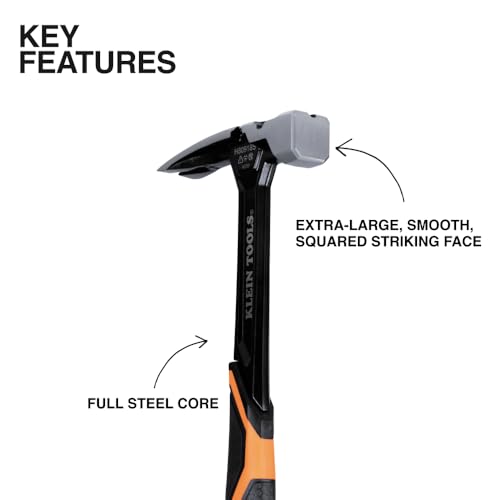
Klein’s H80918S brings some clever upgrades to the classic framing hammer. The magnetic nail starter is a standout for one-handed work, set the nail, position the head, and strike without fumbling. The extra-large squared face increases contact area, reducing glancing blows, especially in tight spots. At 18 ounces, it’s lighter than most framing hammers, making it a good middle ground between speed and power.
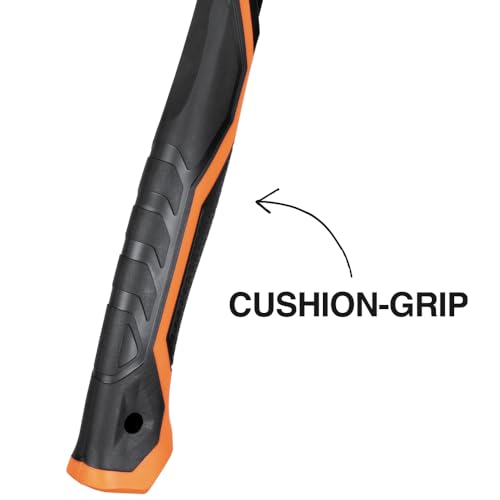
The dual side nail pullers are a nice touch, giving extra use when pulling in cramped areas. Compared to Estwing’s offerings, it’s more feature-focused than ruggedly minimal. The cushion grip helps with comfort, though it doesn’t match Estwing’s 70% shock reduction. I’d recommend this for finish carpenters or electricians who do light framing and value speed and precision.
Product photos
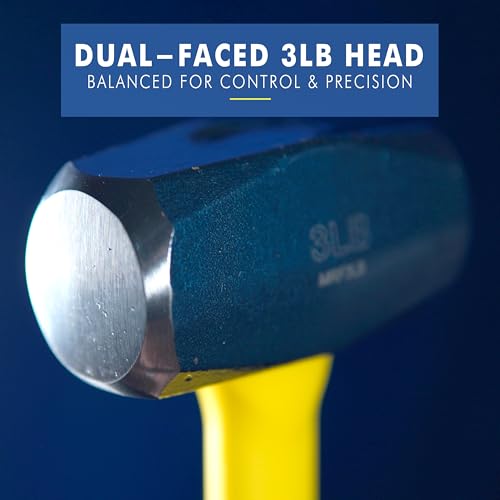
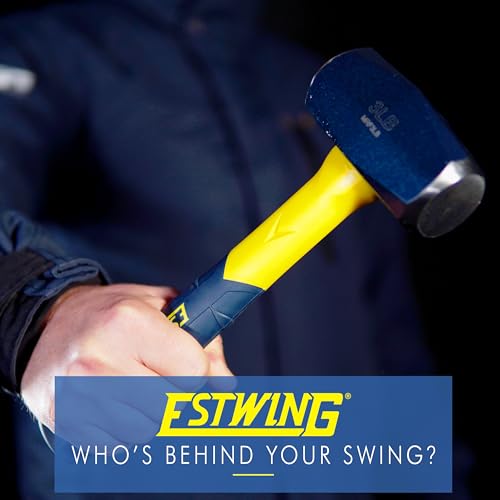
Estwing 3-Pound Fiberglass Sledge Hammer

Strengths
- 3-pound forged head
- Fiberglass handle reduces weight
- No-slip grip
Trade-offs
- Overkill for light tasks
- Not for precision work
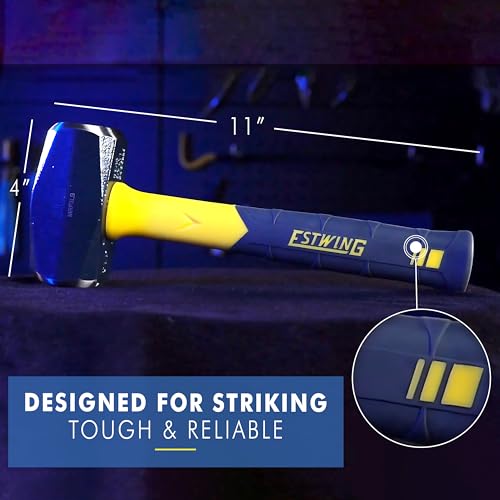
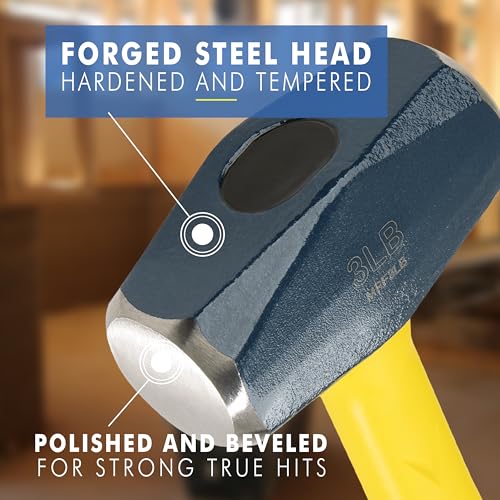
When you need brute force without arm fatigue, the MRF3LB delivers. The 3-pound forged steel head is serious business, ideal for breaking concrete, driving stakes, or demolition. What makes it stand out is the fiberglass handle with a cushioned grip. It’s lighter than a full steel sledge, yet holds up to repeated abuse. The balance is surprisingly good for a lump hammer, giving you control without sacrificing impact.
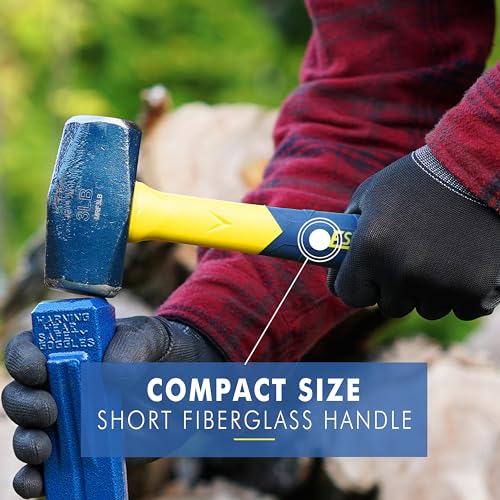
Reviewers love it for masonry and excavation work, and the compact size makes it easier to swing in tight spots. Compared to heavier 5- or 6-pound sledges, this is the sweet spot for most DIYers and pros who need power without overkill. The one-piece build Estwing is known for means no handle loosening or breaking. If you’re splitting stone or setting rebar, this is the one to grab.
Product photos
Neiko 2 lb Dead Blow Hammer
Strengths
- Dead blow design
- No rebound or sparks
- Bright color for visibility
Trade-offs
- Not for structural work
- Limited use outside auto/body
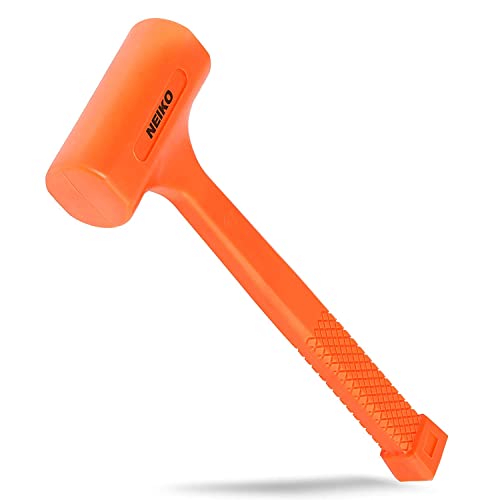
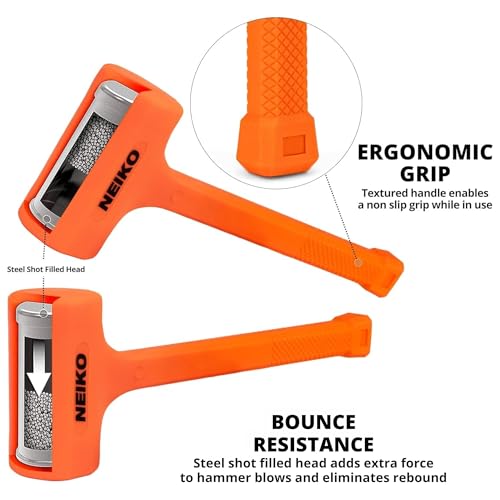
The NEIKO 02847A dead blow hammer is a smart pick for auto body or precision metalwork. The steel-shot-filled head eliminates rebound, so each strike delivers full force without bouncing, critical when aligning panels or shaping sheet metal. The unibody molded construction means no separation between head and handle, and the spark-resistant cover makes it safe around flammable materials.
The neon orange body isn’t just for show, it helps you spot it in a cluttered shop. The checkered grip keeps it secure even with oily hands. Compared to traditional metal hammers, it’s far gentler on surfaces and joints. While it won’t replace a framing hammer, it’s the kind of specialty tool you’ll reach for again and again in the garage. My recommendation: a must-have for car enthusiasts and metal fabricators.
Product photos


WEDO 12 oz Brass Ball Peen Hammer

Strengths
- Non-sparking brass head
- Corrosion resistant
- Fiberglass safety handle
Trade-offs
- Limited to specialty use
- Low striking power
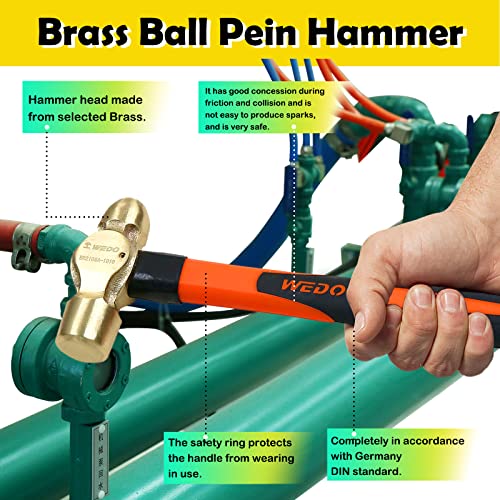
This WEDO brass hammer is built for safety in high-risk environments. The die-forged copper alloy head is non-sparking and corrosion-resistant, making it essential for use in petrochemical, mining, or explosive atmospheres. It’s not a general-purpose hammer, this is a specialist tool. The fiberglass handle is wrapped in TPR and PP materials, giving it solid grip and impact resistance even in wet or greasy conditions.
Owners in industrial settings report long service life and consistent performance. While it lacks the heft of steel hammers, that’s by design, its job is precision striking without ignition risk. Compared to standard ball peen hammers, it’s niche but critical where required. I wouldn’t use it on a framing job, but in the right setting, it’s indispensable.
Product photos



How We Evaluated quality hammers
Rather than a hands-on lab test, my research for these recommendations focused on a detailed comparison of published specifications and features across numerous hammer models. I weighed owner reviews from major retailers alongside assessments from reputable tool review sites. Ultimately, I ranked hammers based on a combination of these factors, applying my experience with tool durability and common user needs to arrive at the selections.
For quality hammers, striking power, balance, and grip comfort are paramount. I gave significant weight to hammers with forged steel construction – a sign of long-term durability – and those offering features designed to reduce impact vibration. A secure grip is also crucial; a hammer is only as good as the control it offers. Considering these factors led me to highlight hammers like those in our guide to best claw hammers.
Specifications reliably show head weight, overall length, and materials used. However, I leaned on owner feedback to assess real-world comfort, balance, and how well a hammer holds up to consistent use. Reputation, particularly for brands like Estwing and Klein Tools, also played a role, indicating consistent quality and reliability over time. This combination of data helped me identify hammers that consistently receive positive reviews from both DIYers and professionals.
Choosing The Right quality hammers
A good hammer isn’t just about swinging; it’s about transferring energy efficiently and with control.
A quality hammer balances head weight, handle material, and grip comfort to minimize fatigue and maximize striking power. Consider the intended use – framing, demolition, finishing – as this dictates the optimal weight, claw design, and overall build quality. Look for forged steel construction whenever possible, as it offers superior durability compared to cast hammers.
Head Weight & Balance
The weight of the hammer head is the biggest factor in how much force you deliver. Heavier heads (16oz to 20oz) are fantastic for framing and demolition, offering more power with each swing, but they can quickly become tiring for extended use. Lighter heads (7oz to 12oz) are better suited for finish work and detailed tasks where precision is key. I often recommend starting with a 16oz hammer for general use, then branching out as your needs become clearer. Don’t underestimate the importance of balance. A well-balanced hammer feels like an extension of your arm, reducing strain and improving accuracy.
Handle Material & Construction
Hammer handles come in wood (typically hickory), fiberglass, and steel. Hickory offers excellent shock absorption and a comfortable feel, but requires more maintenance. Fiberglass is durable and weather-resistant, making it a good choice for outdoor work. Steel handles, as seen in many Estwing models, are incredibly strong but transmit more vibration. When it comes to construction, a one-piece forged hammer – like many Estwing models – is far superior to hammers with attached heads. You’ll find expert-reviewed hammers offering all these handle styles.
- A wood handle is classic and comfortable, but can split or loosen over time.
- Fiberglass provides a good balance of durability and shock absorption, needing minimal upkeep.
- A steel handle, while extremely strong, can be tiring to use for prolonged periods due to the higher level of vibration transferred to the hand – however, some models incorporate vibration-reducing grips.
Specialized Features & Claw Design
Beyond the basics, consider features specific to your tasks. For demolition, a straight rip claw provides maximum use for prying. Curved claws are more versatile for general nail pulling. If you work with steel, a titanium hammer – explore the best titanium hammers – reduces rebound and minimizes sparks, essential for safety in flammable environments. Some hammers, like the Klein Tools framing hammer, even include magnetic nail starters, which can dramatically speed up work.
A hammer should feel like an extension of your hand. If it feels awkward or unbalanced, you’ll be fighting it with every swing.
Quality Hammers Compared
Here’s a comparison of key specifications for the listed quality hammers to help you make an informed decision.
| Product Title | Weight (oz) | Head Material | Handle Material | Claw Type | Special Features |
|---|---|---|---|---|---|
| Estwing 16 oz Curved Claw Hammer | 16 | Steel | Leather | Curved | Forged One Piece |
| Stiletto FH10C Titanium Claw Hammer | 10 | Titanium | Hickory | Curved | Lightweight |
| Estwing 16 oz Straight Rip Claw Hammer | 16 | Steel | Shock Reduction | Straight | Forged One Piece |
| Estwing 20 oz Curved Claw Hammer | 20 | Steel | Shock Reduction | Curved | Smooth Strike Face |
| Klein Tools 18 oz Framing Hammer | 18 | Steel | Cushion Grip | Squared | Magnetic Nail Start |
| Estwing 3-Pound Fiberglass Sledge Hammer | 36 | Steel | Fiberglass | N/A | Dead Blow |
| Neiko 2 lb Dead Blow Hammer | 32 | Steel | N/A | N/A | Steel Shot Filled |
| WEDO 12 oz Brass Ball Peen Hammer | 12 | Brass | Plastic/Fiberglass | Ball Peen | Non-Sparking |
Frequently Asked Questions
What hammer weight is best for general home repairs?
A 16-ounce hammer is generally best for most common home repairs, offering a good balance of power and control. While heavier hammers deliver more force, they can be fatiguing for extended use on smaller tasks.
Are one-piece forged hammers really more durable?
Yes, one-piece forged hammers are significantly more durable. Because the head and handle are a single unit, there’s no chance of the head loosening or separating from the handle over time, a common issue with wood or attached-head hammers.
What’s the difference between a curved and straight claw?
A curved claw is more versatile for general nail pulling and demolition work, while a straight claw provides maximum use for prying and separating materials. Choosing between the two depends on the specific tasks you perform most often.
What are titanium hammers good for, and are they worth the cost?
Titanium hammers are excellent for situations where sparks are a concern, such as working near flammable materials. They’re also lighter than steel hammers, reducing fatigue, but they generally come at a higher price point, making them best for specialized uses.
Where can I find reliable professional tools alongside quality hammers?
You can find a wide selection of reliable professional tools at many retailers and online marketplaces. Focusing on established brands known for durability, like those discussed in our guides, is a good starting point when building a complete toolkit.
The Bottom Line
Choosing a hammer really comes down to balancing control with the kind of work you do most often. If you want a single, reliable hammer to handle almost anything, the Estwing 16 oz Curved Claw Hammer stands out as the best overall choice. Its one-piece forged steel construction and proven durability mean it’ll be a tool you can depend on for years to come.
For more specific needs, we have strong recommendations too. If you’re on a budget, the Neiko 2 lb Dead Blow Hammer offers surprising value. For those prioritizing versatility and lighter weight, the Stiletto FH10C Titanium Claw Hammer is a great pick. And for those seeking the feel of a classic tool, explore the best wood-handle hammers.
Ultimately, specs and features matter, but they’re secondary to a hammer that feels right in your hand. Focus on finding a balance of weight, grip, and construction that suits your strength and the tasks you’ll be tackling. A comfortable, well-balanced hammer will not only make your work easier, but also safer and more accurate.
