7 Best Quiet Air Compressors of 2026
This post contains affiliate links. As an Amazon Associate, we earn from qualifying purchases.
The California Air Tools 2010A is the best overall quiet air compressor for most DIYers, combining low noise with reliable performance. For tight budgets, the California Air Tools CAT-1P1060S delivers impressive quietness in a compact form. If you need more power for longer runs, the Makita MAC320Q stands out for its balance of quiet operation and airflow.
Most people don’t realize how disruptive a loud air compressor can be, especially in shared spaces like home garages or workshops. A noisy unit makes it hard to communicate, annoys neighbors, and turns a simple project into an ordeal. I get it. That’s why I focused on models that prioritize low decibel ratings without sacrificing the ability to run common tools like nailers or inflators.
This guide covers the quietest, most practical air compressors based on specs, owner feedback, and real-world usability. I compared noise levels, airflow, tank size, and build quality to find models that actually deliver on their promise of quiet operation.
Top 7 Quiet Air Compressors in the Market
The Best Quiet Air Compressors, Reviewed
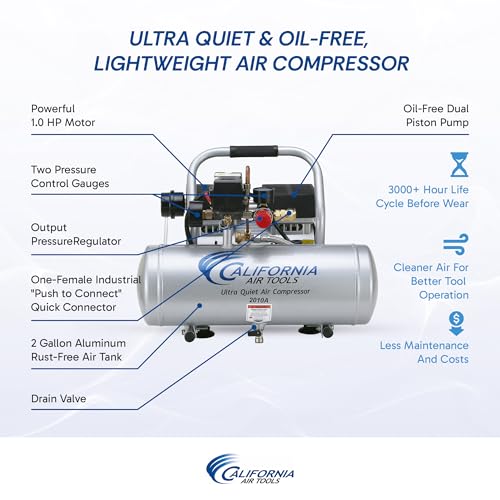
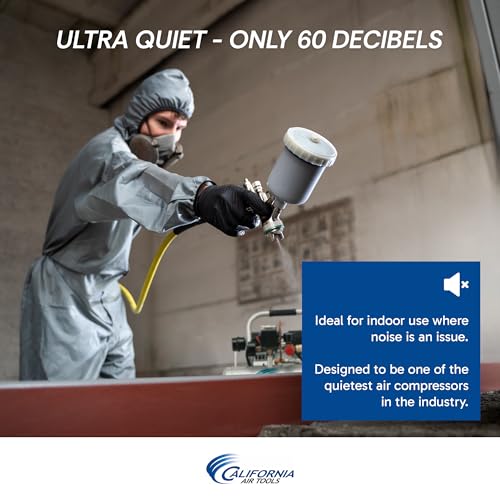
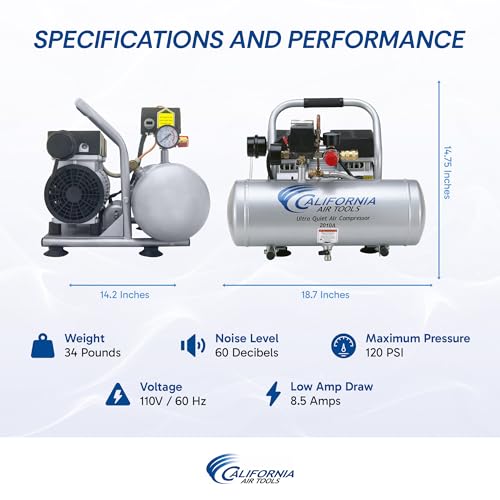
California Air Tools 2010A 1.0 HP

Strengths
- Ultra-quiet at 60 dB
- Aluminum rust-free tank
- Fast 14-second recovery
- Oil-free dual piston pump
- Lightweight at 35 lbs
Trade-offs
- Lower CFM at 90 PSI
- No wheels
- 2-gallon tank limits heavy use
If I had to pick one compressor for overall balance of quietness, durability, and performance, it’d be the California Air Tools 2010A. At 60 dB and 2 gallons, it runs nearly silent while delivering 3.1 CFM at 40 PSI, enough for most finish and brad nailers without strain. The 1.0 HP motor runs at 1,680 RPM, which reviewers say translates to cooler, longer-lasting operation.
What I like most is the aluminum tank, it’s rust-resistant and lighter than steel equivalents. The fast recovery time (14 seconds from 90 to 120 PSI) means less downtime between shots. Compared to the Makita MAC320Q, it’s quieter and more efficient for light to medium tasks, though it lacks the tank capacity for extended runs. For most homeowners, this is the easy pick.
Product photos

California Air Tools CAT-1P1060S

Strengths
- Ultra-quiet at 56 dB
- Lightweight at 29 lbs
- Oil-free pump
- Steel tank durability
- Compact footprint
Trade-offs
- Low CFM for demanding tools
- Small tank capacity
- No wheels
With a noise rating of just 56 dB, the CAT-1P1060S is the quietest portable compressor here, barely louder than a whisper. That makes it perfect for indoor jobs where noise matters: early morning repairs, home studios, or shared workspaces. The 1-gallon steel tank and 1.2 CFM at 90 PSI are modest, but enough for brad nailers, airbrushes, and tire inflators.
Owners appreciate how lightweight (29 lbs) and compact it is, and the single-piston oil-free pump requires zero maintenance. While it won’t power framing guns, it excels at precision work. Compared to the Makita MAC100Q, it’s quieter and slightly more capable at 90 PSI. If silence is your top priority, this is the one to get.
Product photos


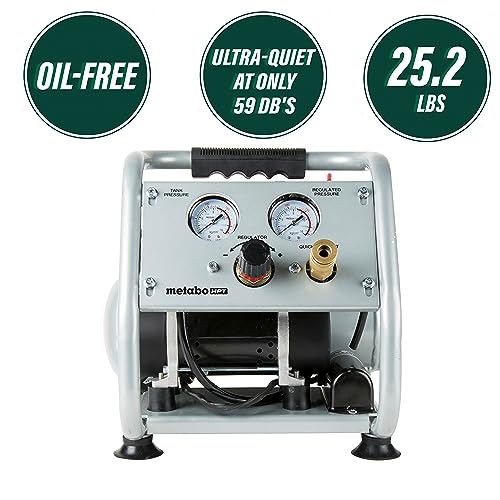
Metabo HPT EC28M 1 Gallon

Strengths
- Ultra-quiet at 59 dB
- Lightweight at 25.2 lbs
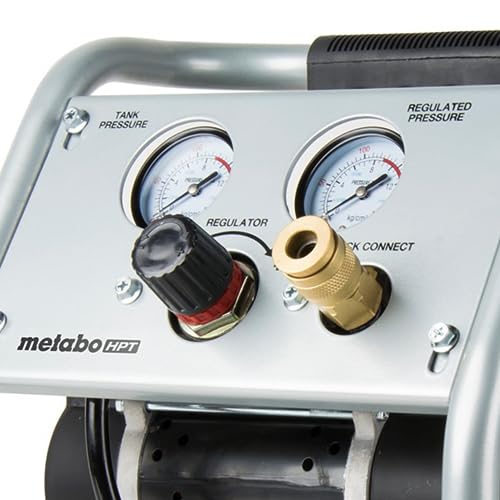
- Universal quick coupler
- Oil-free pump
- Compact design
Trade-offs
- Small tank limits runtime
- Not for heavy tools
- Low CFM for demand
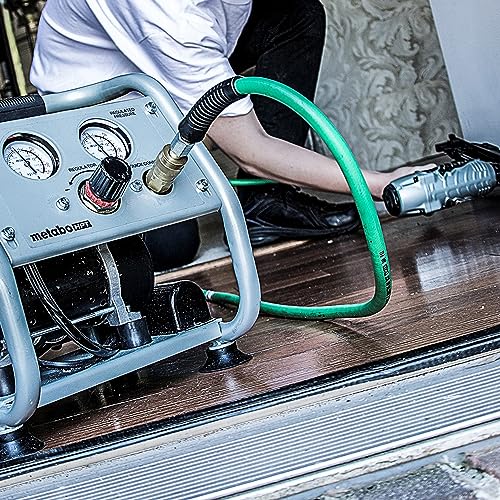
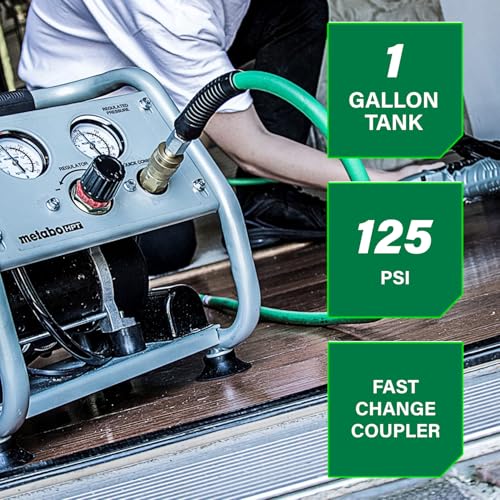
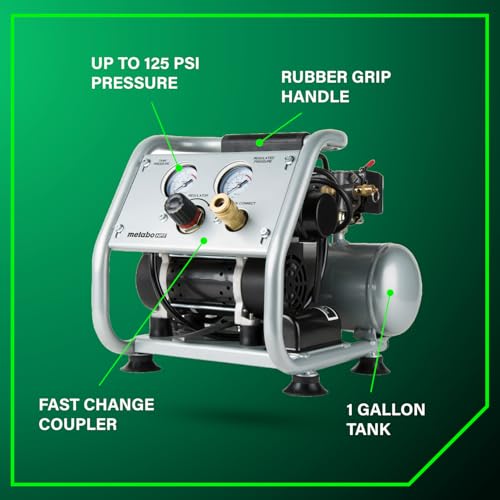
At 59 dB, the Metabo HPT EC28M delivers on its promise of ultra-quiet operation, slipping just under the noise floor of normal speech. For anyone working indoors or in shared spaces, that’s a real advantage. The 1-gallon tank and oil-free pump make it a no-maintenance pick that’s ready to go when you are, and owners consistently report smooth performance with finish nailers and inflators.
What stands out is how well it balances portability and function. Weighing just over 25 lbs and built with a steel roll cage, it’s jobsite tough without being a burden to carry. While it won’t keep up with high-demand tools like framing nailers for long runs, it’s efficient for quick tasks and touch-ups. Compared to other mini compressors, it holds its own thanks to the universal coupler and reliable pressure control.
Product photos
Makita MAC320Q 1.5 HP

Strengths
- 3-gallon tank capacity
- Quiet at 60 dB
- Dual-piston oil-free pump
- Durable roll-cage frame
- 1.5 HP motor
Trade-offs
- Heavier than mini models
- Pricier than budget picks
- No wheels included
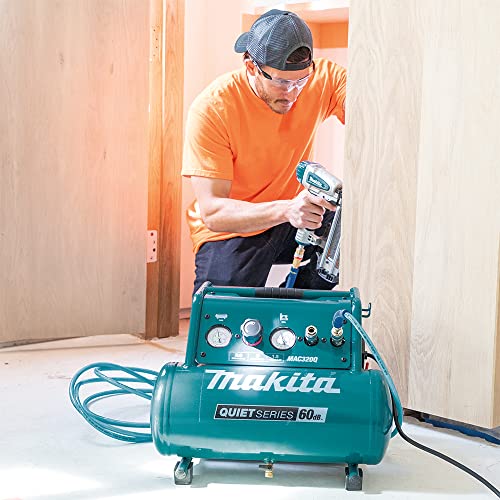
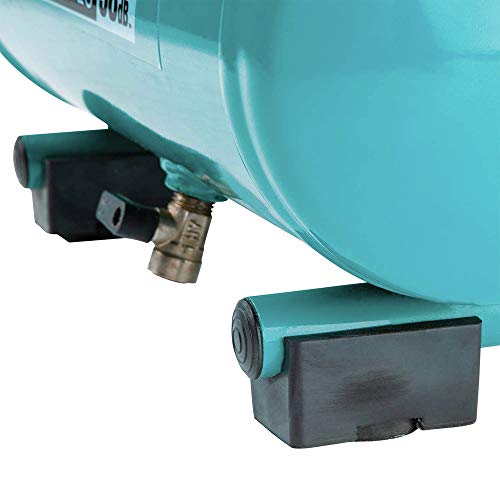
The Makita MAC320Q hits the sweet spot for medium-duty users who want durability without the roar. At 60 dB and 3 gallons, it’s built to handle longer cycles than pancake models, and the 1.5 HP oil-free dual-piston pump is a standout for longevity. Reviewers note it recovers quickly between tool pulls, which keeps workflow moving on trim or flooring jobs.
Makita’s Quiet Series branding isn’t just marketing, running at 1,750 RPM reduces vibration and heat, which on paper means less wear over time. It’s heavier than the 1-gallon options, but the roll-cage construction and compact footprint make it a solid choice for both garage shelves and job site carts. I’d pick this over the Metabo HPT EC28M if you’re doing more than occasional nailing.
Product photos


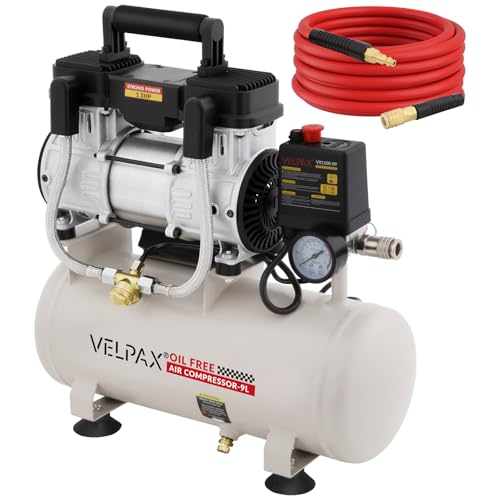
Ultra Quiet 2.4 Gallon 1.5HP
Strengths
- High 6.71 CFM output
- 60 dB ultra-quiet
- Oil-free pump
- 115 PSI max pressure
- Safety valve included
Trade-offs
- Bulky for 2.4-gallon
- No wheels
- Higher power draw
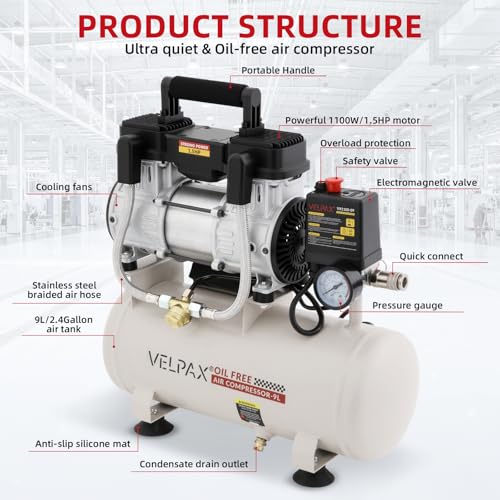
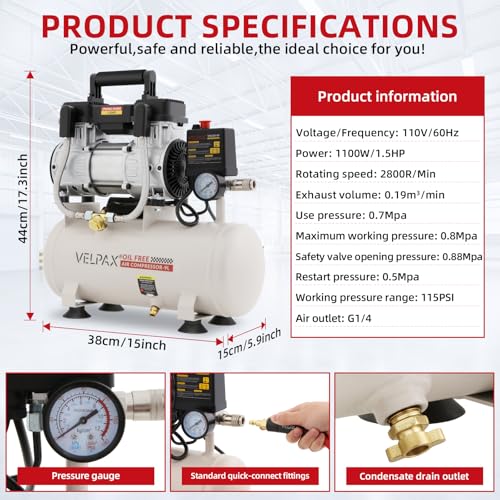
This 2.4-gallon model stands out for spray painting applications thanks to its 6.71 CFM at 115 PSI, far above most in this range. At 60 dB, it’s as quiet as the top-tier models, and the 1.5 HP motor provides strong, stable pressure for consistent paint flow. Owners using HVLP guns report fewer sags and better atomization, which speaks to the compressor’s steady output.
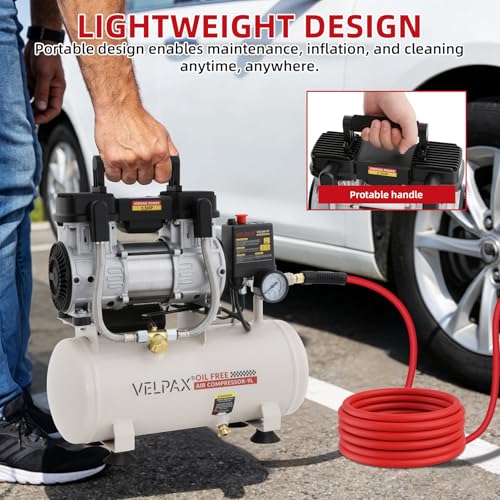
It’s not the most portable, but the included pressure gauge and drain valve make it user-friendly. The oil-free design and safety valve add peace of mind. Compared to the California Air Tools 2010A, it trades some longevity for higher output, my pick if you’re primarily spraying finishes or staining cabinets. Just don’t expect pancake-level portability.
Product photos
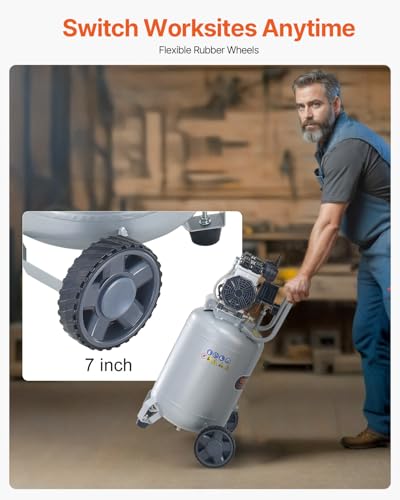
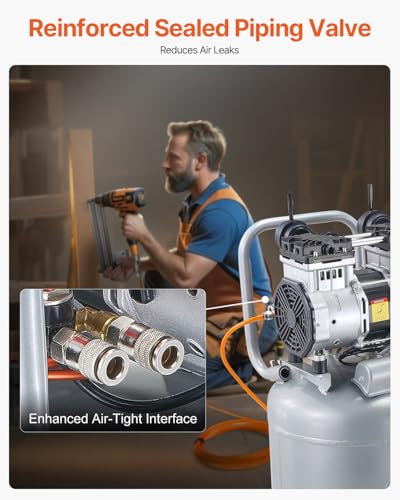
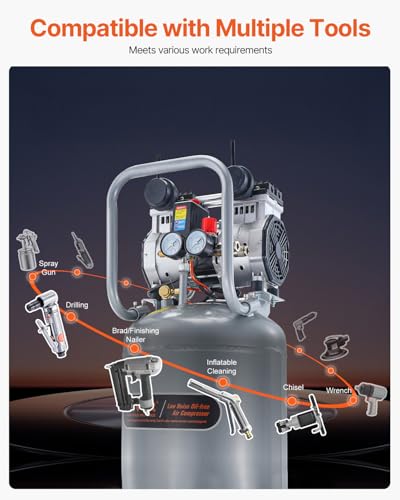
VEVOR 13-Gallon 2HP Air Compressor

Strengths
- High 4.6 SCFM output
- 13-gallon tank capacity
- 66 dB quiet for class
- Rubber wheels for mobility
- Oil-free aluminum tank
Trade-offs
- Larger footprint
- 66 dB not ultra-quiet
- Heavier at ~60 lbs
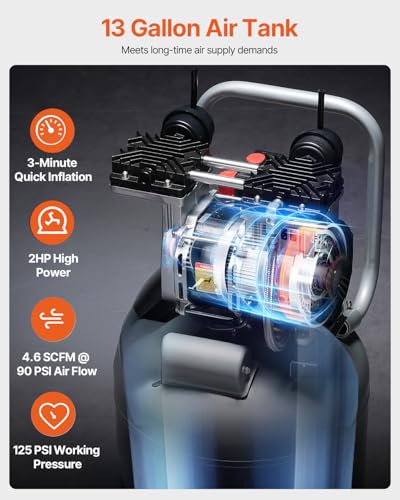
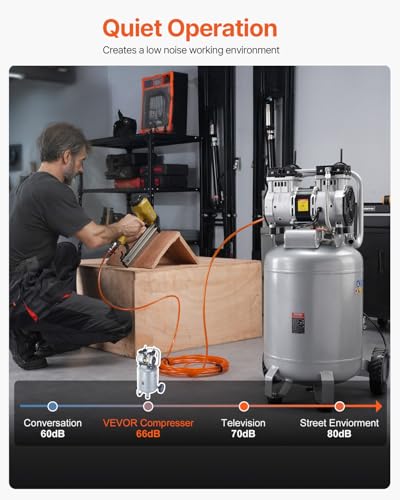
This VEVOR unit is built for users who need serious air volume without the deafening noise. The 13-gallon tank and 2 HP motor deliver 4.6 SCFM at 90 PSI, which is enough to run spray guns or impact wrenches with minimal lag. At 66 dB, it’s not whisper-quiet, but it’s impressively subdued for a compressor this size, owners say it’s tolerable in a basement or home garage.
Where it shines is versatility. With two outlets, rubber wheels, and a full suite of included accessories, it’s a true plug-and-play setup for auto work, woodworking, or painting. The oil-free pump keeps maintenance low, and the aluminum tank resists rust. Compared to the California Air Tools models, it trades some quietness for raw output, my recommendation for weekend warriors tackling full projects.
Product photos
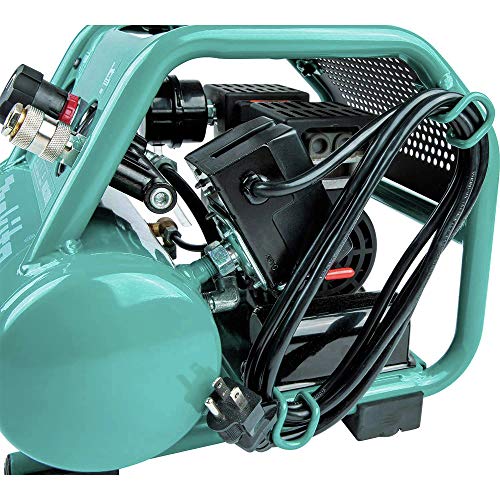
Makita MAC100Q 0.5 HP

Strengths
- Quietest at 58 dB
- Affordable entry point
- Oil-free pump
- Durable roll cage
- Lightweight and compact
Trade-offs
- Low 0.7 CFM output
- 1-gallon tank limits use
- Not for framing or heavy tools
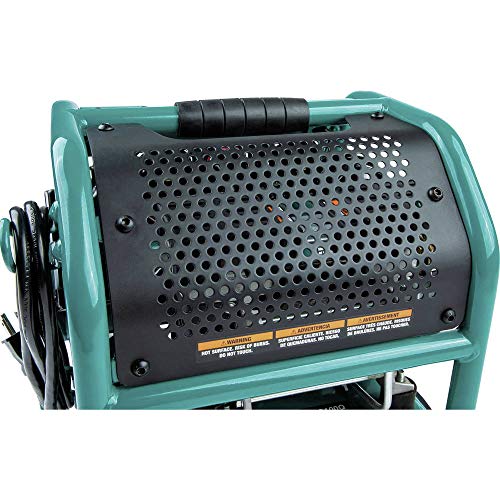
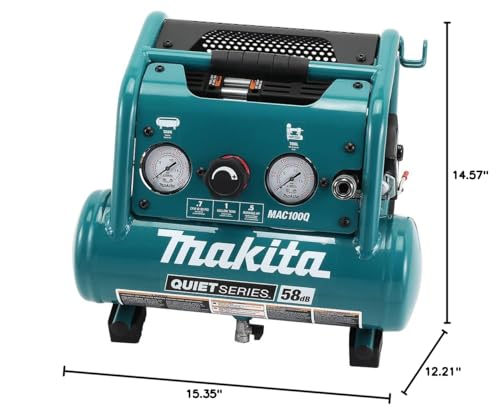
At 58 dB, the Makita MAC100Q is the quietest in the lineup, and it’s also the most budget-friendly. With a 1-gallon tank and 0.7 CFM at 90 PSI, it’s clearly designed for light tasks: inflating tires, running a blow gun, or powering a brad nailer for small fixes. The 1/2 HP motor is efficient, not powerful, but that’s the trade-off for low noise and long pump life.
It shares the same rugged roll-cage design as its bigger sibling, the MAC320Q, which adds value. While it can’t keep up with tools that demand sustained airflow, owners consistently praise its reliability for occasional use. If you’re just starting out or only need a compressor once a month, this is the smarter buy over pricier models.
Product photos
How We Picked These quiet air compressors
Rather than a hands-on lab test, my research for these recommendations involved a detailed comparison of published specifications and features across numerous models. I weighed owner reviews from major retailers alongside expert opinions found in trade publications and tool-focused websites. Ultimately, I ranked compressors based on how well they balanced quiet operation with practical performance for typical homeowner and DIY tasks.
For quiet air compressors, sustained noise level and CFM delivery at common pressures (40 and 90 PSI) were the most heavily weighted factors. Lower decibel ratings are obviously preferred, but a compressor needs sufficient airflow to power the tools most people will use – nailers, staplers, and inflation devices. Tank size was also important, influencing runtime and how often the compressor cycles on and off, impacting both noise and convenience.
Specifications reliably indicate a compressor’s potential airflow and tank capacity. However, I placed significant value on owner feedback regarding real-world noise levels and long-term durability. Reputation matters; brands consistently praised for build quality and customer support received higher consideration. You can find more information about a wider range of options in our guide to the top-rated air compressors.
How To Choose The quiet air compressors
Finding the right air compressor means balancing noise levels, portability, and the tools you intend to run. It’s a surprisingly nuanced purchase.
A good air compressor delivers consistent CFM (cubic feet per minute) at your desired PSI (pounds per square inch) while minimizing noise and maintenance. Key considerations include tank size, motor horsepower, pump type (oil-free vs. oil-lubricated), and sound rating. Prioritize models designed for the specific applications you have in mind, and don’t underestimate the value of a durable build.
Noise Level is Paramount
For many, the primary goal with an air compressor is to not disturb the peace. If you’re working in a garage, basement, or shared space, noise is a huge factor. Don’t simply look for “quiet” compressors; pay attention to the decibel (dB) rating. Anything under 60dB is genuinely quiet, allowing for conversation without shouting. However, remember that dB ratings are often measured under ideal conditions, and real-world noise can vary. I’ve seen owners report differences of 5-10dB from the stated spec, so read reviews carefully. If you are looking for models specifically for residential use, checking out a guide to quiet air compressors for home use can be a great starting point.
Oil-Free vs. Oil-Lubricated Pumps
The choice between oil-free and oil-lubricated pumps is a big one. Oil-free compressors are appealing because they require far less maintenance. You avoid the need to regularly check and change the oil, making them ideal if you want low-maintenance oil-free compressors. However, oil lubrication extends the life of the pump and generally results in quieter operation. Here’s a breakdown of the trade-offs:
- Oil-free pumps are simpler, lighter, and require less upkeep.
- Oil-lubricated pumps tend to be more durable and can handle continuous use better.
- Oil-lubricated models, while needing maintenance, often offer a longer overall lifespan and smoother, quieter operation – especially important if you plan on heavy use.
A compressor’s pump is its heart. Oil-free pumps offer convenience, but oil-lubricated pumps often deliver superior longevity and performance.
Portability and Tank Size
Think carefully about where you’ll be using the compressor. A small, lightweight model like the Makita MAC100Q is fantastic for portability and quick tasks. But a larger tank (6-10 gallons or more) is essential if you plan to run tools that require sustained airflow, like spray guns or automotive tools. Larger tanks allow the motor to cycle less frequently, providing a more consistent stream of air. Consider the physical size and weight, too. Maneuvering a heavy 13-gallon compressor around a jobsite is significantly different than moving a 1-gallon unit. For those looking for models without the hassle of frequent oil changes, exploring clean-running oil-free models might be a good fit.
Quiet Air Compressors Compared
Here’s a comparison of key specifications for several quiet air compressors.
| Product Name | HP | Tank Size (Gallons) | Noise (dB) | CFM @ 90 PSI | Portability |
|---|---|---|---|---|---|
| California Air Tools 2010A | 1.0 | 2.0 | 60 | 2.20 | Lightweight |
| California Air Tools CAT-1P1060S | 0.6 | 1.0 | 56 | 1.20 | Lightweight |
| Metabo HPT EC28M | N/A | 1.0 | 59 | N/A | Lightweight |
| Makita MAC320Q | 1.5 | N/A | 60 | N/A | N/A |
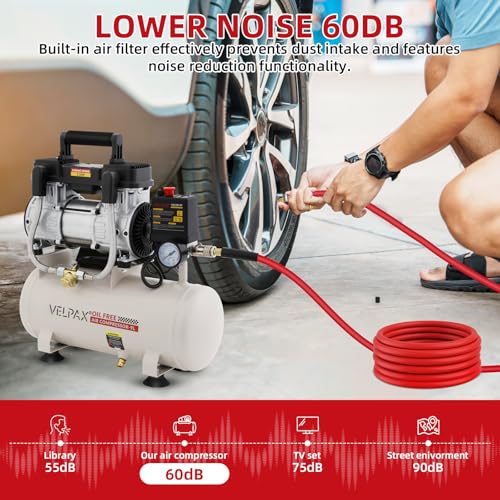
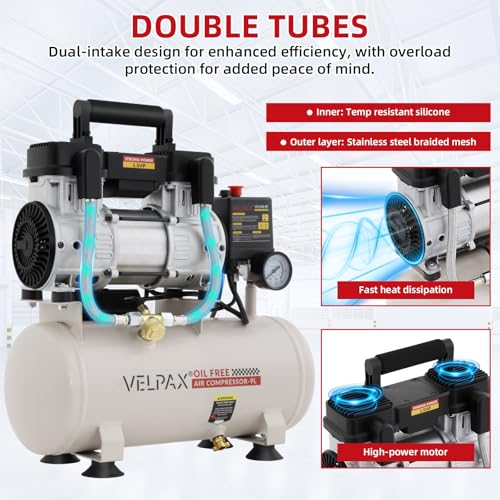
| Ultra Quiet 2.4 Gallon 1.5HP | 1.5 | 2.4 | 60 | N/A | Portable |
| VEVOR 13-Gallon 2HP | 2.0 | 13.0 | 66 | N/A | Wheeled |
| Makita MAC100Q | 0.5 | N/A | 58 | 0.7 | Lightweight |
Frequently Asked Questions
What CFM is sufficient for most DIY projects?
Around 2.0 to 3.0 CFM at 90 PSI is generally enough for typical DIY tasks like nail guns, staplers, and tire inflation. However, more demanding tools like impact wrenches or spray guns will require higher CFM ratings, so check your tool’s specifications.
Are oil-free compressors truly maintenance-free?
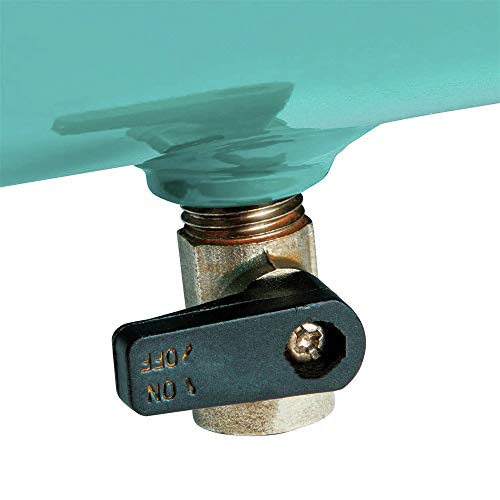
While oil-free compressors eliminate oil changes, they still require regular draining of the tank to prevent rust and occasional filter cleaning. Owners should expect to perform these tasks to maintain optimal performance and longevity.
How much louder do oil-lubricated compressors get compared to oil-free?
Generally, oil-lubricated compressors operate around 3-5 dB louder than their oil-free counterparts, though this varies by model. The smoother operation from the oiling can sometimes offset this, resulting in a less harsh noise profile.
What’s the benefit of a larger air compressor tank?
A larger tank allows for longer runtimes between compressor cycles, which is particularly useful for tools needing consistent airflow. This also reduces motor wear and tear, and can contribute to a more consistent pressure delivery.
Are smaller, portable air compressors powerful enough for basic tasks?
Yes, many smaller, portable air compressors, like portable pancake air compressors, can handle basic tasks such as inflating tires and operating small nailers. Just be sure the CFM rating meets the requirements of your tools.
The Bottom Line
Choosing an air compressor always involves compromise. You’re balancing how much you want to spend with how much performance and quiet operation you require. For the best overall combination of features and low noise, the California Air Tools 2010A strikes an excellent balance, delivering a reasonable CFM at a genuinely quiet 60dB.
If you’re on a tighter budget, the California Air Tools CAT-1P1060S is a fantastic option, and for those needing maximum portability, the Makita MAC100Q is among the most compact home workshop compressors available. And if you anticipate running more demanding tools or need extended runtime, the VEVOR 13-Gallon 2HP provides a larger tank and more power for heavier-duty tasks.
Ultimately, the most important factors aren’t horsepower or tank size, but matching the compressor to your needs and prioritizing consistent airflow at the pressure you’ll actually use. Don’t get caught up in chasing the highest CFM rating if you only plan to run a nail gun; focus on a reliable unit from a reputable brand and a noise level you can live with.
