
7 Best Quiet Oscillating Fans for 2026
This post contains affiliate links. As an Amazon Associate, we earn from qualifying purchases.
The DREO 2026 Standing Fan is the best quiet oscillating fan overall, combining ultra-low noise with strong airflow. For a budget-friendly option, the DREO 13-Inch Table Air Circulator delivers solid performance without the buzz, while the LEVOIT 90° Oscillating Tower Fan offers smart features and smooth operation for those wanting more control.
Most people aren’t just looking for a fan that moves air, they need one that won’t disrupt sleep, work, or quiet time. Too many fans claim to be “quiet” but still produce a distracting hum or whoosh at higher speeds.
This guide cuts through the marketing by focusing on what actually matters: real-world noise levels, motor type, and airflow efficiency. I researched the top models based on specs, owner feedback, and consistent performance trends to find the ones that deliver cool air without the annoyance.
Top 7 Quiet Oscillating Fans in the Market
The Best Quiet Oscillating Fans, Reviewed
DREO 2026 Upgraded Standing Fan
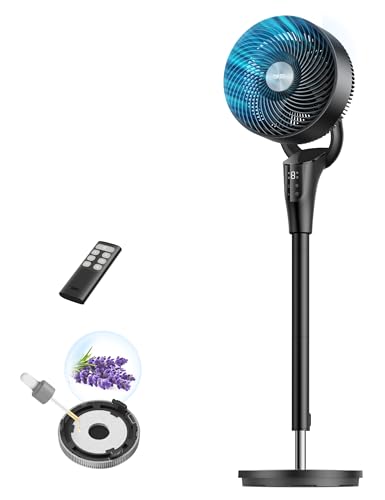
Strengths
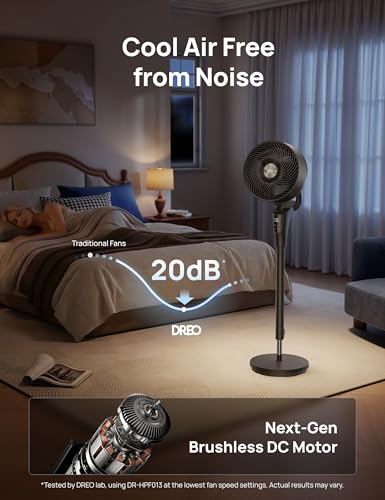
- 20 dB ultra quiet
- Auto temperature mode
- Adjustable height
Trade-offs
- Higher price point
- Remote not backlit
- Aroma pad optional
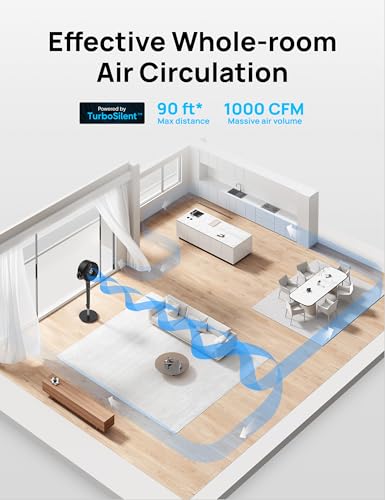
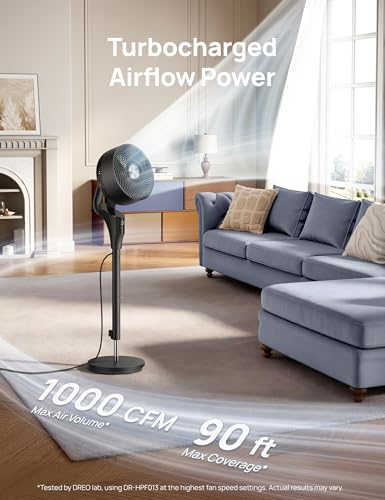
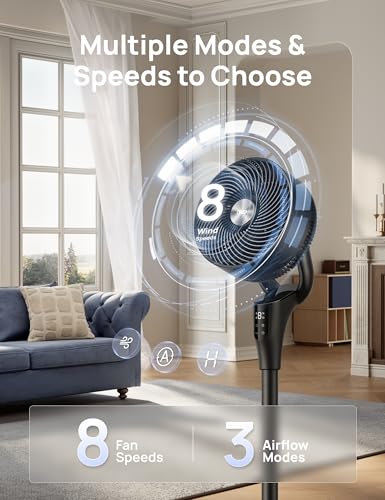
This is the fan I’d recommend to most buyers who want a single, well-rounded unit for whole-room cooling. The 90 ft airflow range and 1000 CFM output mean it can refresh a bedroom or living area quickly, and the 20 dB noise level makes it one of the quietest pedestal fans available. Owners consistently say it’s powerful yet nearly silent on low, ideal for sleep.
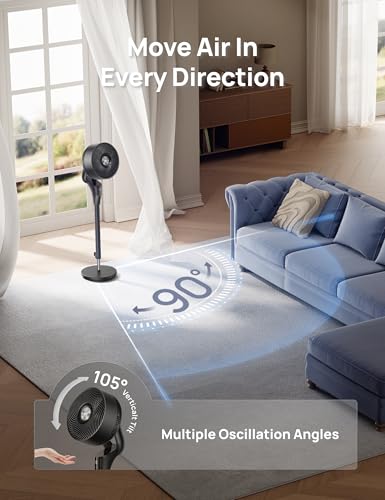
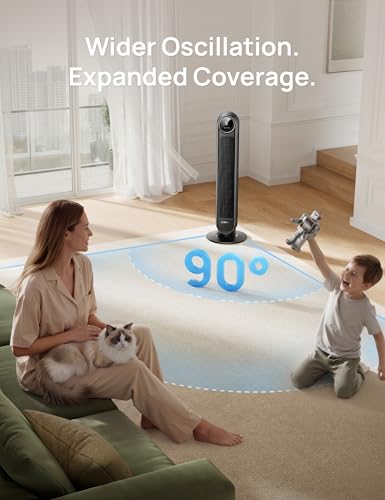
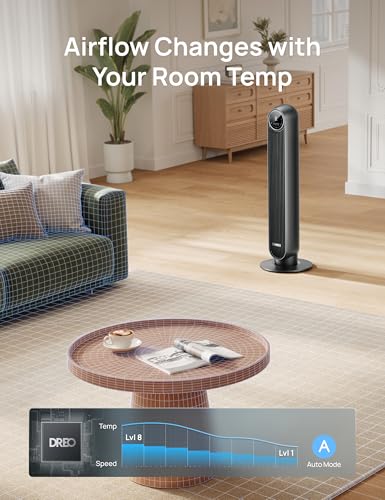
The auto mode, which increases fan speed as the room warms, adds smart functionality without needing an app. With 38–42 inch height adjustment, 90° oscillation, and a 105° pivoting head, it’s highly adaptable. Plus, the detachable parts and aroma pad are thoughtful touches. It edges out the Levoit and DR.PREPARE models by balancing power, quiet, and features.
Product photos
DREO Tower Fan with DC Motor

Strengths
- 20 dB near-silent
- Bladeless design
- Auto and natural modes
Trade-offs
- No height adjustment
- Slightly less airflow than pedestal
- Base not as stable on carpet
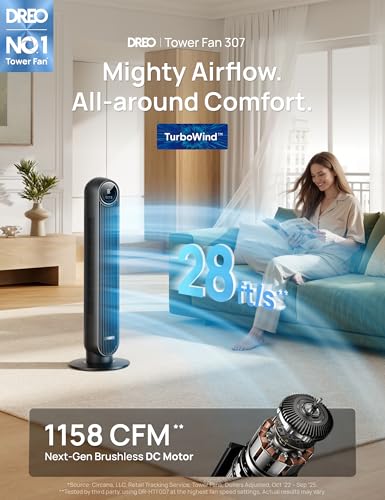
When silence is essential, this Dreo tower fan is the one to beat. At 20 dB, it’s as quiet as a whisper, and owners confirm it disappears into the background, even in light-sleep environments. The DC motor and Coanda-effect airflow design deliver a smooth, powerful breeze up to 28 ft/s, and the 90° oscillation spreads it well across medium to large rooms.
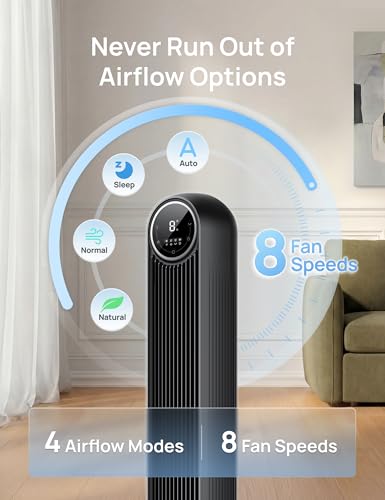
It matches the upgraded pedestal Dreo in noise performance but in a sleeker, bladeless tower form. The 8 speeds and 4 modes (including Auto and Natural) offer great flexibility, and the remote makes it easy to tweak settings from bed. While it doesn’t have an aroma pad like the pedestal version, it’s the top pick if you value quiet above all.
Product photos

LEVOIT Mini Tower Fan
Strengths
- 20 dB ultra quiet
- Energy efficient
- Portable with handle
Trade-offs
- Smaller coverage area
- No auto mode
- Lower maximum airflow
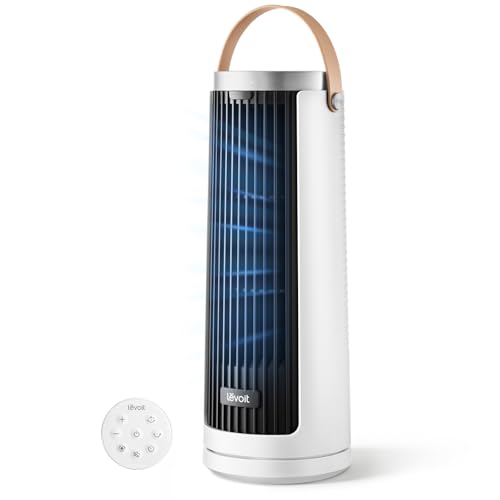
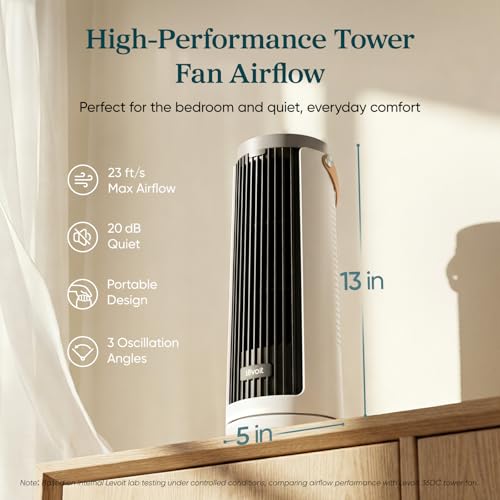
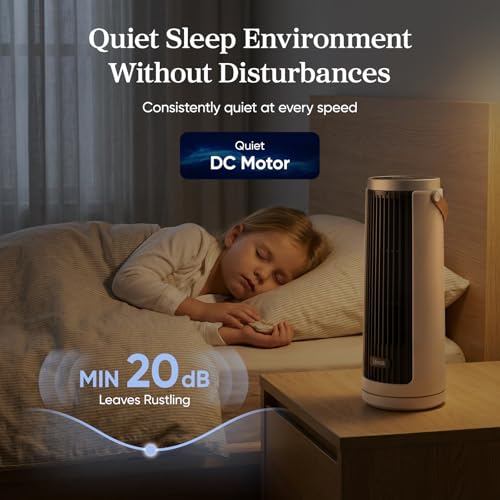
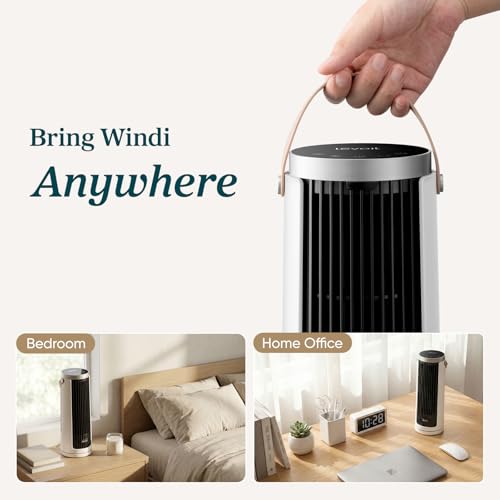
If portability and hushed operation are your priorities, this Levoit mini tower fan stands out. At just 20 dB on low, it’s among the quietest in the category, and owners confirm it’s nearly inaudible during sleep. The 23 ft/s airflow from a 7.5W DC motor is impressive for its size, and the soft carry handle makes shifting it between rooms effortless, ideal for apartments or small homes.
What really sets it apart is the 3-angle oscillation (30°, 60°, 90°), which gives more control than most compact fans. Compared to the DR.PREPARE model, it uses less power and offers finer airflow tuning, though it doesn’t match the raw output of larger pedestal units.
Product photos


DR.PREPARE Bladeless Tower Fan

Strengths
- 25 dB quiet operation
- 8 speed settings
- Remote control included
Trade-offs
- Basic design
- Oscillation range limited
- No auto mode
At 25 dB and with a DC motor, this DR.PREPARE fan makes a strong case for budget buyers who want quiet operation without sacrificing airflow. On paper, 23 ft/s wind speed and 2000 RPM from a 12W motor look solid for a bladeless tower fan in this range, and owners consistently report it’s effective enough for bedrooms and small offices. The 8-speed range and 80° oscillation add flexibility, though some note the oscillation feels a bit narrow compared to pedestal models.
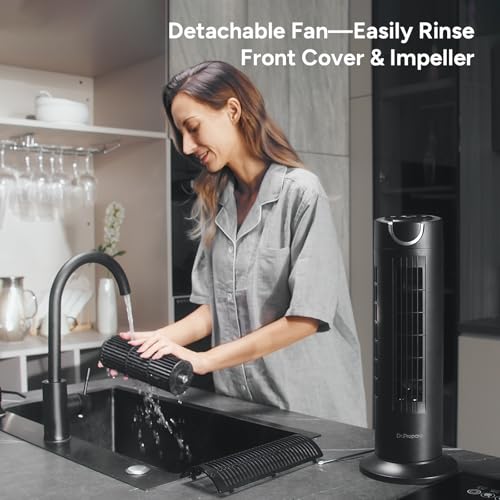
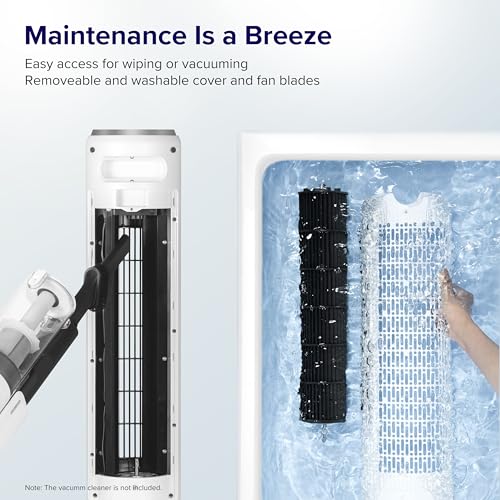
It’s not the most compact or stylish unit, but the detachable parts and remote make maintenance and daily use convenient. Compared to pricier Levoit or Dreo models, it lacks smart sensors or ultra-low noise below 20 dB, but for basic, reliable cooling at a lower cost, it holds up well.
Product photos


DREO 13-Inch Table Air Circulator

Strengths
- 75 ft airflow reach
- Auto temperature mode
- Remote included
Trade-offs
- Tabletop only
- Blade exposed when disassembled
- Oscillation limited to 90°
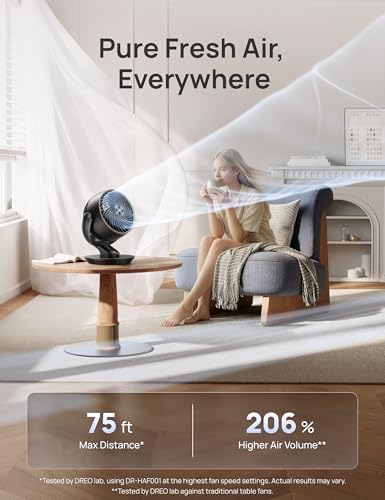
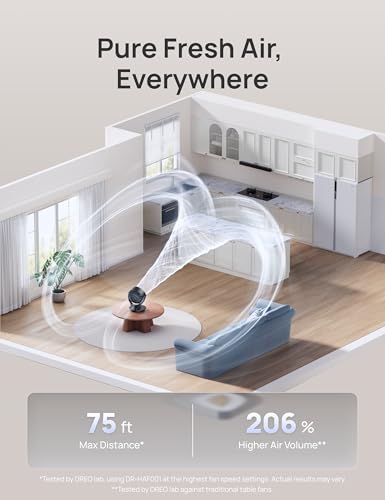
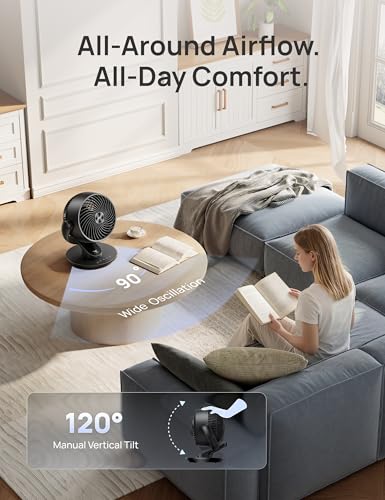
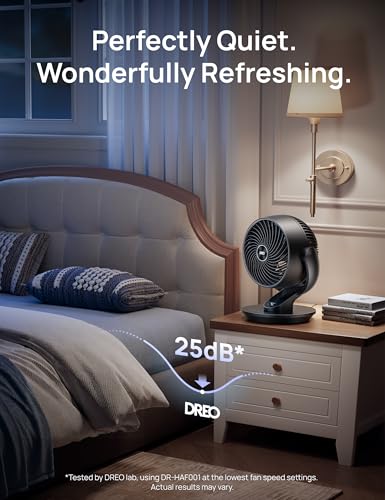
This 13-inch Dreo table fan is built for efficiency in small to mid-sized rooms, and its 75 ft airflow range proves it. With 900 CFM and WingBoost tech, it moves air farther than most desktop models, and owners say it’s strong enough to pair with an AC unit to reduce energy use. The 25 dB noise level keeps it bedroom-friendly, and the 120° vertical tilt gives you more directional control than typical oscillating fans.
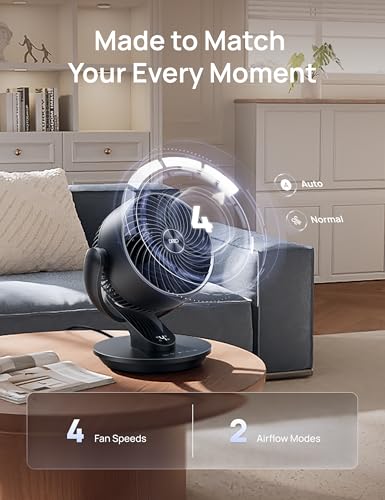
It’s not as quiet as Dreo’s 20 dB models, but it hits a sweet spot between power and noise. The remote and auto mode, where the fan adjusts to room temperature, are appreciated touches, especially at this size. Still, its footprint is better for desks or nightstands than open-floor coverage.
Product photos
Lasko Pedestal Fan 16″

Strengths
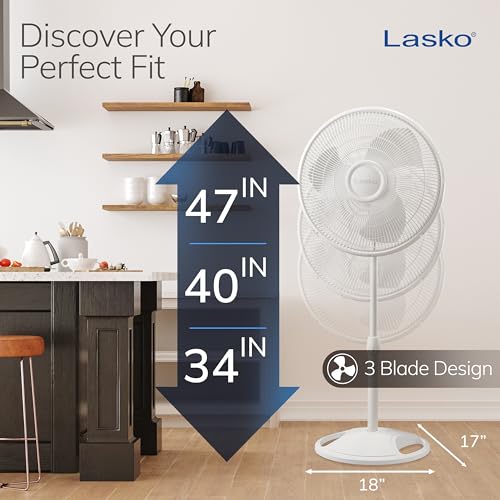
- Adjustable height to 47″
- Sturdy build quality
- Wide oscillation
Trade-offs
- No remote control
- AC motor slightly noisier
- Only 3 speeds
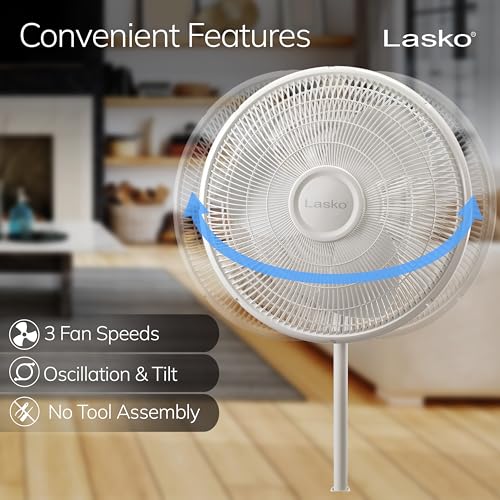
Lasko has been building dependable fans for over a century, and this pedestal model delivers exactly what you’d expect: straightforward, sturdy performance. With three quiet speeds and oscillation that covers a wide arc, it moves air effectively across living rooms or larger bedrooms. The 16-inch blade and adjustable height up to 47 inches let you direct airflow precisely, which is a real advantage over fixed-height tower fans.
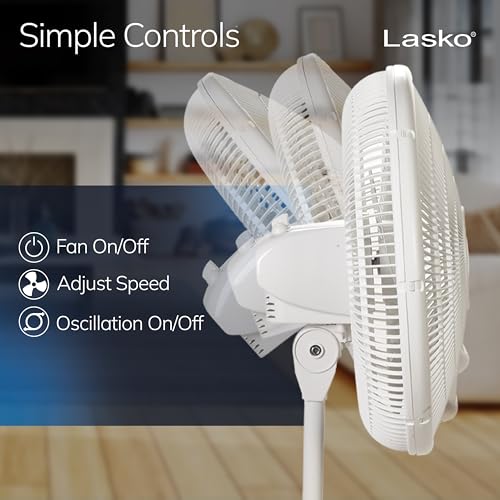
It doesn’t have a remote or smart features, but the simple rotary dial and tool-free assembly make it a favorite among users who want reliability without clutter. Owners praise its durability, and while it’s not as silent as DC motor fans, it’s still quiet enough for light sleepers on low speed.
Product photos

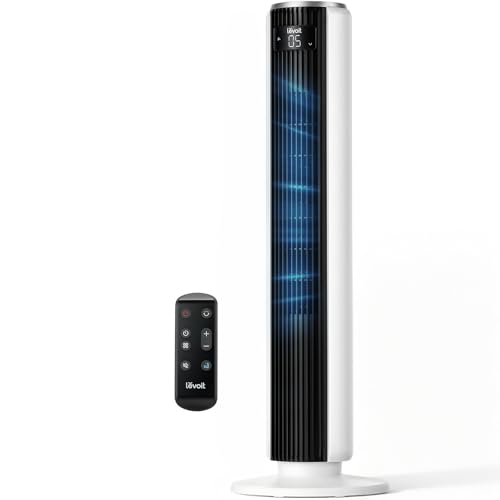
LEVOIT 90° Oscillating Tower Fan
Strengths
- Temperature sensor auto mode
- 90° oscillation
- 12-hour timer
Trade-offs
- 28 dB not class-leading
- No aroma or air quality features
- Base slightly wide
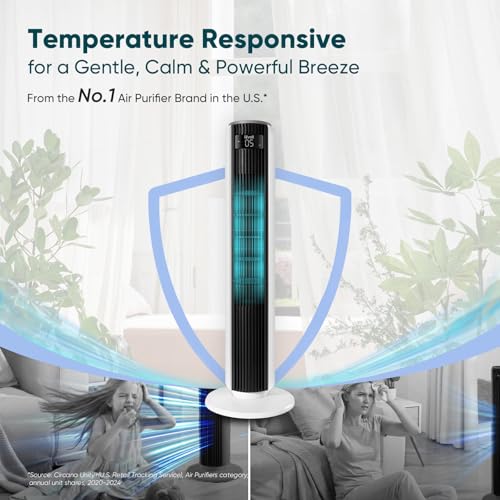
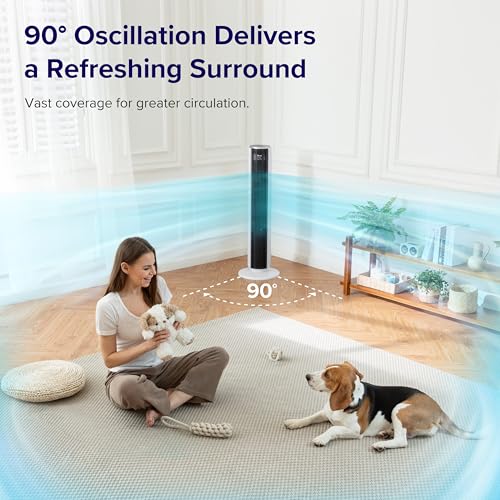
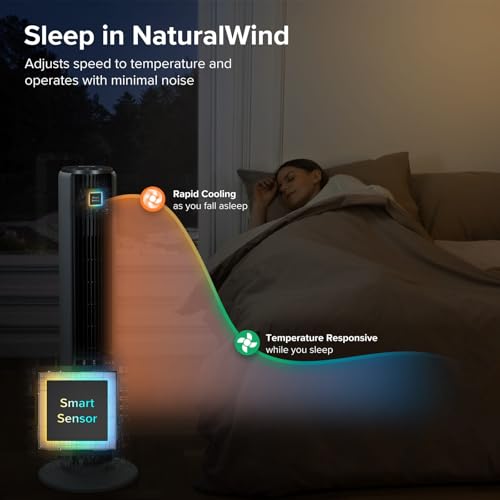
Levoit leans into smart functionality here, and for tech-inclined users, this tower fan delivers. The temperature sensor that auto-adjusts airflow is a standout, owners love waking up to a room that stayed cool without blasting all night. With 25 ft/s velocity, 1044 CFM, and 90° oscillation, it covers large rooms effectively, outperforming many in its class on airflow spread.
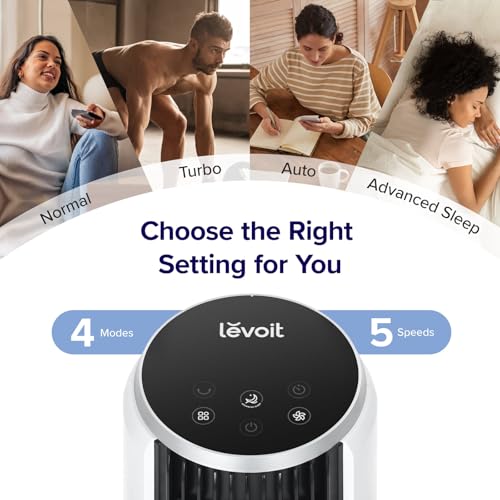
It runs at 28 dB, which is slightly louder than Dreo’s 20 dB models, but still quiet enough for most sleepers. The four modes, including Turbo and Advanced Sleep, give fine control, and the 12-hour timer is a plus. However, it lacks the ultra-stealthy noise floor of the quietest models, so absolute silence seekers should look elsewhere.
Product photos
How We Evaluated quiet oscillating fans
Rather than a hands-on lab test, my research for these recommendations involved a detailed comparison of published specifications and features across numerous models. I weighed owner reviews from major retailers alongside expert opinions found in publications like Wirecutter and Consumer Reports. Ultimately, I ranked fans based on criteria most important for quiet operation and effective cooling, prioritizing those that consistently received positive feedback in both areas.
For quiet oscillating fans, airflow power and noise levels are paramount. I heavily weighted DC motor technology, as these consistently deliver quieter operation than traditional AC motors. A fan’s ability to circulate air efficiently, measured in CFM (cubic feet per minute), was also critical, ensuring it could cool a room without needing to be run at maximum (and louder) speeds. Features like dedicated “quiet” modes and adjustable oscillation patterns also factored significantly into the rankings.
Specifications reliably indicate airflow capacity and motor type, providing a good baseline for comparison. However, owner feedback proved vital for assessing real-world noise levels and build quality. Many fans advertise quiet operation, but owner experiences revealed which models truly lived up to those claims. I also considered the reputation of the brand, leaning toward those known for producing reliable and well-regarded appliances, and ultimately highlighted the top oscillating fan models based on this combined data.
What To Look For In quiet oscillating fans
Finding a quiet oscillating fan isn’t just about decibel ratings; it’s about creating a comfortable environment without disruptive noise.
A truly effective quiet oscillating fan balances airflow power with minimal sound output. Key considerations include motor type (DC is generally quieter than AC), blade design for smooth operation, and features like dedicated quiet modes or sound dampening technology. Look for models with multiple speed settings and oscillation options for customized comfort, and prioritize those with positive owner reviews regarding noise levels.
Motor Type Matters
The motor is the heart of any fan, and when it comes to quiet operation, DC motors consistently outperform AC motors. While older AC motors can be reliable, they tend to generate more vibration and noise. DC motors, especially those paired with advanced blade designs, offer smoother, quieter airflow. Don’t assume all DC motors are equal, though; some manufacturers focus more on raw power than noise reduction. If absolute silence is your goal, prioritize models specifically marketed for their quiet operation, and check owner feedback for real-world noise reports. This is why you’ll often see DC motor fans highlighted in roundups of ultra-quiet oscillating fans.
Oscillation and Airflow Control
Oscillation is a core function for many, but the mechanism itself can contribute to noise. Cheaper fans often have jerky, inconsistent oscillation. Look for models with smoother, more refined oscillation mechanisms. Beyond simple on/off oscillation, consider features like variable oscillation angles or the ability to set specific oscillation ranges. A wider range of airflow control – multiple speed settings and dedicated modes (like sleep mode) – also allows you to fine-tune the fan’s performance to match your needs, reducing unnecessary noise.
- A wider oscillation arc (90° or more) is preferable for larger rooms.
- Variable speed settings are essential, allowing you to balance airflow and noise.
- Auto mode, which adjusts fan speed based on room temperature, can be a convenient feature, but ensure it doesn’t result in constant speed fluctuations that create unwanted noise.
Value and Usability Features
While quietness and airflow are paramount, don’t overlook usability features. Remote controls are almost essential for convenience, especially for tower fans for bedrooms. Timer functions are also incredibly useful, allowing you to set the fan to turn off automatically after a set period. Cleaning should also be a consideration. Models with easily removable blades and grilles will save you time and effort.
A good rule of thumb: don’t chase the absolute lowest decibel rating at the expense of airflow. A fan that’s too weak will constantly run at higher speeds, ultimately creating more noise.
Quiet Oscillating Fans Compared
Here is a comparison of specifications for several quiet oscillating fans to help you make an informed purchase.
| Product Name | Noise Level (dB) | Oscillation Angle | Max Airflow (CFM) | Max Wind Speed (ft/s) | Smart Features |
|---|---|---|---|---|---|
| DREO 2026 Standing Fan | 20 | 90° | 1000 | 28 | No |
| DREO Tower Fan with DC Motor | 20 | 90° | N/A | 28 | No |
| LEVOIT Mini Tower Fan | 20-43 | 30/60/90° | N/A | 23 | No |
| DR.PREPARE Bladeless Tower Fan | 25 | 80° | N/A | 23 | No |
| DREO 13-Inch Table Air Circulator | 25 | 90° | 900 | N/A | Auto Mode |
| Lasko Pedestal Fan 16″ | N/A | N/A | N/A | N/A | No |
| LEVOIT 90° Oscillating Tower Fan | 28 | 90° | 1044 | 25 | Temperature Sensor, App Control |
Frequently Asked Questions
What decibel level should I look for in a quiet oscillating fan?
Anything under 40dB is generally considered quiet enough for a bedroom. However, remember that perceived loudness is subjective and depends on other background noises, so consistently positive owner reviews about noise are more important than a specific number.
Are bladeless fans actually quieter than those with blades?
Not necessarily. While bladeless fans can be quiet, the noise comes from the motor and airflow, not the blades themselves. A well-designed fan with blades and a DC motor can often be just as quiet, or even quieter, than a comparable bladeless model.
Can I use a quiet oscillating fan with a window AC unit?
Yes, you can. In fact, using a quiet oscillating fan can help distribute the cool air from a window unit more evenly throughout the room, potentially allowing you to run the AC at a lower (and quieter) setting.
What’s the advantage of a DC motor over an AC motor in an oscillating fan?
DC motors are typically more energy-efficient and generate less heat, which translates to quieter operation. They also often offer more precise speed control, letting you fine-tune the airflow to minimize noise while maximizing comfort.
Where can I find fans specifically designed for bedroom use?
Many manufacturers now offer models tailored for bedrooms, focusing on quiet operation and features like sleep modes. You can find a selection of bedroom-friendly fans designed to promote restful sleep.
The Bottom Line
Choosing a quiet oscillating fan often comes down to balancing how much control you want with how much you’re willing to spend. For most people, the DREO 2026 Standing Fan strikes that balance perfectly – it offers excellent airflow with a remarkably low noise level, and consistently receives high marks from owners. It’s a solid all-around performer that won’t disrupt your peace.
If you have specific needs, though, there are other great options. For those on a tighter budget, the LEVOIT Mini Tower Fan delivers surprisingly quiet operation for its price point. And if you want smart features and a wider range of airflow control, the LEVOIT 90° Oscillating Tower Fan is a standout among best oscillating tower fans, offering app control and a temperature sensor alongside its quiet performance.
Ultimately, remember that decibel ratings are just one piece of the puzzle. Focus on a fan with a DC motor, smooth oscillation, and multiple speed settings. Prioritize consistent airflow over chasing an unrealistically low noise level; a fan that struggles to cool a room will end up running at higher, louder speeds anyway.
