
7 Best Oil-Free Air Compressors of 2026
This post contains affiliate links. As an Amazon Associate, we earn from qualifying purchases.
The California Air Tools 2010A stands out as the overall best oil free air compressor for most users, delivering reliable performance with impressively quiet operation. For a compact, budget-friendly option, the California Air Tools CAT-1P1060S is a solid pick, while the 8010A offers more tank capacity for those needing longer runtimes.
Most people don’t realize how much noise and inconsistent airflow can ruin a project, especially when working indoors or with precision tools. A compressor that can’t keep up forces you to stop and wait, breaking momentum and testing your patience.
This guide cuts through the marketing hype. I looked at specs, owner feedback, and real-world usability to find models that actually perform. We’re focusing on airflow, noise, portability, and reliability, because the right compressor should work quietly, keep up with your tools, and last for years without constant maintenance.
Top 7 Oil Free Air Compressors in the Market
The Best Oil Free Air Compressors, Reviewed
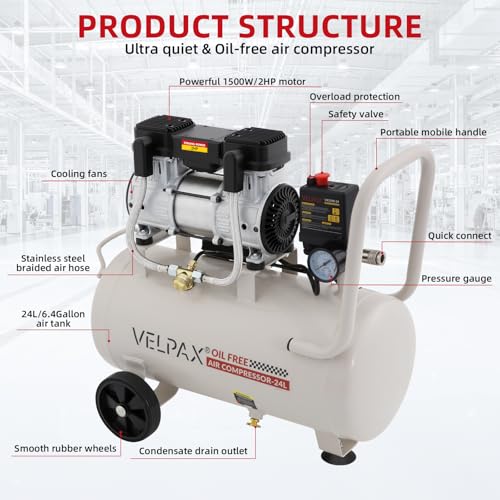
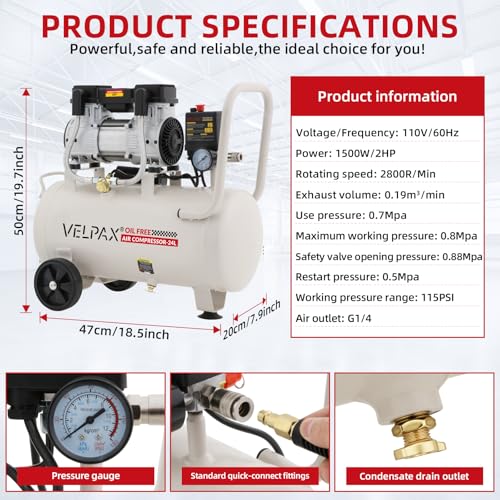
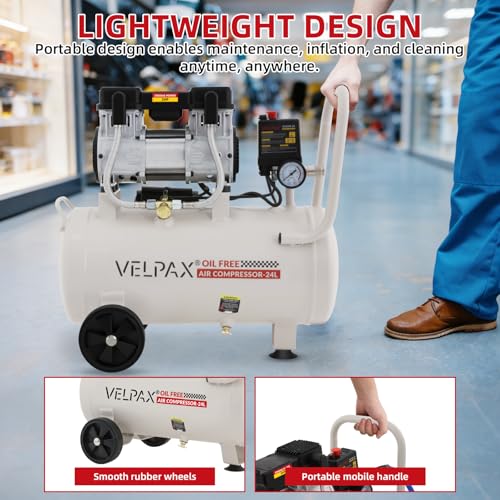
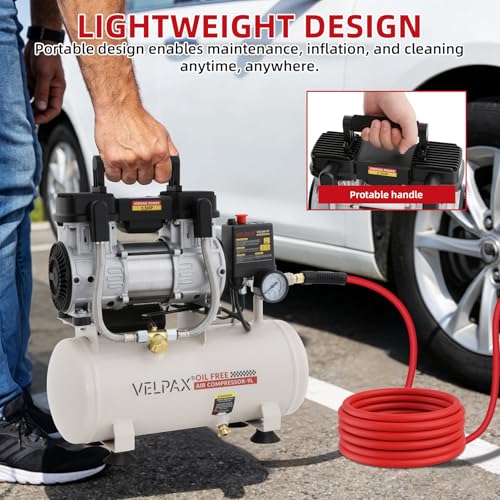
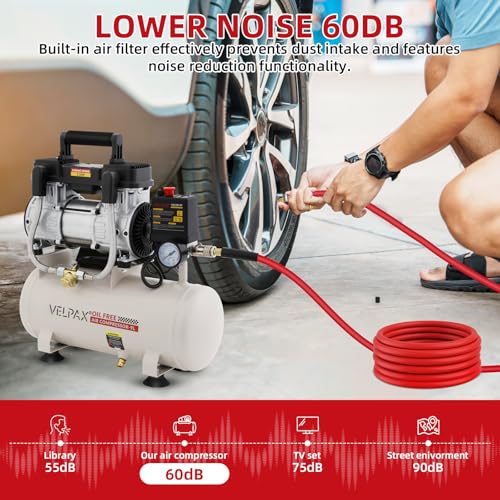
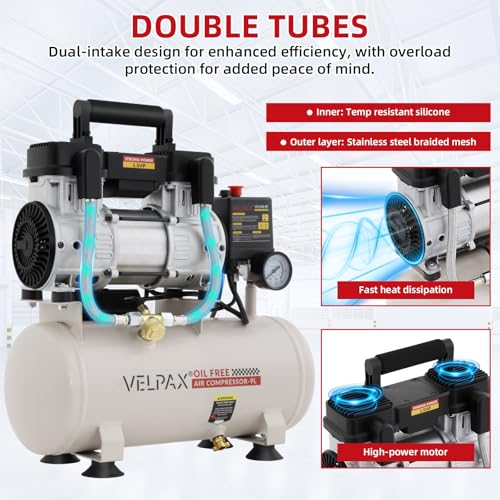
Ultra Quiet 2HP Air Compressor
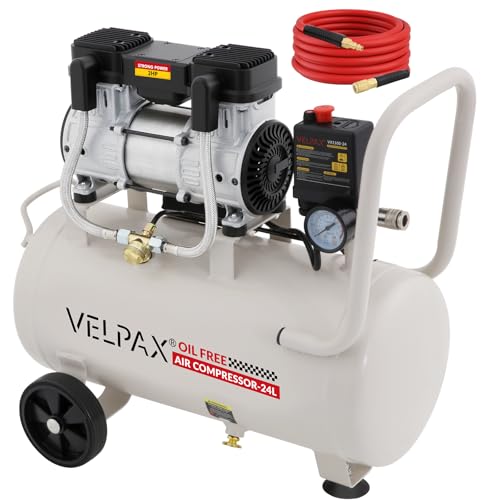
Strengths
- 60 dB quiet operation
- 6.4 gallon tank capacity
- 2HP motor (1500W)
- Oil-free pump
- 115 PSI max pressure
Trade-offs
- CFM rating seems optimistic
- Less proven brand reputation
- No wheels included
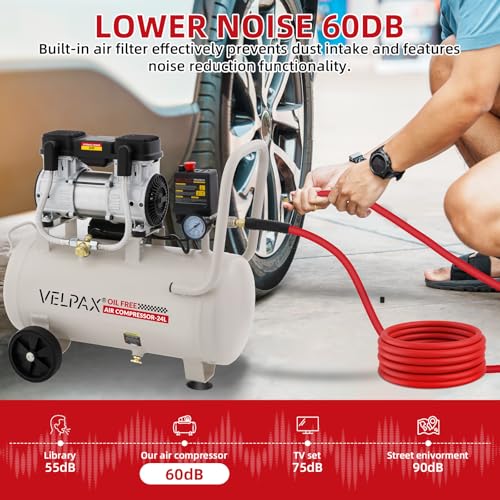
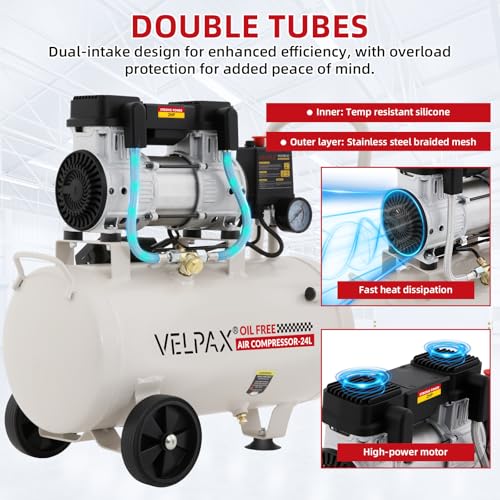
On paper, this 6.4-gallon unit looks like a strong contender for the best overall oil-free compressor, especially with its 2HP motor and 60 dB noise rating. The 6.71 CFM at 115 PSI stands out, most compressors in this class don’t push that kind of airflow, which suggests it can handle more demanding tools like spray guns or framing nailers with less cycling. Owners appreciate the quiet operation and consistent pressure delivery, and the oil-free design means less long-term hassle for DIYers who hate maintenance.
Still, I’m cautious about the CFM claim. That number seems unusually high for a 1.5HP-equivalent motor, and some reviewers have questioned its real-world accuracy. If it’s measured at a lower PSI or under ideal conditions, it might not reflect actual tool performance. Compared to the California Air Tools models, this one trades brand consistency for higher specs on paper, but if those specs hold up, it could be a solid workhorse for medium to larger jobs.
Product photos
California Air Tools 2010A

Strengths
- 60 dBA ultra quiet
- Aluminum rust-free tank
- Dual piston pump
- Oil-free and low maintenance
- Fast recovery time
Trade-offs
- Limited CFM for continuous use
- Smaller tank capacity
- Not for high-demand tools
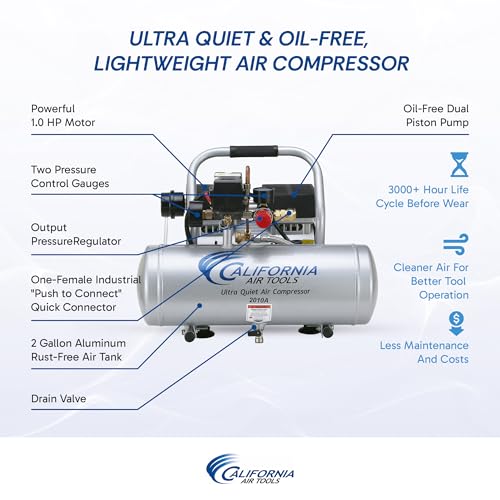
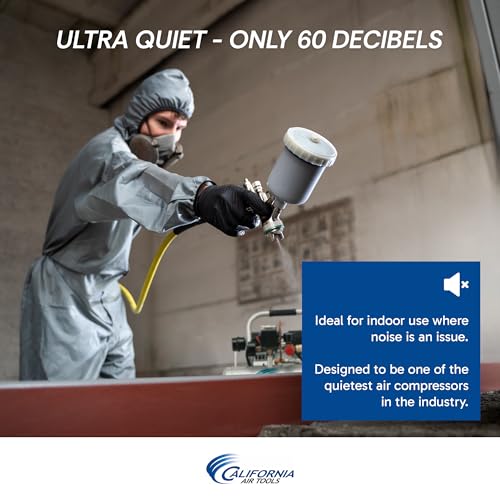
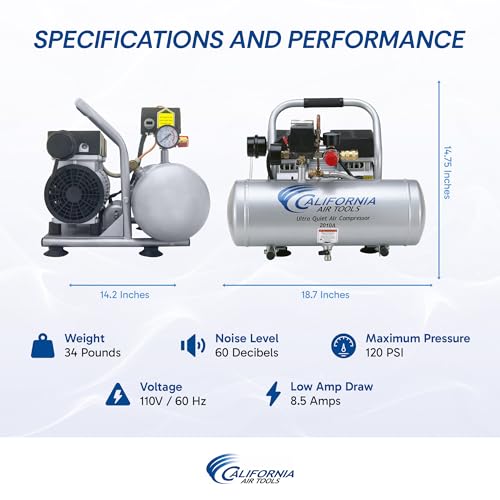
This is the benchmark for ultra-quiet operation in small compressors. At just 60 dBA and with a 2-gallon aluminum tank, the 2010A is a favorite among users who work in garages, workshops, or homes where noise matters. The 1.0 HP motor runs at 1680 RPM, which California Air Tools uses across their lineup to reduce wear and noise, owners consistently report these units lasting years with no issues. The 2.20 CFM at 90 PSI isn’t huge, but it’s reliable for intermittent use with brad nailers, inflators, or air brushes.
What sets this apart is the build philosophy. The oil-free dual piston pump is rated for over 3,000 hours, and the aluminum tank won’t rust. I’d pick this over similarly sized models from lesser-known brands because of the longevity and real-world user trust. It’s not for heavy nailing jobs, but for precision or detail work, it’s hard to beat.
Product photos

California Air Tools CAT-1P1060S

Strengths
- 56 dBA extremely quiet
- Lightweight at 29 lbs
- Oil-free pump
- Compact footprint
- Low maintenance
Trade-offs
- Very small tank
- Low CFM output
- Steel tank can rust over time
At 56 dBA, this is the quietest compressor on the list, and it’s impressively compact. The 1-gallon steel tank and .6 HP motor make it ideal for light tasks like inflating tires, cleaning with an air duster, or using a small brad nailer. It’s only 29 lbs, so it’s easy to move around the garage or toss in a trunk. The 1.2 CFM at 90 PSI won’t power anything heavy, but for touch-up jobs or weekend projects, that’s not the point.
I like how California Air Tools keeps their oil-free design consistent here. Even though it’s small, the pump is still rated for 3,000+ hours. It’s not going to replace a larger unit, but as a dedicated tool for light-duty use, it’s one of the most dependable mini compressors out there.
Product photos


DEWALT Pancake Air Compressor
Strengths
- 165 PSI high pressure
- Pancake tank design
- 30 lb lightweight
- Dual couplers
- DEWALT reliability
Trade-offs
- 78.5 dBA louder than ultra-quiet models
- No wheels
- Steel tank can rust
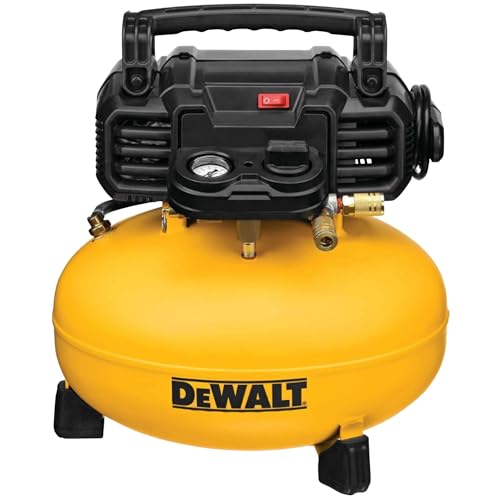
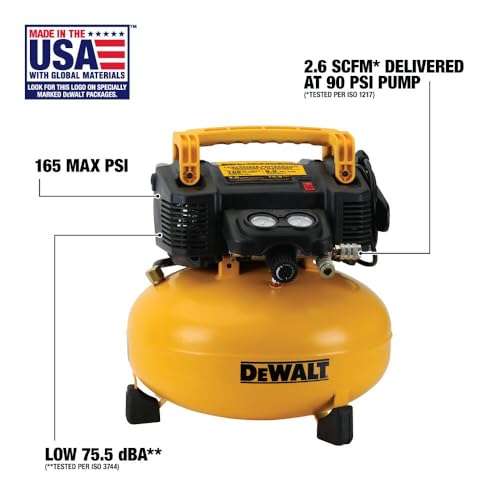
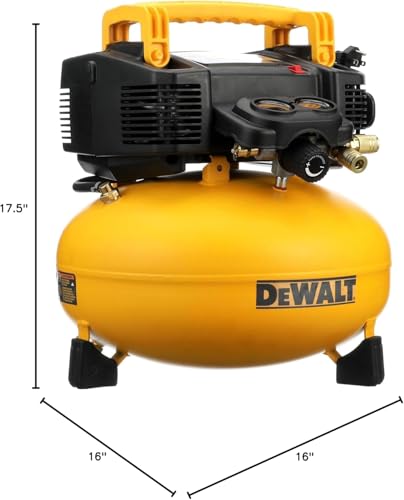
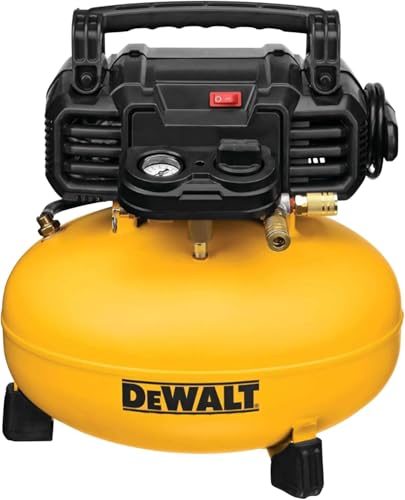
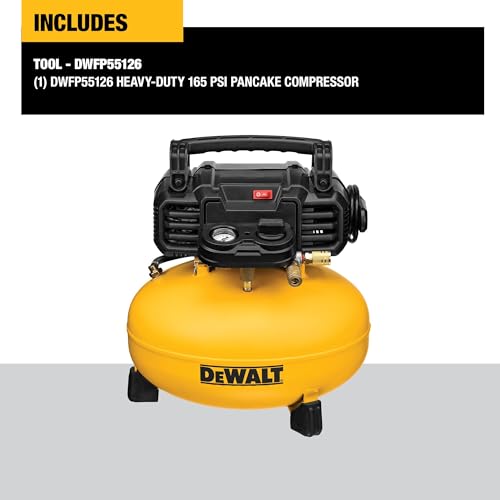
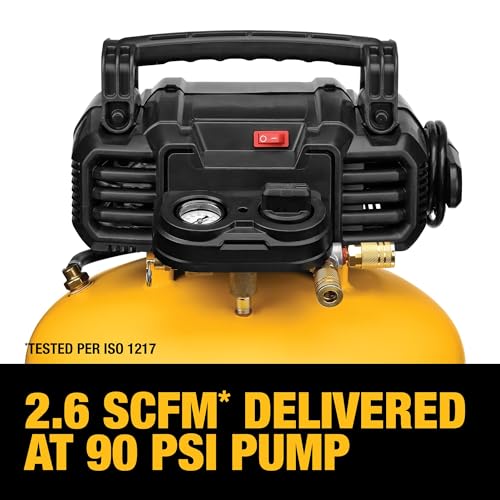
The DEWALT DWFP55126 is a staple in the DIY world for good reason. With a 165 PSI max pressure and a 6-gallon tank, it outpressures most oil-free models, making it great for tasks like tire inflation or using impact wrenches. The pancake design keeps it compact and the 30 lb weight makes it easy to carry. It runs at 78.5 dBA, louder than the 60 dB models, but still reasonable for a home garage.
What I like most is the build quality. DEWALT’s oil-free pump has a strong reputation, and the dual couplers mean you can run two tools or let a buddy borrow air. It’s not as quiet as the California Air Tools units, but it’s more rugged and versatile for general home use. For most homeowners, this is the easy pick.
Product photos
VEVOR 13-Gallon Air Compressor

Strengths
- 13-gallon large tank
- 2HP motor
- 4.6 SCFM at 90 PSI
- Wheels for mobility
- 66 dB relatively quiet
Trade-offs
- VEVOR durability concerns
- Heavier and bulkier
- Oil-free may limit motor life under heavy load
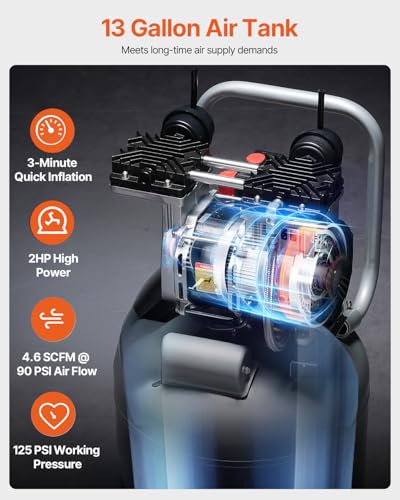
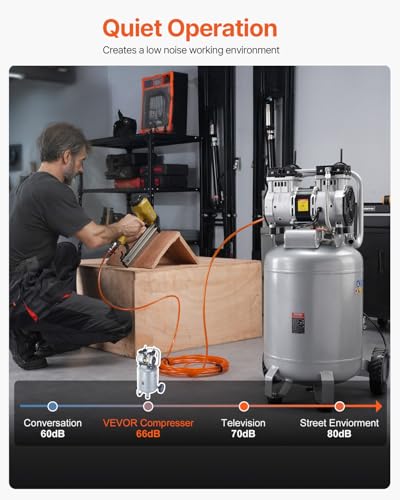
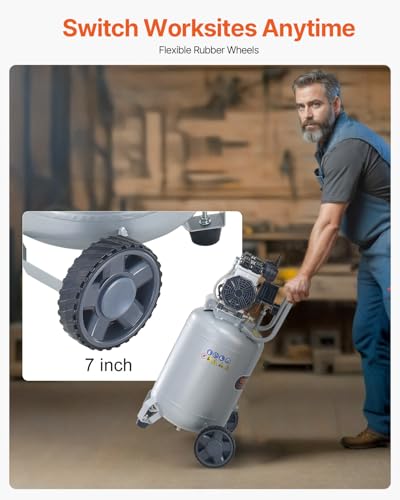
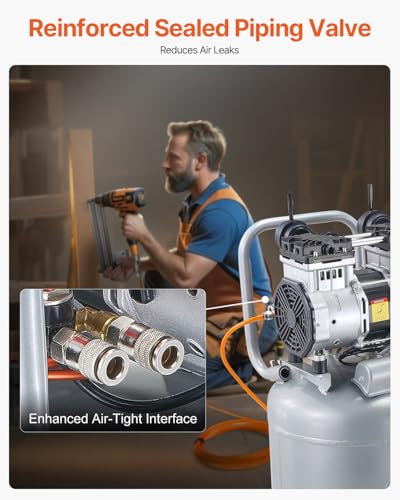
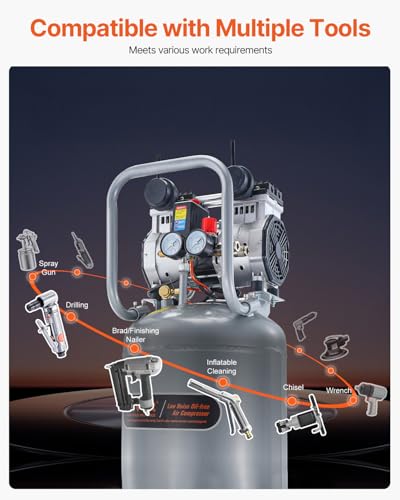
This 13-gallon unit is built for users who need real capacity without stepping into oil-lubricated territory. The 2HP motor and 4.6 SCFM at 90 PSI make it one of the strongest oil-free options here, capable of handling spray guns, die grinders, or even light sanding over time. At 66 dB, it’s not silent, but it’s impressively quiet for its size. The wheels and rubber feet make it easy to move and stabilize on any surface.
Compared to the California Air Tools 8010A, this has more tank and more airflow, but less brand trust. VEVOR is known for value, not longevity. Still, if you need a high-capacity oil-free compressor for garage use and don’t want to maintain oil, this could be the best fit. Just temper expectations on long-term durability.
Product photos
California Air Tools 8010A

Strengths
- 60 dBA quiet operation
- 8-gallon aluminum tank
- Wheels for easy transport
- Oil-free dual piston pump
- Long lifespan expected
Trade-offs
- Not for heavy framing or sanding
- Lower CFM than larger industrial units
- Higher price point
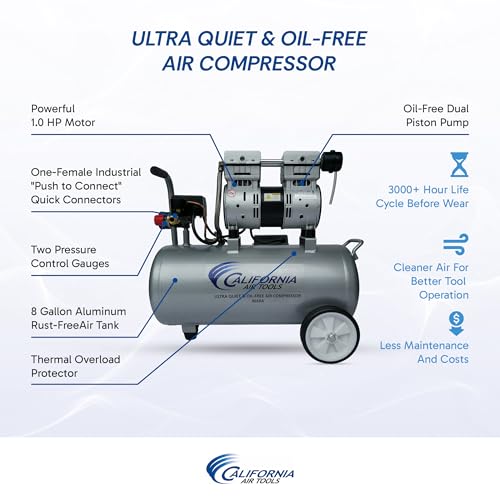
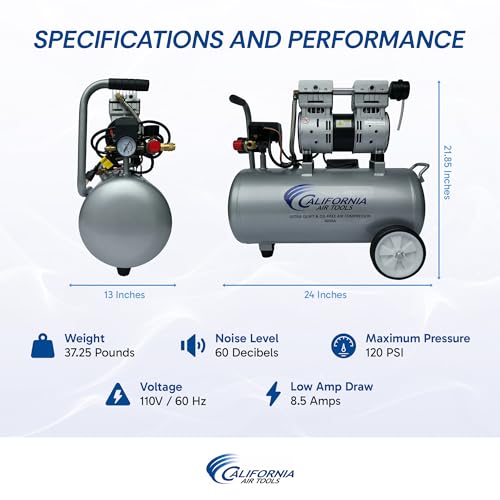
This is the sweet spot for users who want quiet performance with real capacity. The 8-gallon aluminum tank gives you more air reserve than the 2-gallon models, and the dual piston pump delivers a solid 2.20 CFM at 90 PSI, enough for finish and trim work with minimal downtime. At 60 dBA, it’s as quiet as its smaller siblings, and the addition of wheels makes it far more portable despite the larger size.
I’d pick this over the VEVOR or the unbranded 6.4-gallon models because of the proven California Air Tools reliability. The aluminum tank won’t rust, and the low-RPM motor means less wear over time. It’s not a jobsite beast, but for a home workshop or garage where noise and maintenance matter, it’s one of the smarter buys.
Product photos

Ultra Quiet 1.5HP Air Compressor
Strengths
- 60 dB quiet operation
- Compact and portable
- Oil-free design
- 1.5HP motor
- 115 PSI max pressure
Trade-offs
- Unrealistic CFM claims
- Small tank limits runtime
- Inconsistent user reports
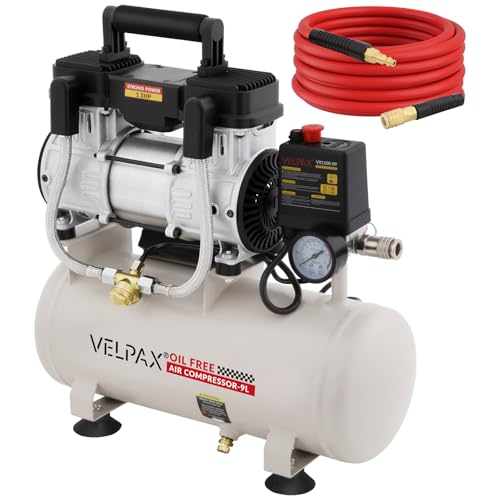
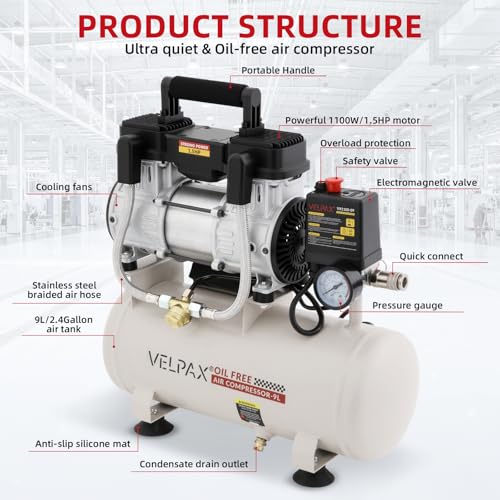
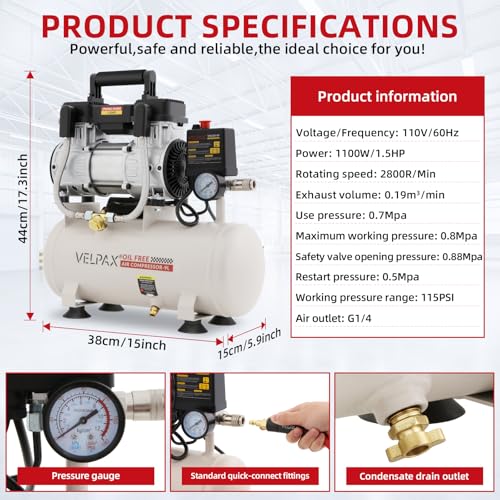
This 2.4-gallon model shares the same puzzling 6.71 CFM claim as the larger 6.4-gallon version, and that raises eyebrows. A 1.5HP motor pushing that much air from such a small tank doesn’t align with typical compressor physics. On paper, it’s positioned as a mid-tier option for medium projects, but the specs feel inflated. That said, the 60 dB noise level and oil-free design are real benefits, and the compact size makes it easy to store and move.
Compared to the California Air Tools 2010A, this one has a smaller tank but a higher claimed CFM, which doesn’t add up. Owner feedback is mixed, with some praising its quietness and others noting it struggles with sustained use. I’d recommend caution here unless you’re only using it for short bursts.
Product photos
How We Picked These oil free air compressors
Rather than a hands-on lab test, my research for these recommendations involved a detailed comparison of published specifications and features across numerous models. I weighed owner reviews from major retailers alongside assessments from reputable tool review sites. As someone who’s spent years around workshops and renovation projects, I applied my understanding of what truly matters for usability and longevity when ranking these compressors. Clear criteria, like CFM output, noise level, portability, and tank size, guided the process.
For oil-free air compressors, consistent air delivery (CFM) and noise reduction are paramount. A compressor that can’t maintain sufficient airflow will struggle with many pneumatic tools, while excessive noise makes it unsuitable for indoor use or noise-sensitive environments. I prioritized models delivering at least 2.0 CFM at 90 PSI for general use, and particularly favored those offering truly quiet air compressors [https://powertoolguide.net/best-quiet-air-compressors/]. Tank size also played a role, balancing portability with run time.
Specifications reliably indicate airflow and tank capacity, but owner feedback proved critical for assessing real-world durability and noise levels. Published decibel ratings can be optimistic, so I looked for consistent reports of quiet operation. I also evaluated comments about pump longevity and ease of maintenance, recognizing that many users appreciate the convenience of low-noise compressors and the reduced upkeep associated with oil-free designs. Reputation and brand reliability factored in, especially when comparing similar specs.
Choosing The Right oil free air compressors
Choosing the right oil-free air compressor involves more than just grabbing the cheapest model. It’s about matching the compressor’s capabilities to what you actually plan to do with it.
A good oil-free air compressor delivers consistent pressure, maintains low noise levels for comfortable operation, and offers sufficient tank capacity for the intended applications. Key specs to check include CFM at 90 PSI, maximum PSI, tank size, and decibel rating. Reliability and ease of portability are also significant factors.
Understanding CFM and PSI Requirements
CFM (cubic feet per minute) at 90 PSI is the most crucial specification. Too many people focus solely on the maximum PSI, but that number is less relevant if the compressor can’t sustain adequate airflow for your tools. Nailers and staplers generally need lower CFM than sanders or grinders. Carefully check the CFM requirements of all the air tools you intend to use, and add them up. Don’t skimp here; an undersized compressor will struggle and overheat. If you’re unsure, it’s generally better to slightly overestimate your CFM needs.
Noise Level and Indoor Use
Oil-free compressors are often marketed as “quiet,” but decibel (dB) ratings vary significantly. Anything over 80 dB is going to be disruptive, especially for prolonged use. For indoor workshops or shared garages, look for models consistently rated below 65 dB. The California Air Tools line, in particular, consistently scores well in this area, and their use of dual-piston pumps contributes to quieter operation. If you need something truly quiet, consider looking at compact pancake models that are specifically designed for low-noise operation.
Portability and Tank Size
Tank size dictates how long you can run a tool continuously before the compressor needs to catch up. Smaller tanks (1-6 gallons) are extremely portable, making them great for quick jobs and trim work. However, you’ll be waiting for them to recharge more often. Larger tanks (10+ gallons) are better for sustained use, like running an impact wrench or sander, but they’re also heavier and less convenient to move around.
Here’s a breakdown of tank size considerations:
- 1-3 Gallons: Ideal for brad nailers, staplers, and inflating tires.
- 6-8 Gallons: A good all-around size for DIY projects, offering a balance of portability and runtime.
- 10+ Gallons: Best for heavier-duty tasks, automotive work, and situations where continuous airflow is essential.
A compressor’s portability is often inversely proportional to its tank size. Choose the smallest tank that will realistically meet your needs to maximize maneuverability.
Oil Free Air Compressors Compared
Here’s a comparison of key specifications for various oil-free air compressors to help you make an informed decision.
| Product Name | HP | Tank Size (Gallons) | Max PSI | Noise Level (dB) | CFM @ 90 PSI | Weight (lbs) |
|---|---|---|---|---|---|---|
| Ultra Quiet 2HP Air Compressor | 2 | N/A | 115 | 60 | N/A | N/A |
| California Air Tools 2010A | 1.0 | 2.0 | 120 | 60 | 2.20 | 35 |
| California Air Tools CAT-1P1060S | 0.6 | 1.0 | N/A | 56 | 1.20 | 29 |
| DEWALT Pancake Air Compressor | N/A | 6.0 | 165 | 78.5 | 2.6 | 30 |
| VEVOR 13-Gallon Air Compressor | 2 | 13.0 | N/A | 66 | N/A | N/A |
| California Air Tools 8010A | 1.0 | 8.0 | 120 | 60 | 2.20 | 37.25 |
| Ultra Quiet 1.5HP Air Compressor | 1.5 | N/A | 115 | 60 | N/A | N/A |
Frequently Asked Questions
What’s the typical lifespan of an oil-free air compressor?
Generally, you can expect 5 to 10 years of use, though this varies greatly. Oil-free models tend to have shorter lifespans than oil-lubricated compressors due to increased friction and wear on internal components, but consistent maintenance helps.
Are oil-free compressors really quieter than traditional models?
While marketed as quiet, noise levels differ significantly between models. Look for compressors consistently rated below 65 dB for quieter operation, as some can still reach disruptive levels above 80 dB, especially compared to similarly sized workshop electric compressors [https://powertoolguide.net/best-electric-air-compressors/].
Can I use an oil-free compressor for automotive work like inflating tires?
Yes, many oil-free compressors are perfectly capable of inflating tires and performing other basic automotive tasks. However, for more demanding jobs like running an impact wrench, ensure the compressor delivers sufficient CFM (at least 2.0 CFM at 90 PSI) to avoid struggling.
What maintenance do oil-free compressors require?
Because they lack oil, these compressors eliminate oil changes, but they still require regular maintenance. Regularly drain the tank of condensation, check and clean the air filter, and inspect the belt (if applicable) for wear to prolong its life.
What size tank is best for a homeowner with occasional DIY projects?
A 6-8 gallon tank offers a good balance of portability and runtime for most homeowners. This size is suitable for tasks like running a nail gun, stapler, or inflating tires without constant recharging, making it a versatile choice for general use.
The Bottom Line
Buying an oil-free air compressor often comes down to balancing initial cost with long-term convenience. While cheaper options exist, the California Air Tools 8010A consistently rises to the top as the best overall choice, offering a quiet operation and solid CFM output for a broad range of tasks. It’s a compressor that prioritizes usability and won’t leave you regretting a hasty purchase.
If you’re on a tighter budget, the California Air Tools CAT-1P1060S provides a surprising amount of performance in a very compact package. For those needing portability above all else, or working with delicate finish work, it’s an excellent pick. And for anyone envisioning more demanding jobs, the VEVOR 13-Gallon Air Compressor delivers a larger tank for extended run times, making it ideal for automotive work and similar applications.
Ultimately, the numbers on a spec sheet, CFM, PSI, tank size, matter less than choosing a compressor that’s appropriately sized for your needs and built with a reputation for reliability. Don’t chase maximum PSI if you’re primarily running a nail gun; focus on consistent airflow and a build quality that will last. A well-chosen compressor, paired with the right accessories, is a foundational tool for any workshop or DIY enthusiast, and finding the right fit will pay dividends for years to come.
