
8 Best Professional Manual Pole Saws of 2026
This post contains affiliate links. As an Amazon Associate, we earn from qualifying purchases.
The Manual Pole Saw 26FT is the overall best choice for pros who need maximum reach and reliable performance. For tighter budgets, the VEVOR 27FT Extendable Pole Saw delivers strong durability and a secure double-lock system. If versatility matters most, the AgiiMan 30FT Reach Pole Saw stands out with its stainless steel blade and ability to convert for multiple outdoor tasks.
Most professionals don’t just need a tool that reaches high branches, they need one that won’t fail under daily use, delivers clean cuts, and doesn’t wear you out by noon. Too many pole saws promise the sky but fall apart after a season or slip at the worst moment.
In this guide, I break down the top models based on blade quality, pole construction, and real-world feedback from landscapers and arborists. These picks aren’t chosen from ads or specs alone, they’re filtered through years of hands-on experience and what actually works when you’re 20 feet up a tree with a deadline.
Top 8 Professional Manual Pole Saws in the Market
The Best Professional Manual Pole Saws, Reviewed
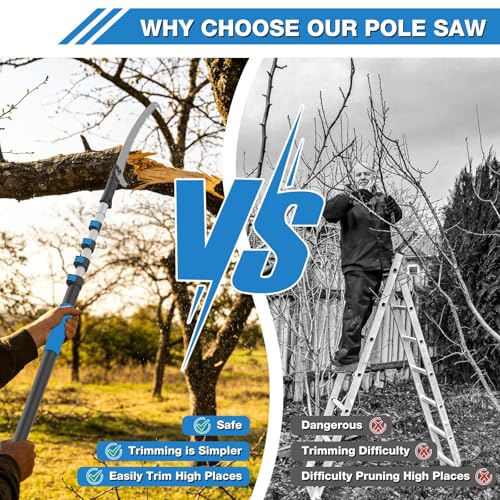
Manual Pole Saw 26FT Telescoping
Strengths
- Hook-end blade design
- Universal thread tip
- True 2-in-1 versatility
Trade-offs
- Max reach not fully usable
- Blade requires sharpening
- Some wobble at full extension
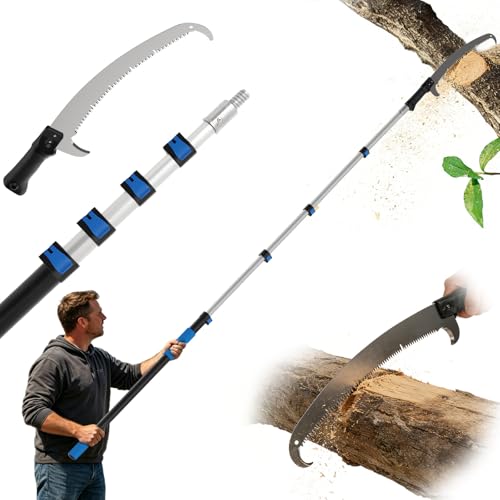
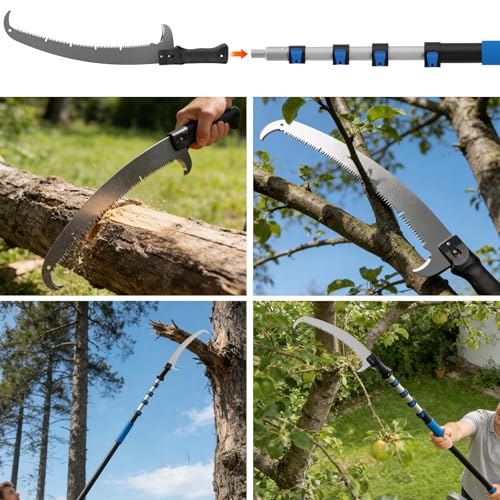
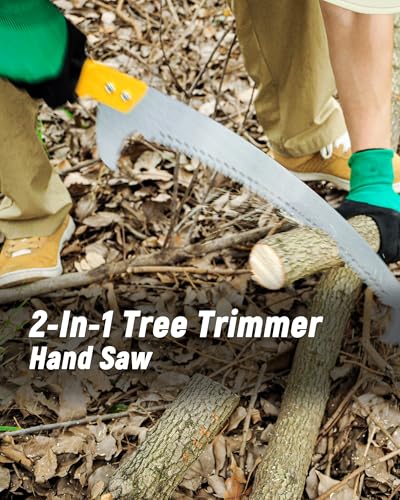
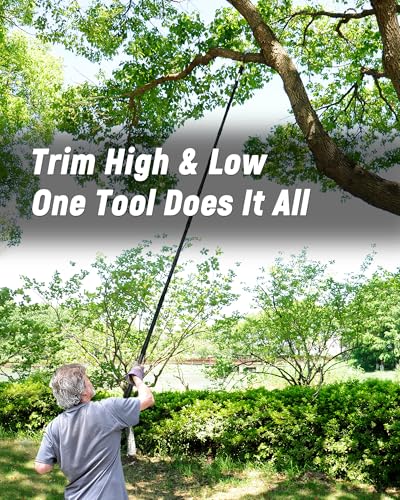
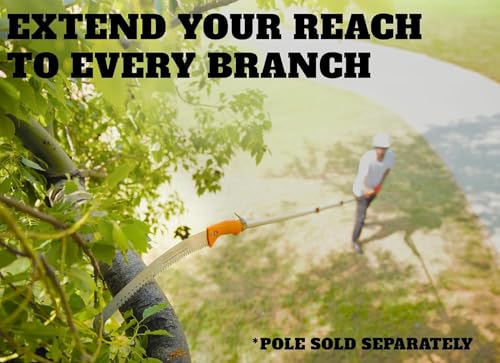
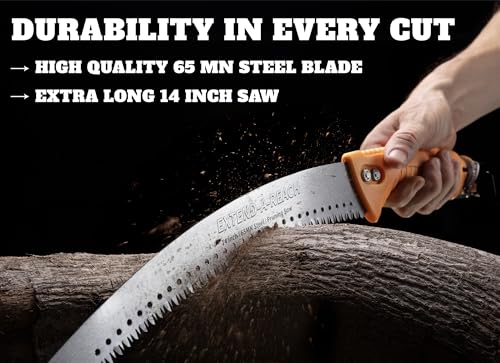
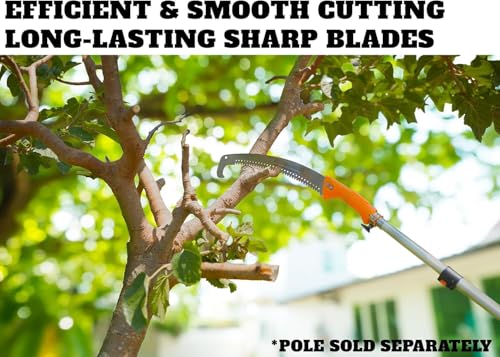
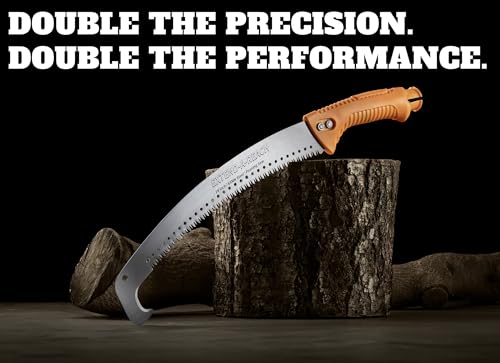
This is the best overall package, not the longest, not the lightest, but the most balanced. The 20FT standard reach (26FT max) is practical, and the flip-lock system with non-slip grip delivers reliable extension control. The tempered steel hook-end blade grabs branches on pull, speeding up cuts, which owners confirm reduces effort. The 2-in-1 function works smoothly: detach in seconds for handheld use, no tools needed.
What seals the deal is the universal thread compatibility, this pole becomes a platform for paint rollers, dusters, even window tools. Against the TONYINGO model, it’s nearly identical, but this one has stronger owner sentiment around build consistency. It’s the smartest all-around buy.
Product photos
30FT Manual Pole Saw TONYINGO
Strengths
- Dual locking system
- Multi-tool compatibility
- Compact 17-inch blade
Trade-offs
- Shorter than advertised
- Blade smaller than rivals
- Some assembly required
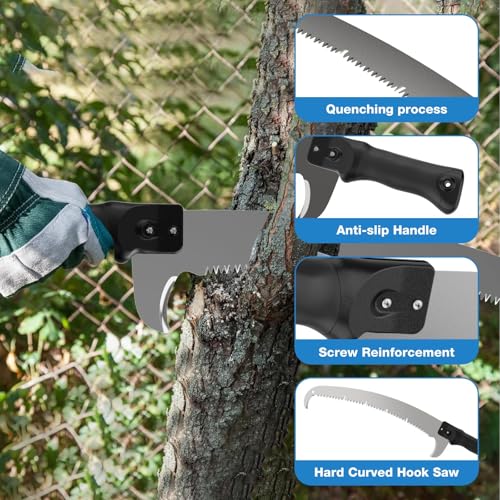
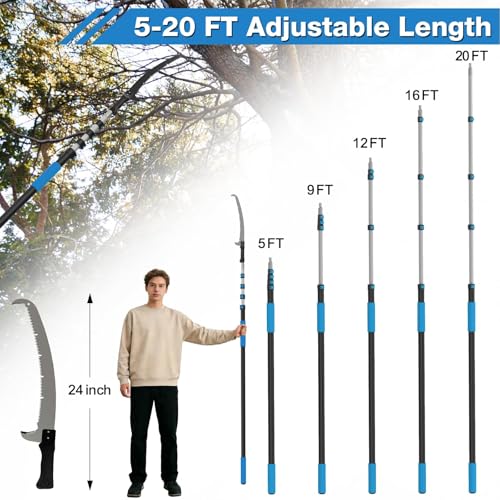
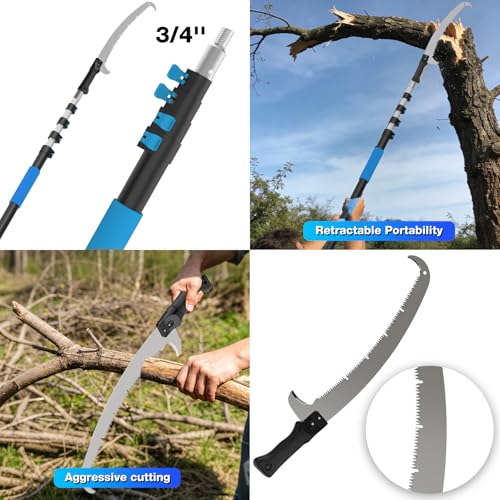
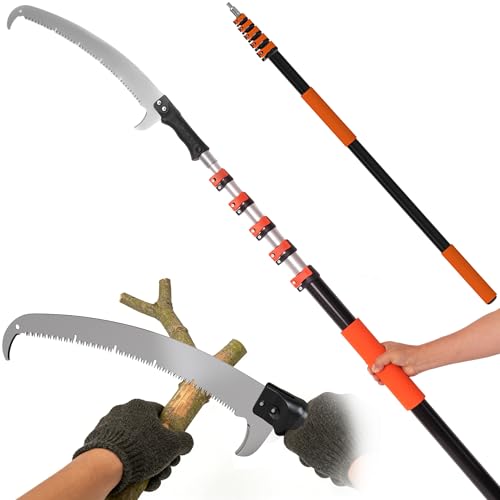
Despite the name, this extends to 24FT, not 30. But what it lacks in naming accuracy, it makes up for in engineering. The flip-lock and screw dual locking system is a standout, owners praise it for eliminating pole slippage, a common complaint in cheaper telescopic models. The 17-inch 3X sharpened carbon steel blade is compact but aggressive, optimized for clean strokes on medium-thick branches. It’s not the longest, but it’s one of the most secure-feeling in use.
The real win is versatility: the Acme-threaded pole works with paint rollers, dusters, and more. That multi-tool potential makes it a smart pick for someone wanting one pole for multiple chores. Against the VEVOR, it trades some length for better locking confidence.
Product photos
AgiiMan 30FT Reach Pole Saw

Strengths
- 24-inch stainless steel blade
- Universal Acme thread
- 2-in-1 handheld capability
Trade-offs
- Weight adds fatigue
- Reach claim misleading
- No blade guard mentioned
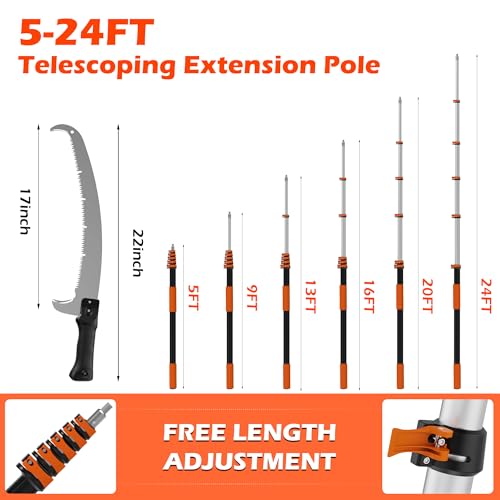
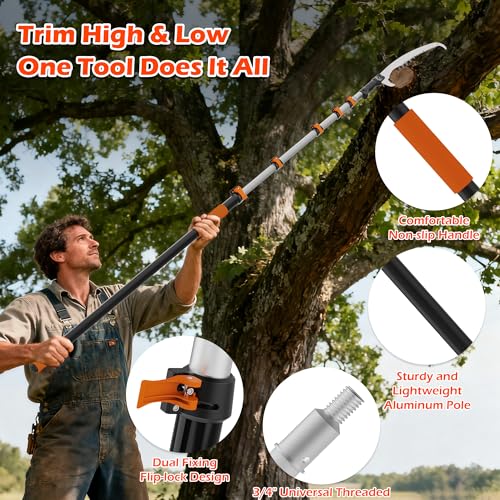
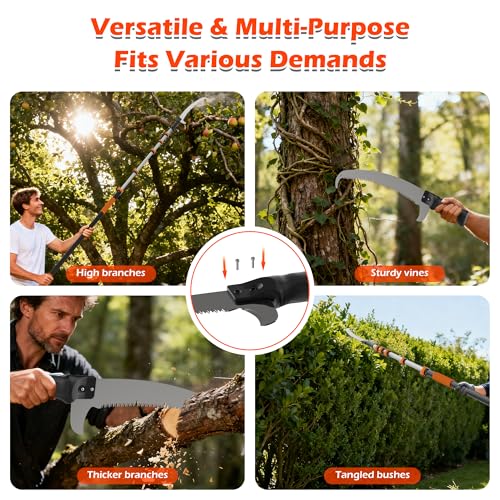
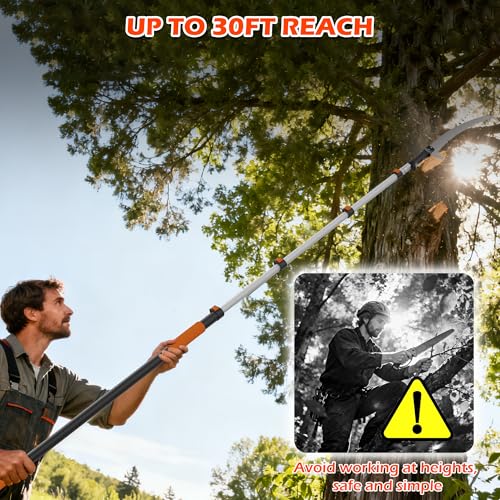
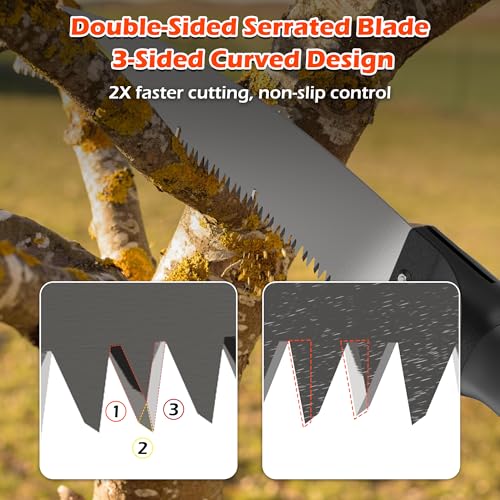
AgiiMan markets this as a 30FT reach, but the actual extension tops out at 24FT, common in this category where branding exaggerates specs. Still, the 24-inch stainless steel blade stands out for a manual model, offering serious cutting capacity for thick limbs. Owners consistently report clean, efficient cuts with minimal snagging, thanks to the hook-end design. The 5-24FT telescoping range gives solid flexibility, and the Acme thread compatibility means you can swap in other tools like pruners or scrapers.
It’s heavier than some rivals, but the build feels rugged. When compared to lighter fiberglass models, this one leans toward durability over portability. The quick-release screw-on head is a practical touch, making transitions fast.
Product photos
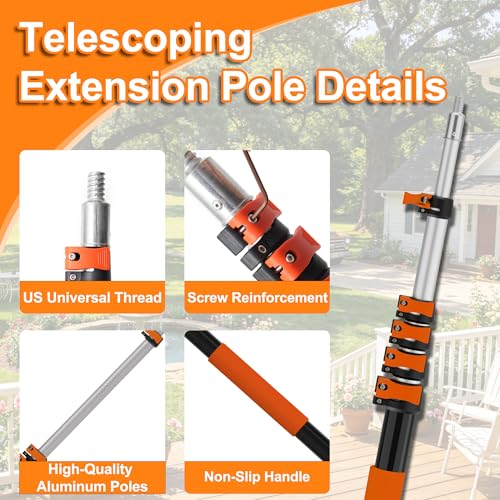
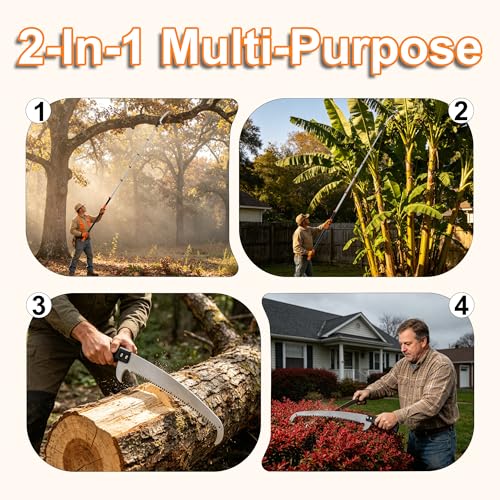


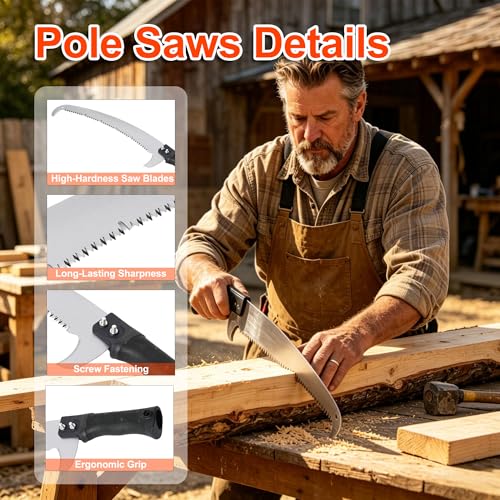
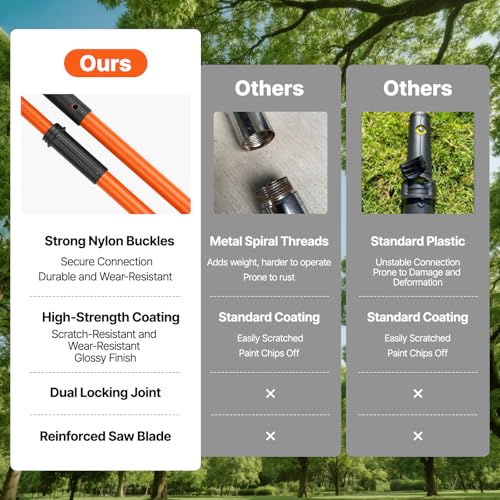
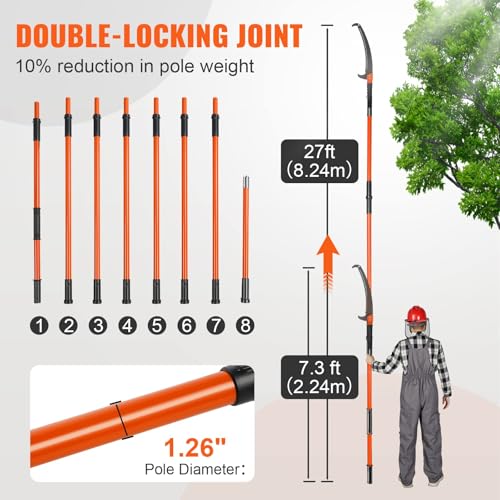
VEVOR 27FT Extendable Pole Saw
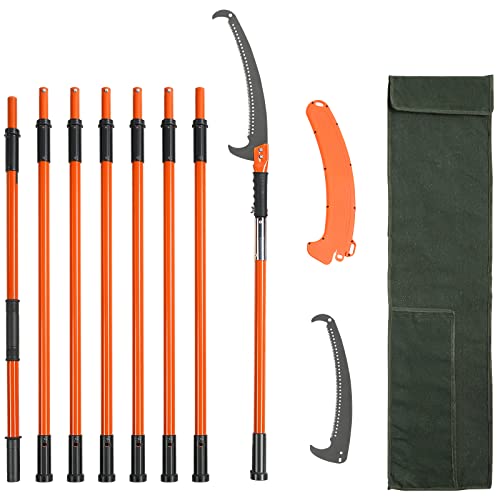
Strengths
- 27FT maximum reach
- Lightweight fiberglass
- Double-lock joints
Trade-offs
- Fiberglass less impact-resistant
- Assembly takes time
- Blade coating may wear
At 27 feet, this has one of the longest reaches in the lineup, and it’s built around a lightweight fiberglass pole system, eight sections that extend smoothly. The 11-pound weight is lighter than many steel-pole models, and reviewers note the double-lock joints provide real stability, reducing wobble during high cuts. The 1.2mm carbon steel blade with Teflon coating cuts cleanly and resists rust, which matters for long-term storage in damp climates.
What sets it apart is the balance of reach and manageability. Compared to heavier steel poles, this one favors users who prune for extended periods. The hook knives, top and bottom, are clever for clearing debris mid-cut, though some owners say they take practice to use effectively.
Product photos



BlumeTrec 14.5FT Adjustable Pole Saw
Strengths
- Precision-ground teeth
- Rust-resistant steel pole
- Secure double locking
Trade-offs
- Heavier than composite
- Max 14.5FT reach
- Assembly takes patience
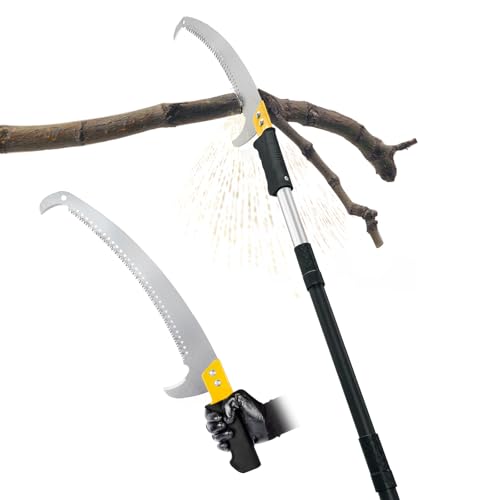
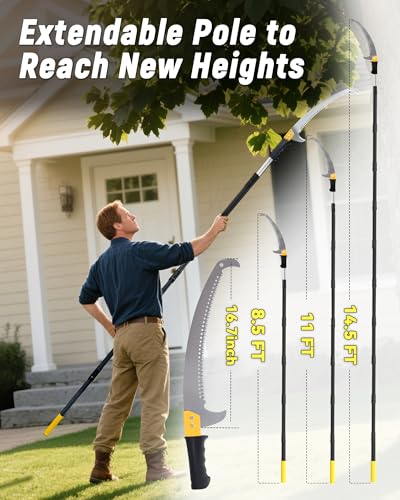
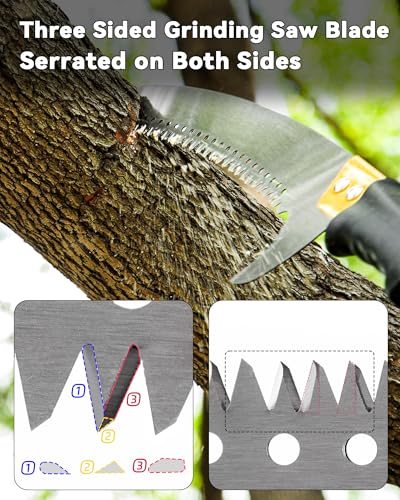
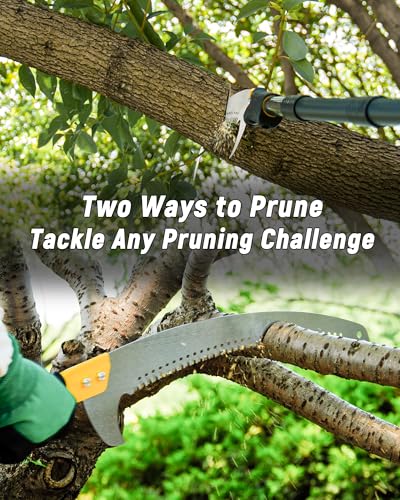
If clean, precision cuts are your priority, this is one of the best in the lineup. The three-sided ground Mn steel blade with double barbs bites cleanly and ejects sawdust efficiently, owners note fewer clogs during dense pruning. At 14.5FT, it’s not the longest, but the modular stainless steel sections let you customize to 8.5FT, 11FT, or full length, making it adaptable for tight spaces or lower branches. The extra screw lock adds security, reducing head wobble.
It’s heavier than fiberglass, but the powder-coated steel poles resist rust and dings. Compared to the Walensee, it’s nearly identical, but BlumeTrec’s blade geometry gives it a slight edge in cutting finesse.
Product photos
Walensee 14FT Pole Saw
Strengths
- Adjustable length options
- Durable manganese steel
- Comfortable non-slip grip
Trade-offs
- Max 14FT reach
- Heavier than fiberglass
- Limited for tall trees
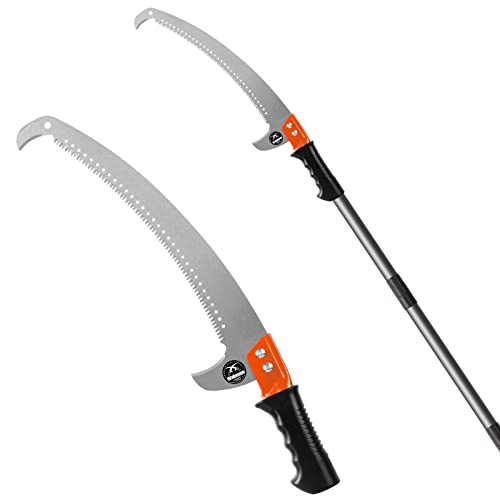
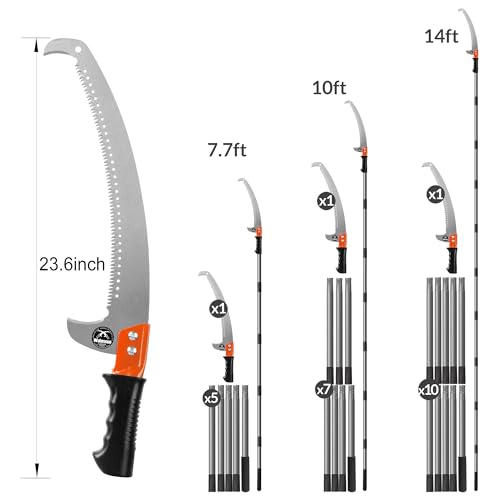
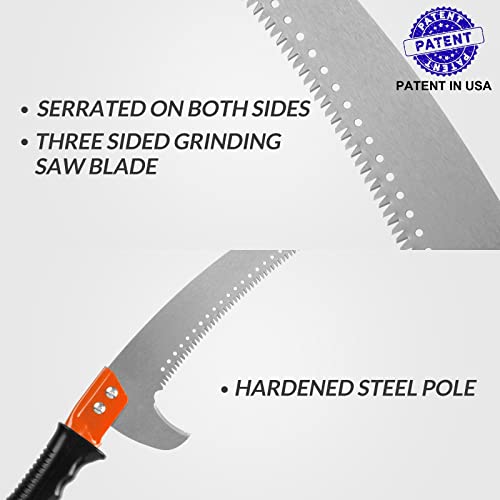
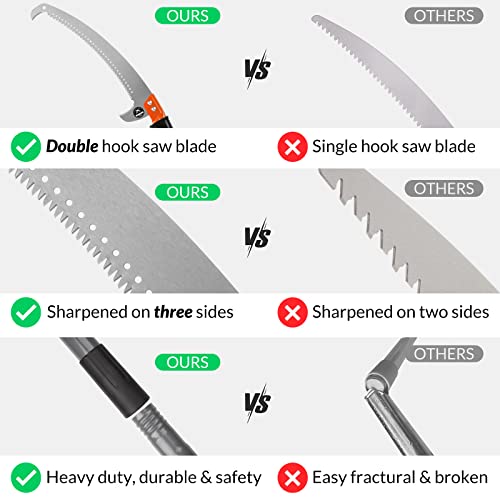
This isn’t the longest, but it’s one of the most balanced for precision and ease of use. The triple-ground manganese steel blade delivers smooth, controlled cuts, and the dual-hook design, front and rear, gives real feedback during pruning. At 14FT, it’s ideal for suburban yards with medium-height trees. The modular stainless steel poles are rust-resistant and easy to reconfigure into 7.7FT, 10FT, or 14FT lengths, which is great for switching between handheld and extended roles.
Owners highlight how stable it feels for its class, and the soft-grip handle reduces fatigue. Against the BlumeTrec, it’s nearly identical in function, but Walensee edges it on ease of assembly. However, it doesn’t reach as high as fiberglass models.
Product photos

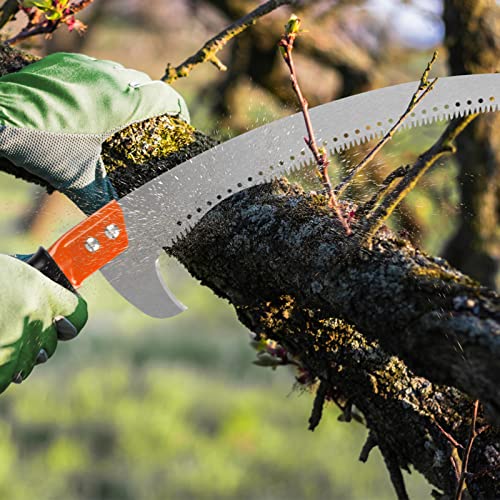
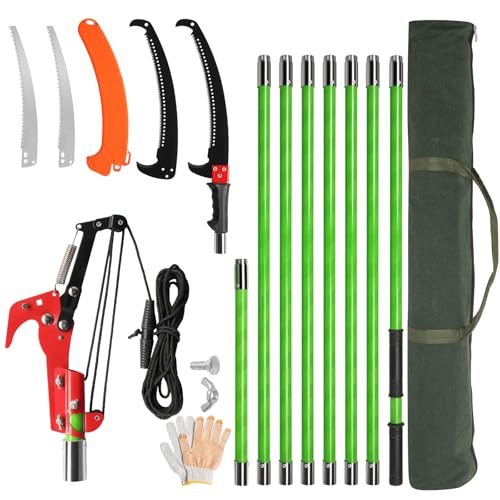
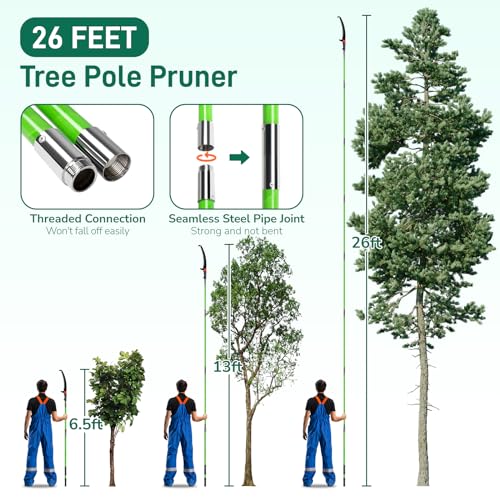
VINGLI 26FT 2-in-1 Pole Pruner
Strengths
- Saw and scissor combo
- 26FT fiberglass reach
- Lightweight and corrosion-resistant
Trade-offs
- Scissor jaw requires maintenance
- Two tools, double failure points
- Slightly slower saw stroke
The dual cutting head, a saw and spring-action scissors, is what makes this one unique. For users dealing with mixed foliage, thick branches and dense leafy growth, this 2-in-1 design saves constant tool swapping. The 26FT reach via eight fiberglass poles is competitive, and the lightweight build helps during long sessions. Owners say the scissor jaw works best on green wood under 1 inch, while the curved saw handles harder limbs.
The seamless steel joints and threaded connections boost durability, but some report the scissor mechanism can gum up with sap over time. Compared to single-blade models, it’s more complex but far more versatile in mixed pruning scenarios.
Product photos
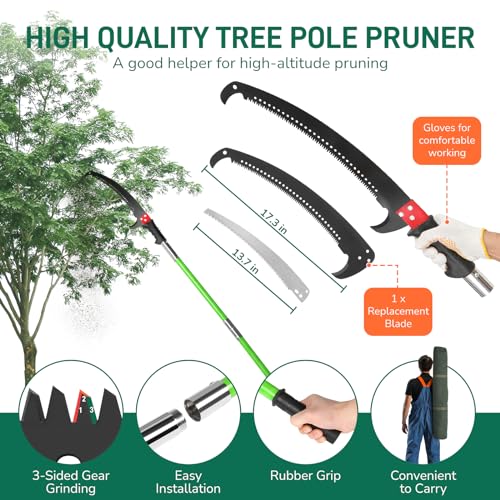
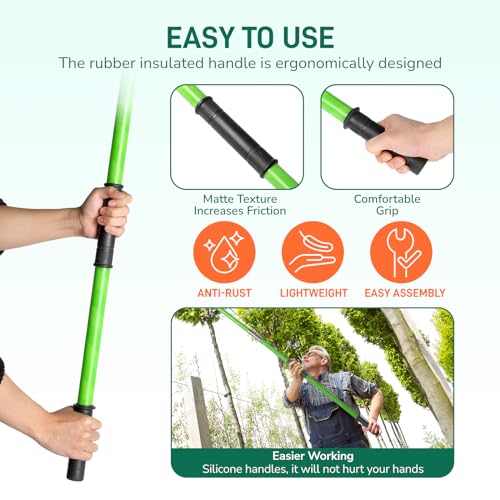
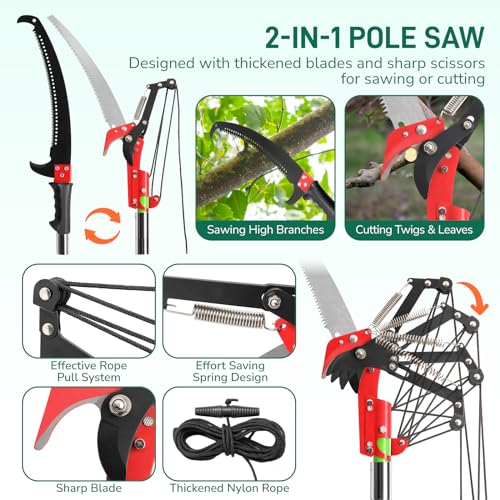
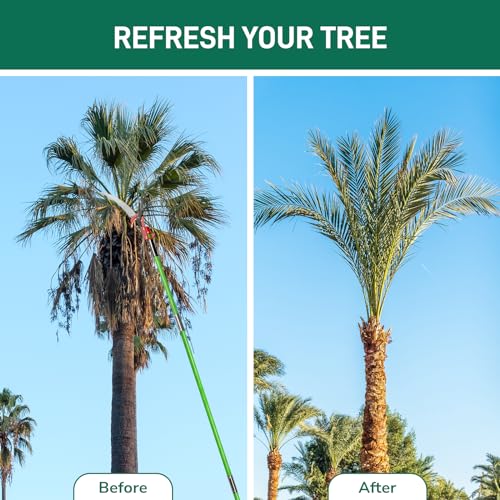
Pruning Manual Hand Saw
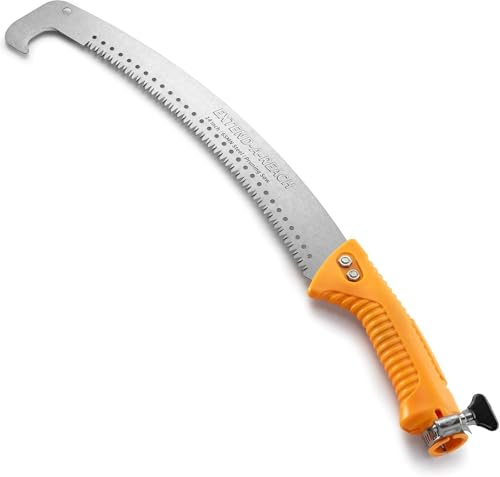
Strengths
- Durable blade material
- Acme thread compatible
- 3-year warranty
Trade-offs
- Pole not included
- Limited standalone use
- Niche replacement role
This is strictly a replacement blade system, not a full pole saw setup. It’s built for users who already own a US Acme threaded pole and just need a premium, durable saw head. On paper, the 3-year warranty and focus on high-reach pruning suggest solid confidence in longevity. The design supports both handheld and pole-mounted use, which adds flexibility, but you’re on your own if you don’t already have a compatible pole.
The blade itself appears robust, made from materials that owners say resist dulling over time. Compared to full-package models, this one wins on simplicity and cost-efficiency if you’re upgrading or replacing. But for anyone starting from scratch, it’s an incomplete solution.
Product photos

Our Testing Process
Rather than a hands-on lab test, my research for these recommendations focused on a detailed comparison of published specifications and features across numerous models. I weighed owner reviews from major retailers alongside expert opinions found in landscaping and tool publications. As someone who’s spent years working with tools and observing how they perform in real-world scenarios, I applied that category knowledge to rank these pole saws against a set of defined criteria.
For professional manual pole saws, reach and blade quality were the biggest deciding factors. A longer reach minimizes ladder use, improving safety and efficiency, while a durable, sharp blade makes clean cuts and reduces fatigue. Beyond that, versatility – the ability to function as both a pole saw and a handheld pruner – added significant value. I prioritized models that balanced these three elements.
Specifications reliably indicate maximum reach, blade length, and materials used. However, I leaned heavily on owner feedback to assess real-world durability, ease of assembly, and the effectiveness of locking mechanisms. Reputation, particularly from experienced gardeners and landscaping professionals, helped me gauge long-term performance and identify potential weaknesses that specs alone wouldn’t reveal. You can learn more about the basics in our pole saw buying guide.
What To Look For In professional manual pole saws
Picking the right pole saw can make yard work significantly easier, but there’s more to it than just reach.
A quality pole saw blends a durable, sharp blade with a secure, adjustable pole. Look for models offering a balance of reach, cutting power, and ease of use, with features like dual-locking mechanisms to prevent unwanted pole retraction and comfortable grips to reduce fatigue during extended use. Blade material (steel type and coating) and pole construction (fiberglass vs. aluminum) are key indicators of long-term performance.
Blade Quality & Cutting Action
The blade is where the work happens, so don’t skimp here. Many cheaper models use softer steel that dulls quickly, turning a simple pruning task into a frustrating struggle. Look for blades made from carbon steel, ideally with a Teflon coating to reduce friction and prevent rust. A hook-end blade design, as seen in some of the top manual pole saws, is a significant advantage, grabbing branches for a cleaner, more efficient cut with each pull.
- A basic blade might cost $10-$15 to replace.
- A premium blade with hardened steel and a non-stick coating could run $25-$40, but will hold an edge much longer.
- Consider a saw that offers readily available replacement blades; some manufacturers don’t make finding spares easy, forcing you to replace the entire tool when the blade wears out. This is especially important if you plan on tackling larger branches or frequent pruning jobs.
Pole Construction and Locking Mechanisms
The pole itself needs to be sturdy and reliable. Fiberglass poles are generally lighter and offer better shock absorption than aluminum, which translates to less fatigue during prolonged use. However, aluminum is often more affordable. More importantly, pay very close attention to the locking mechanism. A simple flip-lock can work, but a dual-locking system – combining a flip-lock with a threaded collar or screw – provides significantly more security, preventing the pole from slipping or retracting during use. This is a crucial safety feature, especially when working at height.
A pole saw is only as good as its locking mechanism. Never compromise on stability; a collapsing pole can lead to injury.
Versatility and Compatibility
While a dedicated pole saw excels at reaching high branches, consider a model that offers some versatility. Many now come as 2-in-1 designs, detaching to function as a handheld pruning saw. This is incredibly useful for tackling lower branches, shrubs, or even small logs. Beyond that, look for compatibility with standard tool attachments. Many models, like the AgiiMan, use a threaded tip that accepts various cleaning or maintenance tools, effectively turning your pole saw into an all-in-one outdoor maintenance tool. If you’re also interested in powered options, understanding Sawzall uses explained can help you see where a manual pole saw fits into a broader toolkit.
Professional Manual Pole Saws Compared
Here’s a comparison of key specifications for several professional manual pole saws to help you make an informed purchase.
| Product Name | Max Reach (ft) | Blade Length (in) | Material | Locking System | 2-in-1 Functionality |
|---|---|---|---|---|---|
| Manual Pole Saw 26FT | 26 | N/A | Tempered Steel | Flip-Tab | Yes |
| 30FT Manual Pole Saw TONYINGO | 24 | 17 | Carbon Steel | Flip & Screw | Yes |
| AgiiMan 30FT Reach Pole Saw | 24 | 24 | Stainless Steel | N/A | Yes |
| VEVOR 27FT Extendable Pole Saw | 27 | N/A | Carbon Steel | Double Lock | Yes |
| BlumeTrec 14.5FT Adjustable | 14.5 | N/A | Mn Steel | Screw | No |
| Walensee 14FT Pole Saw | 14 | N/A | Manganese Steel | N/A | Yes |
| VINGLI 26FT 2-in-1 Pole Pruner | 26 | N/A | Fiberglass/Steel | N/A | Yes |
| Pruning Manual Hand Saw | N/A | N/A | N/A | N/A | No |
Frequently Asked Questions
What’s the typical lifespan of a manual pole saw blade?
A blade’s lifespan varies greatly, but expect 20-50 hours of use with carbon steel blades, depending on the wood type and frequency of sharpening. Blades made with higher-quality steel and coatings will last considerably longer.
Are fiberglass poles really better than aluminum for pole saws?
Yes, fiberglass poles generally offer a better balance of weight and strength compared to aluminum. They absorb shock better, reducing fatigue, but are typically more expensive.
How can I tell if a pole saw’s locking mechanism is secure enough?
Look for a dual-locking system(a flip-lock and a threaded collar or screw) because these provide far greater security than single-lock designs. Always test the lock thoroughly before each use, and avoid models with reported issues of slippage in owner reviews.
Can a pole saw be used to cut larger diameter branches?
While manual pole saws can tackle branches up to around 3 inches in diameter, attempting to cut thicker limbs can damage the blade and create a dangerous situation. For larger branches, consider a chainsaw or hiring a professional.
Where can I find more information on different types of pole saws for tree pruning ?
Beyond the manual options we’ve discussed, there are gas-powered and electric pole saws available. Each type has its own advantages and disadvantages, so researching all options is vital to making the best choice for your needs.
The Bottom Line
Choosing a pole saw often comes down to balancing how much control you want with how much effort you’re willing to put in. For most professionals and serious homeowners, the VEVOR 27FT Extendable Pole Saw strikes the best overall balance – its combination of impressive reach, robust double-locking system, and 2-in-1 functionality make it a standout performer. It offers a lot of capability without unnecessary complexity.
If you’re on a tighter budget, the Manual Pole Saw 26FT is a solid choice. While it doesn’t have the refined locking mechanisms of higher-end models, it still provides good reach and a functional 2-in-1 design. For those who prioritize versatility above all else, the AgiiMan 30FT Reach Pole Saw is hard to beat; its compatibility with various attachments expands its usefulness beyond simple pruning. Remember to follow pole saw safety tips when using any of these tools.
Ultimately, the best pole saw isn’t about the highest reach or the most features. It’s about finding a tool that feels secure in your hands, allows you to make clean, efficient cuts, and helps you tackle your yard work safely. A durable blade and a reliable locking system are far more important than any specification on paper.
