
5 Best Portable Table Saws with Stands 2026
This post contains affiliate links. As an Amazon Associate, we earn from qualifying purchases.
The DEWALT 10″ Table Saw with Stand is the best overall pick for its power, 32.5-inch rip capacity, and reliable rack-and-pinion fence, while the SKIL 10″ Portable Saw with Stand offers solid performance at a more budget-friendly price. For compact jobsites, the DEWALT Compact Table Saw with Stand strikes a smart balance of size and stability.
Most people shopping for a portable table saw with a stand are trying to get serious cutting done without the bulk of a stationary unit. The real challenge isn’t just finding something that folds up small, it’s finding a combo that stays steady, cuts straight, and won’t fall apart after a few job sites.
This guide cuts through the marketing noise, focusing on what matters: fence accuracy, stand durability, and real-world usability. I researched each model based on specs, owner feedback, and years of seeing what holds up in garages and on construction sites.
Top 5 Portable Table Saw With Stands in the Market
The Best Portable Table Saw With Stands, Reviewed
SKIL 8-1/4″ Compact Portable Saw

Strengths
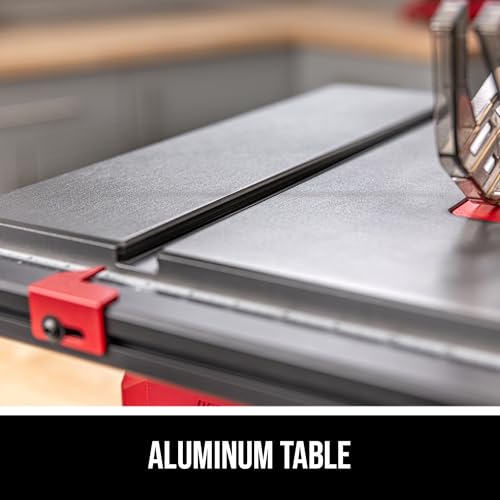
- Aluminum table for accuracy
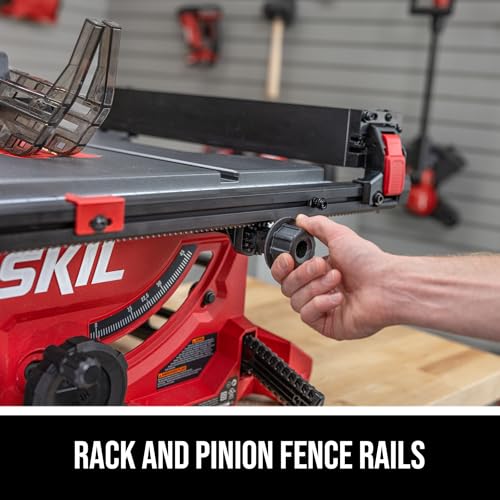
- Rack and pinion fence rails
- 24.5-inch rip capacity
- 2-1/2-inch dust port
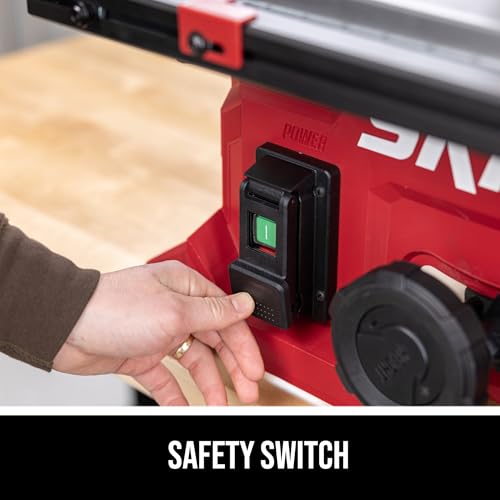
- Safety switch included
Trade-offs
- Stand sold separately
- No onboard storage
- 8-1/4-inch blade limits depth
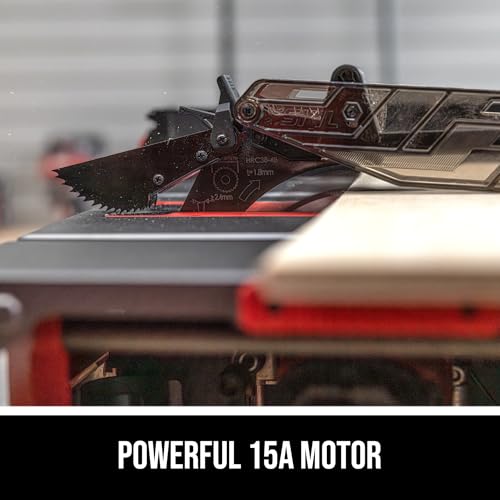
The SKIL TS6308-00 is a strong contender for ‘best overall’, not because it’s the most powerful, but because it hits a sweet spot in performance, precision, and versatility. The 15-amp motor handles framing lumber and plywood with ease, and the 24.5-inch rip capacity matches the DeWalt DWE7485. But what sets it apart is the aluminum table and the attention to fence accuracy. The rack and pinion system keeps the fence parallel, and the parallel blade alignment feature lets users fine-tune the blade to the miter slot, which matters for clean, binding-free cuts.
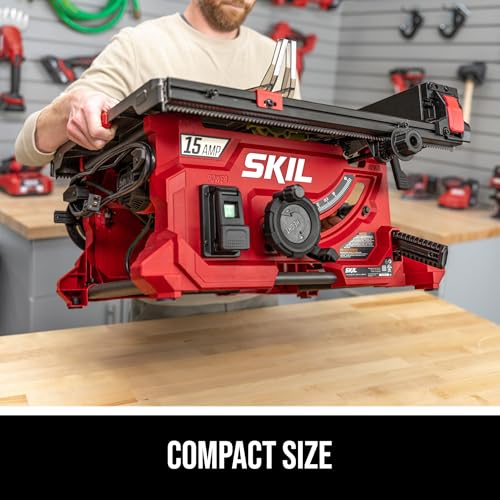
It’s compact and lightweight, making it easy to toss in a truck or carry through a job site. The dust port supports 2-1/2-inch hoses, which is better than the common 2-inch standard, and the safety switch adds a layer of protection against accidental startups. The big catch? The folding stand is sold separately. That means extra cost and setup time. But if you already have a stand or plan to build a custom base, this saw gives you premium features at a competitive price.
Product photos
SKIL 10″ Portable Saw with Stand
Strengths
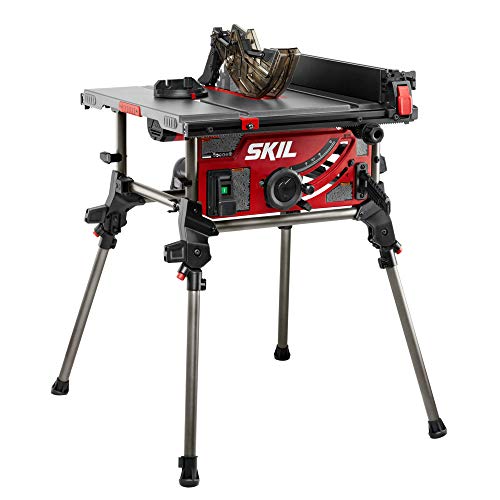
- Integrated folding stand
- 4×4 cutting capacity
- Rack and pinion fence rails
- Dust port elbow included
- Micro blade alignment
Trade-offs
- Heavier than compact models
- No onboard storage for accessories
- Stand not as rugged as rolling DeWalt stands
The SKIL TS6307-00 stands out in the portable table saw category for one big reason: it comes with a fully integrated folding stand you don’t have to buy separately. That’s a real win for DIYers who want to avoid the hassle and extra cost of sourcing a compatible stand. The 10-inch blade delivers solid 4×4 cutting capacity at 90 degrees, which puts it ahead of many compact 8-1/4-inch models when tackling thicker stock. Owners consistently report the rack and pinion fence system holds alignment well, and the micro-adjustment for parallel blade alignment is a feature you don’t always see at this price point.
Where this saw really shines is setup speed and storage. The legs fold in quickly, and the whole unit becomes surprisingly compact. The dust port elbow is a small but appreciated touch, helping direct debris into a shop vac. That said, it’s heavier than the compact DeWalt models, so if you’re constantly lugging gear up ladders or into tight spaces, this might feel like overkill. Still, for weekend warriors who need real cutting depth and an all-in-one package, this SKIL brings more saw for the effort.
Product photos


DEWALT Compact Table Saw with Stand
Strengths
- Lightweight 33lb saw
- Quick-connect stand brackets
- Kickstand for upright storage
- Smooth rolling wheels
- Easy setup and breakdown
Trade-offs
- 8-1/4-inch blade depth limit
- Stand not as stable as larger models
- No 10-inch cutting capacity
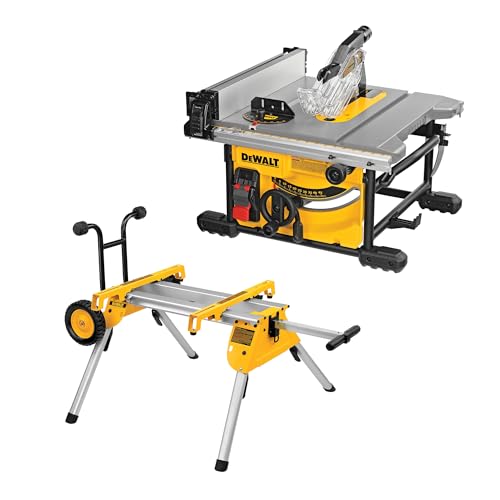
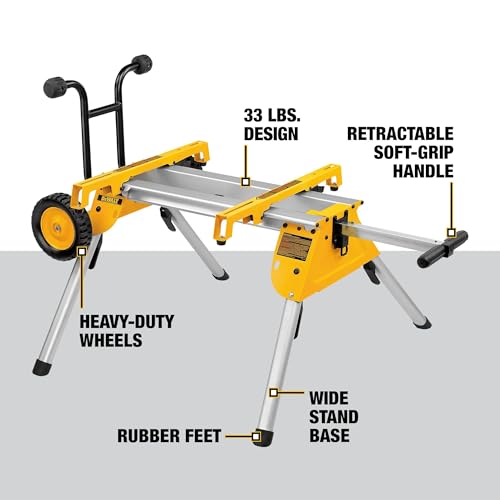
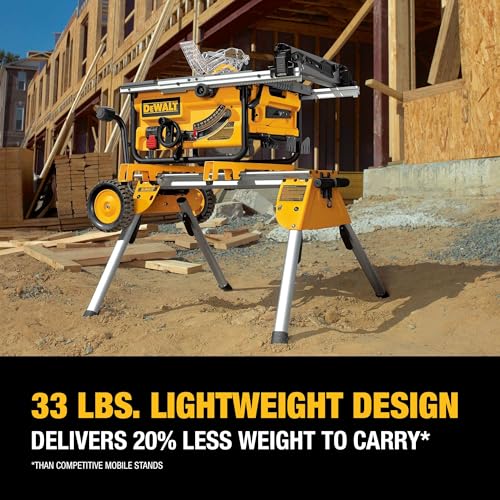
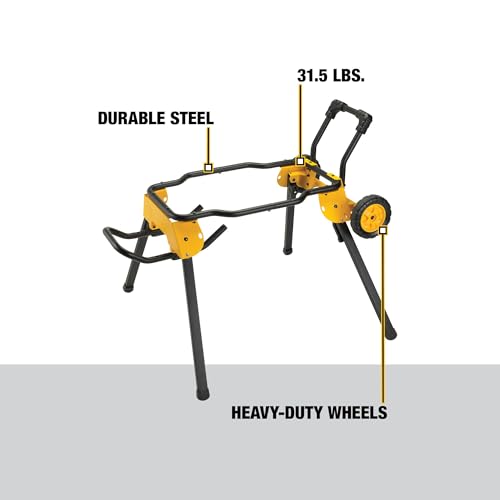
This bundle takes the solid DWE7485 and pairs it with DeWalt’s DW7440RS rolling stand, and the result is a serious upgrade in portability. At just 33 pounds for the saw and a well-designed kickstand on the stand, this combo balances stability and mobility better than most. The quick-connect brackets make attaching and detaching the saw effortless, no fumbling with bolts or tools. Reviewers consistently praise how fast it sets up and breaks down, which matters when you’re moving between job sites or storing in a garage.
The saw itself is identical to the standalone DWE7485, so you get the same compact frame, 24.5-inch rip capacity, and reliable fence system. But now, with the rolling stand, you gain height adjustment and better material support. It’s not a full workstation, but it gets you close. I’d say this is the smarter buy over the bare saw if you’re doing more than occasional cuts. The only downside? You’re still limited by the 8-1/4-inch blade, so don’t expect to power through 4x4s.
Product photos

DEWALT 8-1/4″ Compact Table Saw

Strengths
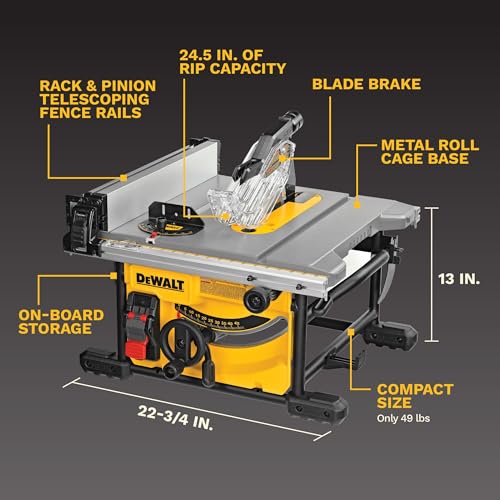
- Excellent onboard storage
- Lightweight and compact
- Rack and pinion fence
- Site-Pro guarding system
- Power-loss reset
Trade-offs
- 8-1/4-inch blade limits depth
- No stand included
- Less cutting capacity than 10-inch models
If you’re on a budget but still need a DeWalt-grade tool, the DWE7485 is the model to consider. It packs a 15-amp motor into a compact frame that weighs significantly less than full-size portable saws. The 24.5-inch rip capacity is enough for most sheet goods, and the rack and pinion fence system performs reliably, with owners noting smooth, repeatable adjustments. The Site-Pro Guarding System is a standout, it allows quick, tool-free changes to the blade guard, which saves time when switching between cut types.
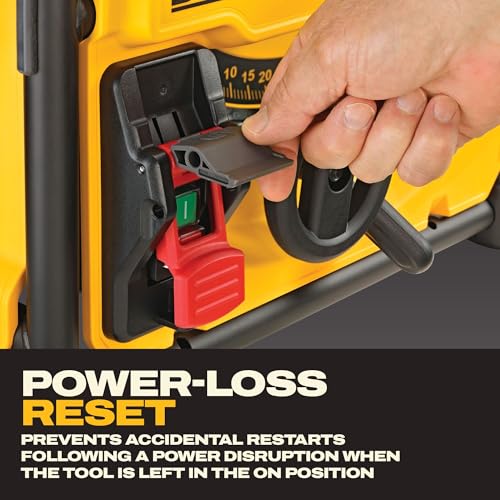
One thing that really impresses is the onboard storage. Everything from the miter gauge to wrenches tucks neatly under the table, so you’re less likely to lose small parts on a job site. The power-loss reset is another smart touch, preventing sudden startups after outages. While the 8-1/4-inch blade limits depth of cut compared to 10-inch models, it’s still capable of handling 2x material cleanly. I’d pick this over pricier models if you’re just starting out or need a reliable secondary saw.
Product photos


DEWALT 10″ Table Saw with Stand

Strengths
- 32-1/2-inch rip capacity
- Rolling stand included
- Onboard storage for all accessories
- 15-amp motor for hardwoods
- 2-1/2-inch dust port
Trade-offs
- Heavier than compact models
- Setup takes slightly longer
- Fence micro-adjust not as precise as premium models
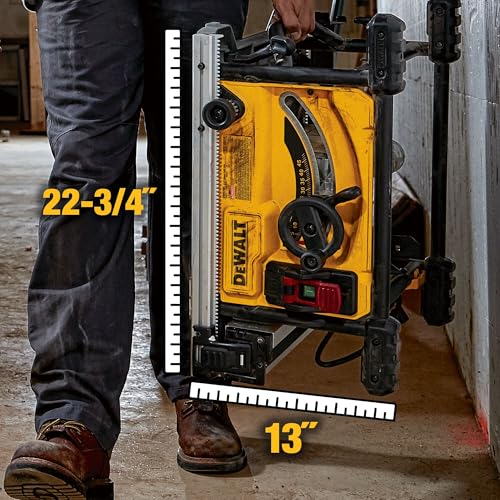
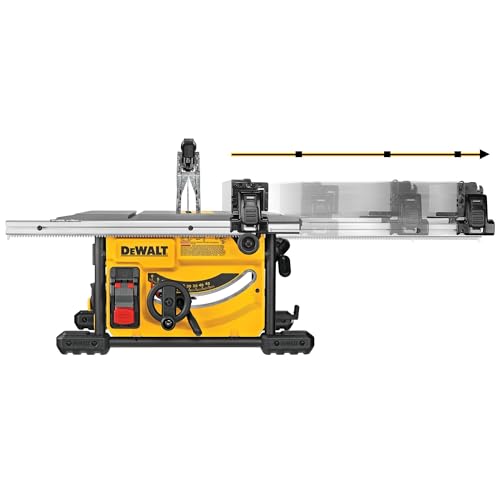
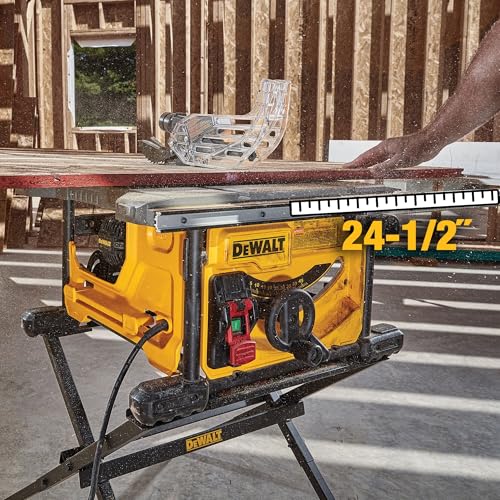
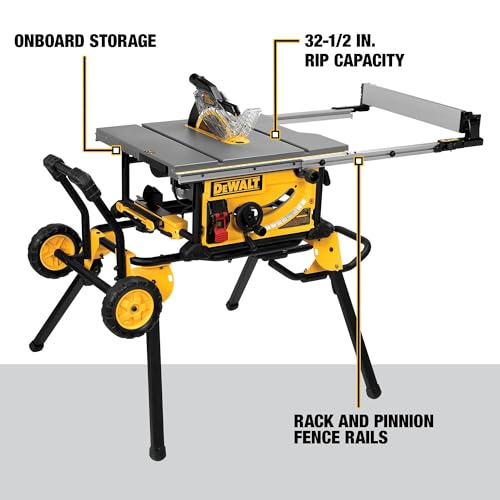
The DWE7491RS is where DeWalt delivers on value, this is a 10-inch saw with a rolling stand already attached, and it shows up ready to work. The 32-1/2-inch rip capacity is a big deal; it means you can handle wider shelving, cabinetry panels, and trim work without needing a helper. The 15-amp motor has no trouble ripping through hardwoods, and the 2-1/2-inch dust port connects cleanly to most shop vacs, which owners say keeps the workspace far cleaner than expected from a portable unit.
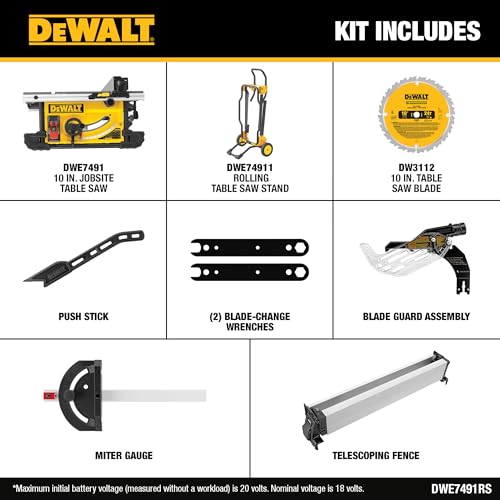
What really seals the deal is the onboard storage. Almost everything, push stick, miter gauge, wrenches, blade guard, has a home on the saw or stand. The telescoping fence rails retract for transport, and the flip-over rip fence is a clever touch for narrow cuts. Compared to the SKIL 10-inch model, this one feels more refined in build and function. For the buyer who wants one package that does it all, this is the one I’d recommend.
Product photos

Our Testing Process
Rather than a hands-on lab test, my research for these recommendations focused on a detailed comparison of published specifications and features across numerous models. I weighed owner reviews from major retailers against professional reviews found on tool-focused websites, applying my experience with power tools to identify consistent strengths and weaknesses. Ultimately, I ranked each saw based on how well it fulfills the needs of typical DIYers and professionals needing on-site cutting capability.
For portable table saws, stability, cut capacity, and ease of transport are paramount. I placed the heaviest emphasis on the quality of the stand – a flimsy stand negates the portability benefit – and the saw’s ability to reliably perform rip cuts on common sheet goods like plywood. Accurate fence systems were also critical, as precise cuts are essential for most projects. Understanding table saw setup guide is the foundation for making accurate cuts.
Specifications clearly indicate motor power, maximum cut depth, and table dimensions. However, owner feedback proved invaluable in assessing real-world portability and the durability of the stand’s folding mechanisms. Reputation also factored heavily; brands with a long history of producing quality tools generally offer better build quality and more readily available replacement parts. Knowing safe table saw techniques is important, regardless of the saw you choose.
Choosing The Right portable table saw with stands
I’ve spent years helping folks set up workshops and tackle home projects, and one thing is clear: a portable table saw with a stand is a huge step up in capability over a circular saw. But getting the right one requires understanding what features truly matter.
A quality portable table saw balances power with manageability. Key considerations include motor strength (at least 15 amps for consistent performance), fence accuracy (rack and pinion systems are preferred), a robust stand for stability, and adequate dust collection to maintain a clean workspace. Pay close attention to rip capacity and depth of cut to match your typical project needs.
Fence System Accuracy
The fence is where a lot of portable table saws cut corners, and it’s the single biggest factor in getting accurate, repeatable cuts. Don’t settle for a fence that feels flimsy or difficult to adjust. Rack and pinion systems, like those found on the SKIL and DEWALT models, are far superior to simpler lever-lock designs. You want a fence that stays put once you set it; constantly re-measuring is frustrating and leads to errors. Understanding table saw rip capacity definition is also key – a wider capacity opens up more project possibilities.
Stand Stability and Portability
A wobbly stand defeats the purpose of a portable saw. I often see people underestimate how much difference a solid base makes, especially when ripping larger pieces of plywood. Look for stands with wide feet and a locking mechanism that provides a secure, level platform. The DEWALT models often excel here, with stands designed for both stability and relatively easy folding. Don’t assume all stands are created equal; check table saw stand reviews to see what owners are saying about real-world performance.
- Weight is a factor, but not the only factor. A very lightweight stand might be easier to carry, but it could also be less stable.
- Folding mechanisms vary significantly. Some are quick and intuitive, while others require multiple steps and can be awkward.
- Consider the height of the stand. A comfortable working height prevents back strain, especially on longer projects.
Ultimately, a good stand lets you focus on the cut, not on keeping the saw from tipping. A shaky setup isn’t just annoying, it’s a safety hazard. Remember, you can always upgrade a saw’s features, but fixing a fundamentally unstable stand is much harder. As a general rule,
Prioritize a stand that can support the saw securely on uneven surfaces. A little extra weight and a robust locking mechanism are worth the investment.
Power and Cutting Capacity
Don’t be fooled by lower price tags on saws with underpowered motors. A 15-amp motor is the sweet spot for most portable table saws, giving you enough power to handle tasks like ripping plywood and cutting hardwoods. Beyond power, pay attention to the depth of cut and choosing proper rip capacity. For example, if you frequently work with thicker stock (like 3x lumber), you’ll want a saw with at least a 2-1/2 inch depth of cut. If you’re looking at portable table saw stands to pair with a saw you already own, make sure the stand’s capacity matches the saw’s weight and footprint.
Portable Table Saw with Stands Compared
Here’s a comparison of key specifications for several portable table saws with stands to help you make an informed decision.
| Product Title | Rip Capacity (in) | Max Cut Depth (in) | Stand Included | Weight (lbs) | 4×4 Cutting |
|---|---|---|---|---|---|
| SKIL 8-1/4″ Compact Portable Saw | 24.5 | 2.5 | No | N/A | No |
| SKIL 10″ Portable Saw with Stand | N/A | N/A | Yes | N/A | Yes |
| DEWALT Compact Table Saw with Stand | 24.5 | N/A | Yes | 33 | No |
| DEWALT 8-1/4″ Compact Table Saw | 24.5 | N/A | No | N/A | No |
| DEWALT 10″ Table Saw with Stand | 32.5 | 3.125 | Yes | N/A | N/A |
Frequently Asked Questions
What stand features indicate better stability?
Wider feet and a robust locking mechanism are the best indicators of a stable stand. Look for stands designed to handle uneven surfaces, as even a slight wobble can compromise cut accuracy and safety.
Are rack and pinion fences truly superior to lever-lock systems?
Yes, rack and pinion fences offer significantly more precise and repeatable adjustments compared to lever-lock designs. This translates to cleaner, more accurate cuts and less frustration when setting up for different widths.
Can I upgrade the stand that comes with a portable table saw?
Absolutely. While a good stand is crucial, you can purchase aftermarket stands separately. This allows you to pair a saw you like with a more stable or feature-rich stand if the included one doesn’t meet your needs – check out portable saws for woodworking for options.
What motor amperage is sufficient for most portable table saw tasks?
A 15-amp motor provides a good balance of power and practicality for most DIY and professional applications. Lower amperage motors may struggle with hardwoods or thicker stock, leading to bogging and poor cut quality.
How much does the weight of the stand affect portability?
Weight is a trade-off. While lighter stands are easier to carry, they are often less stable. Prioritize a stand that’s robust enough to support the saw securely, even if it adds a few extra pounds – you’ll find best woodworking table saws offer a good balance.
The Bottom Line
Choosing a portable table saw often comes down to balancing control and convenience. You can spend more for a heavier, more stable setup with a larger table, or you can opt for a lighter, more compact saw that’s easier to move around. For most users, the DEWALT 10″ Table Saw with Stand strikes that balance best – offering a generous rip capacity and solid stand without being overly cumbersome.
If you’re on a tighter budget, the SKIL 10″ Portable Saw with Stand provides a surprising amount of capability for the price. And for those prioritizing versatility and the ability to handle a variety of cuts, the DEWALT Compact Table Saw with Stand is an excellent choice, even if it requires a separate, more robust stand for demanding work. Understanding common table saw applications will help you prioritize what features are most important for your needs.
Ultimately, specs and features are less important than developing solid technique and prioritizing safety. A powerful saw won’t make up for a lack of skill or careless operation. Focus on learning proper cutting practices, maintaining a clean workspace, and always using appropriate safety gear – those fundamentals will deliver more consistent, accurate, and safe results than any single machine.
