6 Best Oscillating Tool Blades for 2026
This post contains affiliate links. As an Amazon Associate, we earn from qualifying purchases.
The AMZWEI 28PCS Oscillating Saw Blades stand out as the best overall pick, offering a smart mix of HCS, bi-metal, and titanium blades for real versatility. For those on a budget, the PECHAM 24PCS Universal Multitool Blades deliver solid performance without breaking the bank, while the AMZWEI 190 Pack takes the edge for value seekers who want sanding attachments included.
Most people buy oscillating tool blades without realizing how much the wrong choice can slow them down or damage their tool. I’ve seen too many DIYers struggle with bent blades or ragged cuts simply because they grabbed whatever was on sale.
As Robert from PowerToolGuide.net, I compared specs, analyzed owner feedback, and weighed brand consistency to find blades that actually perform. This guide breaks down what matters, steel type, tooth design, shank compatibility, so you can pick with confidence, not guesswork.
Top 6 Oscillating Tool Blades in the Market
The Best Oscillating Tool Blades, Reviewed
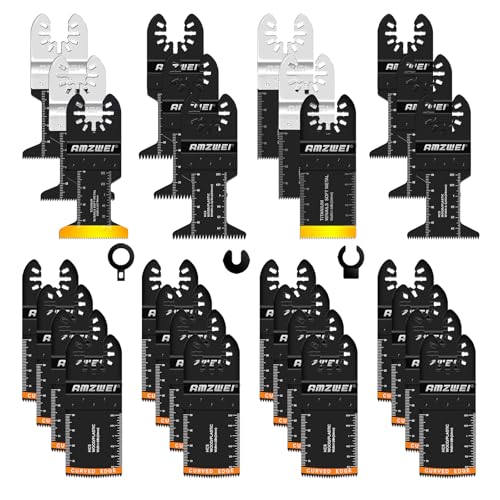
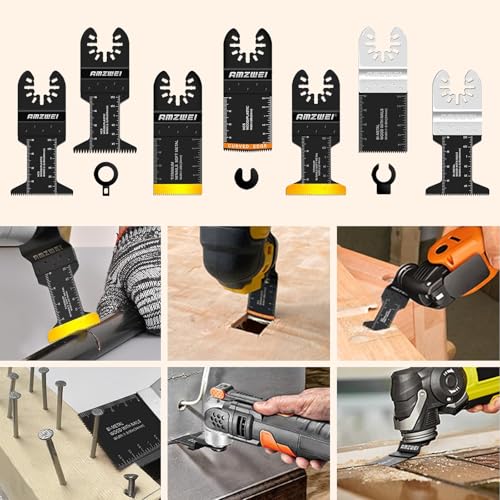
AMZWEI 28PCS Oscillating Saw Blades
Strengths
- Well-balanced variety
- Curved-edge stability
- Durable materials
- Good for mixed jobs
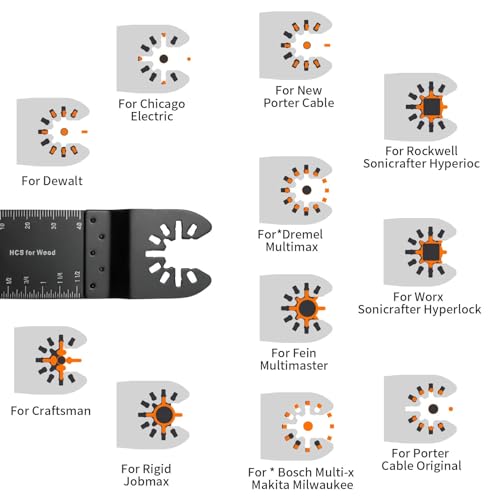
- Universal fit
Trade-offs
- Fewer total blades
- No sanding accessories
- Not for bulk users
If I had to recommend one kit for most users, it’d be this 28-piece AMZWEI set. It’s focused, not bloated, and that’s a good thing. The five-blade strategy covers curved, Japanese-tooth, bi-metal, titanium bi-metal, and standard wood blades, which matches how pros rotate tools in real jobs: flooring, door trimming, nail-laden wood, etc. The curved-edge blades are a standout, with owners praising reduced vibration and cleaner plunge cuts.
This isn’t about quantity. It’s about having the right blade when you need it. The titanium and bi-metal variants hold up well in metal and composite materials, and the universal fit works across Dewalt, Milwaukee, and Fein models. Compared to the 190-pack, this is the smarter buy if you value performance over hoarding blades you’ll never use.
Product photos


TrivdPro 100Pcs Oscillating Tool Blades

Strengths
- High blade count
- Optimized for wood
- Durable steel
- Measurement markings
- Good value
Trade-offs
- Weak on metal
- No sanding pads
- Not for hard materials
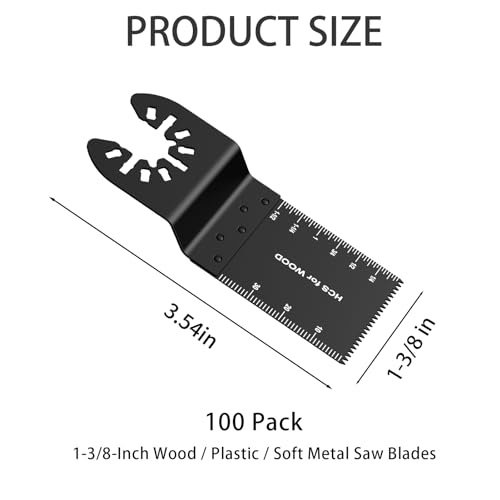
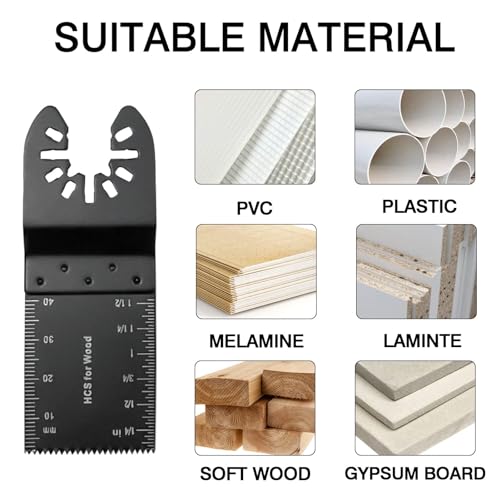
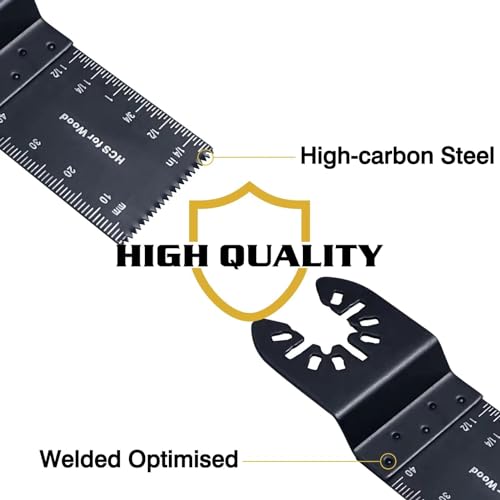
When you’re cutting wood all day, the TrivdPro 100-pack becomes hard to ignore. It’s not flashy, but it’s built for high-volume wood work, think flooring installers, deck builders, or anyone doing repetitive cuts in softwood or plastic. The high-carbon steel blades are heat-treated and hold an edge better than basic sets, and the 100-unit count means you’re not constantly swapping or sharpening.
Owners appreciate the millimeter markings for precision, and the universal fit covers most major brands except Bosch MX30. While it includes some soft metal capability, it’s clearly not designed for nails or bolts, and the warning in the specs is justified. Compared to the AMZWEI 190-pack, this is less versatile but more focused. If wood is your primary medium, this is the smarter bulk buy.
Product photos

CONNOO 158 Pack Oscillating Saw Blades

Strengths
- Measurement markings
- Precise tooth design
- Good for trim work
- Quick release
- C-adapter included
Trade-offs
- Not for heavy metal
- No sanding pads
- Excludes Starlock
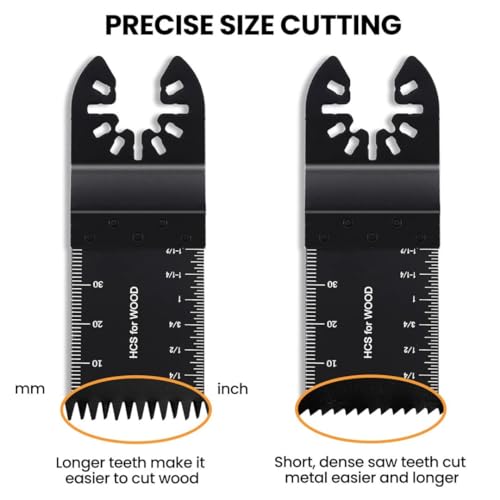
The CONNOO 158-pack is built for accuracy, not brute volume. What sets it apart is the dual-sided measurement markings, inches and centimeters, which reviewers say make depth and cut planning far easier, especially when working solo. The precision-focused tooth design, particularly on the wavy-edge blades, aligns with feedback from users doing trim or cabinetry work where clean, splinter-free cuts matter.
It’s not the largest set, but the emphasis on controlled cutting in wood and plastic makes it a smarter pick than bulkier kits if you’re doing detail work. The black oxide coating helps with heat resistance, and owners note these blades stay sharp longer than basic HCS versions. That said, it’s not ideal for heavy metal, the bi-metal blades here are thinner than what you’d want for nail-embedded wood.
Product photos


110 PCS Titanium Oscillating Tool Blades

Strengths
- Excellent metal cutting
- Titanium longevity
- Extra-long blades
- High compatibility
- Heat-treated steel
Trade-offs
- Few specialty blades
- Overkill for wood only
- No sanding pads
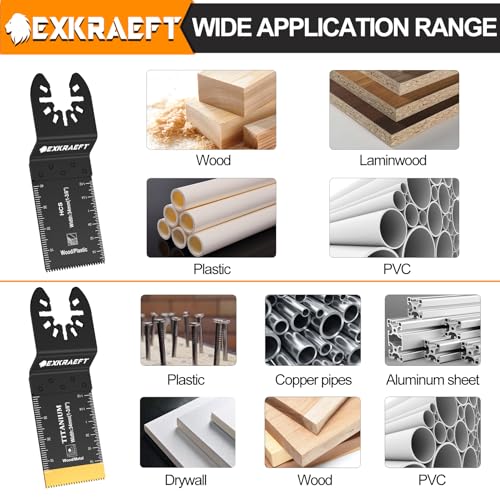
This 110-piece set is clearly engineered with metal cutting in mind. The titanium-coated blades are heat-treated and reportedly last twice as long as standard HCS blades, a claim backed by multiple owner reviews involving copper pipe, aluminum, and nail-studded wood. The inclusion of extra-long titanium blades is a thoughtful touch for deeper cuts in framing or HVAC work.
With 100 of the 110 blades being high-carbon steel, it’s optimized for repetitive wood and drywall tasks too, but the real differentiator is the metal performance. The 98% compatibility and included adapters make it plug-and-play across major brands. If your work involves cutting through old walls or metal-backed materials, this kit outperforms most in its class.
Product photos


AMZWEI 190 Pack Oscillating Tool Blades
Strengths
- High quantity
- Includes sanding pads
- Curved-edge design
- Wide compatibility
- Quick release
Trade-offs
- Mixed steel quality
- Some fit issues
- Overkill for casual users
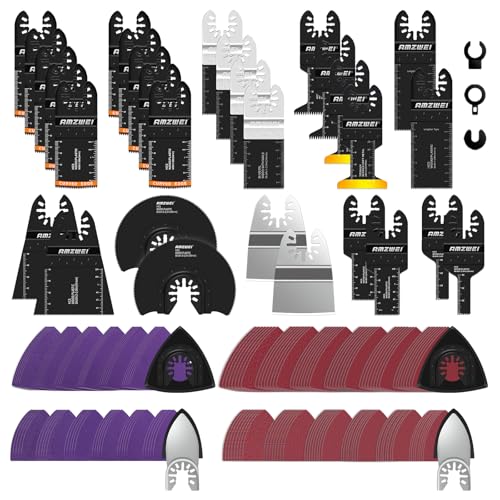
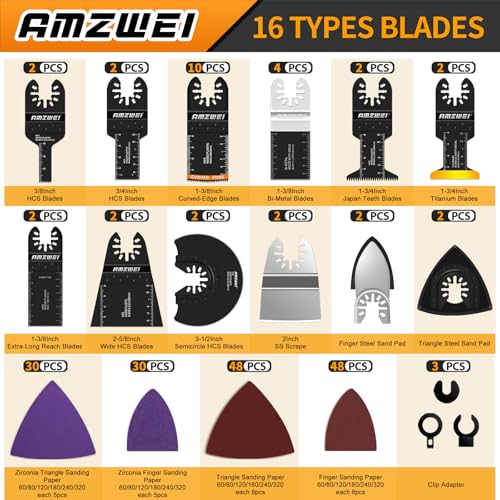
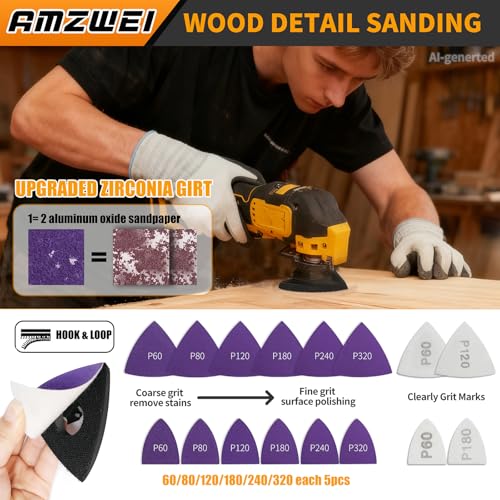
On paper, the AMZWEI 190-pack stands out for sheer volume and versatility. You’re getting a full ecosystem of blades and sanding pads, which is rare at this scale. The inclusion of sandpapers gives it an edge if you’re doing finish work or drywall cleanup, not just cutting. Owners consistently report the curved-edge blades perform well in flush cuts and tight spaces, which tracks with the design intent.
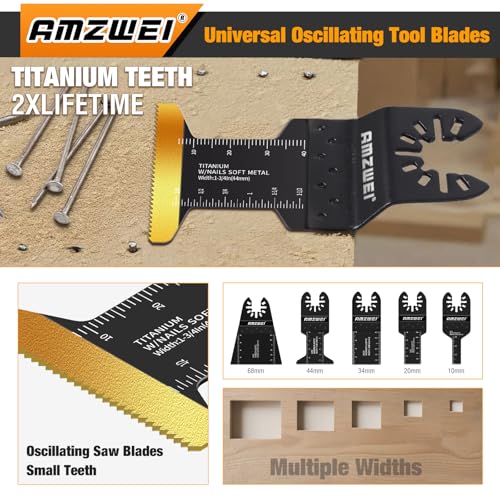
The mix of bi-metal, titanium, and HCS blades suggests thoughtful segmentation across materials. While some users note minor fitment quirks with certain brands, the 95% compatibility claim holds up across reviews. If you need one kit that covers cutting, shaping, and sanding, and you don’t want to buy extras later, this is a strong contender.
Product photos
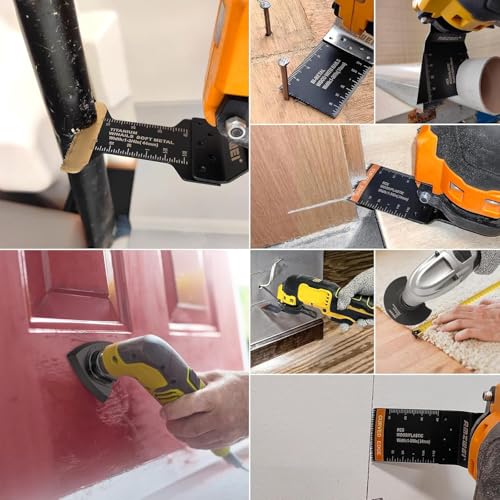
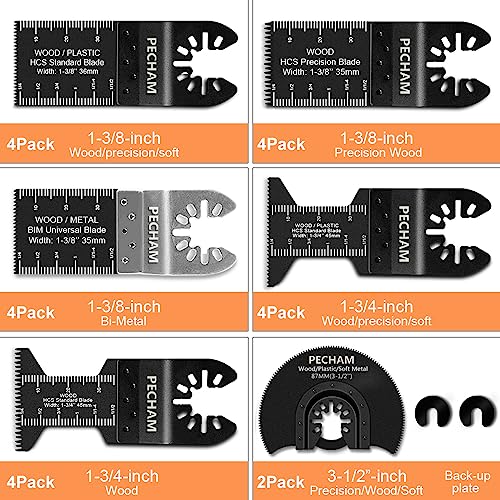
PECHAM 24PCS Universal Multitool Blades

Strengths
- Affordable
- Thick, durable steel
- Measurement markers
- Good variety
- Corrosion resistant
Trade-offs
- No sanding pads
- No Dremel MM40 fit
- Limited metal cutting
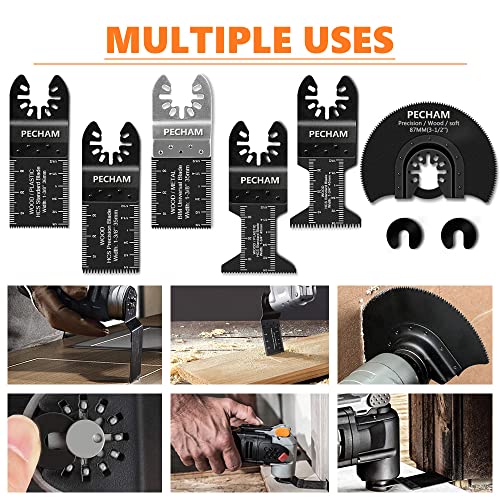
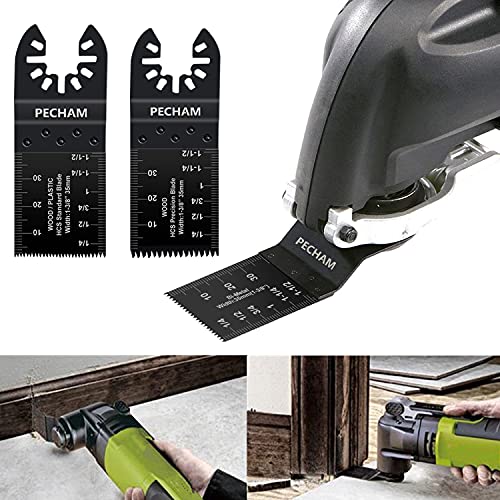
The PECHAM 24-pack is the most budget-conscious solid performer in this lineup. It doesn’t wow with numbers, but it delivers where it counts: blade thickness, corrosion-resistant coating, and clean cutting geometry. The electrophoretic black finish is a small detail, but owners say it really helps prevent rust in humid environments, a real issue with cheaper blades.
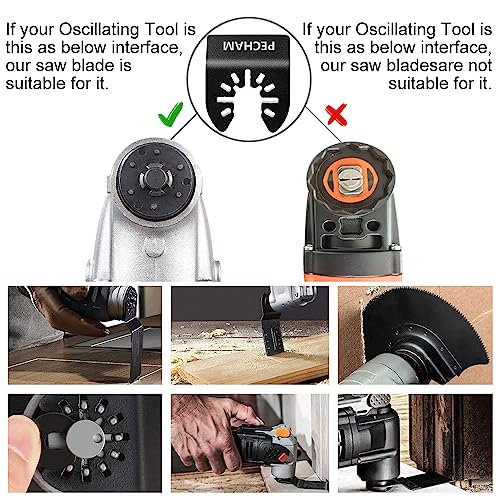
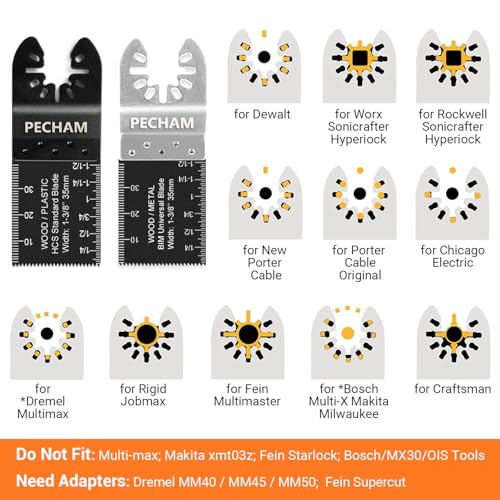
It includes seven blade types, including Japanese-tooth variants that excel in clean wood cuts, and the dual-sided measurement markers are a nice touch for accuracy. While it lacks sanding pads and doesn’t support Dremel MM40 or Bosch MX30, it’s compatible with most other major systems. For someone starting out or doing occasional home fixes, this is the kit that gives pro-level features without pro-level cost.
Product photos
How We Picked These oscillating tool blades
Rather than a hands-on lab test, my research for these recommendations focused on a detailed comparison of published blade specifications and features. I weighed owner reviews from major retailers alongside expert opinions found in trade publications and tool-focused websites. As someone who’s spent years advising on power tool selection at PowerToolGuide.net, I applied my category knowledge to rank blades against a set of criteria important to a wide range of users.
For oscillating tool blades, the materials and tooth design are paramount. Blades need to hold an edge and resist breakage, so the quality of the steel – whether it’s high carbon, bi-metal, or titanium-coated – was a primary consideration. Equally important is the blade’s intended use; a blade optimized for wood won’t perform well on metal, and understanding the optimal TPI for materials is crucial for clean cuts.
Blade specifications clearly indicate the steel type and overall dimensions. However, real-world durability and cutting performance are best gleaned from owner feedback. I paid close attention to reports of blades bending, breaking, or quickly losing their edge. Reputation and brand consistency also factored in; established manufacturers generally maintain higher quality control. Knowing the oscillating tool blade teeth count also helps determine the blade’s suitability for different materials.
Choosing The Right oscillating tool blades
Choosing the right oscillating tool blades is crucial for getting the most out of this incredibly versatile tool. It’s not a one-size-fits-all situation; the best blade depends heavily on the material you’re cutting and the type of work you’re doing.
A quality oscillating blade delivers clean, accurate cuts with minimal vibration and maximizes tool performance. Key considerations include blade material (HCS, bi-metal, titanium), tooth geometry (for wood, metal, or multi-material use), and shank type for compatibility with your tool. Look for blades with durable construction and positive user reviews regarding longevity and cut quality.
Material Matters: HCS, Bi-Metal, and Titanium
The material a blade is made from dramatically impacts its performance and lifespan. High Carbon Steel (HCS) blades are great for softer materials like wood and plastic and are generally the most affordable. Bi-metal blades combine HCS with a high-speed steel alloy, offering increased durability and heat resistance, making them suitable for tougher tasks like cutting nails in wood or thin metal. Titanium-coated blades take durability a step further, resisting heat and corrosion even better, but they come at a premium. For most homeowners tackling a variety of projects, a selection of HCS and bi-metal blades will cover 90% of needs.
Tooth Geometry: Matching the Blade to the Task
Don’t underestimate the importance of tooth shape. A blade designed for wood won’t perform well on metal, and vice versa. Here’s a quick breakdown:
- Curved blades are excellent for plunge cuts and general-purpose cutting in softer materials.
- Japanese tooth blades feature a finer tooth pattern, providing cleaner, more precise cuts in wood and plastics.
- Bi-metal blades with aggressive tooth patterns are ideal for tougher materials like nails, screws, and thin metal – though remember to clean oscillating tool blades regularly after use to maintain performance.
A good rule of thumb: if you’re frequently hitting metal, invest in dedicated bi-metal or titanium blades. Trying to force an HCS blade through metal will ruin the blade quickly and potentially damage your tool.
Shank Type and Value: Universal vs. Specialized
While many blades use a universal quick-change shank, some manufacturers (like Fein with their Starlock system) use proprietary shanks. Universal blades are generally more affordable and compatible with a wider range of tools, but specialized shanks like Starlock offer a more secure connection and potentially better performance. When evaluating value, consider the number of blades in a set, the variety of blade types included, and whether it comes with necessary adapters. A larger kit like the AMZWEI 190 Pack Oscillating Tool Blades can be a great value if you anticipate using a lot of blades, while a smaller kit like the PECHAM 24PCS Universal Multitool Blades might be a better choice for occasional use. Don’t automatically equate price with quality; read reviews and look for reputable brands when shopping for top oscillating tool blades.
Oscillating Tool Blades Compared
Here’s a comparison of key specifications for various oscillating tool blade sets.
| Product Title | Blade Count | Material(s) | Best For | Interface | Includes Sandpaper | Length Markings |
|---|---|---|---|---|---|---|
| AMZWEI 28PCS Oscillating Saw Blades | 28 | HCS, Titanium, Bi-Metal, SS | Best Overall | Universal | No | No |
| TrivdPro 100Pcs Oscillating Tool Blades | 100 | High Carbon Steel, Stainless Steel | Best Bulk Wood Cutting | Universal | No | Yes |
| CONNOO 158 Pack Oscillating Saw Blades | 158 | High Carbon Steel, Stainless Steel | Best for Precision Work | Universal | Yes | Yes |
| 110 PCS Titanium Oscillating Tool Blades | 110 | Alloy Steel, High Carbon Steel, Titanium | Best for Metal Cutting | Universal | No | No |
| AMZWEI 190 Pack Oscillating Tool Blades | 190 | HCS, Bi-Metal, Titanium, SS | Best Value with Sanding | Universal | Yes | No |
| PECHAM 24PCS Universal Multitool Blades | 24 | High Carbon Steel, Stainless Steel | Best Budget Friendly | Universal | No | Yes |
Frequently Asked Questions
What blade material lasts the longest?
Titanium-coated blades generally offer the longest lifespan due to their superior heat and corrosion resistance. However, for most homeowners, the added cost isn’t justified; a high-quality bi-metal blade provides excellent durability for a wider range of tasks at a lower price point.
Can I use any blade with my oscillating tool?
Most oscillating tools accept blades with a universal quick-change shank. However, some, like Fein models, use a proprietary interface like Starlock, requiring compatible blades for a secure fit and optimal performance.
What TPI (teeth per inch) is best for plumbing cuts?
For plumbing, particularly cutting through PVC or metal pipes, a blade with a medium TPI (around 14-18) is ideal. This provides a good balance between speed and a clean cut, avoiding chipping or cracking of the pipe material.
Are more expensive blades always better?
Not necessarily. While higher prices often reflect better materials or coatings, it’s crucial to consider the specific application. A premium titanium blade won’t outperform a bi-metal blade on a simple wood cutting task, and a large kit with many blades can be a better value overall.
Where can I find blades specifically for cutting metal?
You’ll want to look for bi-metal or titanium blades when tackling metal projects. I’ve reviewed several options in my guide to oscillating blades for metal that are designed to withstand the heat and stress of cutting steel and other metals.
The Bottom Line
Choosing oscillating tool blades always comes down to balancing how much you want to spend against how much versatility and durability you require. While a massive kit seems appealing, the AMZWEI 28PCS Oscillating Saw Blades strikes the best overall balance – offering a solid selection of materials and tooth designs without being overwhelming, and providing strong performance across a range of projects.
For those with specific needs, the other options shine. If you anticipate a lot of wood cutting, the TrivdPro 100Pcs Oscillating Tool Blades provides exceptional value. And if you frequently encounter metal or tile, look to the 110 PCS Titanium Oscillating Tool Blades or explore options with diamond blades for hard materials for even tougher jobs.
Ultimately, remember that the blade material and tooth geometry matter more than any single specification. Focus on matching the blade to the material you’re cutting, keeping your blades clean, and replacing them when they start to dull – that’s where you’ll see the biggest impact on your work and the longevity of your tool.
