8 Best Oscillating Multi Tools of 2026
This post contains affiliate links. As an Amazon Associate, we earn from qualifying purchases.
The DEWALT 20V MAX XR stands out as the best overall oscillating multi tool, combining brushless power with solid build quality. For those on a budget, the AVID POWER 3.5-Amp delivers strong performance at a lower price, while the WORKPRO 20V Brushless kit offers excellent versatility for cordless users.
I’ve seen a lot of DIYers struggle to pick the right oscillating multi tool, not because they lack skill, but because the differences between models aren’t always obvious. You want something that can cut, sand, scrape, and handle tight spaces without bogging down or wearing you out.
This guide cuts through the noise. I compared specs and real-world feedback to find tools that deliver consistent power, comfort, and compatibility. Whether you’re tackling trim, remodeling a bathroom, or repairing cabinetry, these picks are backed by what users actually experience.
Top 8 Oscillating Multi Tools in the Market
The Best Oscillating Multi Tools, Reviewed
DEWALT 20V MAX XR Oscillating Multi-Tool

Strengths
- Brushless motor
- LED work light
- Universal accessory fit
Trade-offs
- No battery included
- Slightly heavier
- Higher price point
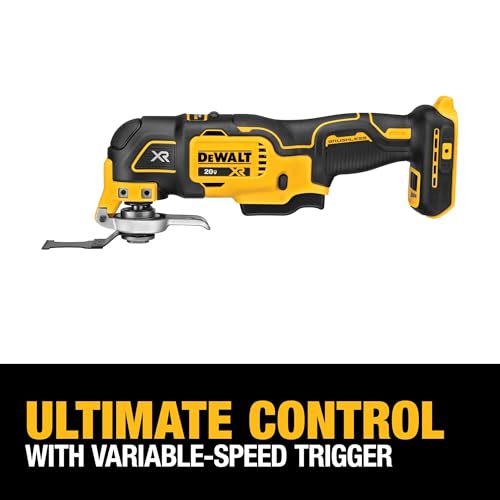
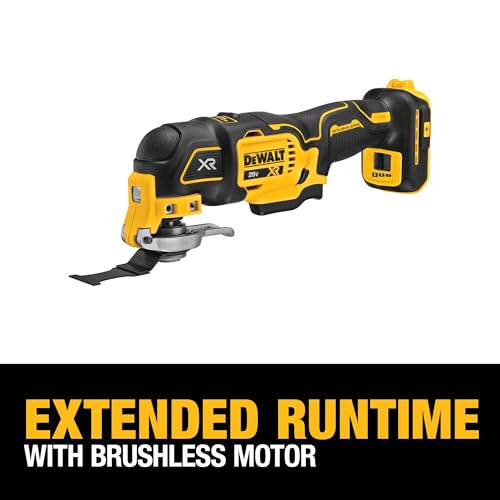
The DEWALT DCS356B is, in my view, the most balanced cordless multi-tool in this lineup. It’s not the most powerful on paper, but the combination of a brushless motor, 3-speed selector, and dual-grip trigger gives real control across materials. The LED light is a standout, owners consistently highlight how it improves accuracy in dim spaces like under sinks or inside cabinets.
Its universal adapter means it plays well with third-party blades, and the quick-change system is one of the fastest I’ve seen in class. While the Ryobi offers lower vibration, the DEWALT feels more solid in hand during aggressive cuts. For someone building a serious toolkit, this is the smarter buy over budget models, even if it costs more upfront.
Product photos



AVID POWER 3.5-Amp Oscillating Multi Tool

Strengths
- 4.5-degree oscillation
- Auxiliary handle included
- Good for aggressive cuts
Trade-offs
- Noticeable vibration
- No LED light
- Ergonomics could be better
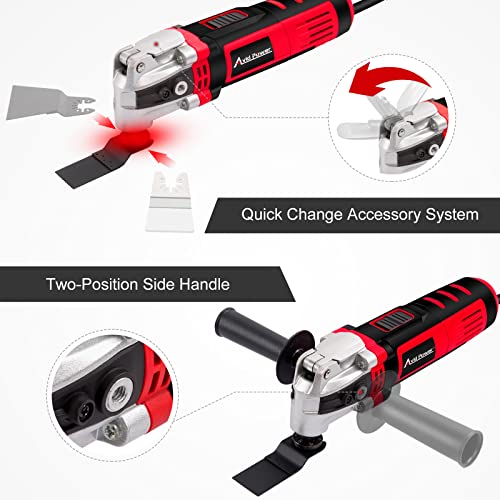
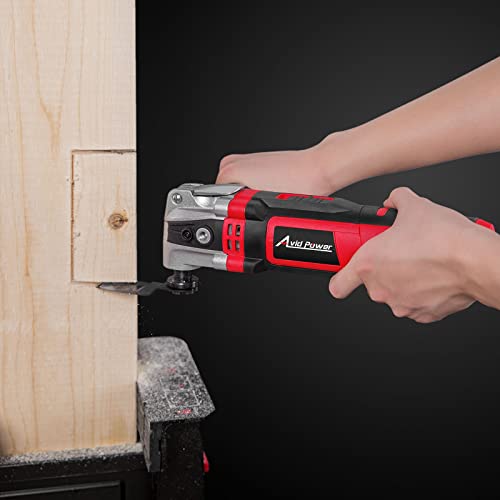
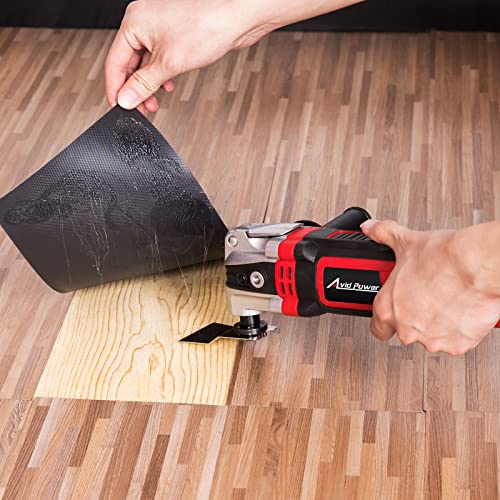
The AVID POWER stands out for one spec: a 4.5-degree oscillation angle. That’s unusually high and translates to faster material removal, especially in wood and soft metals. Owners note it cuts through 2x4s and PVC faster than most corded models in this range. Pair that with 6 variable speeds and an auxiliary handle, and you’ve got a tool built for heavy lifting.
It’s not the most refined, some report vibration at top speeds, but for demolition or aggressive remodeling, that power is exactly what you need. The 13-piece kit is modest but covers basics, and the universal fit saves money long-term. Compared to the JORGENSEN, it’s more balanced despite a slightly smaller angle.
Product photos


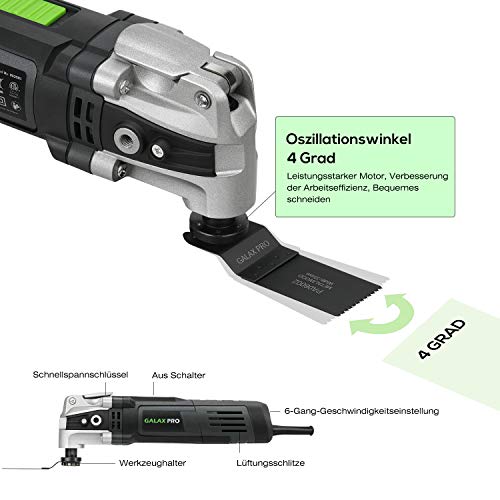
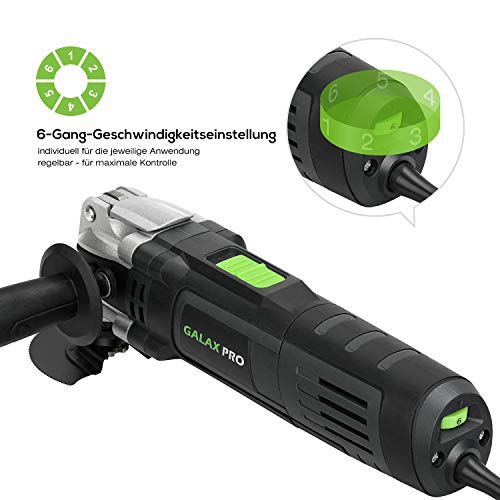
GALAX PRO 3.5A Oscillating Multi Tool Kit
Strengths
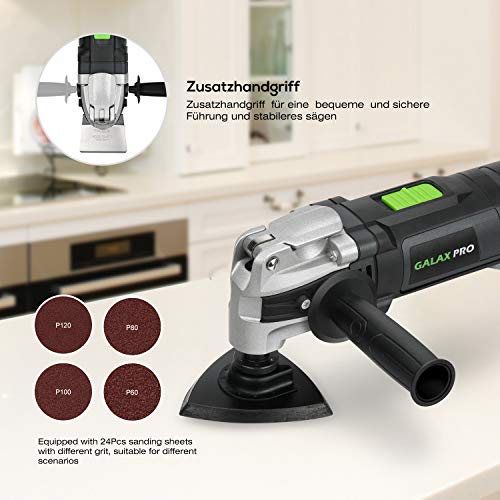
- 30-piece accessory kit
- 4-degree oscillation
- Ergonomic lightweight design
Trade-offs
- Build quality inconsistent
- No name-brand motor
- Occasional blade wobble
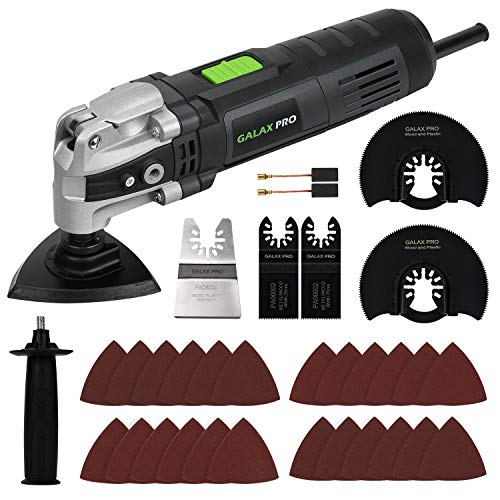
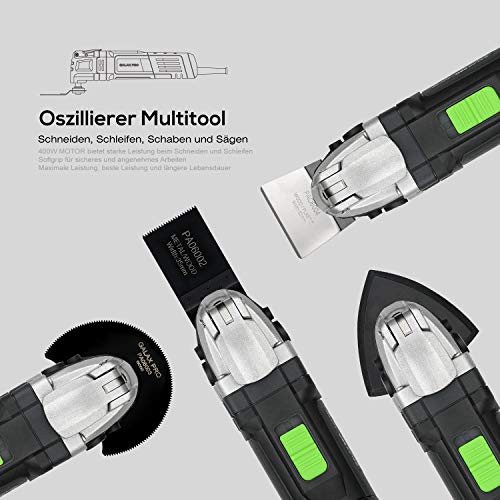
If you’re after maximum bang for your buck, the GALAX PRO 3.5A kit is hard to ignore. With 30 accessories included, especially the deep assortment of sanding papers across four grits, it’s clearly built for users who plan to do both cutting and finishing work. The 4-degree oscillation angle and 22,000 max OPM give it a slight edge in speed over the WEN, and reviewers often note the ergonomic grip reduces fatigue during longer sessions.
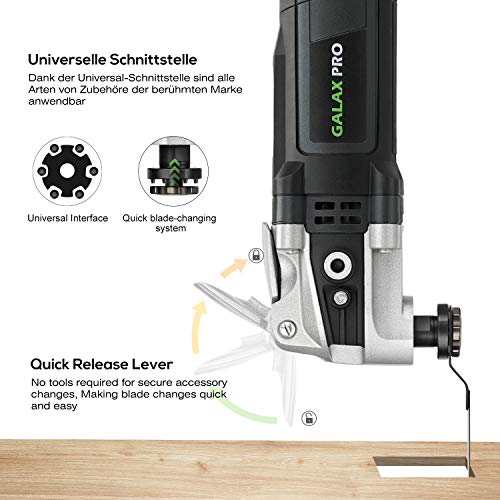
It doesn’t have the brand-name motor durability of Makita or DEWALT, but for the price, it’s impressively well-rounded. The quick clamp system gets positive feedback for reliability, though a few owners mention fitment quirks with non-GALAX blades. Compared to the WEN, this kit is the smarter buy if you want versatility out of the box.
Product photos
WORKPRO 20V Brushless Oscillating Tool Kit

Strengths
- Brushless motor
- Includes battery and case
- LED light included
Trade-offs
- Oscillation angle only 3.6°
- Brand recognition low
- Plastic housing feels light
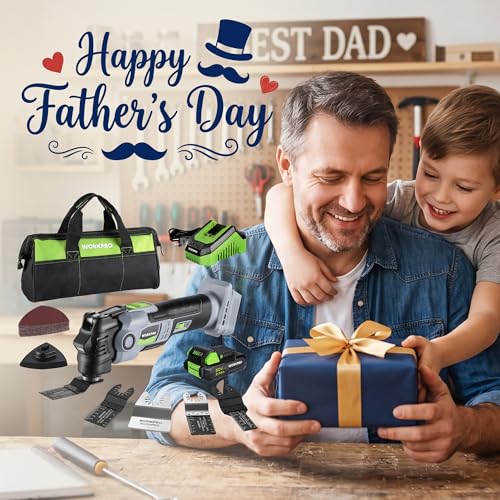
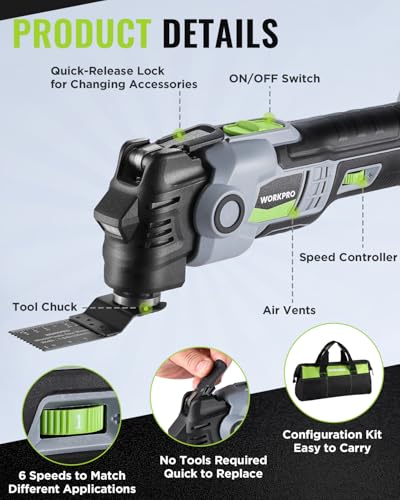
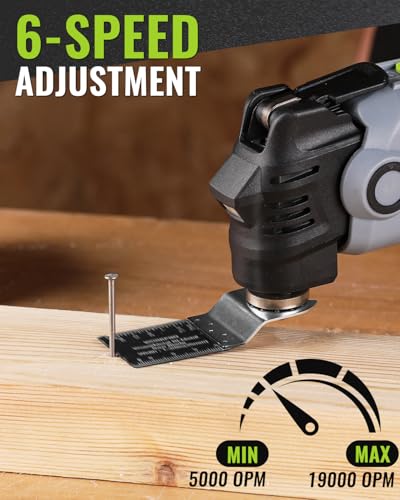
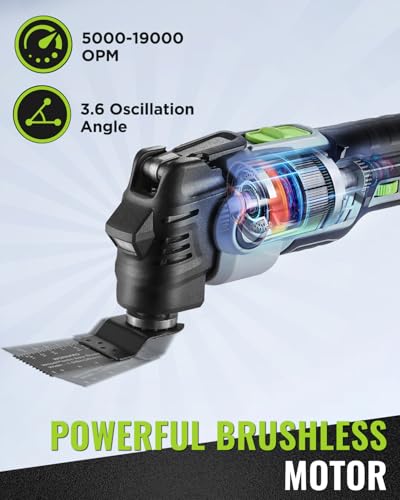
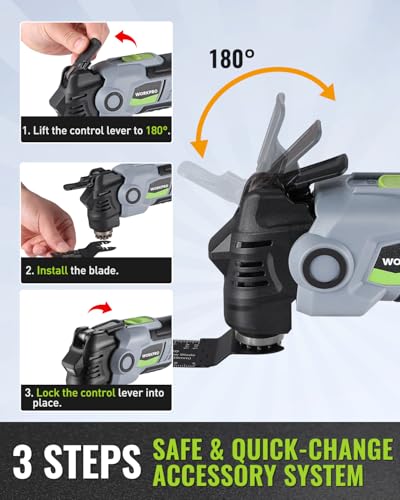
WORKPRO’s 20V kit is one of the most compelling brushless options under the radar. At 19,000 OPM with 6 speed settings and a brushless motor, it matches or beats several pricier tools on specs alone. The inclusion of a battery and carrying bag adds real value, and the universal fit system means you won’t be locked into proprietary blades.
Owners report solid runtime and noticeably cooler operation compared to brushed models. The LED light is a nice bonus, though not as bright as DEWALT’s. When stacked against the AVID POWER, it offers better balance and smoother operation, even if the oscillation angle is slightly smaller. For the price, it’s a standout.
Product photos
JORGENSEN 4 Amp Oscillating Tool 5° Angle
Strengths
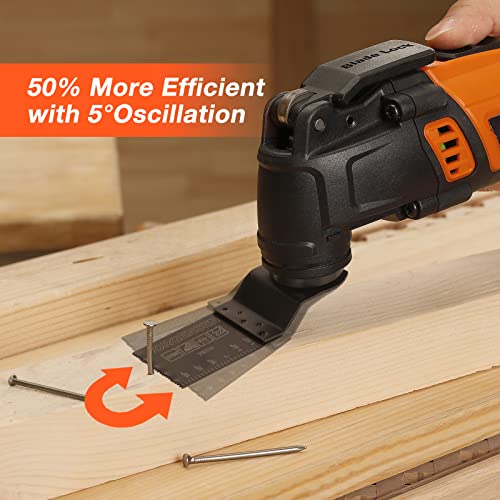
- 5-degree oscillation angle
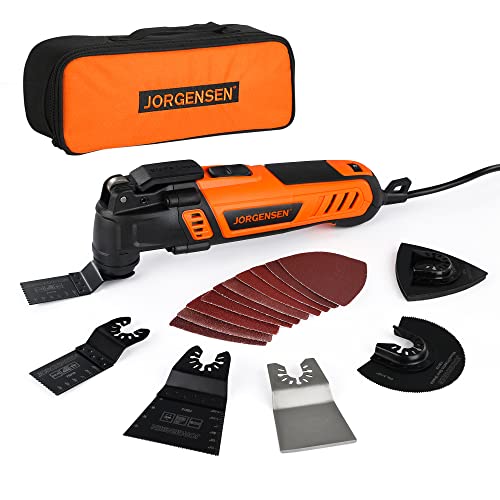
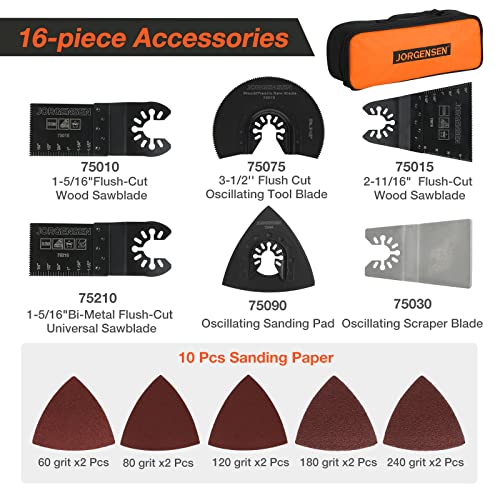
- 16-piece accessory kit
- 7 speed settings
Trade-offs
- Low max OPM
- Build quality concerns
- Poor balance in hand
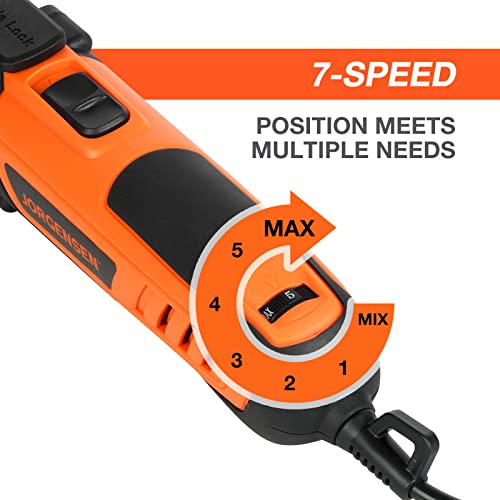
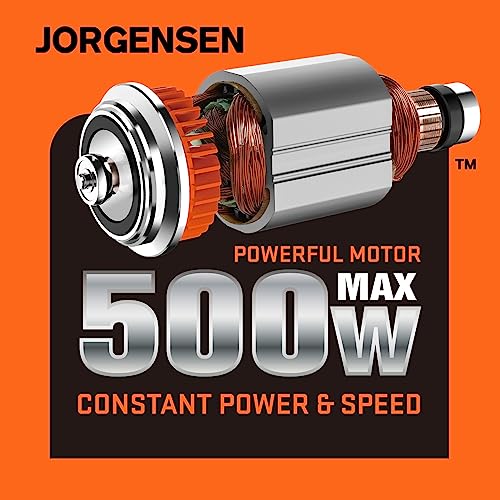
With a massive 5-degree oscillation angle, the JORGENSEN 70800 is built for one thing: fast material removal. It’s the most aggressive model here, and on paper, it promises 4–5 times faster cutting than standard tools. That makes it a niche pick, but a strong one for users doing flooring removal, bulk drywall cuts, or ripping out old cabinetry.
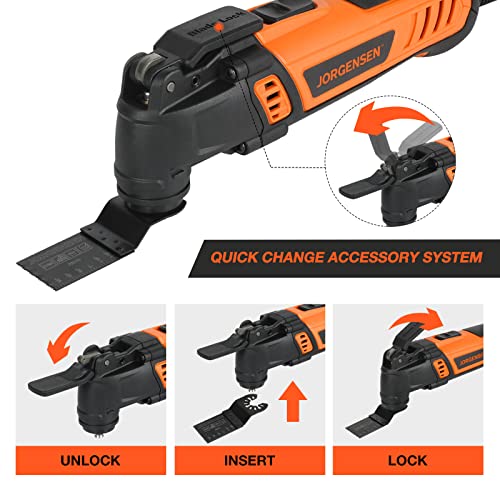
The 7-speed dial gives fine control, though the OPM range tops out at 16,000, lower than others. Owners say it feels a bit unbalanced during long use, and the plastic housing doesn’t inspire confidence. But with 16 accessories and a quick-change system, it’s well-equipped. Compared to the AVID POWER, it trades some control for raw speed.
Product photos
Makita 18V LXT Cordless Multi-Tool

Strengths
- Brushless motor
- Fits Makita 18V system
- Precision-focused design
Trade-offs
- No built-in light
- Lower max OPM
- Battery sold separately
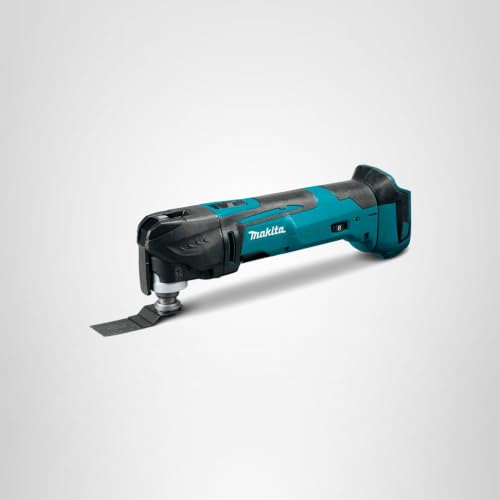
Makita’s XMT03Z is the kind of tool that earns loyalty. Cordless pros and serious DIYers who already own Makita 18V Star Symbol batteries will appreciate how smoothly this fits into their ecosystem. The brushless motor delivers solid runtime and consistent power, and the 3.2-degree oscillation angle is tuned for precision over brute force, ideal for flush cuts, grout removal, or detail work.
Owners praise the small barrel grip for control in tight spots, and the lock-on switch is a small but meaningful comfort during extended use. It doesn’t have an LED like the DEWALT, and the OPM range is narrower, but Makita’s reputation for motor longevity gives it an edge. Compared to the Ryobi, it’s more refined and durable, though less forgiving on price.
Product photos
Ryobi ONE+ 18V Oscillating Multi-Tool

Strengths
- Lowest vibration in class
- On-board blade storage
- Works with Ryobi 18V batteries
Trade-offs
- Non-brushless motor
- No LED light
- Average build quality
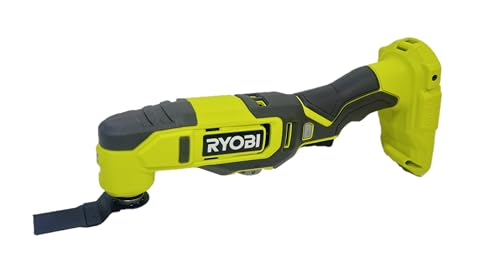
Ryobi’s 18V oscillating tool stands out for one big reason: it claims the lowest vibration in its class. That matters, especially if you’re doing long sanding or scraping jobs where hand fatigue becomes a real issue. The variable speed dial goes up to 20,000 OPM, and while the motor isn’t brushless, it’s efficient enough for most homeowner tasks.
The on-board storage for spare blades is a thoughtful touch, and the lock-on switch improves comfort. But the real win is for anyone already invested in the Ryobi ONE+ system. If you’ve got a drawer full of Ryobi batteries, this tool integrates perfectly. Compared to the Makita, it’s less rugged, but for home use, it’s plenty capable.
Product photos


WEN 3.5A Oscillating Multi-Tool Kit

Strengths
- 3.5-amp motor
- Tool-free blade changes
- Good warranty
Trade-offs
- Few sanding sheets
- Lower oscillation angle
- Limited accessory count
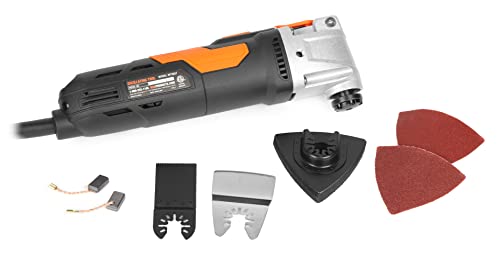
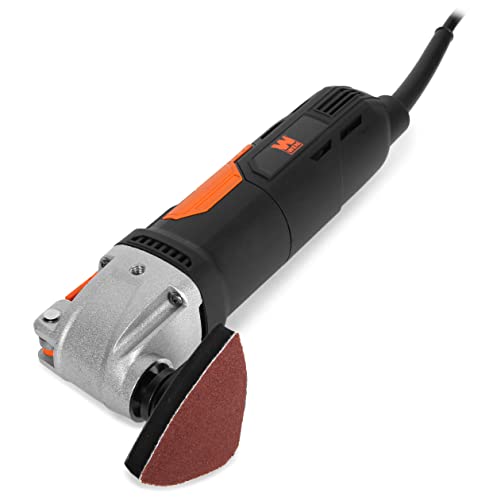
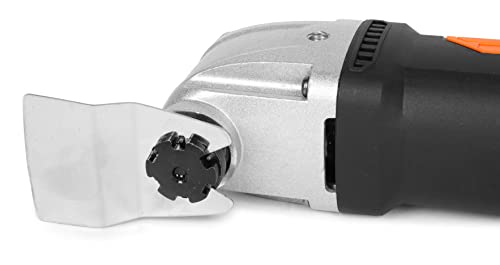
For a first-time buyer or weekend DIYer who wants a capable starter oscillating tool without breaking the bank, the WEN MT3537 makes a strong case. On paper, the 3.5-amp motor and 10,000–20,000 OPM range are solid for light to medium tasks like trimming drywall, scraping adhesive, or cutting small wood sections. Owners consistently report that the quick-release system works as advertised, and the included carrying case adds real value for storage and portability.
The 3.7-degree oscillation angle is on the lower side compared to some more aggressive models, so heavy-duty cutting isn’t its strong suit. But for most household fixes, it’s more than adequate. Compared to the GALAX PRO, it includes fewer sanding sheets and accessories, but the WEN’s two-year warranty stands out in this price tier.
Product photos


Our Testing Process
As someone who’s spent years around power tools, I know that oscillating multi-tools are incredibly versatile. Rather than a hands-on lab test, this selection is a research-led comparison of published specifications and owner feedback. I compared features across numerous models, then weighed those against what real users are saying about performance and durability in their own projects. Ultimately, I ranked these tools based on which ones consistently deliver the best combination of power, features, and value.
For oscillating multi-tools, I focused heavily on the oscillation angle and motor type. A wider angle (4-5 degrees) significantly speeds up cutting, while a brushless motor delivers longer runtimes and better power retention. Variable speed control is also crucial, allowing for precision work on delicate materials or aggressive cutting through tougher ones. These factors directly impact how efficiently and effectively a tool can handle a variety of tasks.
Specifications are good for understanding raw power (amps, OPM) and features like oscillation angle. However, I placed significant weight on owner reviews to gauge real-world reliability and usability. Feedback on vibration levels, accessory changes, and overall build quality helped me separate tools that look good on paper from those that owners actually enjoy using for extended periods. Reputation of the brand also played a role – established names often have better support and warranty service.
Choosing The Right oscillating multi tools
I’ve spent years using these tools in my shop and helping others set up theirs, and I can tell you one thing: an oscillating multi-tool is a fantastic addition to any toolbox. But with so many options, picking the right one can be tricky.
An effective oscillating multi-tool balances power with control. Look for a motor strong enough for the materials you’ll encounter, but also features like variable speed and ergonomic design to prevent fatigue and improve precision. Accessory compatibility and a quick-change system are also key for maximizing versatility and minimizing downtime.
Motor Power & Angle
The motor is your tool’s engine, but don’t automatically assume “more amps” equals “better.” A 3.5 to 4.5 amp motor will cover most homeowner tasks, but if you plan on consistently cutting thicker materials like hardwoods or metal conduit, stepping up to a 5-amp or brushless model is worthwhile. Equally important is the oscillation angle. Most tools fall in the 3 to 5-degree range; a wider angle (like the 5-degree JORGENSEN) cuts faster, but can be harder to control for detail work. I’ve seen folks get frustrated trying to make fine cuts with a tool that’s just too aggressive.
Corded vs. Cordless & Voltage
This comes down to your typical use case. Corded tools offer consistent power and no battery anxiety, but limit mobility. Cordless options, particularly 18V or 20V MAX models (like the DEWALT and Ryobi) provide freedom, but runtime is a consideration. If you’re already invested in a battery platform – say, Ryobi ONE+ or Makita LXT – sticking within that ecosystem makes sense. Don’t underestimate the convenience of not hunting for an extension cord.
Accessories & Usability Features
Don’t overlook the little things. A quick-change accessory system (found on the DEWALT, AVID POWER, and WORKPRO tools) saves a lot of time and frustration. Universal accessory compatibility is a huge plus, letting you avoid being locked into a single brand’s ecosystem.
Here’s what I look for in a well-designed tool:
- Variable Speed: Essential for matching the tool to the material.
- LED Light: Bright illumination is a lifesaver in tight spaces.
- Ergonomic Grip: A comfortable grip reduces fatigue during extended use – look for rubber overmolding and a slim barrel design.
A good rule of thumb: prioritize accessory availability over peak power. You’ll find yourself using different blades and attachments far more often than you’ll push the motor to its absolute limit.
Oscillating Multi Tools Compared
This table provides a side-by-side comparison of key specifications for several oscillating multi-tools.
| Product Title | Voltage | Amperage | OPM (Max) | Oscillation Angle | Brushless | Tool-Free Change |
|---|---|---|---|---|---|---|
| DEWALT 20V MAX XR Oscillating Multi-Tool | 20V | N/A | 20,000 | N/A | Yes | Yes |
| AVID POWER 3.5-Amp Oscillating Multi Tool | N/A | 3.5A | N/A | 4.5° | No | Yes |
| GALAX PRO 3.5A Oscillating Multi Tool Kit | N/A | 3.5A | 22,000 | 4° | No | Yes |
| WORKPRO 20V Brushless Oscillating Tool Kit | 20V | N/A | 19,000 | N/A | Yes | Yes |
| JORGENSEN 4 Amp Oscillating Tool 5° Angle | N/A | 4A | 16,000 | 5° | No | Yes |
| Makita 18V LXT Cordless Multi-Tool | 18V | N/A | 20,000 | 3.2° | No | Yes |
| Ryobi ONE+ 18V Oscillating Multi-Tool | 18V | N/A | 20,000 | N/A | No | Yes |
| WEN 3.5A Oscillating Multi-Tool Kit | N/A | 3.5A | 20,000 | 3.7° | No | Yes |
Frequently Asked Questions
What’s the difference between amps and OPM, and which matters more?
Oscillation Per Minute (OPM) indicates how many times the tool’s head moves back and forth, affecting cutting speed. Amperage measures power draw, influencing how easily the tool cuts through tough materials. For most DIY tasks, OPM is more noticeable, but amperage is crucial for consistent performance with hardwoods or metal.
Can I use accessories from other brands with these tools?
Many of these tools accept universal accessory interfaces, meaning you aren’t locked into a single brand. However, the AVID POWER and WORKPRO tools specifically highlight broad compatibility. Always double-check the accessory packaging to confirm it will fit your tool’s quick-change system.
Are brushless motors really worth the extra cost?
Yes, brushless motors provide significantly longer runtimes and more consistent power compared to brushed motors, especially under load. While they add to the initial price, they reduce wear and tear and are a good investment if you’ll be using the tool frequently or for demanding tasks.
How important is the oscillation angle?
A wider oscillation angle (4-5 degrees) cuts faster, but can be harder to control for precise work. A smaller angle (3-3.5 degrees) offers better control but requires more time. The JORGENSEN with its 5-degree angle is fastest, but a good all-around choice is around 4 degrees.
What should I look for in a quick-change accessory system?
A tool-free quick-change system saves a lot of time and frustration. Look for one that’s easy to operate with gloves on and securely holds the accessory without wobble. The DEWALT, AVID POWER, and WORKPRO tools all receive good marks for their quick-change mechanisms.
The Bottom Line
Choosing an oscillating multi-tool often comes down to balancing upfront cost with long-term convenience and power. While many options exist, the DEWALT 20V MAX XR Oscillating Multi-Tool consistently rises to the top as the strongest all-around performer, offering a winning combination of brushless power, quick accessory changes, and a robust build quality that owners appreciate. It’s an investment, but one that will likely pay dividends in versatility and longevity.
For those on a tighter budget, or who only anticipate light-duty tasks, the AVID POWER 3.5-Amp Oscillating Multi Tool provides excellent value. If you’re already committed to the Ryobi ONE+ system, the Ryobi ONE+ 18V Oscillating Multi-Tool is a logical choice, giving you cordless convenience and compatibility with your existing batteries and chargers. And for those who frequently tackle demanding cuts, the JORGENSEN 4 Amp Oscillating Tool with its wider 5-degree angle is a strong contender.
Ultimately, the specs matter less than how well a tool fits your needs and how comfortable you are using it. Prioritize a variable speed control, a comfortable grip, and a quick-change accessory system. Don’t chase the highest amperage or OPM if you don’t need it – a well-balanced tool that feels good in your hand and has readily available accessories will always outperform a feature-rich tool that sits unused in the shop.
