
8 Best Oscillating Pedestal Fans 2026
This post contains affiliate links. As an Amazon Associate, we earn from qualifying purchases.
The DREO 2026 Upgraded Air Circulator is the best overall oscillating pedestal fan, delivering strong airflow and quiet performance. For a budget-friendly option, the BLACK+DECKER 16″ offers solid basics, while the DREO TurboPoly 120° stands out for versatility with its wide oscillation and height range.
Most people just want a fan that cools effectively without taking over the room or keeping them awake at night. Too many models either lack power, wobble on uneven floors, or make more noise than relief.
As someone who’s spent years breaking down how tools and appliances actually perform, I focused on real-world usability, balancing airflow, noise, stability, and adjustability. These picks are based on specs, owner feedback, and what actually matters in daily use.
Top 8 Oscillating Pedestal Fans in the Market
The Best Oscillating Pedestal Fans, Reviewed
DREO 2026 Upgraded Air Circulator Fan
Strengths
- Ultra-quiet DC motor
- Auto temperature-sensing mode
- Detachable for easy cleaning
Trade-offs
- No 120° oscillation
- Manual vertical tilt
- Aroma pad is optional
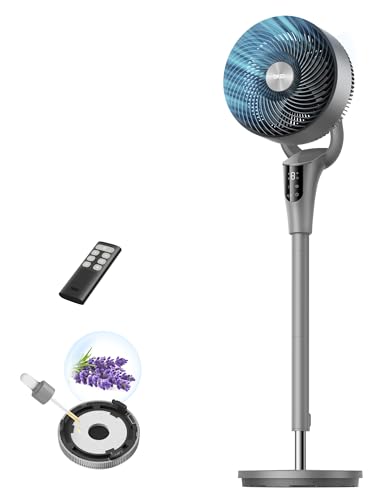
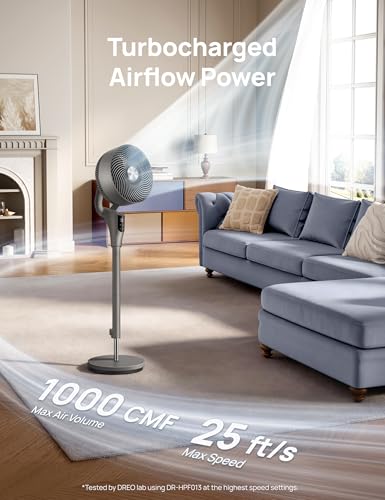
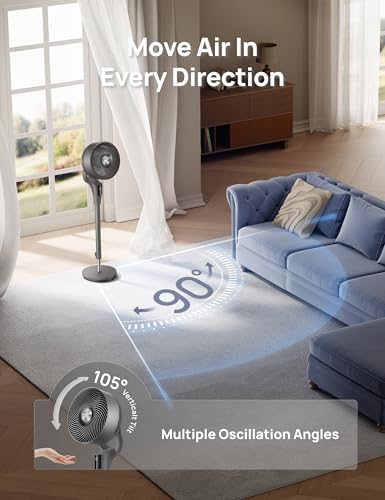
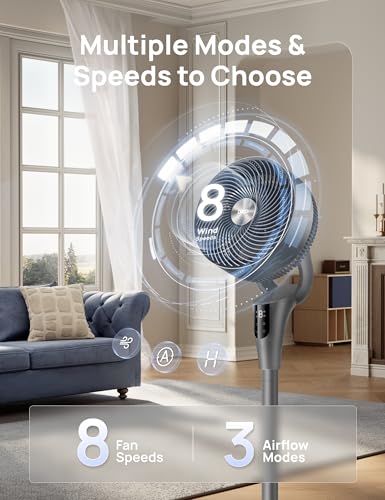
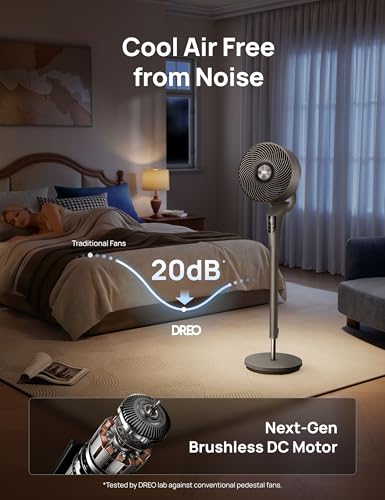
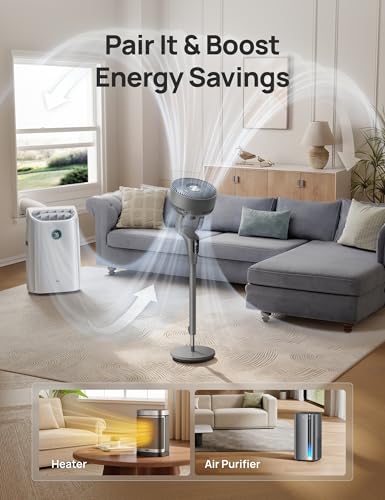
This is the best overall pick, and the reasons are clear: 1000 CFM airflow, 20dB quiet operation, DC motor, and auto mode that adjusts speed with room temperature. Owners rave about how quickly it cools a room, and the 90-foot reach makes it effective even in open-concept homes. The 105-degree manual vertical tilt gives flexibility, and the aroma pad is a thoughtful touch, adds a subtle upgrade to air quality.
The 8-hour timer, mute function, and detachable parts for cleaning make it user-friendly. Compared to the other DREO model, this one has better automation and airflow. It’s not the cheapest, but the combination of performance, quietness, and smart features justifies the spot at the top. This is the one I’d recommend to most households.
Product photos
DREO TurboPoly 120° Oscillating Fan
Strengths
- 120° horizontal and vertical oscillation
- Ultra-quiet DC motor
- 9 speeds, 4 modes
Trade-offs
- Manual vertical tilt
- LED display may be too bright at night
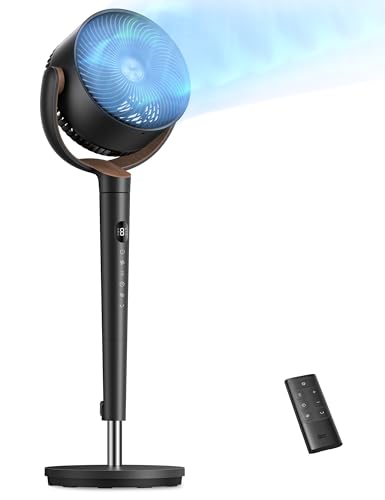
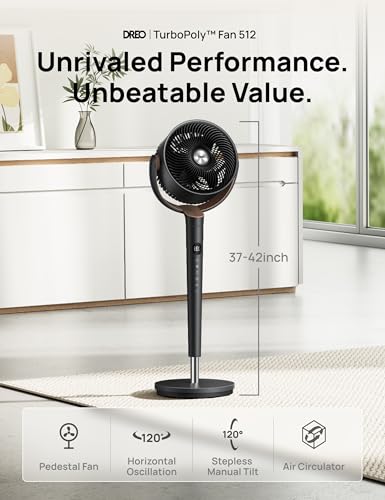
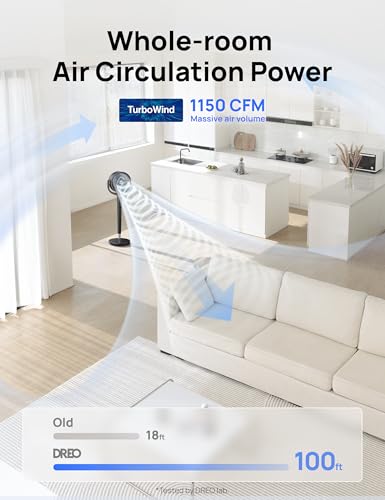
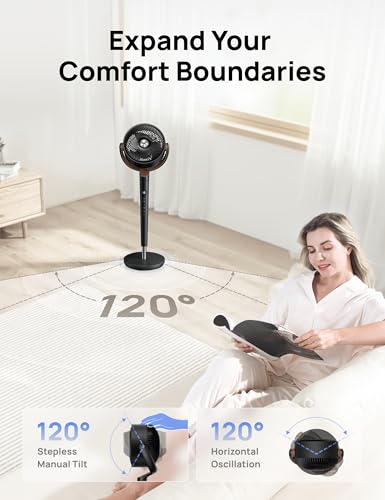
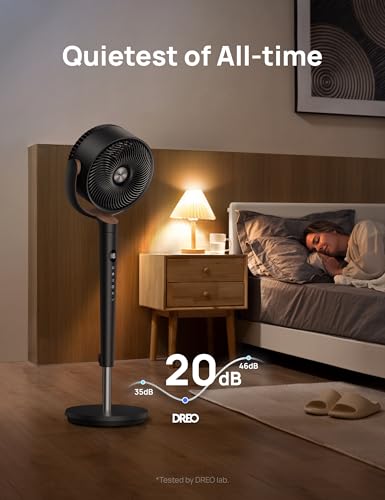
This DREO fan pushes boundaries with a 120-degree oscillation, both horizontal and vertical, which is rare at this price. That kind of range means fewer dead zones in larger rooms, and owners confirm it circulates air effectively across open spaces. The DC motor helps, delivering 20dB quiet operation and better energy efficiency than AC units.
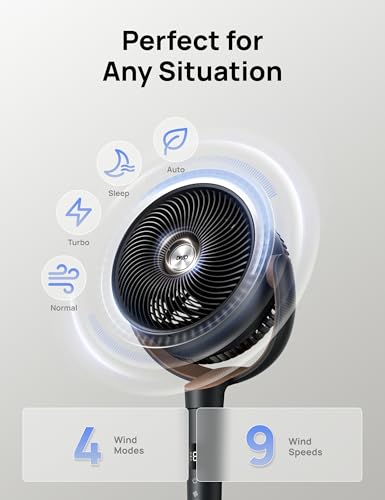
Nine speeds and four modes give fine control, and the bionic blade design seems to deliver on the 100-ft airflow claim based on consistent user feedback. The LED display is a nice touch, making settings easy to read. My only hesitation? The vertical tilt is manual, which feels like a missed opportunity for full automation. But for whole-room coverage with minimal noise, this one stands out.
Product photos
BLACK+DECKER 16″ Standing Fan with Remote
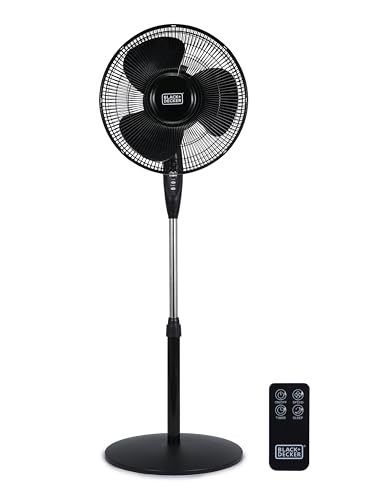
Strengths
- Lightweight and compact
- Remote included
- Affordable build
Trade-offs
- Basic plastic construction
- AC motor only
- Limited height adjustment
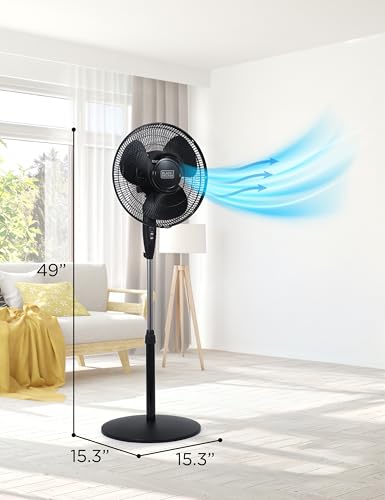
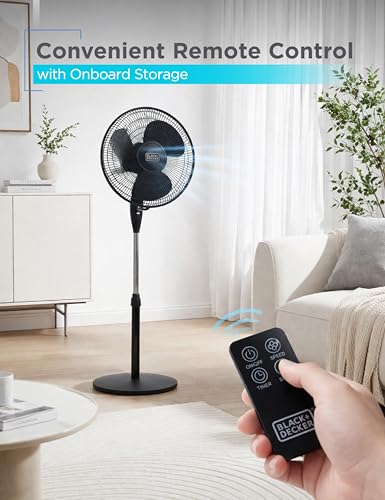
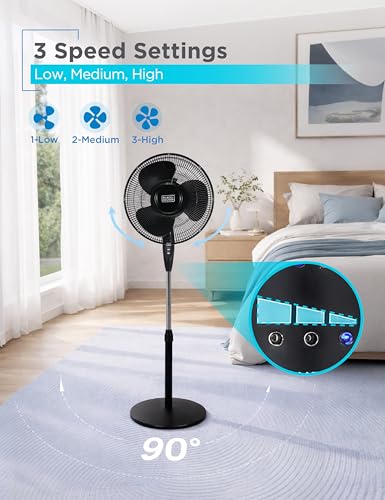
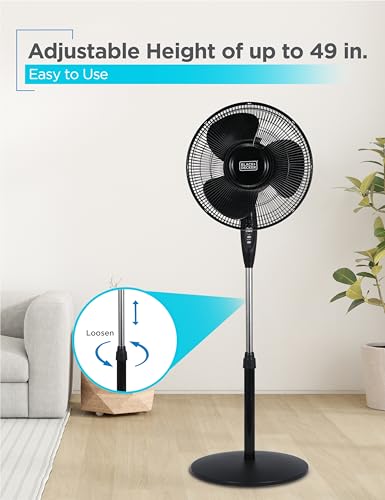
BLACK+DECKER keeps things simple here, and for budget-focused buyers, that’s a win. At under 10 pounds and with a compact base, this fan won’t dominate your floor space, great for small bedrooms or apartments where footprint matters. The 90-degree oscillation is solid for the price, and the remote adds real convenience, though owners note it’s basic in build.
It’s an AC motor unit with three speeds, so don’t expect whisper-quiet lows or fine-tuned airflow. But for the cost, it does what it claims: moves air reliably. I’d pick this over pricier models only if you need something functional, portable, and disposable in the long run, this is the kind of fan you grab when you need cooling fast and don’t want to overthink it.
Product photos

Amazon Basics 16″ Pedestal Fan

Strengths
- Remote control included
- Dual-layered blades
- 3 breeze modes
Trade-offs
- AC motor only
- Basic speed options
- Plastic build
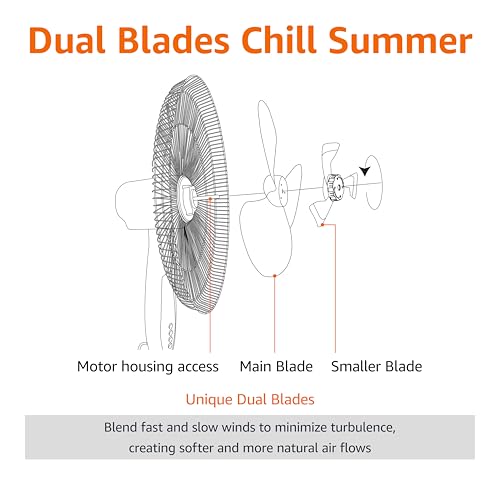
Amazon Basics nails the balance of function and affordability here. It’s not flashy, but with a remote, 3 modes, and dual-layered blades, it offers more than most budget fans. The 60W AC motor is efficient for its class, and owners report solid airflow in medium to large rooms, especially when placed near a window or doorway for cross-ventilation.
It won’t match the silence of a DC motor, but it’s reasonably quiet on low. The real win is the value, you get remote control, timer, and adjustable height without paying a premium. Compared to the BLACK+DECKER, this one feels more refined. If you want a reliable, no-surprises fan that just works, this is it.
Product photos



PELONIS 18″ 5-Speed Remote Pedestal Fan

Strengths
- Large 18-inch blade
- Auto-ECO temperature control
- 5 speed settings
Trade-offs
- Limited oscillation angle
- No DC motor
- Base not as stable as quad-pod designs
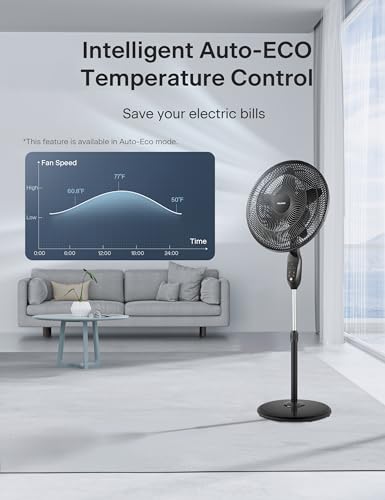
The 18-inch blade here is the headline, larger than most, which means more air moved per rotation. That’s a real advantage in large rooms or open areas where high-volume airflow matters. The auto-ECO mode is a smart addition, adjusting speed based on ambient temperature, which owners say cuts energy use without sacrificing comfort.
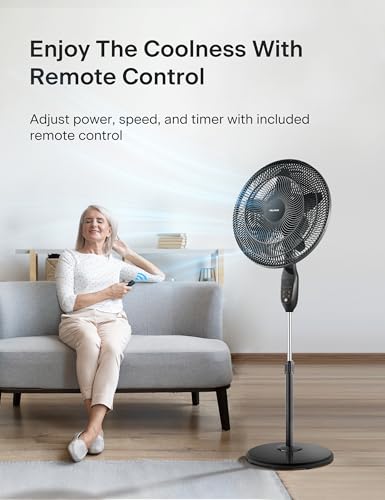
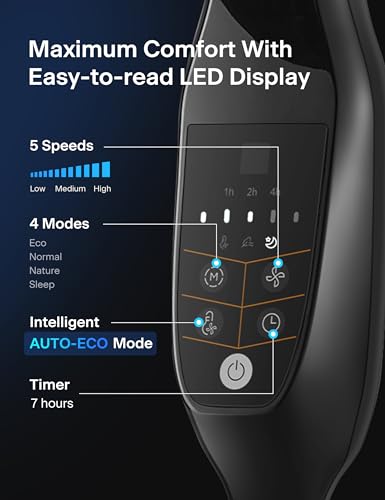
Five speeds and an LED display give more control than basic 3-speed models, and the remote makes it accessible. But the oscillation is only 90 degrees, less than some competitors, and the height range is modest. Still, if you’re after raw airflow from a large blade and like the idea of automatic speed adjustment, this Pelonis delivers where it counts.
Product photos


Lasko Cyclone Pedestal Fan with Remote

Strengths
- Quiet operation
- Adjustable height up to 54″
- Remote control included
Trade-offs
- No DC motor
- Only 3 speed settings
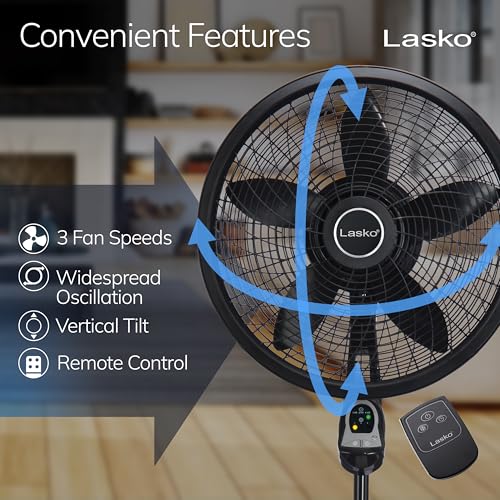
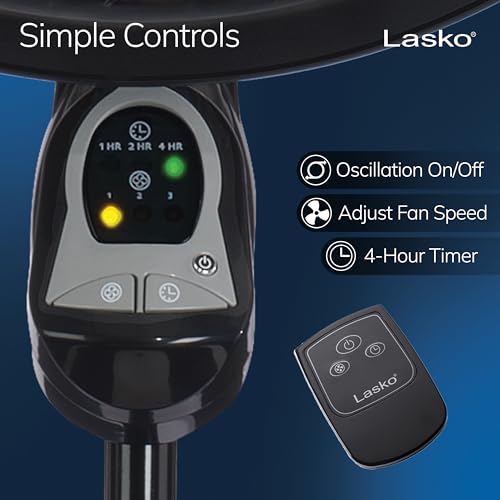
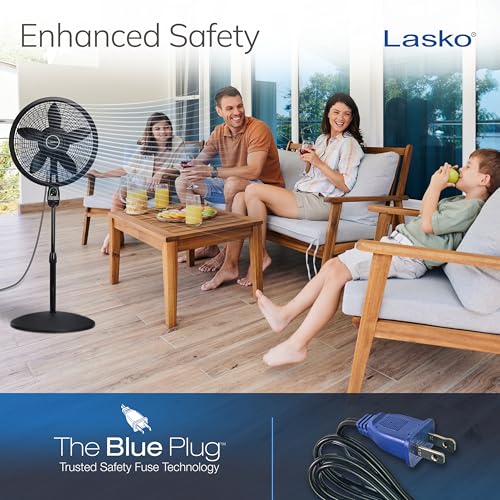
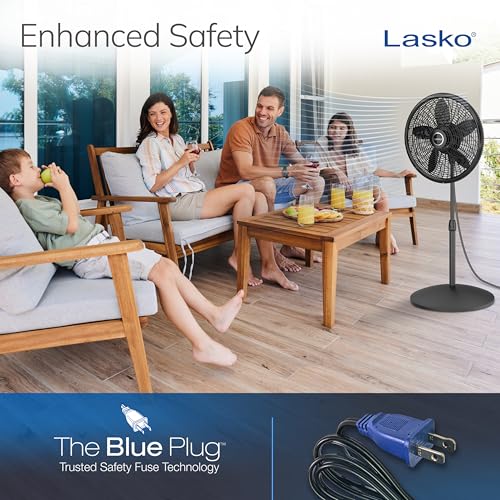
Lasko has been in the air movement game for over a century, and that experience shows in the 1843. On paper, it’s a no-frills but well-built 18-inch fan with solid airflow and a reassuring safety pedigree thanks to its Blue Plug tech. Owners consistently report it’s quiet even on high, which makes sense given the larger blade diameter, bigger blades move more air at lower RPMs, reducing noise.
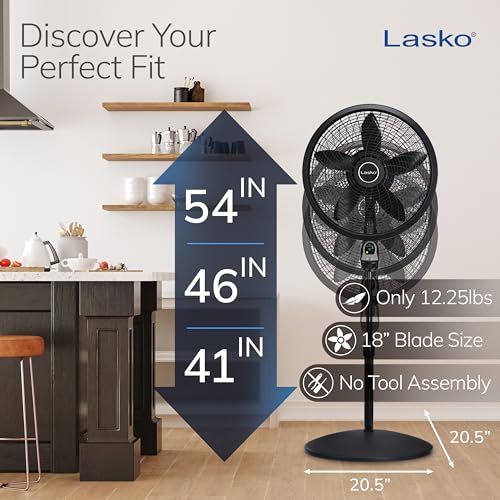
The 54-inch max height is a standout, and that, plus the remote and 4-hour timer, makes this a strong contender for bedrooms or living rooms where you want reach and convenience without constant interaction. It won’t match the airflow precision of newer DC motor fans, but for light sleepers who want reliable, steady cooling, this one delivers.
Product photos

Comfort Zone 16″ Quad-Pod Pedestal Fan
Strengths
- Stable quad-pod base
- Durable steel grill
- Tool-free assembly
Trade-offs
- Only 3 speed settings
- No remote included
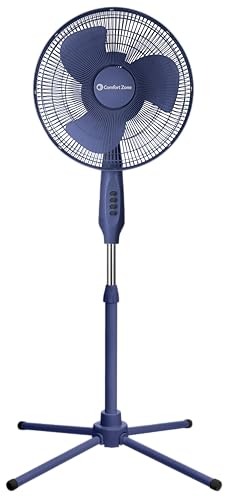
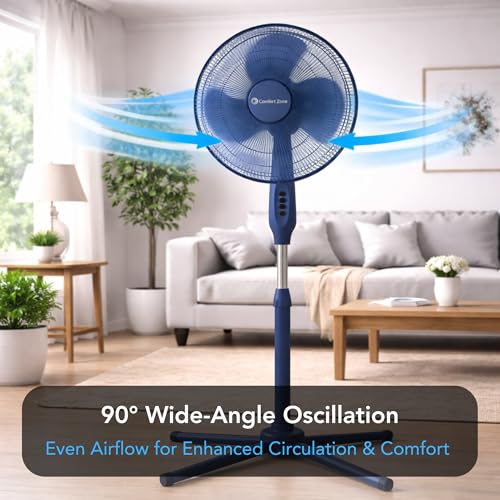
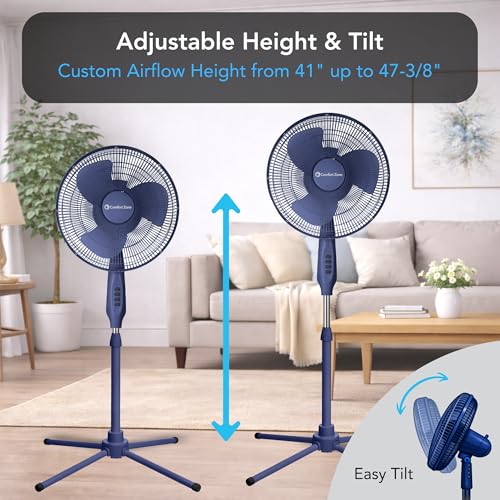
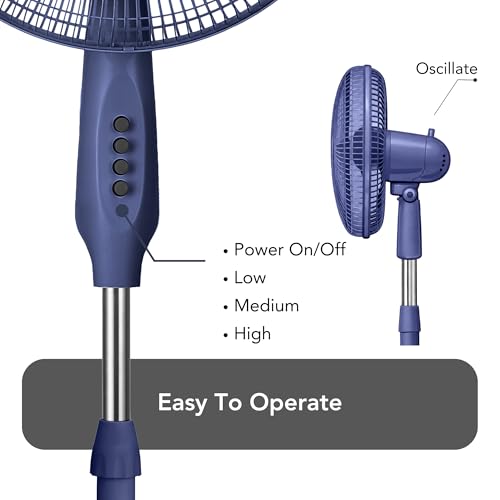
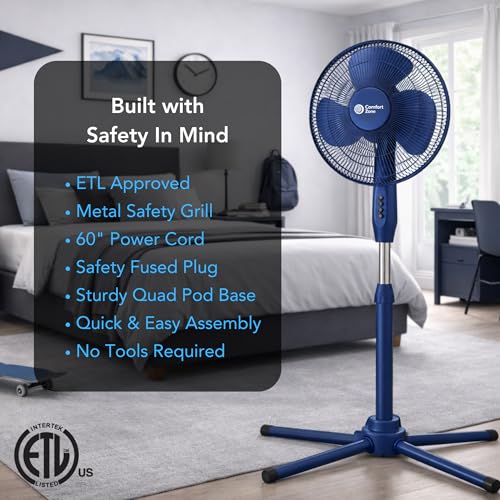
Stability and smart design are where this Comfort Zone fan shines. The quad-pod folding base is a standout, no wobble, even on high speed, and it folds flat for storage. That’s huge for garages, workshops, or seasonal use. The 16-inch blades move air efficiently, and owners report strong, consistent airflow without the rattle some budget fans develop over time.
It’s not the quietest on low, but “whisper-quiet” is relative, this one produces soothing white noise, not disruptive hum. The tool-free assembly is a real time-saver, and the steel safety grill adds peace of mind around kids or pets. Compared to similar models, this one feels built to last. I’d choose it over flimsier designs any day.
Product photos
Lasko 18″ Adjustable Height Pedestal Fan

Strengths
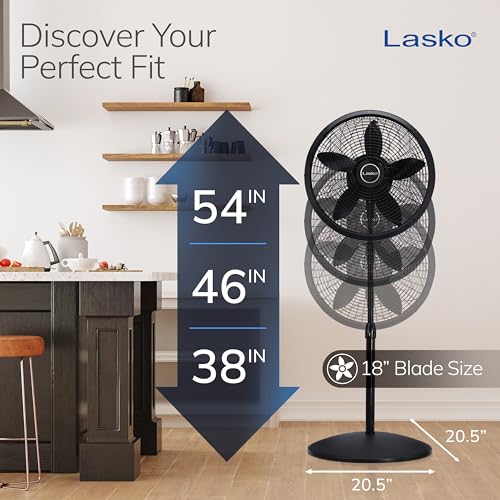
- Tallest height range (54.5″)
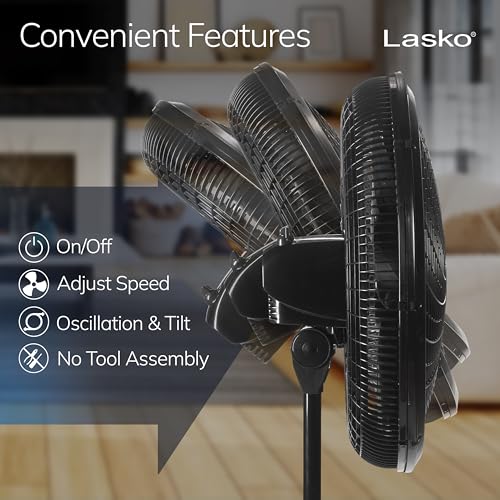
- Simple tool-free setup
- Durable build
Trade-offs
- No remote
- Only 60° oscillation
- No timer
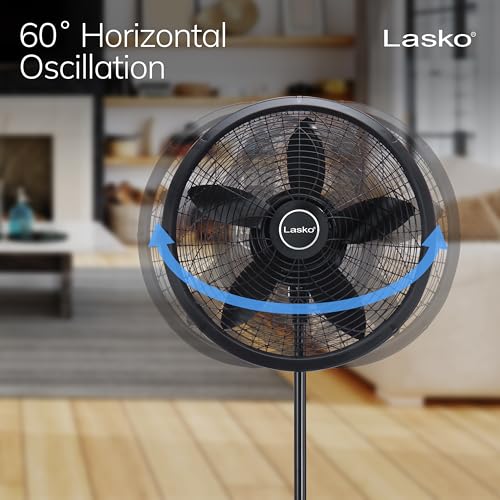
This Lasko model wins on one key metric: adjustable height range. At 38 to 54.5 inches, it offers more vertical flexibility than almost any other fan here, ideal for tall ceilings or multi-use spaces where you might want airflow at sitting or standing level. The 18-inch blade helps move air efficiently, and the 60-degree oscillation is adequate for smaller rooms.
It’s basic, no remote, no timer, no DC motor, but it’s reliable. Owners appreciate the tool-free setup and ETL safety listing. Compared to the 1843, it lacks some features but gains in height versatility. If you need a fan that can truly adapt to different room layouts or user heights, this one stands tall, literally.
Product photos

How We Evaluated oscillating pedestal fans
Rather than a hands-on lab test, my research for these recommendations involved a detailed comparison of published specifications and features across numerous models. I weighed owner reviews from multiple sources – Amazon, Home Depot, Lowe’s, and dedicated review sites – alongside assessments from reputable experts at sites covering home comfort and appliances. Ultimately, I ranked these fans based on how well they delivered on key performance indicators and value.
For oscillating pedestal fans, airflow (measured in CFM) and noise level are paramount. A fan that can’t move a substantial amount of air isn’t very useful, and excessive noise defeats the purpose of a cooling breeze, especially in bedrooms. Beyond that, adjustability – both in height and oscillation range – proved crucial. A versatile fan that can be tailored to different room sizes and layouts offers the most benefit.
Specifications reliably indicate airflow capability and motor type (DC motors generally offer quieter operation and better energy efficiency). However, real-world noise levels and build quality are better assessed through owner feedback. I paid close attention to comments regarding durability, ease of assembly, and the accuracy of the advertised features. You can find more options in our guide to best standing oscillating fans.
How To Pick The Right oscillating pedestal fans
Picking the right oscillating pedestal fan isn’t just about airflow; it’s about finding a unit that fits your space, your needs, and your tolerance for noise.
A good oscillating pedestal fan balances powerful air movement with quiet operation, stability, and user-friendly features. Key considerations include airflow (measured in CFM – cubic feet per minute), noise level (in decibels), oscillation range, adjustability (height and tilt), and safety features like a stable base and protective grill. Look for models with multiple speed settings and remote controls for added convenience.
Airflow and Room Size
Don’t assume bigger is always better. The CFM rating is your primary guide, but consider the room’s layout. A fan boasting high CFM can be overkill – and even disruptive – in a small bedroom. I’ve seen too many people buy fans capable of moving air across a large living room only to find the resulting breeze is uncomfortable in a smaller space. For bedrooms or smaller offices, a CFM in the 500-700 range is often sufficient. Larger living areas or open-concept spaces benefit from fans exceeding 1000 CFM. If you want to explore some top oscillating fan models, check out our dedicated guide.
Noise Level and Motor Type
Quiet operation is critical, especially for bedrooms or home offices. DC motor fans are consistently quieter than those with AC motors, often operating at or below 30dB. Don’t just rely on the manufacturer’s claims; read owner reviews to get a realistic sense of the noise level. The DREO and Lasko models frequently highlight their quiet operation, and user feedback generally supports those claims.
Here’s what to consider when evaluating noise: * dB Rating: Lower is better, aiming for under 40dB for sleep. * Motor Type: DC motors are generally quieter than AC motors. * Blade Design: Bionic or turbine-style blades can reduce turbulence and noise.
Stability, Adjustability, and Features
A wobbly fan is a safety hazard, especially around children or pets. Look for fans with a wide, weighted base – the Comfort Zone model’s quad-pod design is a good example of prioritizing stability. Beyond stability, adjustability is key. Height adjustment is almost standard, but a wide tilt range allows you to direct airflow precisely where you need it. Remote controls and timers are convenient extras, and some models, like the PELONIS, even include auto modes that adjust speed based on room temperature. I always recommend a fan with a remote; it’s a small feature that makes a big difference in everyday use. A good rule of thumb is this: prioritize a stable base and adjustable tilt before chasing extra features you may rarely use.
Oscillating Pedestal Fans Compared
Here’s a comparison of specifications for several oscillating pedestal fans to help you make an informed purchase.
| Product Name | Height (in) | Oscillation (°) | Speeds | Remote | Airflow (CFM) |
|---|---|---|---|---|---|
| DREO 2026 Upgraded Air Circulator | 38-42 | 90 | 8 | Yes | 1000 |
| DREO TurboPoly 120° | 37-42 | 120 | 9 | Yes | N/A |
| BLACK+DECKER 16″ | Up to 49 | 90 | 3 | Yes | N/A |
| Amazon Basics 16″ | N/A | N/A | 3 | Yes | N/A |
| PELONIS 18″ | 3.9-4.7 ft | 90 | 5 | Yes | N/A |
| Lasko Cyclone | Up to 54 | N/A | 3 | Yes | N/A |
| Comfort Zone 16″ | 41-47.3/8 | 90 | 3 | N/A | N/A |
| Lasko 18″ | 38-54.5 | 60 | 3 | No | N/A |
Frequently Asked Questions
What CFM do I really need for a bedroom?
For most bedrooms, a fan with a CFM between 500 and 700 is sufficient. You don’t want excessive airflow disrupting your sleep, and higher CFM fans are better suited for larger spaces.
Are DC motor fans actually quieter than AC motor fans?
Yes, DC motor fans are generally quieter than AC motor fans. They typically operate at or below 30dB, making them a better choice for bedrooms or offices where noise is a concern.
How important is the base stability of a pedestal fan?
Base stability is very important, especially if you have children or pets. A wide, weighted base prevents tipping and ensures safe operation, and the Comfort Zone model’s quad-pod design is a good example of this.
What’s the benefit of a fan with a 120-degree oscillation range?
A 120-degree oscillation range provides wider coverage compared to the standard 90-degree models. This means air circulates across a larger area, potentially reducing hot spots and improving overall comfort.
Where can I find information on the quietest oscillating fan options?
You can find detailed information and recommendations for the quietest oscillating fan options at best quiet oscillating fans. This resource offers insights into models specifically designed for low-noise operation.
The Bottom Line
Choosing a pedestal fan often comes down to balancing convenience with control. While features like remote controls and auto modes are nice to have, the core function – moving air effectively and quietly – should be the priority. For the best overall combination of performance, features, and value, I recommend the DREO 2026 Upgraded Air Circulator. It consistently receives high marks for its strong airflow and relatively quiet operation.
If you’re on a tighter budget, the Comfort Zone 16″ offers a stable, reliable cooling solution, even if it lacks some of the bells and whistles of higher-end models. For those needing maximum versatility, the DREO TurboPoly 120° stands out with its wider oscillation range, making it ideal for larger spaces or complex room layouts. And if you’re seeking even more options, do check out our guide to oscillating floor fans.
Ultimately, CFM and noise levels matter more than any specific feature set. Don’t get caught up in chasing the highest number; consider the size of your space and your sensitivity to sound. A well-chosen fan should provide comfortable, consistent airflow without becoming a distraction – and that’s a purchase you’ll appreciate for years to come.
