
8 Best Standing Oscillating Fans of 2026
This post contains affiliate links. As an Amazon Associate, we earn from qualifying purchases.
The DREO Upgraded Air Circulator Fan is our top pick for overall performance, delivering strong airflow and quiet operation. For a budget-friendly option, the Lasko 18″ Adjustable Pedestal Fan offers reliable cooling at a lower price. If wide coverage matters most, the DREO TurboPoly 120° Fan stands out with its broad oscillation range.
Most people don’t just want a fan that blows air, they need one that cools a room effectively without drowning out conversation or disturbing sleep. Too many fans either lack coverage, run too loud, or pack features you’ll never use.
This guide cuts through the noise. I researched the current market, comparing specs like CFM, oscillation, and noise levels, while weighing real owner feedback to identify which fans actually deliver on their promises. These picks balance power, quietness, and value based on what users report and what the data shows.
Top 8 Standing Oscillating Fans in the Market
The Best Standing Oscillating Fans, Reviewed
DREO Upgraded Air Circulator Fan
Strengths
- Auto temp-responsive mode
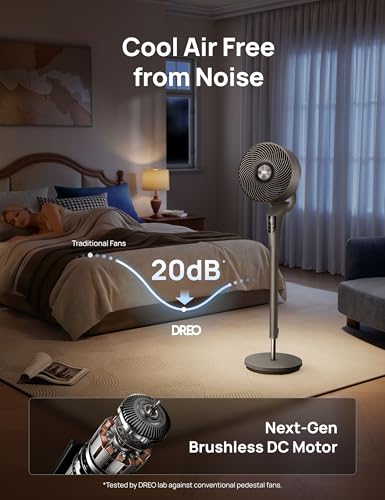
- 20dB ultra quiet
- Detachable for easy cleaning
Trade-offs
- No vertical oscillation control via remote
- Slightly shorter height range
- Aroma pad is optional
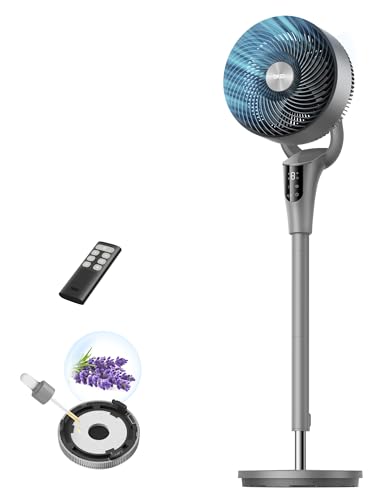
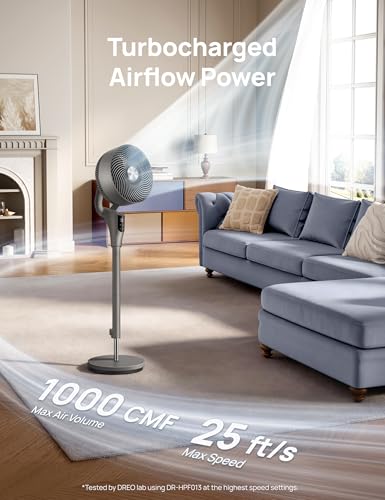
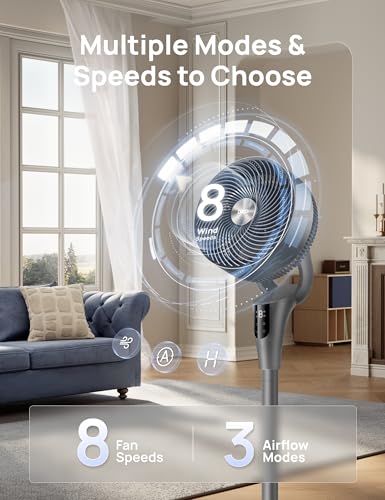
This DREO 2026 model is the one I’d pick if I were buying for my own home. It strikes the best balance of power, quietness, and smart features. The 1000 CFM airflow circulates a whole room fast, and the auto mode that adjusts speed with temperature changes is surprisingly effective, owners say it keeps rooms consistently comfortable without constant tweaking.
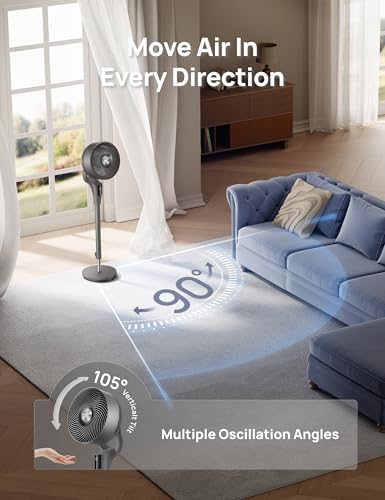
Running at just 20dB, it’s as quiet as the quietest fans here, and the 90° oscillation plus 105° manual tilt gives excellent directional control. I also like the aroma pad, small thing, but it adds a nice touch for improving air quality perception. The detachable parts make cleaning easier than most, and the remote is intuitive. Compared to others, this one delivers the most complete package for everyday home use.
Product photos
DREO TurboPoly 120° Oscillating Fan

Strengths
- 120° oscillation
- Ultra quiet at 20dB
- Energy-efficient DC motor
Trade-offs
- Taller profile
- Higher price point
- Manual vertical tilt
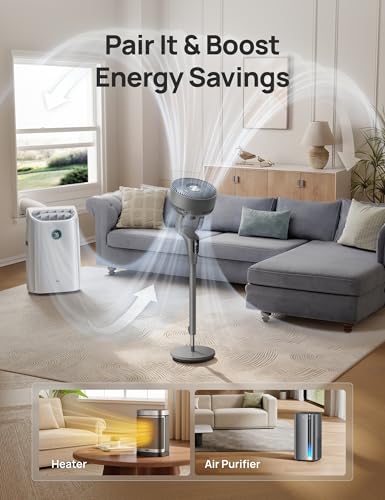
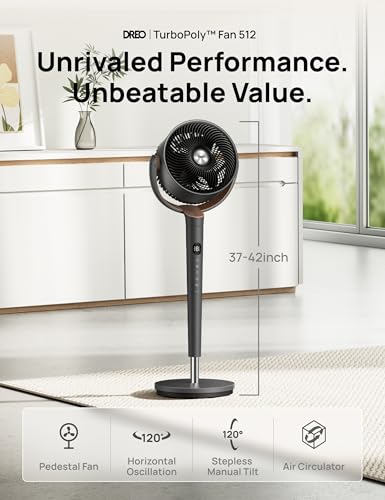
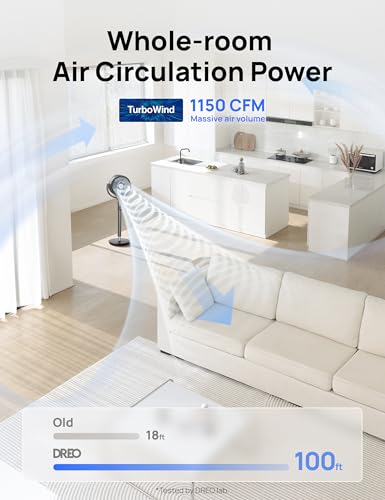
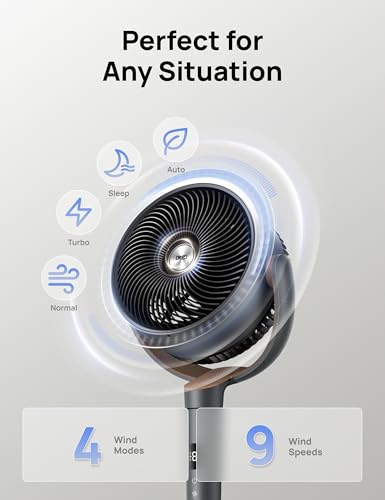
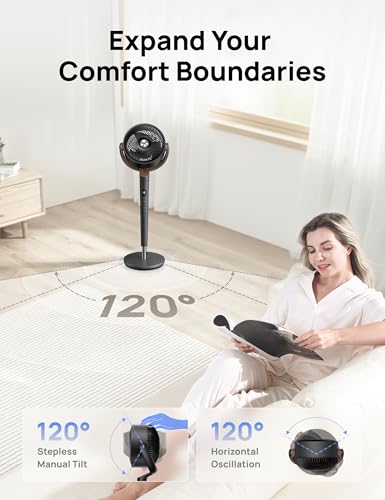
DREO is pushing the boundaries of what a standing fan can do, and this model, with 120° horizontal and vertical oscillation and 100 ft of airflow, feels like a full-room air circulator. The DC motor is key here: it’s efficient, uses less energy, and still pushes air farther than most fans in this class. Owners praise how well it maintains airflow even on low settings, making it practical for all-day use without driving up electricity bills.
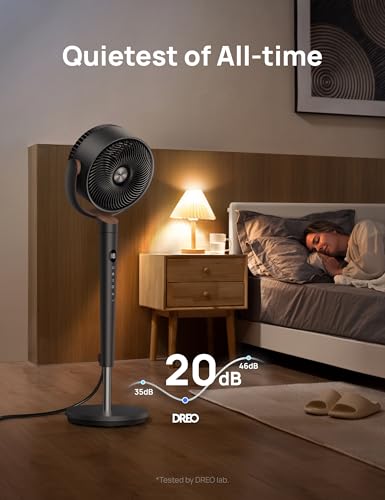
The bionic blade design and air booster tech seem to work as advertised, feedback points to consistent, wide dispersion, and the 20dB quiet operation is a standout. Pair that with a large LED display and remote, and you’ve got a fan that’s easy to use from across the room. It’s not the cheapest, but for someone who wants one fan to handle cooling, circulation, and noise control, this is a top contender.
Product photos
DREO Bladeless Tower Fan

Strengths
- Bladeless and safe
- 20dB ultra quiet
- Easy to clean
Trade-offs
- Less airflow than pedestal models
- Higher cost
- No temperature sensor
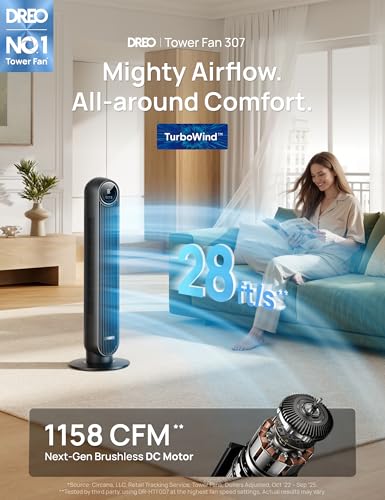
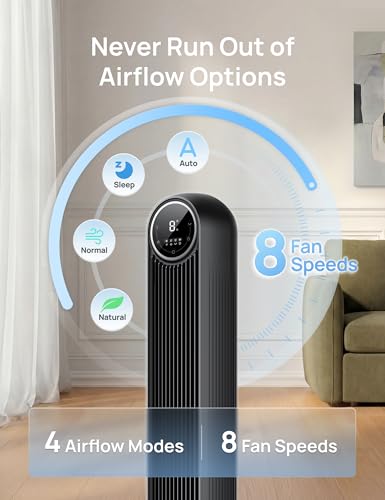
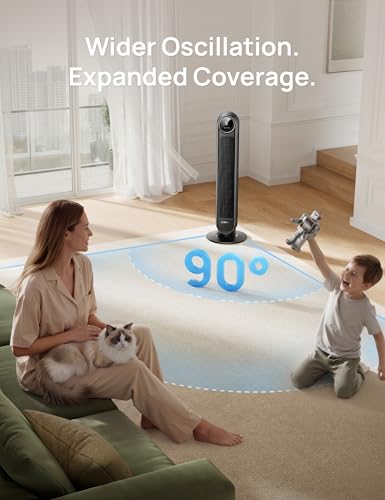
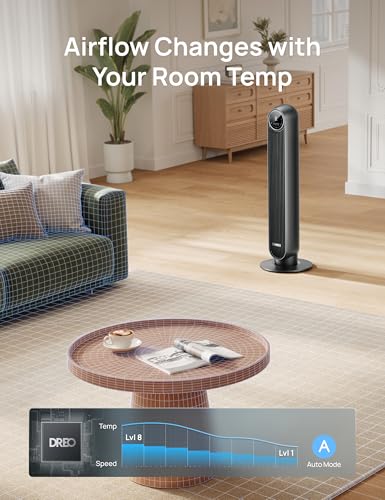
DREO’s bladeless tower fan blends safety, silence, and smart design into a sleek package. The upgraded DC motor delivers 28ft/s of wind speed, stronger than most tower fans, and the Coanda effect helps spread airflow smoothly across the room. At 20dB, it’s among the quietest options available, and owners confirm it’s perfect for bedrooms, nurseries, or offices where noise is a dealbreaker.
The 90° oscillation and 8-speed settings give solid control, and the remote or touch screen make adjustments easy. I appreciate the removable rear grille and impeller, cleaning is a real pain with most bladeless fans, but this one is designed with maintenance in mind. It’s not as powerful as a pedestal fan, but for indoor spaces where safety and quiet matter most, this is the smarter pick.
Product photos

LEVOIT Smart Oscillating Tower Fan
Strengths
- Bladeless and safe
- Smart temp sensor
- Whisper quiet at 28dB
Trade-offs
- Less airflow than pedestal fans
- Plastic build
- No remote backlight
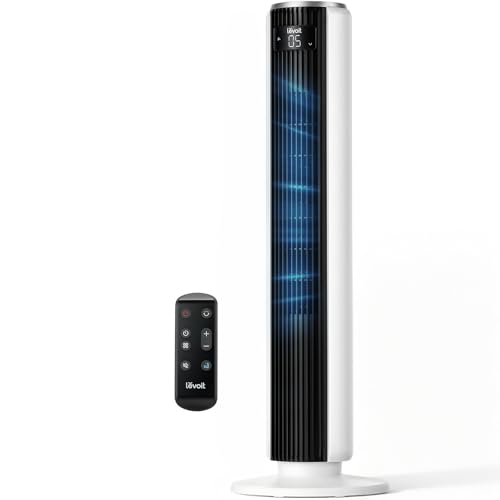
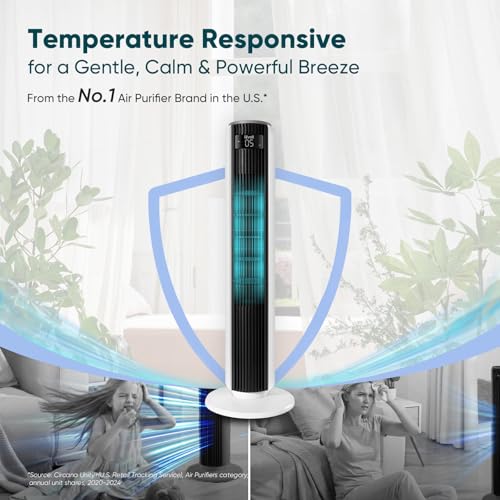
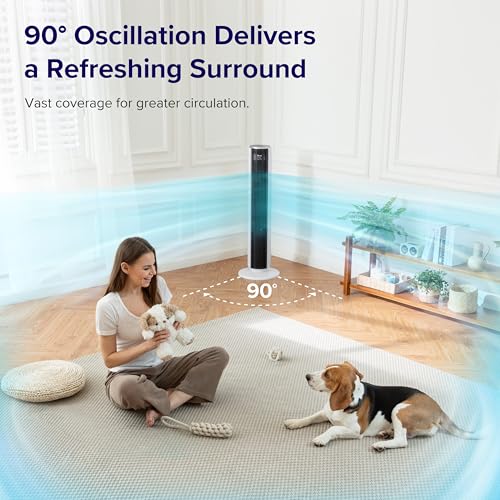
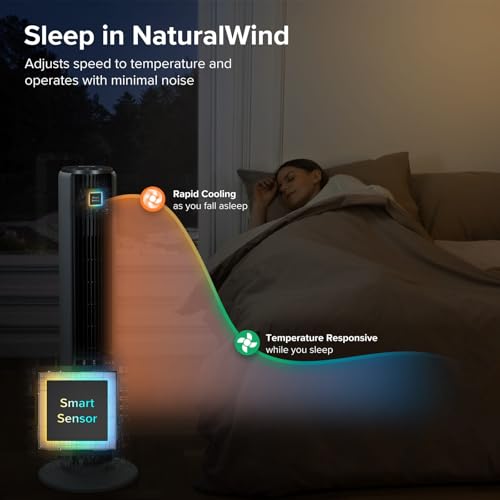
LEVOIT’s tower fan is built around one idea: quiet, sleep-friendly cooling. At 28dB, it’s barely noticeable at night, and the smart temperature sensor that adjusts fan speed based on room heat is a feature I wish more brands included. The curved inlet and multi-blade design create a broad, curtain-like breeze that feels more natural than the punchy gusts from bladed fans.
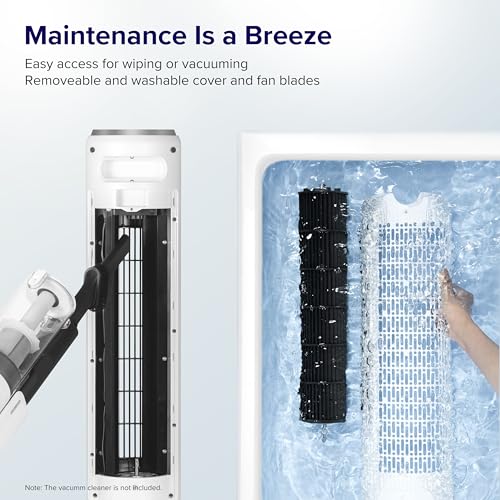
It’s not the most powerful, 25ft/s wind speed is decent but not exceptional, but paired with Auto mode, it maintains comfort without cycling on and off aggressively. Owners say it works well in bedrooms up to 300 sq ft and pairs nicely with AC to reduce runtime. The bladeless design is a win for safety and cleaning, and the 12-hour timer is longer than most competitors. If you hate fan noise at night, this one should be on your shortlist.
Product photos

Lasko 18″ Adjustable Pedestal Fan

Strengths
- Budget-friendly
- Easy assembly
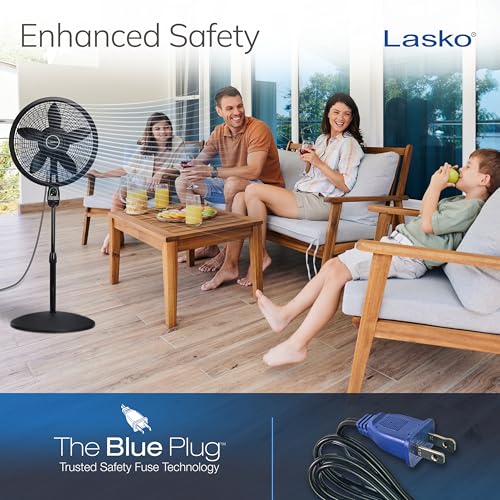
- Safety fuse and Blue Plug
Trade-offs
- No remote
- Basic motor
- Louder on high
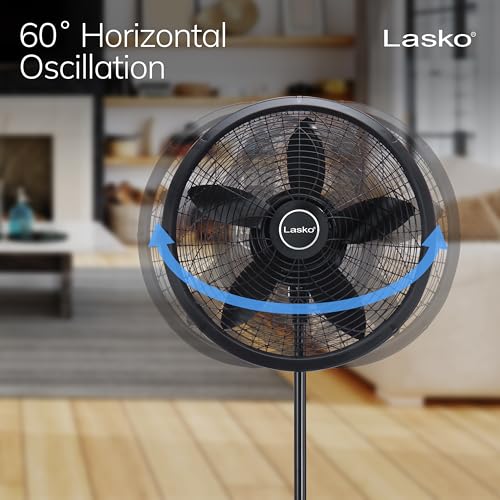
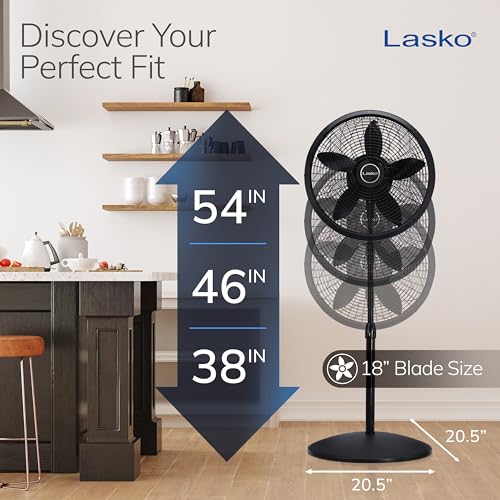
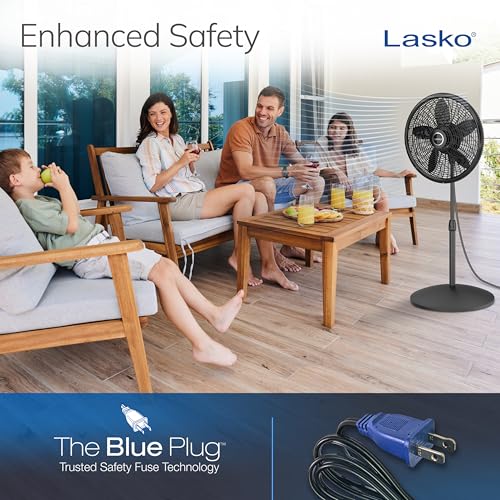
This Lasko 1827 is the definition of no-frills reliability. It doesn’t have a remote, DC motor, or smart features, but it’s simple, lightweight, and gets the job done. With 3 speeds, 60-degree oscillation, and height adjustment up to 54.5 inches, it covers the basics well. At this price, it’s one of the most affordable pedestal fans that’s still ETL listed and built with safety in mind.
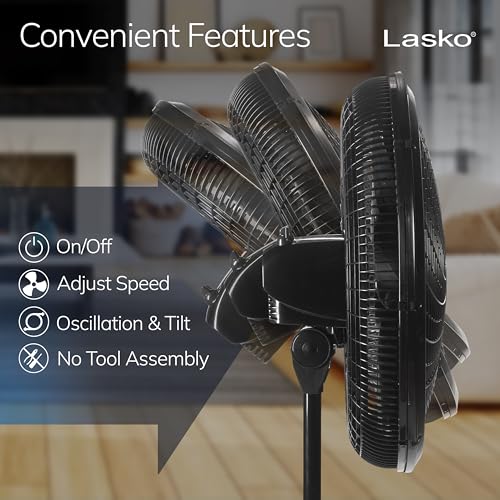
Owners consistently report it lasts for years with basic care, and the tool-free assembly is a plus for renters or those who move it seasonally. It’s not quiet on high, and the airflow won’t impress anyone used to larger models, but for a bedroom, dorm, or guest room where you just need occasional cooling, it’s hard to beat.
Product photos

Lasko Cyclone Pedestal Fan

Strengths
- Remote included
- Adjustable height
- ETL safety certified
Trade-offs
- Limited airflow range
- No bladeless option
- Basic speed settings
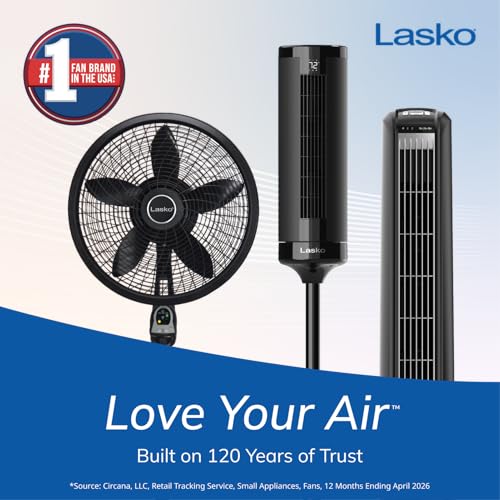
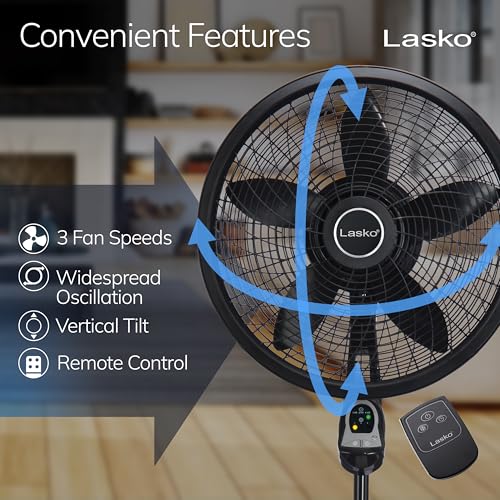
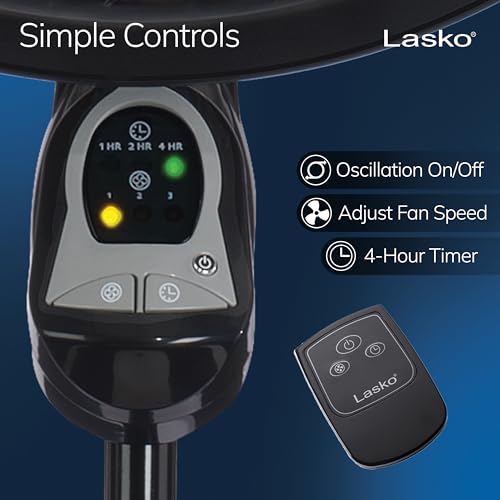
Lasko has been making fans for over a century, and on paper, the 1843 shows why they’ve stuck around. It’s not the most powerful or advanced model here, but it’s a solid, well-rounded pick for someone who wants convenience and reliability without fuss. The remote control is a real perk, handling power, speed, and the 4-hour timer from across the room makes it ideal for bedroom or office use where getting up to adjust things feels like too much effort.
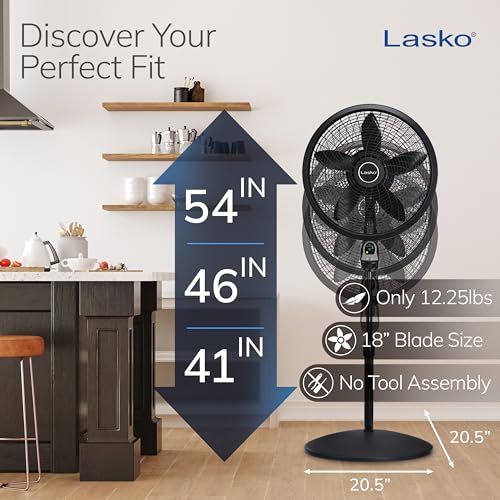
The 18-inch blade and 54-inch max height give it decent reach, and owners consistently report it’s quiet on low, which matters for light sleepers. It won’t move air like an industrial unit, but that’s not the point. Where it stands out is safety, ETL listed with Blue Plug tech, it’s a trustworthy option if you’re worried about electrical issues in older homes or shared spaces.
Product photos
BILT HARD Industrial Pedestal Fan

Strengths
- High airflow output
- Durable metal build
- Wide height range
Trade-offs
- Very loud on high
- Bulky and heavy
- Not for quiet spaces
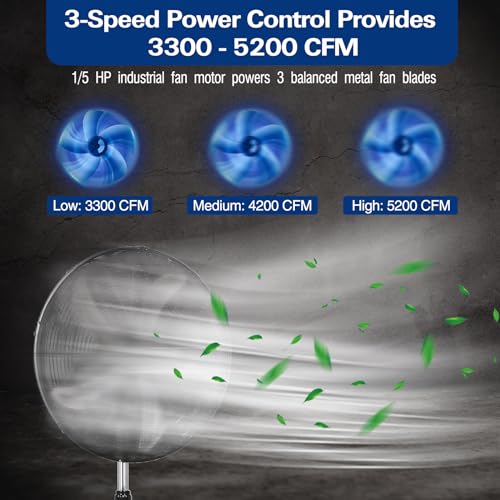
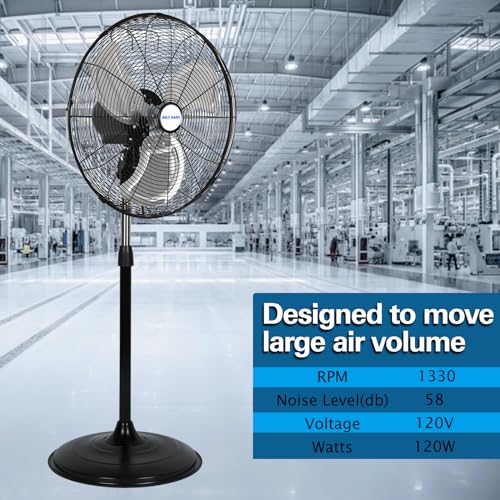
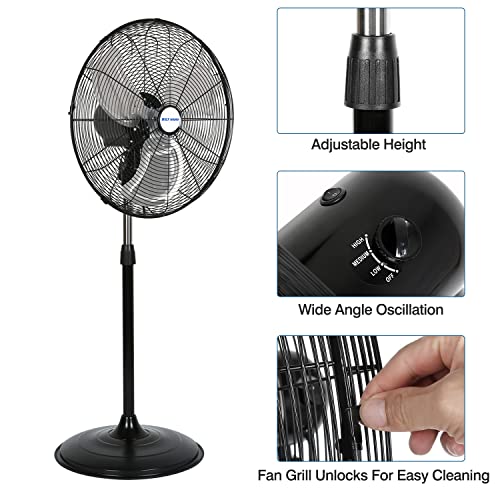
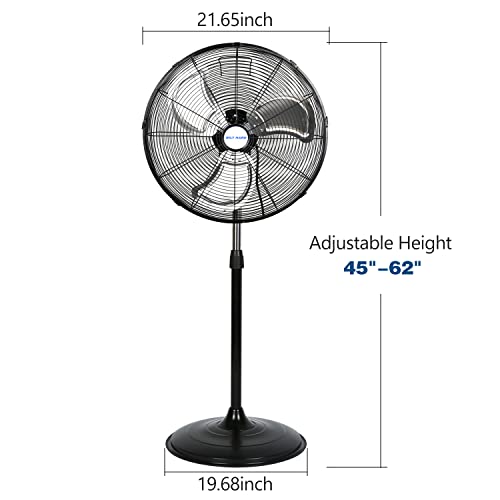
If you’ve ever walked into a sweltering garage or warehouse and needed immediate relief, this BILT HARD fan is built for exactly that moment. With 5200 CFM and a 20-inch aluminum blade, it’s in a different league than bedroom fans, this is serious airflow. The thermally protected PSC motor means it can run hard for hours without overheating, and the heavy-duty metal construction feels like it’ll survive drops, bumps, and seasonal storage abuse.
Owners love how it clears fumes, dries floors, or cools down a workshop fast. It’s loud, this isn’t a quiet fan for sleeping, but that’s the trade-off for moving this much air. At 45 to 62 inches of height adjustment, it fits a range of uses, and the wide base adds stability. For home users, it’s overkill. But for anyone with a garage, shop, or large indoor space, it’s one of the few fans that actually delivers industrial-grade performance at a reasonable price.
Product photos
PELONIS 16″ Oscillating Pedestal Fan

Strengths
- 90° oscillation
- Stable anti-tip base
- Easy to clean
Trade-offs
- No remote
- Mechanical controls only
- Smaller blade size
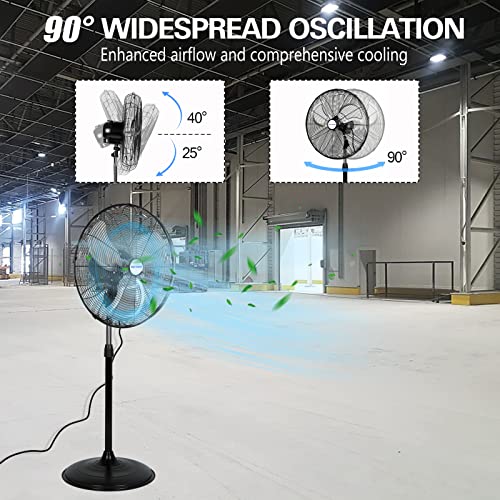
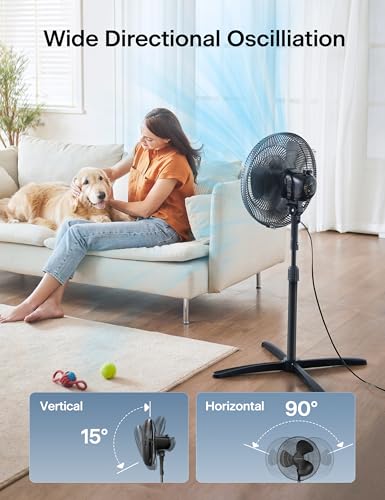
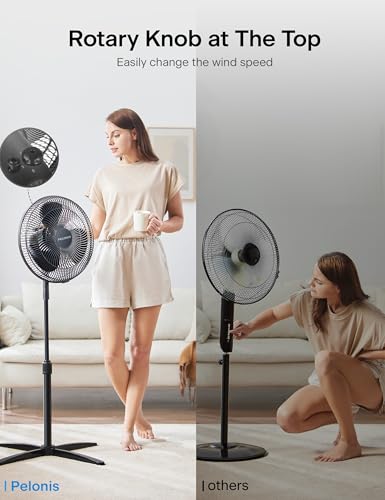
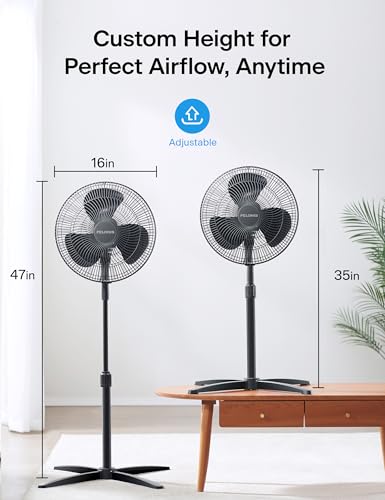
The PELONIS 16-inch fan is the sweet spot between cost and performance. It’s not flashy, but with a heavy-duty motor, 90° oscillation, and a wide anti-tip base, it delivers reliable cooling without cutting corners. The mechanical dial is old-school but durable, owners say it rarely fails, and the 16-inch blade moves more air than smaller fans while staying energy efficient.
It’s lightweight and easy to move, and the removable grilles make cleaning simple. The ETL listing and fused plug add peace of mind, and with a 1-year warranty, it’s backed by a brand with decades of experience. Compared to the Lasko budget model, this one offers better oscillation and stability. For the price, it’s hard to find a more balanced pick.
Product photos


How We Chose These standing oscillating fans
I approached this guide by researching the specifications and features of numerous standing oscillating fans currently available. We compared airflow (CFM), motor types, noise levels, oscillation ranges, and additional features like smart controls and auto modes. Beyond the technical details, I carefully weighed owner reviews from major retailers alongside expert opinions published by consumer product testing sites. This research-led comparison, rather than a hands-on lab test, allowed us to rank fans based on their potential real-world performance.
For standing oscillating fans, consistent airflow and quiet operation are paramount. We prioritized fans with higher CFM ratings, as this directly impacts their ability to effectively cool a room. Equally important was noise level; a fan intended for bedroom use needs to operate quietly. Durability, indicated by motor type and build quality, also factored heavily into our rankings, as a longer-lasting fan represents better value.
Specifications reliably communicate airflow capacity and motor type, giving a baseline for performance. However, owner feedback proved invaluable in assessing real-world noise levels and build quality. Reputable sources helped us discern whether a fan’s features, like auto mode or remote control, functioned as advertised and were truly useful. If you’re seeking more specialized options, you might also want to explore our guide to oscillating tower fans.
Choosing The Right standing oscillating fans
Picking the right standing oscillating fan isn’t just about airflow; it’s about finding a balance between power, noise, features, and price.
A quality standing oscillating fan delivers consistent, widespread airflow with minimal noise, offers adjustable settings for personalized comfort, and prioritizes safety through stable construction and protective features. Look for models with durable motors, adjustable height and oscillation, and user-friendly controls. CFM (cubic feet per minute) is a key spec to compare, alongside noise levels in decibels (dB).
Prioritize Airflow and Coverage
Don’t get hung up on just one number like CFM. While higher CFM generally means more air movement, how that air is distributed matters just as much. A fan with a focused blast might be powerful, but won’t cool a whole room effectively. Look for fans with wider oscillation angles – 90° is common, but 120° or even stepless oscillation offer better coverage. The DREO TurboPoly 120° Oscillating Fan, for example, specifically emphasizes its wide oscillation for whole-room circulation. Consider the blade design, too; some brands are employing more aerodynamic designs to improve airflow efficiency.
Noise Level is Critical, Especially for Bedrooms
Many fans boast about being “quiet,” but decibel (dB) ratings tell the real story. Anything over 50dB is likely to be noticeable, and potentially disruptive, especially in a bedroom. Fans with DC motors are generally quieter than those with AC motors. If you’re particularly sensitive to noise, or plan to use the fan while sleeping, I strongly recommend looking for models specifically marketed as “quiet” and check owner reviews for validation. The LEVOIT Smart Oscillating Tower Fan is one option that prioritizes quiet operation, promising a noise level of just 28dB.
- A basic AC motor fan might reach 55-60dB at higher speeds.
- A DC motor fan typically operates between 20-40dB, making it suitable for bedrooms.
- Some fans include a “sleep mode” which automatically lowers the speed and reduces noise for nighttime use, and can be a worthwhile investment if you’re a light sleeper.
Balancing Features and Value
You’ll find fans ranging from simple, no-frills models to those packed with smart features like remote controls, auto modes, and even app connectivity. While these features can be convenient, they also add to the cost. For most people, a basic fan with adjustable speed and oscillation is sufficient. However, if you want advanced control or plan to integrate the fan into a smart home setup, a more feature-rich model may be worth the investment. If you’re seeking a budget-friendly option, the Lasko 18″ Adjustable Pedestal Fan offers a solid balance of features and affordability. You can find a rundown of more best overall oscillating fans on our site, too.
A well-built fan doesn’t need to be expensive. Focus on the core features – airflow, noise level, and stability – and don’t overspend on bells and whistles you won’t use.
Standing Oscillating Fans Compared
Here’s a comparison of specifications for several standing oscillating fans to help you make an informed purchase.
| Product Name | Airflow (CFM) | Oscillation Angle | Height Adjustment | Noise Level (dB) | Speed Settings | Remote Control |
|---|---|---|---|---|---|---|
| DREO Upgraded Air Circulator Fan | 1000 | 90° | 38″–42″ | 20 | 8 | Yes |
| DREO TurboPoly 120° Fan | N/A | 120° | 37-42″ | 20 | 9 | Yes |
| DREO Bladeless Tower Fan | N/A | 90° | N/A | 20 | 8 | Yes |
| LEVOIT Smart Oscillating Tower Fan | 1044 | 90° | N/A | 28 | 5 | Yes |
| Lasko 18″ Adjustable Pedestal Fan | N/A | 60° | 38″-54.5″ | N/A | 3 | No |
| Lasko Cyclone Pedestal Fan | N/A | N/A | N/A | N/A | 3 | Yes |
| BILT HARD Industrial Pedestal Fan | 5200 | N/A | 45″-62″ | N/A | 3 | No |
| PELONIS 16″ Oscillating Pedestal Fan | N/A | 90° | N/A | N/A | 3 | No |
Frequently Asked Questions
What CFM rating do I really need in a standing oscillating fan?
A good starting point is around 500-1000 CFM for a standard bedroom or living room. However, larger spaces or rooms with high ceilings will benefit from a fan delivering 2000 CFM or more – explore powerful oscillating fans if you have a particularly spacious area.
Are DC motor fans actually quieter than AC motor fans?
Yes, DC motor fans consistently demonstrate lower noise levels than AC motor fans. Generally, DC models operate around 20-40dB, while comparable AC fans often produce 55-60dB, making the DC models preferable for bedrooms or quiet environments.
Can I leave a standing oscillating fan running all night?
Most modern fans are designed for extended use, but it’s best to check the manufacturer’s recommendations. Running a fan continuously can slightly increase electricity costs and potentially reduce the motor’s lifespan over many years, but it shouldn’t pose an immediate safety risk.
What’s the advantage of a fan with stepless oscillation?
Stepless oscillation allows you to customize the oscillation range beyond fixed settings like 90 or 120 degrees. This provides more control over airflow direction and avoids concentrated blasts of air, making it ideal for creating a more consistent and comfortable breeze.
Are the smart features on some fans worth the extra cost?
Smart features like app control and auto mode are convenient, but not essential for everyone. They can be useful if you want remote access or to integrate the fan with a smart home system, but a basic fan with adjustable speeds will meet most people’s cooling needs.
The Bottom Line
Choosing a standing oscillating fan often comes down to how much you’re willing to spend for specific features. While a higher price tag doesn’t always guarantee better performance, it often buys you a quieter motor, wider oscillation, and smart controls. For most people, the DREO TurboPoly 120° Fan strikes a good balance between these factors, offering a wider oscillation range and solid airflow at a reasonable price.
If you’re on a tighter budget, or simply need a reliable basic fan, the Lasko 18″ Adjustable Pedestal Fan is a dependable option. For those prioritizing a quiet night’s sleep, or seeking a fan for a bedroom setting, explore models designed for low noise levels like the LEVOIT Smart Oscillating Tower Fan or check out our guide to the best bedroom oscillating fans. Each has its strengths, so consider your specific needs.
Ultimately, the best standing oscillating fan isn’t the one with the most features or the highest CFM. It’s the one that delivers consistent, comfortable airflow without being intrusive, and that’s built to last. Focus on a stable base, a reliable motor, and honest owner feedback – those are the fundamentals that truly matter.
