8 Best Belt Sanders of 2026
This post contains affiliate links. As an Amazon Associate, we earn from qualifying purchases.
After comparing the field and weighing specs against owner feedback, the Makita 9903 3″ x 21″ stands out as the overall best belt sander for its reliable motor, excellent speed range, and solid build. For those on a budget, the Jellas 3″ x 21″ delivers surprising value without sacrificing key features, while the WEN 10-Amp 4″ x 24″ is the go-to pick if you need a versatile sander that can also convert to a benchtop model.
Most people buying a belt sander don’t realize how much difference motor quality and dust control make until they’re halfway through a project and fighting a wandering belt or a cloud of sawdust. It’s not just about removing material fast, it’s about doing it cleanly and with control.
In this guide, I break down the top models based on real-world specs and user experiences, focusing on power, belt size, usability, and dust management. These picks reflect what actually works in garages and job sites, not just what looks good on paper.
Top 8 Belt Sanders in the Market
The Best Belt Sanders, Reviewed
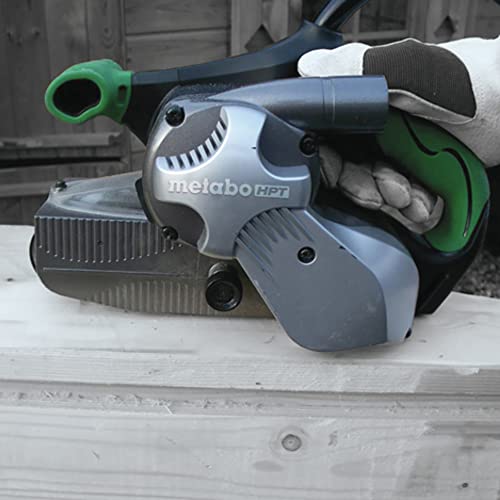
Metabo HPT 3″ x 21″ Belt Sander

Strengths
- 9.0 amp motor
- Variable speed control
- Left-side dust bag
- Soft grip handle
- 5-year warranty
Trade-offs
- Dust bag fills quickly
- No vacuum port
- Belt tracking needs occasional check
The Metabo HPT SB8V2 stands out in the 3×21-inch class with its 9.0 amp motor and variable speed, which puts it ahead of many fixed-speed rivals. Owners consistently report strong performance on hardwoods and heavy stock removal, and the soft-grip housing helps reduce fatigue during longer sessions. The flush front design is a real win for edging work, letting you sand right up to walls or tight corners without gouging.
I like that the dust bag mounts on the left side, this keeps it out of the way when working vertically or in tight spots. The 5-year warranty is a bold statement of confidence, and in a category where motors and bearings often fail under dust exposure, that kind of coverage matters. Compared to the Makita 9903, it doesn’t quite hit the same peak belt speeds, but the power delivery feels more consistent under load.
Product photos


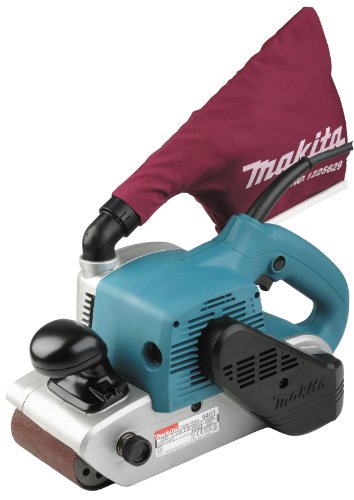
Makita 4″ x 24″ Belt Sander

Strengths
- 4-inch wide belt
- High belt speed
- Dust-sealed motor
- Comfortable grip
- Flush sanding nose
Trade-offs
- Heavy at 12.5 lbs
- No variable speed
- No dust port
If you’re sanding floors, large tabletops, or framing lumber, the 4×24-inch belt on the Makita 9403 gives you serious coverage per pass. The 1,640 ft/min belt speed is among the fastest in this category, and owners confirm it tears through material fast. Pair that with the labyrinth seal design, which keeps dust out of the motor and bearings, and you’ve got a sander built to last in gritty environments.
It’s heavier and less agile than 3×21 models, but that’s the trade for width and speed. The front grip is large and comfortable, and the flush-nose design works well for edging. Compared to the WEN 4×24 combo model, this one doesn’t convert to bench use, but it’s more robust and consistent in continuous operation. For large jobs, this is the kind of tool that earns its keep.
Product photos




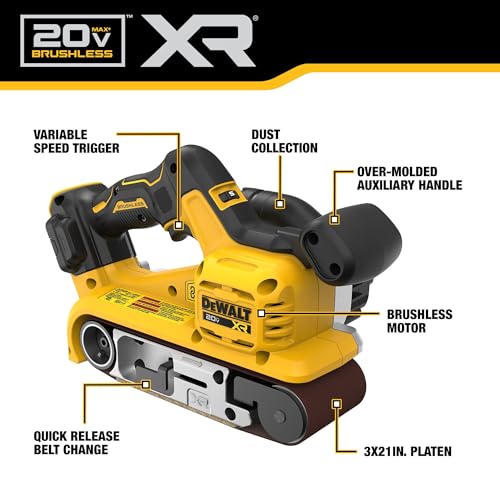
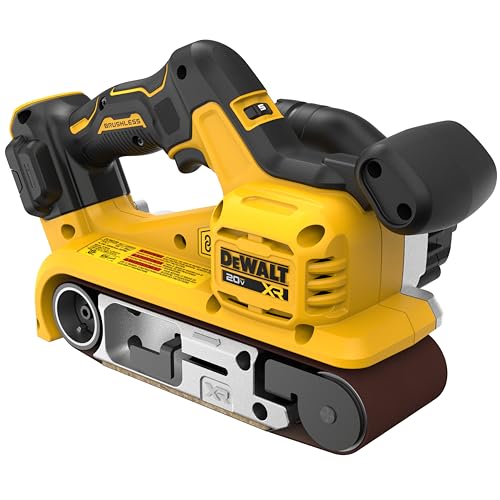
DEWALT 20V MAX Cordless Belt Sander

Strengths
- Brushless motor
- 25-speed selection
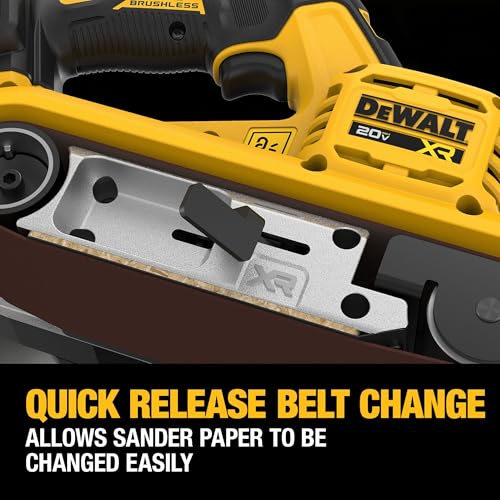
- Tool-free belt change
- Cordless mobility
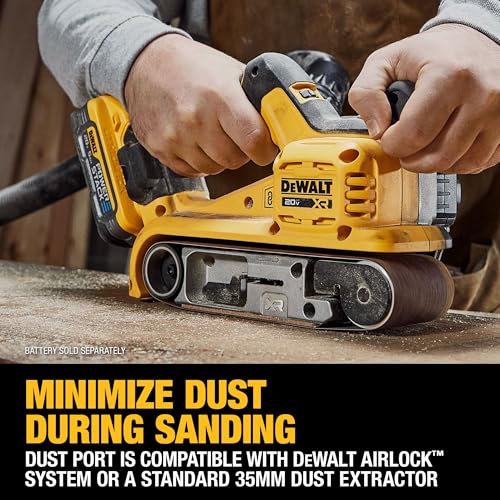
- Airlock dust compatible
Trade-offs
- Battery sold separately
- Smaller 3×18 belt
- Higher cost of ownership
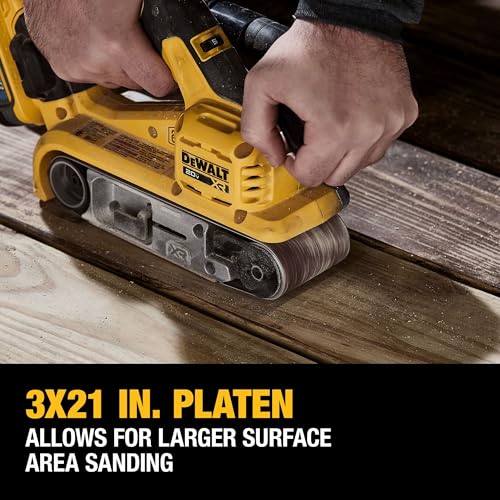
The DEWALT DCW220B is one of the few cordless 3×18-inch sanders that actually performs like a corded model, thanks to its brushless motor and 25-speed dial paired with a variable trigger. Owners say it handles long runs without overheating, and the tool-free belt change is fast and secure. The DEWALT airlock system (sold separately) boosts dust capture to near-corded levels when paired with compatible vacuums.
It’s clearly designed for job sites where mobility matters, think flooring, cabinetry, or framing where outlets are scarce. It has slightly less belt width than 3×21 models, but the ergonomic overmolded handle and balanced weight make it easy to control. Compared to the Milwaukee M18, it offers more speed options and better dust management. For cordless freedom without sacrificing power, this is the one to beat.
Product photos
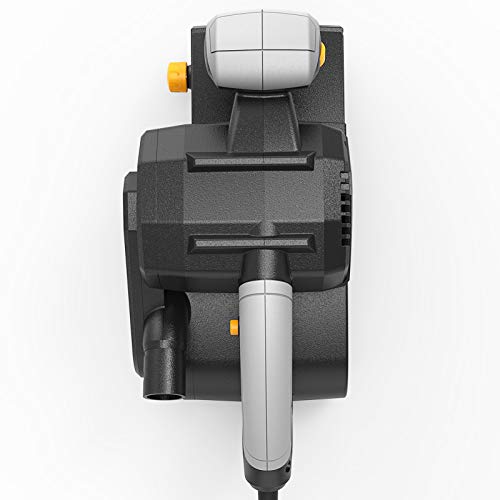
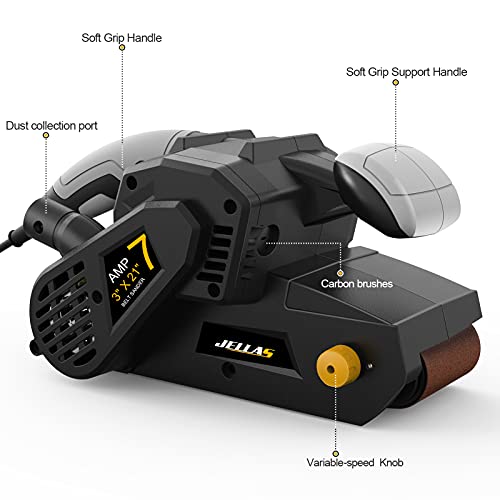
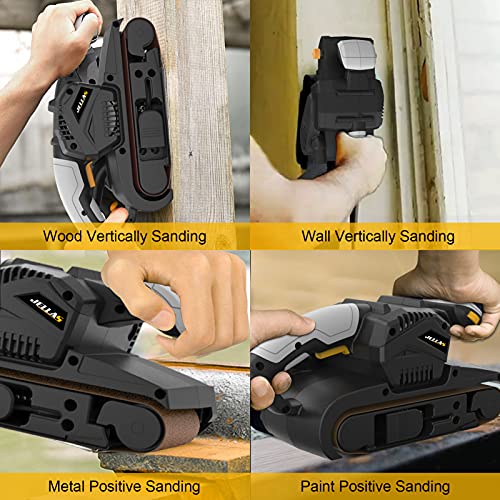
Jellas 3″ x 21″ Variable Speed Sander
Strengths
- Variable speed control
- 2-in-1 bench conversion
- 10 included belts
- Affordable price
- Long power cord
Trade-offs
- Inconsistent long-term durability
- Basic build quality
- Belt alignment issues reported
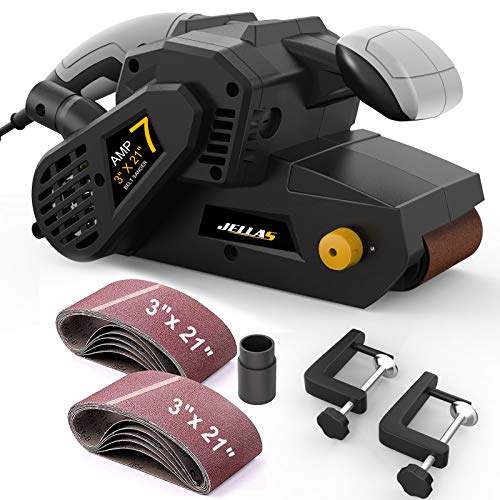
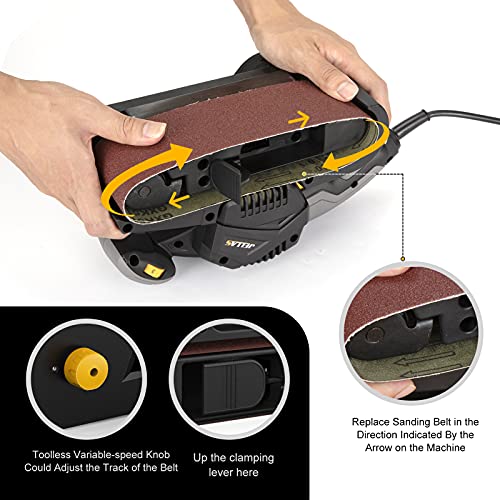
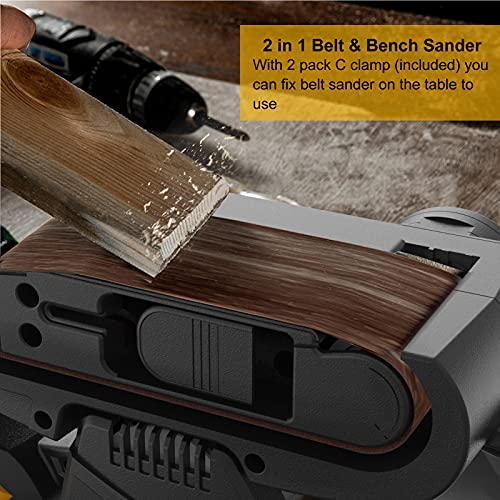
Jellas is clearly targeting budget buyers, but they’ve packed in features that punch above the price, variable speed with six preset levels, a 2-in-1 bench conversion, and 10 free sanding belts across multiple grits. That bundle alone makes it a value standout. The 7-amp motor matches the WEN 6321, and the variable speed works well for switching materials.
Owners report mixed durability, some get years of use, others see motor issues after heavy runs. The dust bag is better than average, and the 2-in-1 vacuum adapters help with shop vac hookups. For the price, it’s hard to ignore, especially if you’re just starting out. It’s not as refined as the Makita or Metabo HPT, but for the garage tinkerer, it’s a smart entry point.
Product photos
WEN 10-Amp 4″ x 24″ Combo Sander

Strengths
- Converts to bench sander
- Variable speed
- 10-amp motor
- Dust port included
- Quick belt change
Trade-offs
- Bench setup less stable
- Plastic housing
- Vibration at high speed
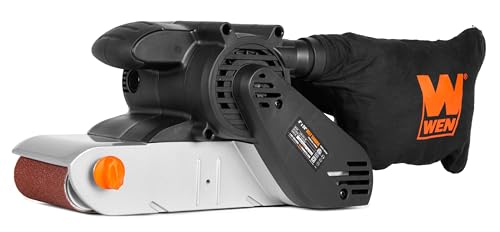
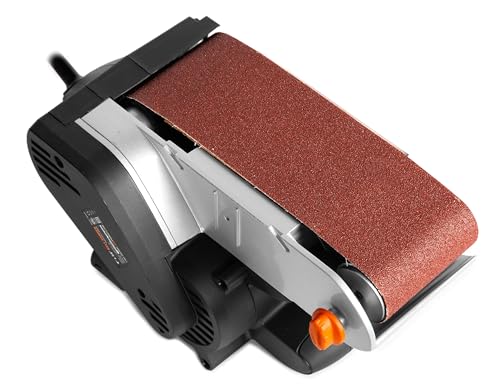
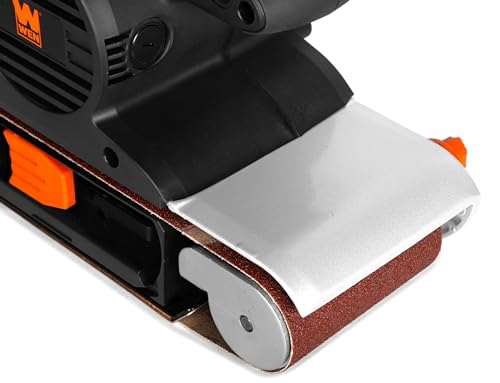
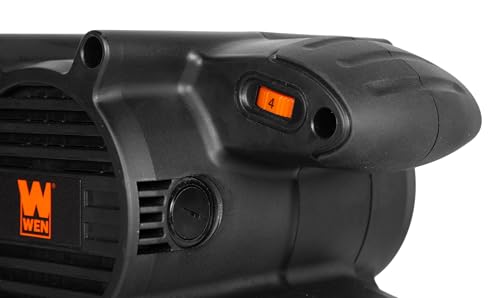
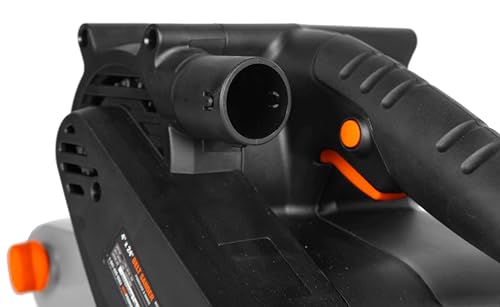
The WEN HB424V is a rare dual-role sander, it works in hand and converts to a benchtop unit with included clamps and a rubber pad. That flexibility is a big win for small shops where space matters. The 10-amp motor delivers strong power, and the variable speed (660–1,310 ft/min) lets you tune it for metal, wood, or finishing.
Owners love the quick-release tension lever, belt changes are fast, and the dust port works with standard shop vacs. While it doesn’t match the Makita 9403 in raw durability, it offers more features for less money. The bench mode isn’t as rigid as a dedicated unit, but for sharpening tools or shaping curves, it’s surprisingly effective. For versatility, this one’s hard to beat.
Product photos
SKIL 6 Amp Belt Sander with Pressure Control

Strengths
- Pressure control feedback
- Auto belt tracking
- Vacuum compatible
- Micro-filtration
- Flush edge design
Trade-offs
- Smaller belt size
- Lower power motor
- Not for heavy stock removal
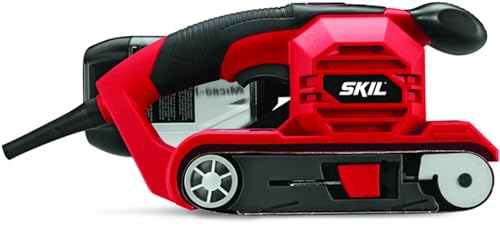
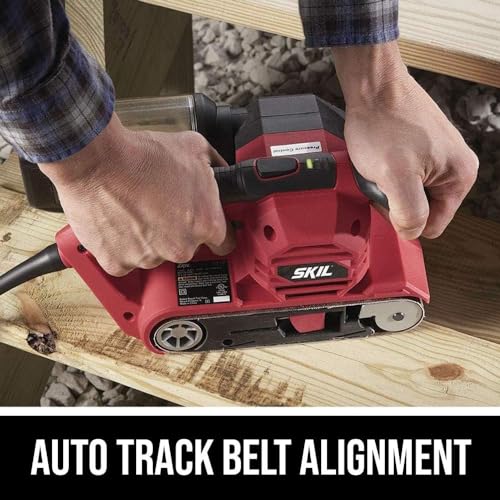
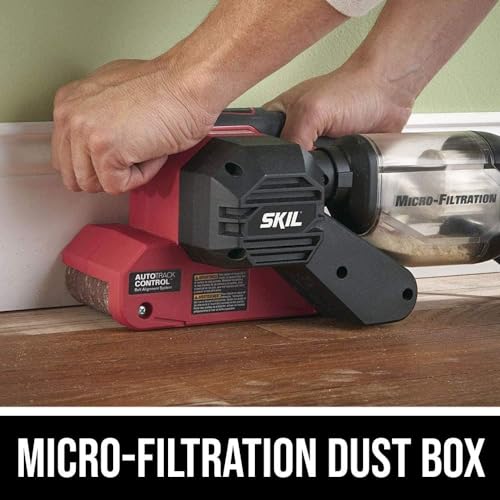
The SKIL 7510-01 brings something unique: pressure control technology that vibrates when you’re pushing too hard. It’s a smart feature for beginners who tend to stall the belt or burn wood. The 6-amp motor is modest, but it’s enough for light to medium tasks, and the auto-track system keeps the belt centered without fiddling.
It’s compact and agile, and the micro-filtration system captures finer dust than most bags in this class. Owners say it’s great for trim work and furniture touch-ups. Compared to the WEN 6321, it’s less powerful but more precise. The smaller 3×18 belt limits coverage, so it’s not for big decks or doors, but for detail, it shines.
Product photos


WEN 6321 7-Amp Belt Sander
Strengths
- Lightweight design
- Lock-on switch
- Good value
- Two-year warranty
- Simple operation
Trade-offs
- No variable speed
- Basic dust collection
- Plastic housing feels flimsy
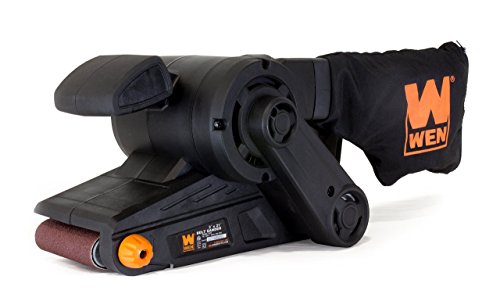
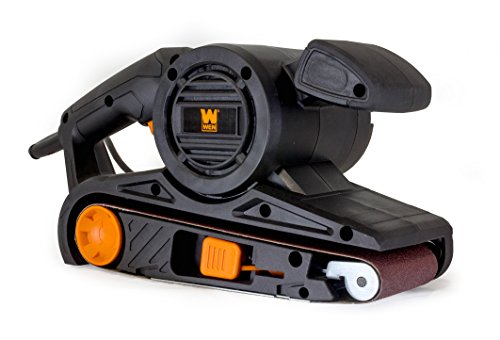
At just six pounds, the WEN 6321 is one of the lightest 3×21 sanders available, and that makes a real difference when working overhead or for extended periods. The 7-amp motor won’t crush oak like a 9-amp beast, but it handles softwoods and medium stock removal without stalling. The lock-on trigger is a small feature that owners genuinely appreciate, it lets you sand with two hands without cramping your index finger.
It’s clearly built to a price, but the trade-offs are manageable. The dust bag is basic, and there’s no speed control, but for weekend DIYers tackling decks or refinished tables, this is a solid performer. Compared to the Jellas budget model, it lacks variable speed and included belts, but it feels more durable in long-term owner reports.
Product photos
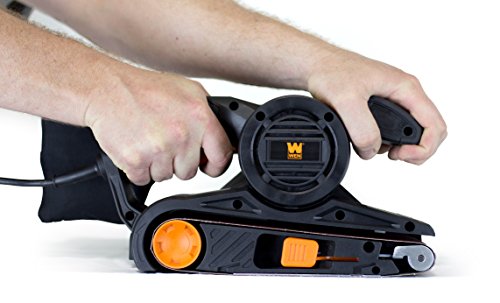
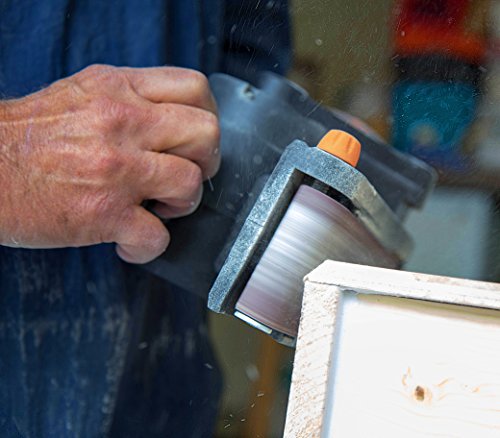
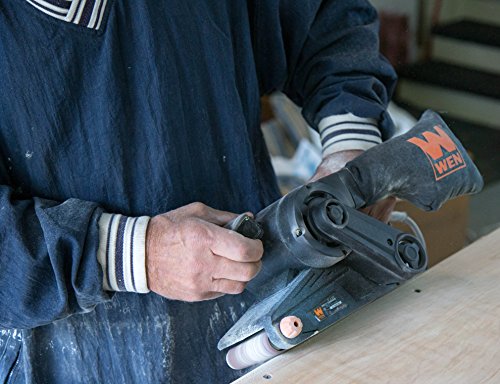
Makita 9903 3″ x 21″ Variable Speed Sander

Strengths
- True variable speed
- Auto belt tracking
- Low noise operation
- Comfortable grip
- Flush sanding design
Trade-offs
- No dust port
- Dust bag capacity small
- Slightly underpowered for dense hardwoods
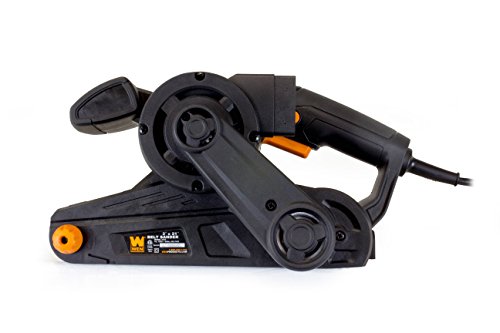
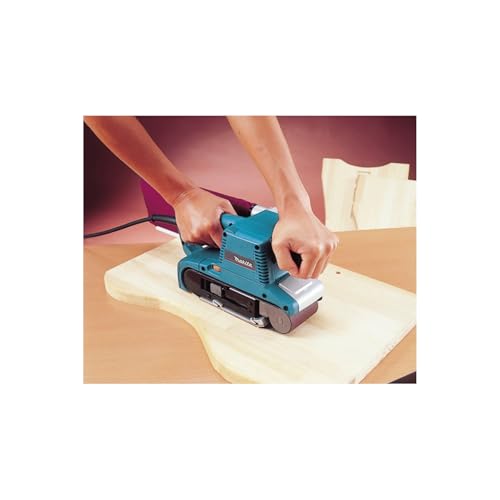
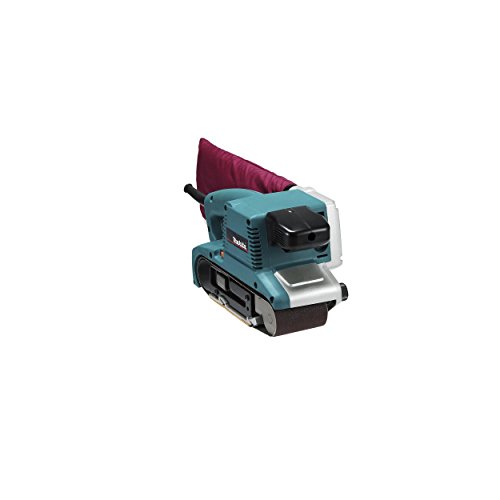
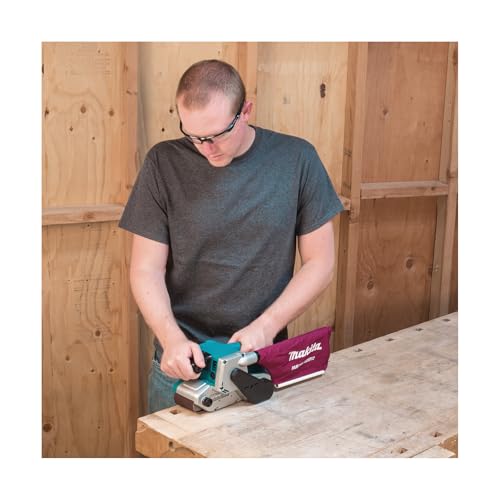
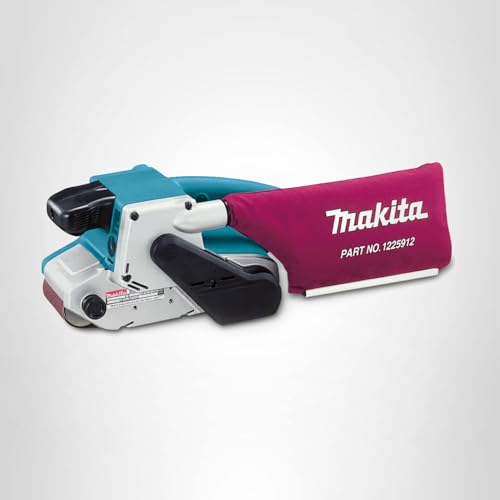
Makita’s 9903 has been a favorite in woodshops for years, and on paper, it’s easy to see why. The variable speed range (690–1,440 ft/min) is broader than most in this size class, giving real control when switching between aggressive stock removal and finer finishing passes. The auto-tracking system works well, owners rarely complain about belt drift, which is a common pain point on budget models.
Where it really pulls ahead is in balance and noise. At 85dB, it’s noticeably quieter than many competitors, and the front grip positions your hand naturally, reducing wrist strain. It’s not quite as powerful as the Metabo HPT, but if you’re doing detail work or extended sanding sessions, I’d pick the 9903 for comfort and precision. It’s the kind of tool that feels refined, not just rugged.
Product photos

How We Evaluated belt sanders
As someone who’s spent years around workshops and renovation projects, I know a good belt sander needs to balance power, control, and dust management. Rather than a hands-on lab test of each model, this selection is a research-led comparison of published specifications, owner reviews, and expert opinions. I weighed data from sources like tool review sites and retailer feedback to build a ranking based on real-world performance indicators.
For belt sanders, consistent sanding speed and build quality are crucial. I heavily considered motor amperage and belt speed, as these directly impact material removal rates. Equally important was the design of the dust collection system – a good system minimizes mess and improves visibility. Finally, features like variable speed control and ergonomic grips played a significant role in determining the top picks.
Specifications reliably reveal a sander’s raw power and physical dimensions. However, owner feedback provides insight into long-term durability, ease of use, and the effectiveness of features like dust collection. Reputation matters too; brands with a history of quality tools, like Makita and DeWalt, generally receive higher marks. If you’re looking for even more precision work, you might also want to consider exploring best 1/4 sheet sanders for detailed projects.
Choosing The Right belt sanders
Choosing the right belt sander can make a huge difference in how quickly and easily you complete your projects. It’s more than just power; understanding the nuances of each type is key.
A good belt sander balances raw power with control and dust management. Key considerations include motor amperage, belt size (width and length), variable speed settings, and the efficiency of the dust collection system. Look for features like auto-tracking to minimize belt slippage and flush sanding capabilities for detail work. Durable construction and a comfortable grip are also vital for extended use.
Motor Power and Material Removal
The motor is the heart of any belt sander, and its amperage directly impacts how aggressively it removes material. For light tasks around the house, a 6-amp motor might suffice, but if you’re regularly tackling hardwoods or larger projects, you’ll want to look at models with 8 amps or more. Don’t automatically equate higher amperage with better, though. Some manufacturers, like Makita, focus on efficient motor design to deliver strong performance at lower noise levels (85dB is a good benchmark). Keep in mind that cordless options, like the DEWALT 20V MAX, are catching up in power, but generally still require a robust battery to compete with corded models for sustained heavy use.
Belt Size and Application
Belt size dictates the sanding area and the types of projects the sander is best suited for. Smaller 3” x 21” belt sanders, such as the Metabo HPT, are more maneuverable and better for detail work, while larger 4” x 24” models, like the WEN 10-Amp combo sander, cover more ground quickly. If you plan on doing a lot of flat surface sanding, a wider belt is a significant time-saver. Consider whether you also want a benchtop option; some models, including the WEN, are designed to convert easily.
Here’s how belt size relates to common tasks: * Small Projects/Detail Work: 3” x 18” or 3” x 21” – Offers precision and control. * General Purpose/Medium Projects: 4” x 24” – A versatile size for a wide range of applications. * Large Surface Sanding/Aggressive Material Removal: 6” x 48” (or larger) – These are typically found in top wide belt sanders and are for serious woodworkers and professionals.
Features and Usability
Beyond the core power and size, several features can dramatically improve your sanding experience. Variable speed control is essential for working with different wood types and achieving the desired finish; the Makita 9903 offers a wide range (690-1,440 ft./min). Auto-tracking belt alignment prevents the belt from wandering, saving you time and frustration, and a well-designed dust collection system is critical for maintaining a clean workspace. The SKIL with pressure control is a standout here, as it can help prevent damage to your workpiece.
A good rule of thumb? Don’t skimp on dust collection. Even a decent dust bag is better than nothing, but a sander compatible with a shop vac (like the SKIL) will significantly reduce airborne particles, protecting your lungs and improving visibility.
Finally, consider your budget. Models like the Jellas offer an entry point for occasional users, but if you’re planning on regular use, investing in a more durable and feature-rich sander from brands known for quality, like Makita or DEWALT, is often a better long-term investment. You may even find that the right corded model among the best corded models provides the best value for your needs.
Belt Sanders Compared
This table provides a specification overview of several belt sanders to aid in product comparison.
| Product Name | Belt Size (in) | Motor (Amps) | Speed (FPM) | Variable Speed | Dust Collection | Cordless |
|---|---|---|---|---|---|---|
| Metabo HPT 3″ x 21″ | 3 x 21 | 9 | N/A | Yes | Dust Bag | No |
| Makita 4″ x 24″ | 4 x 24 | N/A | 1,640 | No | N/A | No |
| DEWALT 20V MAX Cordless | 3 x 18 | 20V | N/A | Yes (25-speed) | N/A | Yes |
| Jellas 3″ x 21″ | 3 x 21 | 7 | 120-400 RPM | Yes | Dust Bag | No |
| WEN 10-Amp 4″ x 24″ | 4 x 24 | 10 | 660-1,310 | Yes | Dust Bag/Port | No |
| SKIL 6 Amp | N/A | 6 | N/A | No | Micro-filtration | No |
| WEN 6321 7-Amp | N/A | 7 | >13 ft/sec | No | Dust Bag | No |
| Makita 9903 3″ x 21″ | 3 x 21 | 8.8 | 690-1,440 | Yes | N/A | No |
Frequently Asked Questions
What belt sander is best for removing paint?
A sander with a higher amperage (8 amps or more) and a coarser grit belt is best for paint removal. The SKIL 6 Amp model, while not the most powerful overall, is frequently recommended for paint work due to its micro-filtration system which helps contain the mess.
Are cordless belt sanders powerful enough for serious work?
Cordless belt sanders, like the DEWALT 20V MAX, are improving, but generally aren’t as powerful as corded models for sustained heavy use. They’re great for quick jobs and portability, but for large projects or hardwoods, a corded option will usually deliver more consistent power.
How important is dust collection on a belt sander?
Dust collection is extremely important, as sanding creates a lot of fine particles. A sander compatible with a shop vac (like the SKIL) is ideal, but even a decent dust bag is a significant improvement over no collection at all.
What grit should I use for initial sanding?
Start with a coarser grit (60-80) for initial material removal or to address significant imperfections. Then, gradually increase the grit (100-120-150-180-220) for a smoother finish. The WEN 10-Amp 4″ x 24″ allows for variable speed control which helps with different grits.
What’s the difference between a 3”x21” and a 4”x24” belt sander?
A 3”x21” sander, like the Metabo HPT, is more maneuverable and better for detail work, while a 4”x24” model covers more surface area quickly. If you need a sander for a variety of projects, consider one of the best handheld belt sanders for versatility.
The Bottom Line
Choosing a belt sander often comes down to balancing initial cost with long-term performance and convenience. While there are many options available, the Makita 4” x 24” sander strikes the best overall balance of power, durability, and features for most homeowners and DIY enthusiasts. It’s a workhorse that’s built to last and will handle a wide variety of sanding tasks effectively.
For those on a tighter budget, the Jellas 3” x 21” is a surprisingly capable option, and if you prioritize portability and freedom from cords, the DEWALT 20V MAX, along with other top cordless belt sanders, is a solid choice – just be sure to factor in the cost of batteries and a charger. And for anyone needing a versatile machine capable of both belt and disc sanding, the WEN 10-Amp combo sander offers excellent value.
Ultimately, remember that the most powerful motor or the widest belt won’t compensate for good technique. Focusing on consistent pressure, proper grit progression, and a clean work environment will yield far better results than chasing the highest specifications. A little patience and the right approach are more important than any single feature.
