
8 Best Nailers for Home Use 2026
This post contains affiliate links. As an Amazon Associate, we earn from qualifying purchases.
The Metabo HPT 15 Gauge Angled Finish Nailer is the best overall for home use, offering reliable power and versatility for trim and molding. If you’re on a budget and already use Milwaukee 18V tools, the Cordless Brad Nailer Compatible with Milwaukee Battery is a solid, no-fuss pick. For those who want dual functionality, the JEXUGK Cordless 2-in-1 Brad Nailer stands out by also driving staples.
Most homeowners don’t need a professional-grade framing nailer, but picking the wrong type can mean split wood, missed fasteners, or constant jams. I’ve seen plenty of DIYers struggle because they bought based on price or brand alone, not realizing how much gauge, power source, and ergonomics affect real-world results.
This guide cuts through the noise. I compared specs, read owner reviews, and evaluated tools based on what actually matters for typical home projects, battery compatibility, ease of use, and the ability to handle everyday tasks without frustration. These picks balance performance, value, and practicality for the average garage or weekend warrior.
Top 8 Nailer For Home Uses in the Market
The Best Nailer For Home Uses, Reviewed
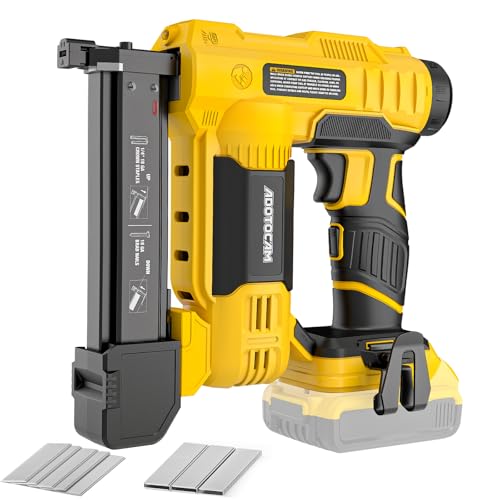
ADOTOCAM Cordless Brad Nailer for Dewalt 20V
Strengths
- DeWalt 20V compatible
- LED light included
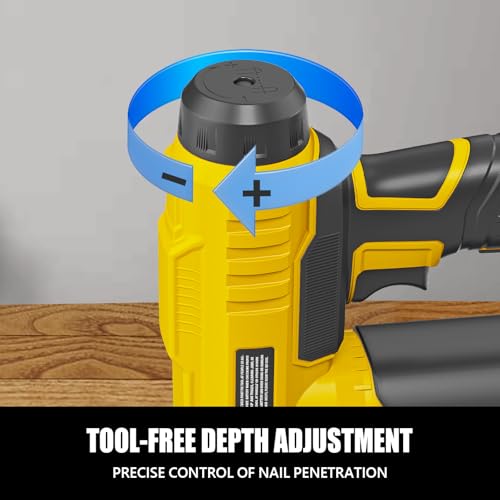
- Tool-free depth adjustment
Trade-offs
- Bare tool (battery sold separately)
- Staple range is limited
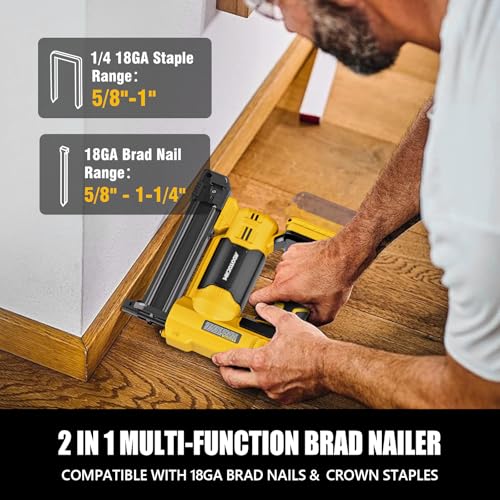
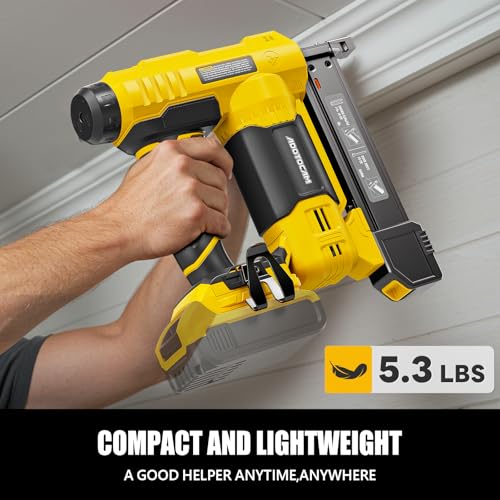
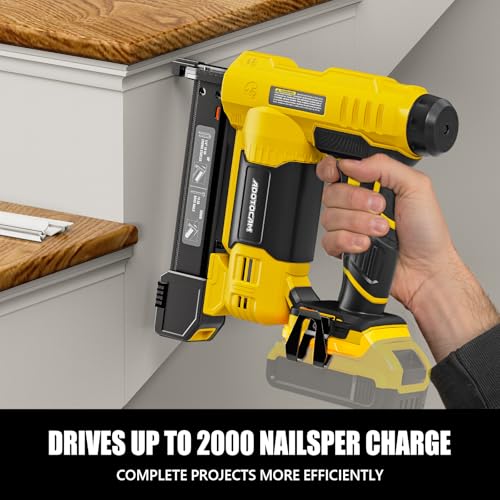
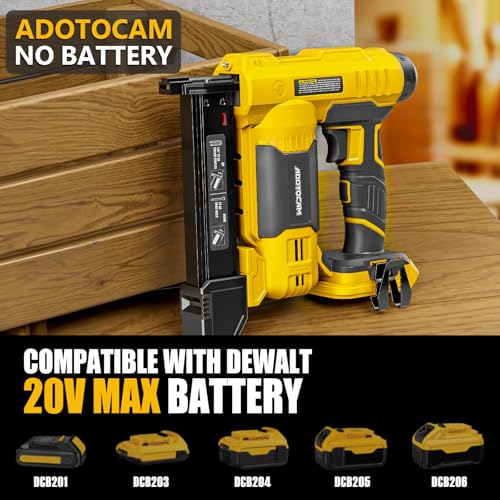
This is my pick for the best overall value in the cordless brad nailer space, not because it’s the most powerful, but because it hits the sweet spot of compatibility, features, and readiness. It’s designed to work with DeWalt 20V Max batteries, which tens of millions of homeowners already own. That means no extra battery cost if you’re in the DeWalt ecosystem. It’s a 2-in-1 tool that handles both brads and staples, has an LED light for dim corners, and includes 1,000 nails and 500 staples, a thoughtful touch.
Owners report reliable depth adjustment and solid build quality for the price. It’s not Metabo HPT-level refined, but it’s close. Compared to the Palotope or JEXUGK models, it’s lighter and more precise, making it better suited for finish work. If you’re a DeWalt user, this should be your first stop.
Product photos
Metabo HPT 15 Gauge Angled Finish Nailer

Strengths
- Drives longer 15-gauge nails
- Lightweight for finish nailer
- Selectable trigger modes
Trade-offs
- Requires air compressor
- Not for delicate trim
If you’re stepping up from brad nails to heavier trim work, this 15-gauge angled finish nailer is where you should look. It drives 2-1/2” nails, which gives it serious advantage over 18-gauge models when installing baseboards, door casings, or exterior trim. The selective actuation switch, letting you toggle between sequential and contact firing, is a pro feature that adds control, and the 360-degree exhaust is a thoughtful touch for keeping dust and air out of your line of sight.
At just 4.2 lbs, it’s surprisingly light for its class, and Metabo HPT’s 5-year warranty adds real peace of mind. Owners consistently praise its jam resistance and balance. Compared to DEWALT’s finish nailers, it holds its own on durability and ease of use, especially for those already in the Metabo HPT ecosystem. But it’s pneumatic, so again, you’ll need a compressor.
Product photos


DEWALT Brad Nailer Kit

Strengths
- Durable build
- Tool-free depth control
- Rear exhaust design
Trade-offs
- Requires air compressor
- Hose limits mobility
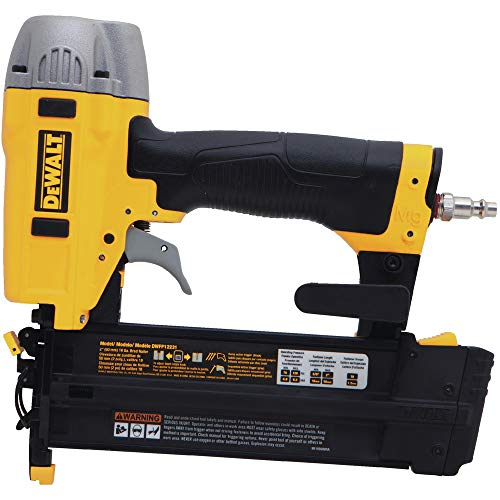
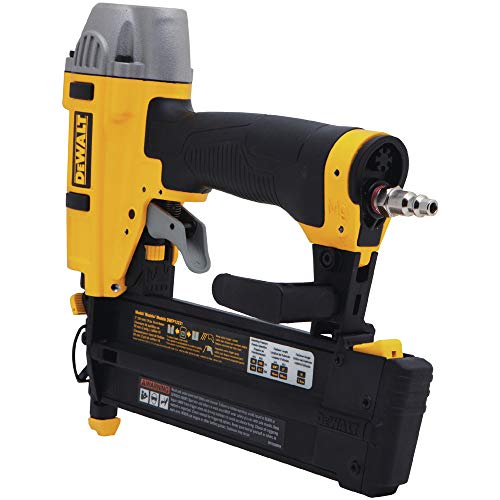
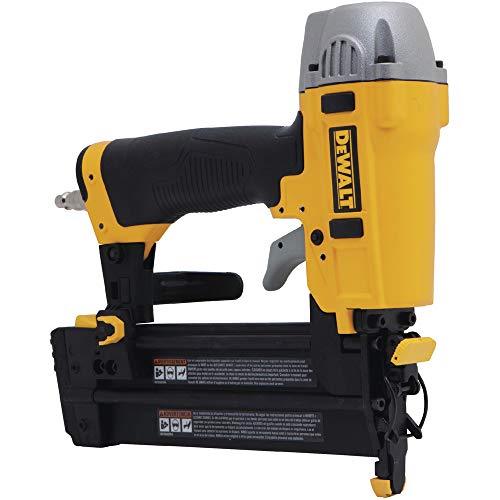
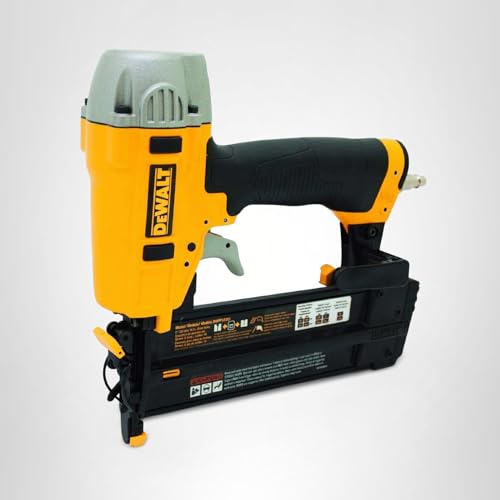
This DEWALT pneumatic brad nailer is built like a tank and backed by a brand that DIYers and pros trust for reliability. On paper, it’s a no-nonsense tool with a maintenance-free motor, tool-free depth adjustment, and a rear exhaust that keeps debris and oil mist away from your work, a small detail that actually matters when finishing delicate trim. Owners consistently report smooth operation and solid drive consistency when paired with a decent compressor, which is the catch here: you need a compressor, hoses, and an outlet.
It’s not the most portable option, but if you’re working in a garage or workshop where you already have air infrastructure, this nailer delivers precision and durability. Compared to cordless models, it’s lighter than most and has zero ramp-up time between shots. For someone doing frequent trim or cabinetry work at home, this is a dependable workhorse, just don’t expect freedom from cords.
Product photos
Metabo HPT 18V MultiVolt Cordless Brad Nailer
Strengths
- Lightweight and compact
- No gas cartridge needed
- Tool-free depth adjustment
Trade-offs
- Smaller battery capacity
- Lower nail count per charge
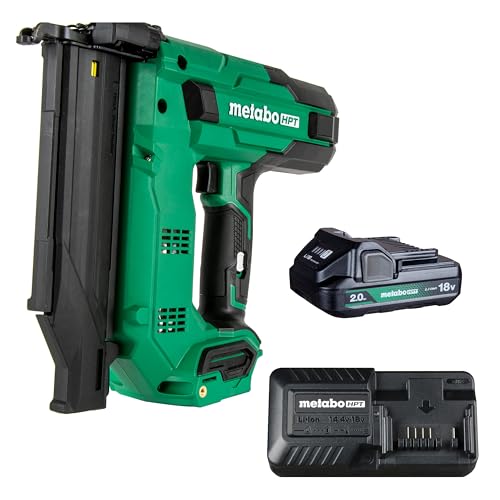
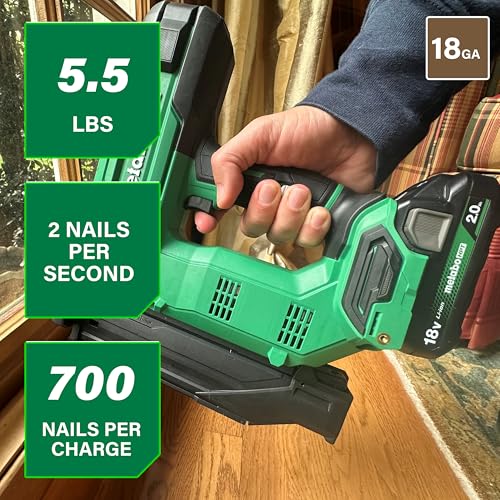
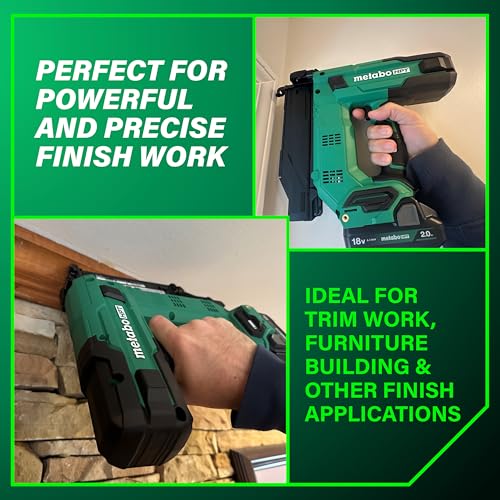
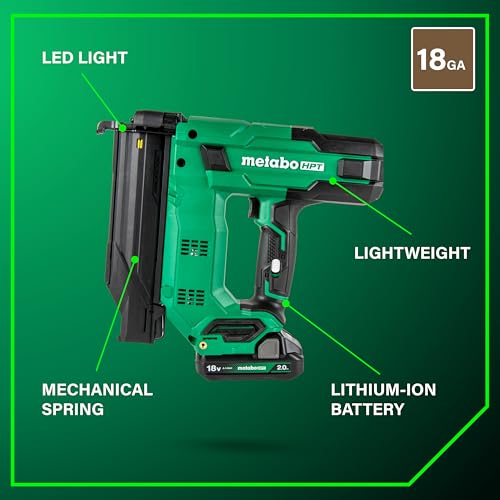
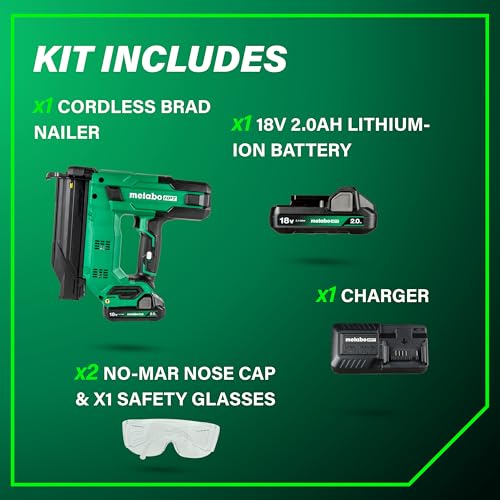
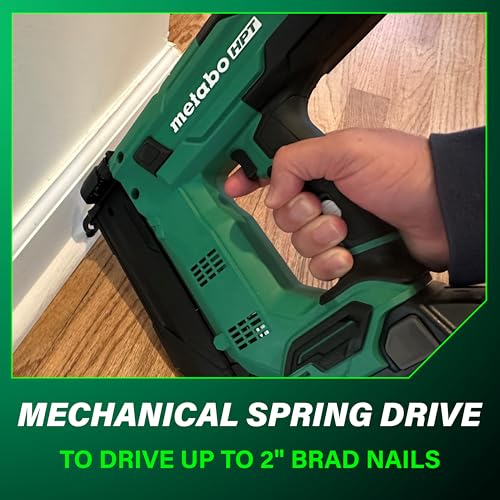
This Metabo HPT cordless brad nailer stands out for being genuinely compact and lightweight at 5.5 lbs, making it easy to handle overhead or in tight spaces, a real plus for weekend warriors tackling crown molding or baseboard projects. It runs on an 18V 2.0Ah battery (included), and while the 700-nail-per-charge claim sounds modest next to others, owners report it holds up well in typical home use. The mechanical spring drive system means no gas cartridge to replace, and no warm-up delay between shots, which I appreciate in this class.
It’s not the most powerful, and the included battery is smaller than what some competitors offer. But for someone who wants a simple, reliable cordless option without fuss, this is a smart budget pick. It won’t match the runtime of models with 4.0Ah batteries, but it’s cheaper and gets the job done for light to medium tasks.
Product photos
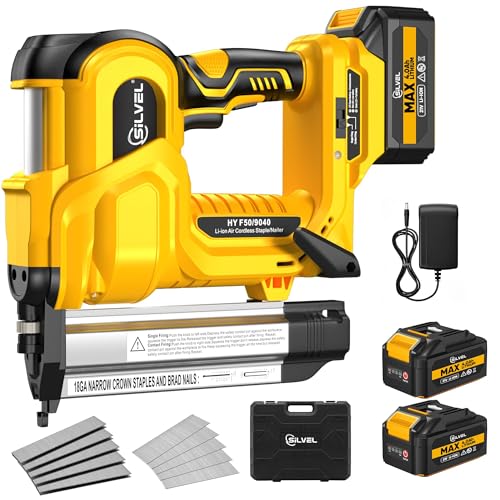
SILVEL 18 Gauge Cordless Brad Nailer
Strengths
- Longest battery life
- Drives 2” brads
- Large magazine capacity
Trade-offs
- Bulky design
- Plastic housing feels light
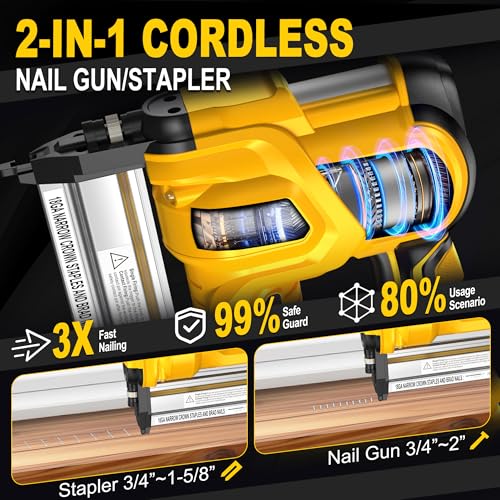
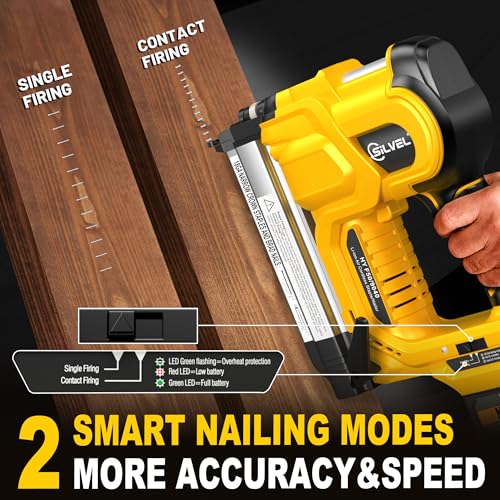
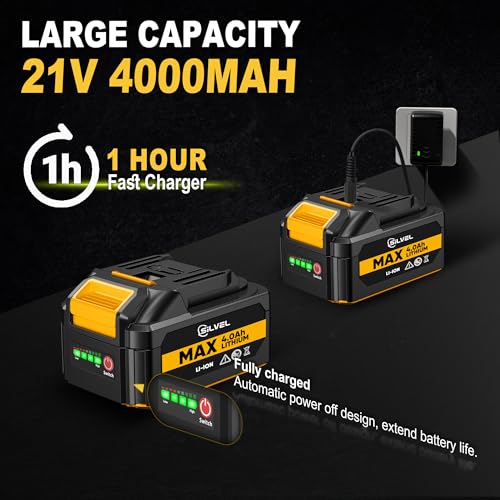
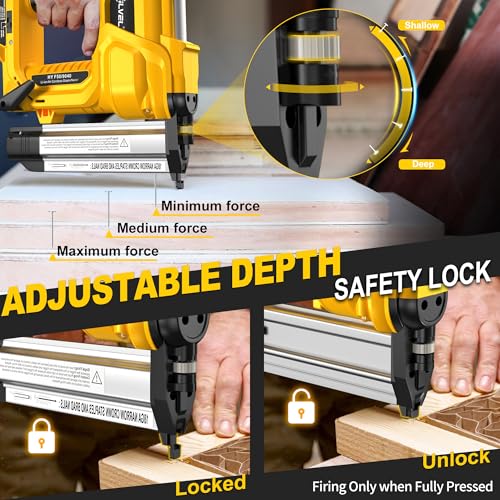
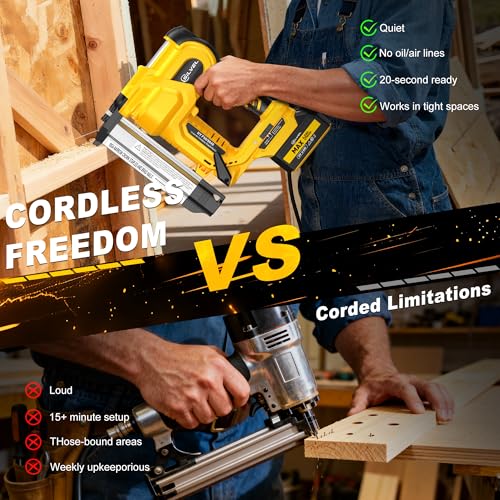
SILVEL’s cordless brad nailer is built for endurance. With two 4.0Ah batteries and a 1,500-cycle charge life rating, this is one of the most battery-dense options on the list, ideal for users who hate downtime. It drives brads up to 2” long, which is rare in this class, and handles staples up to 1-5/8”, giving it real versatility across wood and trim projects. The dual firing modes and adjustable depth work well, and the LED light is a nice bonus for under-cabinet or low-light work.
Some owners mention the yellow body feels a bit toy-like, but the internals are solid. It’s not the most compact, but for long sessions, say, installing baseboards through an entire house, the battery life alone makes it stand out. If you’re doing a marathon project, this is the tool that’ll keep going when others tap out.
Product photos
JEXUGK Cordless 2-in-1 Brad Nailer
Strengths
- 2-in-1 brad and staple use
- Dual 4.0Ah batteries
- High included fastener count
Trade-offs
- Magazine reliability issues
- Ergonomics could be better
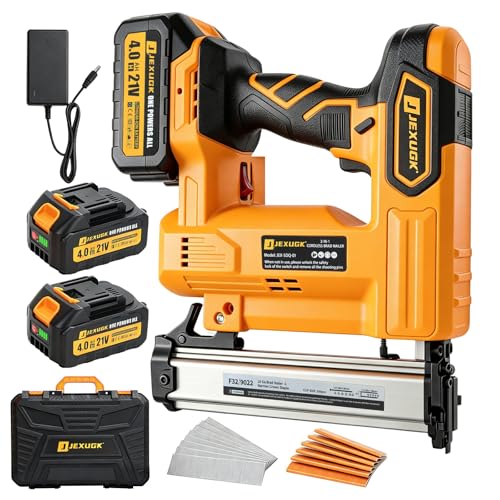
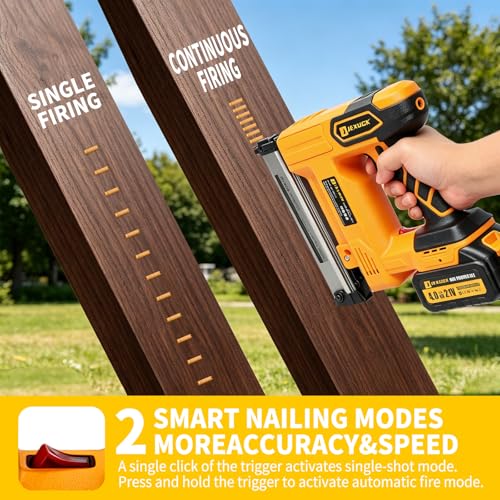
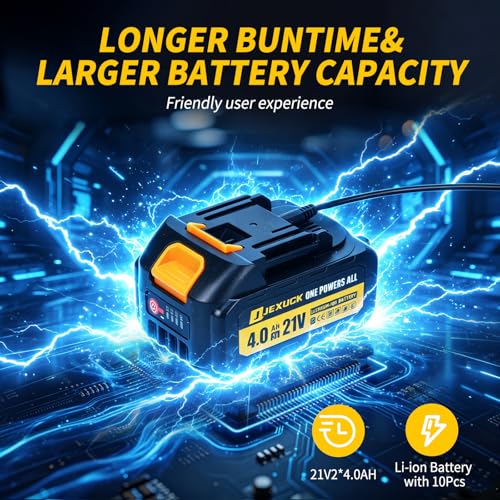
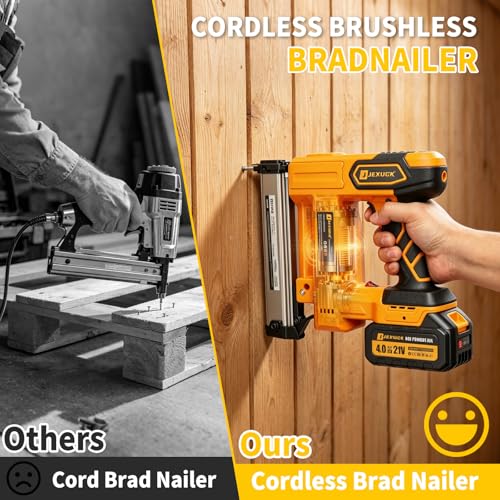
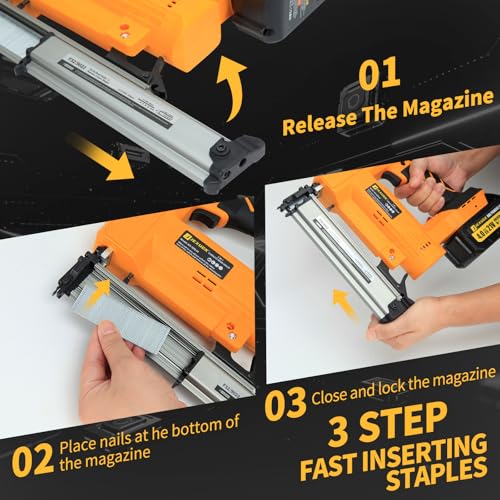
JEXUGK is pushing hard into the heavy DIY space with this 2-in-1 cordless nailer that handles both brads and narrow crown staples, a real advantage if you’re doing multi-material projects like upholstery, fencing, or mixed trim work. It comes with two 4.0Ah batteries, 1,000 nails, and 1,000 staples, so it’s clearly aimed at users who want versatility and endurance. The dual-mode firing works as advertised, and the safety system, requiring both power switch and nose contact, is solid for preventing accidents.
Where it shines is in runtime and flexibility. But some owners note the magazine can be finicky with certain nail brands, and the ergonomics aren’t quite as refined as Metabo HPT or DEWALT. Still, for someone doing a big weekend overhaul, say, a deck, fence, or shed, this tool offers more bang for the buck than most.
Product photos

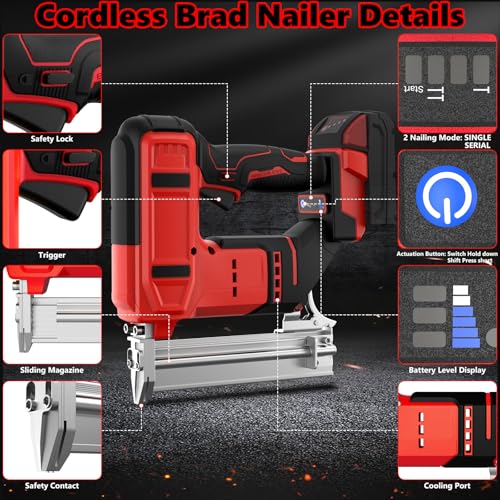
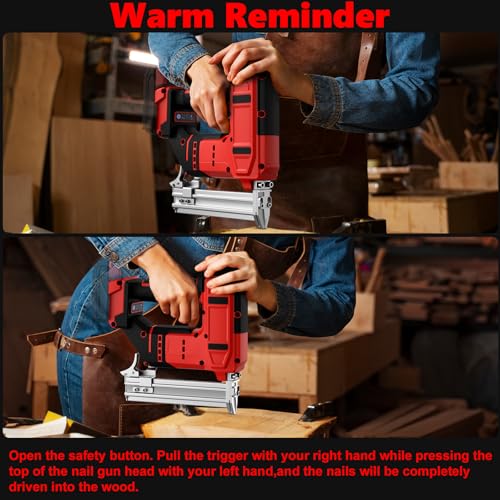
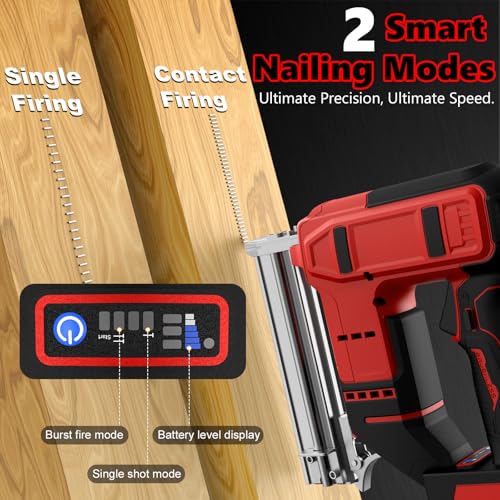
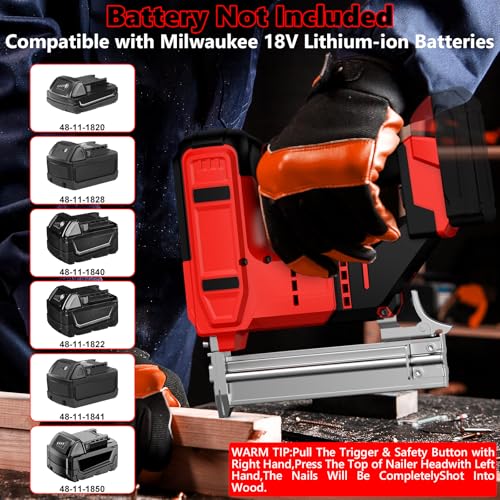
Cordless Brad Nailer Compatible with Milwaukee Battery
Strengths
- Works with Milwaukee 18V batteries
- Brushless motor
- 2-in-1 brad and staple use
Trade-offs
- Bare tool only
- No battery included
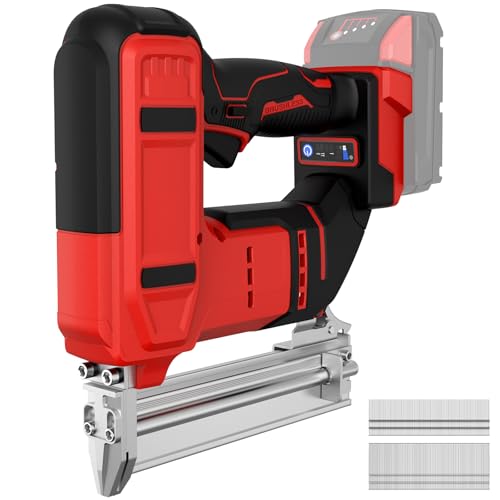
This tool is a no-brainer for anyone already invested in Milwaukee’s 18V RedLithium system. It runs on any Milwaukee 18V battery (sold separately), so if you’ve got spares, you’re saving money and streamlining your toolkit. The brushless motor promises longer life and cooler operation, and owners report solid performance across both brads and staples. The dual-mode firing gives you flexibility, and the tool-free jam release is a real time-saver when things go sideways.
But the big downside? It’s sold bare, no battery, no charger, no nails. That means the upfront cost isn’t as low as it seems. Still, for Milwaukee loyalists, this is a smart add-on. It’s not quite as polished as Milwaukee’s own branded tools, but it delivers where it counts: compatibility and function.
Product photos
Palotope 21V Cordless Brad Nailer
Strengths
- Full kit included
- Long battery life
- Dual firing modes
Trade-offs
- Limited nail length
- Build quality not pro-tier
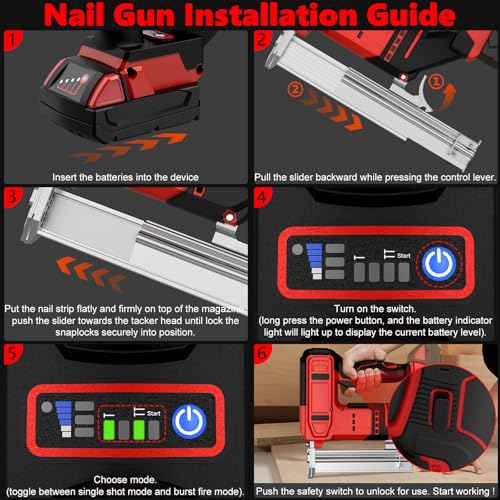
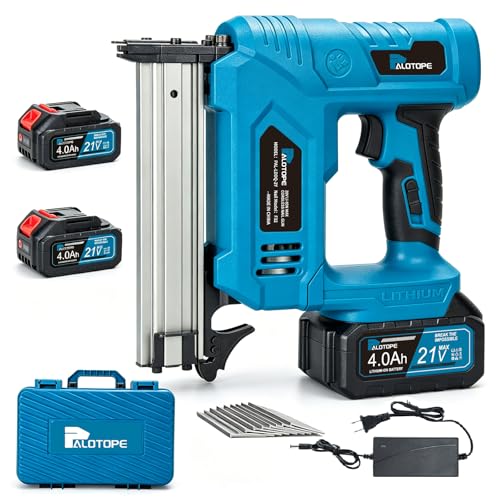
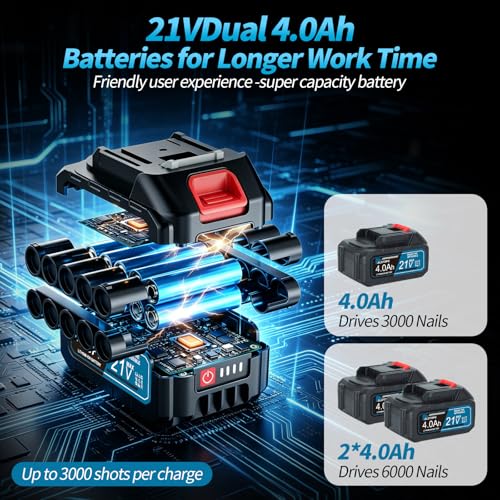
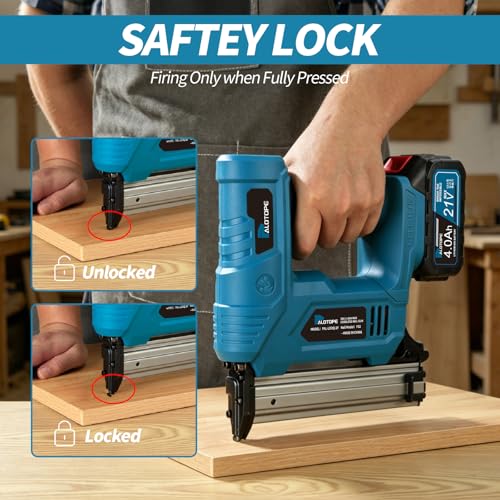
Palotope is trying to win on value here, and they’re not far off. This cordless brad nailer comes with two 4.0Ah batteries, a charger, 1,200 nails, and a toolbox, everything but the kitchen sink. On paper, that’s a huge plus for someone starting from scratch. The dual-mode firing (single-shot and continuous) is well-executed according to owner feedback, and the safety system, requiring both power switch and contact tip engagement, is a smart touch that reduces misfires.
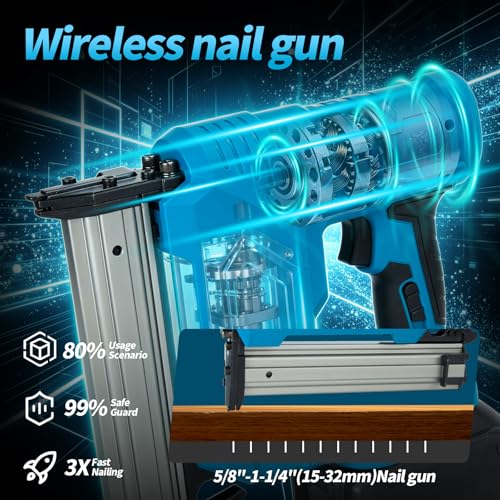
Where it stumbles slightly is in nail range: it only handles up to 1-1/4” brads, which limits its use on thicker baseboards or crown molding. That said, for light trim, cabinet assembly, or furniture repair, it’s more than capable. It’s not as refined as the Metabo HPT or DEWALT-compatible models, but for the kit’s completeness and runtime, it’s hard to ignore.
Product photos
How We Evaluated nailer for home uses
Rather than a hands-on lab test, my research for these recommendations focused on a detailed comparison of published specifications and features across numerous models. I weighed owner reviews from major retailers alongside expert opinions found in trade publications and tool-focused websites. As someone who’s spent years around workshops and renovation projects, I applied my understanding of what features truly matter for consistent performance and durability when ranking these nailers.
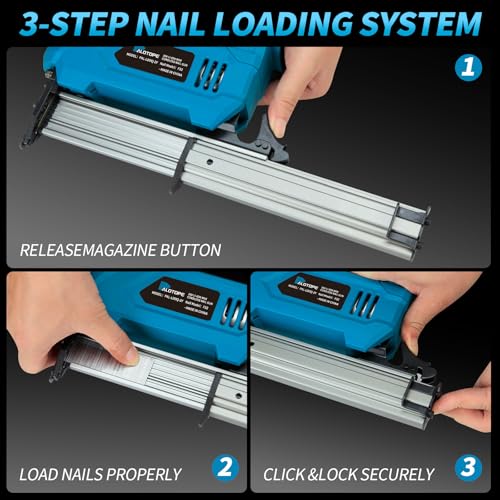
For this category, battery compatibility and versatility were the biggest deciding factors. A nailer’s usefulness is limited if it doesn’t work with batteries you already own, and the ability to handle both brad nails and staples broadens its application. Beyond that, I prioritized ease of use – features like tool-free depth adjustment and jam release mechanisms significantly impact workflow, particularly for DIY users. You’ll find many options, like this cordless baseboard trim nailer, can increase efficiency.
Published specs reliably indicate nail and staple gauge and length compatibility, while magazine capacity provides a good sense of how often reloading will be necessary. However, I heavily relied on owner feedback to gauge real-world reliability, motor life, and the effectiveness of safety features. Reputation and long-term user satisfaction – as reflected in reviews – often reveal issues not apparent in manufacturer specifications.
Choosing The Right nailer for home uses
Choosing a nailer can feel overwhelming, but focusing on your typical projects and a few key features will quickly narrow down the options.
A good nailer balances power with control. Look for models with adjustable depth settings, reliable firing modes (sequential and contact), and comfortable ergonomics. Nailer gauge (the nail thickness) and capacity are also crucial – matching these to the materials you’ll be working with will minimize jams and ensure a professional finish. Consider whether you prefer the freedom of cordless operation or the consistent power of pneumatic tools.
Gauge and Application
The first thing to nail down (pun intended) is what you’ll be building. Brad nailers, using 18-gauge nails, are ideal for delicate trim work, crafts, and lightweight assemblies. Finish nailers, typically 15 or 16 gauge, offer more holding power for thicker materials like molding and cabinetry. Framing nailers, naturally, handle the heaviest work. Don’t overbuy – a heavier gauge nailer isn’t always better; it can split wood if it’s too powerful for the task. For most homeowners tackling common repairs and smaller projects, an 18-gauge or 15-gauge nailer will cover a lot of ground.
Power Source: Cordless vs. Pneumatic
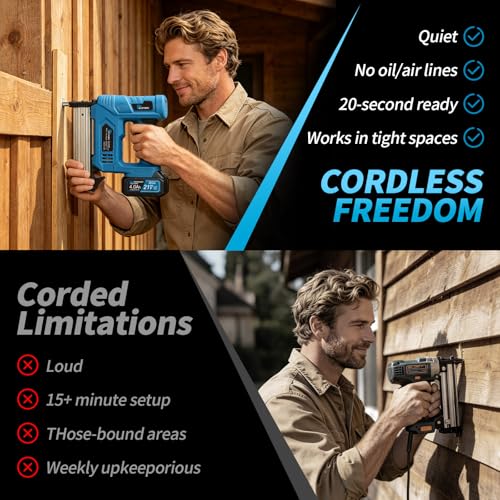
Cordless nailers have come a long way. Early models lacked the power of pneumatic options, but advancements in battery technology, especially with platforms like DeWalt’s 20V MAX and Milwaukee’s M18, have closed that gap. The convenience is undeniable. You avoid the hassle of hoses, compressors, and finding a power outlet. However, pneumatic nailers still offer consistent power and typically a lower price point for comparable performance. If you already own a compressor, a pneumatic nailer is a strong contender. If you’re starting from scratch and value portability, a cordless model is worth the investment.
Here’s how to think through the trade-offs:
- Battery life is critical with cordless models.
- Pneumatic nailers require an air compressor (an added expense).
- Cordless nailers are generally lighter and more maneuverable, making them easier to use for extended periods.
Ergonomics and Features
Don’t underestimate the impact of comfort. You’ll likely be using the nailer for extended periods, so look for features like a comfortable grip, balanced weight distribution, and easy-to-reach controls. Tool-free depth adjustment is a huge time-saver, allowing you to quickly adapt to different materials. A belt hook is a small detail that can make a big difference on the job site. Many nailers now offer dual firing modes – sequential (single actuation) and contact (bump) – providing flexibility for different tasks. If you’re working with crown molding, consider a nailer designed for angled nailing or a nailer for trim work to simplify the process.
A nailer that feels awkward or unbalanced in your hand will quickly lead to fatigue and frustration. Prioritize ergonomics, even if it means spending a little extra.
Nailer for Home Uses Compared
Here’s a comparison of key specifications for several nailers suitable for home use.
| Product Name | Battery Compatibility | Nail Gauge | Nail Length Range | Firing Modes | Magazine Capacity |
|---|---|---|---|---|---|
| ADOTOCAM Cordless Brad Nailer for Dewalt 20V | Dewalt 20V | 18 | 5/8”-1”-1/4” | Single | N/A |
| Metabo HPT 15 Gauge Angled Finish Nailer | N/A | 15 | 1-1/4″ – 2-1/2″ | Sequential/Contact | N/A |
| DEWALT Brad Nailer Kit | N/A | 18 | 5/8 in. to 2 in. | Sequential | N/A |
| Metabo HPT 18V MultiVolt Cordless Brad Nailer | Metabo HPT 18V | 18 | 5/8″ up to 2″ | N/A | N/A |
| SILVEL 18 Gauge Cordless Brad Nailer | N/A | 18 | 3/4″ to 2″ | Single/Contact | 100 |
| JEXUGK Cordless 2-in-1 Brad Nailer | N/A | 18 | 3/8″ to 1-3/16″ | Single/Contact | 100 |
| Cordless Brad Nailer Compatible with Milwaukee Battery | Milwaukee 18V | 18 | 3/8″ to 1-1/4″ | Single/Contact | 100 |
| Palotope 21V Cordless Brad Nailer | N/A | 18 | 3/8″ to 1-1/4″ (10-32mm) | Single/Contact | 100 |
Frequently Asked Questions
What nailer gauge is best for most home repairs?
An 18-gauge nailer is typically best for most home repairs(like installing trim) because it’s versatile enough for crafts, delicate trim, and lightweight assemblies without being too powerful and splitting the wood. Heavier gauges are available, but unnecessary for the majority of DIY projects.
Are cordless nailers as powerful as pneumatic ones now?
Cordless nailers have significantly improved, and models using platforms like DeWalt 20V MAX and Milwaukee M18 now deliver comparable power to many pneumatic options. However, pneumatic nailers still generally provide more consistent power, especially for heavy-duty tasks.
What’s the difference between sequential and contact firing modes?
Sequential firing requires you to depress the safety tip and then pull the trigger for each nail, offering more control and reducing accidental firing. Contact (or bump) firing drives a nail every time the tip is pressed against the surface while the trigger is pulled, speeding up repetitive tasks.
How important is magazine capacity?
Magazine capacity determines how often you’ll need to reload, and a larger capacity saves time on bigger projects. For most homeowners, a capacity of 100 nails or staples is usually sufficient, but if you anticipate extended use, look for models with higher capacities.
Where can I find more information on choosing a nailer for trim work?
You can learn more about choosing the right nailer for your specific needs by reading a guide to the best brad nailer for trim. These guides often provide detailed comparisons and insights into specialized features.
The Bottom Line
Ultimately, choosing a nailer comes down to balancing convenience with capability. For most homeowners, the Metabo HPT 15 Gauge Angled Finish Nailer strikes the best overall balance – it’s a reliable, durable tool that delivers consistent performance without the need for batteries or compressors. It’s a workhorse capable of handling a wide range of projects around the house.
If you’re already invested in a battery platform, or particularly value portability, the ADOTOCAM Cordless Brad Nailer for Dewalt 20V or the Cordless Brad Nailer Compatible with Milwaukee Battery are excellent choices. For those on a tighter budget, the SILVEL 18 Gauge Cordless Brad Nailer provides a surprising amount of functionality at an affordable price point. You might also consider a cordless 18-gauge brad nailer for smaller tasks.
Don’t get too hung up on the latest features or highest numbers. A nailer’s true value lies in its ability to drive fasteners accurately and consistently, project after project. Prioritize build quality, ease of use, and compatibility with the materials you’ll be working with – those fundamentals matter far more than any single specification.
