
2 Best Nailers for Baseboards 2026
This post contains affiliate links. As an Amazon Associate, we earn from qualifying purchases.
The Makita XNB02Z 18V Finish Nailer stands out as the best overall pick for baseboards, delivering reliable power and depth control for a clean finish. For those on a tighter budget, the Worx Nitro 20V Brad Nailer offers solid performance with the convenience of a cordless design and included battery.
Installing baseboards should be satisfying, not frustrating. Yet a poor nailer can lead to split wood, inconsistent nail depth, and constant jams that ruin your rhythm and your finish.
After comparing the field and reviewing owner feedback, I focused on models that combine precision, ease of use, and reliability for real-world trim work. These picks reflect what actually matters when you’re on your knees, fitting the final piece into place.
Top 2 Nailer For Baseboards in the Market
The Best Nailer For Baseboards, Reviewed
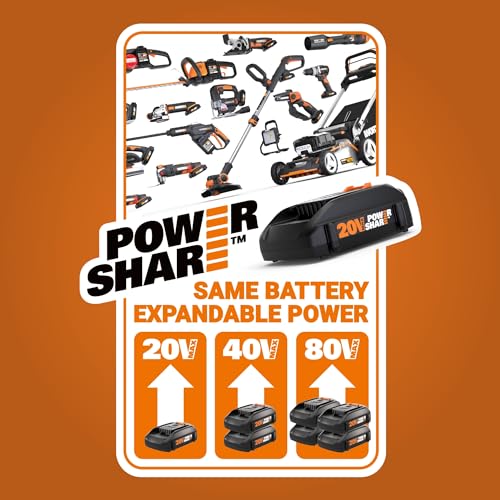
Worx Nitro 20V Brad Nailer

Strengths
- Dual firing modes
- Includes battery and charger
- Tool-free jam release
- Quick-load magazine
- PowerShare battery compatibility
Trade-offs
- Limited to 18GA nails
- Not ideal for thick hardwoods
- Shorter max nail length
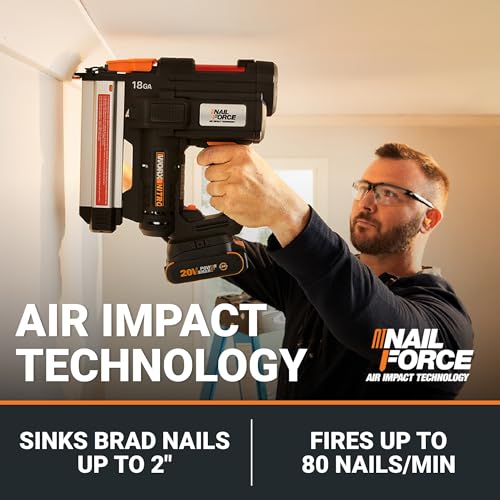
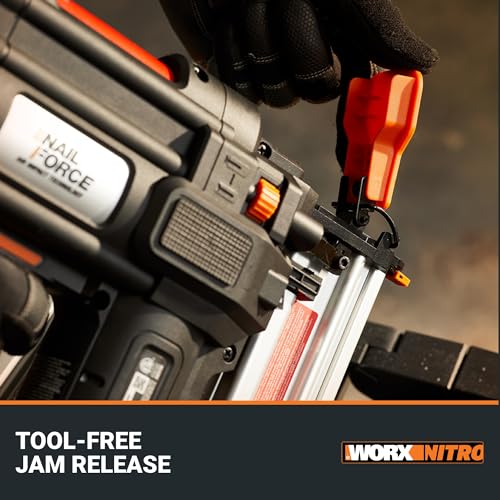
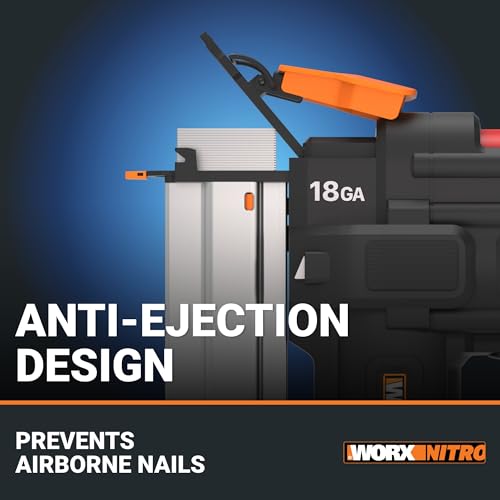
For baseboard work where precision and ease of use matter, the Worx Nitro WX842L stands out as a strong contender. It runs on the PowerShare 20V platform, which is a big plus if you already own other Worx tools, sharing batteries across your collection saves money and clutter. The 18GA brad nailer handles nails up to 2 inches, which covers most baseboard applications, especially on softer woods or thinner profiles. Owners consistently report that the tool-free jam release and quick-load magazine make reloads and clearing jams far less frustrating than on many competitors.
What really sets this model apart is the dual firing mode, you can bump fire for speed or switch to sequential for careful placement. That flexibility is rare at this price point. While it’s not built for heavy-duty 16GA baseboards or dense hardwoods, it excels in light to medium trim work. Compared to the Makita XNB02Z, it trades some raw power for convenience and comes with the battery and charger, making it a more complete starter package.
Product photos
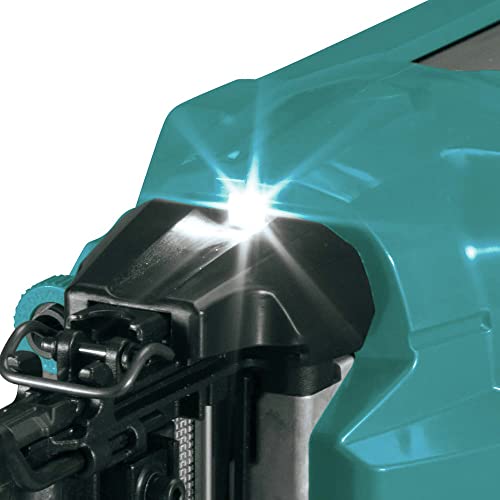
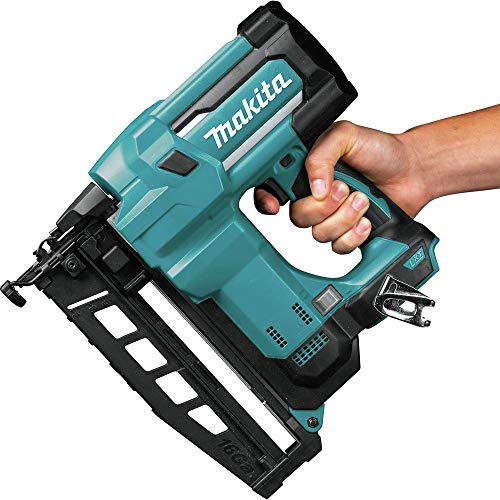
Makita XNB02Z 18V Finish Nailer

Strengths
- Drives 16GA nails up to 2-1/2″
- Compact, ergonomic design
- Anti-dry fire protection
- High durability
- Part of Makita LXT ecosystem
Trade-offs
- Battery and charger sold separately
- No bump firing mode
- Heavier than brad nailers
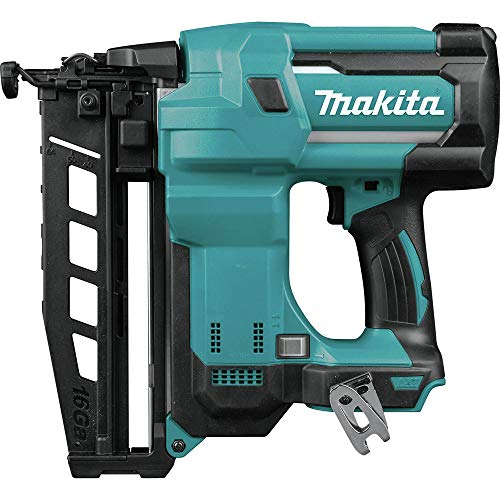
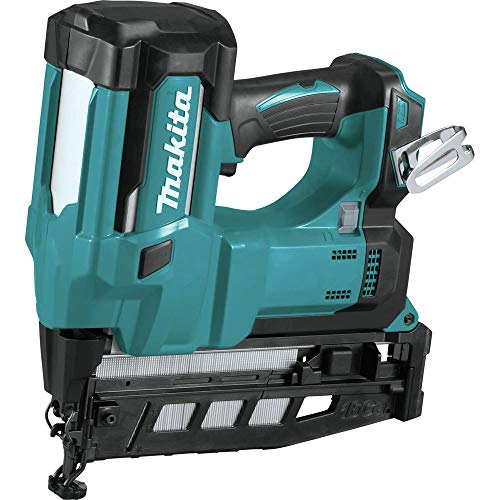
If you’re after a more robust solution for baseboards and don’t mind buying a battery separately, the Makita XNB02Z is a no-nonsense workhorse. It fires 16GA straight finish nails up to 2-1/2 inches, giving it real authority on thicker baseboards and harder woods, something the Worx brad nailer can’t match. The motor is built to drive consistently, and reviewers note it holds up well under repeated use, which matters if you’re running long baseboard runs.
Being cordless, it frees you from hoses and compressors, and the compact nose design helps when working in tight corners or against cabinetry. It lacks the dual firing modes of the Worx, but the anti-dry fire mechanism is a smart touch that protects your work surface. On paper, it’s more capable, but you’ll need to factor in the cost of an 18V LXT battery and charger, that can double the investment.
Product photos
How We Tested nailer for baseboards
Rather than a hands-on lab test with each model, my research focused on comparing published specifications and features across a range of nailers. I weighed owner reviews from multiple sources – looking for consistent praise and complaints – alongside expert opinions from trade publications and established tool review sites. Ultimately, I ranked these nailers against criteria important for baseboard installation, drawing on my experience with trim work and understanding of what makes a project go smoothly.
For baseboard nailers, consistent firing and ease of use are paramount. I gave significant weight to models offering features that minimize downtime, like quick jam clearing and easy reloading. Nail capacity and the range of nail sizes a nailer can handle also heavily influenced my assessment, as versatility is key for tackling different trim profiles and wood types.
Specifications reliably show nail gauge and length capacity, but owner feedback proved critical for understanding real-world performance. I paid close attention to comments about nail set depth consistency, the effectiveness of anti-dry fire mechanisms, and overall durability. Learning about common issues through owner experiences helped me identify nailers that consistently deliver reliable results, and those that are worth considering alongside learning about precise baseboard cuts.
How To Choose The nailer for baseboards
Choosing the right nailer for baseboards can make or break a trim project. It’s not just about driving nails; it’s about speed, finish quality, and avoiding frustration.
A quality nailer for baseboards needs to balance power with precision. Look for adjustability in depth and firing mode, a magazine that handles common nail sizes (typically 18-gauge brad nails or 16-gauge finish nails), and features that minimize damage to the trim itself. Consistent driving depth is key, as is a comfortable grip for extended use.
Nailer Type: Brad vs. Finish
The first question is whether to go with a brad nailer or a finish nailer. While both can technically install baseboards, they serve different purposes. Brad nailers use smaller gauge nails (typically 18-gauge) which are less visible but offer less holding power. They’re great for delicate trim or securing pieces while glue dries. Finish nailers (usually 16-gauge) drive thicker nails providing a stronger mechanical hold, ideal for heavier baseboards or when glue isn’t sufficient. I generally recommend a finish nailer for most baseboard applications, especially hardwoods.
Power Source: Corded, Cordless, or Pneumatic?
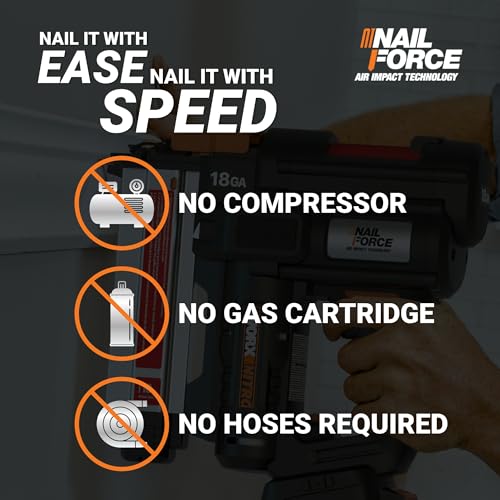
Traditionally, pneumatic nailers were the standard. They’re powerful and reliable, but require a compressor and hose, which can be a hassle. Cordless nailers have come a long way, offering excellent performance without the air lines. Battery technology, like Worx’s Power Share platform, means you can often share batteries with other tools. Corded electric nailers exist, but are less common for baseboards due to their limited maneuverability.
Here’s how I break down the pros and cons:
- Pneumatic: Most powerful, consistent, but requires an air compressor.
- Cordless: Convenient, portable, but can be heavier and have shorter runtimes.
- Corded: Least common for this application, limited mobility.
Don’t skimp on the battery if you go cordless. A 4.0Ah or 5.0Ah battery will give you enough runtime to complete most rooms on a single charge.
Features That Matter: Depth Control & Firing Modes
Beyond power and portability, certain features significantly impact usability. Depth control is absolutely crucial. You want to be able to adjust the nail depth so the nail head is just below the surface without damaging the wood. A tool-free depth adjustment is a huge time saver. Equally important are the firing modes. Sequential mode is best for precise placement, especially around corners and detailed areas. Bump fire (contact actuation) is faster for long, straight runs. If you’re planning to tackle more complex trim work, check out our guide to the best trim nailer for a broader overview. Understanding how to make accurate miter saw cuts is also vital when installing baseboards; proper angles are essential for a professional finish.
Nailer for Baseboards Compared
Here’s a detailed specification comparison of the nailers discussed in this guide to help you make an informed decision.
| Product | Voltage | Gauge | Nail Length Capacity | Battery Included | Jam Release |
|---|---|---|---|---|---|
| Worx Nitro 20V Brad Nailer | 20V | 18 | Up to 2″ | Yes | Tool-free |
| Makita XNB02Z 18V Finish Nailer | 18V | 16 | 1″ – 2-1/2″ | No | N/A |
Frequently Asked Questions
What nail gauge is best for most baseboard installations?
A 16-gauge finish nailer is generally best for most baseboard work, offering a stronger hold than 18-gauge brad nails, particularly in hardwoods. While brad nailers are useful for delicate trim, a finish nailer provides the mechanical strength needed for lasting baseboard installation.
Can I use a cordless nailer for a large baseboard project?
Yes, you can, but battery size matters. I recommend a 4.0Ah or 5.0Ah battery to avoid frequent recharging during larger projects, ensuring you maintain consistent power throughout the installation.
What’s the difference between sequential and bump fire modes?
Sequential mode requires depressing the safety tip and then pulling the trigger for each nail, offering precise placement. Bump fire mode drives a nail every time the nose is pressed against the work surface, making it faster for long, straight runs.
Are pneumatic nailers still a good choice for baseboards?
Pneumatic nailers remain a solid option, providing consistent power, but they require an air compressor and hose which can limit maneuverability. If you already own a compressor, a pneumatic nailer is a reliable choice, but cordless models offer convenience.
Where can I find a nailer specifically designed for more intricate trim work?
If you’re planning detailed trim projects beyond baseboards, you might want to investigate the best brad nailer for baseboards to find a model with enhanced precision and a narrower nail profile.
The Bottom Line
Choosing a nailer for baseboards often comes down to balancing initial cost with long-term convenience. While pneumatic nailers still offer a powerful and reliable experience, the freedom of a cordless model like the Worx Nitro 20V Brad Nailer is hard to beat for most homeowners. It strikes a good balance between power, portability, and price, making it our overall recommendation.
For those prioritizing a stronger hold and working with hardwoods, the Makita XNB02Z 18V Finish Nailer is a solid choice. If you already own tools in the Makita 18V system, adding this nailer expands your capabilities without needing additional batteries or chargers. And for budget-conscious DIYers, the Worx remains a fantastic entry point into nailer-assisted baseboard installation.
Ultimately, the best nailer isn’t about fancy features or top-end specs. It’s about consistent nail depth, comfortable handling, and a design that minimizes frustration. Understanding what is a miter saw and ensuring accurate cuts are just as critical to a professional-looking finish as the nailer itself.
