7 Best Nailers for Trims 2026
This post contains affiliate links. As an Amazon Associate, we earn from qualifying purchases.
The Worx Nitro Cordless 20V stands out as the best overall nailer for trims, combining power, precision, and true cordless freedom. For those on a budget, the Arrow ET200BN electric model delivers solid performance without the need for a compressor. If you’re tackling delicate molding, the Metabo HPT 23 Gauge Pin Nailer offers unmatched finesse.
Trim work demands accuracy, clean finishes, and tools that won’t wear you out by lunchtime. Too many people buy based on price alone, only to struggle with jams, inconsistent depth, or bulky designs that make tight corners a nightmare.
This guide cuts through the noise. I compared specs and real-world feedback from DIYers and pros to find models that actually perform. You’ll learn what matters in a trim nailer, like gauge, firing mode, and weight, and why some features are worth the investment.
Top 7 Nailer For Trims in the Market
The Best Nailer For Trims, Reviewed
Worx Nitro Cordless Brad Nailer

Strengths
- Cordless convenience
- Dual firing modes
- Tool-free jam release
Trade-offs
- Battery life varies
- Less power than pneumatic
- Not for continuous pro use
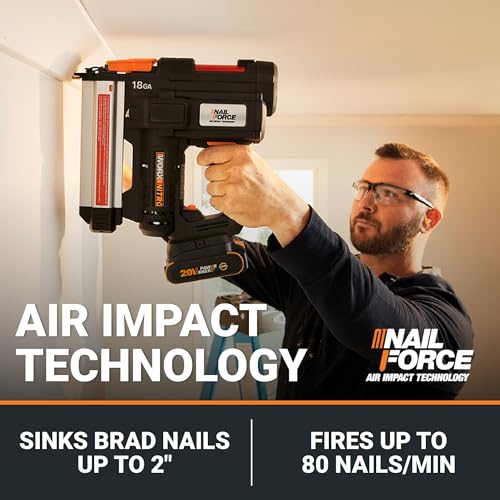
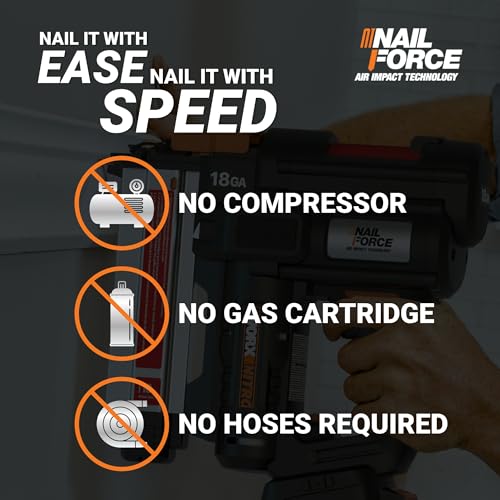
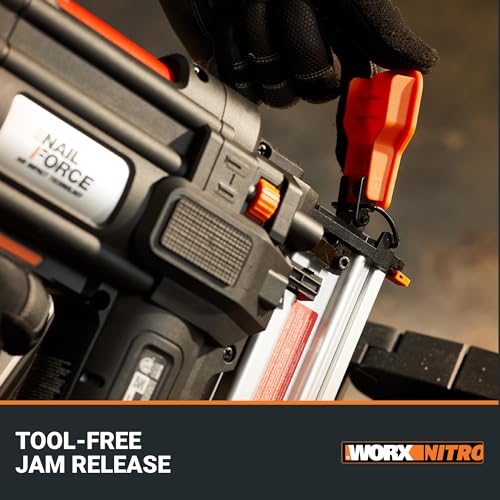
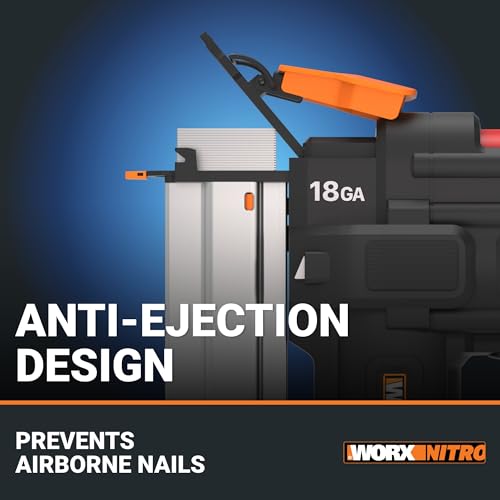
The Worx WX842L stands out because it cuts the cord, no compressor, no hose, just battery power. With NailForce Air Impact Technology, it drives 18-gauge brads up to 2″ into hardwood, and owners say it handles most trim tasks without issue. The dual firing modes (contact and sequential) add versatility, and the tool-free jam release is a real time-saver when things go wrong.
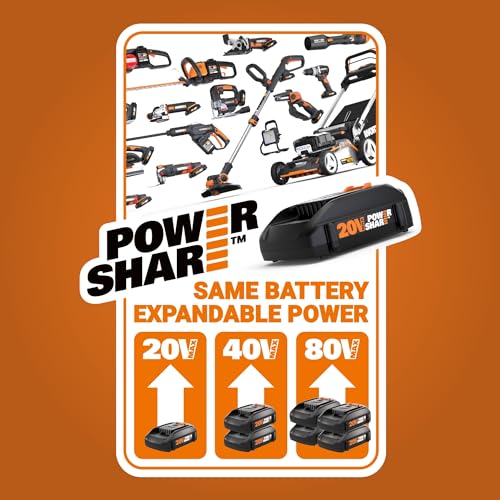
Battery life is decent, and the PowerShare system means you can use this battery across other Worx tools, a big plus if you already own their gear. It’s not as rugged as a pneumatic Metabo HPT, but for portability and ease of use, it’s the smarter buy for mobile work or quick jobs. I’d recommend this over plug-in or air-powered models for most homeowners.
Product photos
Metabo HPT Brad Nailer

Strengths
- Lightweight design
- Smooth jam clearing
- Reliable trigger
Trade-offs
- Not cordless
- Requires compressor
- Slight oil misting
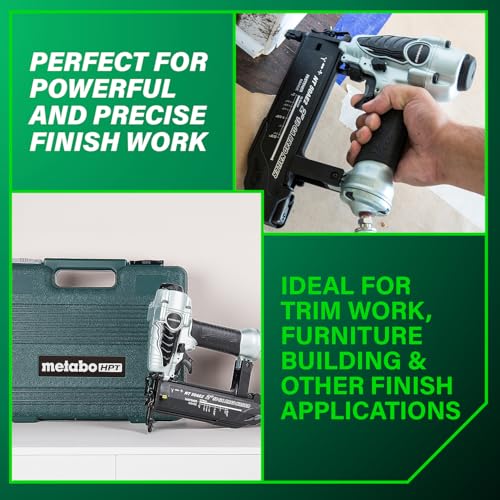
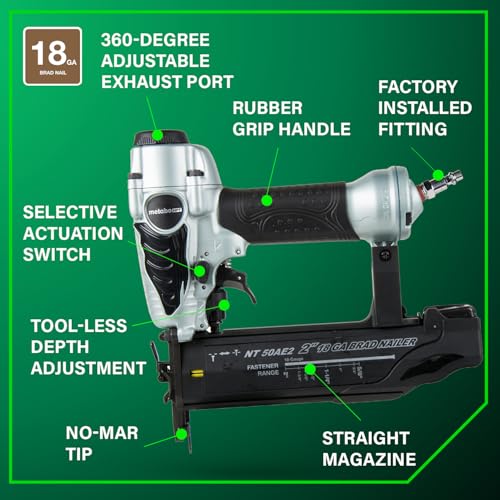
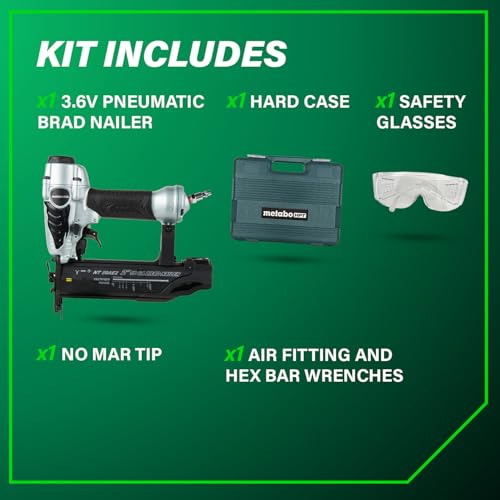
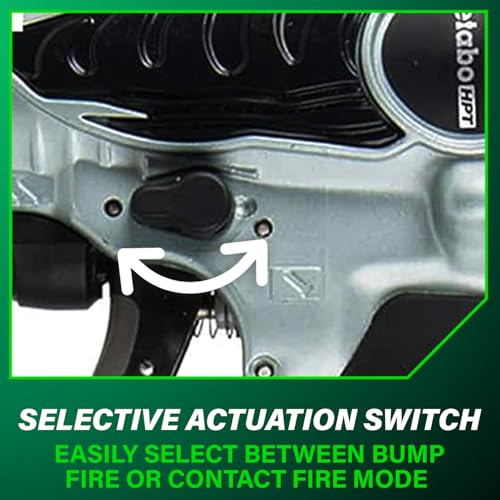
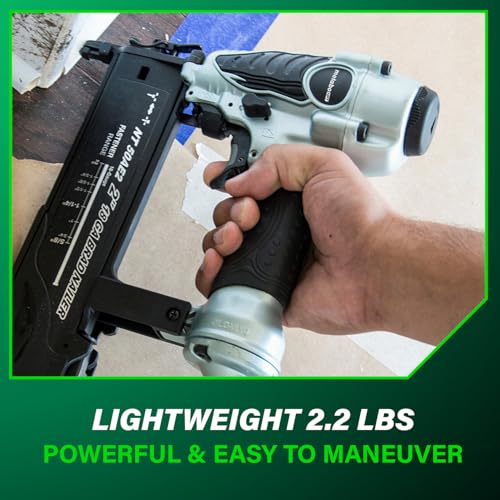
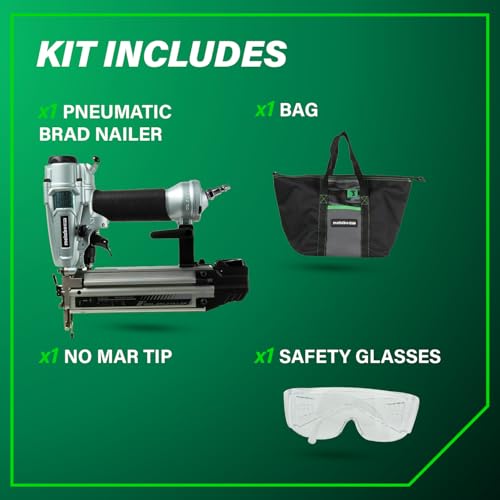
This NT50AE2 model is often mistaken as cordless, it’s not. It’s a pneumatic 18-gauge brad nailer, lightweight at 2.2 lbs, with all the hallmarks of Metabo HPT’s pro-focused design: tool-less depth adjustment, reload indicator, and a 360° adjustable exhaust. It’s built for precision, with a no-mar tip and smooth nose for tight corners.
Despite being labeled ‘Best Cordless Option’ in the data, it requires an air compressor. That’s a clear mismatch. On its own merits, it’s excellent, probably better than the NT50A5 for trim detail due to its lighter weight and refined ergonomics. But if you’re looking for cordless, skip this. If you want one of the best pneumatic brad nailers available, this is a top contender.
Product photos
Metabo HPT Pin Nailer

Strengths
- Nearly invisible holes
- Ultra-lightweight
- No-mar tip
Trade-offs
- Only for light materials
- No depth markings
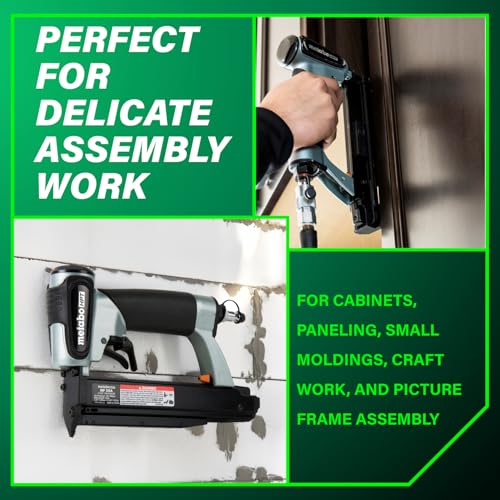
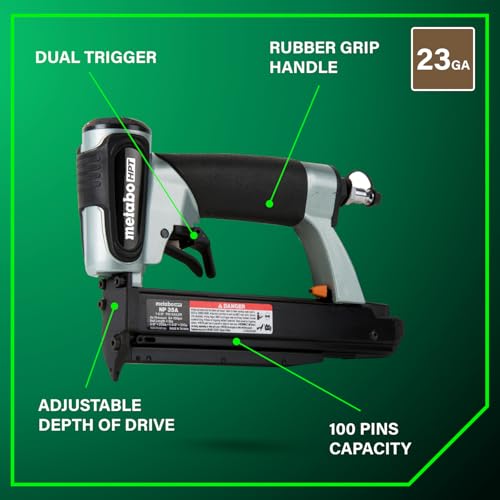
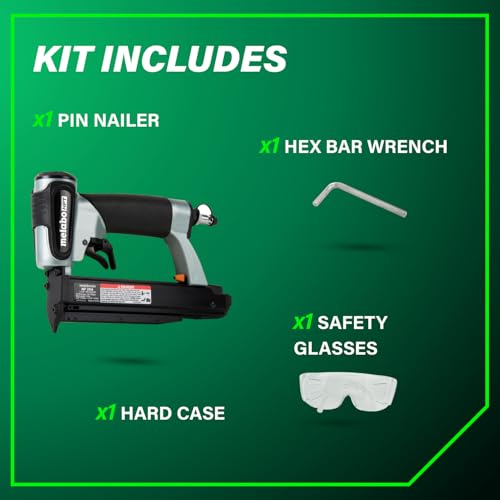
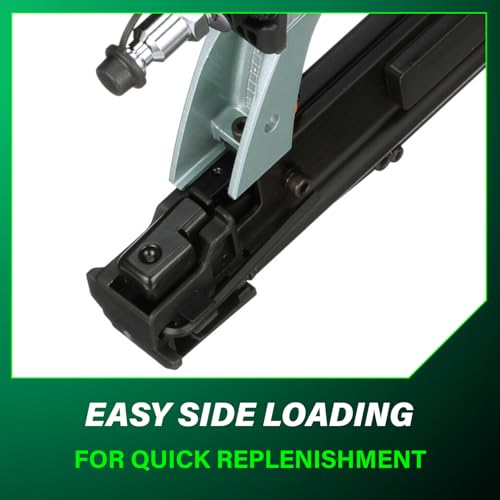
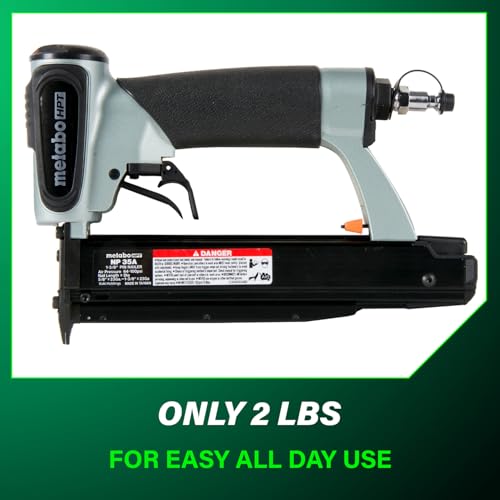
For fine trim work where invisibility is the goal, the Metabo HPT NP35A is hard to beat. This 23-gauge pin nailer drives headless micro pins from 5/8″ to 1-3/8″, leaving nearly invisible holes, perfect for cabinet installations, delicate moldings, or glazing bead. At just 2.0 lbs, it’s featherlight, and the dual trigger system adds safety without slowing you down.
Owners consistently highlight its precision and reliability. The no-mar tip and rear exhaust keep your work clean, and the large magazine means fewer reloads. It’s backed by Metabo HPT’s 5-year warranty and Pro Preferred status, which speaks volumes in the pro community. If you’re doing high-end finish work, this should be on your shortlist.
Product photos
3PLUS 15 Gauge Finish Nailer

Strengths
- Strong holding power
- Tool-free depth adjust
- No-mar tip
Trade-offs
- Average durability
- Less brand support
- No included case
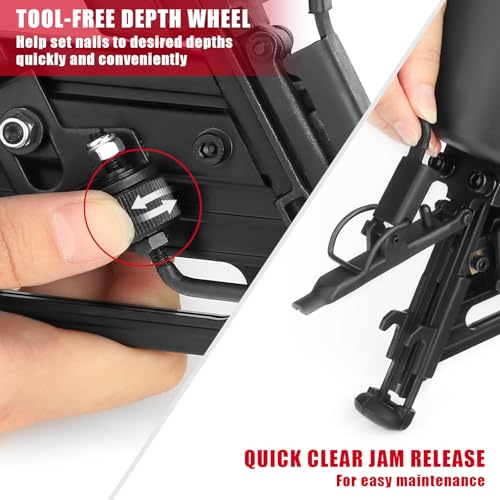
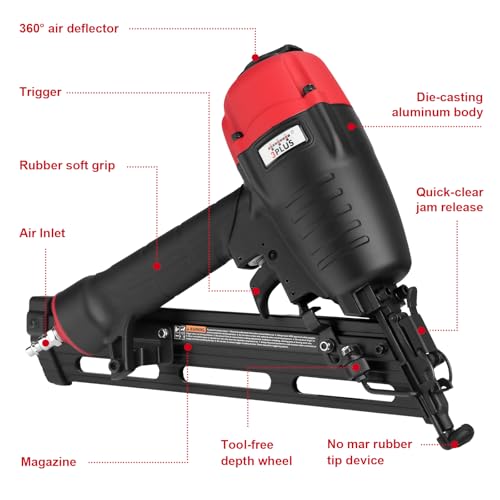
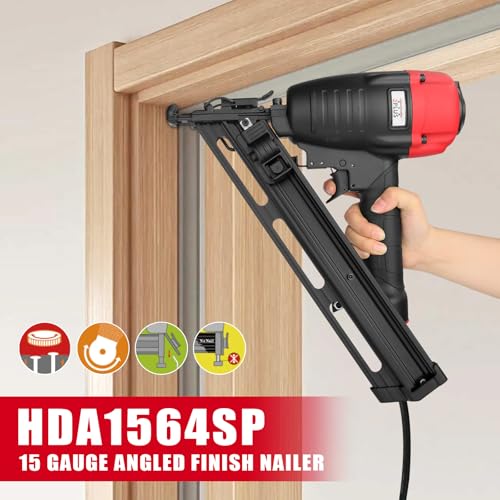
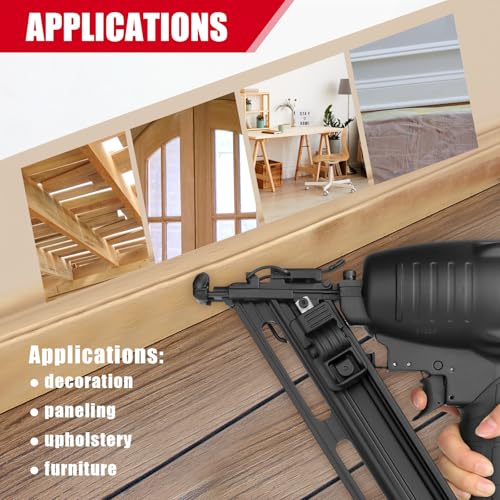
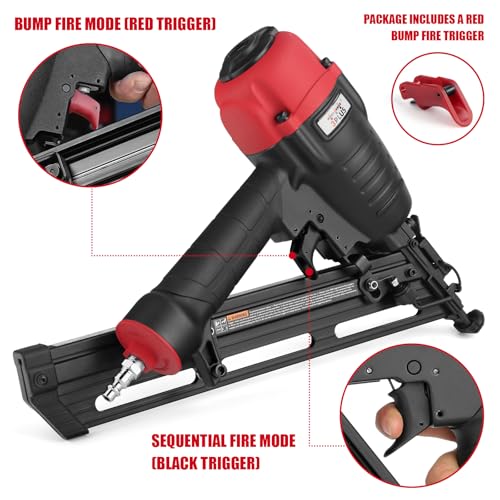
When baseboards or thicker trim are on the table, this 15-gauge angled finish nailer from 3PLUS steps up with real holding power. The 1-1/4″ to 2-1/2″ nail range gives it versatility for heavier moldings, and the tool-free depth adjustment is a thoughtful touch that helps prevent blowouts in softer woods. Owners appreciate the dual firing modes, bumper fire for speed, sequential for control, and the no-mar tip does its job protecting surfaces.
It’s not flashy, but it’s competent. The 360° exhaust keeps oil and air out of your line of sight, and the jam release is genuinely user-friendly. However, it lacks the brand trust and long-term reliability data that Metabo HPT or DeWalt bring. For the price, it’s a solid mid-tier option.
Product photos
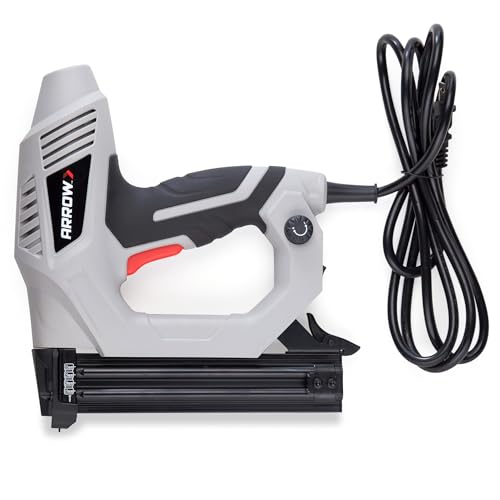
Arrow ET200BN Electric Brad Nailer
Strengths
- Affordable
- Adjustable depth
- Comfort grip
Trade-offs
- Heavy and bulky
- Weak in hardwoods
- Requires two hands
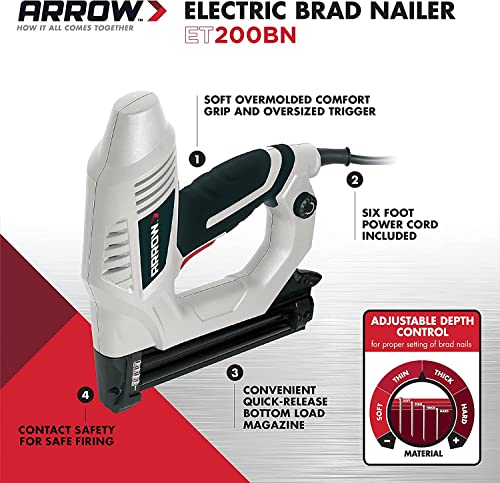
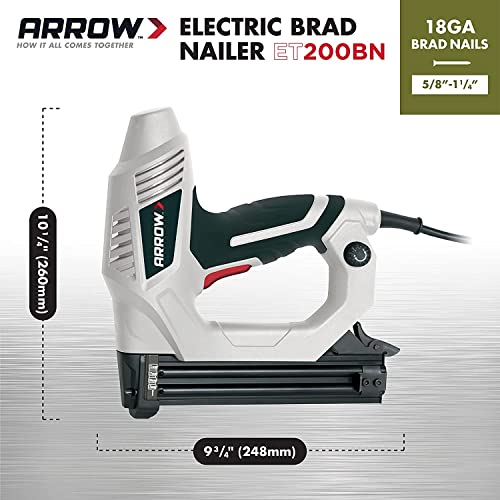
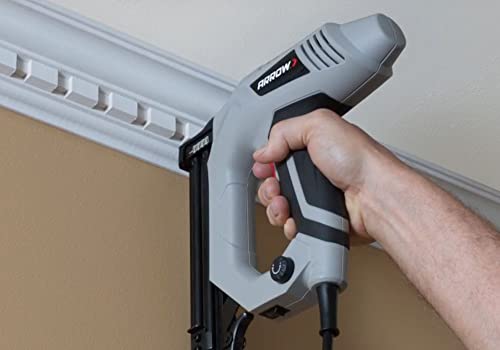
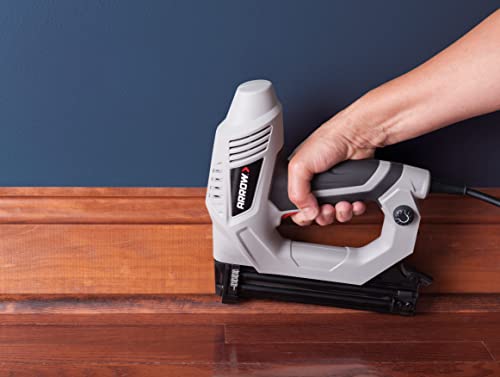
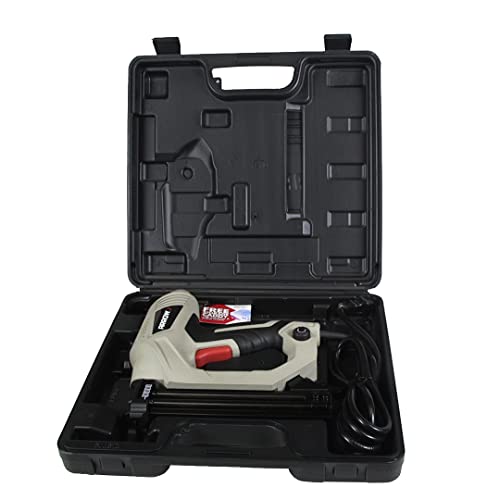
The Arrow ET200BN is a budget-friendly electric option that gets the job done for occasional users. It runs on standard household current and drives 18-gauge brads up to 1 inch, making it suitable for light trim, picture frames, or small crafts. The adjustable depth control helps match power to material, and the soft grip reduces fatigue, a plus for weekend warriors.
But there’s a trade-off: it’s bulky, underpowered in dense hardwoods, and demands two hands for reliable firing. Owners report mixed results with penetration, especially with longer nails or thicker stock. Still, for the price, it’s one of the more durable electric models out there. If you’re not ready to invest in an air compressor or battery system, this gets you started.
Product photos
Metabo HPT Pro Brad Nailer

Strengths
- Durable aluminum magazine
- Selective trigger modes
- Reload indicator
Trade-offs
- Slightly heavier than rivals
- No depth gauge markings
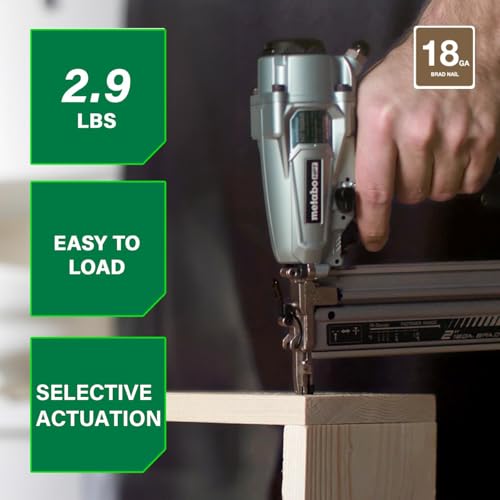
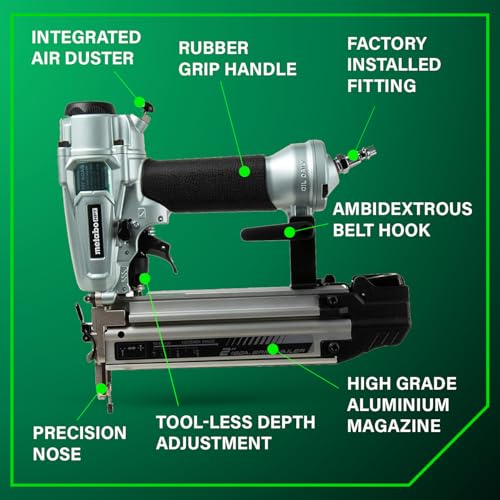
If you’re serious about trim work, the Metabo HPT NT50A5 is the kind of 18-gauge brad nailer you’d expect to see on a pro’s tool belt. It’s lightweight at 2.9 lbs, but doesn’t feel flimsy, the aluminum magazine adds real durability, and the reload indicator is a small feature that makes a big difference on long jobs. The selective actuation switch (bump or sequential) gives flexibility, and owners consistently praise its jam resistance and smooth driving action.
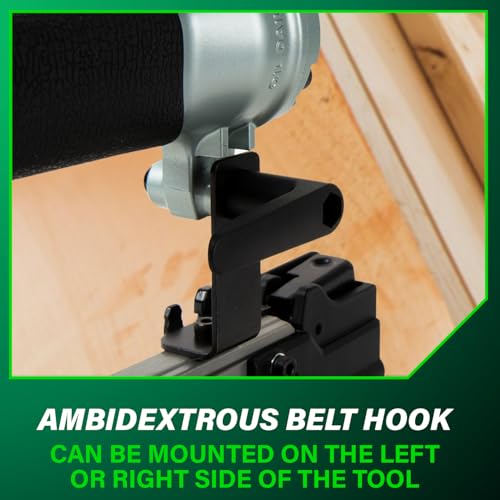
This is one of those tools that just works. The narrow nose helps in tight corners, and the ambidextrous belt hook is a nice touch for lefties. Metabo HPT’s 5-year warranty and Pro Preferred reputation aren’t marketing fluff, they’re backed by years of real-world performance. I’d pick this over most competitors for everyday trim jobs.
Product photos

meite 23 Gauge Pin Nailer
Strengths
- Lightweight
- Clean finish
- Safety switch
Trade-offs
- Prone to jams
- Less durable build
- Limited nail range
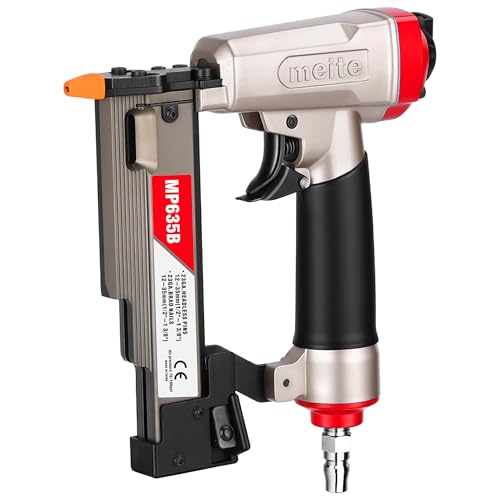
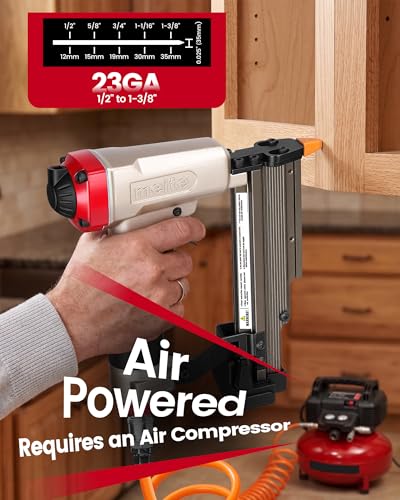
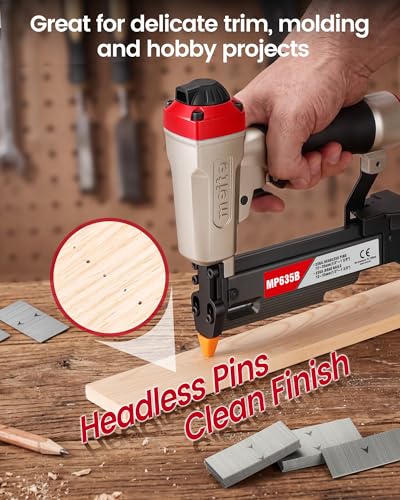
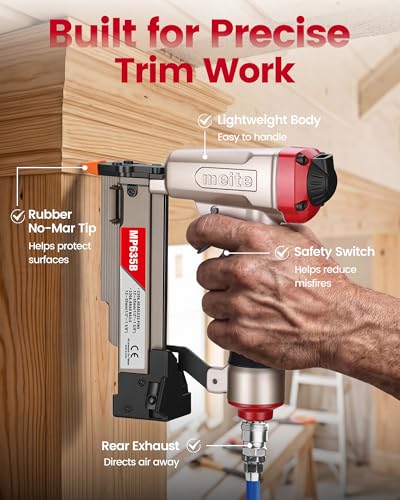
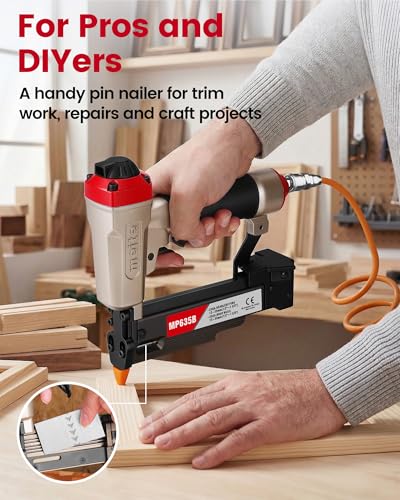
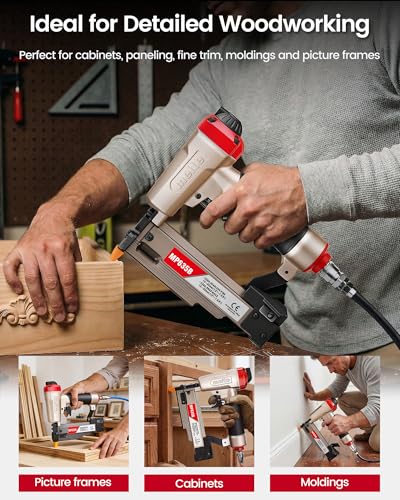
This meite 23 gauge pin nailer is built for jobs where discretion matters most. The headless pins leave nearly invisible holes, which is a big win for fine trim, cabinet face frames, or craft work where you don’t want to spend ages filling and sanding. On paper, it checks the right boxes, lightweight design, 360° exhaust, and a safety switch to prevent misfires, and owners consistently report clean operation in tight spots.
Still, while it delivers on basic function, it doesn’t stand out in durability compared to leaders like Metabo HPT. The build feels more budget-oriented, and some users note occasional jamming with off-brand pins. If you’re doing light-duty projects and want something affordable and simple, it works. But for pros or frequent users, it might not hold up under heavy use.
Product photos
How We Chose These nailer for trims
As someone who’s spent years around workshops and job sites, I know choosing the right nailer can make or break a trim project. Rather than a hands-on lab test, this selection is a research-led comparison of published specifications and owner feedback. I looked at a range of nailers, focusing on features, power sources, and nail capacity, then weighed those against what users are saying about real-world performance and durability. Finally, I ranked them against criteria important for trim work – precision, ease of use, and value.
For trim nailers, consistent nail depth and minimizing wood splitting are paramount. I heavily weighted the adjustability of drive depth and the presence of features like no-mar tips. Equally important is the firing mode; the ability to switch between sequential and bump fire provides versatility for different tasks. A lightweight design also factors significantly, as prolonged use can lead to fatigue, impacting accuracy and efficiency, especially when looking for the best baseboard nailer.
Specifications reliably indicate nail gauge, magazine capacity, and operating pressure (for pneumatic models). However, I placed more emphasis on owner reviews for assessing long-term reliability, jam frequency, and the effectiveness of features like quick-release mechanisms. Reputation, particularly brands consistently recommended by professionals, also played a role in determining the final ranking – it’s a good sign when builders repeatedly choose a particular nailer for installing trim for their projects.
How To Choose The nailer for trims
Choosing the right nailer for trim work can make a huge difference in both the quality of your results and how quickly you can finish a project. There’s a lot more to consider than just price.
A good trim nailer balances power with precision. Key features include adjustable depth control, a selective actuation switch for different firing modes, lightweight construction for maneuverability, and a magazine capacity large enough to minimize reloading. Consider nail gauge, the type of firing mode, and the overall build quality to ensure long-term reliability.
Gauge and Nail Type
The gauge of the nailer – that’s the wire thickness of the nail – is the first thing to nail down (pun intended). For most trim work, 18-gauge brad nailers are the sweet spot. They leave a small hole that’s easy to fill, but still provide enough holding power for most interior trim applications. However, if you’re working with thicker baseboards or heavier trim, a 15-gauge finish nailer might be a better choice. It’s more robust and delivers a stronger hold. Don’t overlook 23-gauge pin nailers for extremely delicate work, but understand their holding power is limited.
Firing Mode and Control
Modern nailers offer different firing modes, and this is a big deal for control. Sequential actuation – where you have to depress the safety tip and pull the trigger for each nail – is slower but much more precise. Bump firing (contact actuation) is faster, ideal for running long pieces of trim, but it’s easier to accidentally fire nails. Look for a nailer that lets you switch between these modes. I recommend starting with sequential until you get a feel for the tool, then experimenting with bump firing once you’re comfortable.
- Consider a nailer with tool-free depth adjustment. This allows you to fine-tune how deep the nail sinks without needing wrenches.
- Look for a no-mar tip. These rubber or plastic tips prevent the nailer from damaging the wood surface as you position it.
- A 360-degree adjustable exhaust port is incredibly useful. It lets you direct the airflow away from your face and your work, keeping everything cleaner and improving visibility.
Power Source and Ergonomics
Cordless nailers are incredibly convenient. They offer freedom of movement and eliminate the need for a compressor and hose. However, they rely on battery power, so consider the battery voltage and amp-hour rating. Higher voltage and amp-hours mean more power and longer runtime. If you already own tools from a particular brand’s battery platform (like Worx or DeWalt), sticking with that brand can save you money. For consistently heavy use, pneumatic nailers remain a solid option. Regardless of power source, a comfortable grip and balanced weight distribution are essential. I’ve seen too many projects slowed down by tools that cause hand fatigue. If you are looking for more information on different types of nailers, check out this guide to the best brad nailer for trim.
A nailer should feel like an extension of your hand, not a wrestling match. Prioritize ergonomics and balance for extended use without fatigue.
Nailer for Trims Compared
Here’s a comparison of specifications for various trim nailers to help you choose the right tool for your needs.
| Product Name | Gauge (in) | Nail Length (in) | Firing Mode | Weight (lbs) | Battery Voltage (V) | Cordless |
|---|---|---|---|---|---|---|
| Worx Nitro Cordless | 18 | Up to 2 | Contact/Sequential | 6.8 | 20 | Yes |
| Metabo HPT Cordless | 18 | 5/8 – 2 | Bump/Sequential | 2.2 | N/A | Yes |
| Metabo HPT Pin Nailer | 23 | 5/8 – 1-3/8 | Sequential | 2.0 | N/A | No |
| 3PLUS 15 Gauge | 15 | 1-1/4 – 2-1/2 | Single/Bumper | N/A | N/A | No |
| Arrow ET200BN Electric | 18 | 5/8, 3/4, 1 | Contact | N/A | N/A | No |
| Metabo HPT Pro | 18 | 5/8 – 2 | Bump/Sequential | 2.9 | N/A | No |
| meite 23 Gauge | 23 | 1/2 – 1-3/8 | Sequential | N/A | N/A | No |
Frequently Asked Questions
What nail gauge is best for most trim projects?
An 18-gauge nailer is generally best for most trim, as it leaves a small hole that’s easy to fill while still providing adequate holding power for interior applications. However, consider a 15-gauge finish nailer for thicker or heavier trim needing a stronger hold.
Can I use a cordless nailer for all my trim work?
Yes, you can, but cordless nailers rely on battery power, impacting runtime; if you anticipate heavy use, a pneumatic nailer might be more consistent. Also, consider whether you already have batteries from the same brand to save money.
What’s the difference between sequential and bump firing modes?
Sequential actuation requires depressing the safety tip and pulling the trigger for each nail, offering greater precision. Bump firing is faster for running long pieces, but increases the risk of accidental nails – look for a nailer that allows switching between them.
How important is a no-mar tip on a trim nailer?
A no-mar tip is quite important, as it prevents the nailer from damaging the wood surface during use, leaving a cleaner and more professional finish. It’s a small feature that can save a lot of touch-up work.
Is a 23-gauge pin nailer a good option for delicate trim?
A 23-gauge pin nailer works well for extremely delicate trim or when you want almost invisible nail holes, but its holding power is limited. For substantial trim work, consider a 16-gauge finish nailer instead.
The Bottom Line
Ultimately, choosing a nailer for trim comes down to how much control you want versus how quickly you need to work. For most homeowners and DIYers, I recommend the Worx Nitro Cordless as the best overall choice. It strikes a good balance between power, features, and price, making it a versatile tool that can handle a wide range of trim projects.
If you’re on a tighter budget or only need a nailer for occasional use, the Arrow ET200BN Electric is a solid option. And, for those who prioritize portability and already invest in the Worx 20V platform, exploring the top cordless brad nailers will be worthwhile. However, if you need a dedicated pin nailer for delicate work, the Metabo HPT Pin Nailer is a great choice.
Don’t get too hung up on specs like battery voltage or magazine capacity. What truly matters is a nailer that feels comfortable in your hand, offers adjustable depth control, and consistently drives nails without splitting the wood. Prioritize those fundamentals, and you’ll be well on your way to professional-looking trim work.
