
6 Best Miter Saws for Homeowners 2026
This post contains affiliate links. As an Amazon Associate, we earn from qualifying purchases.
The DEWALT 12-Inch Double Bevel is the best overall miter saw for homeowners who want maximum cutting capacity and flexibility, especially for larger projects. If you’re on a budget, the SKIL 7-1/4″ Single Bevel offers solid performance for basic trim work without breaking the bank.
Most homeowners don’t realize how quickly an inaccurate or underpowered miter saw can turn a simple trim job into a frustrating mess. Bad cuts mean wasted material, wasted time, and a finish that looks anything but professional.
I’ve spent years evaluating power tools, and for this guide, I focused on real-world usability, what actually matters when you’re standing in your garage or on a job site. These picks are based on a deep explore specs, owner feedback, and long-term reliability across brands that DIYers actually use. We looked at ease of setup, cut accuracy, weight, and whether the features actually help get the job done.
Top 6 Miter Saw For Homeowners in the Market
The Best Miter Saw For Homeowners, Reviewed
SKIL 7-1/4″ Single Bevel Miter Saw

Strengths
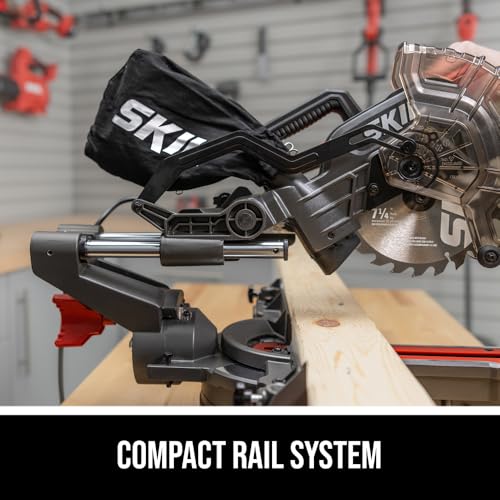
- Compact rail system
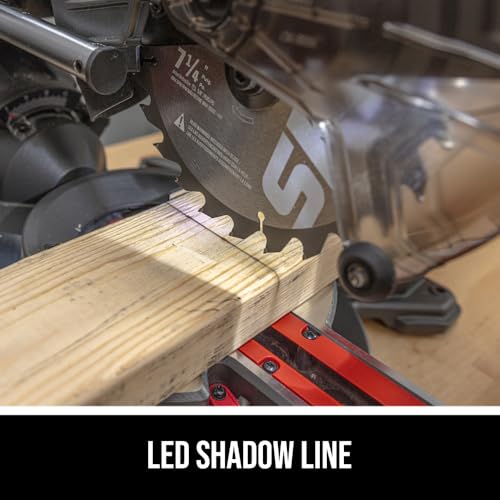
- LED shadow line
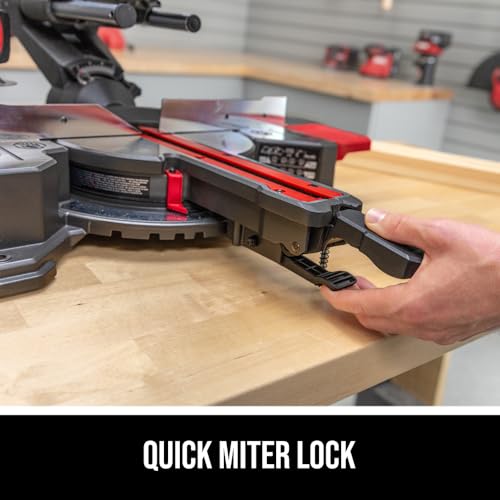
- Quick miter lock
Trade-offs
- Smaller blade diameter
- Single bevel only
- No sliding rails
This SKIL 7-1/4″ miter saw surprised me with how much it packs into a compact footprint. The fixed rail system lets it sit flush against a wall, which is a standout in tight garages or mobile setups. Despite the smaller blade, its 2×10 crosscut capacity at 90° is impressive, and the LED shadow line outperforms lasers in bright lighting, a detail many owners appreciate.
It’s not the most powerful saw here, but for homeowners who value accuracy and space-saving design, it’s hard to beat. The quick miter lock and detents at common angles speed up repetitive cuts. I’d pick this over bulkier models if you’re doing interior trim work and don’t need to cut wide boards regularly.
Product photos
Marvtool 10-Inch Compound Miter Saw
Strengths
- 15-amp motor
- Extension tables included
- 2-year warranty
Trade-offs
- No laser guide
- Basic miter detents
- Plastic components
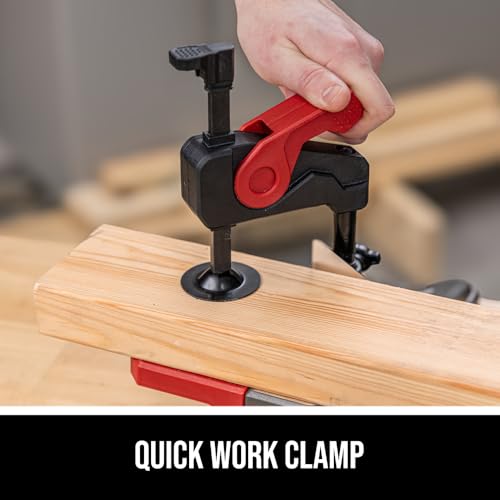
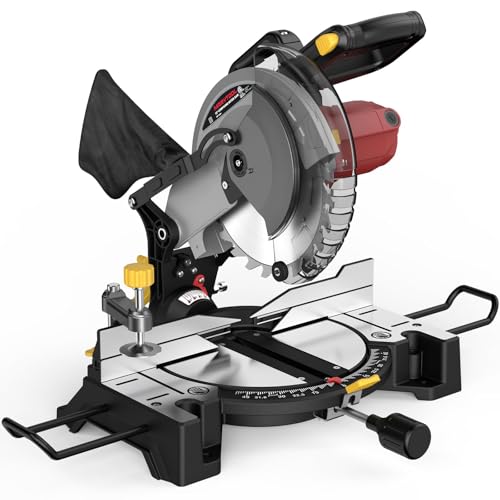
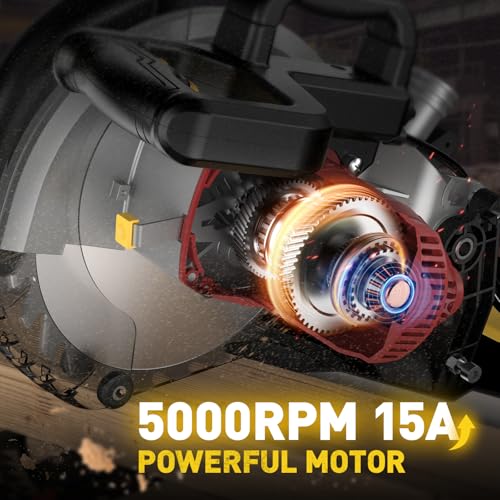
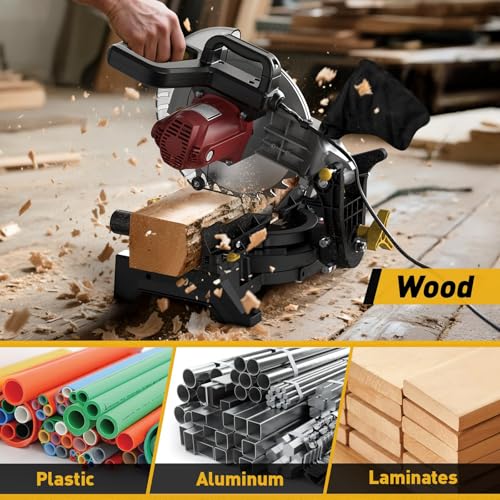
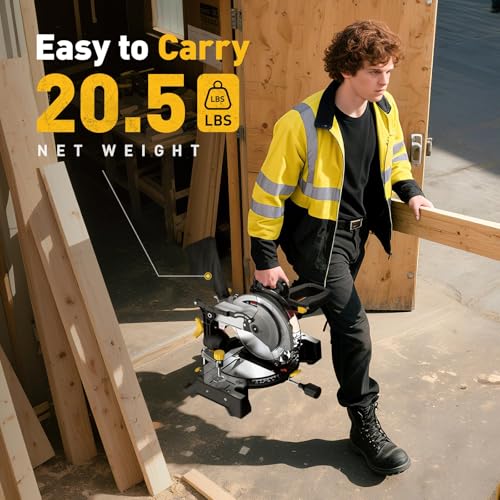
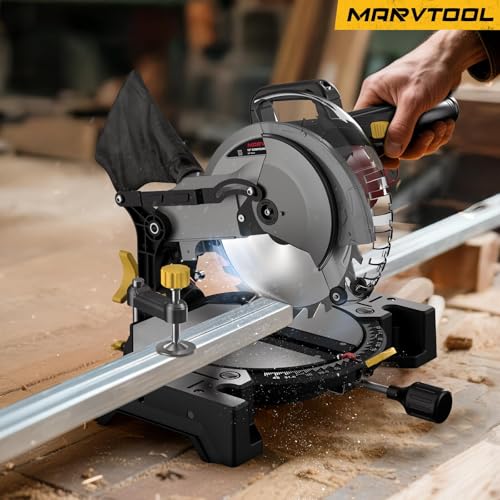
For homeowners on a tight budget who still want a capable saw for basic trim and framing work, the Marvtool 10-inch model stands out as a strong value pick. On paper, its 15-amp motor and 5000 RPM speed match higher-end units, and owners consistently report clean cuts in softwood, plywood, and even laminates. The inclusion of extension tables and a vise clamp adds real utility, especially for those without a dedicated workbench.
Where it falls short is in refinement, reviewers note the miter adjustments can feel loose over time, and the lack of a laser or shadow line means you’ll rely more on careful measuring. It’s not built for all-day precision work, but for occasional use around the house, it delivers more than you’d expect at this price.
Product photos
DEWALT 12-Inch Double Bevel Miter Saw
Strengths
- 12-inch sliding capacity
- Dual bevel design
- Excellent dust collection
Trade-offs
- Heavier than average
- Higher price point
- No laser guide
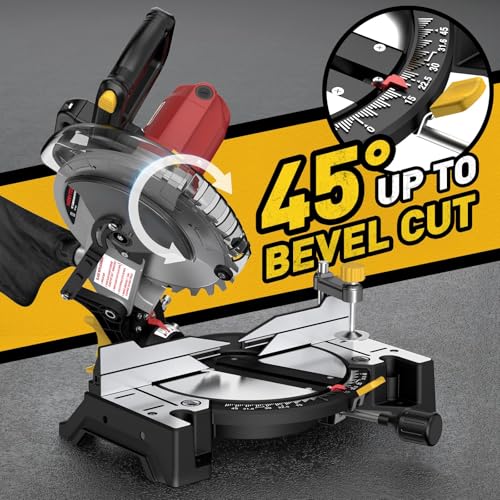
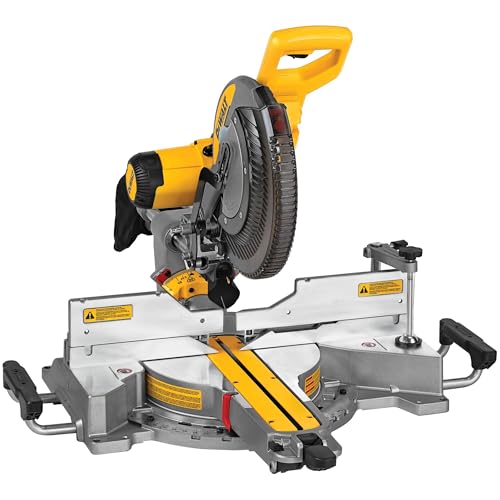
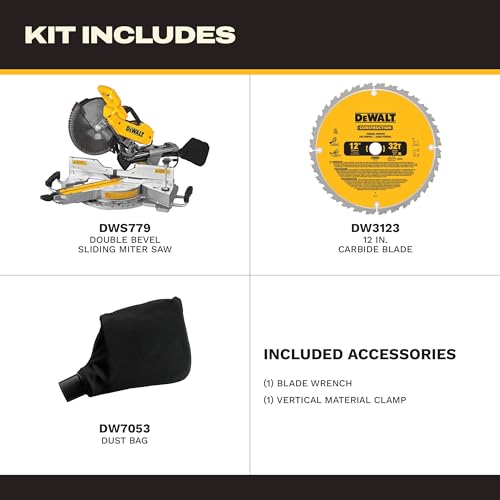
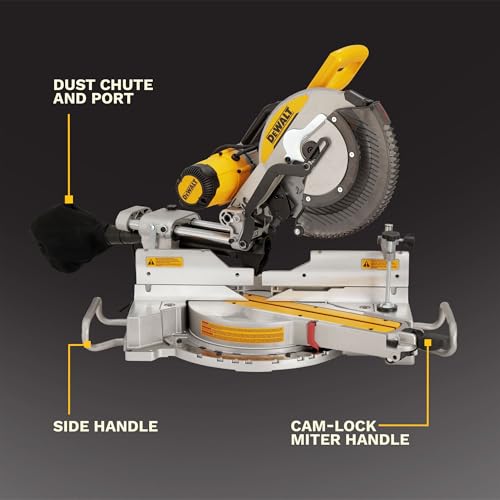
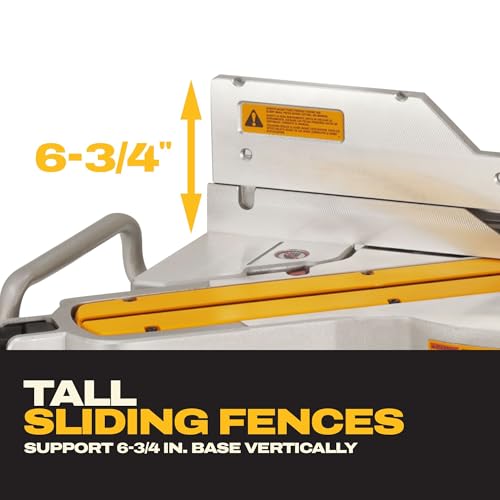
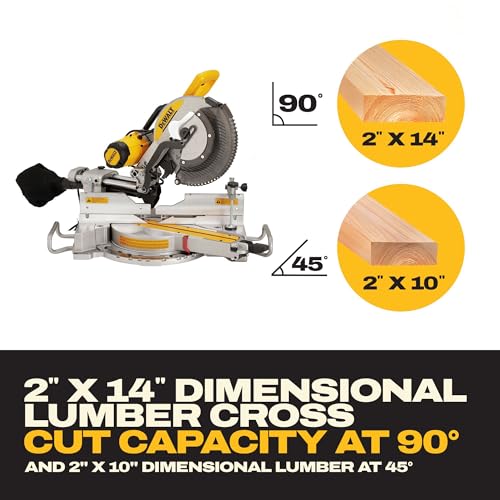
When I think of a homeowner who’s serious about their projects, maybe building decks, installing wide crown molding, or framing, this DEWALT DWS779 is the model I’d point them to. Its 12-inch blade and sliding rails give it the largest cutting capacity here, handling 2x14s with ease. The dual bevel design means you can tilt left or right without flipping the workpiece, which saves time and improves accuracy on complex cuts.
Despite its power, it’s surprisingly compact thanks to the dual steel rails and clever gearbox design. Owners consistently praise the dust collection, capturing over 75% is rare in this class. It’s heavier than others, but that trade-off delivers unmatched versatility. For a homeowner who wants one saw to do it all, this is my top recommendation.
Product photos
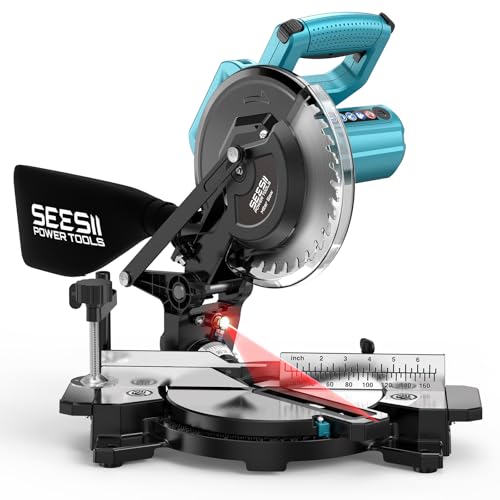
SEESII 8-Inch Laser Miter Saw
Strengths
- Laser guide included
- Dual safety switches
- Lightweight design
Trade-offs
- 8-inch blade limits depth
- Smaller cutting capacity
- Not for dense hardwoods
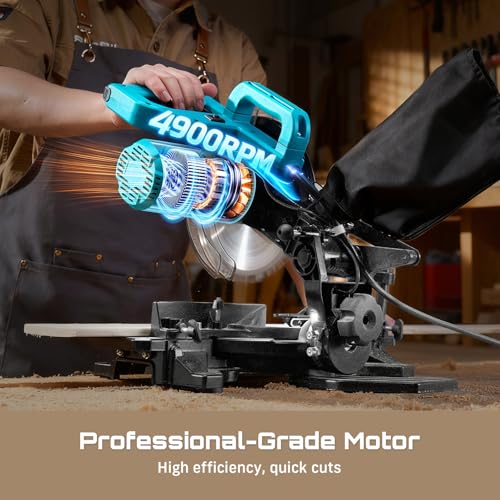
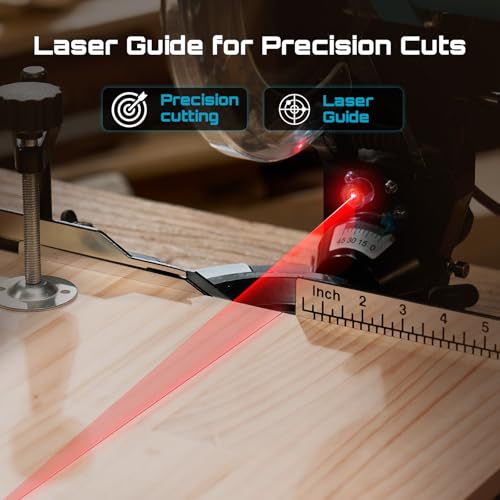
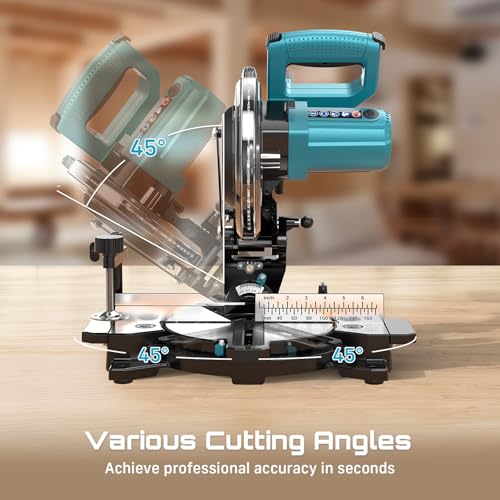
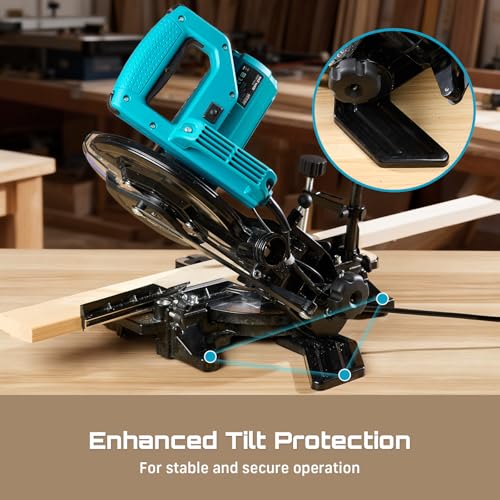
The SEESII 8-inch miter saw feels like it was designed with the weekend DIYer in mind. Its compact size and laser guide make it a solid fit for small workshops or garage corners where space and accuracy matter. The laser projection is a standout feature, reviewers say it significantly improves cut confidence, especially when working solo. At 4900 RPM, it keeps up with most hardwoods and dimensional lumber, though it’s clearly not meant for heavy framing.
I’d recommend this over bulkier models for homeowners focused on trim, molding, and furniture builds. It’s not the most powerful saw here, but the dual safety switches and included clamps reflect thoughtful design for users who prioritize safety and ease of use.
Product photos

Metabo HPT 10-Inch Single Bevel Saw
Strengths
- Xact Cut shadow line
- Lightweight yet sturdy
- 5-year warranty
Trade-offs
- Single bevel only
- No sliding rails
- No included stand
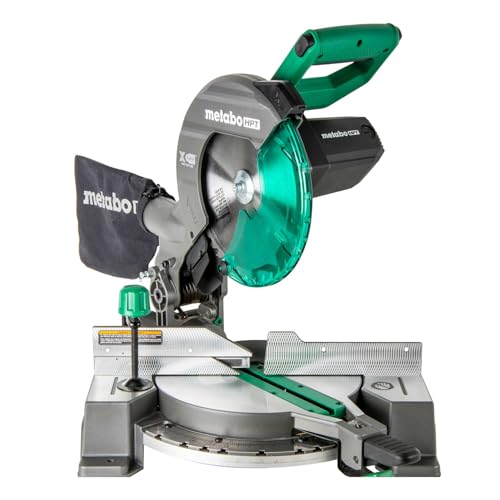
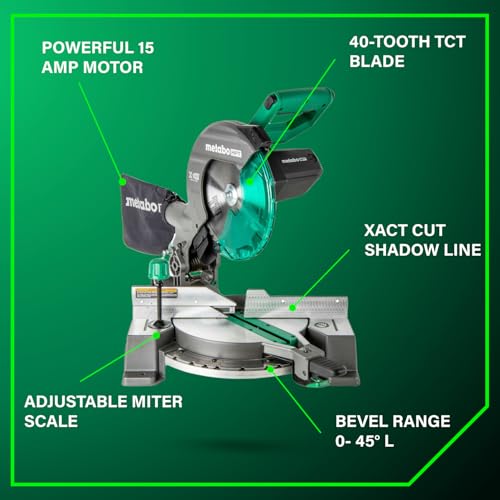
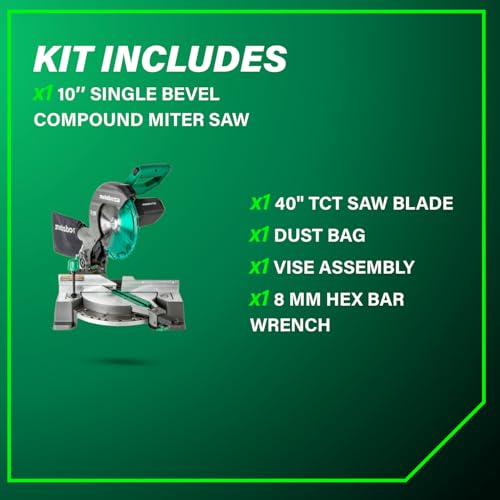
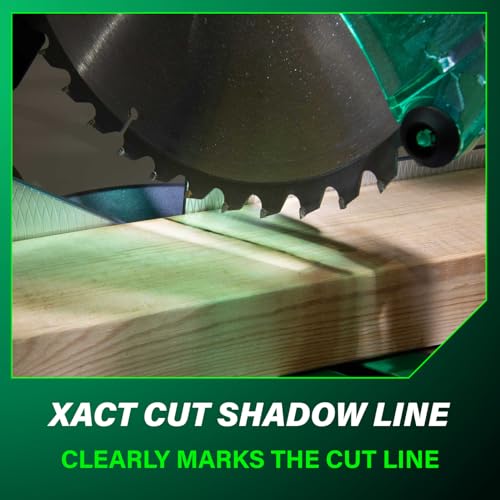
Metabo HPT has a reputation for building tools that last, and this 10-inch model continues that trend. At just 24 lbs, it’s one of the lightest full-size miter saws here, yet it doesn’t feel flimsy, owners praise its balance and stability during cuts. The Xact Cut shadow line is a standout, offering better visibility than lasers in direct sunlight, which matters if you’re working outdoors or in a bright garage.
The miter range goes slightly beyond most competitors (up to 52°), and the 15-amp motor delivers consistent power. While it’s single bevel, the precision and build quality make it a smarter long-term buy than budget alternatives. I’d choose this over the Marvtool for anyone planning to use the saw more than a few times a year.
Product photos

SKIL 10-Inch Dual Bevel Sliding Saw
Strengths
- Dual bevel design
- 2×12 cutting capacity
- LED shadow line
Trade-offs
- Build quality less robust
- No dust bag included
- Heavier than compact models
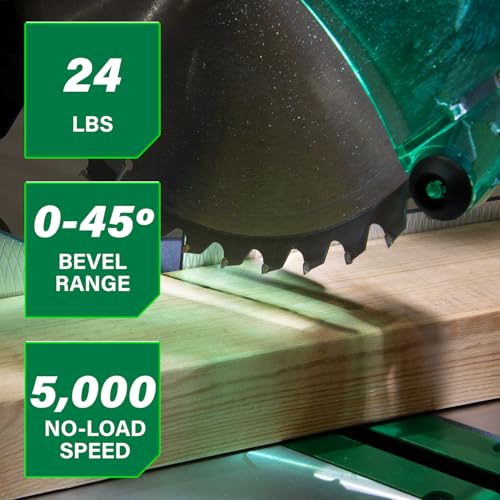
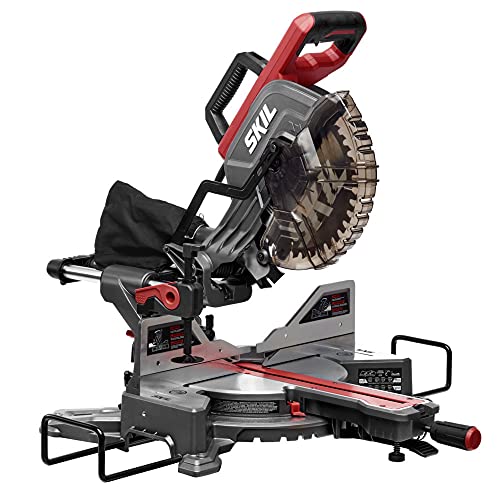
If you want dual bevel capability without paying DEWALT or Bosch prices, this SKIL 10-inch sliding saw is worth serious consideration. For the price, it offers a full 2×12 crosscut capacity and dual bevel stops at common angles, a rare combo in this range. The LED shadow line is sharper than most lasers, and owners say it holds alignment well over time.
It doesn’t have the brand prestige of Metabo HPT or DEWALT, but on specs and owner feedback alone, it holds its own. The 15-amp motor keeps up with hardwoods, and the 11 positive miter stops make repetitive cuts faster. I’d pick this over the single bevel models if you’re doing crown molding or furniture where flipping the board isn’t practical.
Product photos


How We Chose These miter saw for homeowners
Rather than a hands-on lab test, this is a research-led comparison of specifications and owner feedback. I focused on compiling data from manufacturer specifications, reputable review sites, and – crucially – a large volume of customer reviews from major retailers. This allowed me to build a picture of real-world performance and reliability, going beyond marketing claims. We ranked models based on a combination of features, reported accuracy, and overall value for typical homeowner projects.
For homeowners, the most important factors in a miter saw are ease of use, accuracy, and portability. A powerful motor is helpful, but a saw that’s difficult to adjust or too heavy to move around the workshop quickly becomes frustrating. We prioritized models that consistently received positive feedback regarding cut quality and simplicity of operation, as well as those offering a good balance between features and price. Understanding miter saw basics is key to making the right choice.
Specifications reliably indicate motor power, blade size, and cutting capacity. However, owner feedback provided valuable insight into things like the accuracy of the miter angle adjustments, the effectiveness of the dust collection system, and the long-term durability of the saw. Reputation, particularly regarding build quality and consistent performance, heavily influenced our assessment. Learning about types of miter saws helps to understand the different options available.
Choosing The Right miter saw for homeowners
Picking the right miter saw can dramatically improve the quality and speed of your woodworking projects.
A good miter saw balances cutting capacity, accuracy, and usability. Look for a robust motor (10-15 amps is typical), a clear scale for setting angles, a secure clamping system, and features like laser guides or LED shadows to improve cut precision. Blade quality is also critical; a fine-tooth blade yields cleaner cuts in delicate materials, while a coarser blade is better for rapid cuts in rough lumber.
Understanding Cutting Capacity
The first thing I tell people is to honestly assess what you’ll be cutting. A 7-1/4 inch saw is fine for basic trim and small projects, but if you plan to work with larger lumber – say, 2x10s or 2x12s for framing – you’ll need a 10-inch or even a 12-inch model. Sliding compound miter saws offer even more versatility, allowing you to cut wider boards than non-sliding models. Don’t overbuy; a larger saw is heavier and more expensive, and you won’t benefit from the extra capacity if you don’t need it.
Prioritizing Accuracy and Features
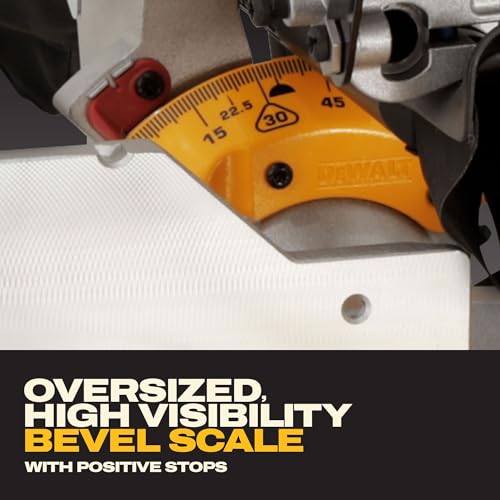
Beyond sheer size, accuracy is paramount. Many saws include positive stops at common angles (like 22.5 and 45 degrees) which are incredibly helpful for repetitive cuts. Consider whether you need a dual-bevel saw. A dual-bevel allows you to make angled cuts in both directions without having to reposition the workpiece, offering a significant advantage for more complex projects. If you’re new to miter saws, or primarily tackle simple cuts, a single-bevel saw might suffice. For those wanting to learn more about the differences, checking out a guide to the compound miter saw can be really helpful.
- A laser guide is a common feature, but don’t rely on it completely. They can sometimes be misaligned, and a good visual alignment with the blade is still essential.
- A dust collection port is incredibly valuable. Miter saws generate a lot of sawdust, and connecting the saw to a shop vac will keep your workspace cleaner and improve visibility.
- Look for a saw with a quick-release clamp. This makes securing your workpiece faster and easier, improving both efficiency and safety.
Balancing Value and Usability
There’s a wide price range for miter saws, and you don’t necessarily need to spend a fortune to get a capable tool. The SKIL and Marvtool models in our lineup demonstrate that there are good options for those on a tighter budget. However, remember that build quality and features often correlate with price. If you anticipate frequent use, investing in a more durable saw from a reputable brand like DEWALT or Metabo HPT is often a smart long-term decision. The right tool for a homeowner is often found when looking at the best miter saw for general projects.
Don’t buy a saw based on features you won’t use. Focus on the core functions you need and prioritize build quality and accuracy over flashy extras.
Miter Saw for Homeowners Compared
Here’s a comparison of key specifications to help you choose the right miter saw for your needs.
| Product Name | Blade Size (in.) | Bevel Capability (Left/Right) | Miter Capability (Left/Right) | Motor Amps | Weight (lbs) | Laser Guide |
|---|---|---|---|---|---|---|
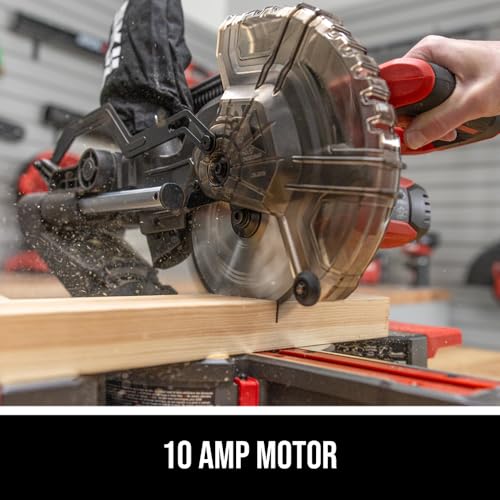
| SKIL 7-1/4″ Single Bevel | 7-1/4 | 0-45 | 0-47 / 0-50 | 10 | <25 | Yes |
| Marvtool 10-Inch Compound | 10 | 0-45 | 0-45 | 15 | 20.5 | No |
| DEWALT 12-Inch Double Bevel | 12 | 49 / 49 | 60 / 50 | 15 | N/A | No |
| SEESII 8-Inch Laser | 8 | N/A | N/A | N/A | N/A | Yes |
| Metabo HPT 10-Inch Single | 10 | 0-45 | 0-52 / 0-52 | 15 | 24 | No |
| SKIL 10-Inch Dual Bevel | 10 | 48 / 45 | 50 / 50 | 15 | N/A | Yes |
Frequently Asked Questions
What blade size should I choose for typical homeowner projects?
A 7-1/4 inch blade is usually sufficient for most homeowner tasks like cutting trim and molding, but if you plan on tackling larger projects involving thicker lumber, a 10-inch or 12-inch saw will provide the necessary cutting capacity.
Are laser guides on miter saws always accurate?
No, laser guides can sometimes be misaligned and shouldn’t be relied upon as the sole method for ensuring accurate cuts; always visually align the blade with your marked cutting line for the best results.
How important is a dual-bevel miter saw for a homeowner?
While not essential, a dual-bevel saw offers increased versatility by allowing angled cuts in both directions without repositioning the wood. This is particularly helpful for more complex projects, but a single-bevel saw is adequate for simpler cuts.
What is the benefit of a sliding miter saw?
A sliding miter saw allows you to cut wider pieces of material than a non-sliding saw, by sliding the blade along rails. This is crucial if you work with larger boards, like those used in furniture making or framing, offering a wider range of project possibilities.
Where can I find more information on choosing a miter saw for home improvements?
You can find additional guidance and recommendations on choosing the best saw for DIY projects on our website, with detailed reviews and comparisons to help you make an informed decision.
The Bottom Line
Choosing a miter saw always comes down to balancing what you can cut with how much fuss you’re willing to tolerate. For most homeowners, the DEWALT 12-Inch Double Bevel offers the best combination of capacity, accuracy, and features – it’s a saw you can grow with as your skills and project ambitions expand. It represents a solid investment for anyone who plans to tackle more than basic trim work.
If you’re on a tighter budget, or primarily need a saw for simple tasks, the SKIL 7-1/4″ Single Bevel is an excellent choice. Those looking for a versatile option without breaking the bank should consider the SKIL 10-Inch Dual Bevel, offering a good balance of features and cutting power. And for those starting out and needing a compact, laser-guided saw, the SEESII 8-Inch Laser provides a solid entry point.
Ultimately, the most important things are understanding accurate miter cuts and prioritizing a saw that feels stable and easy to control. Don’t get caught up in chasing the highest specs; a well-built saw with a clear scale and a secure clamping system will deliver far more satisfying results than a feature-packed model that’s difficult to operate.
