
8 Best Miller Welders of 2026
This post contains affiliate links. As an Amazon Associate, we earn from qualifying purchases.
The Miller Multimatic 215 PRO stands out as the best overall choice for most users, delivering strong multiprocess performance with impressive portability. If you’re on a tighter budget, the Millermatic 142 offers solid MIG capability for lighter tasks, while the Multimatic 220 AC/DC is the go-to for serious fabricators needing reliable TIG work on aluminum.
Picking the wrong welder can mean wasted money, frustrating projects, and gear that sits idle. I’ve seen too many DIYers and even pros buy based on price or hype, only to realize too late it doesn’t match their work.
This guide cuts through the noise. I compared specs and owner feedback across Miller’s lineup, focusing on real-world usability, process coverage, amperage, and durability. These picks reflect what actually works for home shops, job sites, and serious hobbyists.
Top 8 Miller Welders in the Market
The Best Miller Welders, Reviewed
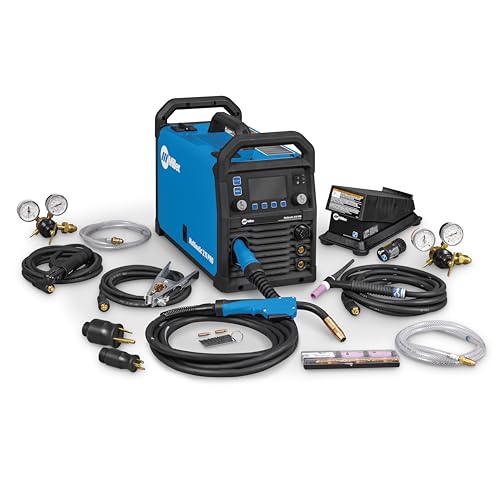
Miller Multimatic 215 PRO Multiprocess Welder
Strengths
- Pulsed MIG and TIG
- BeadVision monitoring
- Full TIG kit included
Trade-offs
- Higher cost
- 63 lb weight
- Software-dependent
This is the one I’d recommend to most serious DIYers and pro-somers looking for a single, future-proof machine. The BeadVision feature gives real-time feedback that helps dial in clean welds, and Pulsed MIG/TIG support means you get finer control with less heat, crucial for thin materials.
With Program Memory, you can save settings for different jobs, and the MVP plug makes power switching effortless. It includes a full TIG contractor kit, so you’re not buying extras. Compared to the Multimatic 220, it adds pulsed capabilities and better monitoring, making it the more refined package. For overall balance of features, ease of use, and versatility, this is my pick.
Product photos
Miller Multimatic 220 AC/DC Multiprocess Welder

Strengths
- True multi-process
- Auto-Set Elite
- Generator compatible
Trade-offs
- Heavy for portability
- Higher learning curve
- Expensive upfront
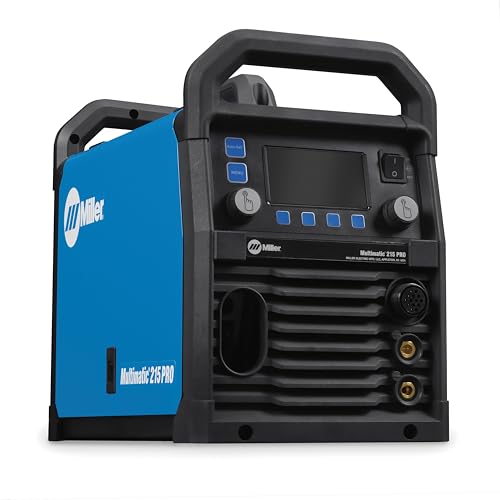
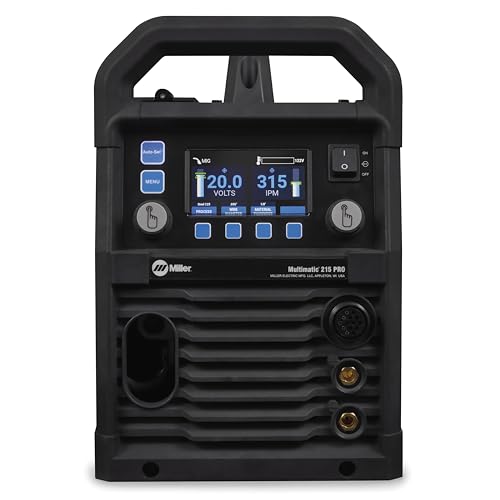
If you want one machine that does it all, MIG, TIG, Stick, flux-cored, the Multimatic 220 is built for that mission. The Auto-Set Elite and QuickTech features take the headache out of switching processes, automatically adjusting polarity and recalling previous settings. That kind of intelligence saves time when you’re bouncing between jobs.
Owners highlight its performance on stainless and aluminum, especially with the included TIG torch and foot control. At 56 lbs, it’s not light, but the multi-voltage plug means you can run it off generators or standard outlets. For heavy-duty fabrication where process flexibility matters, this beats running multiple machines. It’s overkill for casual users, but for pros, it’s a workhorse.
Product photos


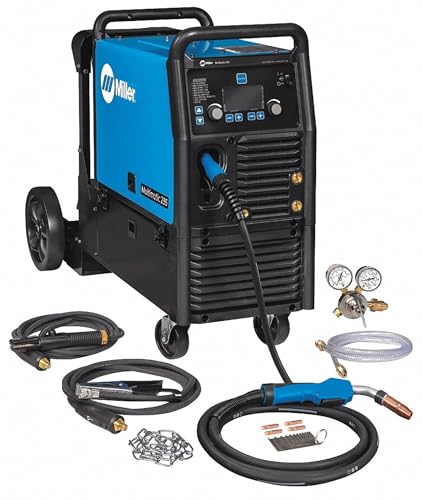
Miller Multimatic 235 MIG Welder
Strengths
- High amp output
- Durable MIG gun
- EZ-Latch mobility
Trade-offs
- 240V only
- No TIG torch included
- Steep price
The Multimatic 235 is built for professionals who need serious output in a single-phase package. With a max of 235 amps and EZ-Latch portability, it delivers industrial-level performance without requiring three-phase power. The MDX-250 MIG gun and AccuLock consumables reduce maintenance and improve arc stability, small details that add up over time.
It’s clearly aimed at fabrication shops and field technicians who can’t compromise on power. While it lacks some of the flashy software features of newer models, its build quality and reliability stand out. Owner feedback points to strong uptime and consistent performance under load. In this class, it’s a standout for high-output work where 240V is available.
Product photos
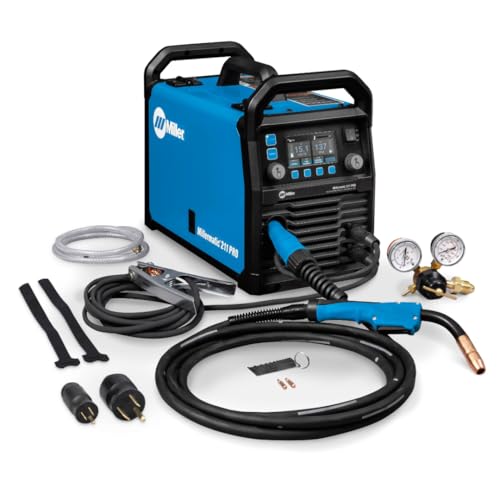
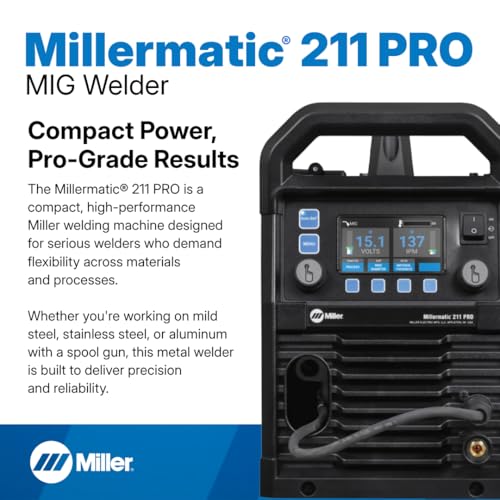
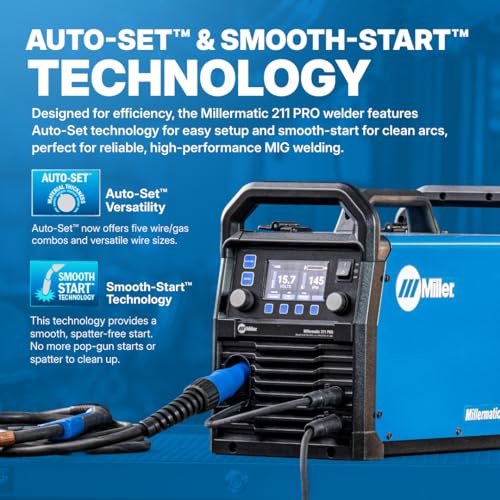
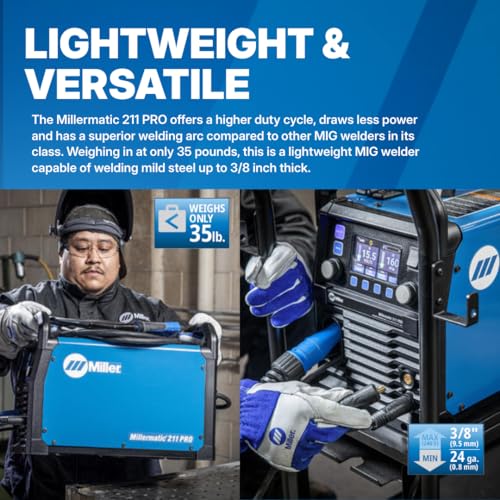
Millermatic 211 PRO MIG Welder
Strengths
- Dyna-Pulse for aluminum
- Dual-voltage ready
- Spool gun auto-detect
Trade-offs
- Spool gun sold separately
- Heavier than entry models
- Software updates needed
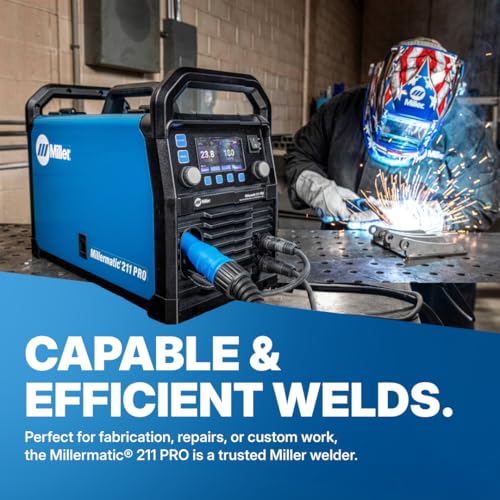
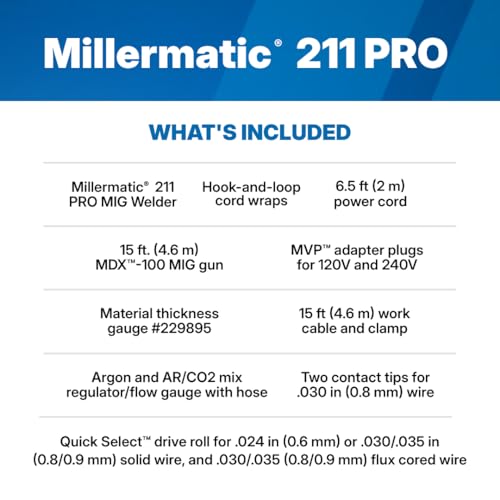
When aluminum welding is in the mix, the Millermatic 211 PRO earns its spot on the shortlist. The Dyna-Pulse MIG capability makes a real difference in controlling heat and reducing spatter, especially on thin aluminum sheets where warping is a constant risk. Paired with Auto-Set and BeadVision, it delivers a level of consistency that’s rare in this class.
The dual-voltage MVP plug is a smart touch, switching between 120V and 240V without tools means you can move from the garage to the jobsite without reconfiguring anything. Owners praise its reliability and the seamless spool gun detection, which eliminates fiddling with manual switches. For a MIG machine that handles aluminum as well as steel, this is the smarter buy over basic models.
Product photos
Millermatic 142 MIG Welder

Strengths
- Auto-Set simplicity
- 120V operation
- Portable design
Trade-offs
- Limited duty cycle
- Not for thick steel
- No 240V option
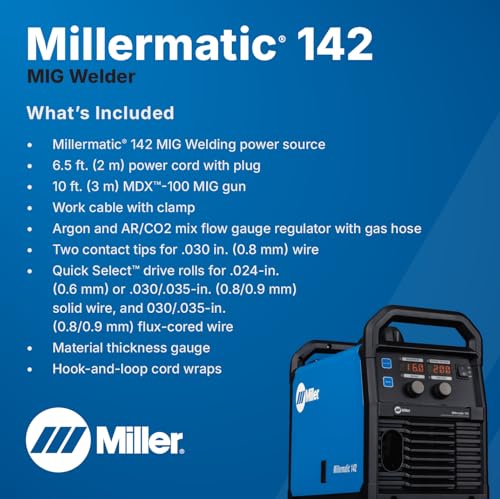
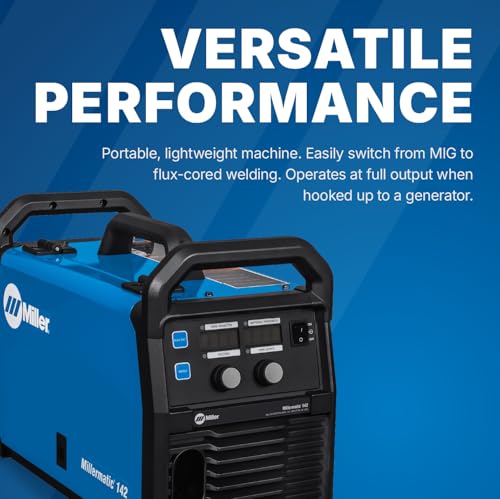
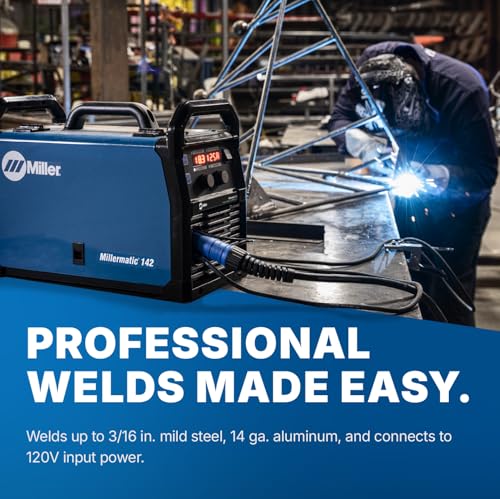
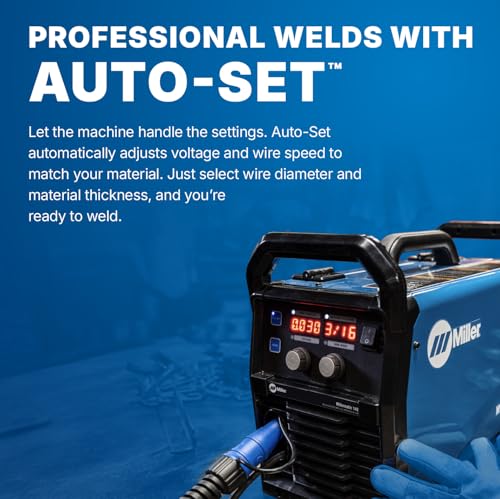
For DIYers just getting into welding or those needing a simple machine for light repairs, the Millermatic 142 is hard to beat. Its Auto-Set feature genuinely simplifies operation, if you’re tired of guessing voltage and wire speed, this one takes the stress out of setup. Running on 120V means it plugs into a standard outlet, which is a big plus for garage tinkerers without access to 240V power.
Owners consistently report solid performance on thin steel up to 3/16″, though don’t expect it to hang in there on prolonged runs. The duty cycle is modest, but for patch jobs, fence fixes, or trailer repairs, it’s more than capable. It’s not built for all-day use, but for weekend warriors, that’s not the point.
Product photos

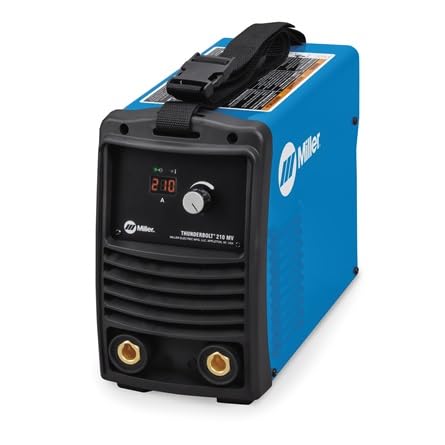
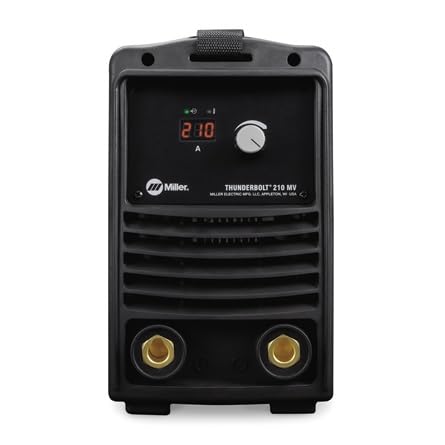
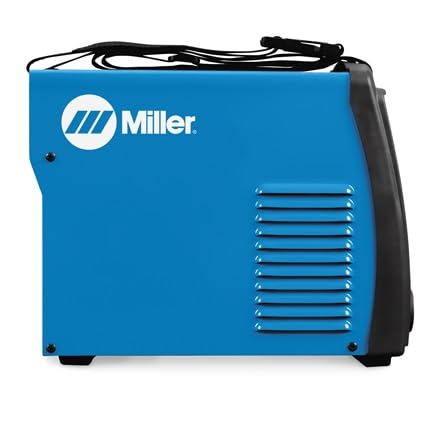
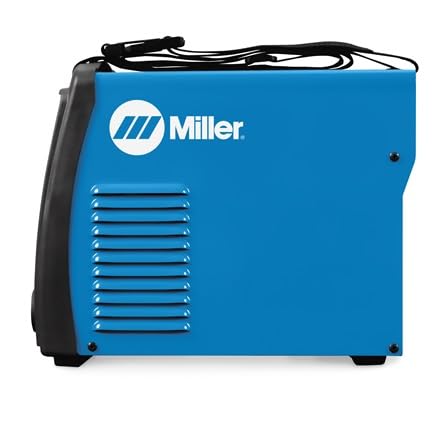
Thunderbolt 210 MV Stick Welder
Strengths
- Lightweight and portable
- Hot Start technology
- Dual-voltage operation
Trade-offs
- No MIG or TIG capability
- Basic display
- Limited for thick builds
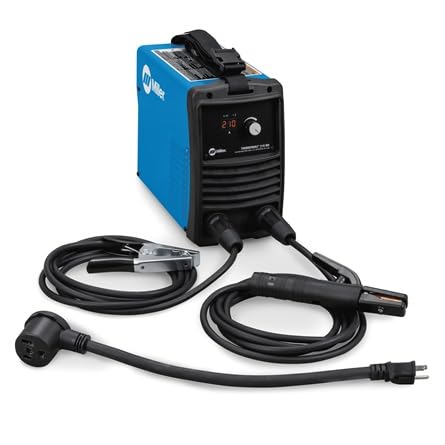
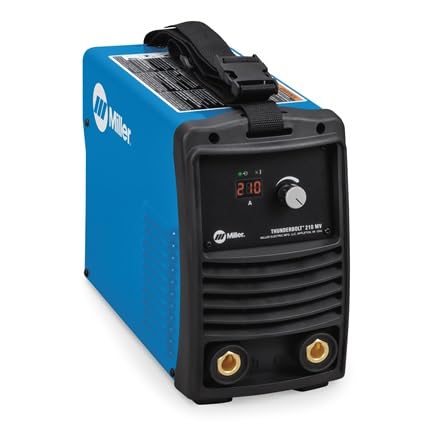
The Thunderbolt 210 MV is a no-nonsense stick welder built for reliability in rough conditions. At just 13 lbs, it’s one of the most portable serious stick machines out there, yet it delivers up to 210 amps when you plug it into 240V. The Hot Start feature works as advertised, owners report far fewer stuck electrodes, especially with 6010 and 6011 rods.
Infinite amperage control in 1-amp increments gives fine-tuned precision, something beginners appreciate as much as pros. It’s not flashy, but that’s the point: this is a tool for barn repairs, farm equipment, or emergency fixes where power sources are limited. Compared to bulkier stick welders, this one wins on mobility and simplicity.
Product photos
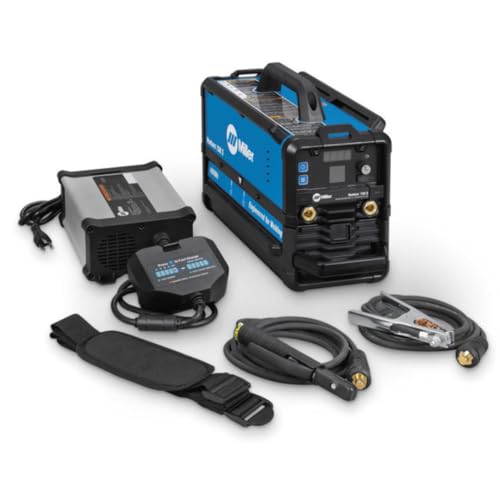
Miller Venture 150 S Battery Welder
Strengths
- True cordless mobility
- Swappable battery
- Lift-Arc TIG
Trade-offs
- Low output for thick metal
- Battery cost adds up
- No AC TIG
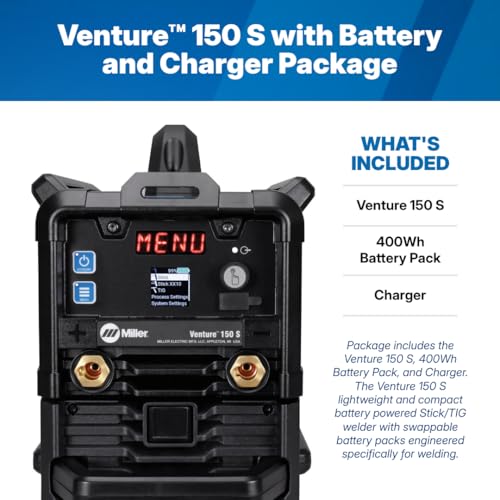
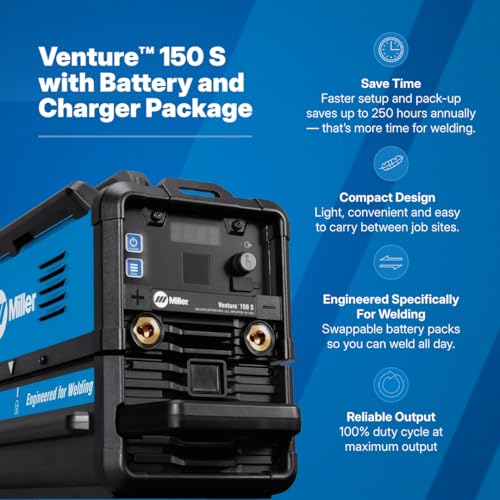
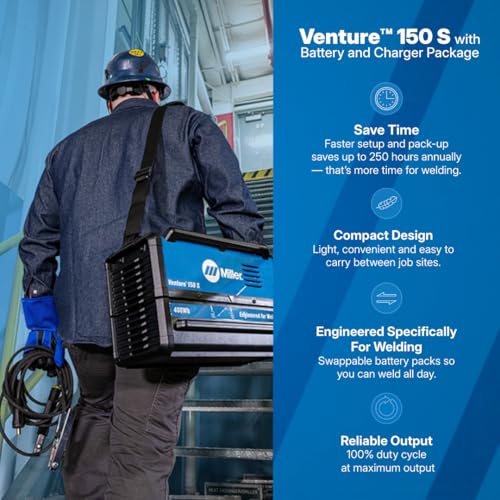
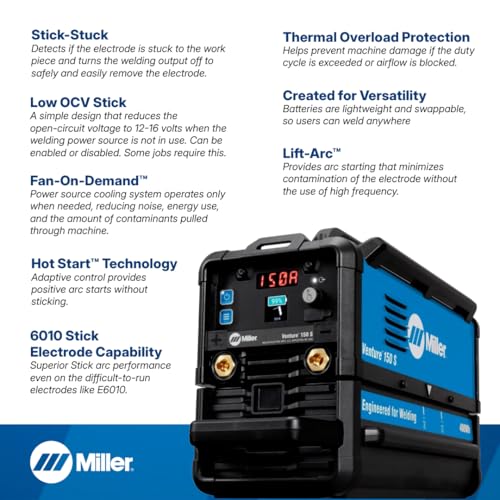
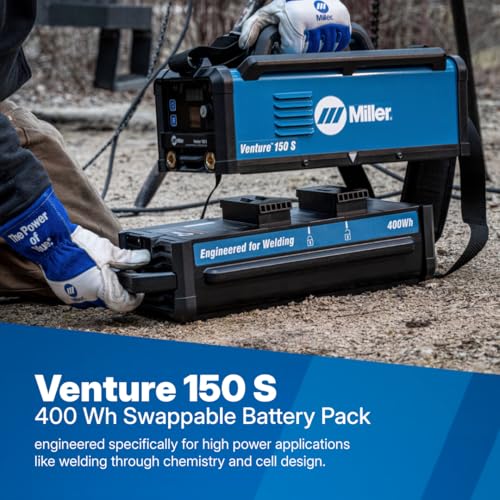
The Venture 150 S is a standout for remote or mobile welding. At 27 lbs with the battery, it’s incredibly portable, and the 400Wh swappable pack means you can keep welding without a power source. The Lift-Arc and Hot Start features work well, especially in tight spots where generator access is impossible.
It’s limited to DC processes and maxes out at 150A, so don’t expect it to replace your shop machine. But for pipeline work, farm repairs, or emergency fixes in the field, owners consistently say it gets the job done when nothing else can. The Fan-On-Demand system also keeps it quiet and efficient. No other Miller offers this kind of freedom.
Product photos
Syncrowave 212 AC/DC TIG Welder
Strengths
- Precision AC/DC control
- User-friendly LCD
- Spool gun compatible
Trade-offs
- Air-cooled limits duty
- Higher price point
- No MIG capability
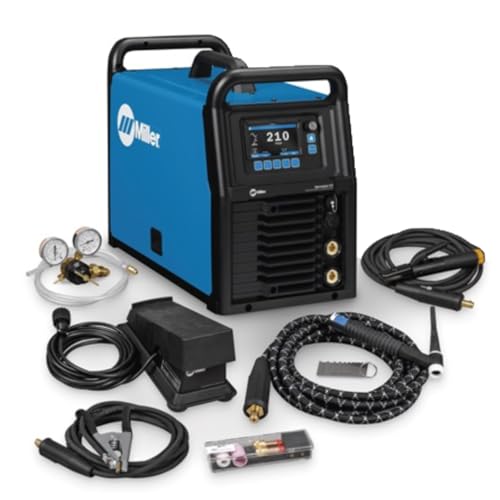
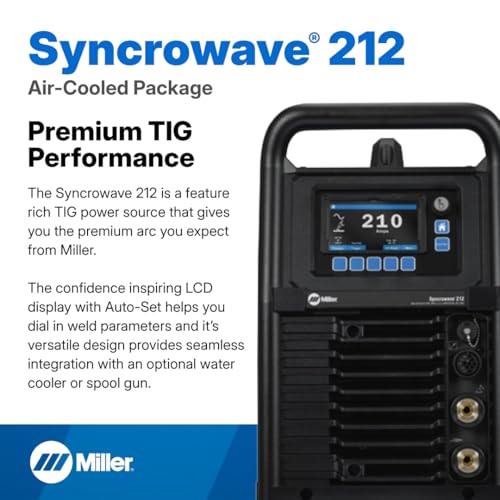
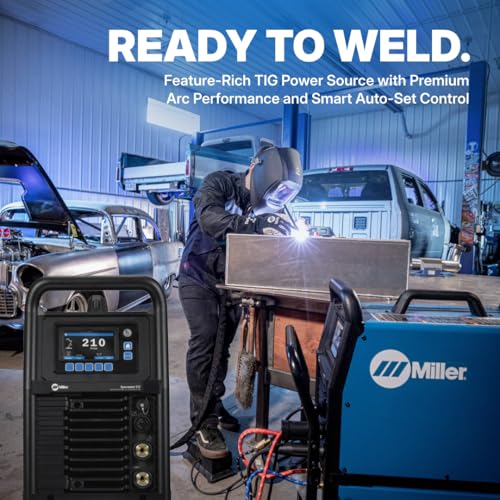
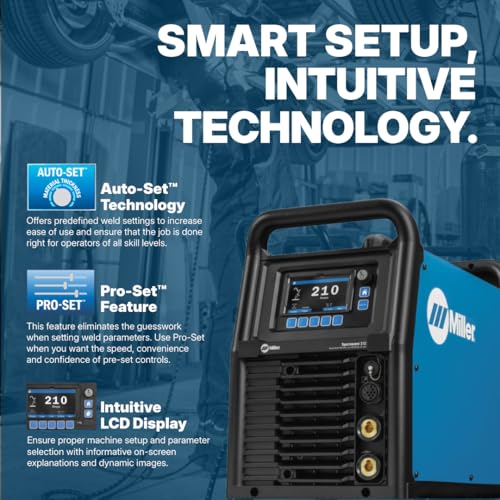
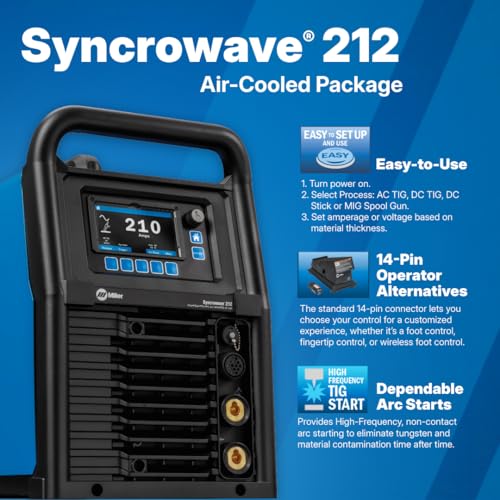
If you’re serious about TIG welding, especially aluminum, the Syncrowave 212 stands out in a crowded field. The Auto-Set tech here isn’t a gimmick, it actually reduces the learning curve for less experienced users while still offering the fine-tuning pros demand. The AC balance and frequency controls let you shape the arc for cleaner welds with less cleanup, which matters when working on visible joints or thin sheet metal.
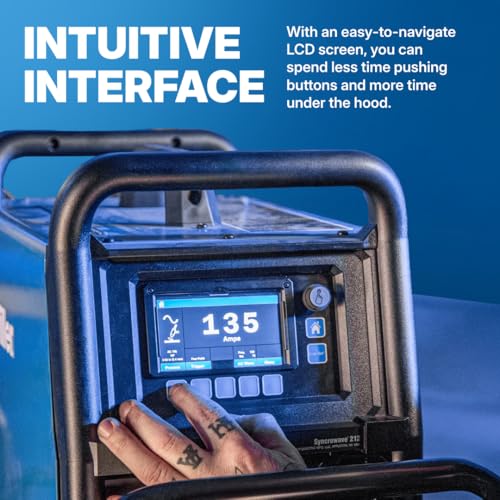
The LCD interface gets high marks from owners for clarity and guidance, and the ability to connect a spool gun or Coolmate 1S cooler adds real flexibility. It’s air-cooled, so it won’t match liquid-cooled units in endurance, but for most shops and mobile welders, it strikes the right balance. I’d choose this over basic TIG machines any day when precision is the goal.
Product photos
How We Picked These miller welders
Rather than a hands-on lab test, my research for these Miller welders was a detailed comparison of published specifications and features, combined with a careful weighing of owner reviews and expert opinions from sources like industry publications and welding forums. I applied my experience with power tools and metal fabrication to assess which models best address different welding needs, ranking them against criteria like versatility, portability, ease of use, and output capability.
For Miller welders specifically, process coverage and amperage output were heavily weighted. The ability to handle multiple processes (MIG, TIG, stick) expands a welder’s usefulness, and sufficient amperage is crucial for tackling thicker materials. Portability also factored in, as many users need a machine that can move between job sites or workshop locations. Ultimately, these factors determine a welder’s overall value and suitability for a range of projects.
Specifications reliably indicate a welder’s maximum output and input power requirements. However, I judged real-world usability and durability more heavily from owner feedback. Reports on arc stability, ease of setup, and long-term reliability are invaluable. You’ll find many excellent options when considering top-rated MIG welders – the best choice ultimately depends on the specific application and skill level of the operator.
How To Pick The Right miller welders
Choosing a welder can feel overwhelming, especially with the variety of processes and features available. I’ve seen a lot of people buy the wrong machine, and it’s a frustrating (and expensive) mistake.
A good welder balances output capability with usability. Key factors include the processes supported (MIG, TIG, Stick), amperage range, input power requirements, duty cycle, and build quality. Look for models with intuitive controls, robust construction, and positive owner reviews regarding arc stability and reliability. Portability is also a significant consideration for many.
Understanding Your Welding Needs
Before you even look at specific models, I need you to honestly assess what you’ll be welding. Are you tackling light-duty home repairs, automotive work, or heavier fabrication projects? A basic stick welder might suffice for occasional farm work, but if you’re planning to work with aluminum or need precise control, you’ll want a multiprocess machine with AC/DC TIG capabilities. Don’t overbuy – a complex, expensive machine won’t help if you only need to join 1/8” steel.
Input Power & Duty Cycle
The input power (120V or 240V) significantly impacts the welder’s output and portability. 120V machines are convenient for shops with limited outlets, but their output is typically lower. If you need to weld thicker materials or run a higher duty cycle, a 240V model is essential. Speaking of duty cycle, this is the percentage of time you can weld continuously within a 10-minute period. A lower duty cycle means more downtime for cooling. If you plan on extended welding sessions, prioritizing a higher duty cycle is crucial. You can find top portable MIG welders that strike a good balance for on-the-go projects.
Process Versatility and Control
Multiprocess welders offer the most flexibility – handling MIG, TIG, and stick welding. However, the quality of each process can vary. Look closely at the amperage ranges for each process. For TIG welding, AC/DC capability is vital for aluminum, while pulse control adds precision and reduces heat input. MIG welders often include features like pulsed MIG and adjustable wire feed speed. Don’t get caught up in every bell and whistle; focus on the features that align with your primary welding tasks. I often recommend looking at Miller MIG performance reviews to get a sense of real-world performance from other users.
A welder’s feature set is less important than its ability to consistently deliver a stable arc and produce clean, strong welds. Prioritize solid construction, clear controls, and a reputation for reliability.
- A simple stick welder can be had for under $300.
- Multiprocess models offering MIG, TIG, and stick generally start around $800 and can easily exceed $2000.
- Investing in a higher-quality machine with a robust feature set will pay off in the long run through improved weld quality, reduced downtime, and greater versatility, especially if you anticipate needing to tackle a variety of projects.
Ultimately, selecting the right welder requires careful consideration of your specific needs and budget. Don’t hesitate to research different models and compare features to find the best fit for your welding endeavors. Checking out best Miller for welding options is a good start.
Miller Welders Compared
Here is a comparison of specifications for various Miller welding machines.
| Product Name | Process(es) | Input Voltage (V) | Amperage (A) | Weight (lbs) | Duty Cycle (%) |
|---|---|---|---|---|---|
| Miller Multimatic 215 PRO | MIG, TIG, Stick | 120/240 | 215 | 35 | N/A |
| Miller Multimatic 220 AC/DC | MIG, TIG, Stick | 120/240 | 220 | 56 | N/A |
| Miller Multimatic 235 | MIG, TIG, Stick | 240 | 235 | 63 | N/A |
| Millermatic 211 PRO | MIG, TIG, Stick | 120/240 | 211 | N/A | N/A |
| Millermatic 142 | MIG | 120 | 140 | N/A | N/A |
| Thunderbolt 210 MV | Stick | 120/240 | 210 | 13 | N/A |
| Miller Venture 150 S | Stick, TIG | Battery | N/A | 27 | N/A |
| Syncrowave 212 AC/DC | TIG | 240 | 212 | N/A | N/A |
Frequently Asked Questions
What’s the biggest difference between a Miller Multimatic and a Millermatic welder?
The Multimatic series offers multiprocess capabilities (MIG, TIG, stick) in a single machine, while Millermatic welders usually focus primarily on MIG welding with some stick options. Multimatics provide greater versatility, but Millermatics are often favored by those who primarily need high-quality MIG welds.
Are Miller welders a good choice for a beginner?
Yes, many Miller welders are user-friendly, particularly the Millermatic 142 and Multimatic 215 PRO. These models have simplified controls and are relatively easy to set up, making them suitable for those new to welding, though practice is still essential for good results.
What input voltage do I really need – 120V or 240V?
A 120V input is convenient if a 240V outlet isn’t available, but it limits amperage and duty cycle. If you plan to weld anything thicker than 1/8” steel or weld frequently, a 240V machine is strongly recommended for better performance and preventing overheating.
How important is the duty cycle specification?
The duty cycle is very important, especially for longer projects. It tells you how much you can weld within a 10-minute period before the machine needs to cool down. A higher percentage means you can weld continuously for a longer time without risking damage to the welder.
Where can I find more information on choosing the best wire feed welder for my needs?
You can find further guidance and recommendations on recommended MIG welders to help you navigate the options and select a machine that suits your specific projects and skill level.
The Bottom Line
Choosing a welder always involves compromise – balancing the desire for maximum capability with practical considerations like budget and ease of use. For most home and DIY welders, the Miller Multimatic 215 PRO strikes that balance exceptionally well. It’s a versatile machine capable of handling a wide range of projects and materials without being overly complicated or expensive.
If you have very specific needs, though, there are better options. For those on a tighter budget, the Millermatic 142 offers a solid MIG welding experience for basic repairs. And if you need the ultimate in precision and aluminum welding capability, the Miller Multimatic 220 AC/DC is the clear choice. You can find a thorough welder guide if you’re still unsure.
Ultimately, specs and features are less important than fundamental skill and practice. A stable arc, proper technique, and a thorough understanding of metallurgy will deliver stronger, cleaner welds than the most expensive machine with all the bells and whistles. Don’t chase the perfect welder; chase the skills to become a better welder.
