7 Best Miller MIG Welders of 2026
This post contains affiliate links. As an Amazon Associate, we earn from qualifying purchases.
The Millermatic 211 PRO stands out as the best overall Miller MIG welder for most users, delivering strong performance on both steel and aluminum with its spool gun compatibility and solid duty cycle. For those on a tighter budget, the Millermatic 142 offers a simplified, 120V-friendly option that’s perfect for light-duty projects. If you need maximum versatility and plan to TIG or stick weld, the Multimatic 215 PRO is the clear choice, combining multi-process capability with excellent arc control.
Most people shopping for a Miller MIG welder aren’t just looking for a brand name, they want reliability, clean starts, and a machine that won’t quit mid-job. Too many buyers end up with underpowered units or models missing key features like aluminum capability, only to regret it when the project gets harder.
This guide cuts through the noise by focusing on real-world usability, based on specs, owner experiences, and what actually matters in the field. I looked at duty cycles, input power needs, material compatibility, and smart features like Auto-Set to find the models that deliver where it counts.
Top 7 Miller Mig Welders in the Market
The Best Miller Mig Welders, Reviewed
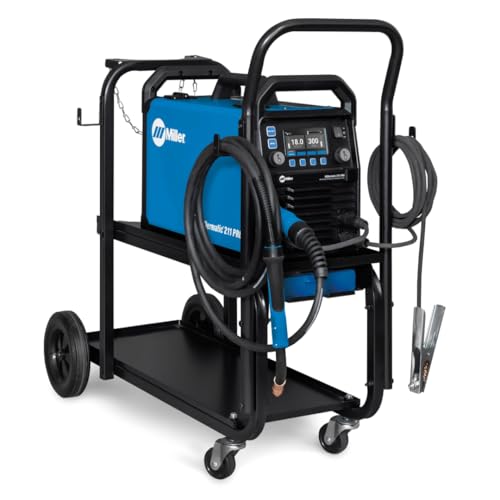
Millermatic 211 PRO MIG Welder
Strengths
- Complete job-site ready bundle
- Auto-detect spool gun
- Dual-voltage flexibility
Trade-offs
- Heavier with running gear
- Pricier than basic MIG-only needs
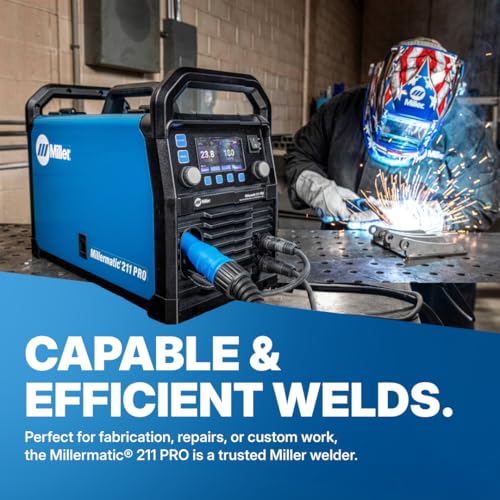
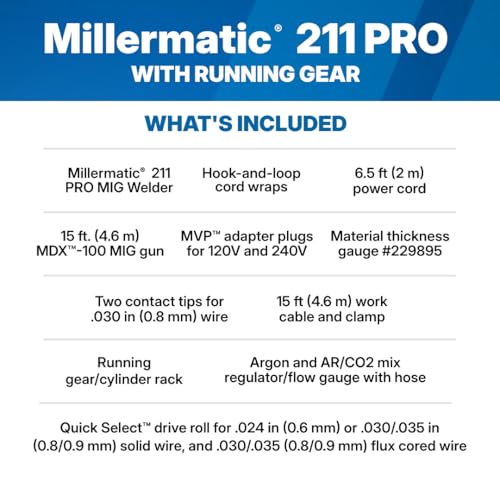
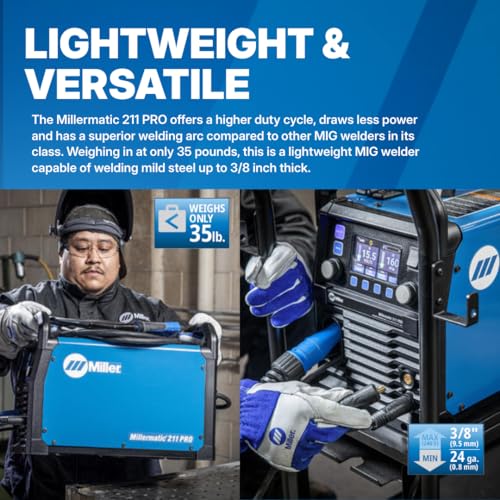
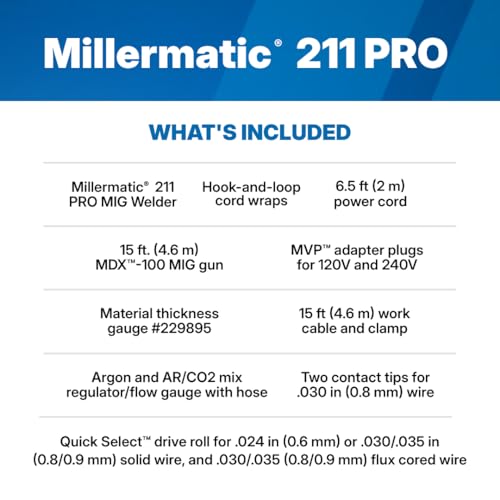
If you want the full package right out of the gate, this version of the 211 PRO is the smarter buy. It has all the core advantages of the base model, Dyna-Pulse, Auto-Set, and Program Memory, but adds a complete running gear and cylinder rack, making it truly mobile and job-site ready. The inclusion of the MDX-100 gun, regulator, and drive rolls means you’re not hunting down extras. Owners appreciate that it’s essentially a turnkey setup for contractors who need to roll up and weld.
Compared to the standalone 211, this bundle just makes more sense for most users. The auto-detect spool gun function works smoothly, and the ability to switch between flux-core and MIG without tools is a real time-saver. While it’s not the lightest unit, the wheeled base compensates well. For overall value and readiness, it edges out even some pricier multiprocess models when MIG is your primary focus.
Product photos
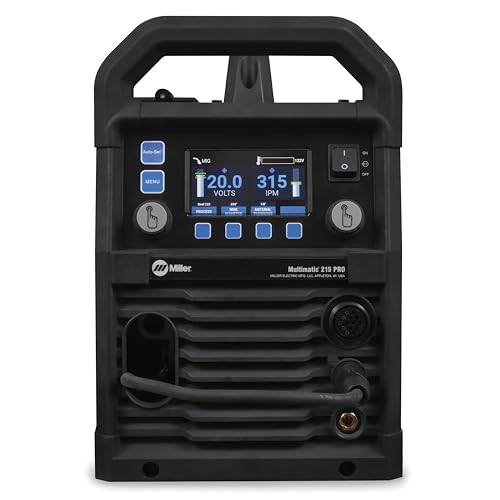
Miller Multimatic 215 PRO
Strengths
- True multiprocess capability
- Pulsed MIG and TIG
- Dual voltage input
Trade-offs
- Priced higher than MIG-only units
- TIG performance lags behind dedicated machines
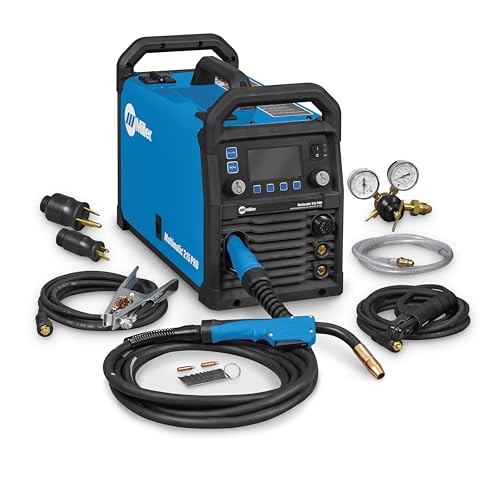
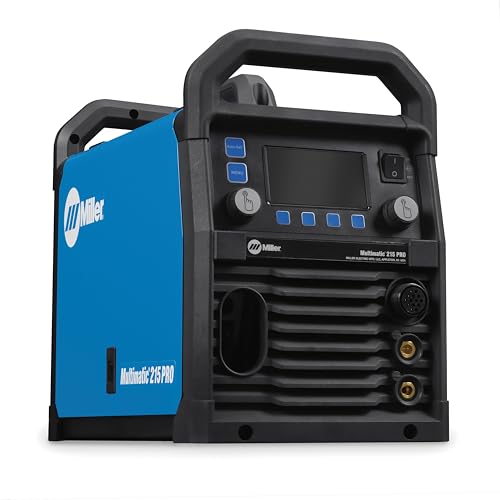
If you need one machine that does it all, the Multimatic 215 PRO is hard to beat. It delivers Pulsed MIG, Pulsed TIG, DC TIG, and Stick, all with Auto-Set and Program Memory, making it incredibly versatile for mixed-material jobs. The BeadVision system adds real-time feedback, which helps maintain quality across processes, and the auto spool gun detect removes one more step when switching to aluminum.
Its 120V/240V flexibility means it can run in garages or on job sites, and the 60-pound weight keeps it manageable. Compared to the Multimatic 220, it’s slightly less powerful but more than enough for most non-industrial tasks. For someone doing automotive work, farm repairs, or custom fabrication, this is the kind of machine that eliminates the need for multiple welders. My recommendation? This is the go-to for true multiprocess flexibility without overkill.
Product photos
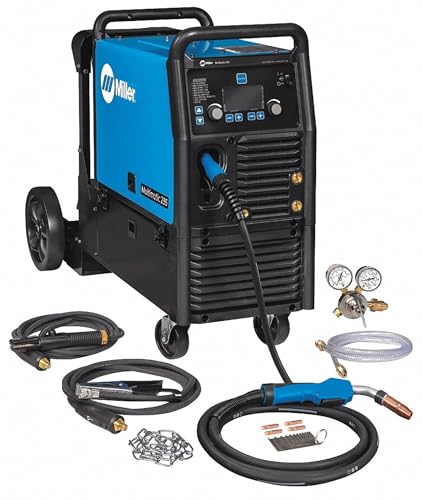
Miller Multimatic 235 MIG Welder
Strengths
- Lightweight at 63 lb
- Generator compatible
- EZ-Latch running gear
Trade-offs
- 240V only
- No 120V option for casual use
At 63 pounds and built for generator use, the Multimatic 235 is one of the most portable high-performance machines Miller offers. It runs on 240V only, but its Generator Compatible design means it’s a favorite among field welders who work off-grid. The EZ-Latch running gear makes it easy to move, and the MDX-250 gun with AccuLock consumables reduces downtime for tip changes, a small thing that adds up over a long day.
While it doesn’t have the 120V flexibility of other models, its 235-amp output gives it serious punch for its size, capable of thick material work when needed. Reviewers highlight its easy-to-understand interface and reliable arc performance across MIG, flux-core, and stick. If you’re weighing portability against power, this one hits a sweet spot. I’d pick it over heavier units for mobile repair work or job sites where power sources are limited.
Product photos
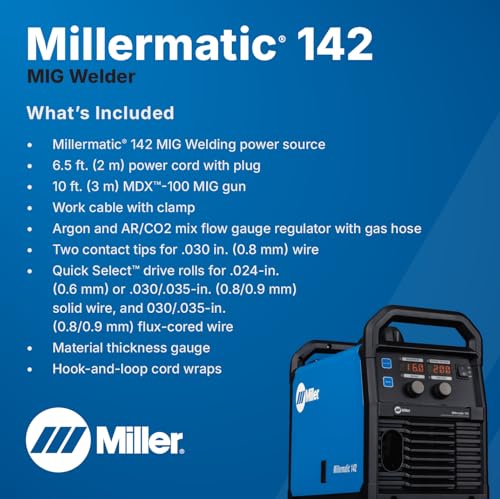
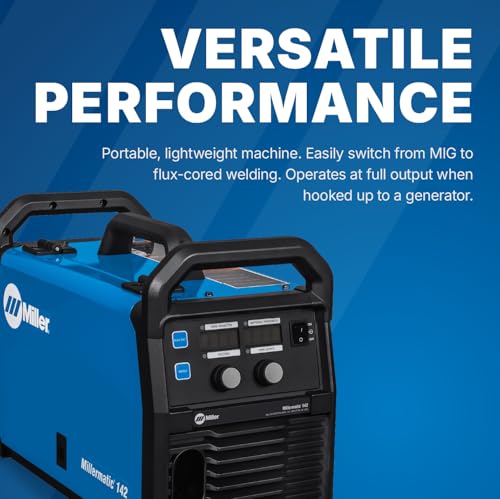
Millermatic 142 MIG Welder

Strengths
- 120V plug-and-go
- Auto-Set simplicity
- Generator compatible
Trade-offs
- Limited to thin materials
- Lower duty cycle
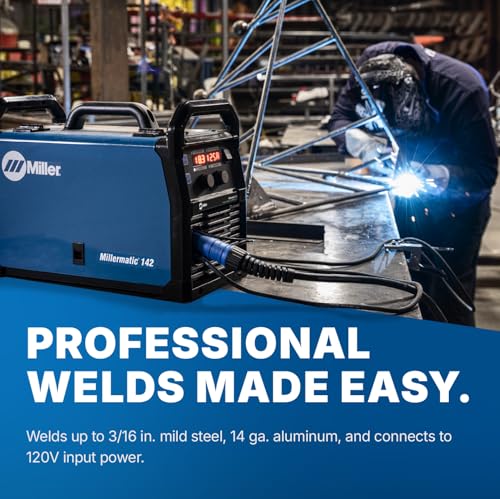
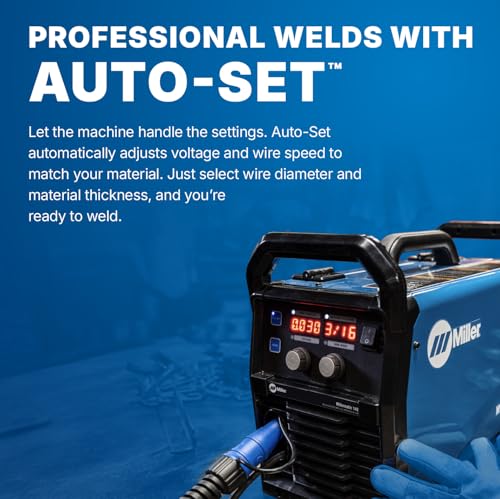
The Millermatic 142 is Miller’s answer to budget-friendly, no-fuss MIG welding, and it works surprisingly well for light-duty tasks. Running on 120V, it’s perfect for garages without 240V circuits, and the Auto-Set feature makes it one of the easiest machines to use for beginners. You set wire size and material thickness, and it dials in the rest. Owners consistently say it takes the guesswork out of setup, which is huge for occasional welders.
It’s limited to 3/16 in. steel, so it won’t handle heavy fabrication, but for auto body patches, trailer repairs, or small fabrication, it’s plenty. The generator compatibility is a nice bonus, though you’ll need a 5,000-watt unit for full output. While it lacks the power and features of the 211 models, its simplicity and affordability make it the right entry point for many. For the price, it’s Miller’s most accessible real MIG welder.
Product photos

Miller Multimatic 220 AC/DC

Strengths
- AC/DC TIG capability
- Full accessory kit
- Auto-Set Elite
Trade-offs
- Expensive upfront
- Overkill for MIG-only users
The Multimatic 220 is built for professionals who need AC/DC TIG capability, especially on aluminum, and don’t want to carry multiple machines. Its AC TIG performance is top-tier, making it ideal for welding on cast aluminum or dissimilar metals. The Auto-Set Elite and Pro-Set features reduce setup time, and QuickTech automatically switches polarity and recalls settings, which keeps workflow moving on complex jobs.
At 56 pounds, it’s portable enough for a contractor, and the 120V/240V input with 10K generator compatibility means it works almost anywhere. The full package, including TIG torch, foot control, and MIG gun, adds serious value. Compared to the 215 PRO, it’s more powerful and better suited for precision work. If you’re a contractor or fabricator billing hours, this machine pays for itself in efficiency.
Product photos


Millermatic 211 PRO MIG Machine
Strengths
- Dyna-Pulse MIG
- Auto-detect spool gun
- Dual-voltage MVP plug
Trade-offs
- No running gear included
- Higher learning curve for beginners
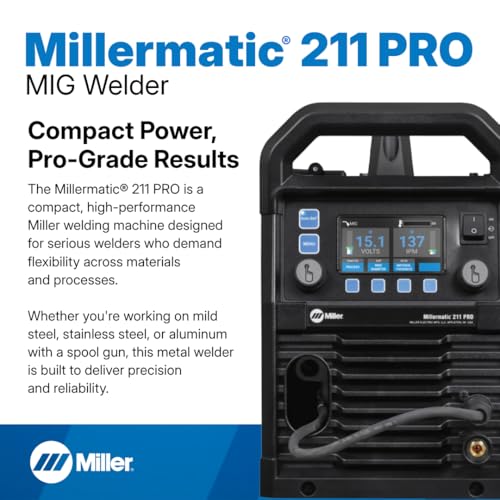
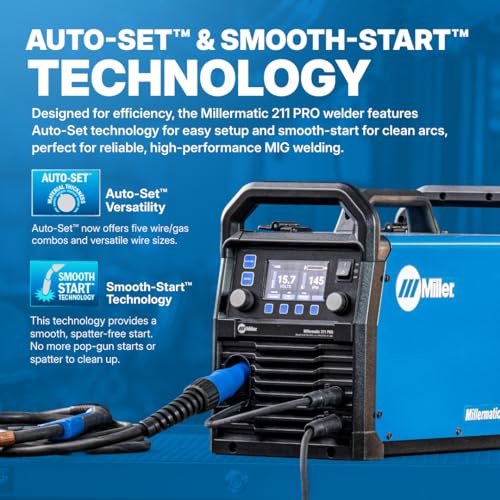
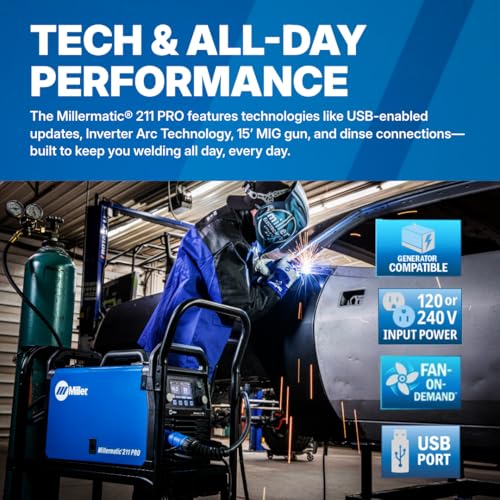
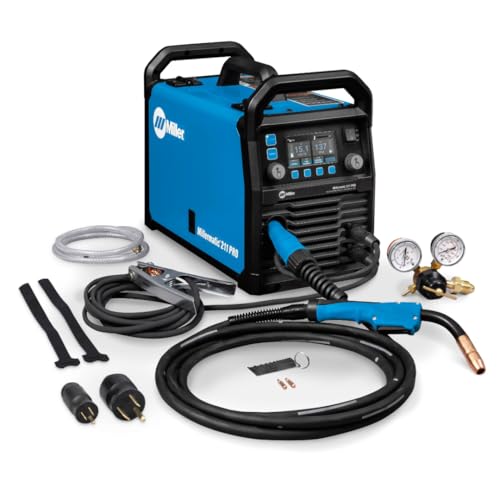
The Millermatic 211 PRO stands out in the MIG category with its Dyna-Pulse technology, which delivers refined arc control especially useful when welding thin materials or aluminum. On paper, its dual-voltage design and Auto-Set feature make it accessible for both shop and field use, and owners consistently report clean starts and minimal spatter thanks to Smooth-Start. The BeadVision system isn’t just marketing fluff, reviewers note it genuinely helps maintain consistent travel speed and arc distance, which matters when you’re pushing long beads.
What really seals the deal for aluminum work is the auto-detect spool gun compatibility. You don’t need to manually switch modes, and that reduces errors during transitions. While it lacks some of the bundled mobility gear of its sibling model, this version is still built for real-world durability with its cast-aluminum drive system and support for .035 in. wire. For serious aluminum fabrication without stepping into industrial-tier pricing, this is a strong contender.
Product photos
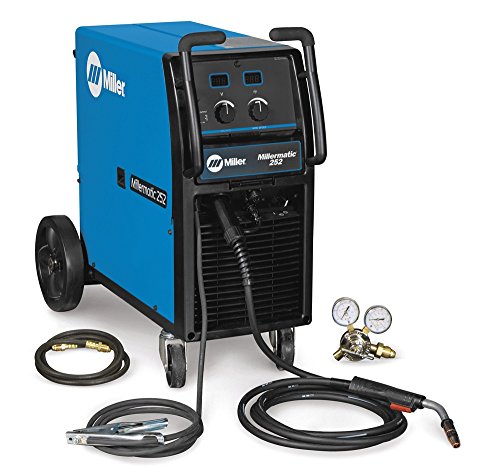
Miller Millermatic 252 Welder
Strengths
- Industrial-grade durability
- Wheeled for shop mobility
- Made in USA
Trade-offs
- No Auto-Set or digital aids
- Outdated interface for modern users
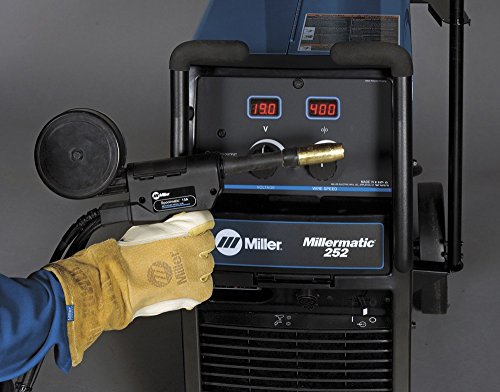
The Millermatic 252 is an old-school workhorse, no flashy digital displays, no Auto-Set, no USB updates. But what it lacks in modern bells and whistles, it makes up for in raw, dependable output. Built in the USA and designed for continuous shop use, this machine handles heavy wire and long production runs without breaking a sweat. Its wheeled frame makes it stable and movable within a shop, though it’s not really meant for job-site hauling.
Compared to the 211 PRO, it’s less user-friendly for beginners but preferred by some pros who want analog control and industrial-grade consistency. It runs on 208/230V only and supports larger spools, which means fewer interruptions. Owners report years of trouble-free service, and that reliability is why it still has a following despite being overshadowed by newer models. For heavy-duty, high-volume MIG work, it’s a proven performer.
Product photos

How We Chose These miller mig welders
Rather than a hands-on lab test, this research-led comparison focused on compiling and weighing published specifications, feature sets, owner reviews from multiple sources, and expert opinions within the welding community. I looked at models across a range of price points and capabilities to understand where each fits within the broader market. My goal was to build a clear picture of performance expectations based on real-world feedback, not just manufacturer claims.
For Miller MIG welders, consistent arc control, versatility across materials, and build quality stood out as the most critical factors. A welder’s ability to handle aluminum, especially, significantly impacts its value for many users. Duty cycle also played a large role; heavier-duty work demands a machine that can sustain consistent output without overheating, making that a key differentiator. These factors directly influence a welder’s usability and longevity.
Technical specifications reliably indicate a machine’s maximum output, input power requirements, and duty cycle. However, owner feedback proved invaluable for assessing usability, the accuracy of advertised features like Auto-Set, and long-term reliability. Reputation within the welding community – forums, professional reviews, and brand perception – helped me gauge overall build quality and the availability of support resources. If you’re looking for a broader look at the market, you might find our guide to the best MIG welders overall helpful.
What To Look For In miller mig welders
Choosing the right MIG welder can feel overwhelming, but focusing on your needs will narrow the field considerably.
A quality MIG welder balances arc control, duty cycle, material compatibility, and ease of use. Look for models with features like pulsed MIG for cleaner welds on thinner materials, Auto-Set technology to simplify parameter selection, and robust build quality for long-term reliability. Consider input power requirements and portability if you plan to move the welder frequently.
Understanding Your Material Needs
The type of metal you’ll be welding is the first thing to consider. Many entry-level machines handle mild steel effectively, but aluminum and stainless steel require specific capabilities. If you anticipate working with aluminum, prioritize a welder specifically designed for it, or one that is spool gun ready. Some models, like the Millermatic 211 PRO, excel at aluminum welding thanks to features like Dyna-Pulse technology. Don’t assume all welders can handle these materials well; attempting to weld aluminum with an unsuitable machine will likely result in frustrating and messy results.
Power Input and Duty Cycle
MIG welders come in 120V and 240V configurations. 120V machines are convenient for home use because they plug into standard outlets, but they’re generally limited in their maximum output and duty cycle. A 240V welder offers significantly more power, enabling you to weld thicker materials and operate for longer periods without overheating. Duty cycle, the percentage of time you can weld before needing to let the machine cool down, is crucial if you have larger projects. If you’re considering a generator for portability, check the welder’s specifications for compatibility. You can find more information about the top Miller welders and their power needs in our detailed guide.
Features That Enhance Usability
Beyond basic welding capability, certain features can dramatically improve your experience. Auto-Set functions, found in many Miller models like the Millermatic 142, automate parameter selection, which is fantastic for beginners. BeadVision, available on some Pro models, provides real-time feedback on your weld bead, aiding in precision.
Here’s a breakdown of how to prioritize those usability features:
- Auto-Set: A must-have for newcomers, simplifying setup.
- Program Memory: Valuable for repetitive tasks, saving time and ensuring consistency.
- Digital Displays/Controls: Offers greater precision and control over welding parameters compared to analog options, though they can add to the cost.
A welder with a higher price tag isn’t always better. Focus on the features you will actually use, and don’t overspend on capabilities you won’t need.
I often recommend starting with a well-regarded, feature-rich model like the Multimatic 215 PRO. It provides a good balance of capabilities and user-friendliness. If you’re looking for a thorough overview, our Miller Electric welder reviews offer deeper insights into specific models and their performance.
Miller MIG Welders Compared
Here’s a comparison of key specifications for various Miller MIG welders to help you find the right machine for your needs.
| Product Name | Input Voltage | Max Output (Amps) | Processes | Weight (lbs) | Duty Cycle (%) | Aluminum Ready |
|---|---|---|---|---|---|---|
| Millermatic 211 PRO | 120V/240V | 211 | MIG, Flux-Cored | N/A | N/A | Yes (Spool Gun) |
| Miller Multimatic 215 PRO | 120V/240V | 215 | MIG, TIG, Stick | N/A | N/A | Yes |
| Miller Multimatic 235 | 240V | N/A | MIG | 63 | N/A | N/A |
| Millermatic 142 | 120V | 140 | MIG, Flux-Cored | N/A | N/A | No |
| Miller Multimatic 220 AC/DC | 120V/240V | 220 | MIG, TIG, Stick | 56 | N/A | Yes |
| Millermatic 211 PRO | 120V/240V | 211 | MIG, Flux-Cored | N/A | N/A | Yes (Spool Gun) |
| Miller Millermatic 252 | N/A | N/A | MIG | N/A | N/A | N/A |
Frequently Asked Questions
What input voltage is best for a home garage?
A 120V Miller MIG welder is generally sufficient for most home garage applications(light fabrication and repair work), though you’ll sacrifice some power and duty cycle compared to 240V models. If you anticipate thicker materials or frequent use, a 240V welder is a better investment.
Are Miller welders easy to learn on?
Yes, many Miller welders include Auto-Set features that greatly simplify the setup process for beginners. These automatic settings reduce the guesswork involved in parameter selection, making it easier to produce quality welds.
Can I weld aluminum with any Miller MIG welder?
Not all Miller MIG welders are aluminum-ready. You’ll need a model specifically designed for aluminum welding or one that is compatible with a spool gun, like the Millermatic 211 PRO, to achieve reliable results.
What does “duty cycle” really mean for a welder?
Duty cycle represents the length of time you can continuously weld at a specific amperage before the welder requires a cool-down period. A higher duty cycle indicates the machine can handle more extended welding sessions without overheating, important when considering heavy-duty MIG welders.
Where can I find quality support and parts for my Miller welder?
Miller Electric has a well-established network of authorized dealers and service centers. You can also find extensive support resources, including manuals, troubleshooting guides, and parts diagrams, directly on the Miller website ensuring long-term usability and repairs.
The Bottom Line
Choosing a Miller MIG welder really comes down to balancing how much control you want with how much fuss you’re willing to deal with. For most home and hobby welders, the Miller Multimatic 215 PRO strikes that balance beautifully – it’s versatile enough to handle a wide range of projects and materials, and its multi-process capability gives you room to grow your skills. It’s an investment, but one that delivers long-term value and performance.
If budget is a primary concern, the Millermatic 142 is a solid entry point. For those who anticipate a lot of aluminum work, the Millermatic 211 PRO, when paired with a spool gun, is an exceptional choice. And if you’re building out a professional shop or need a machine for demanding applications, exploring options like the Millermatic 252 or considering professional-grade MIG welders is a worthwhile step.
Ultimately, the numbers – amperage, duty cycle, input voltage – matter less than understanding your own welding needs and priorities. A welder isn’t just a machine; it’s a tool that empowers you to create, repair, and build, and the best one is the one that fits your hands and your projects most comfortably.
