7 Best MIG Welders for Beginners 2026
This post contains affiliate links. As an Amazon Associate, we earn from qualifying purchases.
The ARCCAPTAIN 200A 6-in-1 MIG Welder stands out as the best overall choice for beginners, offering strong performance and multi-process flexibility. If you’re watching your budget, the FEMEROL 130A MIG Welder delivers solid value with useful included accessories, while the ARCCAPTAIN 135A is a great pick if you want a lighter, simpler machine for basic projects.
Starting out with MIG welding means balancing simplicity, reliability, and room to grow. Too many features can overwhelm, but too few can limit your progress. I’ve seen beginners struggle with machines that are either too finicky or too underpowered for everyday tasks.
This guide cuts through the noise by focusing on what actually matters: ease of use, dependable performance, and real-world feedback. The picks here are based on a close look at specs, owner experiences, and the features that make learning less frustrating.
Top 7 Mig Welder For Beginners in the Market
The Best Mig Welder For Beginners, Reviewed
ARCCAPTAIN 200A 6-in-1 MIG Welder
Strengths
- 200A output
- 6-in-1 functionality
- Preset memory
- Burn-back adjustment
- Dual voltage support
Trade-offs
- TIG and spool gun not included
- Higher price point
- Bulkier than entry models
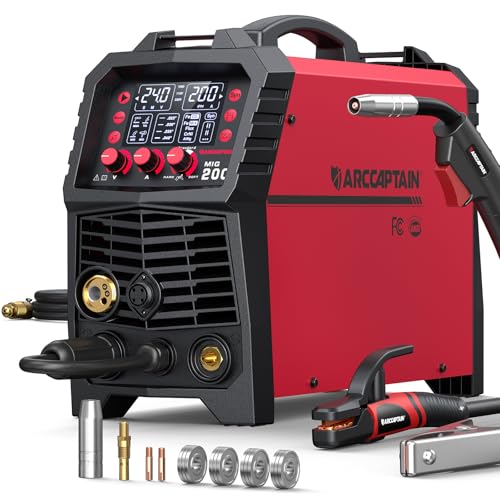
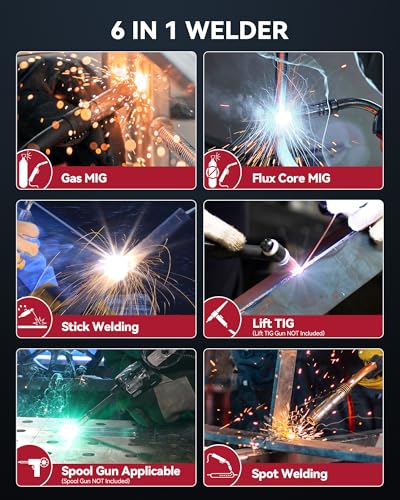
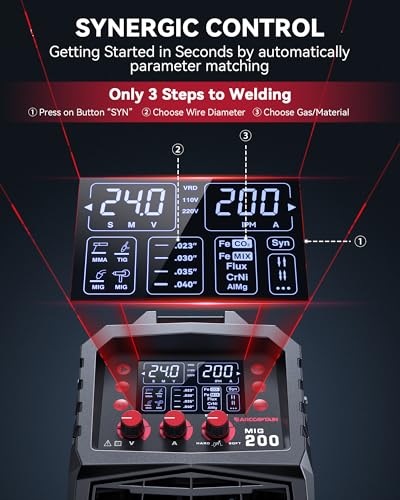
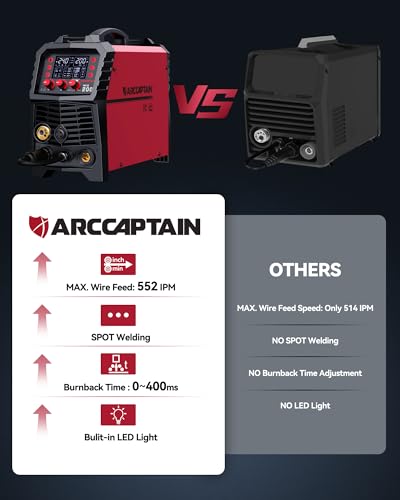
This is the most capable machine on the list, and it earns the ‘Best Overall’ label not just for power, but for features that matter in real use. With 200A output and 6-in-1 functionality, including Spot welding and a spool gun connector, it’s built for users who want one machine to handle nearly every task. The synergic control, preset memory for 10 settings, and burn-back adjustment are pro-level touches that reduce setup time and improve weld quality, especially for repeat jobs.
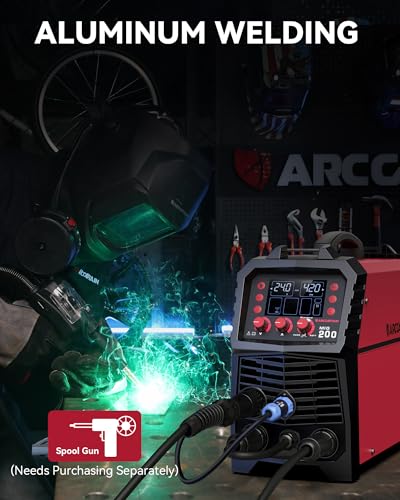
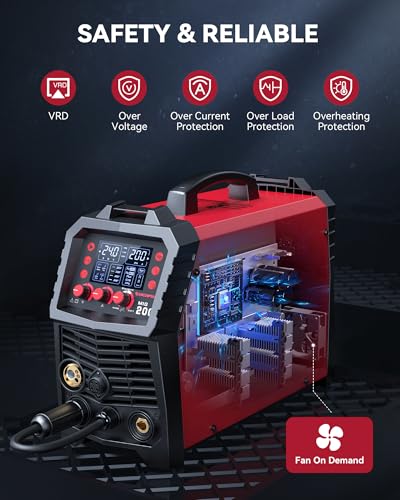
The large LED display is a standout, easy to read with a helmet on, and owners appreciate the pre-flow/post-flow gas control, which protects the weld pool and contact tip. It supports both 110V and 220V, though you’ll need 220V to unlock its full potential. Reviewers note it handles aluminum well with a spool gun (sold separately), and the arc stability in both MIG and Stick modes is excellent. Compared to the YESWELDER 160A, it’s more refined, more powerful, and more versatile.
Product photos
ARCCAPTAIN 135A MIG Welder
Strengths
- Large LED display
- Lightweight and portable
- Beginner-friendly interface
- Good arc start
- Thorough safety
Trade-offs
- TIG torch not included
- No dual voltage
- Narrow wire diameter range
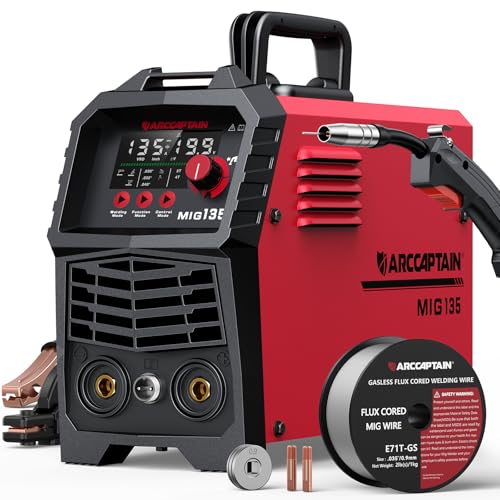
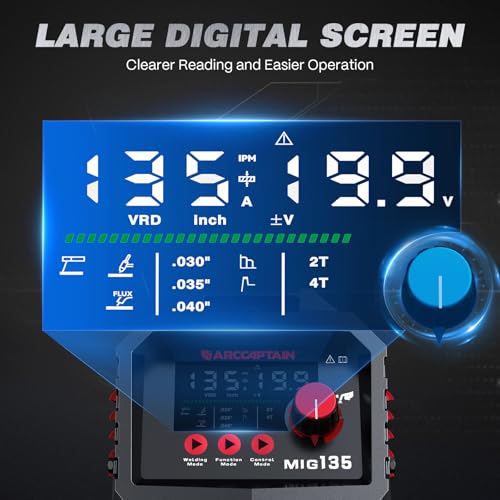
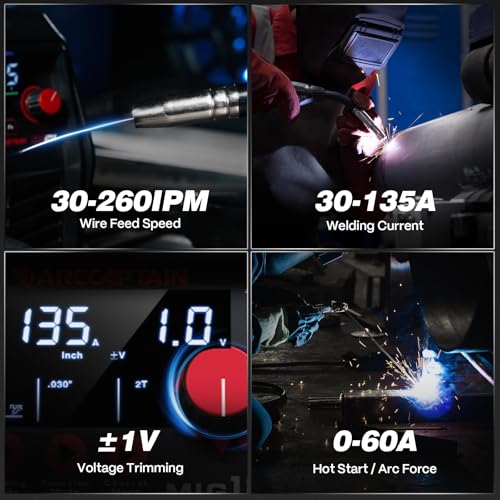
If you’re a beginner who wants clear feedback and confidence in your settings, the ARCCAPTAIN 135A’s large LED display is a legit advantage. It shows voltage, wire speed, and amperage clearly, even in bright light, so you’re not guessing during setup. The synergic mode works well, letting you input wire size and metal thickness and getting automatic recommendations, which I’d argue is one of the most beginner-friendly features in this category.
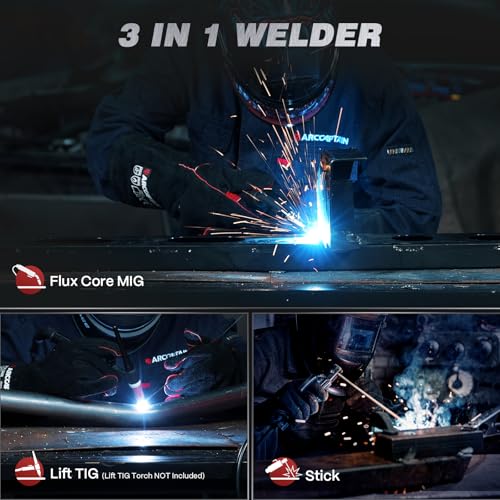
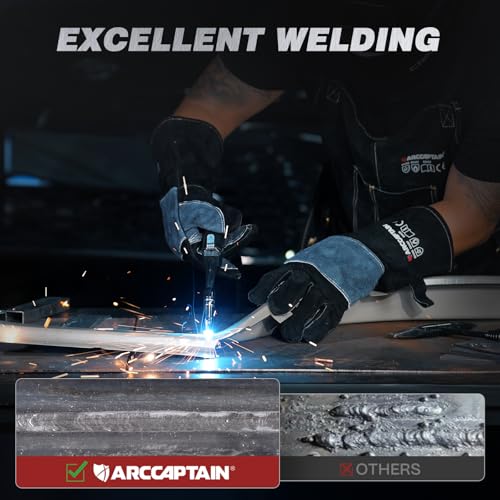
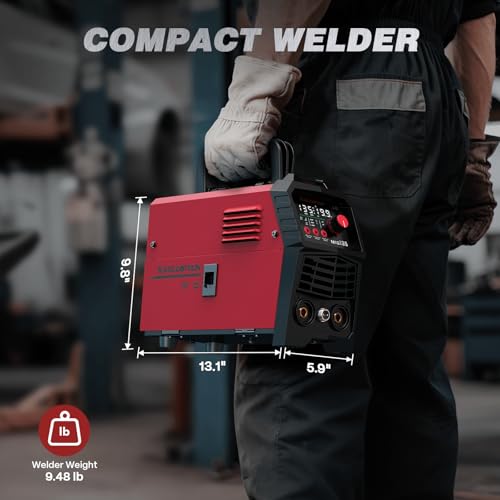
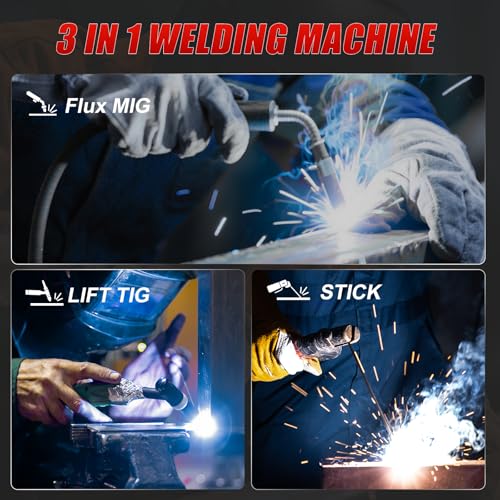
It’s a 3-in-1 (Flux Core, Lift TIG, Stick), and while the TIG torch is sold separately, owners say the arc stability is impressive for the price. At 9.48 lbs, it’s light and comes with a shoulder strap, making it easy to haul to a worksite. The build quality seems consistent with ARCCAPTAIN’s reputation, each unit reportedly goes through lab-grade durability tests. Compared to similarly sized models, this one feels more refined in control layout and safety features.
Product photos
YESWELDER 160A MIG Welder
Strengths
- Dual voltage
- 4-in-1 capability
- Smart synergic control
- LED digital display
- Good amperage for class
Trade-offs
- Heavy for dual voltage class
- TIG torch sold separately
- Spool size limitations
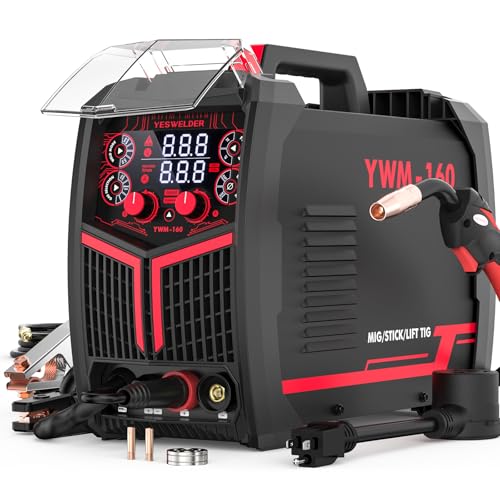
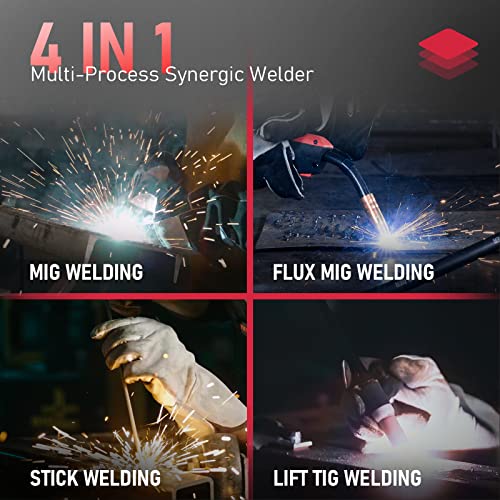
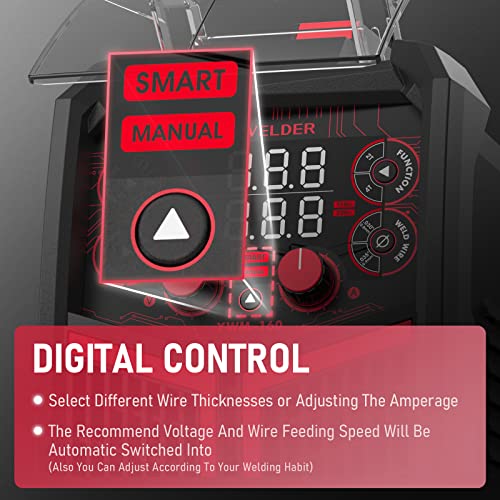
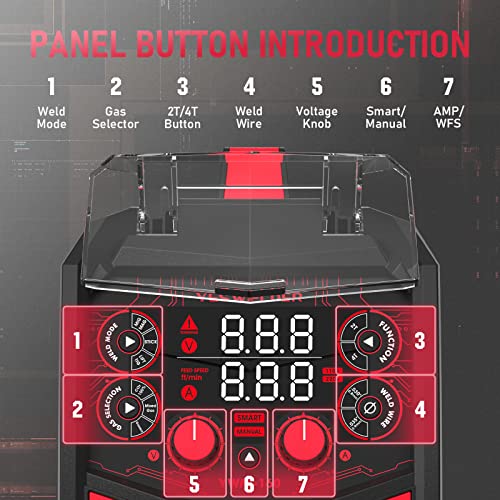
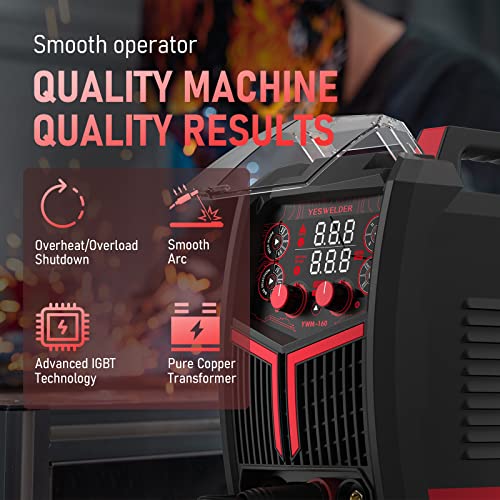
The YESWELDER 160A stands out in the beginner MIG space for its dual voltage flexibility and 4-in-1 functionality, which includes Gas MIG, Flux Core, Stick, and Lift TIG. On paper, this gives it serious versatility, especially for someone who might eventually want to explore aluminum welding or work in environments where gas shielding isn’t practical. The smart synergic control is a real win for new users, automatically pairing wire feed speed and voltage based on material thickness and wire size, reducing the guesswork that often trips up beginners.
Owners consistently report solid arc starts and clean welds on thin to mid-range steel, though some note that the Lift TIG performance can be finicky without an external torch upgrade. Compared to lower-amp models, the 160A output gives you a bit more headroom for thicker material, but it still struggles past 1/4 inch. It’s not the lightest at 19.4 lbs, but the handle makes it manageable for job site use.
Product photos
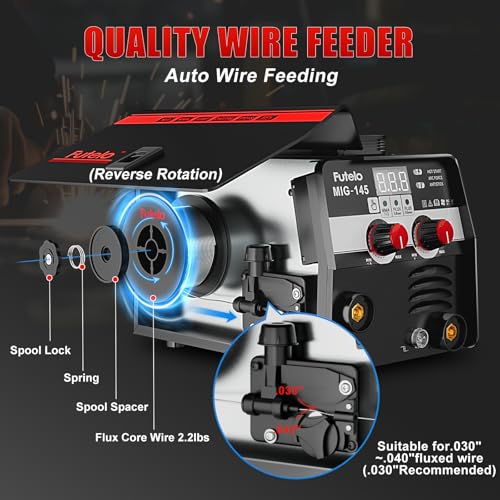
Futelo 145A MIG Welder
Strengths
- Ultra lightweight
- Simple synergic control
- Bright LED display
- Includes basic accessories
- Compact design
Trade-offs
- No dual voltage
- TIG torch not included
- Limited for thick steel
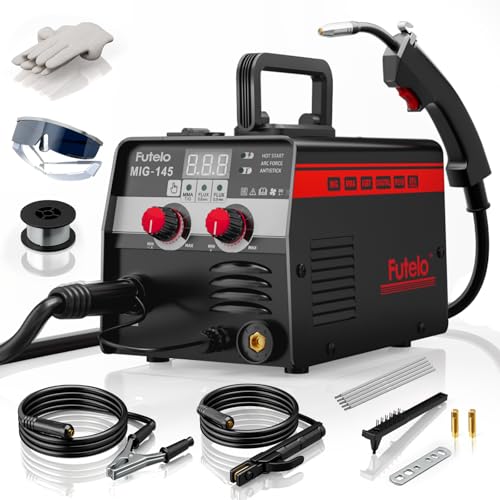
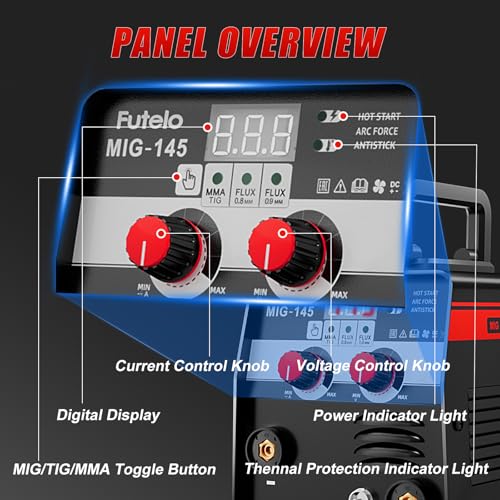
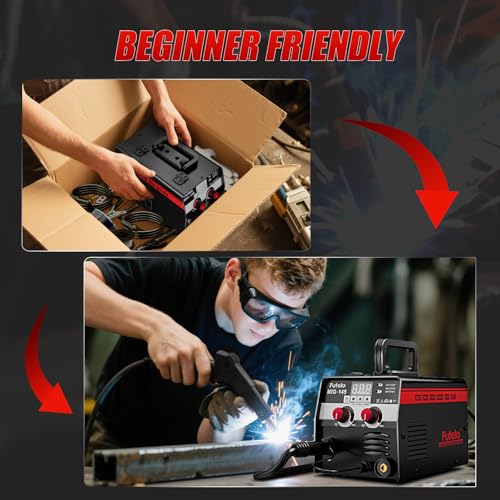
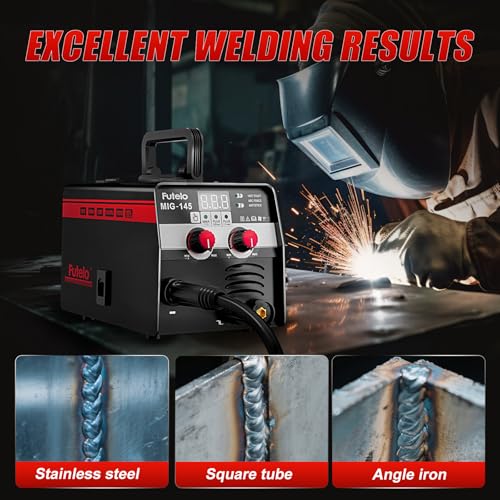
At just 7.5 lbs, the Futelo 145A is the lightest 3-in-1 welder in this group, and that’s a serious advantage for anyone hauling gear to job sites or working in tight spaces. Despite its tiny footprint, it still delivers 145A output and synergic control, so beginners aren’t left guessing on settings. The interface is simple: set wire size or amperage, and the welder auto-matches voltage and feed speed. Reviewers say it starts easily and runs cleanly on 110V, even in colder garages.
It includes basic PPE and a small toolkit, so you’re not starting from zero. The LED display is bright and readable, and the 2T/4T trigger options add convenience for longer welds. However, it’s 3-in-1 (Flux Core, Stick, Lift TIG), and like others, the TIG torch is extra. While it handles up to 5mm steel in theory, real-world results are best on thinner material. Compared to the ARCCAPTAIN 135A, it’s lighter but slightly less refined in build.
Product photos
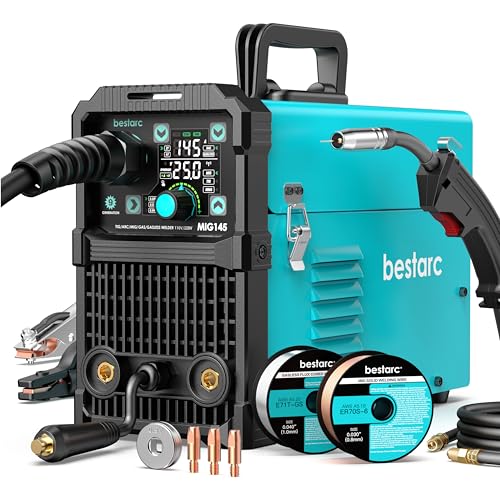
Bestarc 145A MIG Welder
Strengths
- Dual voltage auto-sensing
- 4-in-1 capability
- Good wire compatibility
- Portable with strap
- Fine voltage adjustment
Trade-offs
- TIG torch not included
- No auto-darkening helmet
- Mid-tier amperage
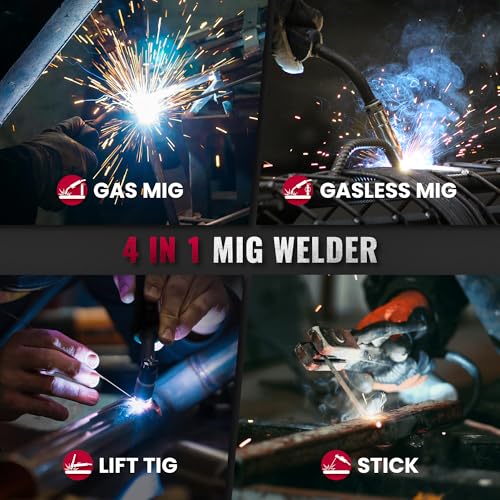
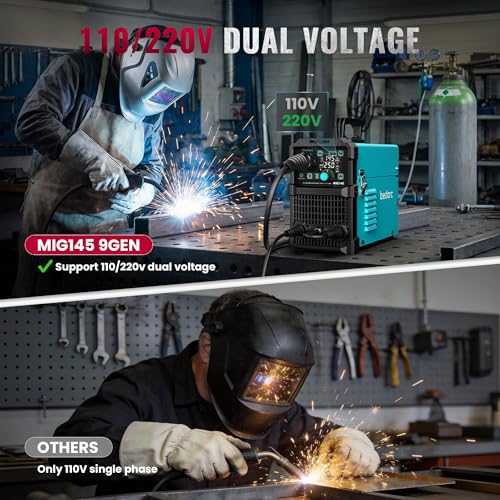
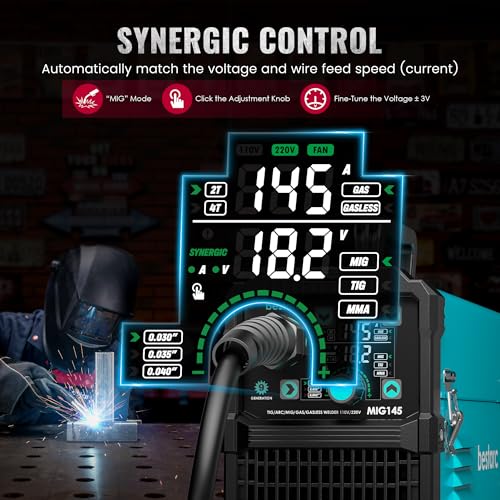
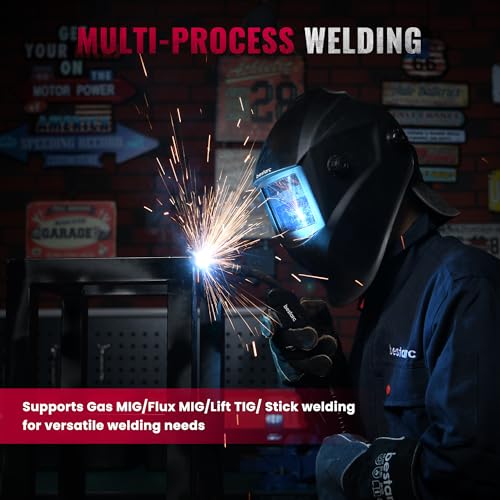
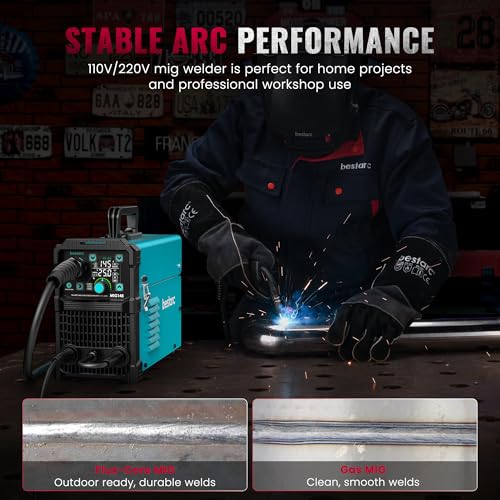
The Bestarc MIG145 hits a sweet spot between value and versatility, especially with its 110V/220V dual-voltage auto-sensing, a feature that’s not always standard at this level. That alone makes it a smarter long-term buy if you’re working in different locations or plan to upgrade your shop power later. The 4-in-1 functionality (Gas MIG, Flux Core, Stick, Lift TIG) gives you room to grow, and the synergic control works as advertised, reducing setup time for novices.
Owners praise its clean weld bead and stable arc, particularly in flux-core mode. The inclusion of both solid and flux-core wires in the package is a nice touch, and the -3V to +3V fine-tuning range gives experienced users enough control to tweak performance. It’s only 13.7 lbs, so it’s still portable, though not as ultra-light as some competitors. Compared to the YESWELDER, it’s slightly less powerful but more balanced in real-world usability.
Product photos
FEMEROL 130A MIG Welder

Strengths
- Extremely lightweight
- Complete starter kit
- Synergic control
- Affordable
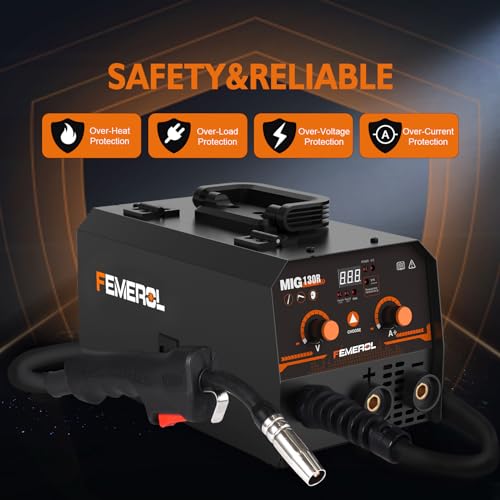
- Overheat protection
Trade-offs
- No gas MIG mode
- Limited to 110V
- Lower amperage ceiling
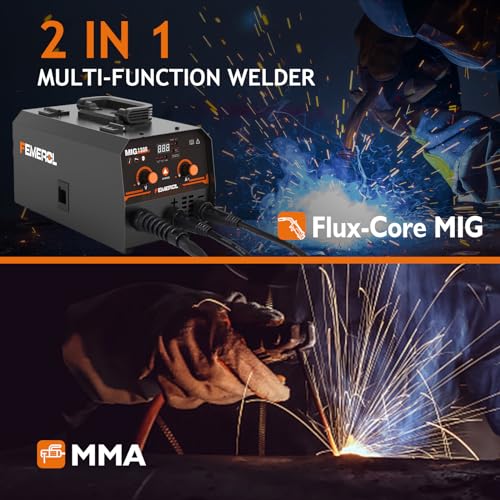
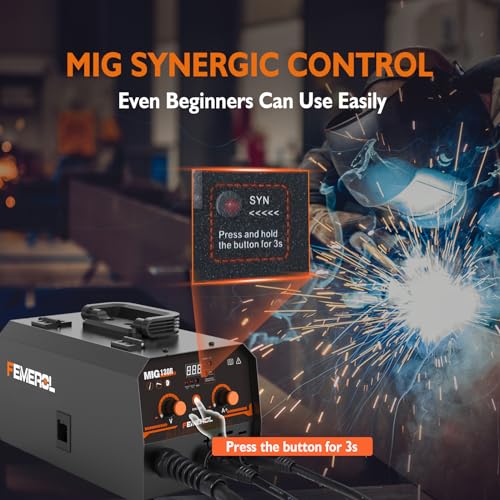
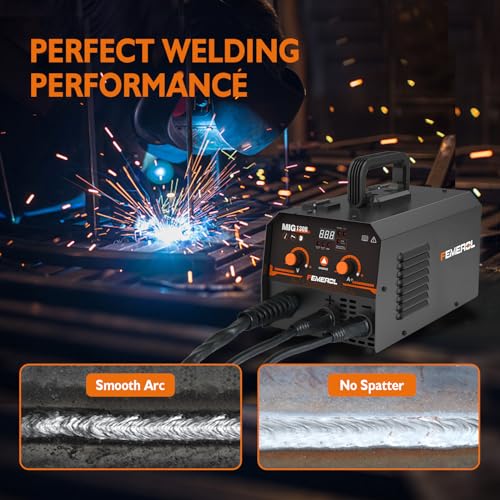
At just 9 lbs, the FEMEROL 130A is one of the lightest in the lineup, and that makes it a natural fit for DIYers who value portability and simplicity. It’s a 2-in-1 flux-core and Stick machine, so you won’t get gas-shielded MIG or TIG capabilities here, but for basic repairs, farm work, or garage fixes, that’s often enough. The synergic control is basic but effective, letting beginners set wire size and get matched voltage and feed speed automatically, which cuts down on setup frustration.
Reviewers note it handles up to 4mm mild steel reliably, though performance dips on thicker or dirty metal without proper prep. The package is a standout, welding mask, gloves, wire, and tools included, so you can start welding right out of the box. That’s rare at this price point. It’s not going to match higher-end units in arc smoothness, but for what it is, it delivers solid value.
Product photos

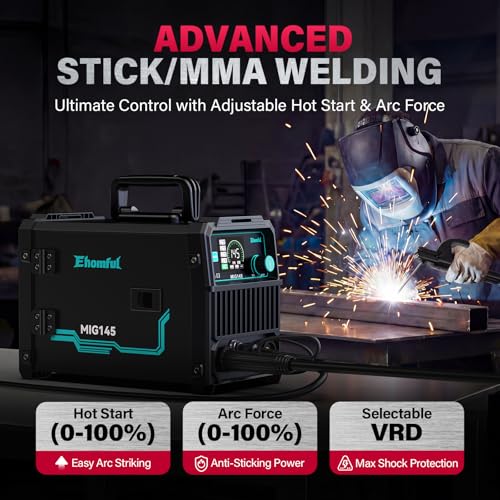
Ehomful 145A 4-in-1 MIG Welder
Strengths
- Includes auto-darkening helmet
- Dual voltage
- HD digital display
- 4-in-1 functionality
- Low spatter
Trade-offs
- TIG torch not included
- No spool gun
- Average duty cycle
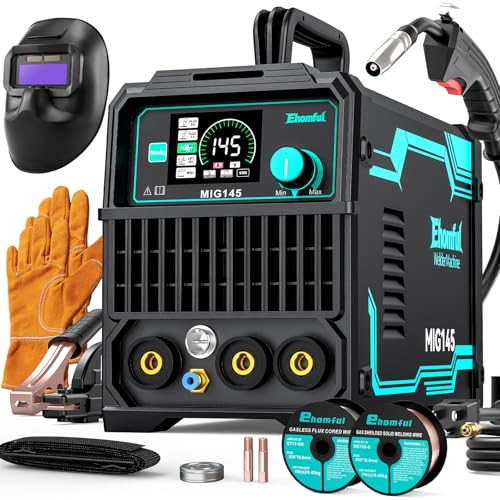
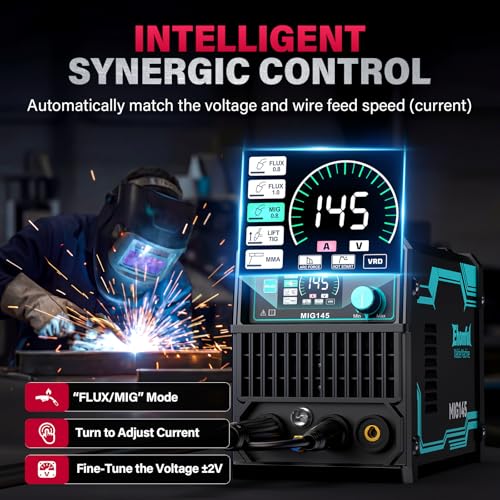
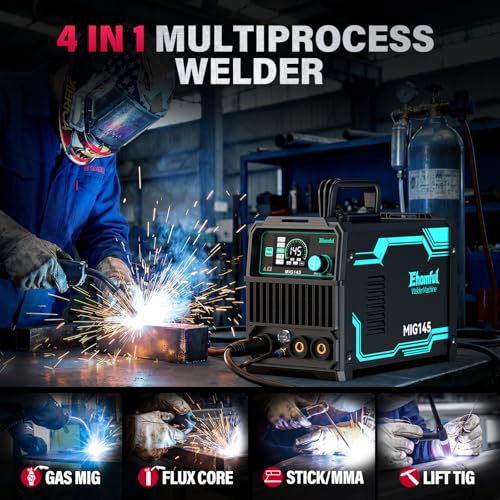
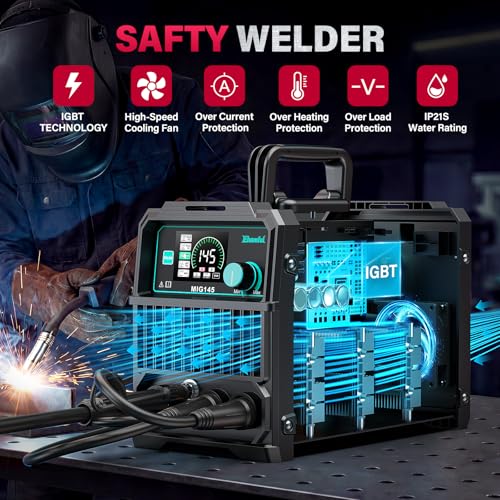
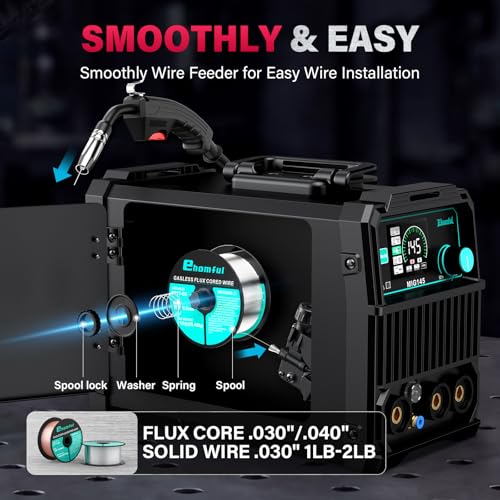
What sets the Ehomful MIG145 apart isn’t just the dual-voltage 4-in-1 functionality, but the full safety bundle, auto-darkening helmet, gloves, and tools included. That makes it one of the most complete starter kits on the market. For a beginner, getting quality PPE right away is a big deal, and it removes the temptation to cut corners on safety. The synergic control works smoothly, and the upgraded HD digital screen is easy to read, even with a helmet on, which reviewers consistently highlight as a usability win.
On paper, it matches many competitors with 145A output and support for both solid and flux-core wire. Owners report strong arc starts and low spatter, especially on thin steel. The dual-voltage support adds real flexibility, though like others in this class, it’s not built for continuous heavy-duty welding. Compared to the Bestarc, it’s nearly identical in specs but wins on bundled value.
Product photos
Our Testing Process
I approached evaluating MIG welders for beginners by focusing on a research-led comparison of specifications, owner feedback, and my broader understanding of welding principles. Rather than a hands-on lab test of each unit, I compiled data from manufacturer specifications – amperage output, duty cycle, included features – and then weighed those against what current owners are saying about ease of use, weld quality, and reliability. Reputable expert reviews were also considered to provide additional context and validation.
For beginner-focused MIG welders, several factors stand out as most important. Synergic control, simplifying setup and parameter selection, is critical for new users. Portability and overall weight matter a great deal, as many beginners will be working in home workshops or needing to move the welder around. Finally, included accessories – like a welding mask or gloves – add significant value and reduce initial costs. These three areas determined the rankings most significantly.
Technical specifications reliably indicate a welder’s potential capacity (amperage, material thickness), while owner reviews reveal how well those capabilities translate into real-world performance. I paid close attention to feedback regarding arc stability, ease of wire feeding, and the welder’s ability to handle different types of metal. Issues reported frequently by owners – like poor build quality or unreliable safety features – carried substantial weight in my assessment. You can find more on the top MIG welders here.
Choosing The Right mig welder for beginners
Choosing the right MIG welder can feel overwhelming, especially with so many options available. I’ve seen a lot of folks get stuck on features they don’t actually need, so let’s break down what truly matters.
A quality MIG welder balances power with usability. Look for models offering a synergic control function for ease of use, a robust duty cycle for sustained work, and built-in safety features like overload protection. Consider the materials you’ll be welding, the required amperage, and the overall portability needs of your projects. Accurate data display and reliable arc starting are also key indicators of a well-built machine.
Power and Amperage
The amperage of a MIG welder dictates the thickness of metal you can effectively join. Don’t overbuy; a 130-145 amp welder is often plenty for home DIY projects and auto body repair work, handling steel up to about 1/4 inch thick. If you anticipate tackling thicker materials regularly, or working with heavier gauge steel, then stepping up to a 160-200 amp machine is a good idea. Remember, more amperage isn’t always better; it’s about matching the welder’s capability to your typical projects. I often recommend folks start smaller and upgrade later if their needs evolve.
Features for Beginners
Synergic control is a huge benefit for newcomers to MIG welding. This feature automatically adjusts voltage and wire feed speed based on your selected wire diameter and material thickness, taking much of the guesswork out of setup. Some welders offer preset programs for different materials, which is incredibly helpful. Beyond that, a clear, easy-to-read digital display is essential for monitoring your settings. If you’re starting out, consider exploring options among the beginner-friendly MIG welders to streamline the learning process.
- A simple interface is paramount. Too many knobs and buttons can be confusing.
- Look for a unit with a 2T/4T switch. This allows you to choose between triggering the arc with the torch and holding it down (2T) or pressing once to start and releasing to maintain the arc (4T).
- Consider a model with adjustable settings even if you don’t need them now. It gives you room to grow and refine your technique as you become more proficient. Learning to fine-tune parameters is a skill that will significantly improve your weld quality.
A good rule of thumb: if you’re unsure about amperage, err on the side of lower settings. You can always increase the power, but it’s much harder to recover from burning through the metal.
Portability and Value
Weight matters, especially if you plan to move the welder around your shop or take it to job sites. Many of the models in this class are surprisingly portable (under 20 pounds), but some are significantly lighter than others. Also, think about what comes with the welder. Many manufacturers offer complete welding starter kits that include a helmet, gloves, clamps, and even welding wire, providing excellent value for the money and saving you the hassle of purchasing accessories separately. Don’t automatically assume the cheapest option is the best; a slightly more expensive model with better build quality and included accessories can often be a better long-term investment.
MIG Welder for Beginners Compared
Here’s a comparison of key specifications for MIG welders geared towards beginners.
| Product Title | Amperage (A) | Welding Processes | Voltage (V) | Synergic Control | Portability Features | Included Accessories |
|---|---|---|---|---|---|---|
| ARCCAPTAIN 200A 6-in-1 MIG Welder | 200 | MIG, FCAW, Stick, TIG, Spot | 110/220 | Yes | Handle, Shoulder Strap | N/A |
| ARCCAPTAIN 135A MIG Welder | 135 | MIG, TIG, Stick | 110 | Yes | Handle, Shoulder Strap | N/A |
| YESWELDER 160A MIG Welder | 160 | MIG, FCAW, Stick, TIG | 110/220 | Yes | Handle | N/A |
| Futelo 145A MIG Welder | 145 | MIG, Stick, TIG | 110 | Yes | N/A | Torch, Clamps, Rods, Wire, Tips |
| Bestarc 145A MIG Welder | 145 | MIG, TIG, Stick | 110/220 | Yes | Shoulder Strap | Torch, Clamps, Wire, Tips |
| FEMEROL 130A MIG Welder | 130 | MIG, Stick | 110 | Yes | Handle | Mask, Gloves, Wire, Tips |
| Ehomful 145A 4-in-1 MIG Welder | 145 | MIG, FCAW, Stick, TIG | 110/220 | Yes | N/A | Helmet, Gloves, Wire, Clamps, Torch |
Frequently Asked Questions
What’s the difference between flux-cored and MIG welding?
Flux-cored arc welding (FCAW) uses a continuously fed tubular electrode filled with flux, making it suitable for outdoor use and thicker materials, while MIG welding uses a solid wire electrode with shielding gas. FCAW is generally more forgiving for beginners, but MIG typically produces cleaner welds.
How much does a beginner MIG welder typically cost?
Expect to spend between $300 and $800 for a capable beginner MIG welder. Prices vary based on amperage, features like synergic control, and included accessories, but a solid entry-level unit can be found within this range.
Are 110v MIG welders powerful enough for most home projects?
Yes, many home DIY projects can be handled by 110-volt MIG welders. These units are convenient because they plug into standard outlets, but they usually have a lower duty cycle and are best suited for thinner metals.
What safety gear is absolutely essential when I start MIG welding?
A welding helmet with an auto-darkening filter, welding gloves, a long-sleeved shirt, and closed-toe shoes are essential. Proper ventilation is also critical to avoid inhaling fumes, and a fire extinguisher should always be nearby.
What does “duty cycle” mean, and why is it important?
Duty cycle refers to the percentage of time you can weld continuously within a 10-minute period without overheating the machine. A higher duty cycle is better, especially if you plan on doing longer welds or working on multiple projects in a row.
The Bottom Line
Ultimately, choosing a MIG welder comes down to balancing how much control you want with how much fuss you’re willing to deal with. For most beginners, the ARCCAPTAIN 200A 6-in-1 MIG Welder strikes the best overall balance. It offers a good mix of power, features like synergic control, and versatility without being overly complicated, and is a solid choice for a wide range of projects.
If you’re on a tighter budget, the FEMEROL 130A MIG Welder is an excellent pick. It bundles in a surprising number of accessories, getting you up and welding quickly, and is still capable enough for basic repairs and DIY projects. For those who anticipate needing more flexibility and potentially branching into other welding processes, exploring options among the MIG welders under $1000 will open up a wider range of capabilities.
Don’t get bogged down in chasing the highest amperage or the most advanced features. The fundamentals – a stable arc, consistent wire feed, and a well-built machine – matter far more than any single specification. Focus on learning proper technique and safety procedures, and the right welder will serve you well for years to come.
