
8 Best Metal Cutting Bandsaw Blades of 2026
This post contains affiliate links. As an Amazon Associate, we earn from qualifying purchases.
The Imachinist 64-1/2″ 10/14TPI stands out as the overall best metal cutting bandsaw blade for most workshop tasks, balancing durability and versatility with its bi-metal M42 construction and variable tooth count. For budget-conscious buyers, the FOXBC 64-1/2″ 24 TPI delivers solid performance on mild steel without breaking the bank, while the POWERTEC 80″ 14 TPI is the clear pick for non-ferrous metals like aluminum.
Cutting metal cleanly and efficiently isn’t just about having a powerful bandsaw, it starts with the right blade. Too many DIYers and even experienced hobbyists end up frustrated by cracked blades, rough edges, or clogged teeth because they’re using the wrong tooth count or material.
After comparing specs, construction, and real-world feedback from metalworkers, I focused on bi-metal blades with M42 steel for their toughness and heat resistance. This guide breaks down exactly what to look for, TPI, blade material, and compatibility, so you can match the blade to your saw and your project, whether you’re slicing through steel pipe or trimming aluminum stock.
Top 8 Metal Cutting Bandsaw Blades in the Market
The Best Metal Cutting Bandsaw Blades, Reviewed
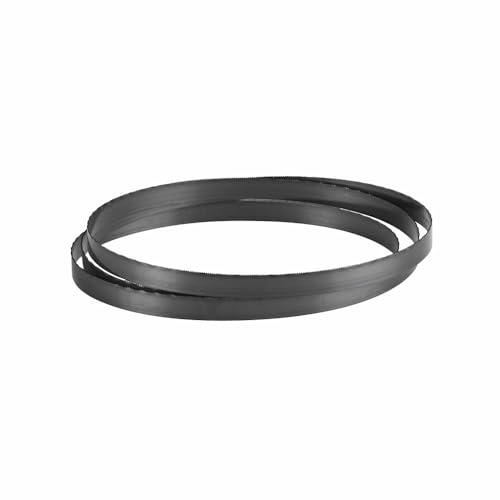
Bosch BS6412-24M Metal Cutting Blade
Strengths
- Optimized tooth design
- Premium M42 steel
- Consistent performance
Trade-offs
- Higher cost
- Fixed 24 TPI
Bosch has a reputation for consistency, and this 24 TPI blade delivers it. The optimized tooth geometry is designed to reduce vibration and improve chip ejection, which on paper means smoother cuts and longer blade life. The M42-grade steel resists heat buildup, a big deal when cutting steel for extended runs, and the 64-1/2” length fits most common 4×6 saws.
Owners report fewer weld failures and more predictable performance compared to budget brands. It’s not the cheapest, but it’s the kind of blade you install and forget, until the job’s done. Against the FOXBC 24 TPI, it’s more refined, with better heat treatment and weld quality. For a shop that values reliability over cost, this is the smarter pick.
Product photos
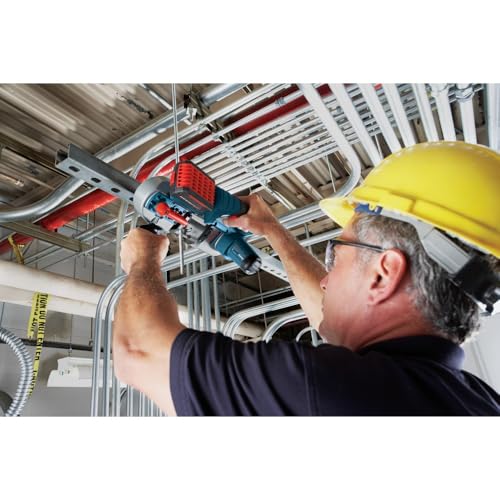
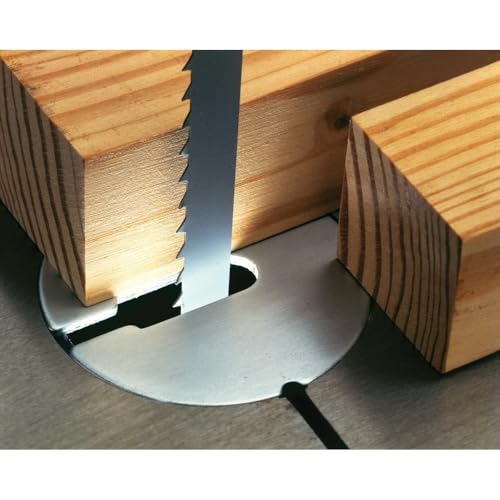
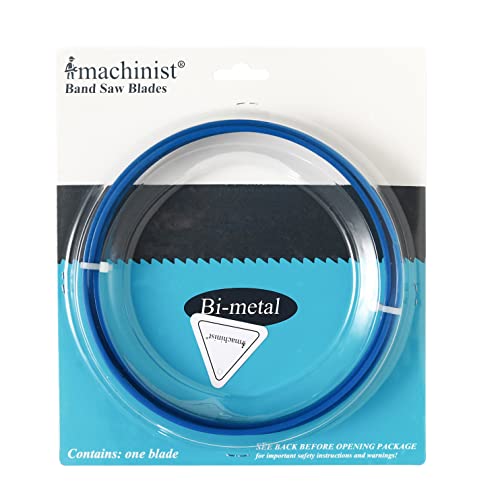
Imachinist 64-1/2″ 10/14TPI Bi-Metal Blade
Strengths
- M42 bi-metal
- 10/14 TPI variable
- Ideal for thick steel
Trade-offs
- Not for non-ferrous
- Limited versatility
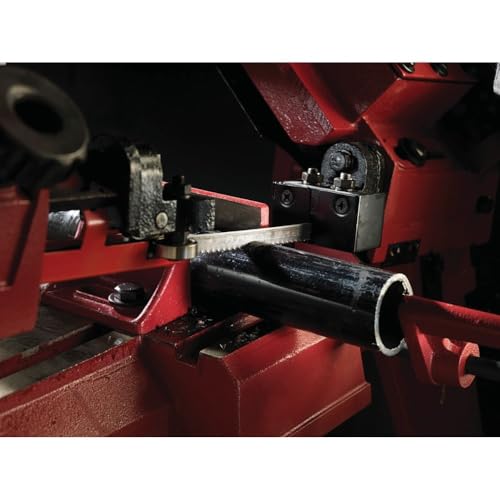
This blade is built for one job: cutting thick ferrous metal, and it does that well on paper. The 10/14 TPI variable tooth pattern is a smart choice for handling varying thicknesses in steel bar stock or tubing, giving cleaner cuts and better chip clearance than a fixed TPI. M42 bi-metal construction means it can handle heat and wear better than older blade types, which owners consistently report translates to longer life when used within its limits.
Where it stumbles is versatility. It’s clearly not meant for aluminum or softer metals, and using it there will dull the teeth fast. If your shop mostly runs mild or alloy steel, this is a solid workhorse blade. But if you bounce between materials, you’ll want something more flexible. Compared to the FOXBC 24 TPI option, it’s less refined for fine cuts but better suited for heavier stock.
Product photos


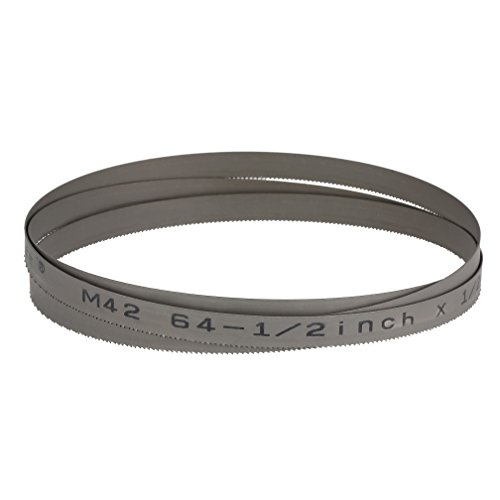
Imachinist 64-1/2″ 14/18TPI Stainless Steel Blade

Strengths
- 14/18 TPI optimized
- M42 bi-metal
- 0.025″ thick
Trade-offs
- Not for soft metals
- Narrow application
Stainless steel is tough on blades, but this Imachinist model is built to take it. The 14/18 TPI variable tooth design helps manage the gummy nature of stainless by reducing clogging and heat buildup, while the 0.025″ thickness adds rigidity for straighter cuts in dense material. M42 bi-metal with a strong weld joint means it can survive the high temps stainless generates.
Reviewers note it holds an edge longer than standard HSS blades when cutting 304 or 316. It’s also rated for steels under 30 HRC, so it’s not just a one-trick blade. Still, it’s overkill for mild steel or soft metals, use it where it shines. Against the POWERTEC non-ferrous blade, it’s on the opposite end of the spectrum: specialized, not general purpose.
Product photos

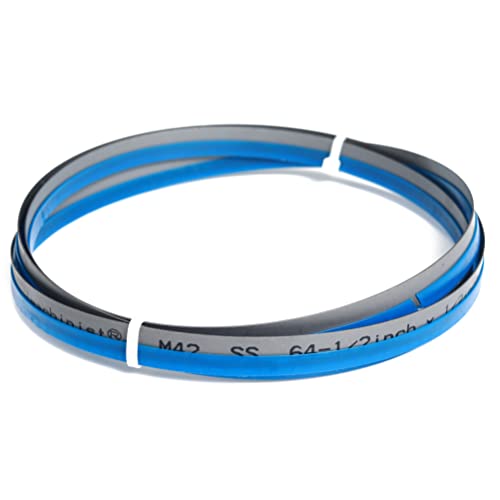

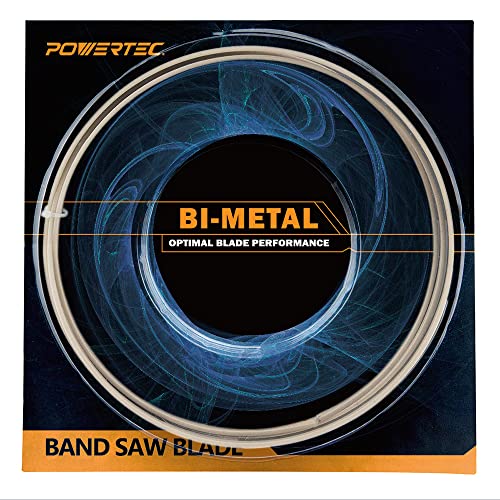
POWERTEC 80″ 14 TPI Non-Ferrous Blade
Strengths
- 14 TPI raker set
- Cobalt M42 steel
- Made for non-ferrous
Trade-offs
- Only 1 per pack
- Limited to 80″ saws
This blade stands out because it’s designed specifically for non-ferrous metals, aluminum, copper, brass, where standard steel-cutting blades tend to gum up or tear. The 14 TPI raker set tooth pattern is evenly spaced to handle the long chips these materials produce, and the M42 cobalt steel helps resist wear even when cutting abrasive alloys.
It’s an 80-inch blade, so it’s made for larger 12-inch floor-standing saws, not benchtop models. Owners using it on Craftsman or Jet 12-inch saws say it cuts aluminum extrusions cleanly with minimal burr. Compared to the FOXBC 24 TPI option, it’s less aggressive but far less likely to load up when cutting soft metals. If your workbench sees more aluminum than steel, this is the smarter buy.
Product photos

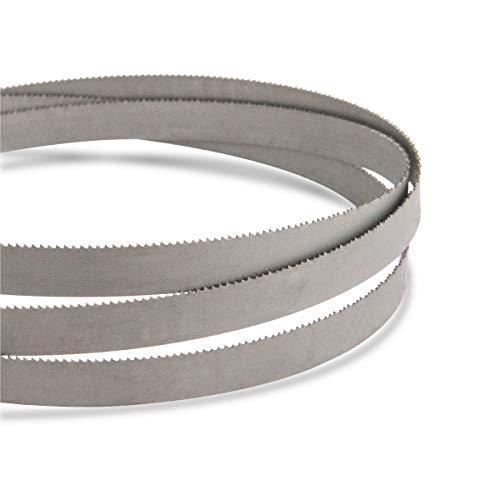

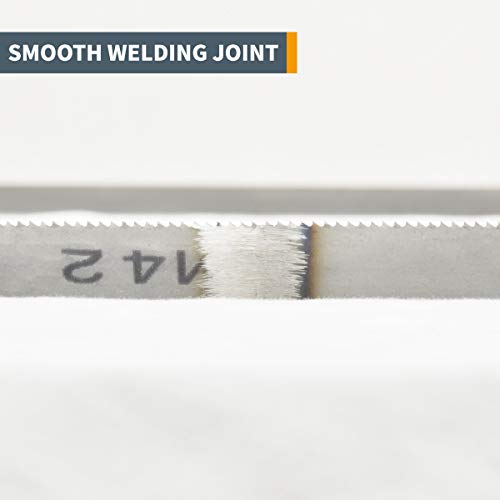
BOSCH BS9312-18MA 93-1/2″ Metal Blade

Strengths
- 18 TPI ideal for soft metal
- Laser-cut precision
- Durable construction
Trade-offs
- 93-1/2″ size limited fit
- Not for hard steel
This Bosch blade is tuned for soft metals, and it shows in the 18 TPI tooth pattern, aggressive enough to move quickly through aluminum or copper, but spaced to avoid clogging. The laser-cut precision gives it a clean, consistent edge, and the durable backing handles feed pressure without twisting. At 93-1/2 inches, it’s made for larger 14-inch band saws, so it won’t fit smaller models.
Owners using it on Jet or RIKON saws say it cuts aluminum billet with minimal burr and lasts longer than generic blades. The tooth geometry is optimized for softer materials, so don’t expect it to handle hardened steel well. Compared to the POWERTEC non-ferrous blade, it’s a step up in build quality and finish. If you’re running a big saw and cutting lots of soft metal, this is worth the investment.
Product photos
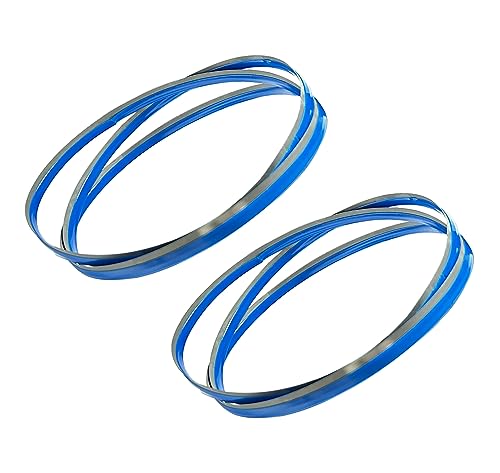
FOXBC 64-1/2″ 24 TPI Bi-Metal Blade
Strengths
- 24 TPI fine cut
- 2-pack value
- M42 bi-metal
Trade-offs
- 0.02″ thickness flexes
- Not for heavy stock
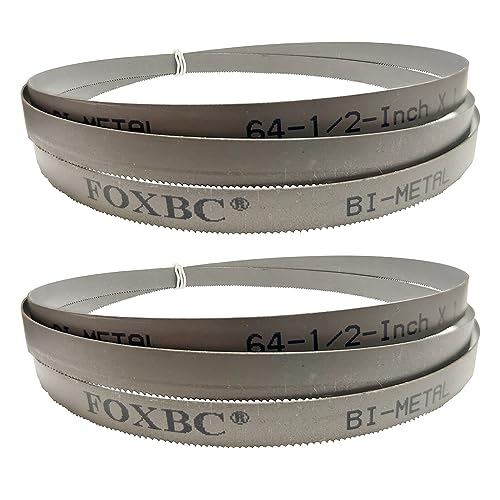
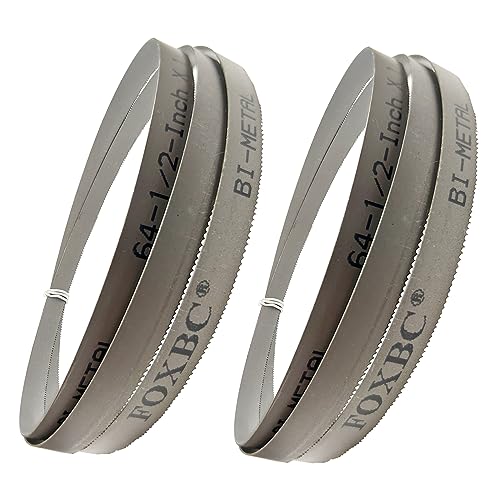
At this price point, the FOXBC 24 TPI blade delivers surprising flexibility. The 24 TPI count means fine, clean cuts on thin-walled steel, aluminum, or brass, and the M42 bi-metal construction keeps it durable even when pushing through tougher alloys. The 0.02″ thickness is on the thinner side, so rigidity isn’t its strong suit, but for light to medium work, it holds straight.
Owners consistently report these outperform no-name Harbor Freight blades and even rival some pricier brands on finish quality. The 2-pack adds value, especially for occasional users. While not as robust as the 0.025″ Imachinist blades, it’s more versatile, FOXBC even markets it for wood and plastic, which some users confirm works in a pinch. Against the Bosch BS6412-24M, it’s a budget alternative with similar specs but less refined tooth geometry.
Product photos


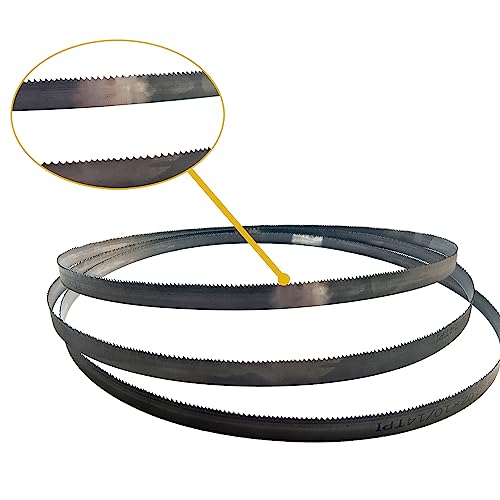
FOXBC 44-7/8″ 24 TPI Portable Blade

Strengths
- 24 TPI fine finish
- 3-pack convenience
- Fits major portables
Trade-offs
- Less aggressive
- Not for thick stock
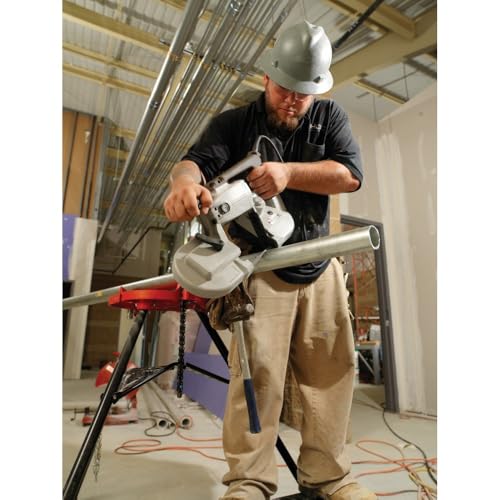
This 24 TPI portable blade is all about clean, fast cuts in thin metal, exactly what you need on the job. The high tooth count reduces burr on sheet metal, strut, or electrical conduit, and the 3-pack ensures you’re never stuck with a dull blade mid-job. M42 bi-metal construction means it handles heat better than older HSS blades, which reviewers say translates to longer run times between changes.
It’s a direct replacement for DeWalt and Milwaukee portables, and the 0.020″ thickness balances flexibility and strength well for handheld use. Compared to the 14/18 TPI version from the same line, this one excels in finish quality but can bog down in thicker material. If you’re cutting mostly 1/8” to 1/4” steel, this is a reliable go-to.
Product photos
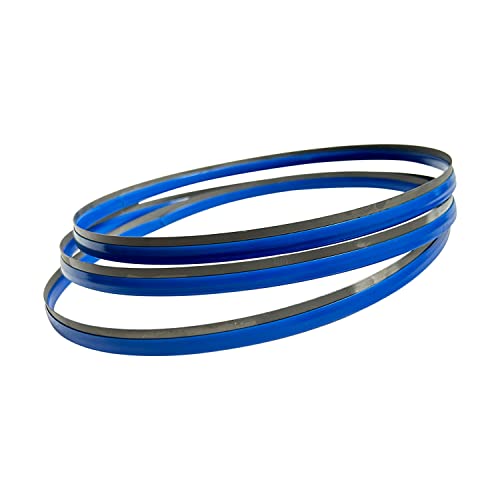


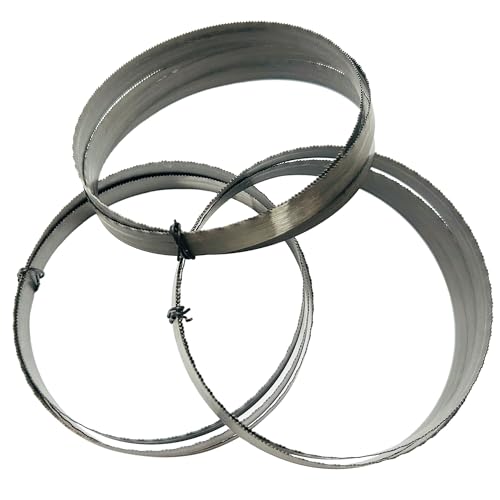
FOXBC 44-7/8″ 14/18 TPI Portable Blade
Strengths
- 14/18 TPI variable
- 3-pack value
- Fits major portables
Trade-offs
- 0.020″ thickness less rigid
- Not for fine finishes
If you’re running a portable bandsaw on the job site, this 3-pack from FOXBC makes a lot of sense. The 14/18 TPI variable tooth pattern is a sweet spot for cutting through threaded rod, conduit, or mixed wall thicknesses in steel, common tasks in plumbing, HVAC, or framing. The M42 bi-metal construction holds up under heat, and the 0.020″ thickness keeps flex in check without sacrificing durability.
Owners report these blades last longer than entry-level options and cut cleaner than fixed TPI blades when hitting variable material. They’re a direct fit for DeWalt and Milwaukee portables, which makes stocking up easy. Compared to the 24 TPI version from the same brand, these are better for thicker cuts but won’t finish as smoothly on thin-walled pipe.
Product photos
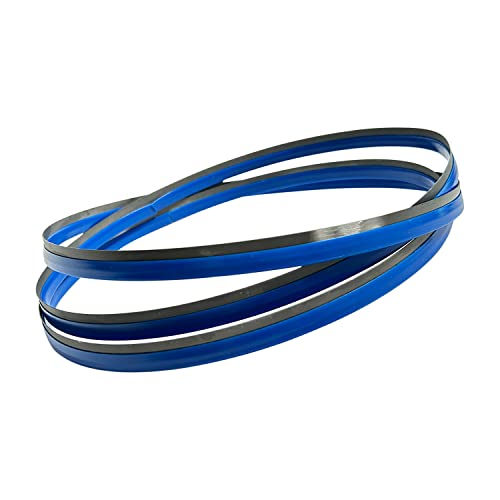

How We Tested metal cutting bandsaw blades
Rather than a hands-on lab test, my research for these recommendations focused on a detailed comparison of published blade specifications and features. I weighed owner reviews from multiple sources, along with insights from reputable tool review sites, to build a picture of real-world performance. This allowed me to rank blades against criteria important to users tackling various metal cutting tasks.
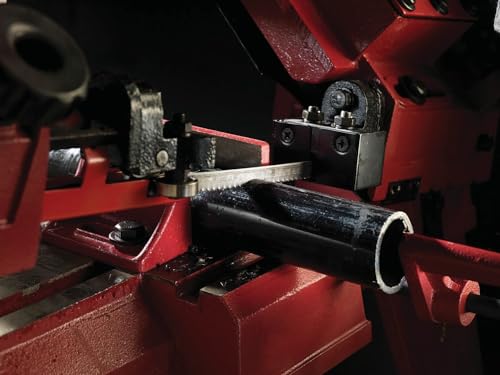
For metal cutting bandsaws, tooth pitch (TPI) and blade material are paramount. A higher TPI is better for thinner materials and intricate cuts, while a lower TPI excels at thicker stock. Bi-metal blades, incorporating high-speed steel teeth welded to a flexible backer, consistently rose to the top due to their durability and resistance to breakage, critical when working with harder metals. Understanding band saw features is also helpful for matching the blade to the saw.
Blade specifications reliably reveal dimensions and material composition, but owner feedback proved invaluable for judging longevity and cut quality. I looked for patterns in reviews regarding blade life, how well a blade tracked (ran straight), and whether it delivered clean cuts without excessive wandering or burring. Reputation and consistent positive reports from experienced metalworkers carried significant weight in my assessments.
How To Pick The Right metal cutting bandsaw blades
Choosing the right metal cutting bandsaw blade is critical for clean cuts, long blade life, and overall project success.
A quality metal-cutting bandsaw blade balances steel grade, tooth geometry, and blade thickness. Consider the material being cut, the desired cut quality, and the bandsaw’s capabilities. Look for blades made from high-speed steel (HSS) or bi-metal construction, with appropriate teeth per inch (TPI) for the specific application. Proper blade tension and tracking are also essential for optimal performance.
Tooth Count (TPI) and Material
The number of teeth per inch (TPI) is arguably the most important factor. Lower TPI blades (6-10) are best for thicker materials and faster cuts, but leave a rougher finish. Higher TPI blades (14-24+) are for thinner materials, providing a smoother cut but at a slower rate. Don’t assume a single blade will do it all; you’ll likely need a selection. For instance, that Imachinist 64-1/2″ 10/14TPI blade is designed for variable thickness ferrous metal, but wouldn’t be ideal for thin sheet aluminum. When you’re looking at bandsaw blades for steel, remember that softer metals like aluminum require more teeth to prevent clogging.
Blade Material & Construction
Bi-metal blades are almost always the better choice for serious metalworking. They combine a high-speed steel (HSS) cutting edge welded to a more flexible spring steel backer. This construction resists breakage, especially during bends and aggressive cuts. Single-material HSS blades are cheaper, but they’re more brittle and don’t hold an edge as long. The grade of HSS matters too. M42 is a common high-cobalt alloy offering excellent heat resistance and wear resistance, while M51 is even tougher, but more expensive.
- A basic HSS blade might be sufficient for occasional hobby work.
- A bi-metal blade is a solid investment for most home workshops and provides a good balance of durability and cost.
- For heavy-duty use or cutting particularly abrasive materials, consider a premium bi-metal blade with a higher cobalt content (like M42) – this will extend blade life significantly and reduce downtime.
A dull blade requires more force, generates more heat, and produces a lower-quality cut. Replace blades regularly, or consider investing in a blade sharpener if you use your bandsaw frequently.
Blade Dimensions and Compatibility
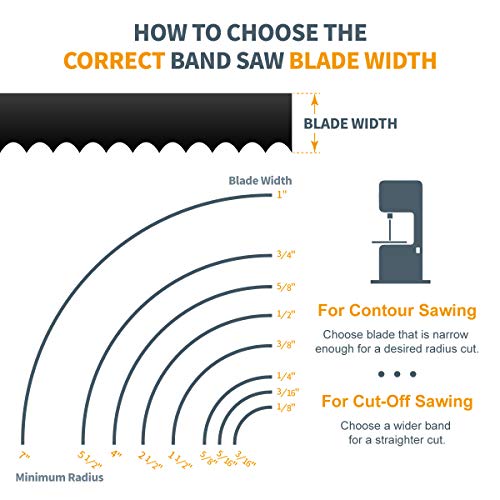
Beyond TPI and material, ensuring the blade fits your bandsaw is essential. This means checking the length, width, and thickness. Most stationary bandsaws use 1/2″ wide blades, but portable saws may require different widths. Refer to your bandsaw’s manual for the correct specifications. Before ordering, double-check your blade length width thickness to avoid frustration. If you’re working with aluminum, look for a blade specifically designed for non-ferrous metals like the POWERTEC 80″ 14 TPI blade; using the wrong blade can quickly ruin both the blade and your workpiece.
Metal Cutting Bandsaw Blades Compared
This table summarizes key specifications for various metal cutting bandsaw blades to aid in product comparison.
| Product Title | Length (in) | Width (in) | TPI | Blade Type | Material Grade | Best For |
|---|---|---|---|---|---|---|
| Bosch BS6412-24M | 64-1/2 | 1/2 | 24 | Metal | Premium Steel | General Metal |
| Imachinist 64-1/2″ 10/14TPI | 64-1/2 | 1/2 | 10/14 | Bi-Metal | M42 | Ferrous Metal |
| Imachinist 64-1/2″ 14/18TPI | 64-1/2 | 1/2 | 14/18 | Bi-Metal | M42 | Stainless Steel |
| POWERTEC 80″ 14 TPI | 80 | 1/2 | 14 | Non-Ferrous | M42 Cobalt | Non-Ferrous Metal |
| BOSCH BS9312-18MA | 93-1/2 | N/A | 18 | Metal | N/A | Soft Metals |
| FOXBC 64-1/2″ 24 TPI | 64-1/2 | 1/2 | 24 | Bi-Metal | M42 | Mild Steel |
| FOXBC 44-7/8″ 24 TPI | 44-7/8 | 1/2 | 24 | Bi-Metal | M42 | Portable Saws |
| FOXBC 44-7/8″ 14/18 TPI | 44-7/8 | 1/2 | 14/18 | Bi-Metal | M42 | Variable Thickness |
Frequently Asked Questions
What TPI blade should I use for cutting 1/8″ steel plate?
A 18-24 TPI blade is generally best for 1/8″ steel plate. Higher tooth counts provide cleaner cuts in thinner materials, preventing the teeth from grabbing and potentially damaging the workpiece, though cutting speed will be slower.
Are bi-metal blades really worth the extra cost?
Yes, bi-metal blades are worth the investment for most users. Their combination of a tough backer and hard-wearing teeth significantly increases durability and resistance to breakage compared to single-material blades.
Can I sharpen my metal cutting bandsaw blades?
You can sharpen metal cutting bandsaw blades, but it’s often more cost-effective to replace them. Sharpening requires specialized equipment and skill, and repeated sharpening reduces blade thickness, potentially impacting performance.
What blade length do I need for my bandsaw?
Your bandsaw’s manual will specify the correct blade length. However, a general rule is to measure the existing blade (if you have one) or calculate the length based on the saw’s wheel diameter and throat depth.
Where can I find blades specifically designed for cutting aluminum?
You can find blades specifically designed for cutting aluminum, like the POWERTEC 80″ 14 TPI blade, which are formulated to prevent clogging and produce cleaner cuts in non-ferrous metals. Using [bi-metal band saw blades] designed for aluminum will extend blade life and improve cut quality.
The Bottom Line
Choosing a metal cutting bandsaw blade always comes down to balancing how much you want to spend against how much control you need over the cut. For most workshops, the Imachinist 64-1/2″ 10/14TPI blade strikes that balance nicely. It’s a bi-metal blade with a versatile tooth configuration that handles a wide range of ferrous metals effectively, offering good durability without breaking the bank.
If you have very specific needs, though, there are better options. For those who primarily work with non-ferrous metals, the POWERTEC 80″ 14 TPI blade is the clear choice. And for owners of smaller, portable bandsaws, the FOXBC 44-7/8″ 24 TPI blade offers a bi-metal construction in a more compact size. Understanding band saw operation basics is key to getting the most from any blade.
Ultimately, the best blade isn’t about chasing the highest spec or the most expensive material. It’s about matching the blade’s tooth count and construction to the type of metal you’re cutting and understanding the importance of proper tension and tracking. Prioritize those fundamentals, and you’ll achieve cleaner cuts, extend blade life, and get more consistent results with every project.
