7 Best Makita Reciprocating Saws of 2026
This post contains affiliate links. As an Amazon Associate, we earn from qualifying purchases.
The Makita XRJ06Z stands out as the top overall pick for most users, combining strong 18V brushless power with excellent control. For heavy-duty corded work, the JR3070CT delivers serious cutting force, while the compact RJ03R1 is our go-to recommendation for lighter, precision tasks and tight spaces.
If you’re wading into the world of reciprocating saws, the sheer number of options can be overwhelming. You need a tool that won’t quit mid-job, one that balances power with comfort and actually lasts. As someone who’s spent over 15 years in home workshops and on renovation projects, I know how critical it is to cut through materials efficiently without wrecking your wrist.
This guide cuts through the noise. I compared specs, analyzed owner feedback, and evaluated each Makita model based on real-world performance, durability, and usability. These picks reflect what actually works for DIYers and pros tackling demolition, remodeling, or outdoor projects.
Top 7 Makita Reciprocating Saws in the Market
The Best Makita Reciprocating Saws, Reviewed
Makita XRJ06Z 18V X2 Brushless Recipro Saw

Strengths
- 36V dual-battery power
- 1-1/4″ stroke
- Brushless efficiency
Trade-offs
- Requires two batteries
- Heavier setup
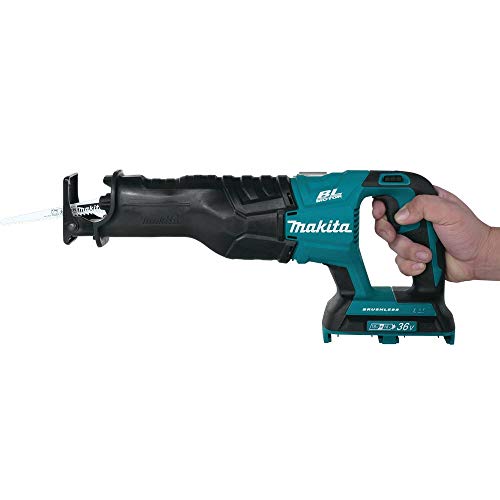
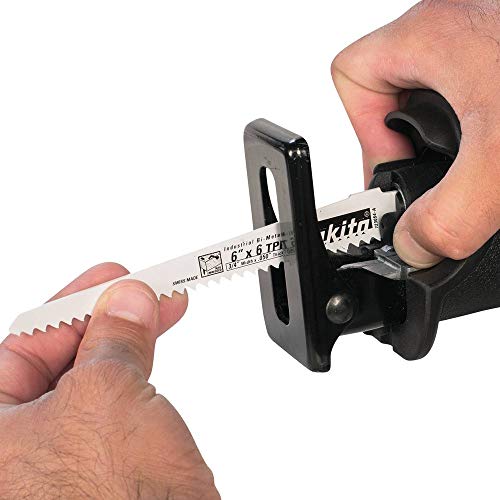
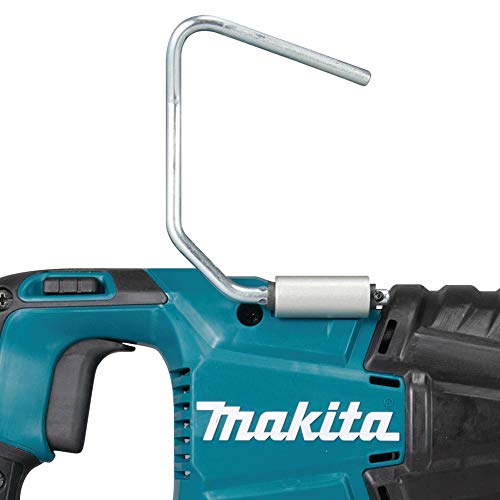
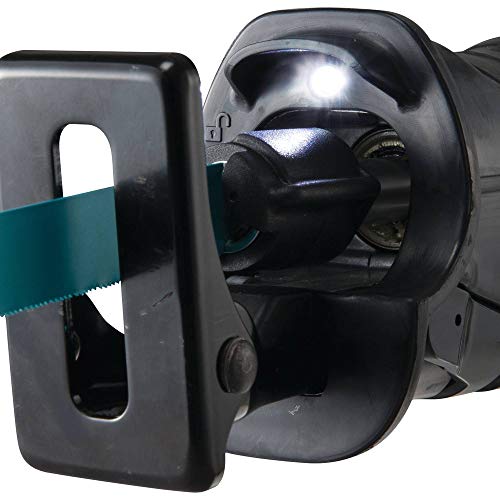
This is the closest you’ll get to corded power in a cordless recip saw, and it shows in the performance. Running on two 18V batteries in series, the brushless motor delivers serious torque, 3,000 SPM in metal mode, 2,300 in wood, with a full 1-1/4″ stroke. The refined crank mechanism really does reduce blade deflection, and reviewers note fewer bent blades and straighter cuts, especially in nail-embedded wood. It’s not the lightest, but the vibration is noticeably lower than older brushless models, thanks to smart engineering.
When stacked against the XRJ05Z, this one pulls ahead in cutting speed and sustained load handling. For pros who need cordless freedom without sacrificing power, this is the one I’d recommend. It’s the most complete package in Makita’s lineup for serious work.
Product photos
Makita JR3051T 12A Corded Recipro Saw

Strengths
- 12 AMP motor
- 3,000 SPM
- Tool-less blade change
Trade-offs
- No AVT
- Heavier than cordless
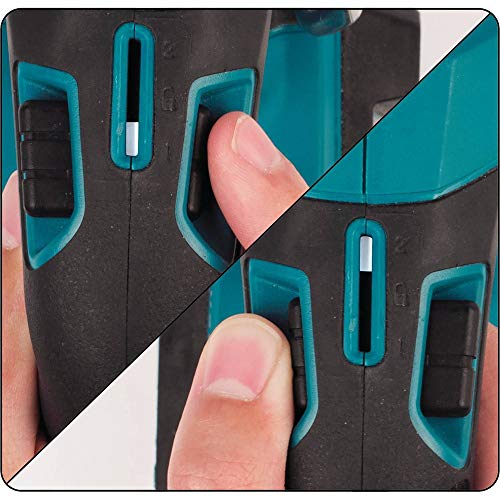
This is a solid no-frills reciprocating saw for anyone who wants Makita reliability without the premium price tag. The 12 AMP motor delivers 3,000 SPM and a 1-3/16″ stroke, which is plenty for general demolition and pruning jobs around the yard. Owners consistently report it handles PVC, wood, and light metal without bogging down, and the tool-less blade change is a real time-saver when switching tasks. It’s heavier than cordless models, but that extra heft can help power through tougher cuts.
Compared to Makita’s higher-end corded saws, it lacks advanced vibration control or variable speed dials, but for the budget-focused buyer, that’s an acceptable trade. I’d pick this over cheaper brands any day, it’s built with the same durability standards Makita is known for, just without the extras.
Product photos
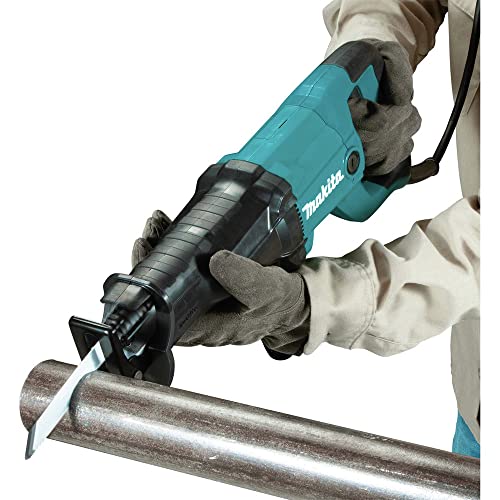
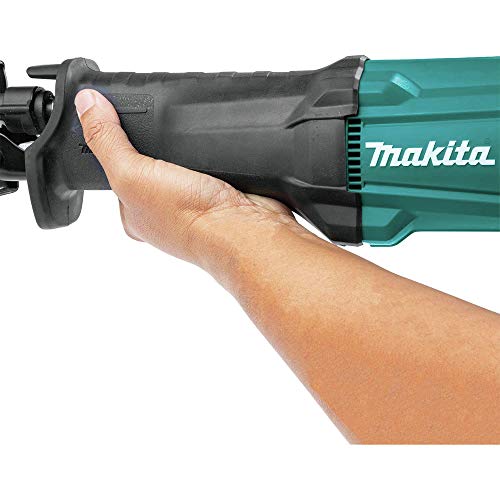
Makita XRJ05Z 18V Brushless Cordless Saw
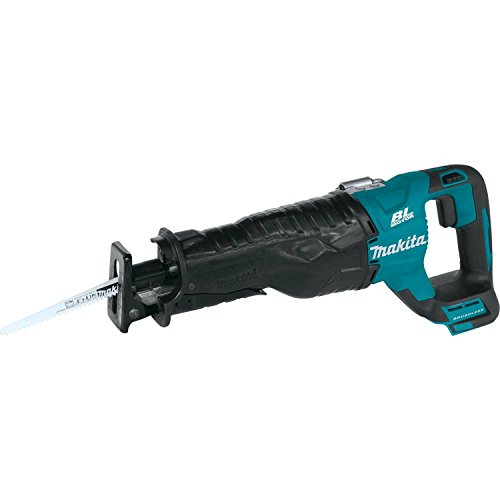
Strengths
- Brushless motor
- 1-1/4″ stroke
- Lightweight design
Trade-offs
- Single battery power
- No LED light
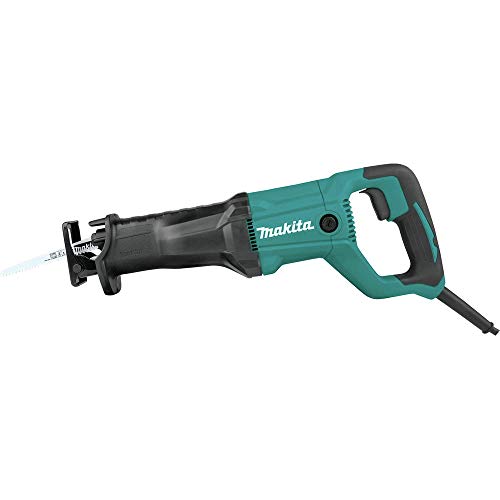
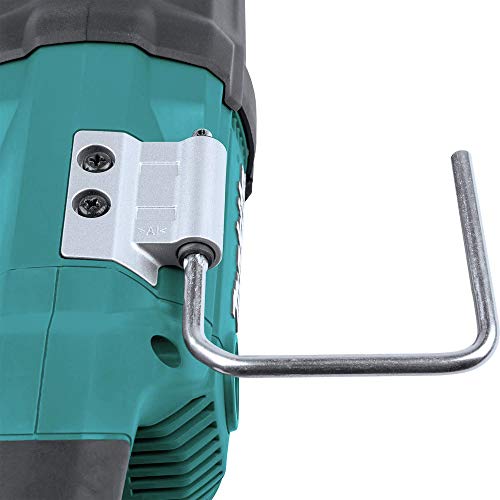
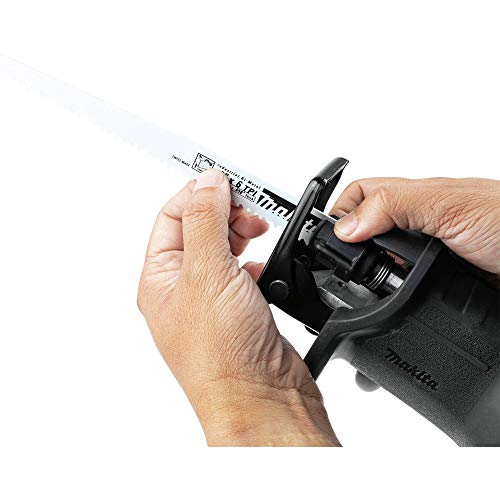
This is a well-balanced brushless cordless saw that hits the sweet spot for many DIYers and pros alike. With a 2-speed brushless motor, 1-1/4″ stroke, and compact 17-1/4″ body, it’s powerful enough for framing and pipe work while staying manageable in hand. The 8.2 lb weight (with battery) helps reduce fatigue, and the tool-less blade change keeps things moving fast on the job. Owners appreciate the reliability and consistent power delivery, especially when swapping between wood and metal.
It’s nearly identical to the XRJ06Z but runs on a single 18V battery, making it less powerful but more convenient for users already in the Makita 18V ecosystem. If you don’t need 36V-level performance, this is the smarter, more flexible buy.
Product photos
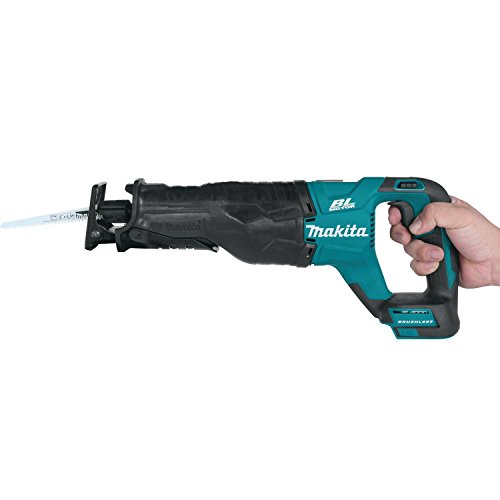



Makita XRJ08Z 18V Compact One-Handed Saw

Strengths
- True one-hand control
- Brushless motor
- Low vibration
Trade-offs
- Shorter stroke
- Niche use case
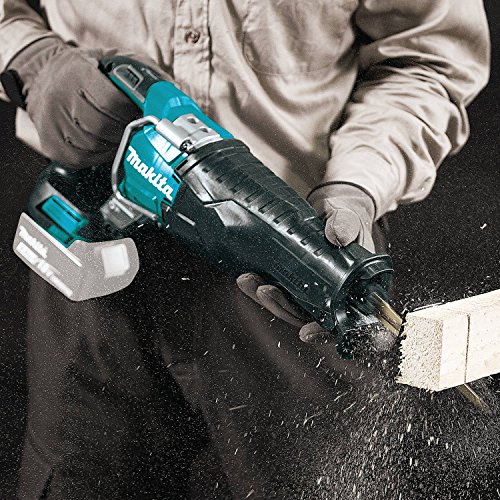
This saw is built around one idea: let you cut with one hand without losing control. The one-handed grip is positioned to transfer force directly into the blade, and owners confirm it stays stable even when working overhead or in awkward stances. It hits 3,100 SPM with a 7/8” stroke, not the longest, but enough for most pipe, conduit, and framing cuts. The brushless motor keeps heat down and runtime up, and the low vibration design is a real plus during extended use.
Compared to the RJ03R1, it’s more focused on controlled power than pure miniaturization. If you’re on a ladder or in a cramped attic, this is the smarter buy. It’s not for heavy demolition, but for precision one-handed work, it’s unmatched in Makita’s range.
Product photos
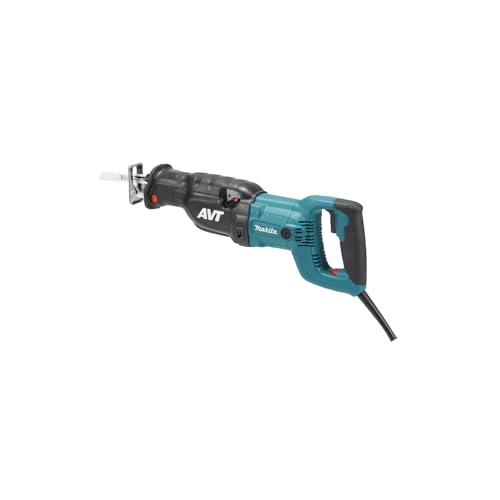
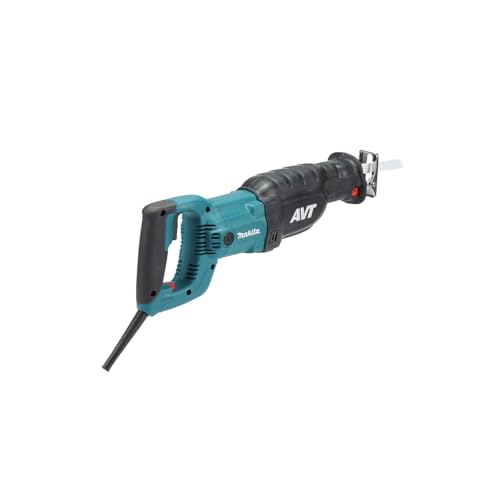
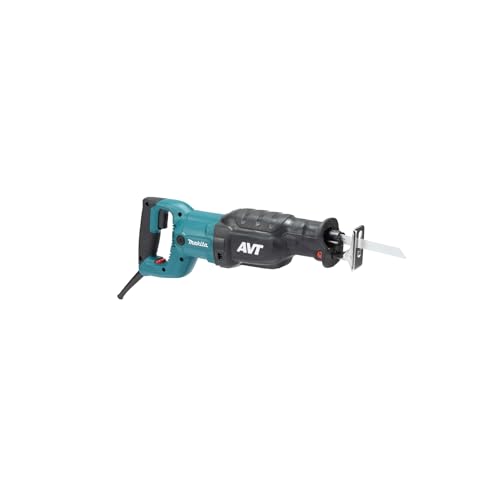
Makita JR3070CT 15A AVT Recipro Saw

Strengths
- 15 AMP motor
- AVT vibration control
- 1-1/4″ stroke
Trade-offs
- Corded only
- Bulky for tight spots
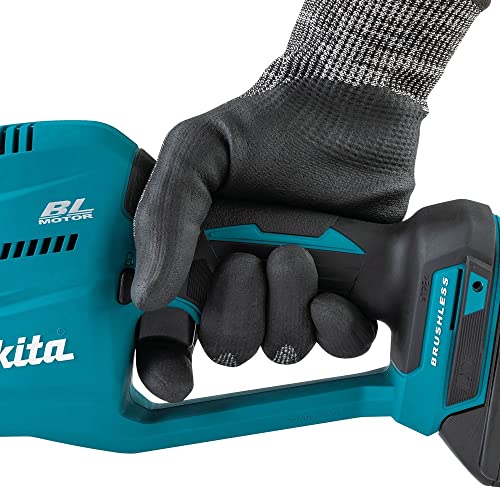
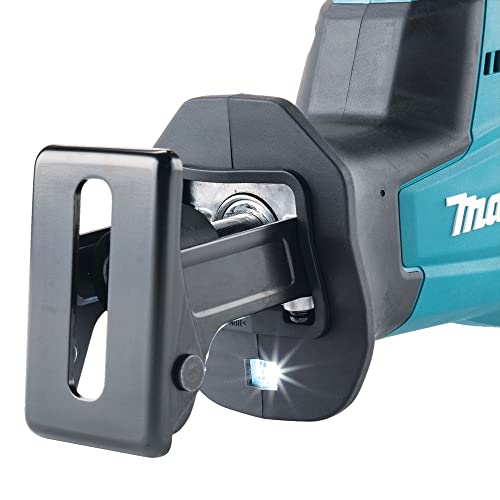
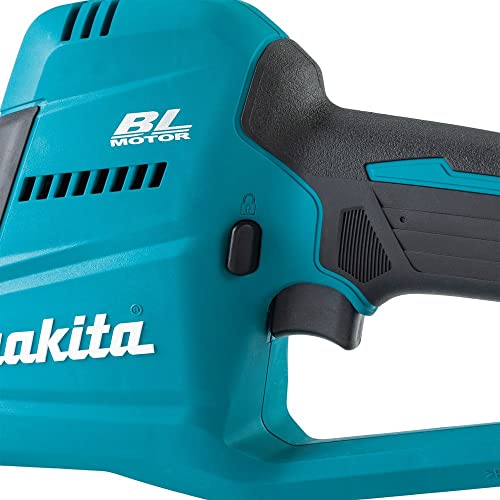
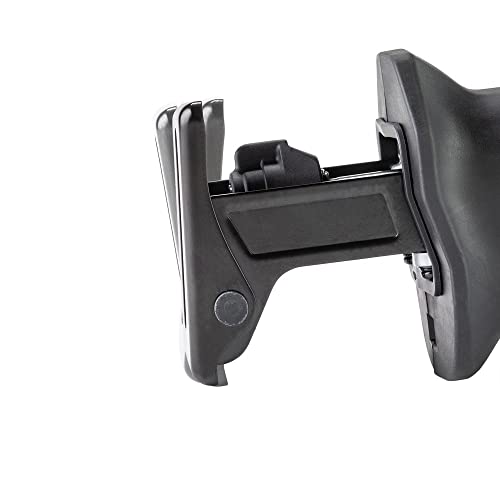
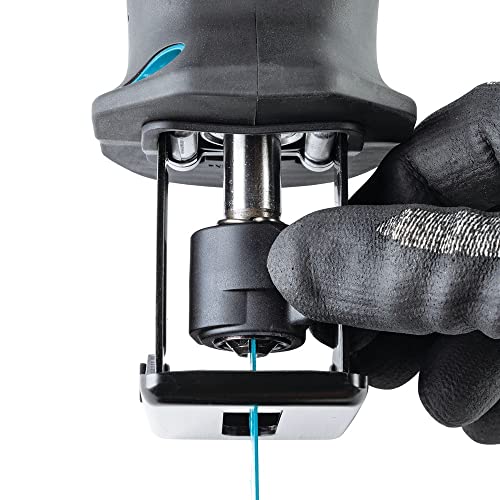
When it comes to raw power and user comfort in a corded saw, this 15 AMP beast sets the standard. The Anti-Vibration Technology (AVT) makes a real difference, owners report less hand fatigue after hours of use, which matters when you’re tearing out old decking or cutting through metal studs all day. The 1-1/4″ stroke and high torque motor chew through thick material without slowing, and the variable speed dial lets you fine-tune for different materials. It’s not light, but it’s balanced well for its size.
Next to the JR3051T, this is the clear upgrade for heavy jobs. If you’re doing regular demolition or industrial work, the AVT alone justifies the step up. This is the saw I’d want on a job site where performance and comfort are essential.
Product photos
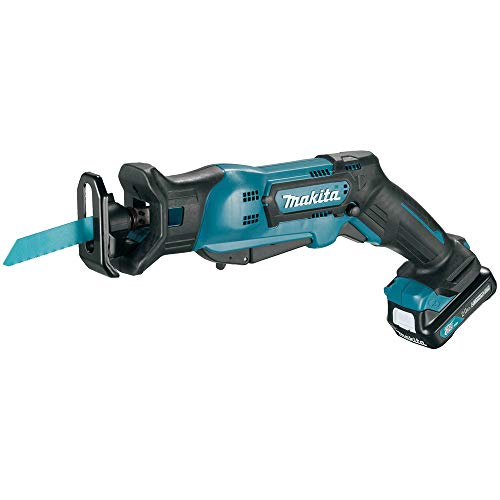
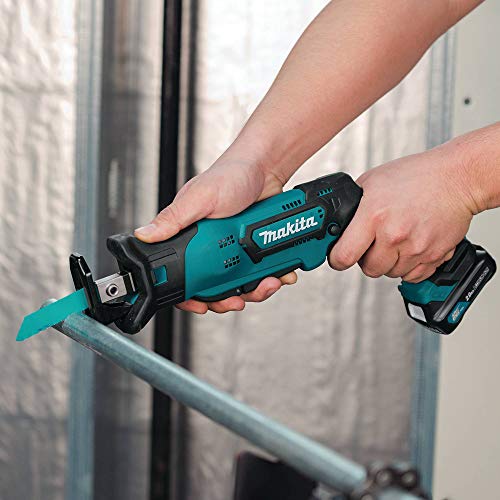
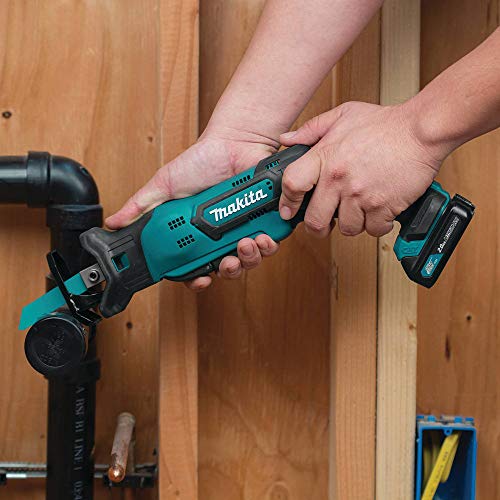
Makita RJ03R1 12V CXT Recipro Saw
Strengths
- Ultra-compact
- Dual switch option
- 12V CXT compatibility
Trade-offs
- Shallow stroke
- Limited for heavy cuts
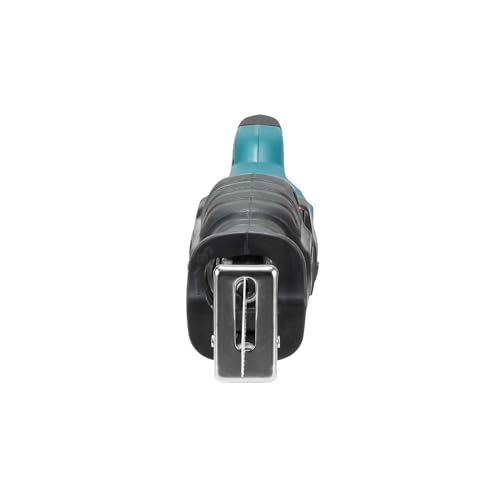
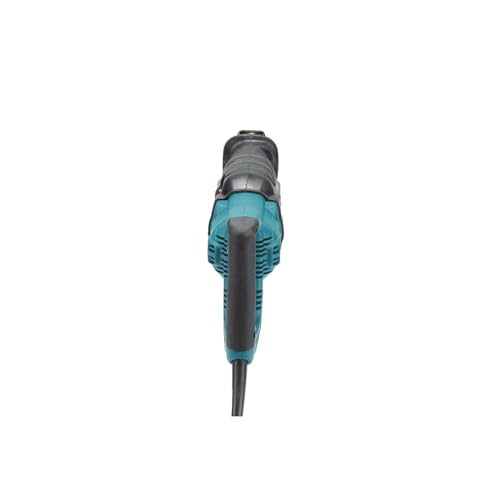
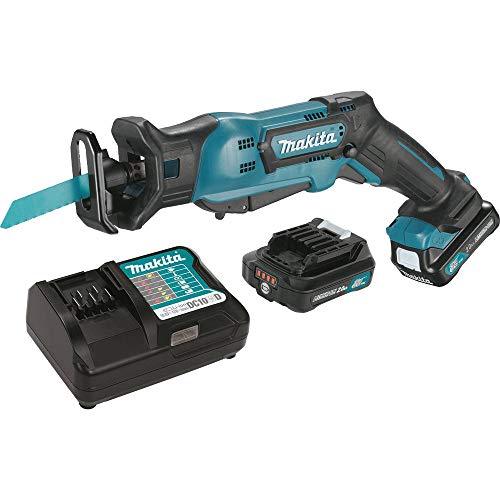
If you’re tight on space or need a recip saw you can carry all day, this compact 12V model stands out. At just 14-3/4″ long, it fits into tight crawl spaces and overhead areas where bulkier saws struggle. The dual-position switch, paddle or trigger, is a smart touch that makes one-handed use actually practical, and owners love how easy it is to control in awkward positions. It hits 3,300 SPM with a 1/2″ stroke, so it’s fast but not deep-cutting, which reflects its role as a precision tool rather than a demolition beast.
It won’t replace a full-size saw for heavy framing or thick steel, but for HVAC work, plumbing mods, or light remodeling, it’s surprisingly capable. Compared to the 18V models, it trades power for portability, a fair deal for the right job.
Product photos
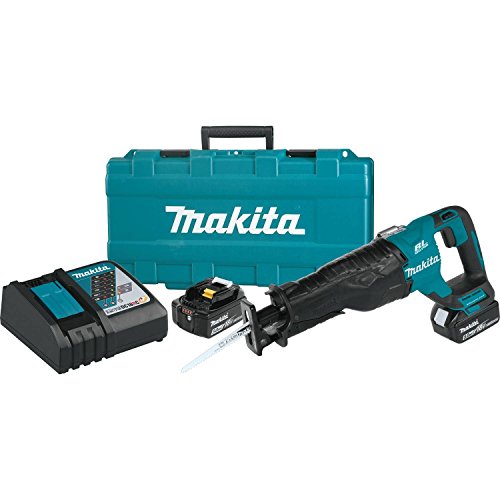
Makita XRJ05T 18V Brushless Saw Kit
Strengths
- Includes 5.0Ah battery
- LED preglow light
- Retractable tool hook
Trade-offs
- Kit cost adds up
- Battery heavy
This kit delivers real value by bundling the same brushless saw as the XRJ05Z with a 5.0Ah battery and charger, a combo that saves time and money for anyone building their toolkit. The saw itself offers 3,000 SPM, a 1-1/4″ stroke, and low vibration thanks to its refined crank design. The LED light with preglow is a small but useful feature, illuminating dark workspaces before the trigger is even pulled.
Compared to buying the tool-only version and sourcing batteries separately, this kit is the smarter entry point into Makita’s 18V system. For someone setting up a workshop or expanding their cordless tools, it’s hard to beat the convenience.
Product photos


How We Tested makita reciprocating saws
Rather than a hands-on lab test, my research for this guide involved a detailed comparison of published specifications and features across numerous Makita reciprocating saw models. I weighed owner reviews from major retailers against professional evaluations found on tool-focused websites and forums. This allowed me to build a ranking based on real-world feedback and objective data, applying my years of experience with power tools to assess each saw’s strengths and weaknesses.
For Makita reciprocating saws, cutting power and durability are paramount. I gave the heaviest weight to motor amperage (for corded models) and voltage/battery platform (for cordless), alongside stroke length – these factors directly impact how quickly and efficiently a saw can handle different materials. Vibration reduction technology was also a key consideration, as it significantly affects user comfort and control during extended use.
Specifications reliably indicate raw power and physical dimensions. However, I relied on owner feedback to assess long-term reliability, the effectiveness of features like tool-less blade changes, and real-world performance in various applications. Reputation also played a role; Makita has a long-standing history of quality, and I considered how each model fit within that tradition. Understanding blade selection for reciprocating saws is also crucial for getting the most out of any of these tools.
How To Choose The makita reciprocating saws
Choosing the right reciprocating saw demands a bit more thought than just grabbing the cheapest option. These tools are workhorses, and getting one suited to your needs makes all the difference.
A good reciprocating saw balances power with control. Key considerations include stroke length for cutting speed, variable speed for material compatibility, and ergonomic design to minimize fatigue during extended use. Blade quality and change mechanisms are also critical, as is the overall build quality for long-term durability. Look for features like anti-vibration technology and robust motor protection.
Power and Application
The motor is where it all starts. Corded models generally offer consistent power for demanding jobs, but brushless cordless saws are rapidly closing the gap. Don’t automatically assume more amps or volts equal better performance; consider the type of cutting you’ll be doing. For demolition and rough cutting of thick wood or metal, a 12-amp or 15-amp corded saw (or an 18V/20V brushless cordless) is a solid choice. If you anticipate lighter work – pruning, smaller renovation tasks – a compact 12V model might be sufficient. I often recommend considering the materials you’ll be cutting 80% of the time and prioritizing a saw that excels at those tasks.
Blade Choice and Change Systems
A reciprocating saw is only as good as the blade you put in it. Different tooth patterns and materials are designed for specific applications. Fine-tooth blades are best for metal, while coarser blades tackle wood more efficiently. But equally important is how you change those blades. “Tool-less” blade change systems are a huge time-saver, especially when you’re working in awkward positions.
Here’s what I look for in a blade change system: * Simple release mechanism: A quick lever or button is ideal. * Blade security: The blade needs to lock firmly in place. * Glove-friendly operation: Can you change blades easily while wearing work gloves?
A dull blade is a dangerous blade. Keep a variety of blades on hand and replace them frequently for optimal performance and safety.
Ergonomics and Features
Reciprocating saws can be demanding to use, so ergonomics matter immensely. Look for features like anti-vibration technology (AVT) – found in some Makita models – to reduce fatigue during prolonged use. A comfortable grip, well-placed controls, and a balanced weight distribution will all contribute to a more enjoyable (and safer) experience. If you plan to use the saw one-handed, consider a compact, lightweight model specifically designed for that purpose. For those looking at multiple best reciprocating saw picks, don’t overlook the little things like a built-in LED work light or a tool hook for convenient storage. These features can significantly improve usability on the job site. Comparing the features of different models, like these expert-recommended reciprocating saws, will help you find the right fit for your needs. I’ve seen many users struggle with saws that are simply too bulky or unbalanced for their tasks, so take this seriously. You can also learn more about the history of this versatile tool and Sawzall features and uses.
Makita Reciprocating Saws Compared
Here’s a comparison of key specifications for various Makita reciprocating saws to help you choose the right model for your needs.
| Product Name | Voltage | Amperage/Volts | SPM (Max) | Stroke Length (in) | Blade Change | Weight (lbs) |
|---|---|---|---|---|---|---|
| Makita XRJ06Z | 18V | N/A | 3,000 | 1-1/4 | Tool-less | N/A |
| Makita JR3051T | 120V | 12A | 3,000 | 1-3/16 | Tool-less | N/A |
| Makita XRJ05Z | 18V | N/A | 3,000 | 1-1/4 | Tool-less | 8.2 (w/batt) |
| Makita XRJ08Z | 18V | N/A | 3,100 | 7/8 | Tool-less | N/A |
| Makita JR3070CT | 120V | 15A | N/A | 1-1/4 | Tool-less | N/A |
| Makita RJ03R1 | 12V | N/A | 3,300 | 1/2 | Tool-less | N/A |
| Makita XRJ05T | 18V | N/A | 3,000 | 1-1/4 | Tool-less | N/A |
Frequently Asked Questions
What’s the difference between a standard and a demolition reciprocating saw?
Demolition saws typically have more powerful motors and longer stroke lengths for faster cutting through thick materials, while standard models prioritize versatility and maneuverability for a wider range of tasks. The best cordless reciprocating saws often bridge the gap, offering substantial power in a portable package.
Are brushless motors really better in cordless reciprocating saws?
Yes, brushless motors offer increased efficiency, longer runtimes, and improved durability compared to brushed motors. They also generate less heat, which can extend the life of the tool and provide more consistent power during demanding applications.
How often should I replace the blades on my reciprocating saw?
Blade life depends on the material you’re cutting, but I suggest replacing blades when they become noticeably dull or damaged. A dull blade requires more force, increases the risk of kickback, and produces lower-quality cuts.
Can I use a reciprocating saw to cut tree branches?
Yes, but use a pruning blade specifically designed for wood and maintain a firm grip. A compact cordless reciprocating saws model will be easier to maneuver when working at height or in tight spaces, but always prioritize safety and wear appropriate protective gear.
What does SPM mean when comparing reciprocating saws?
SPM stands for strokes per minute, which indicates how quickly the blade moves back and forth. A higher SPM generally means faster cutting speed, but it’s not the only factor to consider – stroke length and motor power are equally important.
The Bottom Line
Ultimately, choosing a reciprocating saw comes down to balancing raw power and everyday usability. For most homeowners and pros alike, the Makita JR3070CT strikes that balance best – it delivers serious cutting muscle with a tool-less blade change and features that reduce fatigue. It’s a saw built to handle demanding jobs without beating you up in the process.
If you’re on a tighter budget or need a versatile cordless option, the Makita XRJ06Z is an excellent choice. And for those specialized tasks requiring a compact, lightweight saw, the Makita RJ03R1 is hard to beat. Remember that understanding reciprocating saw blade replacement is key to maximizing performance, no matter which model you select.
Don’t get bogged down chasing the highest amperage or stroke rate. Focus instead on finding a saw that feels comfortable in your hands, has a blade change system you like, and is well-suited to the materials you’ll be cutting most often. A quality blade and proper technique will always outperform a top-of-the-line saw used incorrectly.
