
8 Best Knife Sharpening Tools of 2026
This post contains affiliate links. As an Amazon Associate, we earn from qualifying purchases.
The Work Sharp Precision Adjust Elite stands out as the best overall knife sharpening tool, delivering precise angle control and versatile sharpening stages. For those on a budget, the AccuSharp Knife Sharpener offers surprising performance with minimal learning curve. If you prefer traditional methods, the Intelitopia Complete Knife Sharpening Stone Set provides exceptional flexibility across grits and steel types.
A dull knife doesn’t just make prep work harder, it increases the risk of slips and cuts. Most people struggle to sharpen blades consistently because they’re using tools that don’t guide the angle or match their skill level.
This guide cuts through the hype, focusing on real-world performance, durability, and ease of use. I researched each option based on abrasive quality, angle consistency, and feedback from actual owners, not marketing claims. Whether you’re reviving old knives or maintaining a professional set, these picks deliver reliable results.
Top 8 Knife Sharpening Tools in the Market

The Best Knife Sharpening Tools, Reviewed
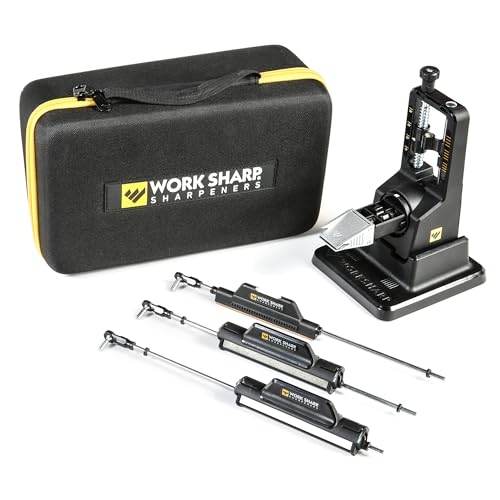
Work Sharp Precision Adjust Elite Knife Sharpener
Strengths
- Adjustable angle guide
- Handles serrated knives
- Complete abrasive set
Trade-offs
- Higher price point
- Larger footprint
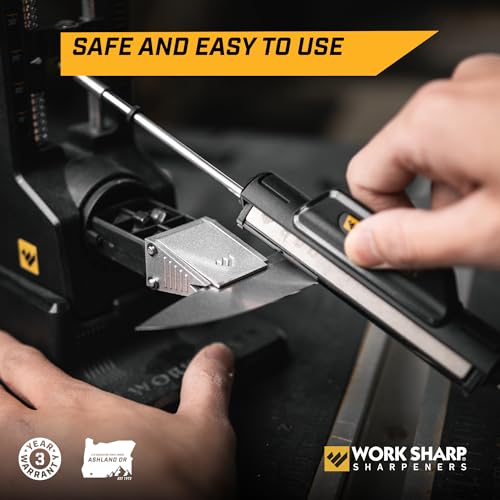
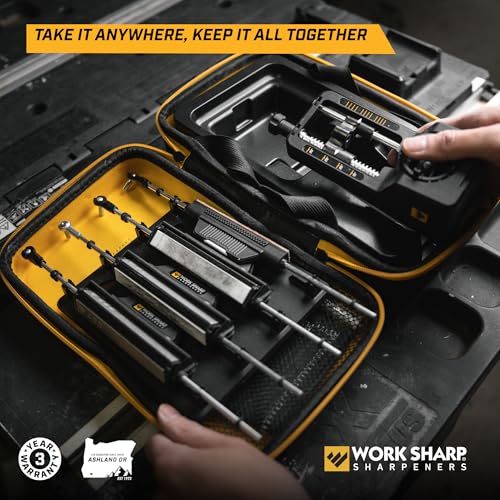
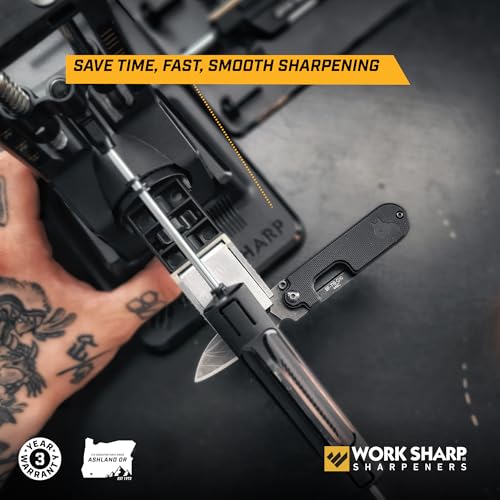
This is the closest thing to a professional sharpening setup you can own at home. The adjustable angle guide, from 15° to 30°, means it handles Japanese, Western, and outdoor knives with equal confidence. Owners consistently report barbershop-level sharpness, and the inclusion of a conical ceramic rod for serrated knives is a standout; most systems can’t touch those edges.
The guided system makes it foolproof for beginners, yet precise enough for enthusiasts. Compared to other guided sharpeners, the Elite kit includes more abrasives, diamond plates, ceramic rods, and a tri-brasive attachment, which means fewer add-ons needed. It’s the most complete system here, and that’s why it earns the overall top spot.
Product photos


Intelitopia Complete Knife Sharpening Stone Set
Strengths
- High grit range
- Includes angle guide
- Flattening stone included
Trade-offs
- Steep learning curve
- Requires water prep
This whetstone set is built for people who care about the craft of sharpening. The dual grits, 400/1000 for reshaping, 3000/8000 for polishing, let you take a knife from dull to mirror-finish, and the included angle guide helps maintain consistency. Owners report the corundum stones cut cleanly and last a long time, especially with the included flattening stone to correct wear.
It’s not the fastest option, and beginners might struggle without practice, but for enthusiasts, this kit delivers professional-level results. Compared to pull-through sharpeners, it offers full control and preserves blade life better over time. The bamboo base and leather strop add a premium feel without gimmicks.
Product photos


AIERLIAN Rolling Knife Sharpener Kit

Strengths
- Magnetic angle guide
- Diamond and ceramic discs
- Leather strop included
Trade-offs
- No serrated knife support
- Wood base needs care
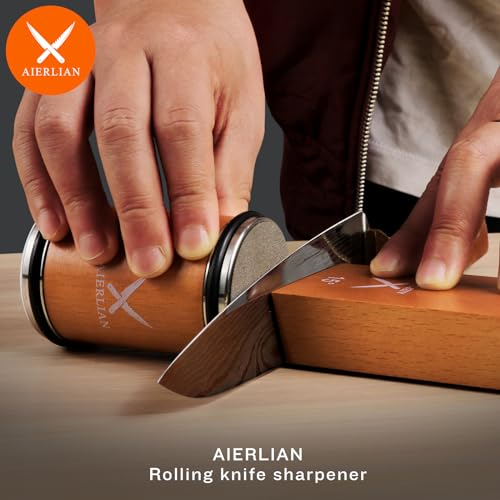
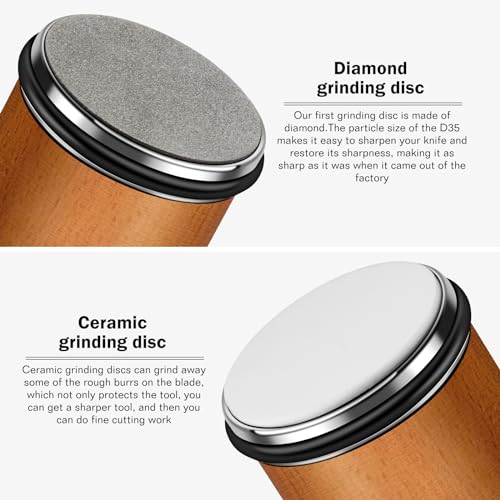
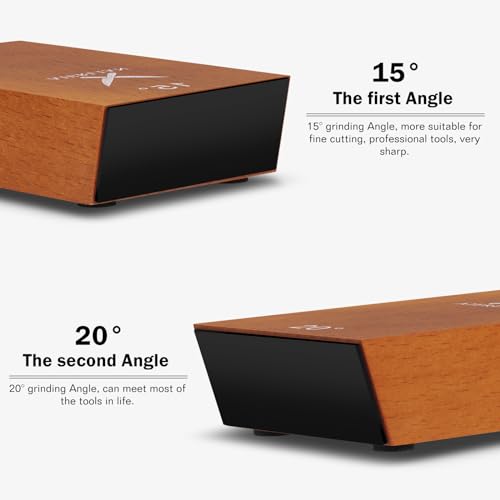
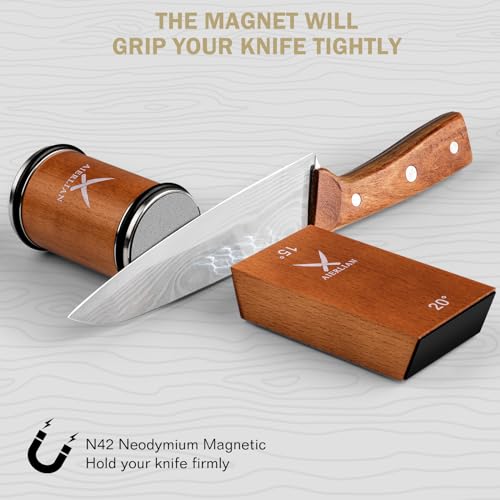
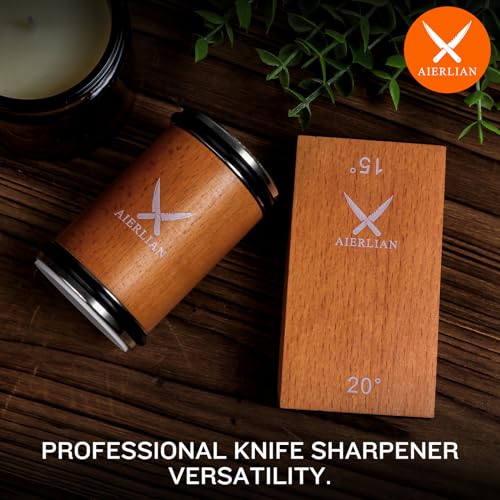
The AIERLIAN roller sharpener stands out for delivering fast, repeatable results with minimal effort. The #400 diamond and #3000 ceramic discs work in sequence to reshape and polish edges, and owners report it brings knives back to near-factory sharpness in minutes. The magnetic angle guide, offering 15° and 20° settings, keeps the blade stable and ensures consistent contact, which is rare in this style.
The natural wood base and leather strop add a premium touch, and the strop actually makes a difference in final smoothness. It’s not for serrated knives or scissors, but for straight-edged kitchen tools, it’s one of the most user-friendly systems available. I’d pick this over basic pull-through sharpeners any day for consistency.
Product photos
AccuSharp Knife Sharpener
Strengths
- Fast sharpening
- Reversible blades
- Ergonomic grip
Trade-offs
- Not for precision work
- Limited angle control
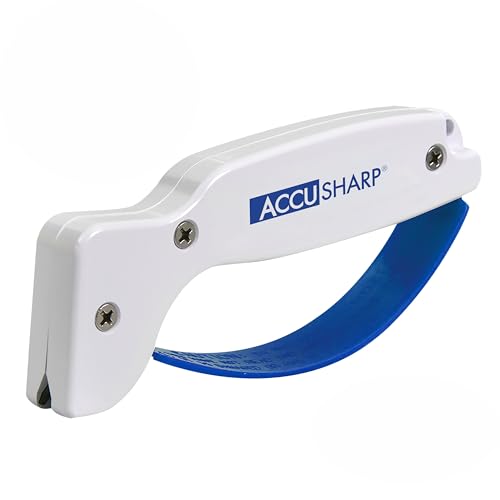
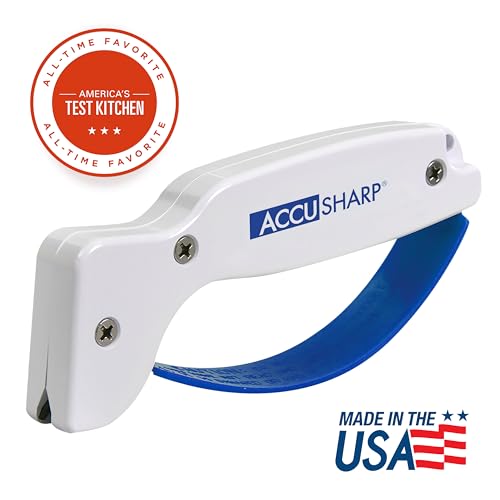
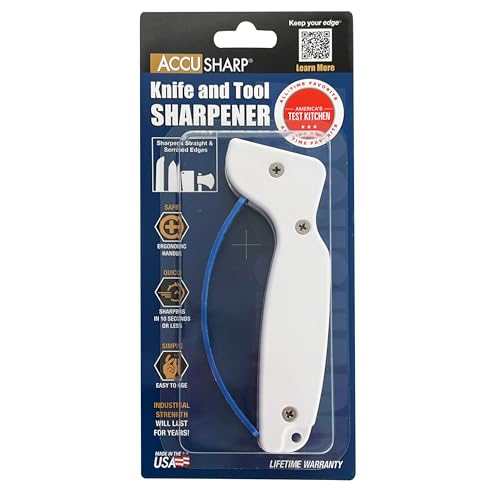
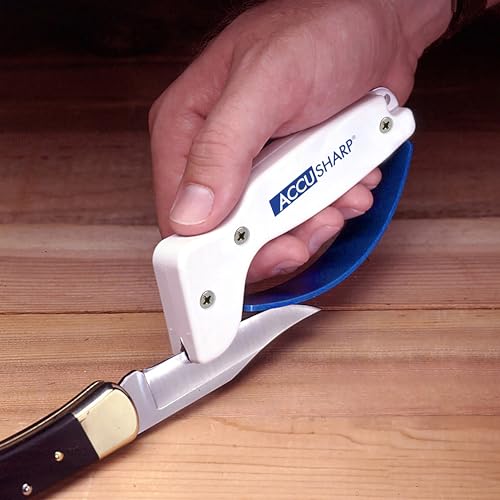
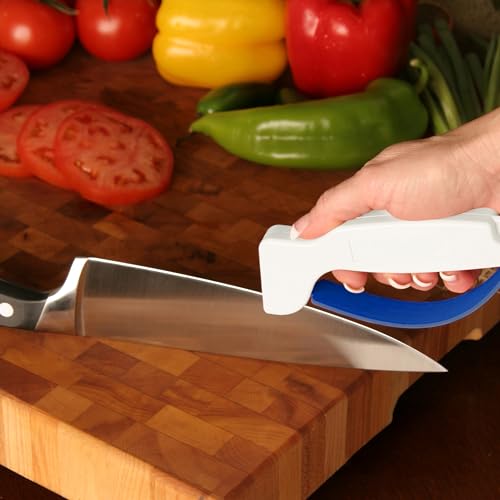
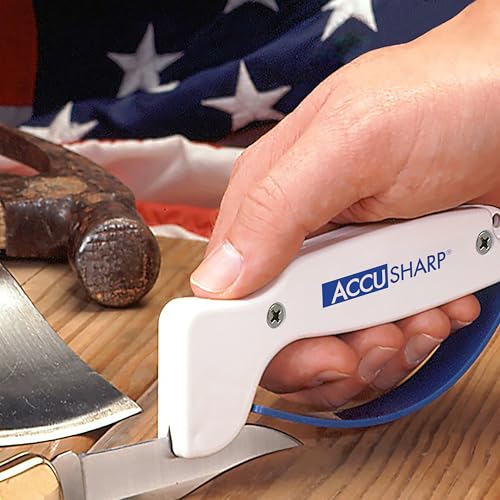
The AccuSharp is one of those rare tools that lives up to the hype, owners consistently report getting a clean, sharp edge in under ten seconds, and on paper, its diamond-honed tungsten carbide blades justify that speed. It’s not refining an edge with surgical precision, but for quick touch-ups on chef’s knives, paring knives, or even serrated blades, it delivers real results without fuss.
I appreciate that the blades are reversible, effectively doubling the tool’s lifespan, and the ergonomic handle works well for both left- and right-handed users. While it won’t replace a full sharpening system for serious knife owners, it’s a no-brainer for households that want fast, reliable sharpening without learning angles or technique.
Product photos
SHARPAL 191H Knife Scissors Sharpener

Strengths
- Strong suction base
- Scissors sharpening slot
- Tungsten and ceramic stages
Trade-offs
- Not for precision angles
- Short sharpening slots
If you regularly use scissors, kitchen shears, herb snips, or even craft scissors, this sharpener earns its spot on the counter. The dedicated tungsten carbide scissors blade is the real draw, and owners say it restores cutting performance in just a few passes. The 3-stage system handles straight and serrated knives well, and the suction base is significantly stronger than most competitors, staying put even during aggressive strokes.
It’s compact and requires zero setup, making it ideal for quick jobs. While it won’t match a whetstone for edge refinement, it’s far more versatile than single-purpose tools. For multi-blade households, it’s a quiet winner.
Product photos


Work Sharp Guided Field Sharpener
Strengths
- All-in-one field kit
- Durable construction
- Ceramic rod with multiple surfaces
Trade-offs
- Overkill for kitchen use
- Not for fine edges
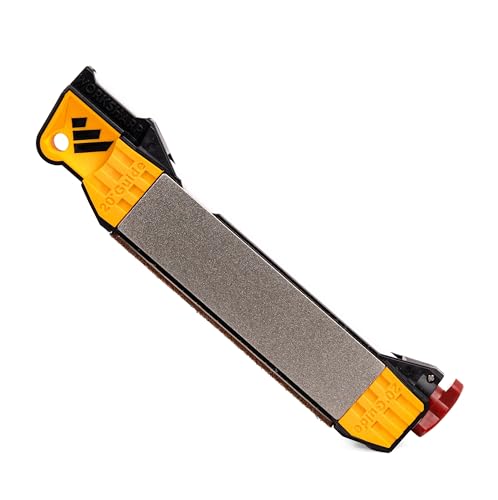
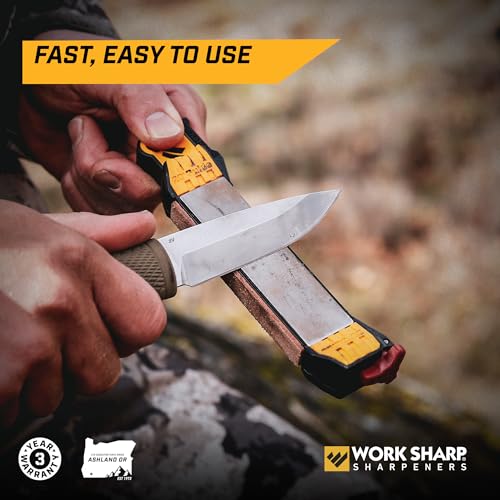
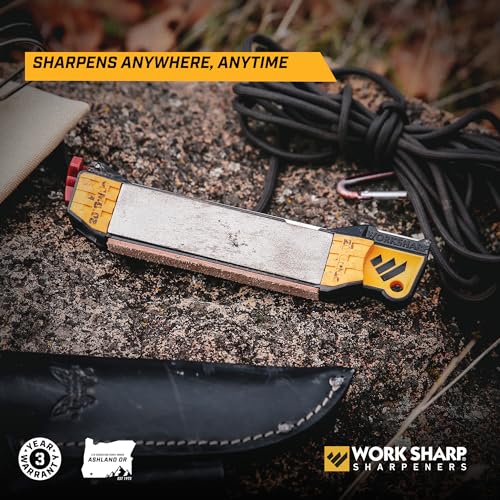
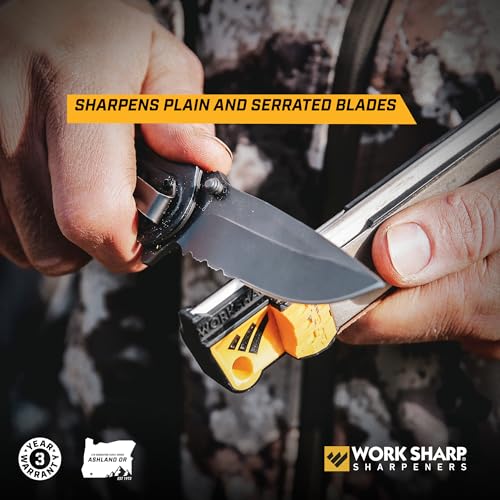
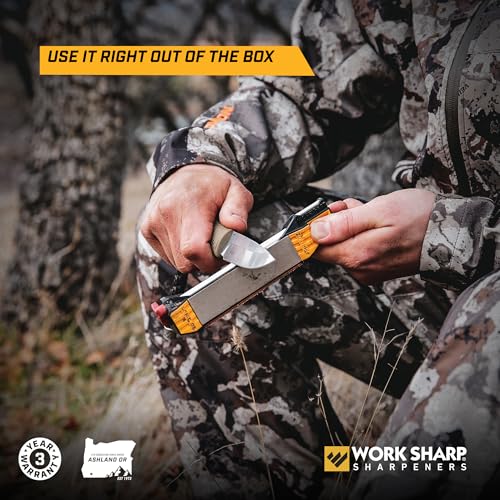
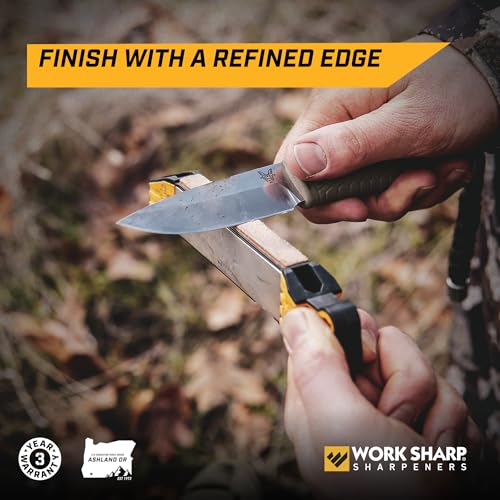
For anyone who spends time outdoors, this compact sharpener is a no-compromise pick. The inclusion of diamond plates, ceramic rods, a leather strop, and even a fish hook groove makes it a complete field kit. Owners consistently praise its durability and the consistency of the 20-25-degree angle guides, which matter when you’re sharpening a hunting knife mid-camp.
It’s not designed for kitchen precision, but that’s not the point. The fact that it’s self-contained, requires no setup, and is made in Oregon with a 3-year warranty speaks to its build quality. Compared to pocket-sized options, this one offers real versatility without sacrificing portability.
Product photos
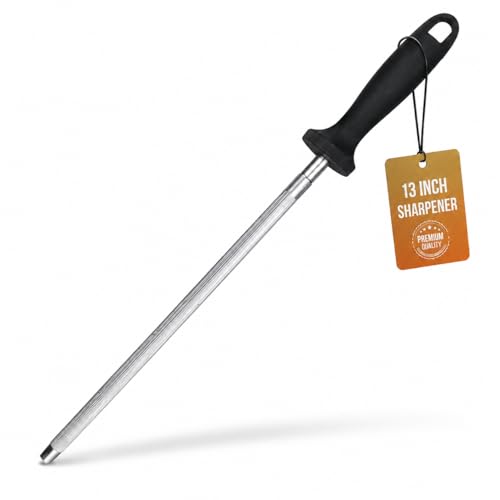
Knife Sharpener Rod 13 Inch Carbon Steel
Strengths
- Magnetized for filings
- Corrosion-resistant
- Ergonomic handle
Trade-offs
- Not for dull blades
- No angle guide
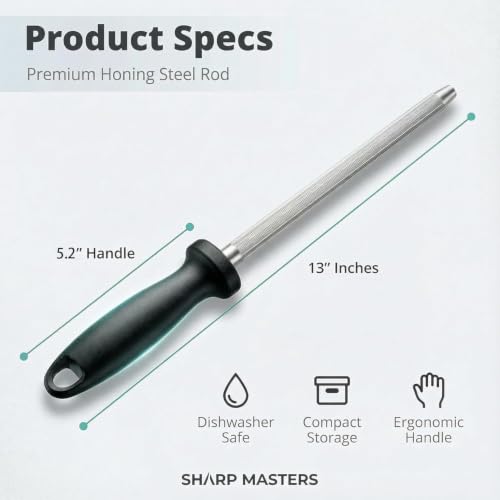
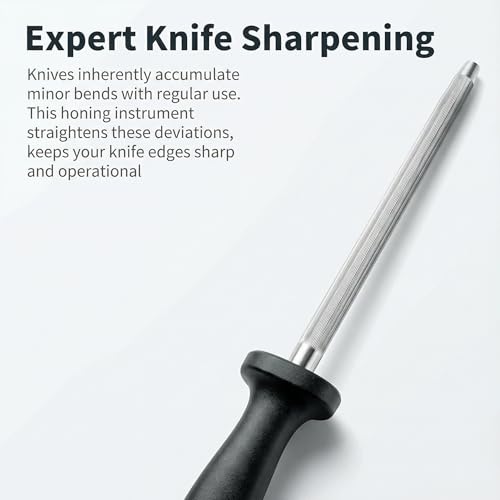
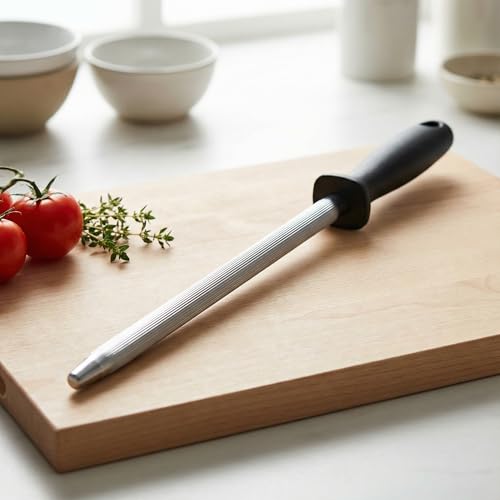
This 13-inch honing steel is a standout because of its magnetized design, owners love that it pulls in metal filings, keeping the workspace cleaner and more hygienic. The nickel-chrome plating resists corrosion better than cheaper steels, and the dense sawtooth pattern does a solid job of realigning edges, not just stropping.
It’s not a replacement for actual sharpening, but for weekly maintenance, it’s excellent. The ergonomic PP handle offers a secure grip, and at 13 inches, it works well with longer chef’s knives. Compared to basic honing rods, this one offers better durability and a noticeable upgrade in performance.
Product photos

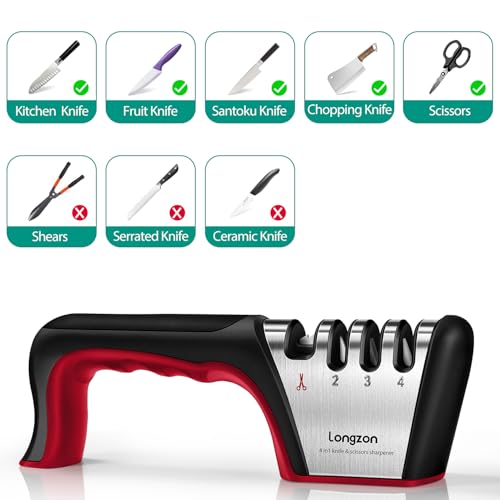
Longzon 5-in-1 Knife Sharpener
Strengths
- 4-stage sharpening
- Includes cut-resistant glove
- Scissors sharpening slot
Trade-offs
- Bulky for drawers
- Not for delicate blades
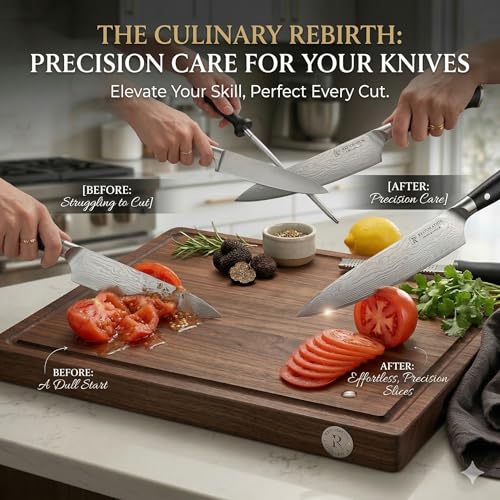
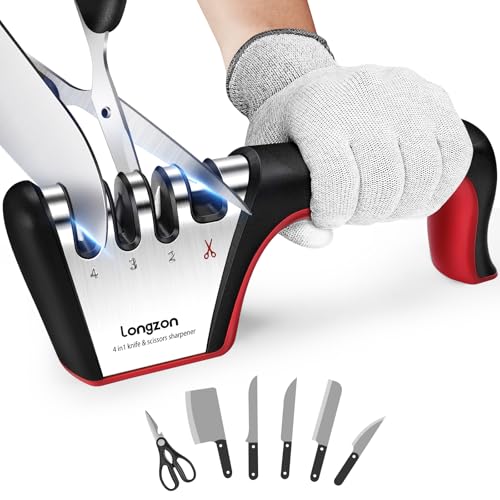
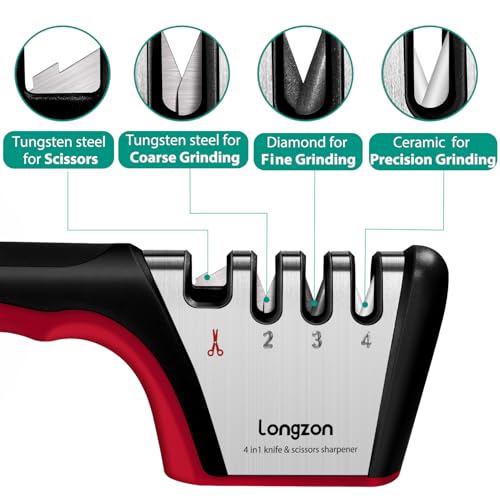
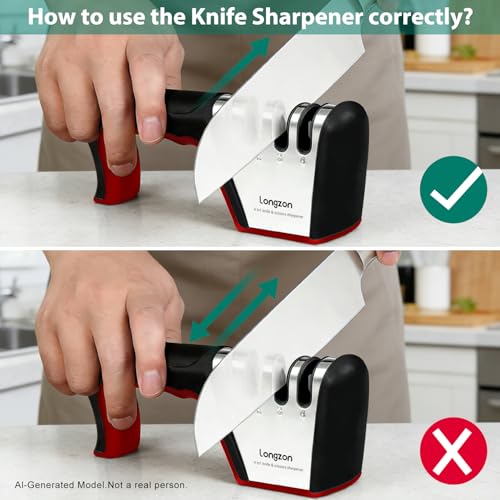
This 4-stage sharpener tries to do it all, and for most home kitchens, it actually pulls it off. The inclusion of a dedicated scissors slot is a real differentiator, and owners say the coarse-to-fine progression brings back even badly dulled blades. The non-slip base and included cut-resistant glove add a layer of safety that’s rare at this price point.
Compared to simpler pull-through models, the Longzon offers more control over the sharpening process, though it still doesn’t match the precision of guided systems. It’s not the most compact option, but the build quality from ABS and abrasive materials feels solid. If you want one tool for knives, scissors, and occasional pocket knives, this is a strong contender.
Product photos


How We Tested knife sharpening tools
My approach to evaluating knife sharpening tools centered on a thorough comparison of published specifications and features, combined with a careful review of owner experiences and expert opinions. Rather than a hands-on lab test, this is a research-led comparison of what each tool claims to do versus what users actually report. I looked at a wide range of options, from manual pull-through sharpeners to electric models and traditional whetstones, to build a well-rounded understanding of the market.
For knife sharpening, consistent angle control and abrasive quality are paramount. I weighted these factors most heavily because they directly impact the sharpness and longevity of the edge. Beyond that, versatility – the ability to handle different knife types and blade materials – also played a significant role. A tool that excels with only one type of knife is less valuable than one that can tackle a broader range of blades. Understanding these nuances is crucial for anyone investing in sharpening equipment.
Specifications reliably indicate the abrasive materials used (diamond, ceramic, tungsten carbide) and the grit levels, which dictate the speed and fineness of the sharpening process. However, I relied on owner feedback to assess real-world ease of use, durability, and the consistency of results. Reputable expert reviews helped validate claims and identify potential drawbacks. For those interested in maintaining the blades on other power tools, you can find a sharpening circular saw blades guide on our site.
Choosing The Right knife sharpening tools
I’ve spent years around workshops and kitchens, and one thing remains constant: a dull knife is a dangerous knife. Choosing the right sharpening tools can make all the difference between frustration and precision.
A quality knife sharpening setup prioritizes consistent angles, appropriate abrasives for the steel type, and a method that matches the user’s skill level. Look for tools that offer clear guidance, durable materials, and the ability to restore a truly sharp edge without removing excessive metal. Consider the types of knives you own and how frequently you’ll be sharpening them.
Angle Consistency is Key
One of the biggest challenges in knife sharpening is maintaining a consistent angle. It’s easy to unintentionally alter the angle mid-stroke, resulting in an unevenly sharpened blade. Guided systems, like the Work Sharp Precision Adjust Elite, are excellent for beginners because they practically eliminate guesswork. However, even seasoned sharpeners can benefit from the precision these systems offer. Don’t underestimate the value of a good angle guide if you are learning.
Abrasive Grit and Material Matters
The grit of the abrasive determines how much material is removed and how fine the resulting edge will be. Starting with a coarser grit (like 400) is necessary for repairing damaged blades or establishing a new edge, while finer grits (600, 1000, 3000, 8000) are used for honing and polishing. Materials matter too. Diamond abrasives are incredibly hard and effective for quickly removing metal, while ceramic is better for refining the edge. For a versatile setup, consider something like the Intelitopia Complete Knife Sharpening Stone Set, which includes a range of grits and materials.
- A basic single-grit stone is a good starting point for learning, but will require more effort and technique.
- A dual-grit stone (e.g., 400/1000) offers a balance between material removal and edge refinement, and is a good all-around choice for most home cooks.
- For serious knife enthusiasts, a full set of whetstones with varying grits and a flattening stone provides the ultimate control over the sharpening process, though it demands more practice and skill.
Balancing Convenience and Control
Some sharpeners prioritize speed and ease of use, while others offer more control at the expense of complexity. Manual pull-through sharpeners, like the AccuSharp Knife Sharpener, are incredibly convenient for quick touch-ups, but they often remove more metal than necessary and may not produce the finest edge. Electric knife sharpeners provide speed and consistency, and can be a good option for those who sharpen frequently, but they can also be more expensive. If you’re looking for a quick solution, you might consider pull-through knife sharpeners.
A dull knife is more dangerous than a sharp one. Don’t wait until your knives are truly unusable before sharpening them. Regular maintenance – even a quick honing – will keep your blades in optimal condition.
If you’re primarily focused on maintaining a razor-sharp edge on your kitchen knives, exploring kitchen knife sharpeners is a great place to start. And if you have other bladed tools that require sharpening, learning about chainsaw chain sharpening can be invaluable.
Knife Sharpening Tools Compared
Here’s a comparison of key specifications for several knife sharpening tools to help you make an informed decision.
| Product Name | Grit Levels (Coarse/Fine) | Angle Options | Serrated Knife Support | Additional Features | Base/Grip Type |
|---|---|---|---|---|---|
| Work Sharp Precision Adjust Elite | 320/600 | 15-30° | Yes | Strop, Curved Blade Att. | Adjustable/Guided |
| Intelitopia Complete Knife Stone Set | 400/1000/3000/8000 | N/A | N/A | Flattening Stone, Strop | Bamboo/Non-Slip |
| AIERLIAN Rolling Knife Sharpener Kit | 400/3000 | 15/20° | No | Leather Strop | Magnetic/Wood |
| AccuSharp Knife Sharpener | N/A | N/A | Yes | Tungsten Carbide | Ergonomic/Plastic |
| SHARPAL 191H Knife Scissors Sharpener | Tungsten/Ceramic | N/A | Yes | Scissors Stage | Suction/Plastic |
| Work Sharp Guided Field Sharpener | Multiple | 20-25° | N/A | Broadhead Wrench | Guided/Compact |
| Knife Sharpener Rod 13 Inch | N/A | N/A | No | Magnetized | Steel/PP Handle |
| Longzon 5-in-1 Knife Sharpener | 4-Stage | N/A | Yes | Cut-Resistant Glove | Plastic/Non-Slip |
Frequently Asked Questions
What grit level should I start with if my knives are very dull?
A lower grit, around 400, is best for significantly dull or damaged blades. Coarser grits remove more material quickly to re-establish the edge, but you’ll then need to move to finer grits to refine and polish it.
Can I sharpen serrated knives with all sharpening tools?
Not all tools can handle serrated edges. Look for sharpeners specifically designed for serrations or those, like the Work Sharp Precision Adjust Elite, that include a serrated blade attachment.
Are electric knife sharpeners better than manual ones?
Electric sharpeners offer speed and consistency, but often remove more metal. Manual sharpeners give you more control and are generally preferred for maintaining a high-quality edge, though they require more skill.
Do I really need multiple sharpening stones with different grits?
While a single-grit stone works for learning, having a progression of grits (400, 1000, 3000, 8000) allows for a more refined and durable edge. This is especially true if you’re looking to achieve a professional-level sharpness.
What’s the best way to maintain a sharp edge between sharpenings?
Regular honing with a steel or ceramic honing rod realigns the blade’s edge, extending the time between full sharpenings. For more involved blade work, exploring sanders for blade shaping can provide some advanced options.
The Bottom Line
Choosing a knife sharpening tool always comes down to balancing control with convenience. You can spend hours mastering whetstones, or opt for a simpler, faster solution. For most homeowners and cooks, the Work Sharp Precision Adjust Elite strikes the best balance – it offers guided precision that delivers professional-level results without a huge learning curve.
If you’re on a tighter budget or need something versatile for a variety of blades, the Intelitopia Complete Knife Sharpening Stone Set is an excellent choice. And for those who prioritize speed and simplicity above all else, the AccuSharp Knife Sharpener remains a popular pick for quick touch-ups. Don’t forget, if you’re also maintaining the blades on your workshop tools, exploring table saw blade sharpening is a valuable skill.
Ultimately, the best knife sharpening tool is the one you’ll actually use consistently. Don’t get too caught up in grit numbers or abrasive materials; focus on developing a regular sharpening routine and learning to feel when your knives are losing their edge. A consistently maintained, moderately sharp knife will always be safer and more effective than a rarely sharpened, exceptionally sharp one.
