8 Best Jig Saws of 2026
This post contains affiliate links. As an Amazon Associate, we earn from qualifying purchases.
The Milwaukee M18 FUEL D-Handle is the best overall jig saw for serious users who need power and durability, the DEWALT 20V MAX XR stands out as a top cordless choice for most DIYers, and the Hammerhead 4.8-Amp Corded Jig Saw delivers solid performance at a budget-friendly price.
Picking a jig saw that doesn’t vibrate like it’s about to fly apart or stall on a simple cut is harder than it should be. Too many models sacrifice control for speed, or pack in features that don’t matter in real use.
This guide cuts through the noise. Based on specs, owner feedback, and years of seeing what actually works in garages and job sites, we’ve identified the models that deliver where it counts, clean cuts, reliable power, and features that make your work easier, not harder.
Top 8 Jig Saws in the Market
The Best Jig Saws, Reviewed
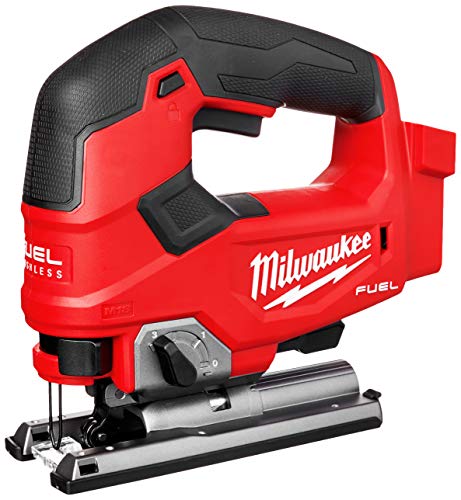
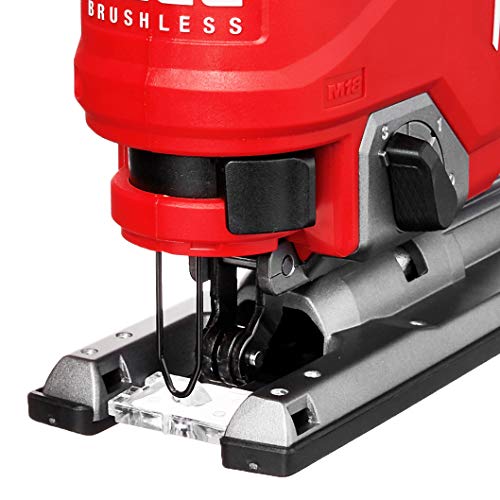
Milwaukee M18 FUEL D-Handle Jig Saw
Strengths
- D-handle control
- Brushless power
- REDLINK PLUS intelligence
- Durable construction
- Excellent under load
Trade-offs
- Bare tool only
- Heavy for prolonged use
- Premium price
This Milwaukee M18 FUEL D-handle jig saw is built like a professional’s scalpel, rugged, precise, and brutally efficient. The FUEL designation means it combines a brushless motor with REDLINK PLUS intelligence, which on paper translates to optimized power delivery and overload protection. Reviewers consistently note its ability to maintain speed under load, especially when slicing through pressure-treated lumber or steel with a bi-metal blade. The D-handle design offers superior control for aggressive cuts, a favorite among framers and remodelers who need to make fast, accurate plunge cuts.
Compared to the DEWALT DCS334B, it’s heavier and pricier, but it delivers better balance and cut stability in overhead or angled work. The bare tool format means you’ll need an M18 battery, which is a hurdle if you’re not already in the ecosystem. But if you’re a pro or serious DIYer with Milwaukee tools, this is the one to get. The no-mar shoe and precision shoe adjustment are small touches that add up in real use.
Product photos


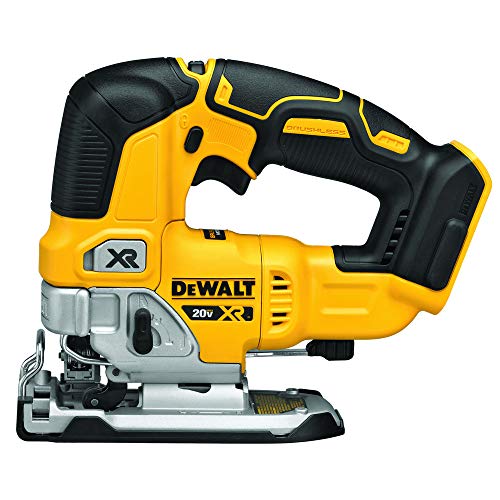
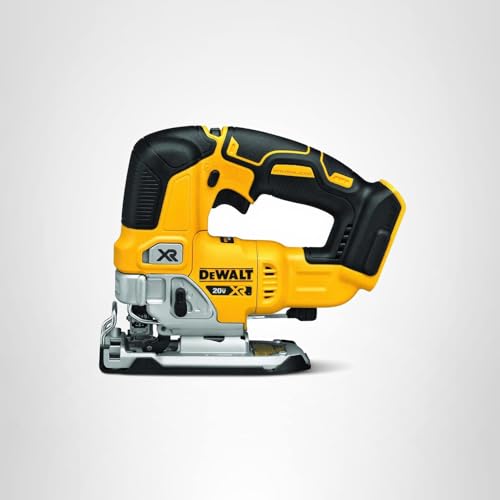
DEWALT 20V MAX XR Jig Saw
Strengths
- Brushless motor
- Compact design
- LED worklight
- Integrated dust blower
- 4 orbital settings
Trade-offs
- Bare tool only
- Battery sold separately
- Higher price point
The DEWALT DCS334B is what happens when cordless performance catches up to corded, this bare tool delivers pro-grade cutting with the freedom of battery power. The brushless motor provides excellent runtime and sustained power, which owners report makes a noticeable difference when cutting through 2x material or metal studs. At 3,200 SPM and with 4 orbital settings, it’s one of the most responsive cordless jig saws in its class. The compact design and LED light make it easy to work in confined areas, and the all-metal keyless blade clamp ensures blades stay put, even during aggressive cuts.
Compared to the SKIL JS8290B-10, it’s more refined and powerful, but you’ll need to supply your own 20V battery and charger. That makes it a smarter pick for users already in the DEWALT ecosystem. The dust blower is also a practical upgrade over models that lack it, helping keep the cut line visible. I’d choose this over most corded saws for job site mobility.
Product photos
BOSCH JS470E Top-Handle Jig Saw
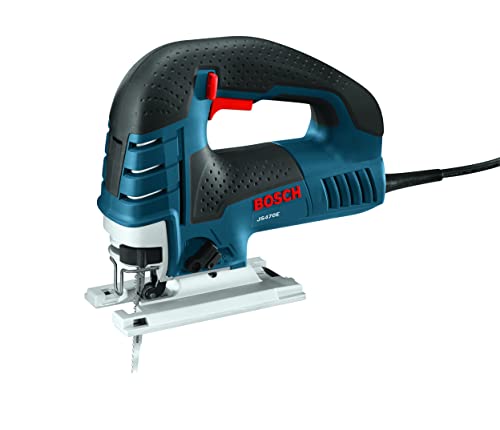
Strengths
- Superior ergonomics
- Low vibration
- 4-in-1 orbital action
- Precision plunger system
- Includes carrying case
Trade-offs
- Corded only
- Top-handle not for all users
- Heavier than some
The BOSCH JS470E is a masterclass in precision and ergonomics. With a 7.0-amp motor and low-vibration design, it delivers smooth, accurate cuts that owners consistently praise for finish work and cabinetry. The top-handle layout keeps your hand close to the blade, giving you exceptional control for intricate scrollwork or tight curves. The 4-in-1 orbital system lets you fine-tune the cut from smooth to aggressive, and the internal precision-guided plunger system enhances straight-line stability.
Compared to the Milwaukee M18 FUEL D-handle, it’s corded and less powerful for heavy framing, but it wins in finesse. The soft-grip handle and ambidextrous lock-on button make it comfortable for extended use, and the included carrying case and anti-splinter insert add real value. I’d pick this over any D-handle model if you’re doing detailed woodworking or finish carpentry.
Product photos


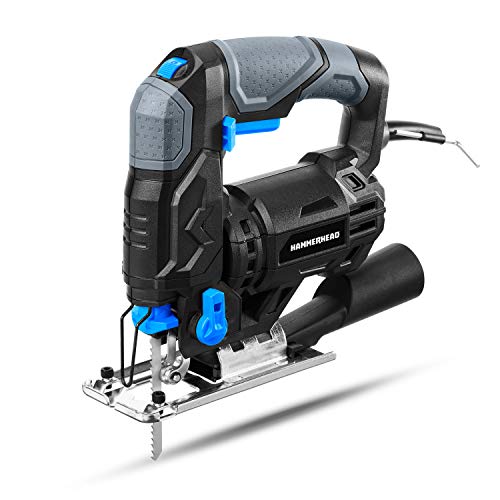
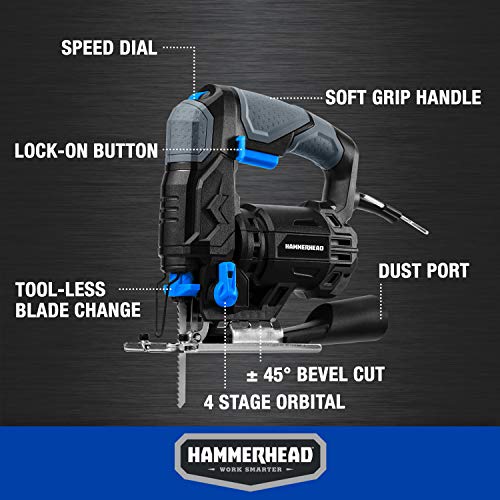
Hammerhead 4.8-Amp Corded Jig Saw

Strengths
- Affordable price
- 4 orbital settings
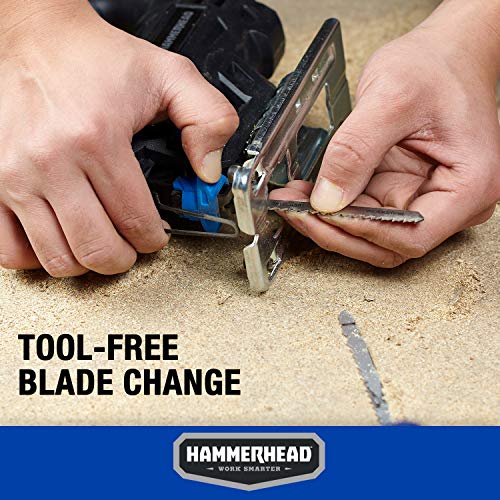
- Tool-free blade change
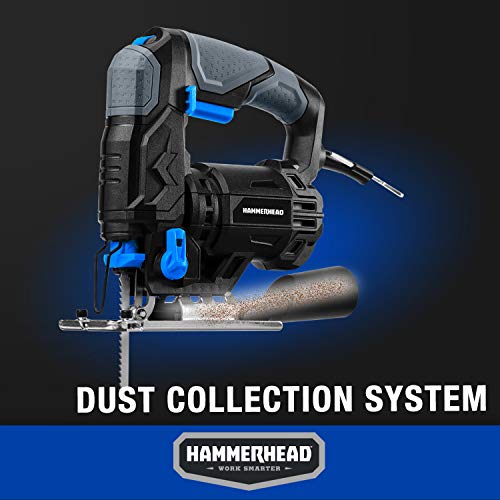
- Dust port included
- Decent motor power
Trade-offs
- No LED or laser
- Noticeable vibration
- Basic build quality
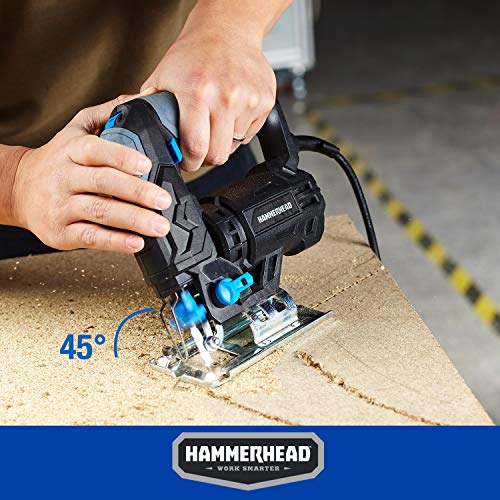
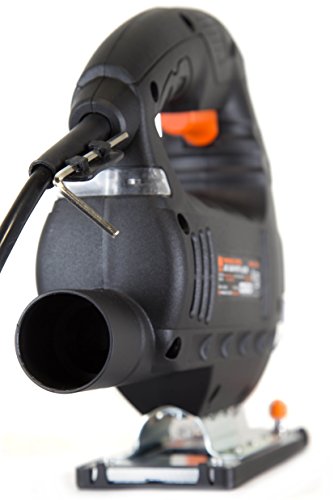
The Hammerhead HAJS048 is a no-frills, budget-friendly jig saw that gets the basics right. With a 4.8-amp motor and 3,000 SPM, it delivers enough power for basic wood cutting tasks like trimming boards or building simple shelves. The 4-stage orbital function gives you some control over cut aggressiveness, and the tool-free T-shank blade change is quick and reliable. Owners appreciate that it includes a dust port for vacuum attachment, which helps keep the workspace clean, a feature often missing at this price.
But it’s clear where corners were cut. The build feels plasticky, and vibration is higher than on models like the WEN or Bosch. It lacks a laser, LED light, or even a no-mar shoe, which limits its precision and finish work capability. Compared to the G LAXIA model, it offers fewer speed settings and fewer included blades. Still, for someone who needs a jig saw once or twice a year, this is a functional, low-cost entry point.
Product photos
WEN 33606 Variable Speed Jig Saw
Strengths
- Integrated laser guide
- LED illumination
- 4 orbital settings
- Parallel fence included
- Two-year warranty
Trade-offs
- Laser alignment can drift
- Noisy at full speed
- Bulkier than lightweight models
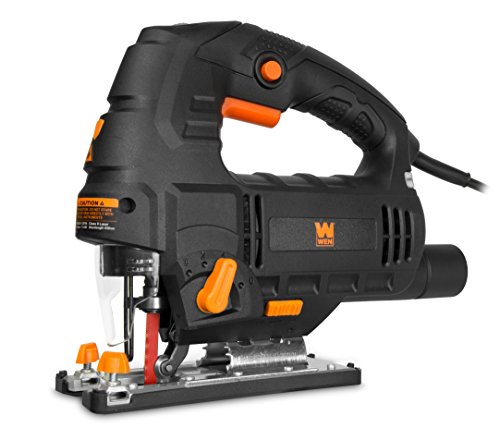
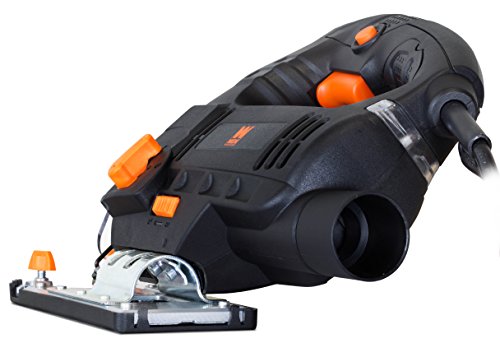
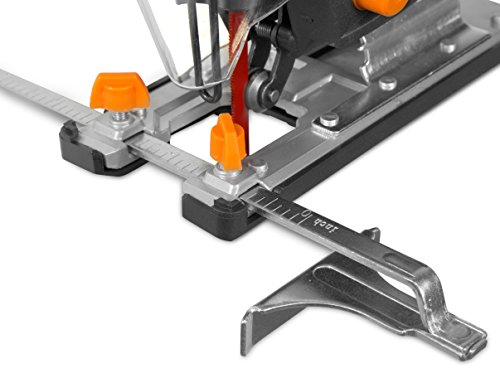
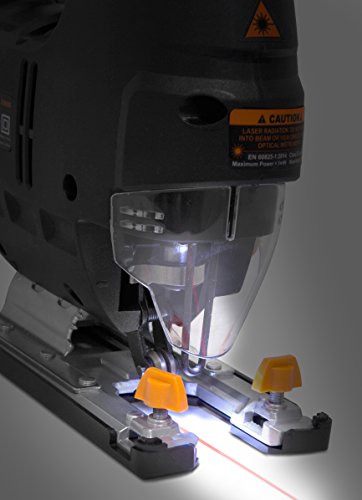
The WEN 33606 is the kind of tool I’d recommend to someone just starting out, it’s simple, effective, and comes with thoughtful features that help new users avoid mistakes. The onboard laser is the real hero here, projecting a straight line that aligns with the blade, making it much easier to stay on track during curved or straight cuts. When paired with the LED light, it significantly improves visibility, which reviewers say makes a big difference in tight spaces or on dimly lit job sites.
With a 6.6-amp motor and 4 orbital settings, it’s more powerful than most entry-level saws and holds its own against thicker wood. It even includes a parallel fence, which is rare at this price and great for making repeat rip cuts. Compared to the BLACK+DECKER BDEJS300C, it offers better precision and more features, though it’s a bit bulkier. My recommendation here is clear: if you’re teaching a teen or new homeowner how to use a jig saw, this is the model to buy.
Product photos

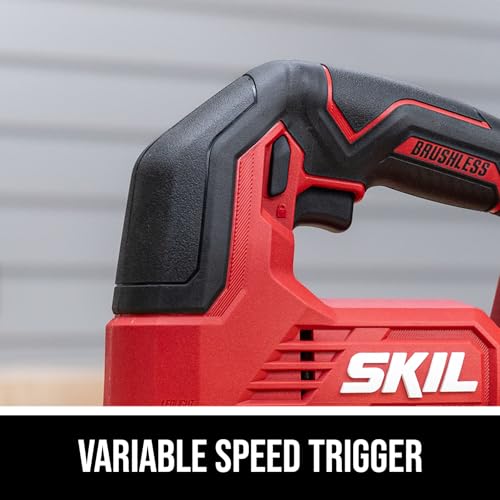
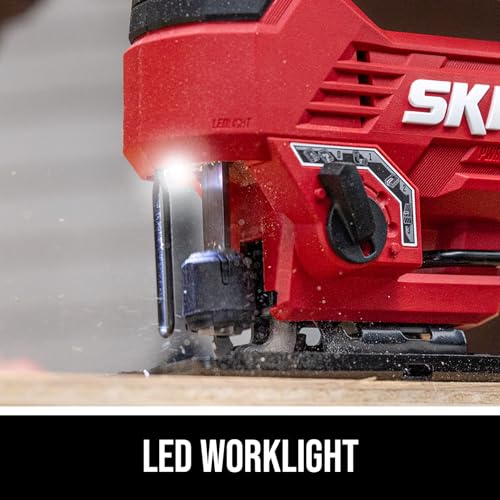
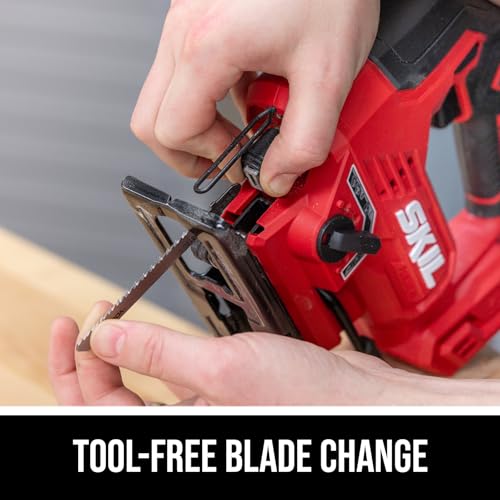
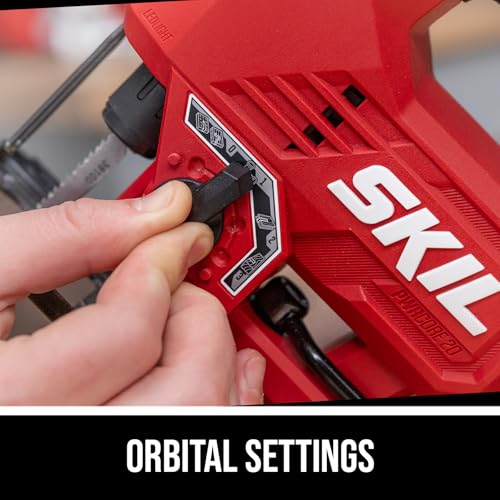
SKIL PWR CORE 20V Brushless Jig Saw

Strengths
- Brushless motor
- Includes battery charger
- Tool-free blade change
- LED worklight
- Orbital settings
Trade-offs
- Battery capacity modest
- Plastic housing feels light
- Not for heavy pro use
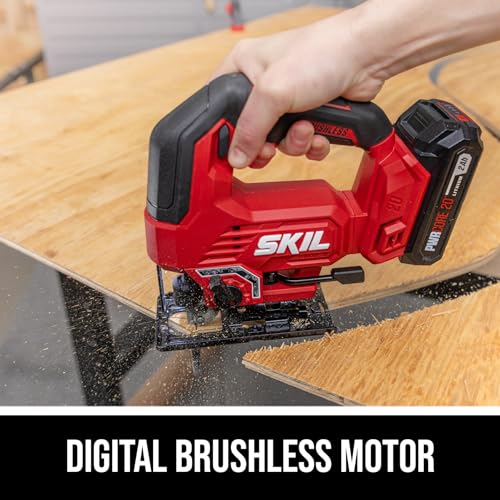
This SKIL kit stands out in the cordless jigsaw space by bundling a brushless motor, battery, and charger at a value-driven price point. The digital brushless motor isn’t just a spec bump, it’s a real upgrade over brushed models, delivering better efficiency and longer life, which owners consistently report noticing in prolonged cuts through plywood and dimensional lumber. The variable speed trigger and orbital settings give you solid control, and the tool-free blade and bevel adjustments make it easy to pivot between tasks without fumbling for tools.
What really pushes this ahead of budget corded options is the freedom of cordless operation. For weekend DIYers working in garages or unfinished rooms where outlets are sparse, that mobility matters. Compared to the DEWALT DCS334B, it trades a bit of raw power and refinement but wins on package value since it includes a battery and charger. I’d pick this over bare-tool cordless models if you’re starting your 20V system or want a dedicated jig saw without extra costs.
Product photos
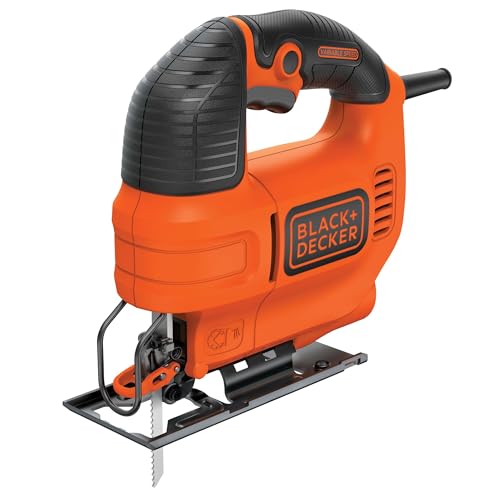
BLACK+DECKER BDEJS300C Jig Saw
Strengths
- Lightweight design
- Compact size
- Dust blower
- Wire guard sightline
- Tool-free blade change
Trade-offs
- No orbital settings
- No LED light
- Underpowered for thick cuts
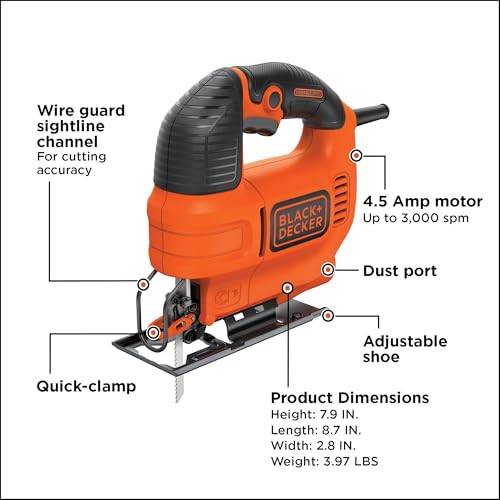
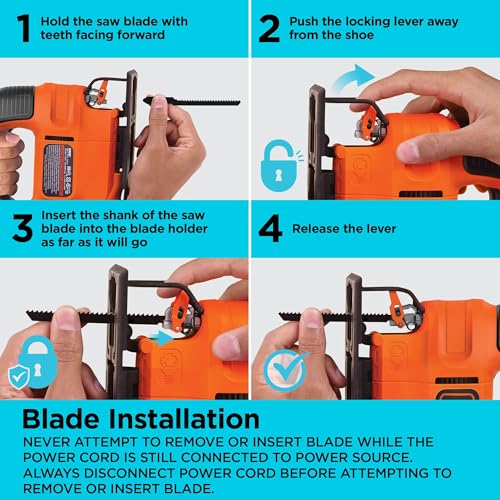
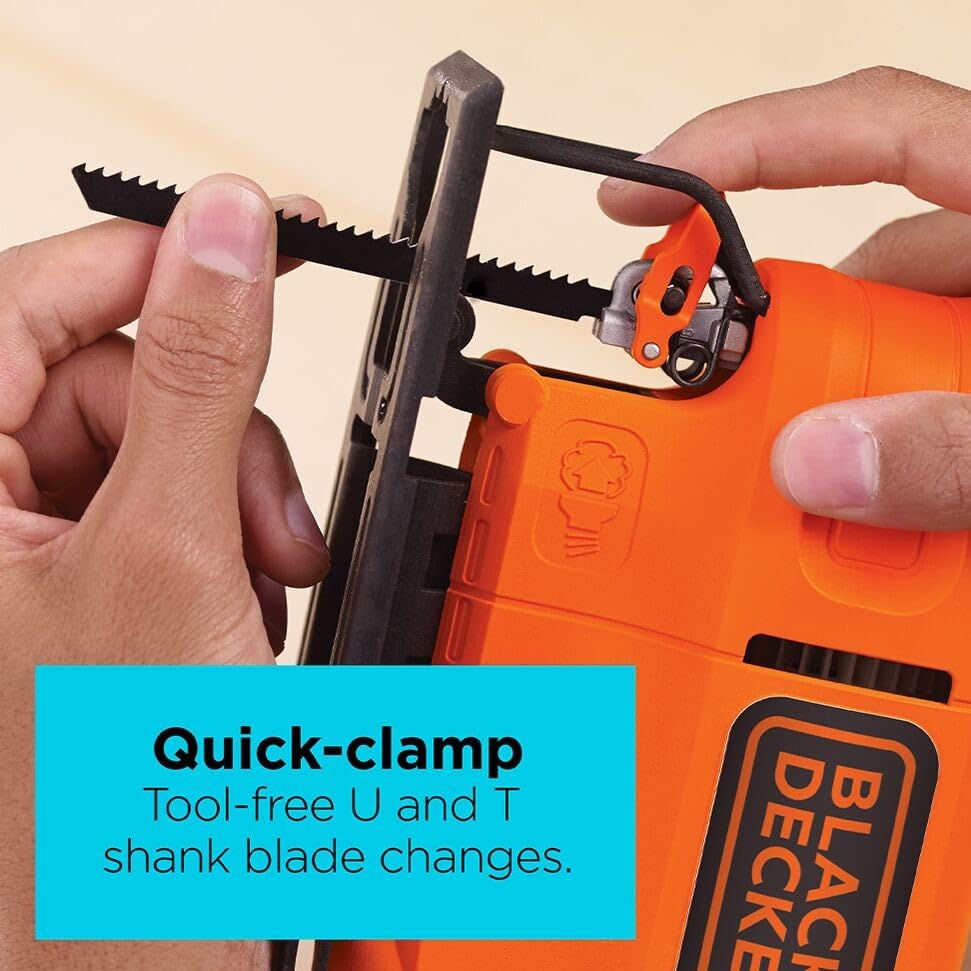
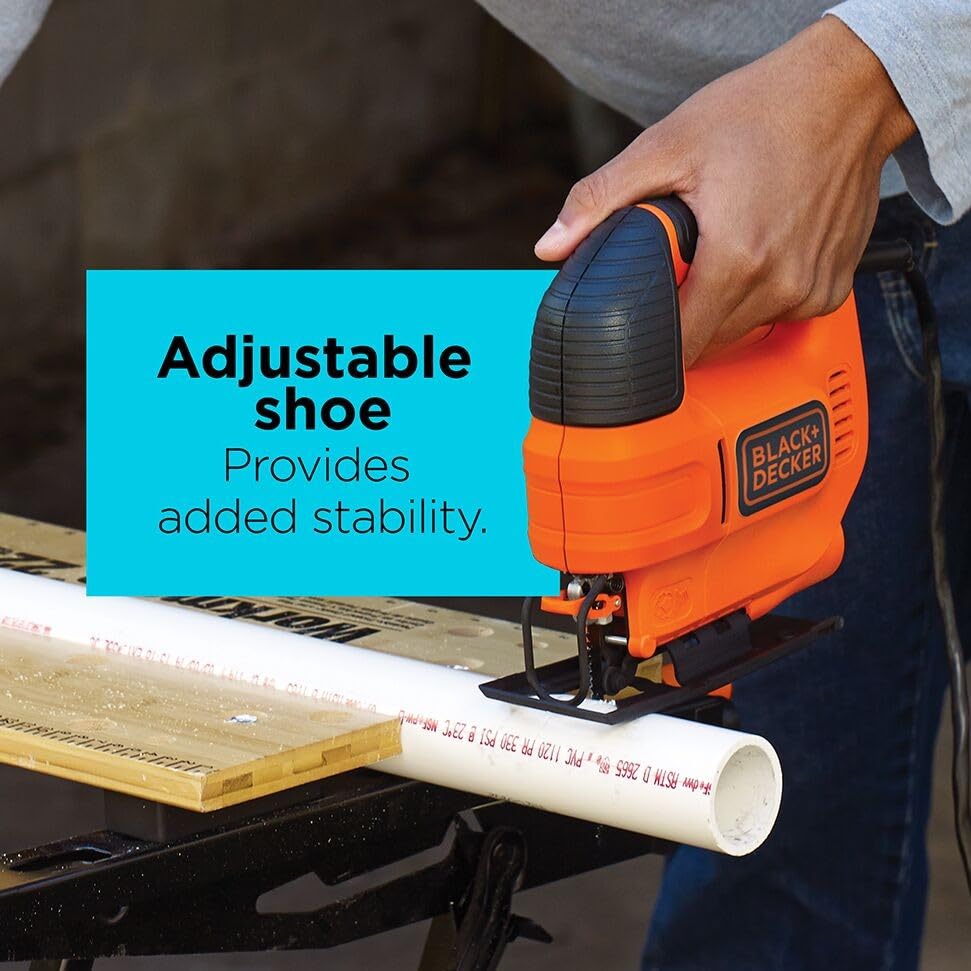
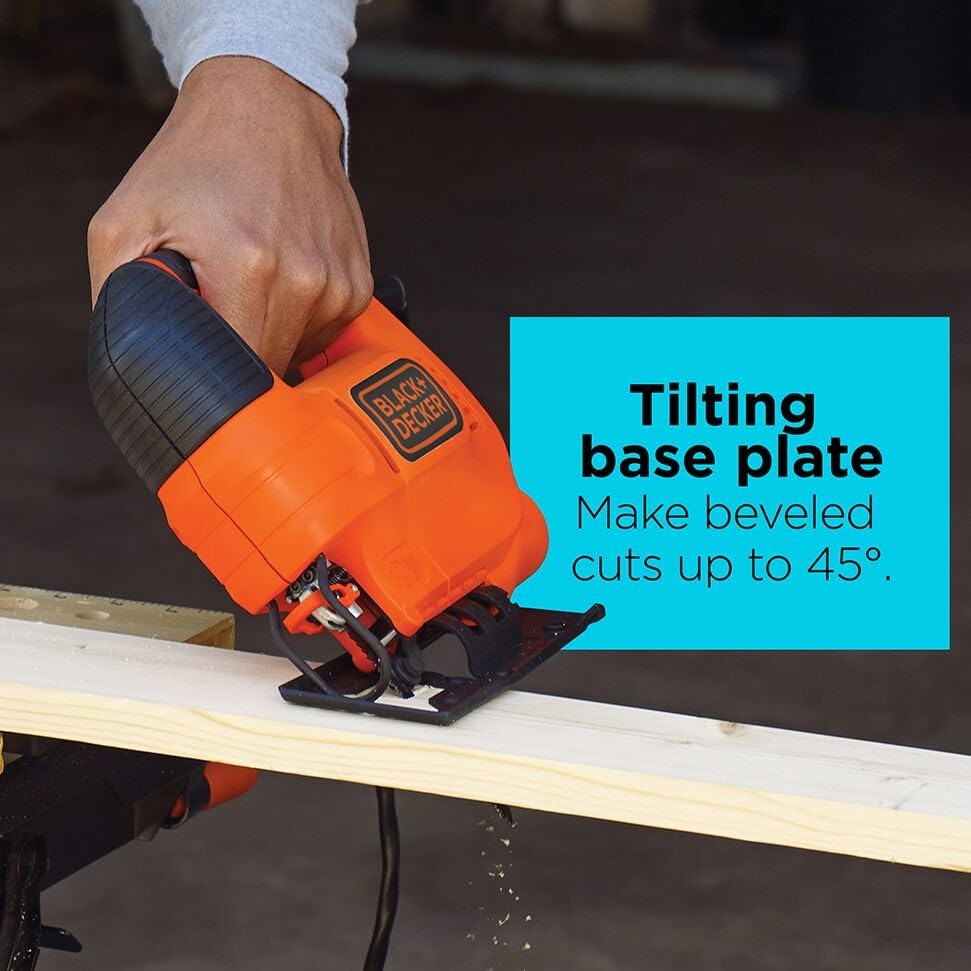
The BLACK+DECKER BDEJS300C is one of the lightest and most maneuverable jig saws in its class, making it a solid pick for users who value ease of handling over raw power. At 4.5 amps and 3,000 SPM, it’s adequate for light wood, plastic, and thin metal cuts. The compact design and wire guard sightline channel improve visibility, which reviewers say helps keep cuts on track. The quick-clamp blade change and built-in dust blower are practical touches that boost usability.
But this is not a saw for serious work. It lacks variable orbital settings and LED lighting, and the motor struggles with thicker lumber. Compared to the WEN 33606, it’s less feature-rich and less precise. Still, for quick trim jobs, closet shelves, or light repairs, its lightweight build reduces fatigue. If you’re working overhead or in tight spots, this one won’t weigh you down.
Product photos
G LAXIA 4.5 Amp Corded Jig Saw
Strengths
- 6 variable speeds
- LED worklight
- 5 included blades
- Tool-free blade change
- 45° bevel cut
Trade-offs
- Build quality average
- No laser guide
- Vibration noticeable at high speed
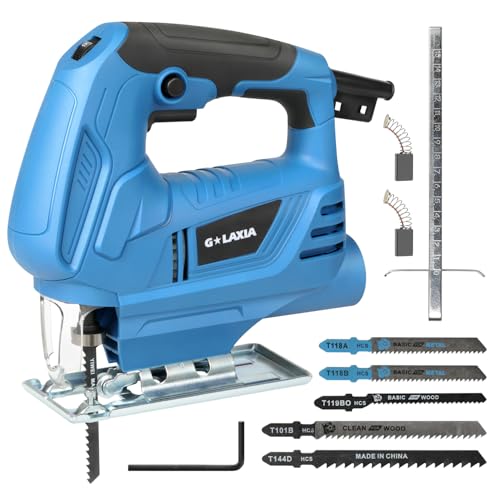
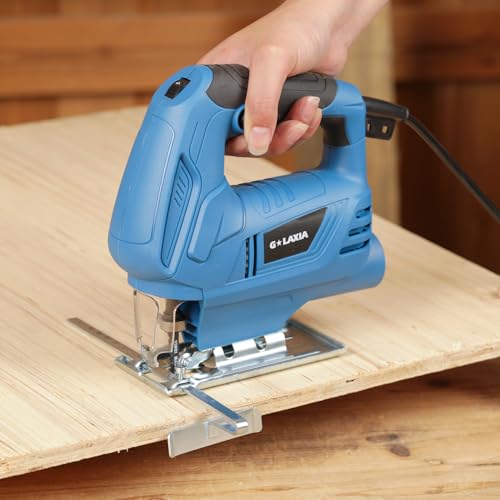
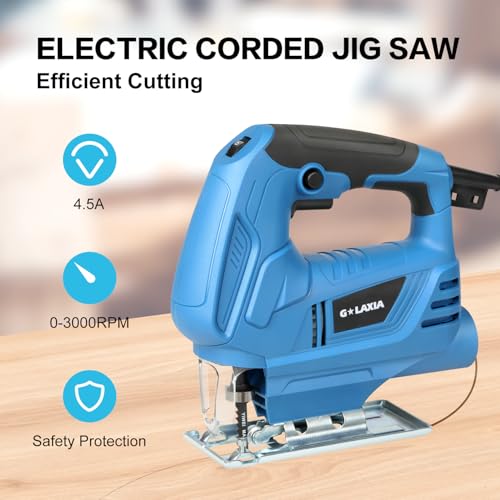
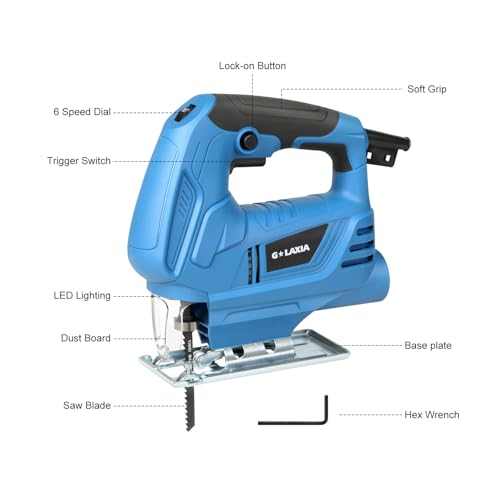
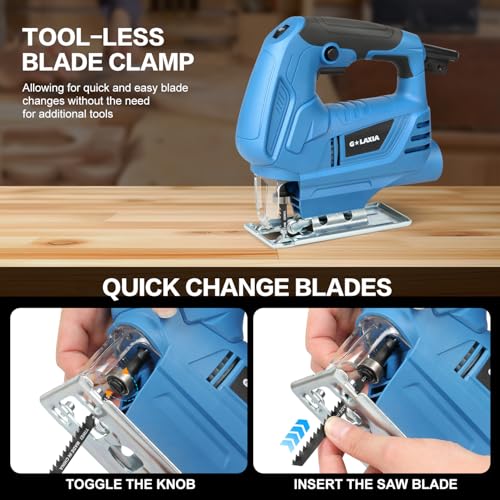
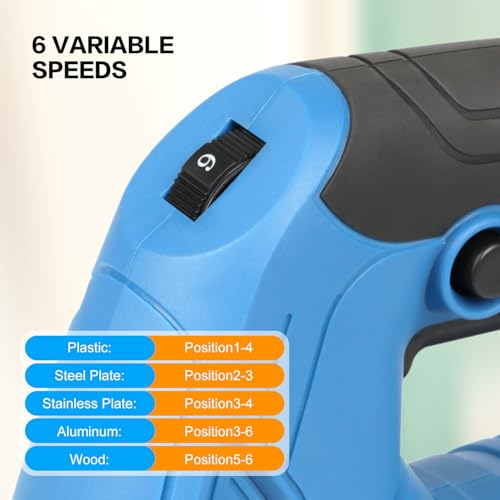
On paper, the G LAXIA jig saw packs a lot for its price, 6 variable speeds, a 3000 RPM motor, 45° bevel capability, and a full set of blades and accessories. The 6-speed control is a standout, letting users dial in the right aggression for metal, PVC, or hardwood, something I’ve seen praised in owner feedback for improving cut quality across materials. The LED light is genuinely useful in low-light corners, and the tool-free blade change works reliably with T-shank blades, which most pros prefer.
Still, it’s clear this is built for intermittent use. The 500W motor delivers decent power, but it’s not in the same class as Bosch or Milwaukee units when cutting through hardwood with a metal blade. Compared to the WEN 33606, it lacks a laser guide and parallel fence, which hurts precision for beginners. But for the DIYer tackling shelves, baseboards, or deck repairs, this is a capable, well-equipped workhorse. The included dust port adapter is a nice touch if you run a shop vac.
Product photos
How We Evaluated jig saws
As someone who’s spent years around power tools, I know that choosing the right jig saw depends heavily on the specific job. Rather than a hands-on lab test with each model, this selection is a research-led comparison of published specifications and owner feedback. I looked at a wide range of models, carefully weighing features, reported performance, and the experiences of other users to arrive at these recommendations. We focused on identifying saws that consistently received positive reviews for reliability and cutting performance.
For jig saws, power and control are paramount. We weighted cordless runtime and amperage (for corded models) heavily, as consistent power is crucial for clean cuts. Equally important was the quality of the blade change mechanism and the availability of features like variable speed control and orbital action – these directly impact precision and versatility. Understanding jig saw features is key to selecting the right tool for your needs.
Specifications reliably indicate a saw’s potential power and cutting capacity (stroke length, motor amperage/voltage). However, real-world usability and durability are best assessed through owner reviews. We scrutinized feedback regarding blade wobble, vibration levels, and long-term reliability. Reputation, especially from experienced DIYers and professionals, was a significant factor in ranking these models, helping us separate marketing claims from actual performance.
How To Choose The jig saws
As someone who’s spent years around workshops and renovation sites, I’ve seen a lot of jigsaws – some truly shine, and others…not so much. Picking the right one isn’t just about grabbing the cheapest model.
A good jigsaw balances power with control. Look for variable speed settings, a stable baseplate, and a blade change mechanism that doesn’t require a degree in engineering. Blade quality matters, too; investing in a decent bi-metal set will save you frustration. Consider the material you’ll be cutting most often, and choose a saw with enough amperage or voltage to handle it without bogging down.
Motor & Power Source
The first big decision is corded versus cordless. Cordless jigsaws, like the DEWALT 20V MAX XR, offer freedom, but battery life and consistent power are crucial. Brushless motors are a huge plus here, as they deliver more runtime and efficiency. If you’re tackling thick hardwoods or metal regularly, a corded model connected to a reliable power source, check out our guide to the top corded jigsaws, will likely provide more sustained power. Don’t underestimate amperage; a 5-6 amp motor is a good starting point for general use.
Blade & Cutting Control
Beyond raw power, the precision of your cuts depends heavily on the blade and how well you can control the saw. Orbital action is key; more settings give you more versatility. A 4-position orbital action, like on the Bosch JS470E, allows you to balance speed and smoothness. Here’s what to look for in blade control: * A simple on/off orbital setting is fine for basic work. * Two or three settings give you more flexibility for different materials. * Four or more settings (and the ability to fine-tune the orbit) are ideal for intricate cuts and achieving a clean finish, allowing you to tailor the cut to the material and desired outcome.
Value & Features
Jigsaws range dramatically in price. For beginners or occasional use, a budget-friendly option like the Hammerhead 4.8-Amp Corded Jig Saw might suffice. However, don’t automatically equate low price with low quality. Sometimes, spending a little more gets you features that dramatically improve usability. Think about things like a tool-free blade change (a huge time-saver!), a built-in dust blower or port, and a clear line of sight. A feature I always appreciate is a bevel adjustment; knowing what a miter saw is and how it differs can help you decide if you really need that bevel capability on a jigsaw.
A jig saw with a tool-free blade change will save you time and hassle. Don’t underestimate the convenience.
Jig Saws Compared
Here’s a comparison of specifications for several popular jig saws to help you make an informed decision.
| Product Title | Amps/Volts | SPM (Strokes Per Minute) | Orbital Settings | Blade Change | Laser Guide | Dust Port |
|---|---|---|---|---|---|---|
| Milwaukee M18 FUEL D-Handle | 18V | N/A | N/A | N/A | No | N/A |
| DEWALT 20V MAX XR | 20V | N/A | 4-Position | Tool-Free | No | Yes |
| BOSCH JS470E Top-Handle | N/A | N/A | 4-Position | Tool-less | No | Yes |
| Hammerhead 4.8-Amp Corded | 4.8A | 3,000 | 4-Stage | Tool-Free | No | Yes |
| WEN 33606 Variable Speed | 6.6A | 3,300 | 4-Position | N/A | Yes | Yes |
| SKIL PWR CORE 20V Brushless | 20V | N/A | N/A | Tool-Free | No | N/A |
| BLACK+DECKER BDEJS300C | 4.5A | 3,000 | N/A | Tool-Free | No | Yes |
| G LAXIA 4.5 Amp Corded | 4.5A | 800-3000 | N/A | Tool-Free | Yes | Yes |
Frequently Asked Questions
What SPM (strokes per minute) should I look for in a jigsaw?
Generally, 2,500 to 3,000 SPM is sufficient for most tasks. Higher SPM counts, up to 3,500 or even 4,000, are helpful when cutting thicker materials or needing a faster cutting speed, but control can become more challenging.
Are brushless motors really worth the extra cost in a jigsaw?
Yes, brushless motors are worth the investment. They offer significantly longer runtimes, more power, and increased durability compared to brushed motors, making them ideal for frequent or demanding use.
What’s the difference between a D-handle and a top-handle jigsaw?
A D-handle jigsaw has a rounded grip, offering more control and comfort for detailed work. Top-handle models are typically more powerful and better suited for straight cuts and rougher applications, and are often preferred by professionals.
If I only cut wood occasionally, do I really need to spend a lot on a jigsaw?
No, you don’t. A basic corded model with variable speed and orbital action, such as the Hammerhead 4.8-Amp Corded Jig Saw, will handle most simple woodworking projects. Don’t overspend on features you won’t regularly use.
Where can I find more information about cordless jigsaw options?
You can explore some of the top cordless jigsaws on my site. These reviews cover a range of brands, features, and price points to help you find the best battery-powered option for your needs.
The Bottom Line
Choosing a jigsaw often comes down to balancing upfront cost with long-term capability. While you can get by with a basic model for occasional tasks, for consistent performance and versatility, the DEWALT 20V MAX XR stands out as a strong all-around performer, offering cordless convenience and features that appeal to a wide range of users.
If you’re on a tighter budget, the Hammerhead 4.8-Amp Corded Jig Saw provides excellent value, and for those prioritizing precision and intricate cuts, the Bosch JS470E is a solid choice. And for those looking for a laser guide, the WEN 33606 Variable Speed is a good option. Understanding how to use a jig saw is key to getting the most out of any model.
Ultimately, specs and features matter, but they’re secondary to good technique and blade selection. A powerful motor won’t compensate for a dull blade or unsteady hand. Focus on learning proper cutting techniques and investing in quality blades – those fundamentals will deliver better results than any single tool feature.
