
8 Best Corded Jig Saws of 2026
This post contains affiliate links. As an Amazon Associate, we earn from qualifying purchases.
The Bosch JS470E is the best overall corded jig saw for precision and reliability, especially if you value clean cuts and a solid build. For those watching the budget, the WEN 33606 delivers strong performance at a low price, while the DEWALT DW331K stands out when you need maximum power and control for tougher jobs.
Most people buying a corded jig saw want one that won’t bog down, stays accurate, and won’t leave them wrestling with blade changes or a wobbly baseplate. Too many models either lack power or sacrifice cut quality for speed, making it hard to trust them on critical cuts.
This guide cuts through the noise by focusing on real-world performance, based on specs and owner feedback. I looked at motor strength, orbital action, ease of use, and durability to find the models that actually deliver where it matters.
Top 8 Corded Jig Saws in the Market
The Best Corded Jig Saws, Reviewed
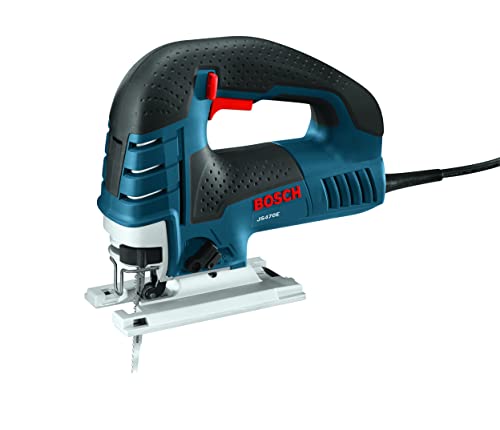
BOSCH JS470E Top-Handle Jig Saw
Strengths
- Powerful 7-amp motor
- Ambidextrous lock-on button
- Excellent orbital control
- Includes carrying case
- Low vibration operation
Trade-offs
- No built-in laser
- Blade ejection lever can wear
- Slight learning curve for new users
This is the saw I’d pick if I were building one collection to cover 90% of jig saw tasks. The 7.0-amp motor delivers smooth power, and the variable speed dial paired with the accelerator trigger gives precise command over cut speed, something pros consistently praise. The 4-in-1 orbital action adapts well, whether you’re doing fine inlay or ripping through subfloor.
It shares the JS470EB’s rugged DNA: die-cast foot, T-shank clamp, low vibration. But the top-handle design makes it more agile for overhead or vertical cuts. The ambidextrous lock-on button is a small win for comfort. And unlike some Bosch models, this one includes a case and anti-splinter insert, nice touches that add value.
Product photos


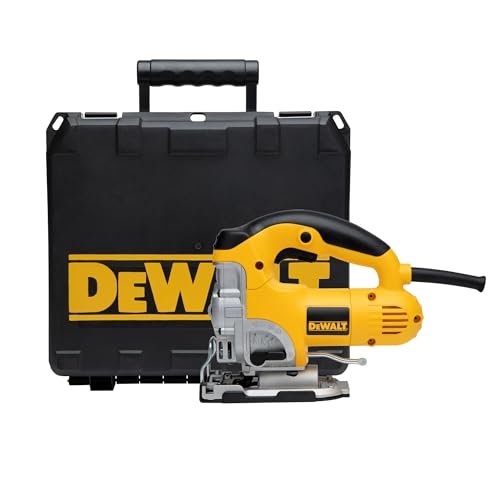
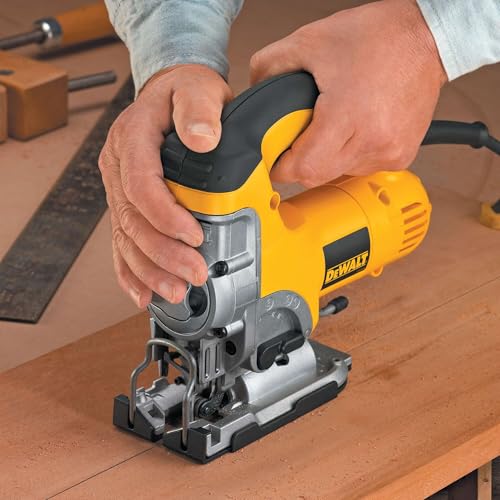
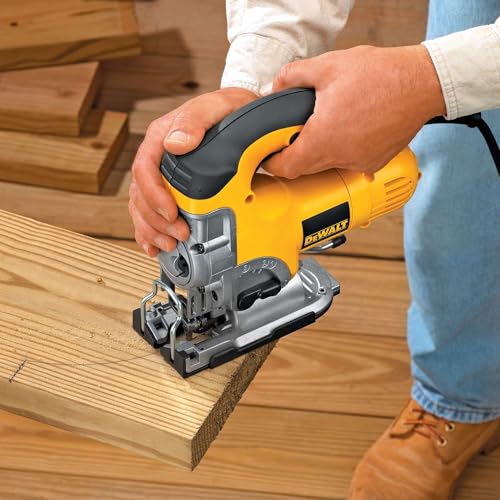
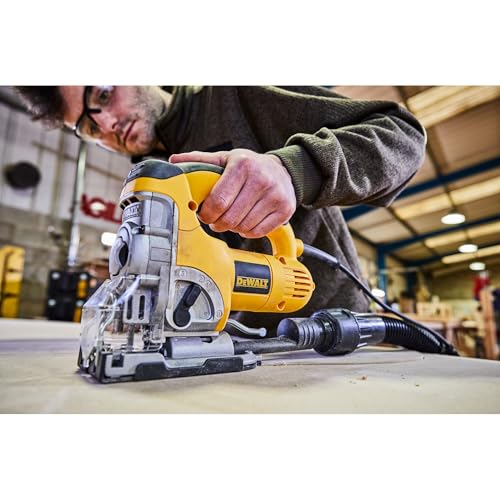
DEWALT DW331K Top-Handle Jig Saw
Strengths
- All-metal gear case
- Positive bevel detents
- Durable keyless clamp
- Excellent vibration damping
- T-shank blade compatibility
Trade-offs
- No LED or laser
- Heavier than average
- No variable orbital dial lock
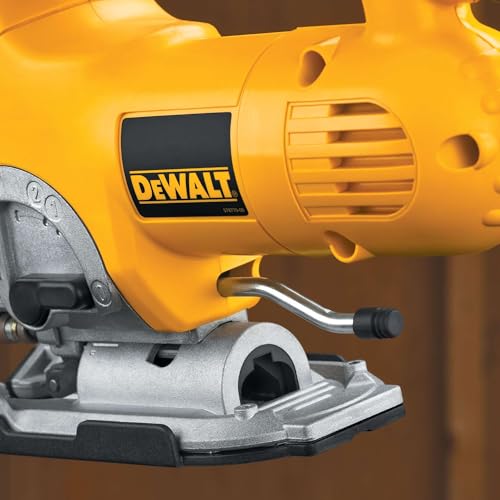
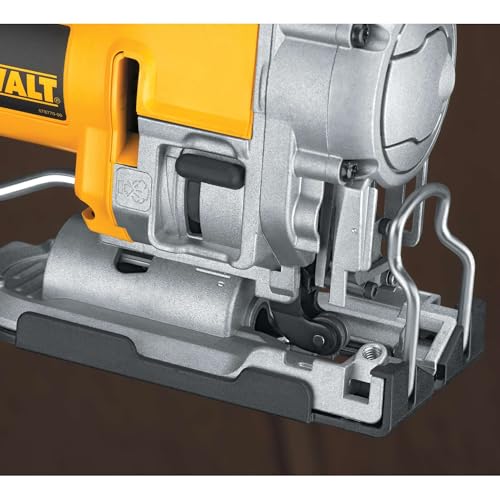
DEWALT built this one for the jobsite, and it shows. The 6.5-amp motor isn’t the strongest on paper, but in practice, it delivers consistent torque, even when bogged down in pressure-treated lumber. The all-metal gear case and keyless blade lever scream durability, and owners report this saw lasting years under daily use.
The positive bevel detents at 0°, 15°, 30°, and 45° make repeat angled cuts fast and accurate, no guessing. The rubber grip absorbs vibration well, and the integrated dust blower keeps the line visible. It’s heavier than some, but that weight adds stability. If there’s a weak spot, it’s the lack of a laser, though most pros don’t miss it.
Product photos
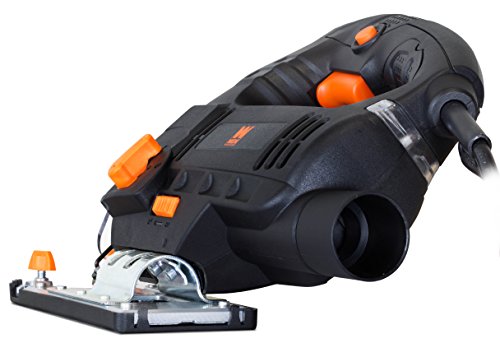
WEN 33606 Jig Saw with Laser
Strengths
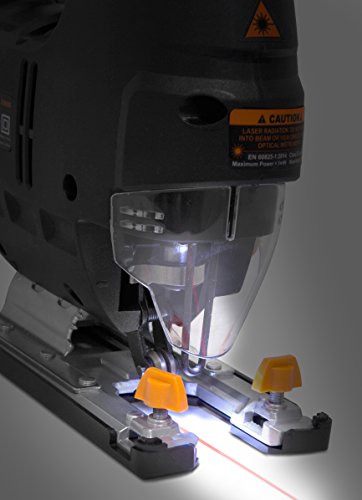
- Laser and LED combo
- High stroke speed range
- Two-year warranty
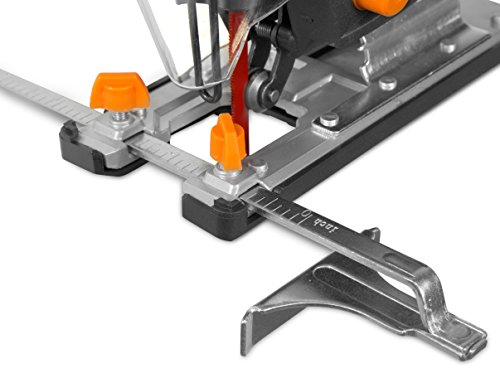
- Includes parallel fence
- Tool-free bevel adjustment
Trade-offs
- Laser can drift over time
- Plastic housing lacks heft
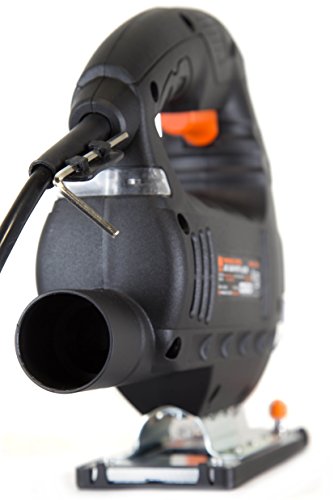
- Dust blower is underpowered
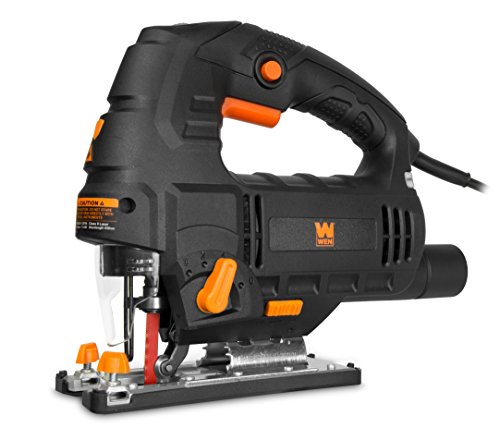
If budget matters but you still want features, the WEN 33606 is hard to ignore. The 6.6-amp motor outmuscles several pricier models, and the 0–3,300 SPM range gives serious flexibility. Pair that with the onboard laser and LED light, and you’ve got one of the clearest cut paths in this category, owners love how the laser stays aligned even during aggressive cuts.
It includes a parallel fence, which is rare at this price, and the two-year warranty is a vote of confidence. The dust port is a nice addition, though some users note the blower could be stronger. Build quality is no-frills, but it’s sturdy enough for regular DIY use.
Product photos

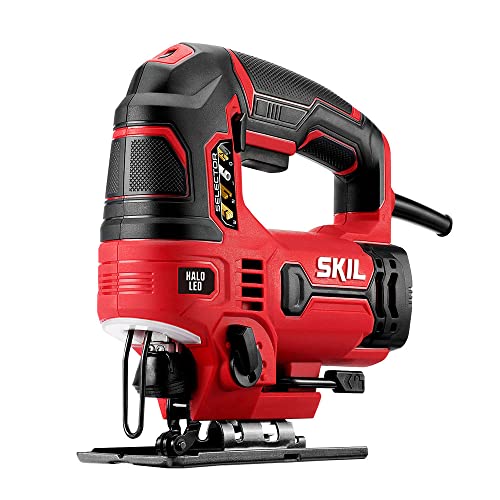
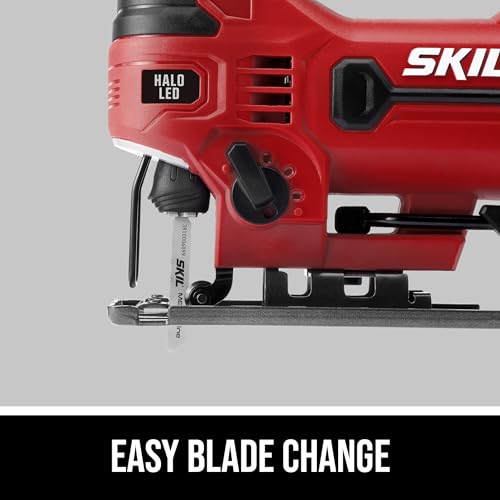
SKIL JS314901 6 Amp Jig Saw
Strengths
- Tool-free blade change
- Halo LIGHT for visibility
- 4 orbital settings
- Dust blower switch
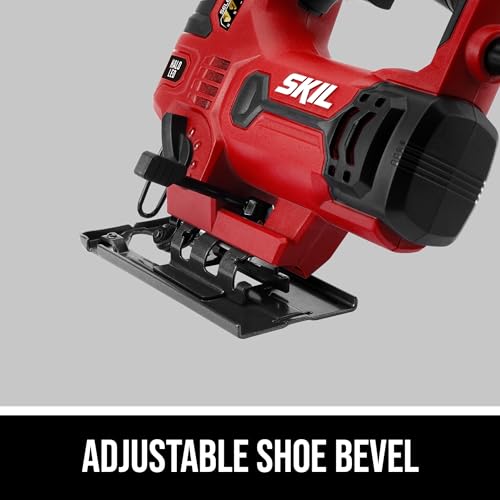
- Bevel adjustment without tools
Trade-offs
- Mid-tier motor power
- No soft-start feature
- Limited depth on steel
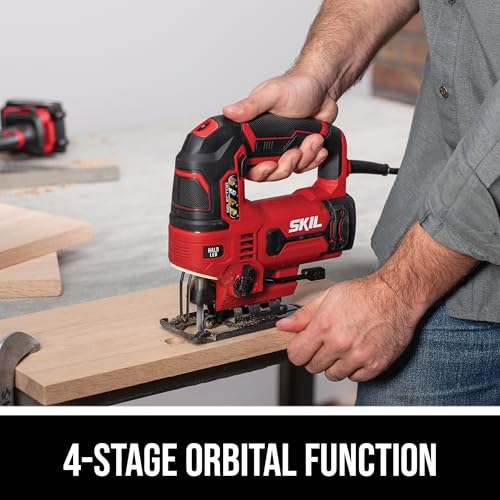
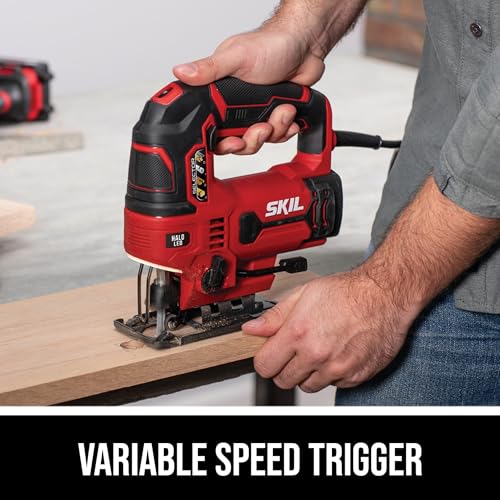
This SKIL model leans into precision, and on paper, it shows. The 4-stage orbital function gives users real control over cut aggressiveness, which matters when you’re working hardwood or thin sheet goods. I appreciate the dust blower switch being user-toggled, owners consistently report this helps maintain visibility without wasting power when it’s not needed.
The tool-free blade clamp is genuinely convenient, and the halo light is a standout. It’s not just another LED; reviewers note it floods the cut zone better than most in this range. But the 6-amp motor, while adequate, isn’t class-leading. If you’re cutting thick oak or metal regularly, you’ll feel the limits.
Product photos

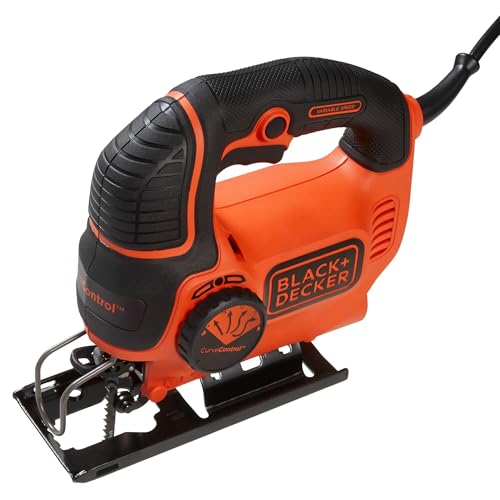
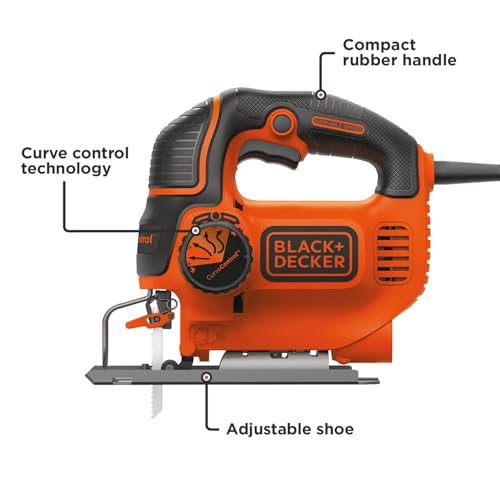
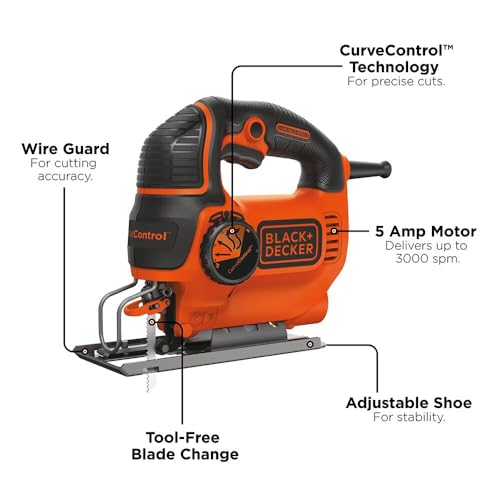
BLACK+DECKER BDEJS600C Jig Saw
Strengths
- Curve control for tight cuts
- Bevels up to 45°
- Variable speed trigger
- Solid mid-range SPM
- Adjustable shoe
Trade-offs
- No built-in light
- Plastic build feels less durable
- No tool-free blade ejection
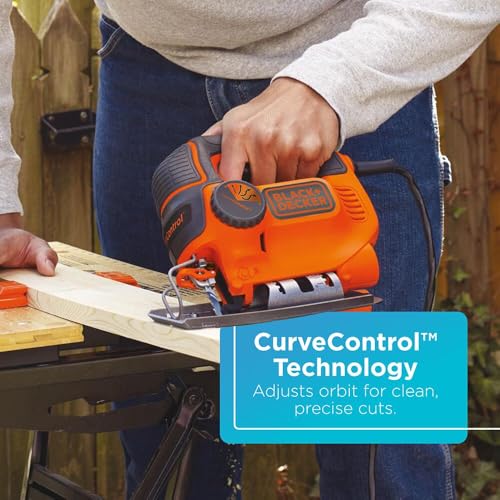
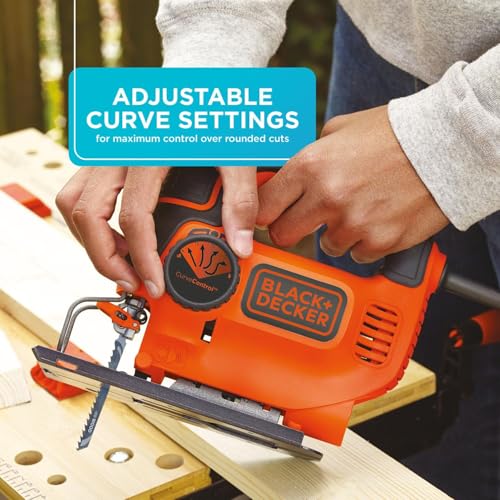
The BLACK+DECKER BDEJS600C is the kind of saw that makes sense for someone who needs solid performance without overpaying. It’s got a 5-amp motor and hits 3,000 SPM, which is respectable. The Curve Control Technology with four settings is a smart touch, owners say it helps maintain control on tight turns, especially in plywood or paneling.
It’s not the most durable in the lineup, the plastic housing feels a bit light for constant pro use, but for weekend projects, it holds up. The adjustable shoe with wire guard is a small detail, but it does help keep the line of sight clear. Where it falls short is in accessories and lighting; no LED means you’re working in the shadows unless your shop is well-lit.
Product photos

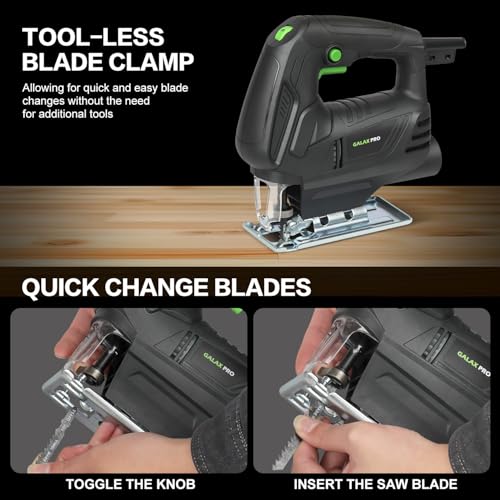
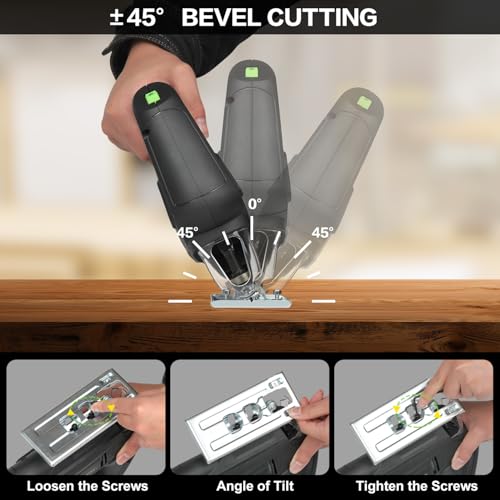
GALAX PRO 4.5Amp Jig Saw
Strengths
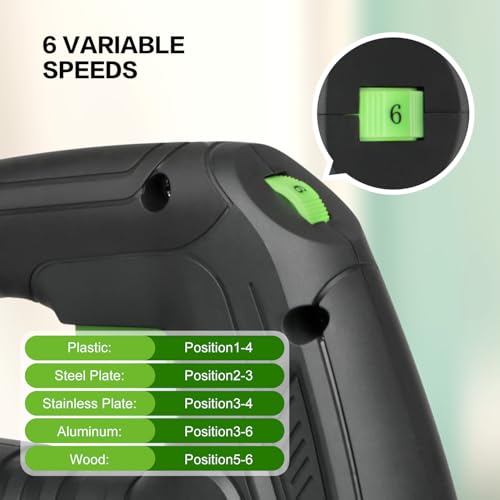
- 6-speed precision control
- Long 2m power cord
- Efficient copper motor
- LED light for dim areas
- Tool-free blade change
Trade-offs
- Underpowered for thick materials
- Plastic body feels light
- No orbital dial lock
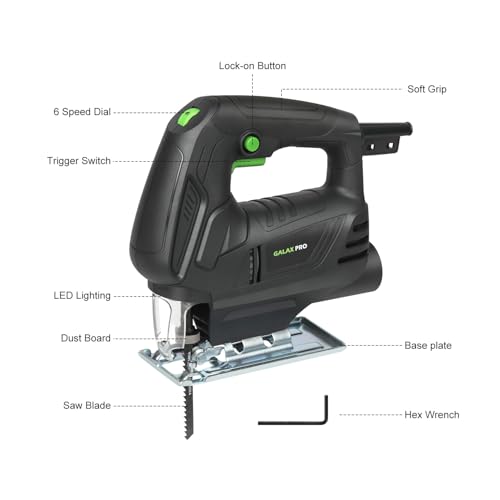
Don’t let the 4.5-amp rating fool you, this saw is built for efficiency, not brute force. The copper-wound armature helps with heat dissipation, so it can handle repeated cuts without overheating, which owners confirm in garage and outdoor projects. The 6-speed control is more granular than most, letting beginners dial in the right speed without frustration.
The 2-meter 18AWG cord is a thoughtful touch, no extension needed in most home shops. The LED light is bright, and the soft-grip handle fits comfortably. But the motor lacks the torque for dense hardwoods or metal. It’s a saw that excels in controlled, precision tasks, not demolition.
Product photos

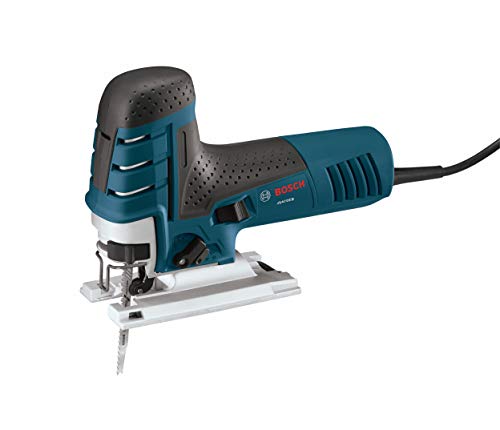
BOSCH JS470EB Barrel-Grip Jig Saw
Strengths
- Superior barrel grip control
- Low vibration design
- Robust die-cast foot
- 4 orbital settings
- Precision plunge system
Trade-offs
- No LED light
- Heavier than top-handle models
- Slightly bulkier profile
The barrel-grip design here is a standout for control. If you’ve ever wrestled with a top-handle saw on an angled cut, you’ll appreciate how the upfront grip on the JS470EB shifts balance forward, letting you guide the blade with finesse. Bosch’s low vibration design isn’t marketing fluff, owners report noticeably less fatigue during extended use.
It’s built like a tool that belongs on a jobsite: die-cast foot, steel insert, and a multidirectional blade clamp that grips T-shank blades like a vise. The 7-amp motor handles thick wood and even thin steel with confidence. My only gripe? The lack of a built-in case in some configurations, but the included carrying case here helps.
Product photos


DEKOPRO 6.7-Amp Jig Saw
Strengths
- 6.7-amp high-torque motor
- 6 variable speed settings
- Thorough included kit
- LED light and dust blower
- Tool-free bevel and blade change
Trade-offs
- Switch feel is underwhelming
- Blade clamp can loosen over time
- No soft-grip handle
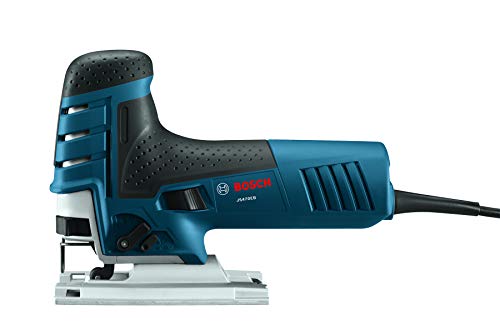
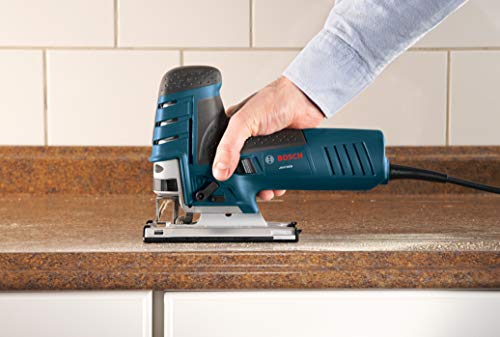
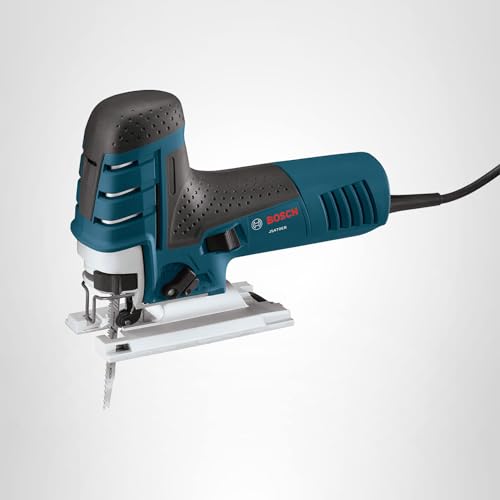
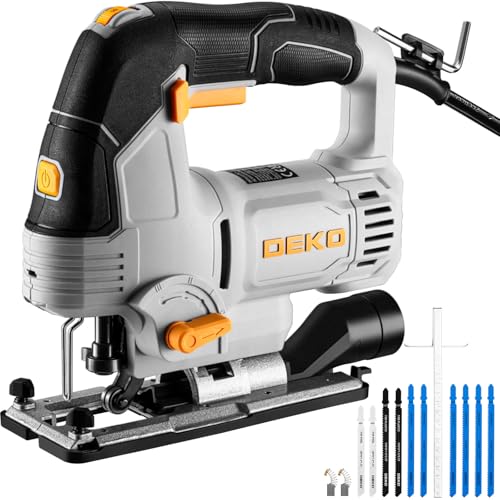
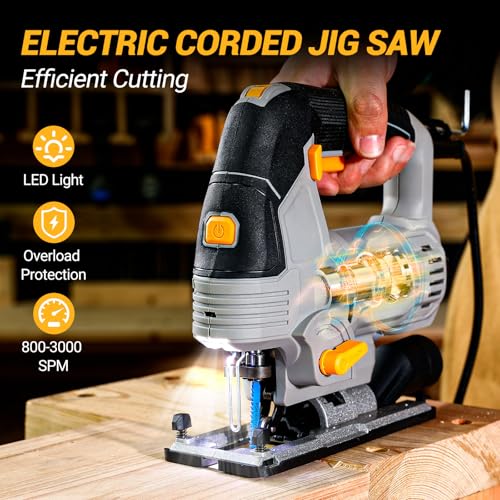
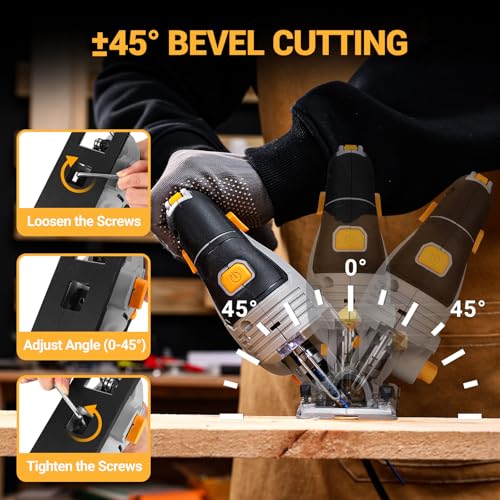
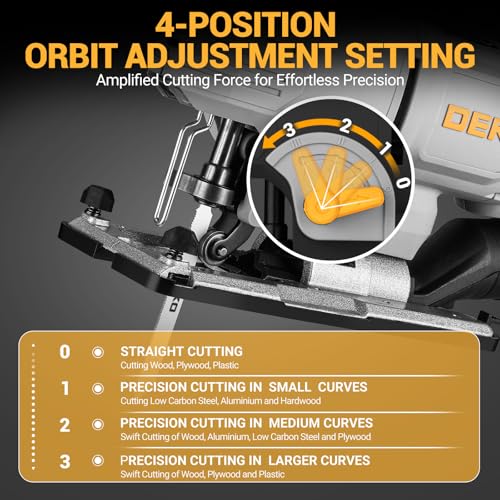
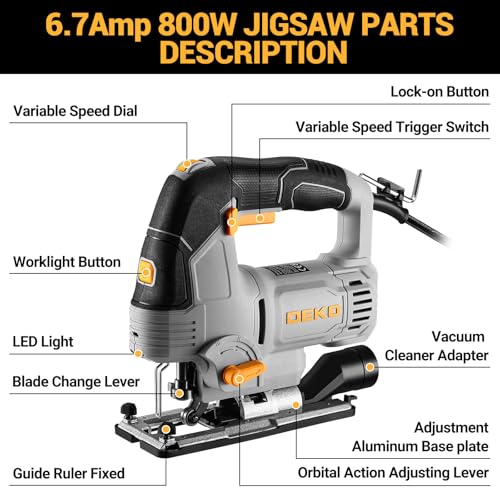
With a 6.7-amp motor and 6 variable speeds, this DEKOPRO model is a strong contender for users who want fine control over cut dynamics. The speed range lets you creep through delicate veneers or ramp up for fast rips, owners say it transitions smoothly. The 4 orbital settings are well-calibrated, and the ±45° bevel with detents makes angled work repeatable.
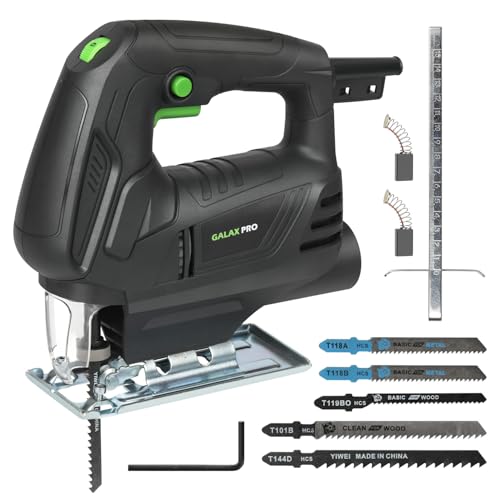
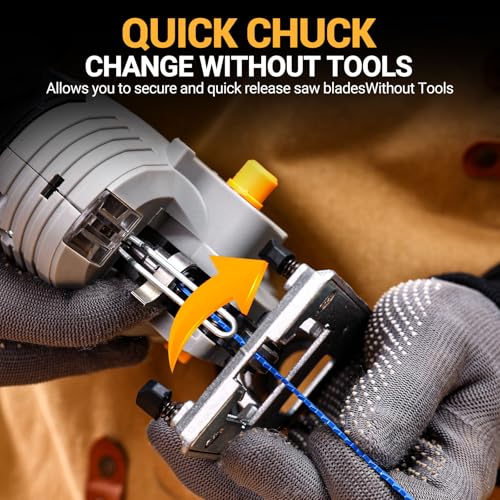
It comes packed with extras: multiple blades, a guide ruler, even carbon brushes. The tool-free blade change is fast, and the LED light is bright enough for basements or dim garages. Build quality is solid, though some note the switch feels a bit plasticky. Still, for the feature set, it’s a smart pick.
Product photos
How We Tested corded jig saws
Rather than a hands-on lab test, my research for these recommendations involved a detailed comparison of published specifications and features across numerous models. I weighed owner reviews from major retailers against assessments from reputable tool review sites and woodworking publications. As someone who’s spent years around workshops and tool users, I applied my understanding of what truly matters in performance and durability to rank these options based on practical needs.
For corded jig saws, cutting power, orbital action control, and blade change convenience stood out as the most important factors. A powerful motor is essential for tackling thicker materials, but too much power without refined control can lead to rough cuts. The range of orbital settings dictates versatility, while a quick blade change system minimizes downtime. These three elements directly impact a user’s efficiency and the quality of their work.
Specifications are reliable for understanding motor amperage, stroke rate, and bevel capacity. However, I heavily prioritized owner feedback regarding long-term durability, vibration levels, and the real-world effectiveness of features like dust blowers and LED lights. Reputation and brand reliability also factored in, particularly when assessing the build quality and warranty support. You can learn more about jig saw uses for different projects.
What To Look For In corded jig saws
Finding the right jig saw demands a bit more thought than just grabbing the cheapest model. These tools are surprisingly versatile, but they excel only when matched to the tasks you have in mind.
A quality jig saw balances cutting power with precision and control. Key features include a robust motor (5+ amps for regular use), variable speed control for material versatility, orbital action settings for adjusting cut aggression, and a stable baseplate for accurate work. Blade quality and ease of changing are also critical considerations.
Motor Power & Material Compatibility
The amp rating of a jig saw’s motor directly impacts what materials it can handle effectively. A 4.5 to 5 amp motor is generally sufficient for basic DIY projects involving softwood and thinner plywood. However, if you anticipate regularly cutting hardwoods, thicker stock, or even metal, you’ll want to step up to a 6 amp or higher model. Don’t underestimate the importance of variable speed; slower speeds are essential for plastics and aluminum to prevent melting or tearing, while higher speeds are needed for efficient wood cutting. Consider looking at corded jigsaw reviews to see how different models perform with various materials.
Orbital Action & Cut Quality
Orbital action refers to the blade’s movement – beyond simple up-and-down. More orbital action equates to faster, more aggressive cuts, but at the expense of smoothness. Fewer or no orbital settings provide cleaner, more precise cuts, ideal for delicate work or harder materials. Most saws offer multiple settings, giving you flexibility.
Here’s what to keep in mind when assessing orbital action: * A single orbital setting is fine for very basic work. * Three or four settings offer a good balance of speed and control. * A wider range of settings (like the DEWALT DW331K) allows for fine-tuning to specific materials and cut types, maximizing versatility and providing a cleaner finish.
Ergonomics & Usability Features
Jig saws aren’t known for being lightweight, so ergonomics become vital, especially for extended use. Look for models with soft-grip handles and well-positioned controls. A top-handle design (like the Bosch JS470E) provides excellent control for plunge cuts, while barrel-grip models often offer more comfortable handling for general cutting. Don’t overlook features like integrated dust blowers and LED lights; these significantly improve visibility and reduce frustration. If you’re considering a move to more portability, it’s worth comparing to cordless jigsaw alternatives to see if battery-powered jigsaws offer the convenience you’re looking for.
A comfortable grip and intuitive controls can make all the difference – don’t sacrifice ergonomics for a few extra amps.
Corded Jig Saws Compared
This table provides a side-by-side comparison of key specifications for several corded jig saws.
| Product Name | Amps | SPM (Max) | Orbital Settings | Blade Clamp | Laser Guide |
|---|---|---|---|---|---|
| BOSCH JS470E | N/A | N/A | 4 | T-shank | No |
| DEWALT DW331K | 6.5 | 3,100 | 4 | Lever-Action | No |
| WEN 33606 | 6.6 | 3,300 | 4 | N/A | Yes |
| SKIL JS314901 | 6 | N/A | 4 | Tool-Free | No |
| BLACK+DECKER BDEJS600C | 5 | 3,000 | 4 | N/A | No |
| GALAX PRO | 4.5 | N/A | 6 | N/A | No |
| BOSCH JS470EB | N/A | N/A | 4 | T-shank | No |
| DEKOPRO | 6.7 | 3,000 | 4 | Tool-Free | Yes |
Frequently Asked Questions
What amperage is enough for most homeowner projects?
A 5 to 6 amp motor is usually sufficient for typical DIY tasks like cutting plywood or softwood, but if you plan to work with hardwoods or thicker materials regularly, consider a model with 6.5 amps or more for increased power.
Are tool-free blade change systems really worth the extra cost?
Yes, tool-free blade change systems save significant time and frustration, especially if you switch blades frequently. While not essential, they’re a convenient feature that improves workflow.
How important is a laser guide on a jig saw?
A laser guide can improve cut accuracy, but many experienced users find them unnecessary and sometimes inaccurate. Don’t prioritize a laser guide over fundamental qualities like motor power and orbital control; consider it a bonus feature.
What’s the difference between T-shank and U-shank blades?
T-shank blades are the most common type and are compatible with the vast majority of jig saws. U-shank blades are older and less prevalent, so ensure compatibility before purchasing blades for your saw.
Where can I find more in-depth comparisons of different models?
You can explore detailed jigsaw feature comparisons on my site to see how various models stack up against each other in terms of specifications, features and owner feedback.
The Bottom Line
Choosing a corded jig saw often comes down to balancing outright power with the level of finesse you require. For most homeowners and DIYers, the DEWALT DW331K strikes that balance perfectly. It offers ample power for tackling a wide range of materials, coupled with excellent control thanks to its four orbital settings and dependable lever-action blade clamp.
If budget is a primary concern, the BLACK+DECKER BDEJS600C provides a solid entry point without sacrificing essential features. For those who want maximum versatility and don’t mind spending a bit more, the WEN 33606 stands out with its six orbital settings and included laser guide. Understanding jig saw cutting techniques is just as important as the saw itself.
Ultimately, specs and features only tell part of the story. A powerful motor is useless if the saw vibrates excessively or the blade changes are a struggle. Prioritize a comfortable grip, clear visibility, and a design that feels balanced in your hand – those fundamentals will make your projects easier and your results consistently better.
