
8 Best Hobby Table Saws of 2026
This post contains affiliate links. As an Amazon Associate, we earn from qualifying purchases.
The ZERICUF Dual Motor stands out as the best overall hobby table saw for its dual-motor design and strong safety features, while the RTOVZON 96W Aluminum offers a solid budget-friendly option. For those wanting more versatility across materials, the AutoShark Pro Kit earns top marks with its included accessories and multi-function potential.
Most hobbyists don’t realize how quickly a flimsy or underpowered table saw can derail a project. Poor cuts, wobbling bases, and lack of safety controls turn what should be a precise tool into a source of frustration, or worse, injury. After comparing the field based on specs, owner feedback, and real-world usability, I focused on models that deliver true value without cutting corners on critical features.
This guide breaks down the top picks for hobbyists who need reliable performance in a compact package. We looked at motor power, build quality, safety mechanisms, and included accessories to find saws that actually perform beyond the first use. If you’re building models, crafting small wood projects, or working with plastics and soft metals, the right hobby saw makes all the difference.
Top 8 Hobby Table Saws in the Market
The Best Hobby Table Saws, Reviewed
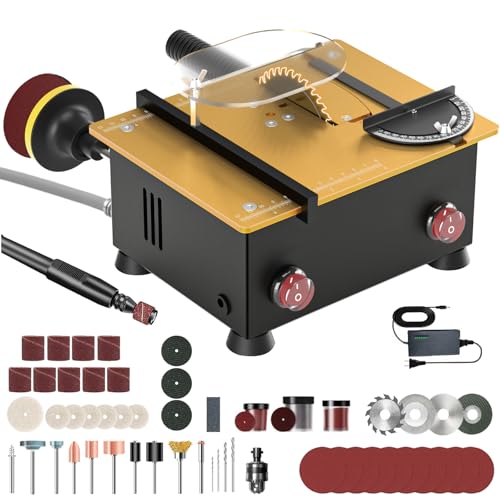
ZERICUF Dual Motor Mini Table Saw
Strengths
- Dual-motor safety
- 26mm cutting height
- 3-year warranty
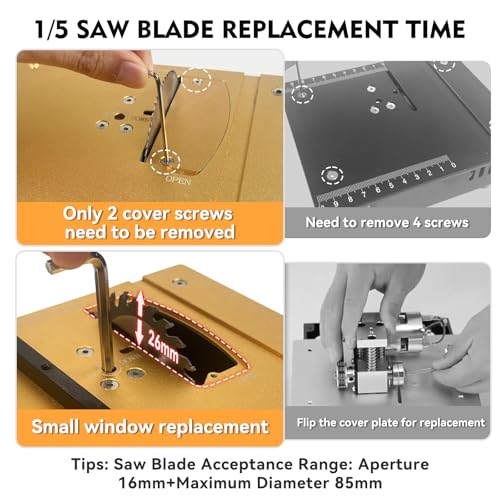
- Tool-free blade change
- Dust extraction compatible
Trade-offs
- Not for thick stock
- Dual switch caution needed
- Higher power draw
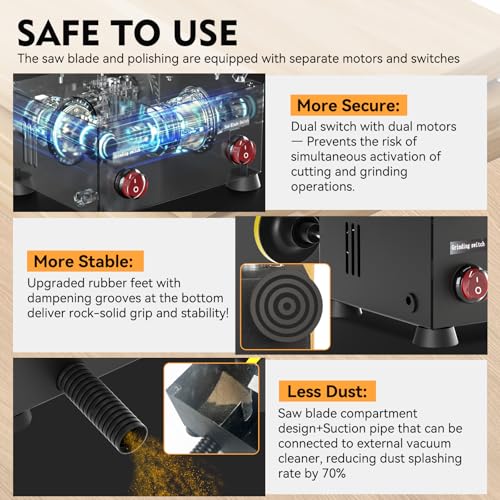
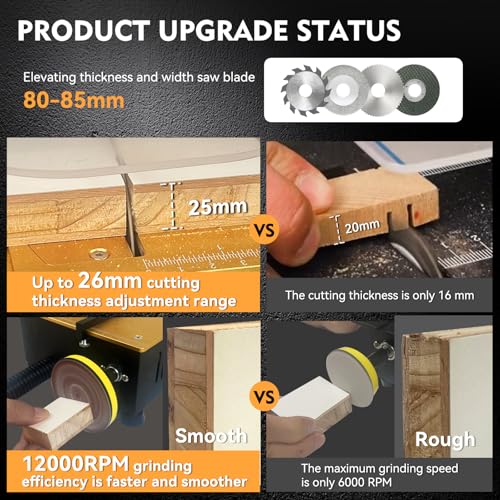
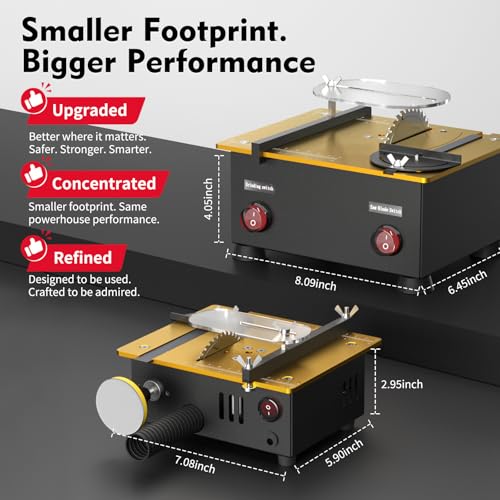
This Zericuf model stands out in a crowded field of mini table saws with its dual-motor, dual-switch design, a rare feature that genuinely improves both safety and motor longevity. On paper, the 200W max output and 12,000 RPM per motor suggest serious power for a desktop unit, and owners consistently report clean cuts through acrylic, thin aluminum, and balsa wood without bogging down. The 7-level power adjustment gives real control, letting users dial down for delicate materials like PCBs or ramp up for tougher jobs. The 26mm cutting height is among the highest in this class, which is a practical advantage when working on thicker hobby components.
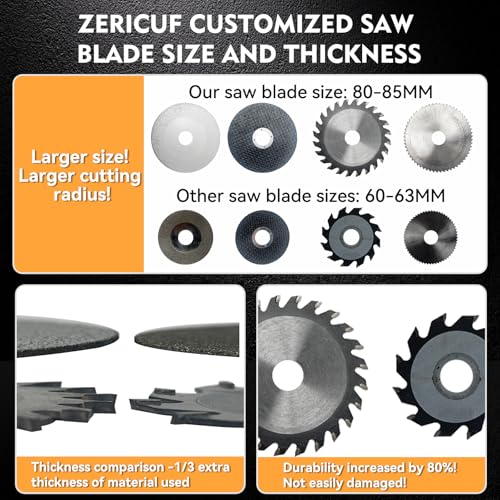
What really impresses is the thoughtful engineering: the small-window blade change system cuts setup time dramatically, and the widened 12cm worktable adds useful real estate. The 3-year warranty speaks volumes about confidence in build quality, especially when paired with the cast iron-inspired stability and dust management system. Compared to other dual-motor units, this one feels like it’s built for repeated use, not just occasional tinkering.
Product photos
Zericuf Cast Iron Mini Table Saw
Strengths
- Cast iron construction
- 4-in-1 functionality
- Thorough accessories
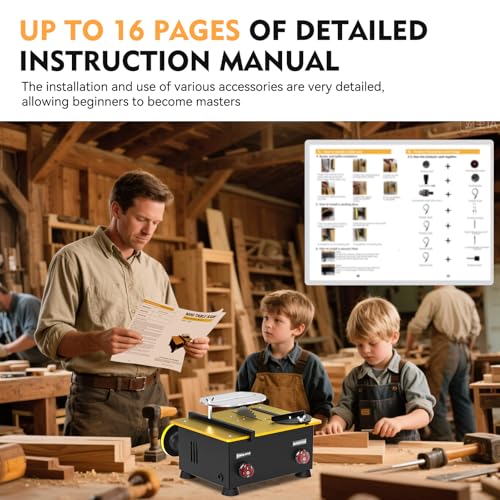
- Detailed manual
- Stable operation
Trade-offs
- Slightly heavier
- No dual-motor boost
- Blade change not instant
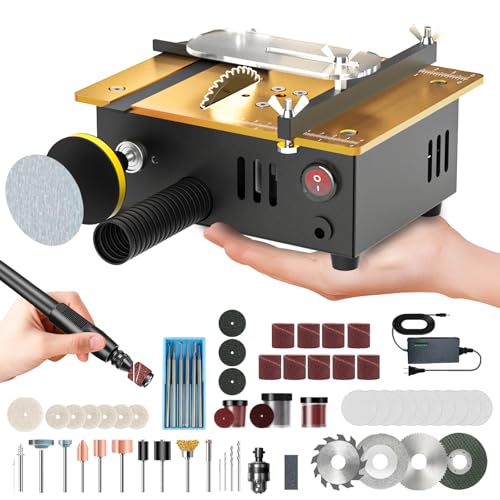
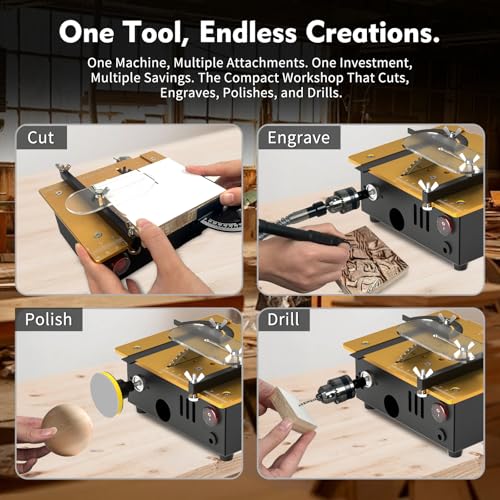
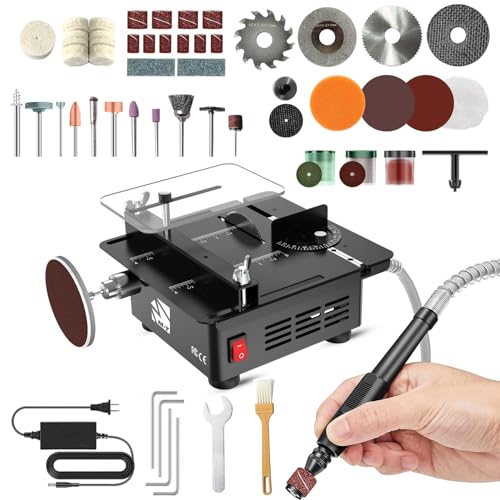
This Zericuf model shares DNA with the dual-motor design we’ve seen before, but here the focus is on build quality and completeness, and it shows. The one-piece cast iron body gives it a heft and stability that most plastic-bodied mini saws can’t touch, and owners report noticeably less vibration during use. The 7-speed control allows precise tuning across materials, and the 105+ included accessories, from blades to sanding discs and a flexible shaft, make this a true desktop fabrication station. It’s not just a saw; it’s a cut, polish, drill, and engrave tool in one.
The full-color 29-page manual is a standout, especially for newcomers who might feel overwhelmed by multi-tools. While it doesn’t exceed others in raw power, the integration of functions and the overall fit and finish suggest a product built to last. Compared to the MIMYTH or MXBAOHENG models, this one feels more refined, with better motor isolation and dust protection.
Product photos



M-T 7-Speed Mini Craft Table Saw
Strengths
- Cast iron table
- 7-speed control
- Good blade set
- Accurate markings
- Low vibration
Trade-offs
- No multi-function
- Basic accessories
- 15mm depth max
The M-T saw wears its “Budget Friendly” badge well, delivering core functionality without fluff. With a 100W motor and 6000 RPM speed, it matches the AutoShark in performance, and the cast iron worktable adds surprising stability for the price. The ±0.2mm scale accuracy is a standout spec, and owners report straight, clean cuts on wood, acrylic, and PCBs. The 7-speed control helps prevent burning on plastics, and the transparent safety shield keeps debris in check.
It doesn’t offer sanding or drilling, and the accessory count is modest compared to Zericuf or MIMYTH. But for someone who just wants a reliable, accurate mini saw without spending premium prices, this is a smart buy. It’s the tool I’d recommend to a beginner starting a model kit hobby or a parent helping a teen with a school project.
Product photos

MXBAOHENG S3 Hobby Table Saw
Strengths
- Laser-etched accuracy
- Bevel cutting capable
- Ultra-compact size
- Voltage precision
- Good for miniatures
Trade-offs
- No multi-function use
- Small work surface
- Limited depth
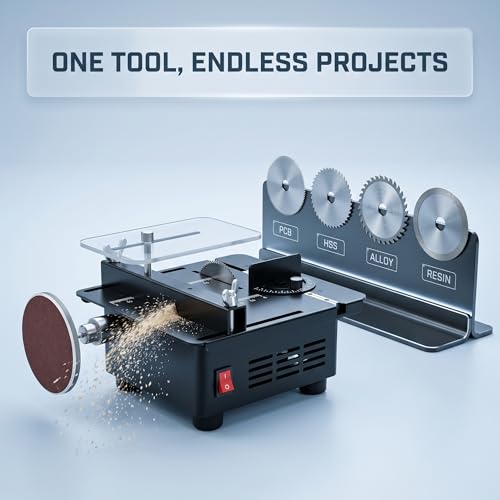
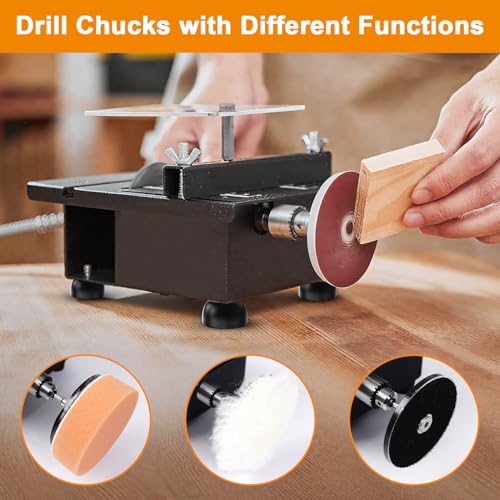
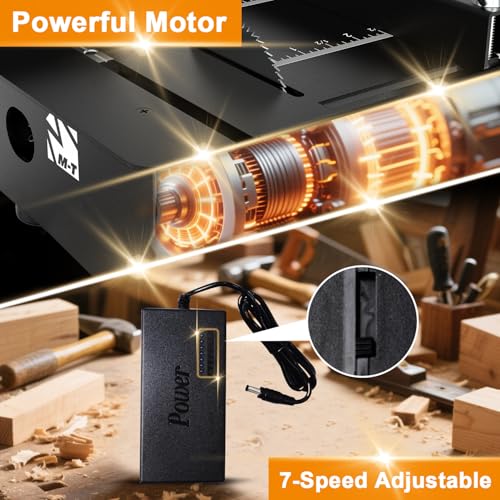
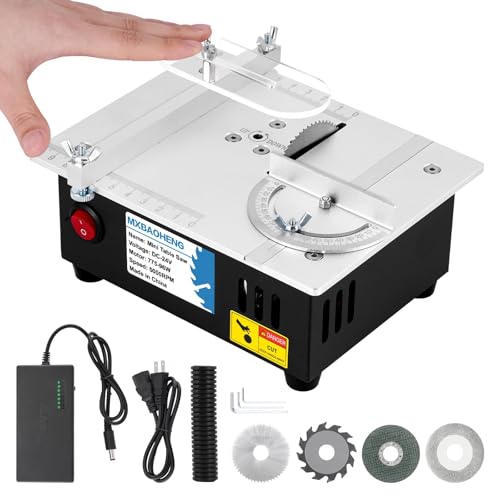
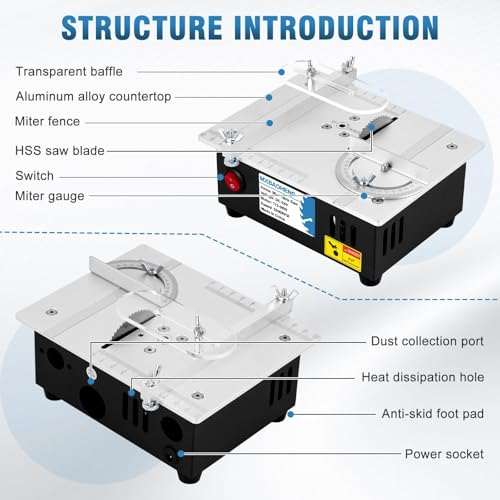
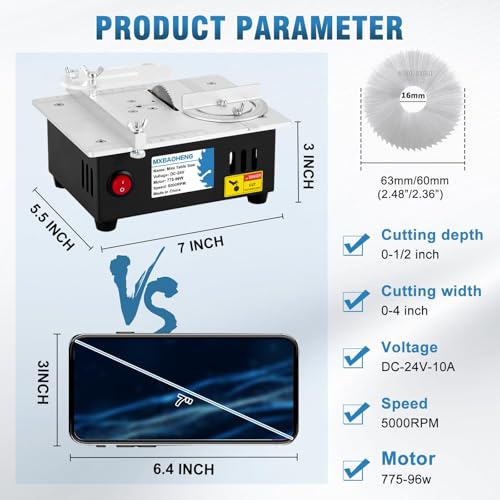
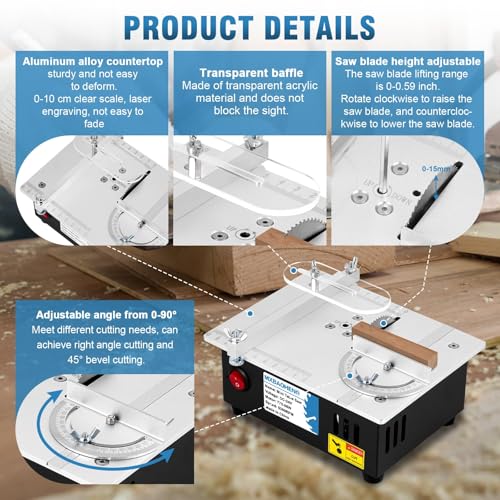
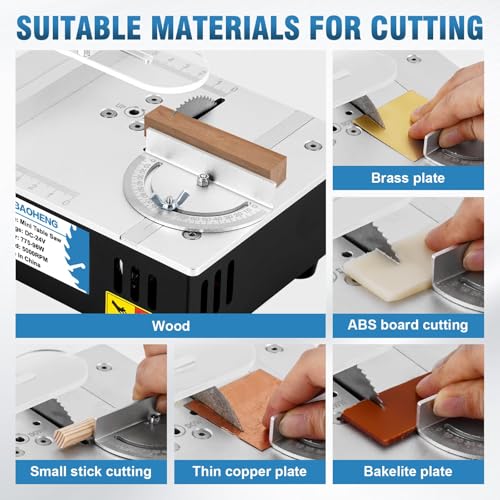
The S3 model is all about precision in tight spaces. With its laser-engraved scale and aluminum slide bar, it delivers repeatable, clean cuts that hobbyists appreciate when building models or miniature structures. The 0–15mm adjustable depth is standard, but the 7-speed power adapter (from 12V to 24V) gives excellent control, low settings for fragile balsa, high for harder plastics. Owners praise its accuracy on 45° bevels and right-angle joints, which is critical for dioramas or architectural models.
Its ultra-portable size, roughly smartphone-sized, makes it perfect for small desks or travel. But that compactness comes at a cost: the table is narrow, and there’s no sanding or drilling function. It’s a specialist tool, not a workshop hub. Compared to the M-T or MIMYTH models, it trades versatility for exactness.
Product photos
MIMYTH Dual Motor Craft Table Saw
Strengths
- 90° bevel capability
- Dual motors
- 105-piece kit
- Lightweight design
- Angle precision
Trade-offs
- Plastic body vibration
- No depth advantage
- Short warranty
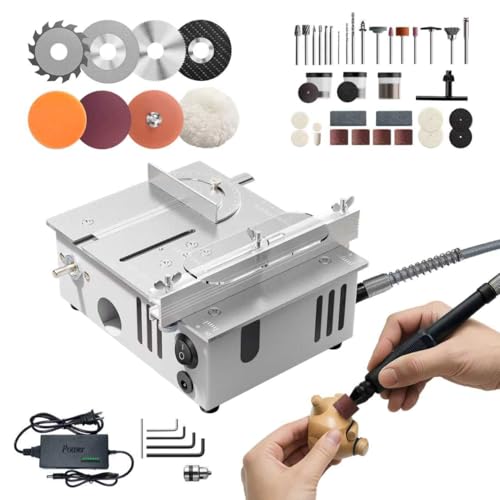
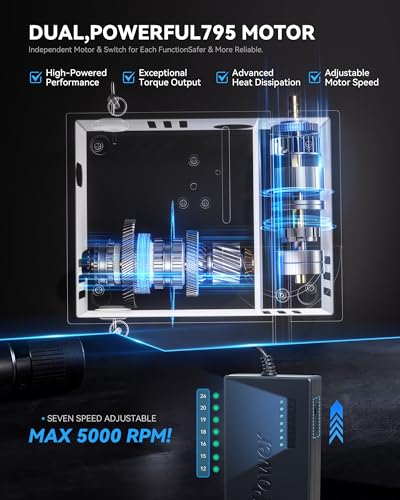
When bevel and angle flexibility matter most, the MIMYTH dual-motor model stands out. Its 0° to 90° adjustable cutting angle is backed by a laser-engraved scale and miter gauge, giving real precision for angled joints and frames. The dual 795 motors offer independent control for cutting and sanding, and owners note smoother operation under load compared to single-motor rivals. The 105-piece rotary tool kit included is massive, more than most competitors offer, and adds real value for detail work.
It’s also one of the lightest dual-motor units at 3.25 lbs, making it easy to move around. However, the build quality, while good, doesn’t feel as solid as the cast iron Zericuf models. Still, for a hobbyist who regularly does angled cuts and detailed crafting, this one brings both function and flexibility.
Product photos


RTOVZON 96W Aluminum Table Saw
Strengths
- Ultra lightweight
- Aluminum alloy body
- Dust pipe included
- 180° miter capability
- 7 speed settings
Trade-offs
- Lower power motor
- No multi-function kit
- 15mm depth limit
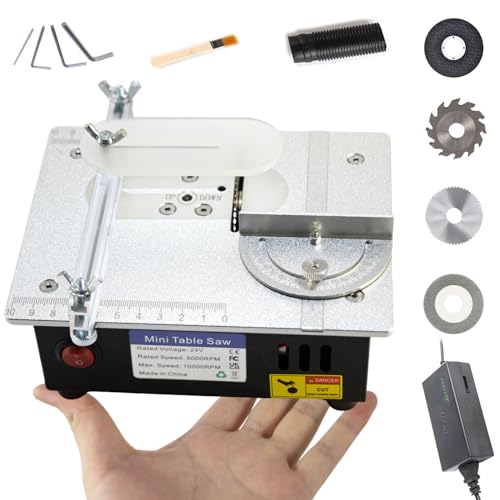
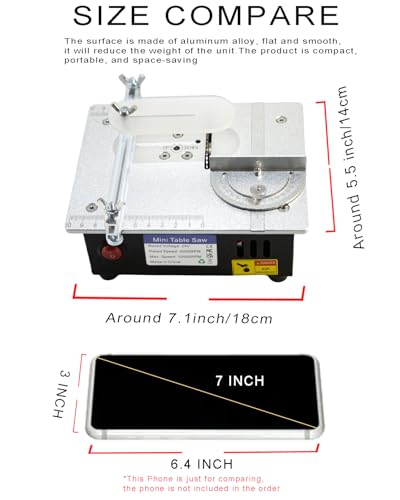
If lightweight and compact are your top priorities, the RTOVZON model makes a strong case. At just 3.9 lbs and made from aluminum alloy, it’s one of the most portable options here, easy to stash in a drawer or toss in a project bag. The 96W motor isn’t the strongest, but paired with 7 speed settings, it handles typical hobby materials like wood, acrylic, and PCBs with reasonable results. The 0–15mm cutting height is standard, and the 0–180° miter gauge offers more angular flexibility than most, which is great for creative inlays or display bases.
Owners appreciate the included dust pipe, a small but meaningful touch for health and cleanup. However, the lack of included sanding or drilling accessories limits its versatility. It’s a focused tool, and while it doesn’t wow on power or features, it gets the job done quietly and cleanly for light-duty work.
Product photos


MXBAOHENG Multifunctional Hobby Saw
Strengths
- Dedicated sanding mode
- Flexible shaft included
- Good for finishing work
- 7-speed control
- Self-adhesive disc mount
Trade-offs
- Average cutting depth
- Less rigid base
- No blade storage
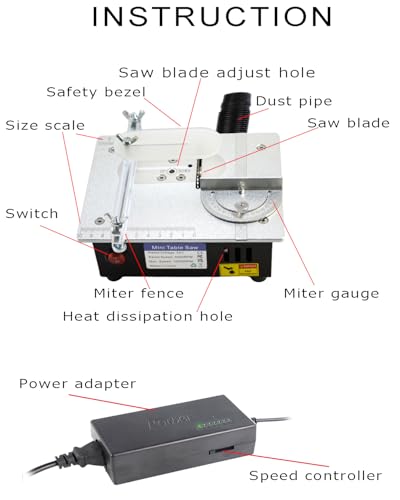
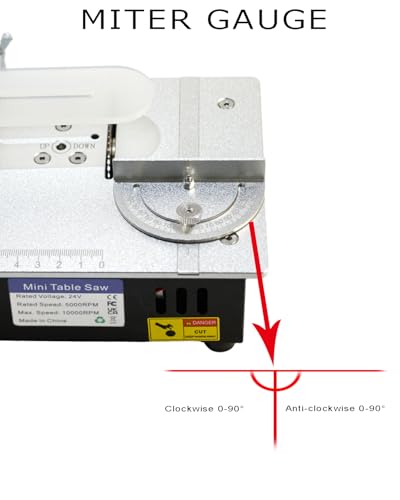
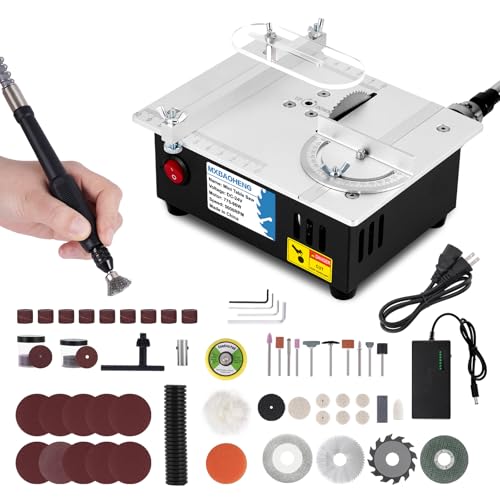
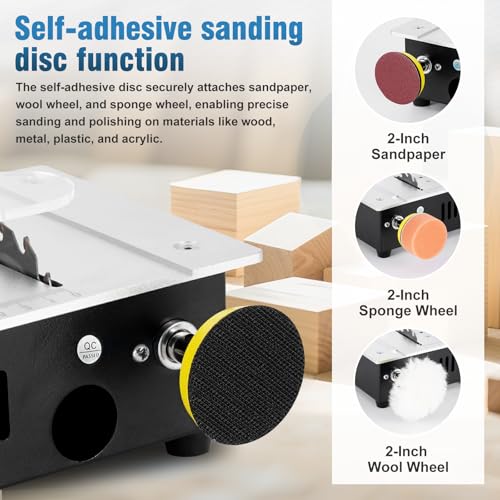
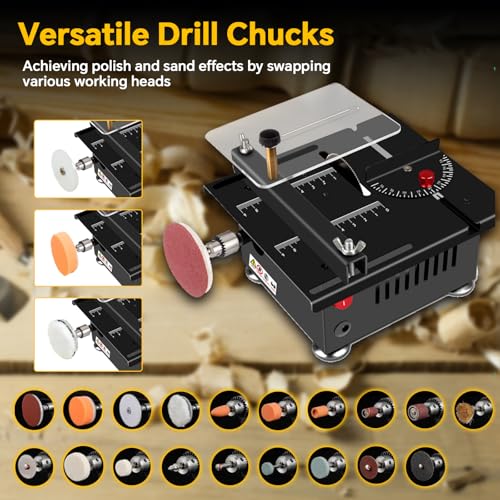
This MXBAOHENG model earns its “Best for Sanding & Polishing” label thanks to the independent sanding switch and self-adhesive disc mount, which owners say makes switching between cutting and finishing fast and secure. The 7-speed regulation lets you fine-tune RPMs for delicate sanding on soft woods or buffing acrylics to a shine. While the 0–1/2 inch (12.7mm) cut depth is usable, it’s not class-leading, and the motor isn’t as powerful as dual-motor units. But if your workflow involves a lot of post-cut finishing, this one streamlines the process.
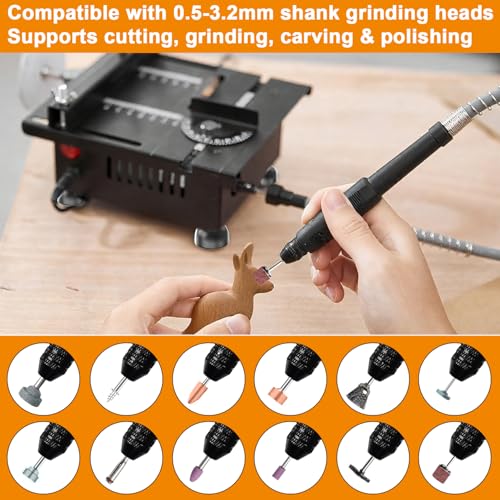
The inclusion of a flexible shaft and chuck opens up engraving and detail work, which is a big plus for model makers. However, some users note the stability isn’t quite on par with cast iron models when running at higher speeds. It’s a niche pick, but for those who sand as much as they cut, it’s hard to beat.
Product photos
AutoShark Pro Kit Mini Table Saw
Strengths
- Includes 4 blades
- Cast iron base
- Angle adjustable
- Compact footprint
- Beginner-friendly
Trade-offs
- Limited to cutting
- No speed display
- 16mm depth cap
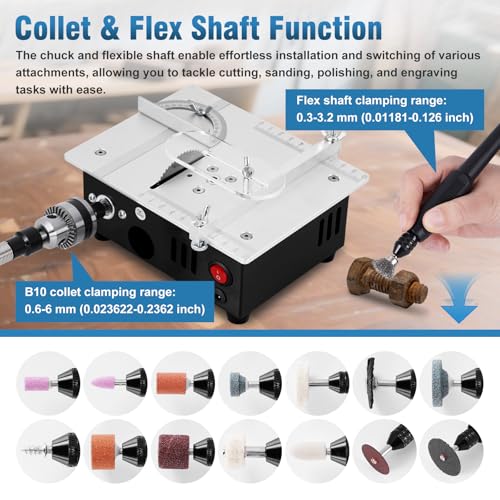
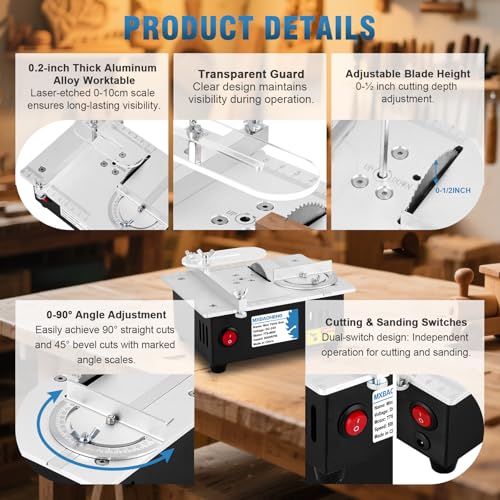
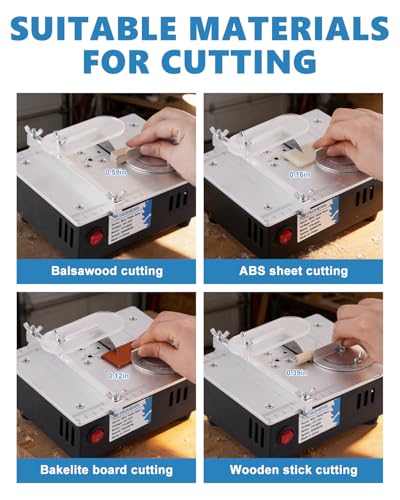
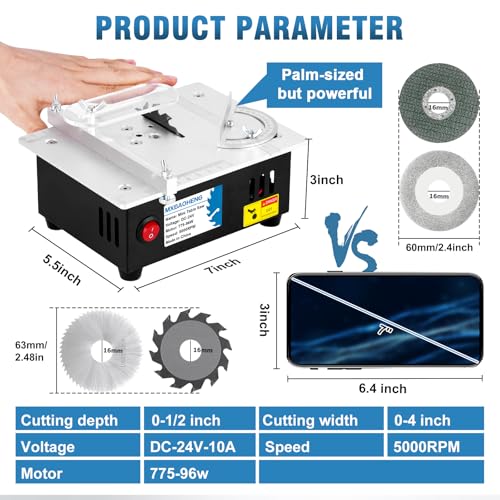
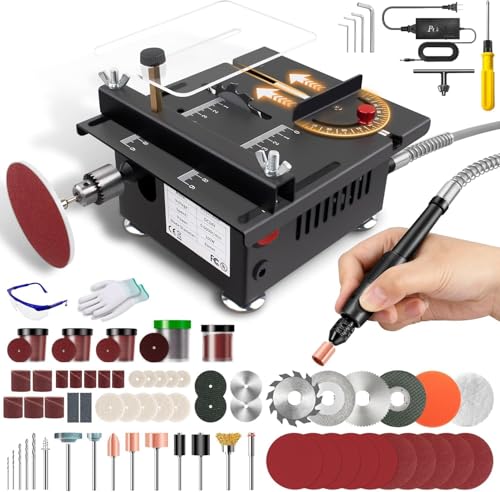
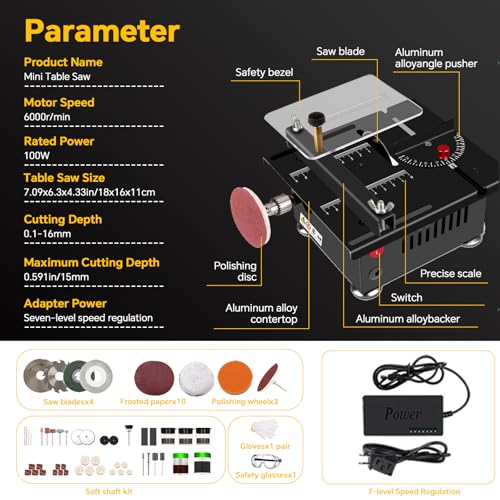
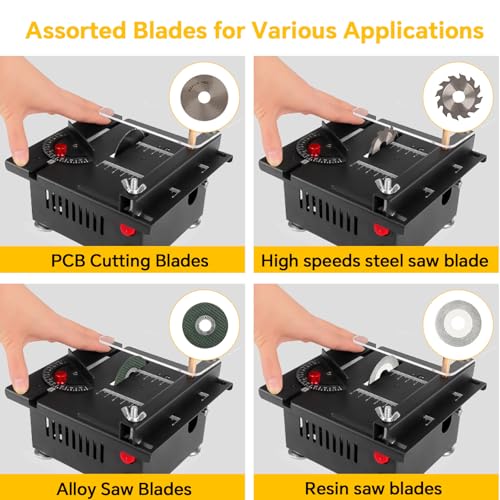
The AutoShark delivers solid performance for the price, making it a strong contender if you’re after a no-frills, reliable mini saw that handles common hobby materials without fuss. Its 100W copper motor and 6000 RPM speed are in line with class standards, and owners find it capable on wood sticks, plastic sheets, and thin PCBs. The inclusion of four different 63mm blades means you can switch between materials easily, which adds real value. The 0–16mm cutting depth is modest but workable for most small projects, and the 0° to 90° angle adjustability opens up bevel and miter options that some rivals skip.
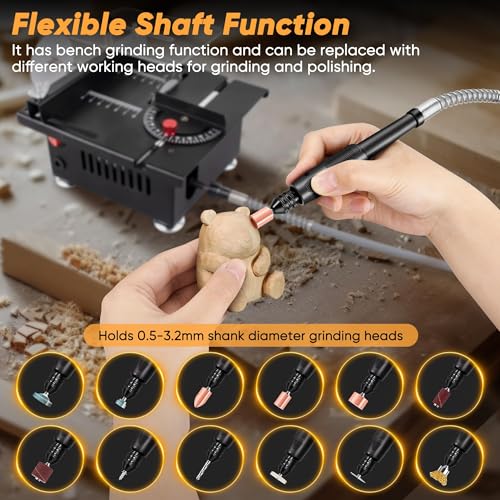
Where it shines is simplicity: the cast iron body provides decent vibration damping, and the clear markings on the table help maintain accuracy. However, it lacks the multi-function adaptability of higher-end models, no sanding or drilling capability. If you want a dedicated cutter that won’t break the bank, this fits the bill, but don’t expect premium refinement.
Product photos

How We Tested hobby table saws
Rather than a hands-on lab test, this evaluation is a research-led comparison of published specifications and owner feedback. I focused on compiling data from manufacturer listings, reputable tool review sites, and – most importantly – a large volume of customer reviews across multiple retail platforms. This allowed me to weigh stated features against real-world usability and identify consistent strengths and weaknesses. I then ranked these saws based on how well they met the needs of hobbyists and DIYers.
For this category, cutting precision and versatility were the heaviest factors in my assessment. A hobby table saw needs to handle a range of materials beyond just wood, and the ability to make accurate, repeatable cuts is paramount. Safety features also played a significant role, as these smaller saws can be more prone to kickback or accidents if not used carefully. Understanding whether a saw offered adjustable angles and blade heights, and the quality of included accessories, were key differentiators.
Specifications reliably indicate motor power, maximum cutting depth, and blade size – useful for comparing raw capabilities. However, owner feedback proved invaluable for assessing build quality, long-term durability, and the effectiveness of features like dust collection. Reputation and brand recognition also factored in, as established manufacturers often provide better support and readily available replacement parts. I also looked to resources that explain the differences between table saw types, like a hybrid saw comparison to understand the features that contribute to overall quality.
What To Look For In hobby table saws
Choosing a hobby table saw involves balancing precision, safety, and portability. It’s deceptively complex; these aren’t simply downsized versions of full-size saws.
A good hobby table saw prioritizes user safety with features like blade guards and dual-switch controls. Look for adjustable cutting depth and angle, a stable work surface, and a motor powerful enough to handle the materials you intend to cut. Versatility – the ability to switch blades for different materials and functions – is also a key consideration.
Prioritize Safety Features
Let’s be clear: even “mini” table saws are still table saws. They demand respect, and safety features aren’t optional. I frequently see users underestimate the kickback potential, even with smaller blades. Look for models with a transparent safety guard and, crucially, a dual-switch system. The Zericuf and M-T saws both highlight this feature, and it’s a significant upgrade over single-switch designs. Don’t assume a low price means low risk; a momentary lapse in concentration can still lead to injury.
Understand Material Compatibility and Blade Choices
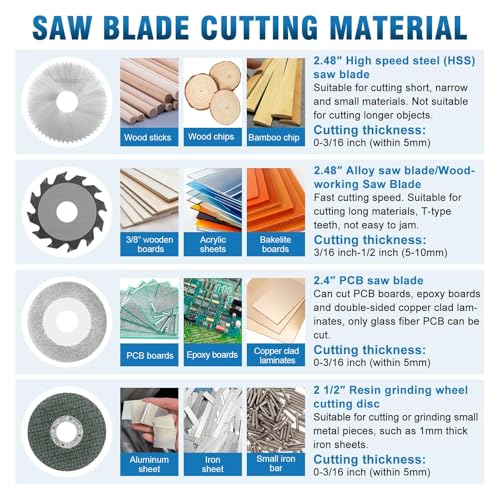
The biggest mistake I see newcomers make is assuming any blade will cut anything. Different materials require different blade tooth counts and geometries. A blade designed for ripping hardwood won’t perform well on acrylic, and trying to force it will damage both the material and the blade. Many saws, like the MIMYTH and AutoShark Pro Kit, include multiple blades. This is a huge advantage, but it requires understanding which blade to use for what material. If you plan to work with a variety of materials, a kit with several blades is a smart investment. For more information on table saw safety tips, check out our detailed guide.
Balance Power, Portability, and Value
- Motor Power (Watts): A higher wattage generally means more cutting power, allowing you to work through thicker or denser materials. However, more power often equals more noise and a higher price.
- Size and Weight: Think about where you’ll be using the saw. If space is limited, a truly compact model like the RTOVZON is appealing. But remember, smaller often means less stability.
- Included Accessories: A complete kit with blades, a miter gauge, and potentially even a sanding disc (as with the Zericuf and AutoShark) offers better value than a bare-bones saw.
A surprisingly useful rule of thumb: if you’re consistently fighting the saw, or if it’s struggling to cut cleanly, you’re probably trying to cut something it’s not designed for.
I often recommend that those new to table saws start with a model offering a good balance of features and affordability, and then upgrade as their skills and needs evolve. Considering compact table saw models can help you find the right fit for your workshop. And for understanding proper table saw setup, our guide can help you get started safely and efficiently.
Hobby Table Saws Compared
Here’s a comparison of key specifications for popular hobby table saws to help you make an informed decision.
| Product Name | Motor Power (W) | Max. Cut Depth (mm) | Speed Settings | Blade Size (mm) | Angle Adjustment | Key Features |
|---|---|---|---|---|---|---|
| ZERICUF Dual Motor | 200 | 26 | 7 | 80-85 | N/A | Dual-motor, dual-switch, dual blade change |
| Zericuf Cast Iron | N/A | N/A | 7 | N/A | 0-90 | Cast iron body, 4-in-1 functionality |
| M-T 7-Speed Mini | 100 | 15 | 7 | N/A | N/A | 4-in-1, Portable, 7 Speed Control |
| MXBAOHENG S3 | N/A | 15 | 7 | N/A | 0-90 | Adjustable depth, Ultra-portable |
| MIMYTH Dual Motor | N/A | 15 | 7 | 63 | 0-90 | Dual motor, 4 blades, flexible shaft |
| RTOVZON 96W Aluminum | 96 | 16 | 7 | 63 | 0-180 | Lightweight, Aluminum Alloy |
| MXBAOHENG Multifunctional | N/A | 19 | 7 | N/A | N/A | Sanding/Polishing, Adjustable cut depth |
| AutoShark Pro Kit | 100 | 16 | 6000 RPM | 63 | 0-90 | Multi-functional, Compact Size |
Frequently Asked Questions
What blade size is typical for a hobby table saw?
Most hobby table saws use an 80-85mm blade, though 63mm blades are also common, especially on more compact models. Smaller blades limit the maximum cutting depth, but they also contribute to the saw’s portability and affordability.
Are hobby table saws powerful enough to cut hardwoods?
While they can cut hardwoods, it requires a slower feed rate and a blade specifically designed for hardwoods. Lower wattage motors may struggle with thicker pieces, so choosing a saw with at least 100 watts is advisable if you frequently work with dense wood.
Can I use a hobby table saw for projects other than woodworking?
Many models, like the AutoShark Pro Kit, are designed for multi-material cutting and even include sanding or polishing functions. However, always use the correct blade for the material to avoid damage and ensure safety.
What is the advantage of a dual-motor hobby table saw?
Dual-motor designs, such as those found in the ZERICUF Dual Motor saw, generally provide more power and stability than single-motor models. This translates to cleaner cuts and reduced strain on the motor when working with tougher materials.
Where can I find more information on choosing a smaller table saw?
If you’re looking for even more options, you can explore our guide to best compact table saws to find models tailored to limited workshop space and portability needs.
The Bottom Line
Ultimately, choosing a hobby table saw comes down to how much control you want versus how much fuss you’re willing to accept. If you prioritize a robust, feature-rich saw and aren’t overly concerned with portability, the ZERICUF Dual Motor stands out as a strong all-around performer. It offers a good balance of power, safety features, and versatility that will serve most hobbyists well.
For those on a tighter budget, or who need a truly portable option, the AutoShark Pro Kit delivers surprising capability in a compact package. Similarly, the MIMYTH Dual Motor offers a lot of functionality for the price, especially if you appreciate having multiple blades included. If you are planning more complex projects, understanding table saw rip capacity definition will help you choose the correct saw for your needs.
More than any specific wattage or blade size, remember that a safe and accurate cut relies on good technique and the right blade for the material. Don’t get caught up chasing the highest specs; focus on building a solid foundation of skills and understanding, and choosing a saw that fits your projects and your workshop.
